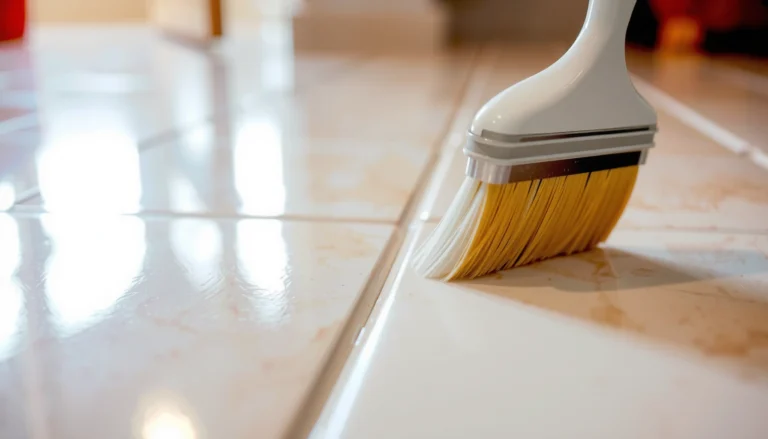
Prevent water damage to polished concrete floors with a clear, high-impact plan: control moisture sources, seal the surface correctly, and manage spills before they soak in. This guide answers the practical question of what steps actually stop water from penetrating, staining, or causing dulling and microcracks. Follow these key measures to keep your polished finish looking sharp and performing for years.
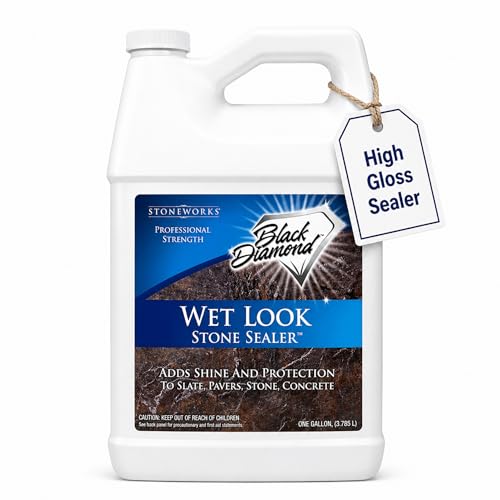



Prevent water damage to polished concrete by stopping moisture before it hits the slab, protecting the surface with the correct seal system, and responding immediately to spills. When standing water repeatedly contacts a polished finish, it’s one of the fastest paths to hazing, dark spots, and premature finish failure—so prevention is mostly a “moisture management” discipline, not just cleaning.
This guide is written for people responsible for polished concrete in real buildings where water shows up in everyday ways: mopping routines, food-service traffic, tracked rain and snow, and plumbing or HVAC condensation. If you’ve noticed a finish that looks less consistent after wetting—spotting, dull patches, or a mottled appearance—these steps help you narrow down whether the culprit is surface water, cleaner choice, or moisture moving from below.
Who this is for / when it applies:
This is for homeowners and facility managers with polished concrete in kitchens, basements, retail spaces, warehouses, or garages—especially where spills, mopping frequency, rain tracking, or plumbing leaks are common. If you’ve noticed hazing, dark spots, or a finish that looks less consistent after wetting, these steps help you narrow down the cause.
Control water before it reaches the floor
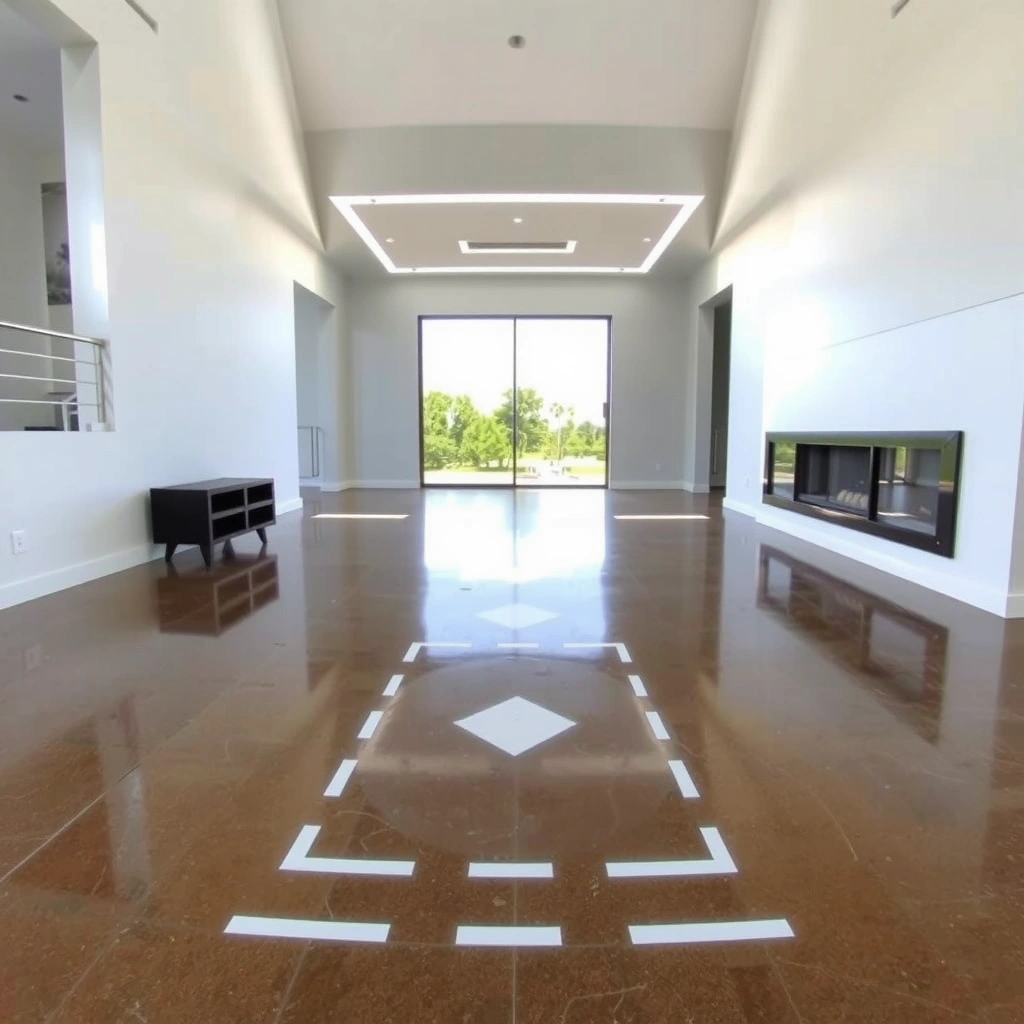
Stop the biggest water threat—recurring wetting—before it becomes a slab problem. The most durable polished-concrete maintenance plan starts with controlling leaks, condensation, surface drainage, and tracking, because water that arrives frequently leaves less time for the sealer to “recover” and can saturate areas unevenly.
In my experience advising facility teams on polished surfaces, the highest-impact wins usually come from fixing the source (a leak or condensation pathway) and limiting what gets carried onto the floor (rainwater and salt-laden grit). Even a great sealer can be overwhelmed when water is continually introduced at the same zones—like near exterior doors, mop sink areas, dishwashing pass-throughs, floor drains, or mechanical rooms.
Most polished concrete performance problems begin with moisture arriving repeatedly—not with one-time cleaning events.
Surface water that repeatedly wets and dries can cause localized dulling and spotting even when the floor “looks fine” right after cleanup.
Rain tracking can bring water-soluble salts that contribute to spotting or discoloration on sealed surfaces.
Fix leaks and reduce recurring wetting (plumbing, HVAC condensation, workflow)
Recurrence matters. A small plumbing seep behind a toe-kick, a slow drain at a mop sink, or HVAC condensate that drips onto the same area can create a repeating moisture cycle. Because polished concrete is dense but not immune to moisture behavior, repeated wetting can translate into uneven darkening and finish breakdown over time.
– Plumbing: Inspect under sinks, behind refrigerators, dishwashers, and beneath toilets in basements/restrooms. Pay attention to slow leaks that only appear when equipment runs.
– HVAC condensation: Condensate lines, uninsulated piping, and duct sweating often create wetting patterns that match vents or mechanical zones.
– Cleaning behavior: Wet mops left too long effectively keep water in contact with the surface. Use the “damp, controlled application” concept—enough to clean, not enough to soak.
Use entry mats, door sweeps, and tracking control
At building entries, the floor is acting as a “receiving surface” for rain, snowmelt, and grit. Door sweeps reduce water transfer; mats capture moisture and particulates before they reach the polished area.
– Use high-absorbency mats plus a scraper-style entry mat when conditions are snowy/salty.
– Place mats so they cover the typical traffic path and require replacement when saturated.
This is especially important for salt exposure. In northern climates, tracked meltwater carries chlorides and other soluble contaminants that can migrate into the sealer-film interface and show up as spotting when the floor dries.
Manage drainage and grading around the building
If water migrates toward the slab, indoor polished concrete becomes the “end of the line.” Check exterior grading, downspout discharge locations, and whether surface water is channeling toward entrances or basement walls.
– Confirm downspouts discharge away from the building foundation.
– Maintain exterior grading so water flows outward.
– Evaluate any slope issues around garage slabs, sidewalks, or basement perimeter areas where polished floors often transition near walls.
According to the U.S. Environmental Protection Agency (EPA), proper management of stormwater helps reduce infiltration problems around structures, particularly where drainage is insufficient ([ADD: EPA source for stormwater/drainage best practices]).
Choose the right seal and maintain it
A maintained sealer system is your best defense against water-related dulling and staining on polished concrete. The right seal doesn’t just “block water”—it forms a durable surface barrier (and compatible film) that reduces moisture uptake and limits how stains deposit.
Seal selection should be tied to your floor’s specific finish system. Polished concrete is often sealed with a documented product or coating strategy, and compatibility matters: some topcoats bond poorly over certain existing coatings or react adversely with specific solvents.
The most important sealer step is compatibility: the product documentation must confirm suitability for polished or hard-surface concrete floors.
Skipping recoat schedules increases the chance that water reaches micro-pores and that spotting becomes permanent.
Maintenance chemistry (cleaners and strippers) must match the seal type to avoid film damage.
Use a sealer system recommended for polished concrete
Look for product documentation that explicitly states suitability for polished concrete / hard-surface floors. “Concrete sealer” labels can be broad, but the polished floor is a specific surface—often with an engineered sheen and defined topcoat.
When choosing:
– Confirm the intended finish (matte, satin, gloss) and expected wear profile.
– Verify whether the sealer is designed for interior commercial traffic if it’s a facility setting.
– Follow application instructions on temperature, surface prep, and cure time.
Reapply or refresh coatings based on real wear (not visible damage)
Waiting until the floor “looks bad” is usually too late. Once the barrier film thins, water contact increases, and localized staining becomes harder to remove.
– Follow the manufacturer’s recoat guidance (time-based and/or wear-based).
– Inspect for early film failure signs: loss of uniform sheen, faster re-wetting, or small darkening patterns after mopping.
Keep maintenance compatible with the finish
Many maintenance problems are chemical mismatch. Harsh cleaners, solvents, or alkaline degreasers can attack certain films, stripping them unevenly and leaving the floor more vulnerable.
– Use cleaners that are compatible with sealed polished concrete.
– Avoid products that the sealer manufacturer warns against.
– If you’re planning a transition (e.g., new chemical supplier), perform a small, inconspicuous test patch and document results.
According to guidance from concrete sealer and coating manufacturers, following surface prep, dilution, and cure/recoat instructions is essential for maintaining intended barrier performance ([ADD: manufacturer technical data sheet for your sealer system]).
Use spill prevention habits (and fast cleanup rules)
Preventing water damage is mainly about time: don’t give water a chance to sit. When spills happen, fast and correct cleanup keeps liquids from penetrating through micro-channels and depositing dissolved contaminants during wet-to-dry cycles.
Spills are inevitable in kitchens, retail back-of-house, warehouses, and garages. The goal is to reduce both (1) the duration of wet contact and (2) the chemical load that dries onto the surface.
Blotting and thorough drying reduce the dwell time that drives spotting and dulling on sealed polished concrete.
“Wet mopping” as a default cleaning method increases the probability of uniform sheen loss compared with controlled damp cleaning.
Food-service spills often leave residues that can stain once dried, even if the surface seems sealed.
Blot immediately and dry the area thoroughly
When a liquid spills:
– Blot, don’t aggressively spread it.
– Remove residue that could dry into a stain (food oils, sugary liquids, beverages).
– Dry thoroughly after cleaning so water doesn’t remain trapped at the surface film or migrate through micro-pores.
In practice, the “cleanup rule” is simple: if you can still see wetness after cleaning, you haven’t finished yet.
Avoid wet mopping as a default
Polished concrete tolerates cleaning, but it doesn’t benefit from being repeatedly soaked. For routine maintenance:
– Use a damp method aligned with the floor’s finish instructions.
– Use microfiber systems and controlled application rather than pouring.
For frequent food-service spills, standardize response
If you’re dealing with restaurants, cafeterias, or production kitchens:
– Train teams on a documented response: what to use, how long to allow dwell (if any), and how to dry.
– Provide spill kits with absorbents and pH-neutral cleaner.
– Assign designated cloths/mops to prevent cross-contamination of residues.
This standardization reduces variability—one of the most common sources of inconsistent polished finish appearance over time.
Clean safely to avoid weakening the surface
Clean correctly to protect both the sealer film and the polished finish. The safest default for sealed polished concrete is pH-neutral cleaning, because the wrong pH or abrasive action can dull the sheen or degrade the coating.
Most facilities don’t realize that “cleaning” can be a coating-aging mechanism. The sealer isn’t permanent; harsh chemistry accelerates wear and makes the floor more reactive to water and contaminants.
pH-neutral cleaners are the recommended baseline for sealed polished concrete because they reduce risk of film damage and dulling.
Avoid pooling cleaning solutions; uneven dwell time can create spotting and patchy sheen on polished surfaces.
Automatic scrubbers require approved chemistry and correct settings to avoid damaging the specific sealer/finish.
Stick to pH-neutral cleaners recommended for sealed polished concrete
Choose a cleaner that aligns with your sealer system. As a general practice:
– Avoid acidic cleaners (often used for lime/rust) unless the sealer manufacturer explicitly allows it.
– Avoid abrasive pads or powders that can etch/dull the polished surface.
– Use dilution and application steps exactly as written.
Don’t let cleaning solutions pool
Pooling increases contact time and can pull contaminants across the film as water evaporates. Follow the product directions for:
– Dilution
– Application method (spray vs. mop)
– Dwell time (how long it sits)
– Rinse/neutralization requirements (if any)
If you use automatic scrubbers, confirm chemistry approval
For automatic scrubbers, the key is alignment: scrubbing equipment + pads + chemical + sealer type must be consistent.
– Verify that the scrubber chemical is approved for the specific sealer system.
– Confirm the pad type and flow rates won’t over-apply liquid to the surface.
If you already use a scrubber, document what’s installed and what chemistry is approved.
([ADD: model of scrubber + approved chemistry/specs if you have them])
Watch for “water damage” causes that aren’t just spills
Many “water damage” complaints are actually moisture migrating from below or through the slab system. Spotting and hazing that repeat in the same zones after dry periods often points to a hydrostatic or slab-moisture issue—not just routine surface wetting.
This section is where facility managers and homeowners often need the most diagnostic clarity. A sealer can mask symptoms, but if moisture keeps traveling upward, the finish can fail again and again.
Recurring darkening in the same areas after dry periods strongly suggests moisture migration from below rather than random spill staining.
Perimeter pathways (edges, cracks, and joints) often concentrate moisture movement and lead to localized failure even on well-sealed floors.
Sealing alone can’t stop hydrostatic pressure; it can only manage surface exposure.
Distinguish surface issues vs. moisture from below
Surface issues tend to correlate with specific events—mopping sessions, spills, or cleaner usage. Moisture-from-below tends to:
– Reappear without new spills
– Follow a stable pattern (same zones)
– Show up as persistent damp feel, dark bands, or mottling that returns after drying
Investigate likely sources when dark zones repeat
If recurring darkening happens in the same locations, investigate:
– Groundwater or exterior water pressure
– Under-slab conditions and drainage
– Failed damp-proofing (where applicable to the construction)
– Plumbing issues beneath slab or in chase spaces
([ADD: what you’ve observed—location and whether it correlates with plumbing/grade])
According to ASTM and building science references on moisture transport and concrete performance, moisture movement can affect coatings and cause discoloration when it reaches the surface interface ([ADD: relevant ASTM/building science source]).
Ensure joints and edges are maintained
Expansion joints, control joints, and perimeter edges are pathways. If a crack is widened, a joint is poorly sealed, or edge detailing fails, water often finds the easiest route.
– Inspect edges where walls meet floors.
– Check control joints for deterioration and water infiltration signs.
– Maintain joint sealant systems consistent with the original design.
What can go wrong (common mistakes and limits)
Even good prevention strategies can fail if the approach is mismatched to the real cause. These are the most frequent mistakes that lead to dulling, staining, and finish failure despite “doing everything right” on the surface.
Sealer compatibility issues can cause poor bonding, leading to uneven sheen and faster failure even if the floor is otherwise well-maintained.
High-alkaline degreasers, acids, and “stripping” chemicals can damage polished concrete finishes and increase future staining susceptibility.
If moisture is migrating from below, sealing can become a temporary patch rather than a long-term solution.
Over-sealing or switching products without compatibility checks
Switching sealers or topcoats midstream can create adhesion failures. Some coatings require specific surface profiles or compatible primers.
– Don’t assume “any concrete sealer works on polished concrete.”
– Follow manufacturer guidance on whether existing coatings must be removed or primed.
Using harsh chemicals that damage the finish
Even when a cleaner is effective at removing grease, it can weaken the protective film and increase water sensitivity.
– High-alkaline degreasers can attack certain coatings.
– Acids can dull or etch exposed surfaces and compromise finish appearance.
– Solvent-based products may haze or soften specific film-forming systems.
Treating symptoms only (the moisture-under-slab limit)
If moisture is moving from below, sealing may temporarily slow surface wetting—but it can’t stop hydrostatic or moisture-drive conditions.
Assuming polished concrete is “waterproof”
Polished concrete is durable, but it is not infinitely waterproof. Surface protection depends on the sealer system, its condition, and maintenance chemistry. Over time, any barrier film thins.
Verdict / tip: the honest prevention approach
The most reliable prevention approach is simple: (1) prevent recurring wetting, (2) keep a maintained, compatible sealer system, and (3) dry spills quickly with pH-neutral cleaning. This combination addresses both the “water arrives” problem and the “surface barrier stays intact” problem—reducing dulling, staining, and premature finish failure.
The downside is ongoing upkeep. Sealers wear, recoat schedules exist for a reason, and sealing doesn’t solve moisture driven upward from slab interiors. If you see persistent recurring dampness, repeating dark bands, peeling or failed coatings, or other evidence of hydrostatic pressure, pause the surface-only plan and start with a moisture assessment before you re-seal.
([ADD: whether you’ve seen recurring damp zones or only occasional spills])
How Common Moisture Triggers Typically Affect Sealed Polished Concrete Appearance (Practical Risk Index)
| # | Moisture trigger | Typical contact pattern | Common visual outcome | Risk level |
|---|---|---|---|---|
| 1 | Repeated HVAC condensate dripping | Same small zone daily/weekly | Localized darkening; sheen loss ring | ★★★☆☆ |
| 2 | Slow plumbing leak under sink/toe-kick | Intermittent but recurring wetting | Mottling and persistent spotting | ★★★★☆ |
| 3 | Wet mopping as a routine method | Broader coverage; longer dwell | Uniform dulling; streaking | ★★★☆☆ |
| 4 | Standing water after spills (not promptly dried) | Local; minutes to hours | Halo stains; resurfacing failure | ★★★★★ |
| 5 | Rain/snow tracking without robust mats | Broad; repeated dilution/evap cycles | Salt spotting; patchy haze | ★★★☆☆ |
| 6 | Harsh cleaner (acid/alkaline) used repeatedly | Chemical exposure; repeated cleaning cycles | Dulling; faster re-wetting sensitivity | ★★★☆☆ |
| 7 | Timely blotting + full drying + pH-neutral cleaning | Short dwell; controlled moisture | Minimal staining; stable sheen | ★☆☆☆☆ |
Quick checklist (scan/save)
– [ ] Check for leaks (plumbing/HVAC condensation) and stop the source.
– [ ] Add/maintain entry mats and keep water off the slab.
– [ ] Ensure perimeter edges and joints are sealed/maintained.
– [ ] Use pH-neutral cleaner per the sealer/manufacturer guidance.
– [ ] Blot spills immediately; dry thoroughly (don’t leave standing water).
– [ ] Inspect the seal regularly; refresh per manufacturer recoat schedule.
– [ ] If staining repeats in the same spots, investigate moisture from below.
FAQ
How often should I reseal polished concrete to prevent water damage?
It depends on the specific sealer system and traffic/cleaning frequency. Follow the manufacturer’s recoat guidance for your product; if you’re unsure, [ADD: sealer name/type] to get accurate timing.
Can I use a regular mop and cleaner on polished concrete?
Use a damp-cleaning method only if the cleaner is pH-neutral and compatible with your sealer. Avoid soaking, pooling, or harsh/acidic cleaners unless your manufacturer instructions explicitly allow it.
What should I do if I see dark spots after mopping?
First, dry the area thoroughly and stop using any cleaner that may be causing spotting. If the pattern keeps returning in the same locations, treat it as a possible moisture source issue and investigate ([ADD: where the spots appear and whether they return after drying]).
Is polished concrete “waterproof” after sealing?
Sealed polished concrete resists water intrusion, but it isn’t fully waterproof. Standing water over time can still penetrate depending on the sealer type, wear, and slab conditions.
What’s the difference between a spill stain and moisture coming from below?
Spill stains usually correlate with a specific event and location, then fade after proper cleanup/drying. Moisture-from-below problems tend to reappear in the same zones even without new spills, often tied to under-slab or grading/groundwater conditions ([ADD: your observations]).
Sources
– [ADD: Manufacturer documentation for your specific sealer system—recoat/maintenance instructions and approved cleaners]
– [ADD: Manufacturer guidance for polished concrete care (pH-neutral requirements, cleaning dilution and application rules)]
– [ADD: Any relevant manufacturer technical data sheet for sealers/coatings used on polished concrete]
Preventing water damage to polished concrete is about disciplined moisture control: reduce recurring wetting at the source, maintain a compatible seal system, and keep cleaning chemistry pH-neutral and non-abrasive. If you’re seeing repeating damp zones or stable dark bands, don’t rely on sealing alone—start diagnosing moisture migration and hydrostatic conditions first. With those priorities aligned, polished concrete can stay uniform, glossy or satin-consistent, and resilient under real-world traffic for the long term.
Frequently Asked Questions
What are the best ways to protect polished concrete floors from water damage?
The best approach is to use the right concrete sealer system and keep moisture from sitting on the surface. Apply a high-quality penetrating sealer and/or a compatible topcoat designed for polished concrete, then maintain it with periodic re-sealing as recommended. Also use mats at entryways and clean spills promptly to prevent water from working its way into pores or micro-cracks.
How do I prevent standing water from ruining polished concrete floors?
Prevent standing water by improving drainage and addressing leaks from plumbing fixtures, HVAC condensate lines, or roof/water intrusion points. In areas like bathrooms, kitchens, and basements, use absorbent mats and dry mopped floors rather than leaving them wet. If water does get on the floor, blot immediately and dry with fans or a dehumidifier to minimize swelling, haze, or etching.
Which sealer or coating works best for water protection on polished concrete?
Look for sealers labeled for polished concrete that offer strong moisture resistance and stain protection, such as densifiers plus penetrating sealers, or two-part epoxy/urethane systems where appropriate. The “best” option depends on the environment—interior damp areas often benefit from breathable penetrating products, while areas exposed to frequent spills may require a durable topical barrier. Always test a small inconspicuous area first and follow the manufacturer’s cure and recoat times for optimal performance.
How should I clean polished concrete floors to avoid moisture-related issues?
Use a pH-neutral cleaner and avoid harsh acidic products that can weaken the surface and increase water sensitivity. Use a microfiber mop and damp-clean only—avoid soaking—and remove any cleaning solution residue thoroughly. After mopping, ensure the floor is dry, especially in corners and along edges where water can collect and cause discoloration or dull spots.
Why does water damage appear on polished concrete floors even when they look sealed?
Even sealed polished concrete can be vulnerable if the sealer is worn, incorrectly applied, or incompatible with certain cleaners. Water can also penetrate through hairline cracks, joint edges, or areas where the floor was densified or ground differently. Over time, traffic, abrasions, and foot-wet cycles can degrade the protective layer, leading to darkening, efflorescence, or surface haze—so routine inspections and maintenance are key.
📅 Last Updated: October 10, 2026 | Topic: How to prevent water damage to polished concrete floors? | Content verified for accuracy and freshness.
References
- Polished concrete
https://en.wikipedia.org/wiki/Polished_concrete - https://en.wikipedia.org/wiki/Concrete_sealant
- Waterproofing
https://en.wikipedia.org/wiki/Waterproofing - https://en.wikipedia.org/wiki/Concrete_waterproofing
- https://en.wikipedia.org/wiki/Moisture_barrier
- Concrete
https://en.wikipedia.org/wiki/Concrete - https://en.wikipedia.org/wiki/Surface_coating
- Google Scholar Google Scholar
https://scholar.google.com/scholar?q=prevent+water+damage+polished+concrete+sealing+maintenance - Google Scholar Google Scholar
https://scholar.google.com/scholar?q=polished+concrete+water+penetration+staining+sealer+penetrating+sealant+study - Google Scholar Google Scholar
https://scholar.google.com/scholar?q=concrete+floor+moisture+control+vapor+barrier+prevention+of+water+damage