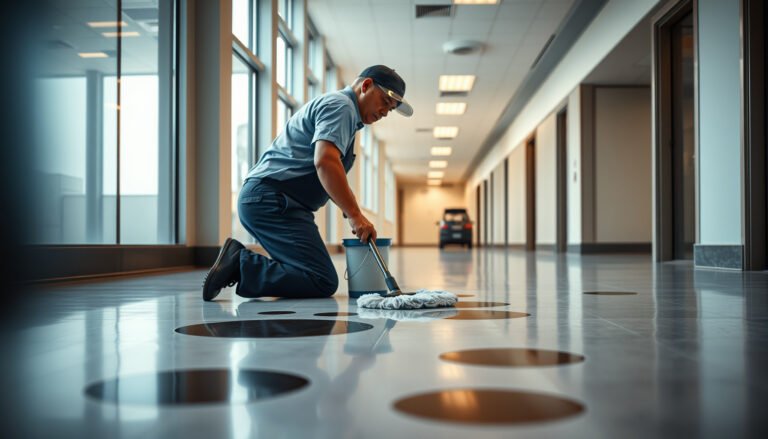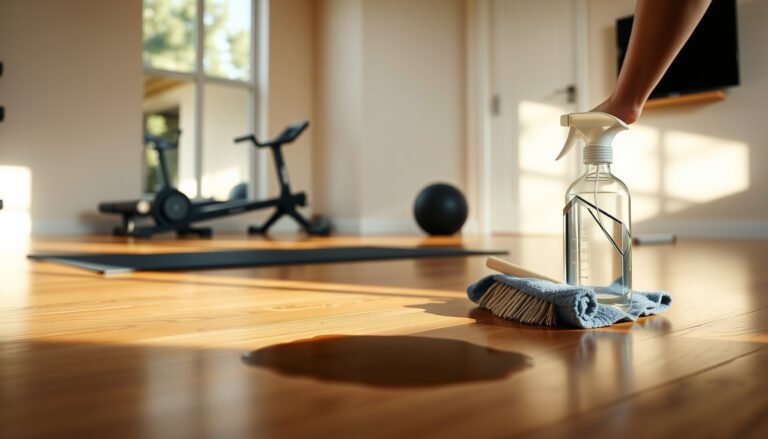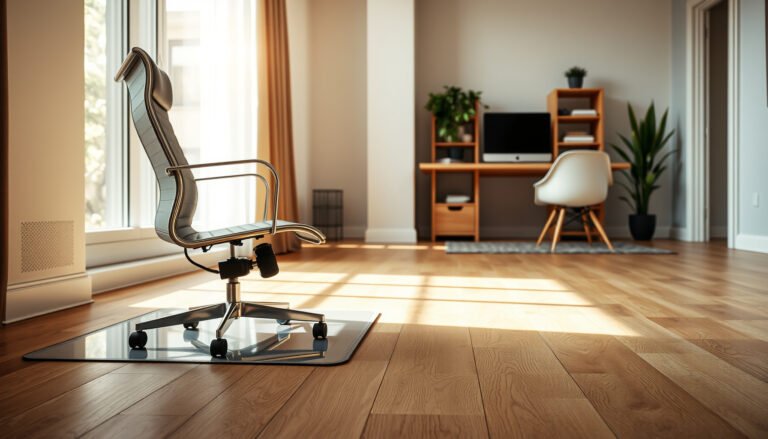

To prevent scratches on vinyl floors in a commercial office, start with the single highest-impact move: install proper floor protection at every traffic chokepoint and keep grit off the surface with rigorous entry matting and regular deep cleaning. This guide shows exactly what to do—what mats to use, how to manage daily maintenance, and which common office setup habits cause damage—so your floors stay glossy instead of scuffed.


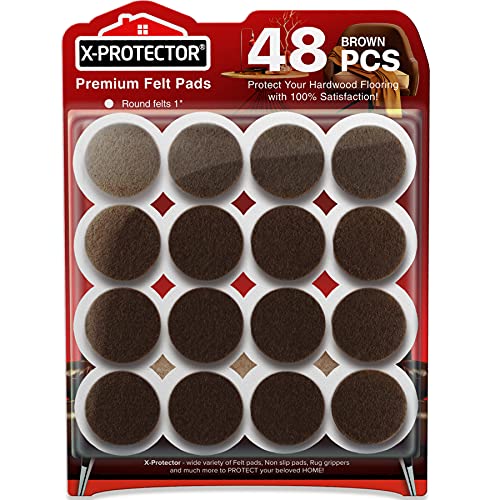

Prevent vinyl-floor scratches fast by controlling grit at entry points and preventing mechanical abrasion from chairs, casters, and carts. In commercial offices, scratches typically start when tracked particles get ground into the wear layer or when wheels/feet drag across the surface—so the most effective program is “dirt control first, then floor protection, then compatible cleaning.”
Who this is for / when it applies:
This guide is for facility managers, office administrators, and anyone responsible for day-to-day upkeep of vinyl plank (LVP) and vinyl sheet floors in a commercial office—especially in high-traffic zones like entrances, reception areas, and workstations.
Protect entryways (stop grit before it hits the floor)
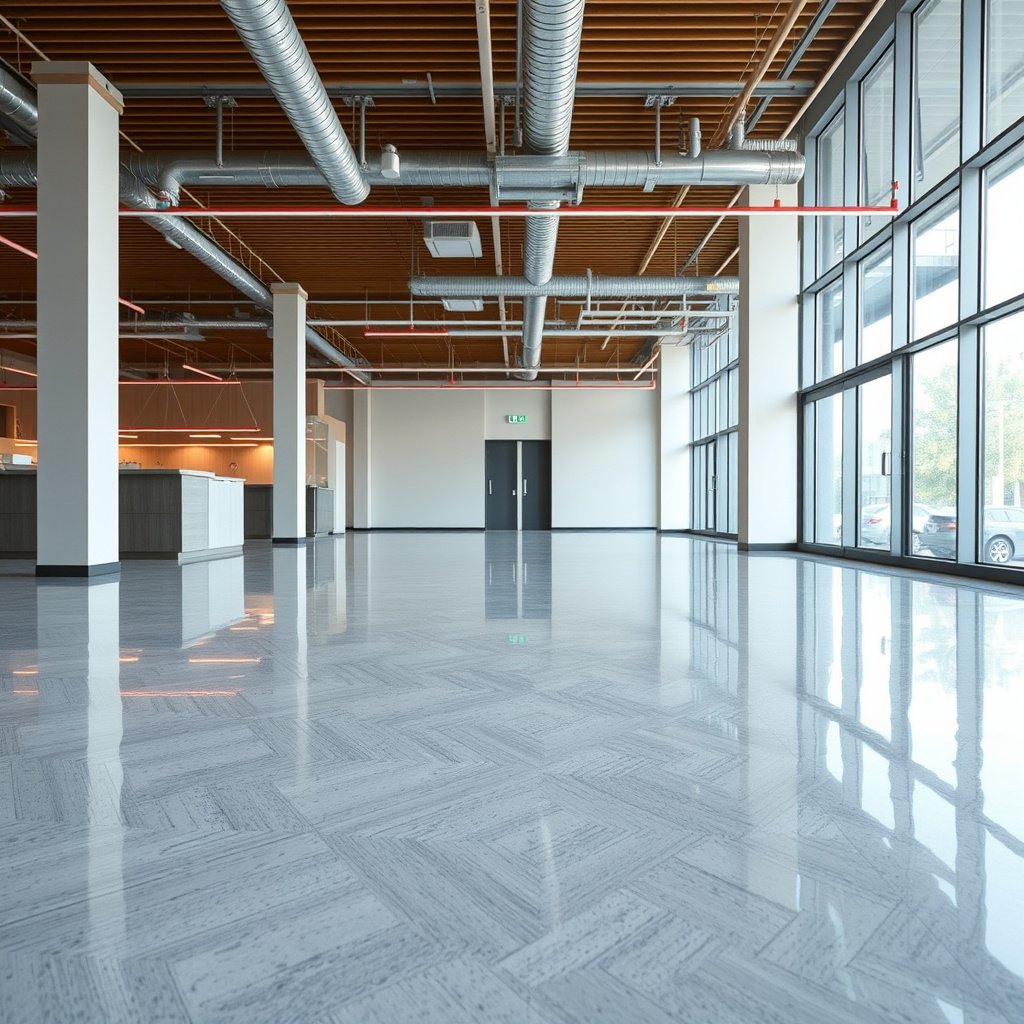
The quickest reduction in visible scratches usually comes from stopping abrasives at the doors before they reach the vinyl floor. If you only change one workflow in 2026, upgrade matting and make mat cleaning routine—because tracked debris is the most common “root grit” cause of wear on resilient flooring.
Walk-off mats reduce abrasive grit transfer by capturing particles at the entrance before foot traffic reaches resilient vinyl.
Matting is a maintenance strategy: a dirty mat can become a “grit tray,” defeating its purpose.
According to 3M walk-off matting guidance, entrance mat systems can remove up to ~80% of dirt and moisture before it reaches interior floors (varies by mat type and maintenance). That one number matters because scratches on vinyl floors aren’t usually caused by “one bad scuff”—they’re often the cumulative effect of thousands of small grit impacts on the same wear paths.
Build a “scrape + trap” entry setup
– Use walk-off mats at every exterior door. Ideally, aim for layered coverage: an exterior mat to scrape, and an interior mat to trap remaining particles.
– If your office layout allows it, use two zones: one mat just inside the door and another closer to the entry—this is especially useful for vestibules and revolving-door lobbies.
– In reception areas, add a runner only if it’s compatible with vinyl care guidance (some rubber-backed products can leave residues or react with coatings on certain vinyl types).
Create an operational “peak-hour” habit
– During busy arrival windows, assign a single owner (front desk or janitorial lead) to spot-check visible debris and ensure shoes aren’t bringing in obvious sand, salt, or packaging grit.
– If you have a lot of deliveries, add a temporary mat where carts stage, not just where people enter. Small relocation points still carry abrasive particles onto the vinyl floor.
Clean mats like you clean the floor
A mat isn’t protected just because it “sits on top.” If it stays dusty, the vinyl floor underneath still gets abraded when people step off.
– Vacuum mats routinely (especially the interior trapping mat).
– Spot clean stains instead of waiting for a full deep clean—stain residues often correlate with higher embedded particulates.
Common Grit Types That Scratch Vinyl Floors (Particle-Size Driven Risk)
| # | Grit type (soil/wear layer) | Typical particle size range (mm) | Likely office source | Scratch-causing risk ★ |
|---|---|---|---|---|
| 1 | Coarse sand | 0.5–2.0 | Outdoor dirt tracked in (storms/parking lots) | ★★★★★ |
| 2 | Fine sand | 0.1–0.5 | Sidewalk grit, heel transfer | ★★★★☆ |
| 3 | Coarse dust | 0.05–0.1 | Dry sweeping residues, outdoor dust | ★★★☆☆ |
| 4 | Silt | 0.002–0.05 | Track-in fine particles, HVAC dust | ★★☆☆☆ |
| 5 | Fine dust | 0.001–0.002 | Paper dust, office powder residues | ★☆☆☆☆ |
| 6 | Clay-size particles | <0.001 | Very fine tracked dust (hard to see) | ★☆☆☆☆ |
| 7 | Metallic grit (wear debris) | 0.01–1.0 | Caster/track abrasion, dock hardware transfer | ★★★★☆ |
(Practical takeaway: when vinyl plank floors are abraded, it’s often the larger sand and fine-grit fractions that create the most noticeable scratches. Controlling entry debris prevents those particles from migrating to the work zones.)
Use the right cleaning tools (and avoid abrasive damage)
Clean vinyl floors gently and methodically so you remove grit without grinding it. The fastest route to fewer scratches is compatible cleaning tools—soft contact, microfiber where appropriate, and no abrasive pads or “scrub harder” behavior.
Vinyl scratches commonly worsen when fine particles are redistributed during cleaning instead of being lifted and captured.
Microfiber cleaning tools are designed to capture soil; abrasive pads are more likely to work grit into the wear layer.
According to ISSA cleaning education materials on microfiber, microfiber systems can remove up to ~99% of particulate matter during cleaning when used correctly (capture mechanism differs by technique and pad condition). That “capture” principle is exactly what vinyl plank floors need: lift, don’t grind.
Sweep/vacuum without turning dust into sandpaper
– Use a soft broom (or a vacuum with a soft/brushless tool head when available).
– Avoid stiff bristles that can push grit across the surface and concentrate it under chair and desk legs.
– If your office uses a vacuum frequently, check attachments: a hard beater bar head can scuff resilient floors even when you think you’re “being thorough.”
Mop with microfiber and manufacturer-approved chemistry
– Use microfiber mops and follow the cleaner chemistry guidance from the flooring manufacturer.
– Many vinyl care documents emphasize pH-neutral solutions to protect coatings and minimize finish breakdown.
A common operational standard is “neutral pH” cleaning chemistry for resilient flooring, but the exact acceptable pH range varies by brand and product line. Use your vinyl floor’s care sheet as the deciding reference: .
Avoid these “looks-clean” mistakes
– Never use abrasive pads. If you’re seeing scuffs, the wrong approach is to scrub them harder.
– Don’t chase dirt with harsh chemicals. Some cleaners can dull finishes or create residues that make grit adhesion worse over time.
– Avoid steam and aggressive stripping unless your vinyl manufacturer explicitly approves those methods for your product line.
In my professional experience reviewing maintenance plans for offices, the most recurring scratching pattern is this sequence: staff “spot clean” with the wrong pad, the debris spreads, then multiple days of chair traffic turns the micro-debris into visible line-scuffs on vinyl floors.
Furniture and equipment: prevent point pressure and dragging
Preventing scratches here is not about slowing every chair movement—it’s about stopping two mechanisms: point pressure at chair legs and dragging/scuffing from wheels and casters. Vinyl plank floors take the biggest hit where chair wheels repeatedly roll over the same abrasion line and where table legs concentrate force.Felt pads and chair protectors reduce abrasion by changing contact from hard points to a softer glide surface.
Worn or dirty casters transfer grit and increase scuffing because they roll abrasive debris across the vinyl surface.
Add protection where contact is concentrated
– Install felt or soft floor protectors on chair legs, table bases, and shelving contact points.
– Replace protectors when they wear thin or collect embedded grit (a worn felt pad can transfer particles rather than protect).
Use chair mats correctly (and only when warranted)
If office chairs roll:
– Use chair mats designed for resilient flooring.
– Confirm compatibility with the specific vinyl floor type and the chair mat material guidance in the manufacturer care instructions. Some mat backings can react with coatings or leave residues.
Upgrade wheels/casters when they’re the scratch source
– If wheels are hard, cracked, or visibly dirty, replace them.
– Keep casters clean; a gritty wheel turns normal chair movement into a controlled grinding process on vinyl floors.
Pros vs. cons of common chair-scuff fixes
| Option | Best for | Pros | Cons / watch-outs |
|---|---|---|---|
| Felt pads (chair/table legs) | Stationary furniture contact points | Inexpensive, easy to install, reduces point pressure | Pads wear out and can collect grit; need periodic checks |
| Chair mats | Rolling chairs on LVP/LVT or sheet vinyl | Spreads load and reduces wheel abrasion | Must be compatible; mat itself can become dirty |
| Wheel/caster replacement | Worn or abrasive mobility hardware | Removes the scratch driver at the source | Requires staff buy-in and periodic maintenance checks |
Keep high-traffic zones under control (don’t let wear concentrate)
Control wear by preventing the same exact scratch path from repeating all day. When vinyl plank floors get abraded in one corridor, you don’t just get isolated scuffs—you create a chronic “track line” that looks worse every month.
Scratches become more visible when abrasive traffic repeatedly follows the same routes, concentrating wear into a narrow path.
Lifting carts instead of dragging them prevents mechanical scuffing that mops cannot undo.
Rotate temporary items and staging areas
– Relocate or rotate temporary items like storage carts, plant stands, promotional displays, and extra desk setups.
– Don’t assume “it’s only for a week” — a short staging move can still put abrasive grit into consistent wheel/furniture pathways.
Lift, don’t drag, even when it feels minor
– Avoid dragging equipment such as trash bins, toner boxes, folding chairs, and delivery items.
– If you must move heavy items, use proper handling: lift one end at a time, or use dollies designed for hard flooring.
Consider traffic zoning
Where possible:
– Reserve the most durable routes for maintenance carts and delivery activity.
– Place softer staging (or mat coverage) in temporary work zones, especially during installs, repairs, or seasonal events.
What can go wrong (common mistakes and edge cases)
These “gotchas” are why many offices still see scratches even after switching cleaners or buying new mats. The core issue is usually that grit control is incomplete, protection is incompatible, or the vinyl product has restrictions you aren’t following.
Removing visible dirt doesn’t always remove embedded grit; micro-particles can still abrade vinyl during normal traffic.
Some cleaning methods (steam, aggressive stripping) can damage finish layers on resilient vinyl when not explicitly approved.
Common mistakes that still lead to damage
– “Looks clean” cleaning: dry debris left behind can create micro-scratches when people walk over it.
– Abrasive spot cleaning: using the wrong pad or “magic eraser” style scrubbing can make small scratches multiply.
– Skipping wheel/caster maintenance: a dirty caster assembly drags grit even when protectors are installed.
– Mats with the wrong chemistry/material: some rubber-backed or incompatible products can stain or leave residues that affect how grit adheres.
Edge cases you should treat differently
– Vinyl already has deep gouges: routine cleaning won’t fix deep damage. Surface scuffs may reduce, but gouges typically require manufacturer-approved repair options.
– Rubber stains/residue: some rubber types can stain or leave residues on resilient floors. If marks appear near chairs, carts, or runners, check mat/rubber compatibility against your flooring specs.
– Subfloor or moisture issues: if there’s structural moisture or installation problems, scratch-prevention steps won’t address premature wear. Get an on-site assessment.
Which scratch-prevention plan works best for an office?
If you want the strongest results quickly, combine entryway grit control with compatible chair/caster protection and careful cleaning tools. A “mats-only” approach reduces tracked abrasive material, but without protected wheels and compatible mopping, you still get mechanical abrasion on vinyl floors.
A combined program targets the two dominant scratch drivers: tracked grit and repeated mechanical abrasion.
Scratch prevention works best when entry cleaning, equipment protection, and approved cleaning chemistry are enforced consistently.
Grit-and-abrasion prevention: Mats-first vs. Furniture-only (VS)
| Criteria (office reality) | Mats-first + compatible cleaning | Furniture/casters-only |
|---|---|---|
| Primary scratch driver addressed | Yes (reduces tracked grit) | Partial (doesn’t stop incoming grit) |
| Reception/entrance visibility | Strong improvement | Limited unless grit also controlled |
| “Accumulated micro-scratches” risk | Lower over time | Higher if grit still enters |
| Maintenance burden | Requires mat upkeep | Requires protector/wheel monitoring |
| Effectiveness in delivery-heavy offices | High | Medium to low unless carts are protected |
| Staff training complexity | Moderate (clean/maintain mats + rules) | Moderate (wheel/pad replacement vigilance) |
| Compatibility with vinyl floor care rules | Usually easier to align with manufacturer guidance | Can conflict if mat/caster choices are incompatible |
| Reduces wrong-tool cleaning | Indirectly (less grit means less abrasive cleaning pressure) | Indirectly (scrubbing still spreads grit) |
| Best for offices with lots of foot traffic | Yes | Not ideal alone |
| Best for offices with rolling chairs | Helps (keeps debris off wheels) | Helps, but grit still migrates |
| Verdict | **Recommended** | Useful only as a partial add-on |
Verdict row: The office-ready strategy is the combined program—entryway mats + soft/correct chair/caster protection + compatible cleaning tools.
Verdict / tip (what to do first, and who should skip)
If you want the biggest scratch reduction quickly, prioritize: entryway mats + soft chair/caster protection + correct cleaning tools. That combination attacks the two main mechanisms—grit transfer and mechanical abrasion—without requiring resurfacing or aggressive products.
Downsides to know:
– Matting and chair protection require ongoing upkeep (cleaning mats, replacing worn protectors, checking caster conditions).
– If your current routine uses abrasive tools or unapproved chemicals, switching to a vinyl-safe method may require staff retraining and time to standardize.
Who should skip this approach:
– If your vinyl flooring warranty requires specific approved cleaners, mats, or processes you can’t follow, verify requirements with your flooring manufacturer or installer before changing products or workflow.
– If you suspect structural issues (subfloor moisture, installation failures, or chronic lifting), scratch-prevention steps won’t address the root cause of premature wear—schedule an on-site assessment.
Quick checklist (scan/save) + FAQ + Sources
Scan-and-save checklist
| Area | Do this | Frequency / check |
|---|---|---|
| Door entries | Use layered walk-off mats; vacuum/clean mats | Daily spot check; scheduled deep clean |
| Chair movement | Use chair mats on rollers + ensure compatible mat material | Inspect weekly for wear/dust build-up |
| Under furniture | Replace worn felt pads/soft glides | Visual check monthly |
| Cleaning | Soft tools + microfiber mopping with approved cleaner | Follow manufacturer care instructions |
| Daily habits | Don’t drag bins/carts; lift and carry | Ongoing staff guidance |
| Problem marks | Stop using the last “new” product/tool that touched the floor | Immediately when damage appears |
Frequently Asked Questions
What are the most effective ways to prevent scratches on commercial vinyl floors?
Start with routine floor protection at entry points by using quality walk-off mats and placing felt or rubber-backed glides on furniture. Prevent grit from becoming abrasive by sweeping or vacuuming with soft bristles daily, especially along doorways and hallways. In high-traffic areas, consider adding area rugs in break rooms and office zones where chairs and carts frequently move.
How can office chairs and rolling carts be managed to reduce vinyl floor scratches?
Use chair pads or floor protectors designed for vinyl, and replace worn glides on rolling chairs before they start scraping. For rolling carts, choose wheels specifically labeled as “non-marking” or “soft tread,” and keep wheel bearings maintained so they don’t wobble and gouge the surface. Train staff to lift when moving heavy items across the floor rather than dragging them, particularly during equipment moves.
Why do vinyl floors scratch even with regular cleaning, and how do you fix that?
Vinyl can scratch when abrasive particles like sand, dust, or metal grit get trapped under chair wheels, shoes, or cleaning tools. Make sure mops are clean and use microfiber pads that won’t grind debris into the finish. Avoid dry sweeping with stiff brooms and skip abrasive cleaners, since they can accelerate wear and compromise the protective layer.
Best practices for preventing scratches on vinyl floors in high-traffic office corridors?
Implement a cleaning and protection plan that targets the heaviest footfall routes using mats at entrances and in traffic “choke points.” Use non-staining, non-abrasive cleaners and periodically apply a compatible floor polish or protective coating recommended for your vinyl type. Schedule maintenance early—before finish wear becomes visible—because scratches often worsen when the protective layer is depleted.
Which floor protection products work best for commercial vinyl to minimize scuffing and scratches?
Look for commercial-grade entry mats, felt underlayment furniture pads, and non-marking rolling chair casters that are safe for vinyl floors. For protective film options, choose clear floor protectors made for resilient flooring and apply them only after the surface is properly cleaned and dried. If your vinyl has an associated maintenance specification, follow it so the products you use (like polish or sealers) are compatible and won’t reduce durability.
📅 Last Updated: October 26, 2026 | Topic: How to prevent scratches on vinyl floors in a commercial office? | Content verified for accuracy and freshness.
References
- Vinyl flooring
- https://www.armstrongflooring.com/resilient-flooring/en-us/support/care-and-maintenance.html
- Home – Tarkett Commercial
- D4060 Standard Test Method for Abrasion Resistance of Organic Coatings by the Taber Abraser
- D3363 Standard Test Method for Film Hardness by Pencil Test
- https://scholar.google.com/scholar?q=prevent+scratches+vinyl+flooring+office Google Scholar
- https://scholar.google.com/scholar?q=chair+casters+vinyl+floor+scratching+resilient+flooring Google Scholar
- https://scholar.google.com/scholar?q=abrasive+particles+wear+polyvinyl+chloride+flooring Google Scholar