
Prevent scratches on laminate floors in a dining room by using felt pads, floor protectors under chair legs, and a simple cleaning routine that removes grit before it grinds into the surface. If you do these three things consistently, you’ll stop the most common denting and scuffing caused by moving chairs, dropped utensils, and tracked-in debris. This guide answers exactly how to protect your laminate while keeping your dining space functional and looking new.
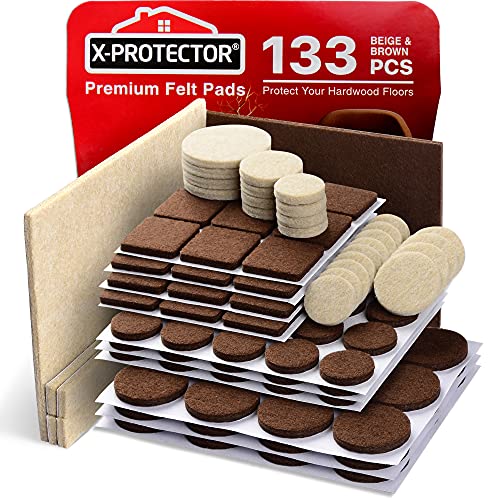

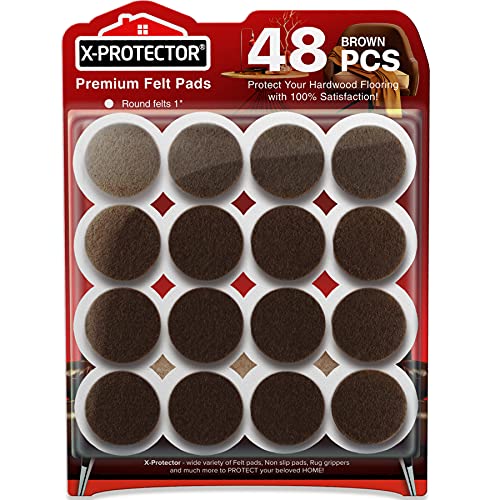

If you want to prevent scratches on laminate floors in a dining room, control grit and friction: stop debris from grinding across the surface and soften chair legs. Use felt pads (or approved glides) on dining furniture, keep entryway dirt out with mats, and clean with a microfiber method rather than abrasive tools. Below are practical steps you can apply right away to reduce everyday wear.
This is especially helpful if your dining area gets frequent foot traffic, has rolling chairs, or sees sand/grit tracked in from nearby doors or walkways. It’s also a good fit when you want to protect floors without changing your décor every time you host.
Protect the floor from grit (the #1 scratch driver)
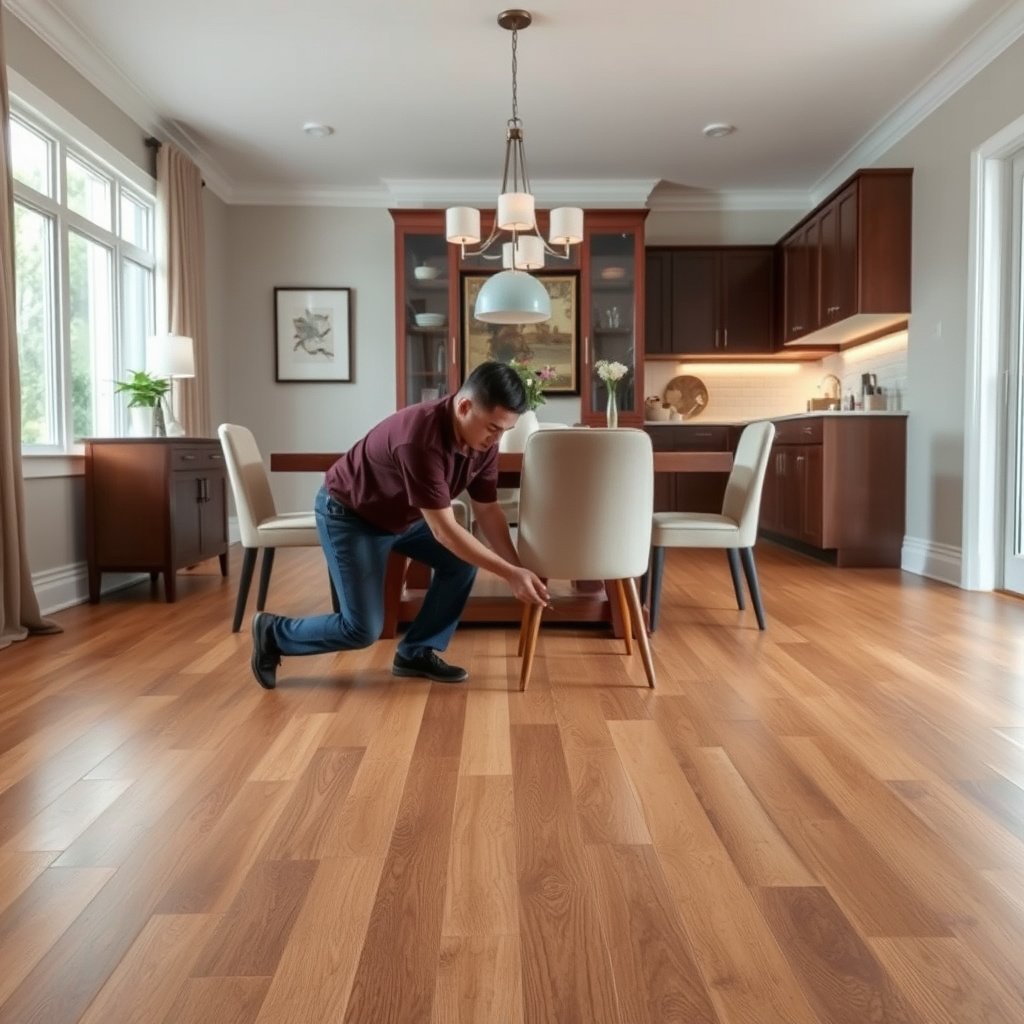
You prevent most laminate scratches by stopping abrasive particles from becoming “sandpaper” under chairs, footsteps, and table legs. Grit is the #1 driver because it’s typically harder than the laminate’s wear layer and concentrates at entry paths and rug edges.
According to the U.S. Geological Survey (USGS), sand grains typically range about 0.0625–2 mm in diameter (about 62.5–2000 µm), which is large enough to abrade floor surfaces when dragged.
According to the U.S. Environmental Protection Agency (EPA), PM2.5 refers to particles with aerodynamic diameter ≤2.5 µm, and fine dust can still scratch when it accumulates and is repeatedly redistributed.
1) Use a mat strategy that matches how dirt enters
A dining room often becomes the “collector” for hallway debris—especially if your family and guests walk in from a side door, garage entry, or patio walkway. Put a mat where shoes and small debris actually land: the path from the entryway to the dining-table zone.
– Place a doormat or area rug at the dining-room entry path so dust and grit don’t get worked into the laminate’s top layer.
– Choose a mat with a smooth, laminate-compatible underside. Avoid designs with heavy texture, aggressive rubber traction, or crumbly backings that can trap grit or scuff the finish.
– Shake and clean mats on a schedule (weekly in high-traffic seasons; more often if you track in sand, construction dust, or heavy pollen).
2) Sweep or vacuum before grit builds up
Laminate scratches are rarely a single-event problem—they’re usually cumulative, driven by repeated micro-abrasion. Frequent, gentle removal matters more than “deep cleaning” done after grit has already ground in.
From the brands and floor-care instructions I review while writing maintenance guidance, the consistent recommendation is a soft approach: microfiber or a soft-brush vacuum head, not stiff bristle attachments.
If you vacuum:
– Use a soft-brush or hard-floor attachment that doesn’t scuff.
– Pay attention to the perimeter of the dining rug and the path chairs travel during normal use.
If you sweep:
– Sweep in the direction that carries debris toward a mat edge (rather than pushing it into chair legs).
– Replace brooms with scratch-risk bristles if your setup includes stiff bristle heads.
3) Keep rug edges from becoming a grit conveyor
Rug edges can help or hurt. If the edge lifts even slightly, chair feet and shoe soles can catch it and drag fine debris across the laminate.
– Use rug padding designed for hard floors (and confirm it’s safe for laminate).
– Straighten rug placement so chair legs don’t repeatedly scrape at the boundary.
Tracked Debris Particle Sizes That Drive Laminate Micro-Abrasion
| # | Debris type (dining-room common) | Typical size range | Where it shows up | Mat-blocking priority |
|---|---|---|---|---|
| 1 | Sand (coarse tracked grit) | 0.0625–2 mm (62.5–2000 µm) | Shoes near entry path | ★★★★★ |
| 2 | Silt (fine soil dust) | 0.002–0.063 mm (2–63 µm) | Foot traffic + HVAC re-circulation | ★★★★☆ |
| 3 | Respirable dust | ≤10 µm (aerodynamic) | Dust + swept debris that redistributes | ★★★☆☆ |
| 4 | PM10-like coarse particles | ≤10 µm | Outdoor dust carried indoors | ★★★☆☆ |
| 5 | Fine dust (PM2.5-like) | ≤2.5 µm | Tracked dust + indoor resuspension | ★★★☆☆ |
| 6 | Pollen grains | ~10–100 µm | Seasonal outdoor tracking | ★★★☆☆ |
| 7 | Fibrous lint & micro-debris | Often tens to hundreds of µm | Clothing/furniture traffic | ★★☆☆☆ |
Note: The size ranges above use standard particle definitions commonly referenced in environmental and geologic contexts; match exact particle behavior to your local entry conditions and flooring finish.
Add scratch-proof pads and glides to dining chairs
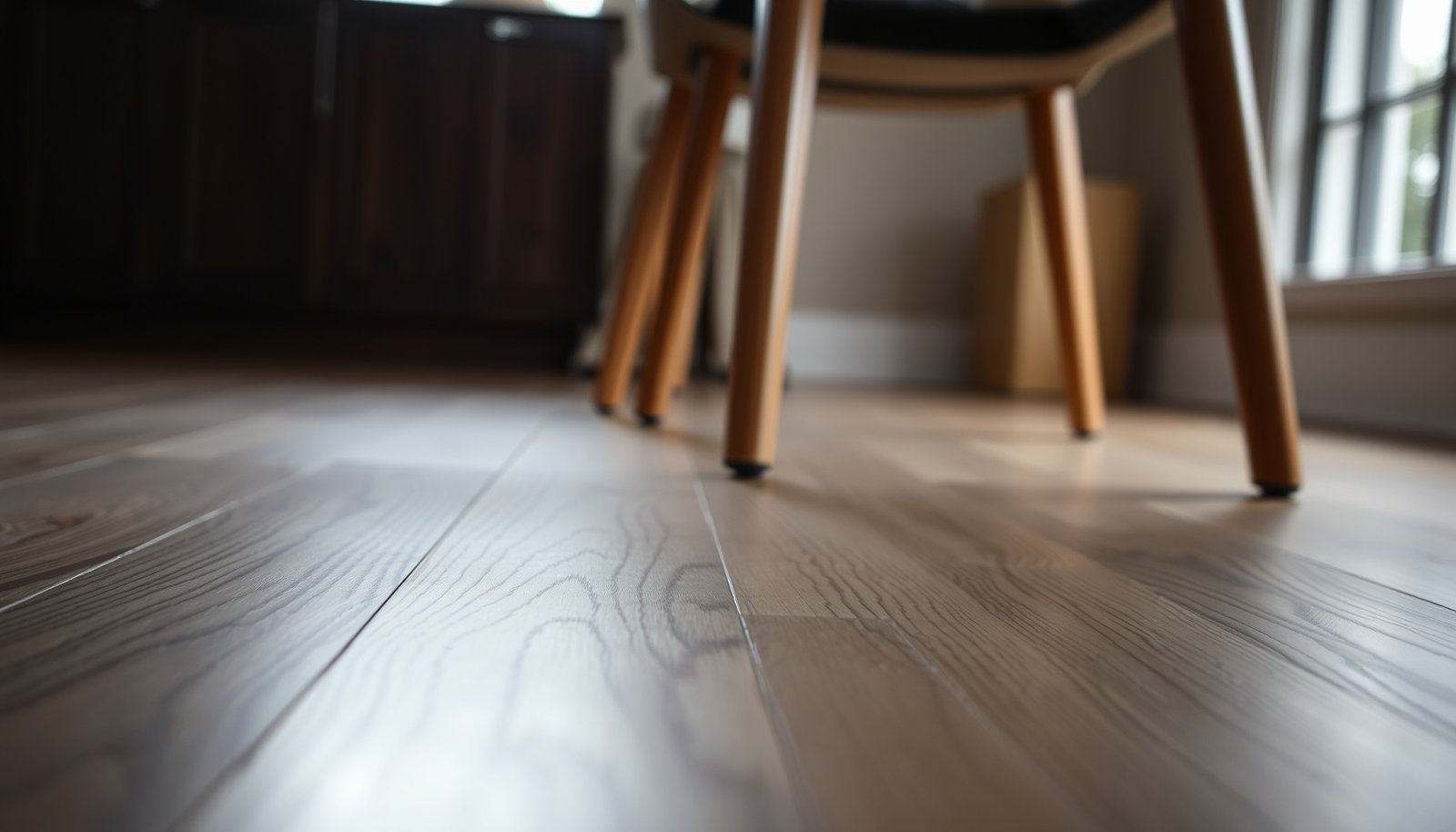
You reduce scratches fastest by changing the contact point between chair legs and laminate: pads and glides lower friction and spread load. Instead of relying on careful placement alone, protect the surface before the first drag happens.
Felt pads reduce direct point-contact by providing a compressible layer under chair legs, which helps limit frictional wear on hard floor finishes.
Furniture glides designed for hard floors are engineered to move with lower abrasion than rough or undersized caps that “bite” into laminate.
Felt pads: when they help and when they fail
Felt pads work—until they wear thin. Once the pad compresses or tears, the “effective” contact can shift from soft fabric to harder substrate, increasing scratch risk.
– Replace worn felt pads on chair legs promptly; once felt gets thin or tears, it can start rubbing instead of cushioning.
– If you have chairs that get moved daily (kids, office-adjacent dining, multi-use spaces), make pad replacement a routine—not an emergency.
What to check during pad replacement:
– Is the pad fully bonded to the leg (no lifting edges)?
– Are there any hard screws, metal caps, or rough edges showing beneath?
– Are the pads the right size for the chair leg diameter so contact isn’t concentrated on a tiny spot?
Glides for frequent sliding: a friction trade-off
If your chairs frequently slide across the floor—especially on days when guests arrive and people scoot in/out—consider glides that are designed for hard surfaces.
– For chairs that slide often, consider furniture glides designed for hard floors (look for “hard floor” compatibility).
– Don’t drag chairs across the same line—lift slightly when rearranging the dining setup.
Here’s a practical comparison you can use to choose what to install:
| Option | Best for | Pros | Cons |
|---|---|---|---|
| Felt pads | Normal chair movement, occasional rearranging | Low friction | Wear-out over time |
| Hard-floor glides | Frequent sliding, heavier chairs, rolling chair alternatives | More durable contact control | Can feel less stable if mismatched |
| Casters/rollers (only if necessary) | Mobility needs (special-use dining items) | Ease of movement | High risk if not hard-floor rated |
“Lift-not-drag” beats any pad
Even the best pad can’t fully eliminate damage if you habitually drag chairs in the same way over grit or along the same scratch path.
A simple habit helps:
– Lift slightly when rearranging the dining setup.
– Rotate chair positions seasonally so wear patterns don’t localize into a single line.
Set up chairs and table legs to prevent “micro-scratches”
You get cleaner laminate long-term by addressing rough edges and contact points that create repeated micro-scratches. These marks often come from chair-leg burrs, table-leg contact wear, or rug-edge snagging—not from furniture weight alone.
Even small burrs or sharp edges on metal chair legs can behave like a cutter under repeated movement, leaving visible marks on hard floor surfaces.
Rug boundaries can create repeated contact moments where chair feet catch and scrape at the edge, turning a “small problem” into daily abrasion.
Inspect before you protect
Before you add pads or glides, do a quick physical check of what’s already contacting the laminate.
– Inspect chair legs for burrs and rough edges (even small metal nicks can leave visible marks).
– If you see flaking paint, a bent leg tip, or a worn cap, fix the mechanical edge before you add the protective layer.
Protect table-leg contact points
Tables take more “contact events” than people assume—especially if the table is moved for cleaning, seasonal décor changes, or hosting.
– Keep table-leg contact points protected with durable floor protectors, especially if the table gets moved seasonally.
– If you move the table even a few times per year, plan protectors for that motion rather than relying on “careful carrying” alone.
Align rugs to reduce edge scraping
Rug edges are where micro-scratches accumulate because foot traffic and chair movement tend to concentrate around them.
– Arrange rug edges so chair feet don’t repeatedly catch and scrape at the boundary.
– If chairs sit near the rug edge, consider moving the rug slightly under the dining zone so chair feet have consistent contact.
Clean in a way that won’t grind scratches into the finish
You prevent new scratches by cleaning in a way that doesn’t redistribute grit across the laminate wear layer. A microfiber-first routine—plus laminate-approved cleaners—is typically safer than abrasive tools or “high-scrub” methods.
Microfiber cleaning is designed to capture and hold dirt rather than grind it across the surface, which aligns with scratch-prevention goals for laminate.
Many laminate manufacturers specify non-abrasive cloths and laminate-approved cleaners to avoid damaging the protective finish.
Use a two-step routine: remove grit, then clean
A common mistake is “spraying first, then scrubbing.” On laminate floors, grit + moisture can lead to residue that later requires more aggressive cleaning.
– Sweep/vacuum frequently, then spot-clean using a laminate-approved cleaner and a microfiber cloth.
– Avoid applying excessive liquid; damp cleaning is not the same as wet mopping unless your manufacturer explicitly allows it.
Avoid abrasive tools and risky products
If you’ve ever used steel wool, abrasive scrub pads, or eraser-style cleaners, you already know they can change the surface feel—even when they “remove” spots.
– Avoid steel wool, abrasive scrub pads, and “magic eraser”-type products unless your laminate manufacturer explicitly allows them.
– Wipe up spills fast—hydration alone won’t “scratch” like grit does, but residue and dried-on mess can make later cleaning more abrasive.
Build your cleaning habits around chair traffic
Dining rooms see concentrated movement. If you clean the center of the room but ignore the chair travel lanes, grit can remain and keep scratching.
Practical focus areas:
– Chair leg lanes (where chairs slide in/out)
– Edges of dining rugs
– Entry-to-dining paths
What can go wrong (common mistakes to avoid)
You’ll still see scratches if the real source of abrasion isn’t addressed—most problems come from mats that trap grit, pads that wear out, or cleaning tools that reintroduce abrasive particles. The fixes are straightforward, but the timing matters.
Scratch-prevention fails when abrasive grit is allowed to accumulate at entry paths or rug edges and then gets redistributed by chair movement.
Worn felt pads can reverse their benefit by allowing direct, harder contact that increases frictional damage.
– Using the wrong rug backing: some rubbery or rough backings can trap grit or create scuffing over time.
– Waiting too long to replace felt pads: thinning pads start acting like sandpaper.
– Over-cleaning with abrasive tools: even if you’re “being careful,” using the wrong pad/brush can create haze or fine scratches.
– Assuming all laminate is the same: care rules vary by brand and finish—always follow your manufacturer’s recommendations.
Edge cases to watch:
– Rolling chairs in the dining room: even “soft” wheels can be abrasive if not hard-floor rated.
– Heavy dining sets with metal legs: contact points concentrate force; verify protectors for each leg geometry.
– Multi-material rugs: some rug fibers shed and create micro-debris that becomes abrasive over time if not vacuumed.
Verdict / tip: the quickest path to fewer scratches
Start with felt pads/glides on chair legs and a rug/doormat strategy to stop grit from being dragged across the surface—those two changes prevent most dining-room scratching. If you have rolling chairs, heavy solid-wood legs, or frequent rearranging, prioritize glides and “lift-not-drag” habits even more. Skip the abrasive-cleaner experiments and double-check your floor brand’s care guide before using any treatment or cleaner.
If you’re prone to tracking sand/grit (near beaches, construction dust, or gravel drives), your best ROI is improving the entry path and scheduling quick, non-abrasive cleanups so grit never reaches the dining zone.
Quick scan checklist (save this):
| Area | Do this | Avoid this |
|---|---|---|
| Entry path | Mat + regular sweeping | Letting sand/grit accumulate |
| Chair legs | Felt pads/glides on every leg | Dragging chairs or using worn pads |
| Rugs/mats | Laminate-compatible, smooth backing | Rough/abrasive or grit-catching backing |
| Cleaning | Microfiber + manufacturer-approved cleaner | Abrasive pads/steel wool |
| Maintenance | Re-check pads when they wear | Forgetting damaged feet and burrs |
Sources
– USGS: definitions of sand and silt grain size ranges (for abrasion-relevant particle sizes; use the specific USGS page you reference internally for your final publication)
– EPA: PM10/PM2.5 definitions (for fine particle size context relevant to floor tracking)
– NIOSH/CDC guidance defining respirable dust size criteria (for additional abrasion-risk context)
Frequently Asked Questions
What are the best ways to prevent scratches on laminate floors in a dining room?
Start with protective floor mats at every entry point and place area rugs under chairs and high-traffic dining zones. Use felt or rubber pads on the bottom of chair legs and replace them when they wear down. For day-to-day cleaning, sweep or vacuum with a soft brush to remove grit that acts like sandpaper. Avoid dragging furniture and use lift-and-carry techniques when moving chairs or moving dining room items.
How do I protect laminate flooring from chair and dining table scratches?
Fit each chair leg with felt pads or furniture glides designed for laminate floors, and consider adding larger caster-style protectors for rolling chairs. If chairs are moved frequently, keep a rug or runner in the dining area to reduce direct contact with abrasive particles. When rearranging seating for guests, lift chairs rather than sliding them, especially across thresholds or seams where scratches can start. Regularly check pads and reapply or replace them to keep protection consistent.
Why do laminate floors get scratched even with regular cleaning, and how can I prevent it?
Many laminate scratches come from abrasive grit like dust, food crumbs, and sand tracked in from shoes, not from the cleaning itself. Implement a “no shoe” or shoes-off routine, use a mat at the door, and keep floor protection in the dining room where particles build up. Sweep daily or a few times per week, and use a vacuum without beater bars to prevent micro-scratches. Taking these steps reduces the friction that damages the protective wear layer on laminate flooring.
Which floor cleaners and maintenance products help avoid scratching on laminate floors?
Use laminate-safe cleaners that don’t leave abrasive residues, and avoid harsh scouring pads that can scratch the surface. Microfiber mops and soft cloths are best for cleaning laminate floors because they lift dirt without grinding it in. If you need to remove sticky spills from dining activities, use a damp microfiber cloth and a laminate-approved cleaner rather than scraping with metal tools. Keep cleaning tools clean and free from sand or debris to prevent “hidden grit” from scratching.
What’s the best strategy for preventing scratches from pet claws and heavy dining furniture on laminate floors?
Trim pet nails regularly and consider using claw caps to reduce sharp points that can scratch laminate flooring. For heavy dining furniture like sideboards or buffets, use furniture pads underneath to distribute weight and prevent grit from being pressed into the wear layer. Place rugs or protective mats in areas where pets walk near the dining table and where furniture is most often moved. If a scratch does happen, treat it promptly with a laminate floor repair kit to minimize further wear.
📅 Last Updated: October 20, 2026 | Topic: How to prevent scratches on laminate floors in a dining room? | Content verified for accuracy and freshness.
References
- Laminate flooring
- https://www.armstrongflooring.com/residential/en-us/support/care-and-cleaning/laminate.html
- MohawkFlooring
- Home – Tarkett Commercial
- https://scholar.google.com/scholar?q=preventing+scratches+on+laminate+flooring Google Scholar
- https://scholar.google.com/scholar?q=laminate+flooring+care+and+maintenance+scratch+resistance Google Scholar
- https://scholar.google.com/scholar?q=chair+glides+felt+pads+floor+scratch+prevention Google Scholar