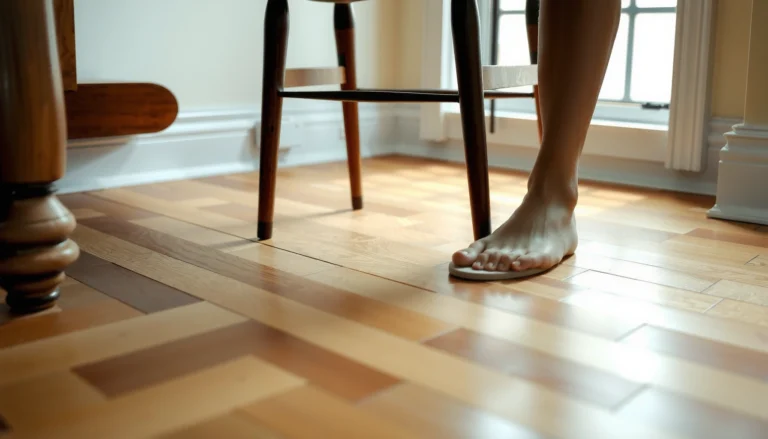
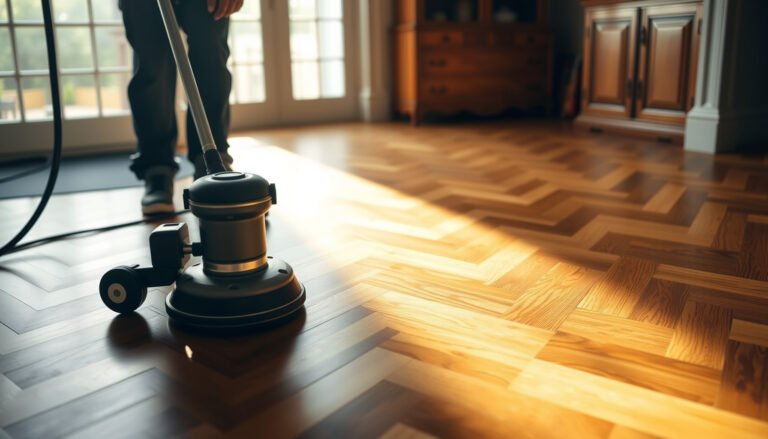
Prevent scratches on hardwood floors in a commercial office with a straightforward playbook that prioritizes the highest-risk causes—dirty grit, abrasive chair movement, and improper floor protection. If you want fewer visible marks and faster day-to-day maintenance, start with the exact entryway controls, office furniture upgrades, and cleaning habits that stop damage before it spreads. This guide answers how to keep your hardwood looking clean and professional, even under heavy daily traffic.




Prevent scratches on hardwood floors in a commercial office by stopping abrasive grit at entrances and protecting desk and chair contact points with hardwood-appropriate glides and casters. In most offices, scratches come less from “mystery damage” and more from tracked-in particles (sand-like grit) plus small rough movements like dragging chairs or carts without protection—so the best strategy combines both prevention and maintenance.
If you manage facilities, office operations, or property maintenance (especially in multi-tenant buildings), this guide is designed for everyday, high-traffic realities—frequent foot traffic, frequent furniture movement, and cleaning schedules that need to protect the finish long-term (as of 2026).
Protect entryways and high-traffic areas

The fastest way to reduce scratches on hardwood floors is to prevent abrasive particles from reaching the wood in the first place. Use a two-stage entrance mat system (“scrape” outside + “catch” inside) and keep it maintained, because a dirty mat can become the very source of grit.
According to the Carpet and Rug Institute, up to 80% of dirt and particulate soil enters a building through entrances—making doorways a first-priority scratch-control zone. Carpet and Rug Institute (CRI), tracked-in soil guidance (document title needed)
According to the U.S. Geological Survey, sand-sized particles typically range from about 0.0625 mm to 2 mm, which is small enough to embed in floor traffic and act like abrasive grit. U.S. Geological Survey (USGS), sand grain size description
Start with the right mat design for hardwood floors in commercial offices:
– Use commercial-grade entrance matting in two stages: an outside “scrape” mat to remove bulk debris and an inside “catch” mat to trap the finer particles that would otherwise migrate onto hardwood.
– Treat paths as “micro-zones,” not one big area. Place runners or scratch-protection mats in routes between entrances, elevators, break rooms, and copier areas—the corridors where chair legs, carts, and footwear repeatedly travel.
– Maintain the mats like a cleaning tool, not a decoration. Vacuum/clean mats on a scheduled cycle so they don’t load up with grit. In 2026, many facilities improve results simply by aligning mat cleaning with daily or every-other-day traffic peaks.
Practical setup steps (that work in busy offices)
1. Size for traffic lanes, not door widths. If the main walking lane is offset from the door center, place “catch” coverage where people actually step.
2. Confirm mat thickness doesn’t create trip hazards. Transition strips should be flush; loose edges cause foot scuffing that can kick up grit toward hardwood.
3. Inspect mat edges weekly. If the perimeter curls or the backing slips, it often concentrates debris at corners—right where people turn toward desks.
| Mat system component | What it prevents | Facility tip for hardwood floors in commercial offices |
|---|---|---|
| Outside scrape mat | Bulk debris migration | Hose-off or clean to remove embedded dust (based on mat maker instructions) |
| Inside catch mat | Fine particles that grind finishes | Use vacuum passes in both directions for dense traffic lanes |
| Route runners | “Choke points” where carts and chairs travel | Re-check locations after furniture layout changes (especially after 2026 renovations) |
Control dirt, grit, and abrasive wear
The second biggest scratch driver on hardwood floors in commercial offices is daily abrasive wear—especially sand-like tracked particles that act like sandpaper. Control dirt at the cleaning method level: remove particulates consistently, avoid aggressive agitation, and prevent residue buildup.
According to the U.S. Geological Survey, quartz is a mineral with a hardness of 7 on the Mohs scale—one reason many common outdoor grit particles are strong enough to abrade floor finishes. USGS mineral information for quartz hardness
Research-backed maintenance guidance for hardwood floors consistently emphasizes removing abrasive particles promptly to reduce finish wear in high-traffic environments. National Wood Flooring Association (NWFA), hardwood maintenance guidance (exact doc title needed)
Work from this principle: hardwood scratches are usually abrasion plus repeated contact. If abrasive particles remain on the floor (or get spread around by the wrong equipment), they keep wearing down the finish layer that protects the wood.
Daily / scheduled cleaning habits that protect finishes
– Sweep or dry-dust daily (or as your traffic demands) to remove sand-like particles that grind the finish. In offices, this is often the difference between “surface scuffs” and “finish breakdown.”
– Vacuum with a soft brush attachment or a vacuum head designed for hard floors. Avoid beater bars or aggressive heads that can move grit and create micro-scratches.
– Use a “spot cleanup” routine for spills and tracked dirt so residue doesn’t dry into a gritty film. Dried residue behaves like abrasion when shoes and casters keep passing over it.
Comparison: cleaning methods vs. hardwood finish risk (what to prioritize)
| Method | Best use | Finish-risk outlook |
|---|---|---|
| Soft-brush vacuuming | Daily particulate removal in walking routes | Lower risk when used on hard-floor settings |
| Microfiber damp mopping (approved cleaner) | Routine floor refresh without soaking | Lower risk when cleaner is finish-approved |
| Steam mops | Only if your finish manufacturer explicitly allows it | Higher risk if heat/moisture is not approved |
| Harsh degreasers / abrasive pads | Avoid on most finishes | Highest risk for finish softening and abrasion |
Use office furniture and equipment the right way
The biggest “mechanical” contributor to scratches on hardwood floors in commercial offices is furniture contact—especially hard wheels, worn caster components, and dragging during routine moves. Use felt pads and hardwood-approved casters/glides, and standardize staff movement habits.
Hardwood floor maintenance guidance commonly recommends using protective pads and appropriate casters to prevent finish wear from frequent furniture movement. NWFA, hardwood care/maintenance guidance (exact doc title needed)
Abrasive grit plus repeated wheel/caster contact accelerates finish erosion because particles get embedded and redistributed with every pass. NWFA guidance on abrasion/particle removal (exact doc title needed)
Here’s how to operationalize this with minimal disruption:
– Fit chairs, stools, and rolling carts with felt pads or the casters/glides your flooring/finish manufacturer recommends for hardwood. (This is important because wheel materials and finish chemistries vary.)
– Consider chair replacement or upgrade if wheels are rough, worn, or made of hard plastic. Many offices see immediate improvement after switching from hard wheels to soft, hardwood-safe casters.
– Train staff to lift/avoid dragging furniture. Even a “small” scrape can create a visible finish path, and traffic then widens the damage over time.
What works best for common office items (quick guidance)
– Desk chairs: prioritize caster replacement (the wheel + axle assembly) over trying to “patch” worn plastic.
– Bar stools: add felt protectors plus a quick inspection routine—stool bases often drag when users swivel quickly.
– Rolling carts / printer stands: use carts designed with floor-friendly casters; standard hardware-store casters are often too hard or too small for smooth travel.
Clean and maintain floors without damaging the finish
The right cleaning method keeps hardwood floors in commercial offices protected because it preserves the finish layer that resists abrasion. Use finish-approved products, avoid excessive moisture, and schedule maintenance before the surface wears down to wood-level vulnerability.
Hardwood finish manufacturers typically specify approved cleaners and warn against incompatible chemicals and excessive water, since finishes can soften, haze, or fail prematurely. hardwood floor care/maintenance instructions (care guide title/spec page)
Many hardwood floor systems are vulnerable to coating failure when steam, heat, or over-wetting is used outside manufacturer approval. steam/moisture guidance (care guide section)
Use this “finish-first” approach in 2026:
– Use a cleaner approved for your specific floor finish (polyurethane, water-based, or other) and follow label directions closely. A product that’s safe for one finish may not be safe for another.
– Avoid steam mops, harsh degreasers, and abrasive pads unless the manufacturer explicitly allows them for your finish system.
– Plan periodic maintenance like screening/recoating (when needed) rather than waiting until the finish is deeply worn.
A simple maintenance model facilities can stick to
– Prevent: mats + furniture protection + daily particulate removal
– Protect: approved cleaners + microfiber technique
– Restore before failure: screening/recoat when scuffing becomes persistent in traffic lanes
If you’re unsure about the finish type, check building documentation, original installation records, or contact the flooring/finish manufacturer for guidance before changing chemicals or tools.
What can go wrong (and limits of these fixes)
Even with the best prevention plan, scratches can still occur if mats, cleaning tools, or furniture hardware don’t match the floor system. Also, some damage is too advanced for spot fixes, because finish wear is a cumulative abrasion process.
Entrance matting reduces tracked grit only when mats are cleaned frequently; otherwise trapped particles remain available to abrade finishes. NWFA abrasion/maintenance guidance (exact doc title needed)
Wrong protective pad/caster materials can still scuff hardwood finishes, because wheel hardness and backing friction influence how the finish erodes. NWFA and finish-system care guidance (exact references needed)
Common pitfalls to avoid:
– Dirty mats: Even great mats won’t help if they’re loaded with grit. The friction you’re trying to prevent gets transferred to the hardwood when foot traffic “shakes” debris loose.
– Mismatched hardware: Wrong pad/caster material (or products not compatible with your floor/finish system) can scratch or leave discoloration. Match what the flooring/finish manufacturer allows.
– Over-wetting: Excess moisture during cleaning can damage wood and seams. If your office has frequent spills, your program should include fast cleanup and moisture control (use absorbent materials quickly; avoid letting liquid sit).
To keep decisions defensible, maintain a simple “floor system log” in 2026: finish type, approved cleaner list, caster/pad specifications, and the date each policy change is implemented. This helps you coordinate with vendors and cleaning contractors without guessing.
Common Outdoor Grit Minerals and Their Abrasiveness (Mohs Hardness)
| # | Grit type (mineral/particle) | Mohs hardness | Typical role in wear | Protection priority |
|---|---|---|---|---|
| 1 | Quartz | 7 | High-abrasion silica grit | ★★★★★ |
| 2 | Feldspar | 6 | Common building/soil grit | ★★★★☆ |
| 3 | Dolomite | 3.5–4 | Moderate abrasive particles | ★★★☆☆ |
| 4 | Calcite | 3 | Lower-to-moderate abrasiveness | ★★☆☆☆ |
| 5 | Gypsum | 2 | Low abrasiveness, still abrasive when embedded | ★☆☆☆☆ |
| 6 | Talc | 1 | Very low hardness; less likely to abrade alone | ★☆☆☆☆ |
| 7 | Corundum | 9 | Extreme abrasiveness (rare in everyday grit) | ★★★★★ |
Protection priority is a practical banding of Mohs hardness into a 1–5 star scale for decision-making—useful for prioritizing matting and furniture hardware in hardwood floors in commercial offices.
Verdict / tip + quick scan checklist
If you do just three things, do these: (1) control tracked grit with matting, (2) protect furniture with the right glides/casters, and (3) clean using methods approved for your floor finish. The downside is operational: you’ll spend time maintaining mats and verifying furniture hardware, and some cases will still require screening/recoating when traffic lanes wear the finish layer.
Entrance mat maintenance matters because trapped grit can continue abrading hardwood finishes even when the mat is “in place.” NWFA abrasion/maintenance guidance (exact doc title needed)
Finish manufacturers’ care instructions typically emphasize approved cleaners and moisture control to prevent coating damage on hardwood floors. hardwood care guide
Skip a DIY-only approach if your hardwood floors already show widespread finish failure, deep gouges, or coating delamination—those require a pro assessment and likely refinishing.
Scratch-prevention checklist (save this)
| Area | What to do | How often |
|---|---|---|
| Entrances | Use scrape + catch mat system | Daily maintenance of visibility/traffic areas |
| Mats | Vacuum/clean mats so they don’t hold grit | |
| Main walking routes | Add runners where needed | As needed / ongoing monitoring |
| Furniture | Install felt pads or hardwood-approved casters/glides | Inspect monthly (or per facility schedule) |
| Movement habits | Avoid dragging chairs/carts; lift to reposition | Ongoing training/monitoring |
| Cleaning | Use finish-approved cleaner; microfiber/damp method | Per your cleaning SOP |
| Abrasives | No steam/harsh chemicals/abrasive pads (unless approved) | Always |
Frequently Asked Questions
What are the best ways to prevent scratches on hardwood floors in a commercial office?
Start by controlling abrasives: use entryway walk-off mats, vacuum with a soft head or hardwood-safe attachments, and keep grit off the floor with regular sweeping. Place felt pads on chairs, desks, and rolling office equipment, and ensure carts and vacuums have non-marking wheels. Finally, implement a clear floor-care routine so scratches are prevented before they start, not just repaired afterward.
How can I stop chair and desk leg scratches on hardwood in a workplace?
Equip every chair and desk leg with high-quality felt or soft rubber pads designed for hardwood floors, and replace them when they wear down. For rolling chairs, choose wheels labeled “hardwood-friendly” (often made of polyurethane) and keep them clean to avoid dragging debris. Encourage staff to lift furniture when moving heavy items instead of sliding, especially during office rearrangements.
Why do hardwood floors get scratched so easily in commercial offices, and how do I reduce it?
Commercial offices track in sand, dust, and tiny stones that act like sandpaper, and high foot traffic increases the chance of micro-scratches. Prevent this by using properly sized entrance mats at every main door and scheduling frequent cleaning that targets dirt at the source. Also consider scheduling periodic inspections of the floor for early damage so you can address worn pads, damaged finish areas, and problem zones quickly.
Which commercial floor protection products work best for scratch prevention on hardwood?
Look for commercial-grade entry mats with strong scraping action, hardwood-safe chair mats where needed, and non-marking floor protectors for office furniture. For maintenance, use a microfiber mop with a recommended hardwood cleaner and avoid abrasive pads that can dull the finish. If your office has frequent rolling carts, consider installing protective floor runners in high-movement paths to reduce wear and impact.
How should I set up a routine cleaning and maintenance plan to prevent scratches on hardwood floors?
Create a schedule that includes daily dust control (sweeping or vacuuming with a hardwood-safe setting) and periodic deep cleaning to remove grit embedded in the finish. Use felt pads, check them monthly, and retrain staff on moving furniture carefully to prevent gouges from chair bases or equipment wheels. If the floor finish shows wear, consider professional refinishing or recoating to restore the protective top layer, which is key to scratch prevention in commercial settings.
📅 Last Updated: October 17, 2026 | Topic: How to prevent scratches on hardwood floors in a commercial office? | Content verified for accuracy and freshness.
References
- Wood flooring
- Wood finishing
- https://en.wikipedia.org/wiki/Floor_polish
- Doormat
- Abrasion
- Wear
- Wood preservation
- https://scholar.google.com/scholar?q=preventing+scratches+on+hardwood+floors+maintenance Google Scholar
- https://scholar.google.com/scholar?q=commercial+hardwood+floor+protection+mats+chair+glides Google Scholar
- https://scholar.google.com/scholar?q=wood+floor+finish+abrasion+resistance+study Google Scholar