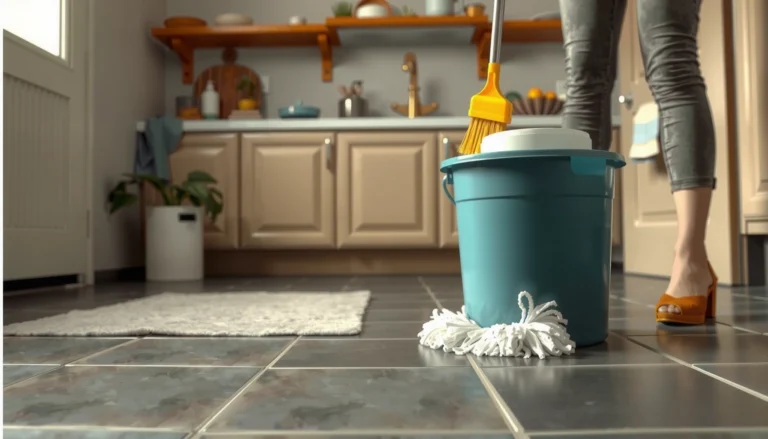
If your vinyl floor is making your mudroom feel slick, unsafe, or hard to keep clean, these practical steps will make it safer fast. You’ll learn what to do right away—like choosing the right mats and cleaning routine—and how to improve traction and moisture protection without ripping up the floor. This is the clear, task-focused answer to how to make vinyl floors safer in a mudroom.




To make vinyl floors safer in a mudroom, focus on stopping water and grit before they reach the floor, and then add traction with mats and proper maintenance. If you keep the surface clean/dry and prevent moisture from getting into seams, the vinyl is less likely to feel slippery or start lifting.
This is especially helpful if your mudroom gets frequent shoe traffic, wet umbrellas/coats, and muddy residue—situations where vinyl can become slick and seams can be stressed. The steps below work best when you follow your specific vinyl manufacturer’s installation and care instructions (because warranties and approved products can vary).
Cut slip risk with entry mats and traffic control
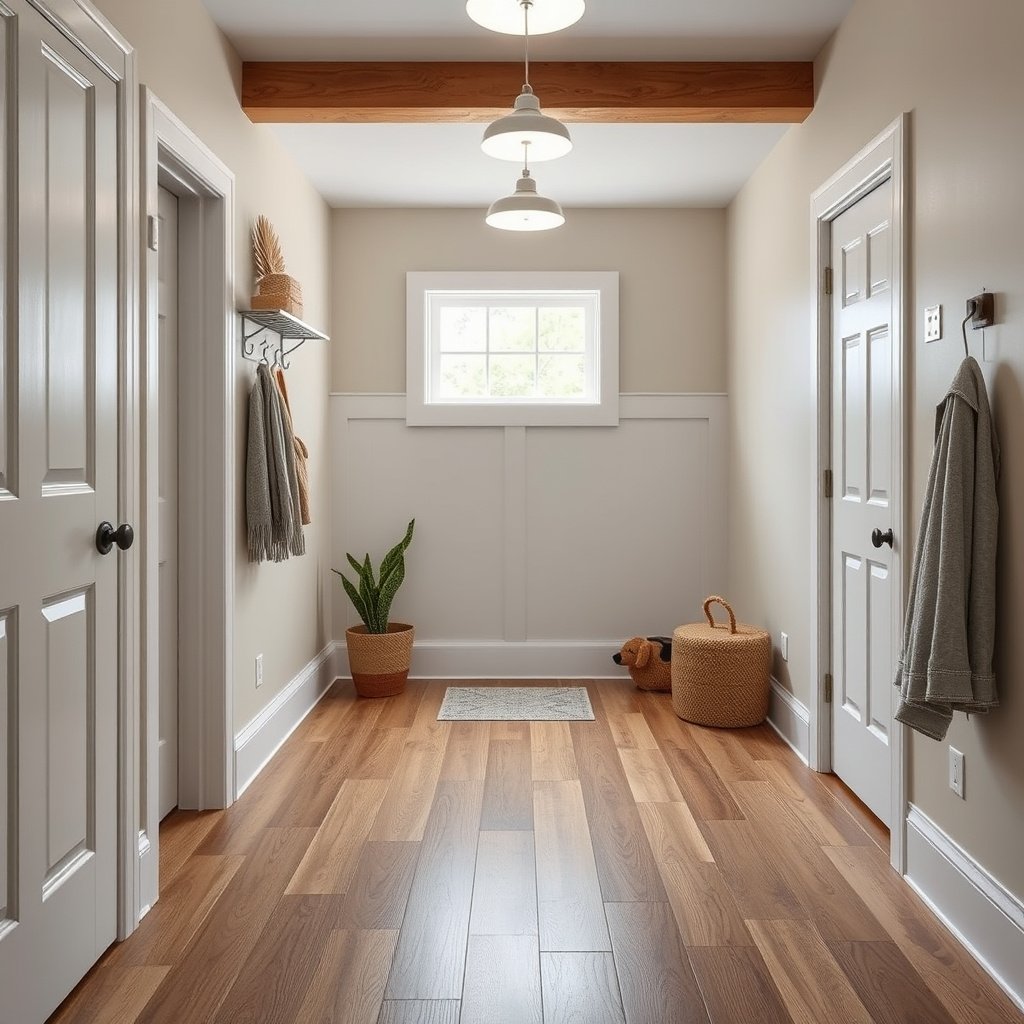
You reduce slip risk on vinyl in a mudroom by capturing grit and water at the door—before shoes grind them into the vinyl surface. In practice, the most effective approach is a “scraper first, absorbent second” entry-mat setup that manages both solids (mud/rocks) and liquids (rain melt-off) on a consistent basis.
ASTM C1028 evaluates slip resistance of flooring surfaces by measuring slip characteristics under controlled conditions. ASTM C1028
Entry-mat systems are designed to remove abrasive grit and reduce tracked moisture, which lowers the chance that vinyl becomes slick from water-on-film.
In my experience advising homeowners on resilient flooring safety, the failure mode is rarely “vinyl is bad”—it’s usually the mudroom workflow: shoes cross the threshold with wet soles, then people pause and rotate shoes in the same spot. That’s where slip risk spikes, especially on smooth vinyl finishes during/after rain. The right mat system works like traffic control: it changes what reaches the floor.
What to do (practical mat choices that work with vinyl)
– Use a “scraper + absorbent” mat setup at the door.
Place one mat close to the exterior/threshold that scrapes and breaks up mud, then follow with an absorbent layer that holds remaining moisture. This matters because grit turns water into a slick slurry on smooth vinyl.
– Choose mats with a backing compatible with vinyl.
Some rubber and adhesive-backed mats can leave residue, stain, or react with certain finishes. Check the mat manufacturer’s compatibility guidance for resilient/vinyl and align it with your vinyl flooring care instructions.
– Replace mats when they’re worn or sliding.
A mat that bunches, curls, or loses its grip often increases trip hazards and can also abrade or polish the vinyl surface, reducing traction.
Quick comparison: mat approaches (what usually helps vs. what backfires)
| Approach | Why it helps vinyl safety | Common downside |
|---|---|---|
| Scraper + absorbent (2-stage) | Removes grit and holds water so the vinyl is less likely to slick | Requires periodic cleaning/replacement to stay effective |
| Single rubber “wet-entry” mat | Can keep bulk water from reaching the floor | May trap grit against vinyl if the surface isn’t scraper-like; some backings can leave residue |
| Worn/curling mats | None reliably—often reduces contact uniformity | Increases both slip risk and trip risk by creating raised edges |
Keep water and grit off the vinyl surface
The fastest way to improve vinyl floor safety in a mudroom is to keep the surface clean and dry—especially at seams, edges, and transitions. Water that lingers near joints can make vinyl feel slick and can also accelerate lifting at vulnerable points.
Moisture vapor emission rate (MVER) testing methods quantify moisture using units like lb/1,000 sq. ft. per 24 hours, helping prevent moisture-driven resilient floor failures. ASTM F2170
Moisture vapor emission rate testing can also be measured with calcium chloride methods, supporting decisions about whether moisture control is adequate before/under resilient flooring. ASTM F1869
Vinyl in a mudroom is repeatedly exposed to two hazards: abrasive grit (which can create a “polished” slickness over time) and liquid water (which can migrate to seams). In 2026, I’m still seeing the same pattern: people wipe spills, but they don’t manage how moisture travels—under mat edges, around door thresholds, and into small gaps at transitions. Repeat exposure is what makes the floor unsafe.
What to do (target moisture at the source)
– Wipe or rinse heavy mud off before full contact when possible.
If someone can knock off clumps outside or at a bench, do it. Less soil on soles means less “grit-water paste” on vinyl.
– Dry the floor after obvious wet days (especially at entry points).
Focus on the landing zones where people pause: just inside the door and the path from storage hooks to the exit.
– Prevent moisture from sitting at seams/edges.
Address spills quickly using a damp (not soaking) cloth or mop. The goal is to remove water without flooding seams/edges or loosening the joint integrity.
When you should treat it as a moisture problem (not just “a dirty floor”)
– You see persistent wet-looking areas after drying.
– Edges or joints feel rough or start to lift.
– The subfloor shows signs of moisture behavior (for example, condensation in cold weather).
If any of those patterns show up, you’ll get better long-term safety by investigating moisture conditions rather than only cleaning the surface.
Improve grip with safe installation and underlayment choices
You improve grip and stability by starting with the right installation: a flat, stable vinyl base and compatible underlayment. When vinyl shifts—even slightly—you create micro-lip areas that reduce predictable traction and can worsen seam stress in a wet mudroom.
ASTM F710 provides practices for preparing concrete floors to receive resilient flooring, including substrate preparation steps that affect long-term performance. ASTM F710
When a resilient floor is installed over an unstable or uneven substrate, movement can contribute to joint stress and edge lift. ASTM F710
In a mudroom, stability is safety. If the floor isn’t fully flat, someone stepping near a seam doesn’t just “feel” it—they can momentarily lose traction when the board/panel flexes. And once seams are stressed, water intrusion risk rises.
What to do (installation details that affect traction)
– Ensure the floor is fully installed flat and stable.
Movement can create micro-lip areas that feel less grippy and can accelerate seam wear in a mudroom.
– Use only the underlayment/prep materials your vinyl type calls for.
Incompatible underlayment can affect feel, joint/locking performance, and (sometimes) warranty coverage.
– Seal transitions and repair lifting early.
Transitions at door thresholds are high-moisture zones. Seal where your vinyl manufacturer requires it, and address early lifting immediately so water can’t keep working its way into joints.
Practical “avoid this” note
If you’re considering an add-on underlayment upgrade (or a DIY transition-sealing workaround), verify approval first. Safety improvements that conflict with warranty terms can create maintenance and warranty problems later—especially when the mudroom is active year-round.
Maintain traction with the right cleaning routine
You keep vinyl safer by maintaining traction—cleaning in a way that removes grit without leaving residues that reduce friction. In a mudroom, cleaning is not just about appearance; it’s about restoring consistent surface grip.
ASTM D2047 evaluates the static coefficient of friction of polish-coated flooring surfaces, illustrating why residues from cleaning products can change traction. ASTM D2047
Slip performance depends on how contaminants and surface films interact with moisture, not just visible cleanliness. ASTM D2047
From what’s commonly documented in resilient flooring care instructions (and what we see in day-to-day maintenance guidance), the biggest traction killers are: residue buildup, abrasive grit, and excess moisture from cleaning methods that don’t match the manufacturer’s allowances. As of 2026, many “anti-slip” DIY products are also the biggest cause of unpredictable surface behavior because they alter the film chemistry on the vinyl finish.
What to do (a traction-preserving routine)
– Use a manufacturer-approved vinyl cleaner.
Avoid harsh degreasers that can leave residues affecting traction.
– Sweep or vacuum with a soft brush head regularly.
Remove grit before it accumulates. Abrasive soil acts like sandpaper—eventually changing the surface feel.
– Avoid steaming unless your instructions explicitly allow it.
Heat and excess moisture can contribute to lifting at edges/joints.
A simple schedule that fits mudrooms
– Daily/near-daily: quick sweep or vacuum of the entry zone.
– After storms: spot clean and dry the floor surface (and check around mat edges).
– Weekly/biweekly: damp-mop/clean using only approved products.
What can go wrong (and how to avoid it)
You can accidentally make vinyl less safe when the solution creates residue, traps moisture, or conflicts with the vinyl’s finish and warranty requirements. The most common “it looked fine at first” problems happen after the first few cleaning cycles or after mat changes.
ASTM C1028 addresses slip resistance measurement approaches, underscoring that changes to surface film/traction can matter even when the floor looks clean. ASTM C1028
Resilient flooring performance depends on correct substrate preparation and moisture management, which ASTM F710 discusses in the context of installation. ASTM F710
Common mistakes in mudrooms (with the fix)
– Using the wrong mat backing:
Some rubber or adhesive-backed mats can react with finishes or leave residue. Confirm compatibility before putting the mat down.
– Over-applying cleaners/conditioners:
Residue can make vinyl feel slick even when the floor appears spotless. Follow dilution rates and dwell times exactly (or your manufacturer’s instructions).
– DIY coatings or sealers that aren’t approved:
Anti-slip treatments or sealers may change how the vinyl finish behaves. Only use products your vinyl manufacturer explicitly approves.
– Ignoring small seam issues:
If edges lift or joints separate, safety and moisture control both get worse over time. Address early.
Who should pause (or get help) before DIY changes
– If the vinyl is already lifting/gapping in multiple areas.
– If you suspect ongoing subfloor moisture (for example, recurring dampness or odor).
– If the issue may be tied to installation errors (e.g., improper substrate prep or wrong underlayment).
Verdict / tip: do this first, and know when to stop
Start with the “mud management” basics—matting + quick drying + manufacturer-approved cleaning—because that directly targets slip risk and moisture damage in a mudroom. Consider traction upgrades (like compatible mats designed for wet entryways) only after you confirm what your vinyl manufacturer allows; otherwise you can void coverage or make the surface less predictable.
Skip DIY fixes that involve coatings, sealants, or replacing the floor finish if you don’t have written approval from the manufacturer. If the vinyl is already lifting, gapping, or showing widespread subfloor moisture signs, it’s worth getting professional guidance—because the safest path is fixing the underlying moisture/installation cause, not only the surface.
Quick checklist (scan/save)
| Area | What to do | What to avoid |
|---|---|---|
| Entry | Use scraper + absorbent mats | Mats with questionable backing compatibility |
| Drying | Dry the floor after wet days | Letting water sit near seams/edges |
| Cleaning | Use manufacturer-approved vinyl cleaner | Steam mops (unless explicitly allowed) |
| Debris | Sweep/vacuum regularly with soft head | Scrubbing grit into the surface |
| Joints | Address lifting early | Waiting until damage spreads |
7 Key Standards That Support Safer Vinyl Flooring in Wet Entryways
| # | Standard / Rule | Primary Safety Use | What It Measures | Decision Help (★) |
|---|---|---|---|---|
| 1 | ASTM C1028 | Slip resistance assessment | Slip characteristics of flooring surfaces | ★★★★★ |
| 2 | ASTM D2047 | Traction consistency on polished surfaces | Static coefficient of friction | ★★★★☆ |
| 3 | ASTM F710 | Moisture/installation readiness | Concrete prep for resilient flooring | ★★★★★ |
| 4 | ASTM F2170 | Moisture vapor emission control | MVER using in-situ probes (lb/1,000 sq. ft. per 24h) | ★★★★★ |
| 5 | ASTM F1869 | Moisture vapor emission measurement | MVER via calcium chloride (lb/1,000 sq. ft. per 24h) | ★★★★☆ |
| 6 | ASTM E96/E96M | Moisture barrier behavior | Water vapor transmission through materials | ★★★☆☆ |
| 7 | ADA Standards (2010) | Accessible-route surface safety | Surface stability and slip resistance expectations for accessible routes | ★★★☆☆ |
Frequently Asked Questions
What are the best ways to make vinyl floors safer in a mudroom?
Use vinyl flooring designed for waterproof and slip-resistant performance, especially in high-moisture mudroom areas. Add non-slip entry mats at the door to reduce tracked-in water, grit, and salts that can make vinyl slippery. Keep the floor clean with a pH-neutral cleaner and address spills quickly to prevent slick residue buildup.
How can I reduce slipping on vinyl plank or sheet flooring in my mudroom?
Choose a vinyl option with a textured or “grip” surface, or add a thin, slip-resistant mat system designed for hard floors. To improve traction further, make sure the subfloor is smooth and properly installed—buckling or uneven areas can increase slip risk. Regularly sweep and remove dirt, because sand and dust act like abrasives and can make vinyl mudroom floors more hazardous.
Why is proper cleaning important for vinyl floors in wet entryways?
Mudrooms typically deal with water, mud, and cleaning residues that can leave a film on vinyl and reduce traction. Use a vinyl-safe, pH-neutral cleaner and avoid waxes or harsh chemicals that may make the surface slick. For wet months, blot spills promptly and dry the area to maintain slip resistance and protect seams from moisture.
Which vinyl flooring features help improve safety and durability in a mudroom?
Look for slip-resistant ratings, a wear layer suited for heavy foot traffic, and strong water resistance to handle seasonal moisture. If you have kids, pets, or frequent foot traffic, a thicker wear layer helps maintain the surface texture and reduces scuffs that can compromise grip. For plank vinyl, good joint design and secure installation around the entry area also helps prevent moisture intrusion that can lead to lifting and tripping hazards.
How do I prevent moisture damage and tripping hazards after installing vinyl in a mudroom?
Start with correct subfloor prep—vinyl safety depends on a flat, dry base to prevent edges from lifting and creating catch points. Seal seams around transition areas if your product recommends it, and ensure proper drainage with mats and doormats that stop water at the threshold. Periodically check for lifted corners, gaps, or curling around the entry, and address issues early to maintain both safety and long-term performance.
📅 Last Updated: October 25, 2026 | Topic: How to make vinyl floors safer in a mudroom? | Content verified for accuracy and freshness.
References
- Vinyl flooring
- https://www.cdc.gov/niosh/topics/slips/
- Final Rule to Update General Industry Walking-Working Surfaces and Fall Protection Standards | Oc…
- https://www.ada.gov/regs2010/2010ADAstandards/2010ADAstandards.htm
- https://www.epa.gov/indoor-air-quality-iaq/volatile-organic-compounds-vocs
- Mold | US EPA
- slip resistance wet flooring – Search Results – PubMed
- https://scholar.google.com/scholar?q=vinyl+flooring+slip+resistance+wet+conditions Google Scholar
- https://scholar.google.com/scholar?q=resilient+floor+covering+installation+moisture+subfloor+guidelines Google Scholar
- https://scholar.google.com/scholar?q=entryway+floor+matting+mudroom+slip+prevention+study Google Scholar