
To make slip-resistant industrial floors that actually perform, follow practical, proven floor-hardening and surface-treatment steps that improve grip without slowing equipment or trapping debris. You’ll get a clear checklist for choosing the right anti-slip surface finish, applying the treatment correctly, and meeting slip-resistance targets under your traffic and cleaning conditions. If you install it wrong—wrong coating, wrong profile, or wrong maintenance—you’ll still have a hazard, so this guide focuses on the fixes that hold up in real workplaces.



Slip-resistant industrial floors come down to choosing the right surface texture and the right coating/system for your chemicals, foot traffic, and wet/oily conditions. Start with a site check (what’s causing the slip—water, oils, dust, or wear), then select a surface treatment that provides consistent traction and is compatible with your cleaning methods.
If you manage a warehouse, food plant, garage, or light industrial space and you’re seeing near-misses, worn coatings, or slick areas around drains and traffic lanes, this guide walks through the main approaches—grit additives, epoxy/urethane systems, grooving, and concrete prep—plus where each option can fail.
Assess slip risk by surface conditions
You get the right slip-resistant floor by treating the cause of slipperiness, not just the symptom. The most reliable projects start with a short diagnostic: identify whether the floor is slick because it’s wet, contaminated (oil/grease), dusty, or already losing its intended texture.
“Slips and falls are heavily influenced by surface condition—water, grease, dust, and wear patterns often determine whether a floor will be safe in practice.”
“A slip-resistant design works best when traction, drainage, and chemical resistance are chosen together rather than independently.”
The key idea is simple: traction isn’t only about “roughness.” It’s about how the floor behaves under real loads—rolling carts, forklift traffic, footwear patterns, and the cleaning agents your team uses. In 2025, we still see the same failure chain: an otherwise “rated” system goes slick because the environment (oils, detergents, wastewater, sanding slurry, or standing water) wasn’t addressed in the original design.
To assess correctly, focus on five buckets:
Identify the slip drivers
– Water/ice: wet sweeping lanes, condensation, meltwater at doors, hose-down overspray.
– Oil/grease: engine zones, food processing fats, hydraulic drips, compressor mist.
– Detergent residue: when alkaline or surfactant cleaners leave films that change surface friction.
– Dust/sanding slurry: drywall/metal fabrication dust, polishing residues, grinding tracks.
– Smooth/failed coatings: worn epoxy/urethane, burned-through topcoats, delaminating edges around drains.
Map where the problem happens
Walk the floor like a route planner. Mark hotspots on a floor plan:
– Entries and door swings
– Machine zones (where leaks appear)
– Spill-prone aisles
– Ramp transitions (traction often changes abruptly between slabs or profiles)
– Around floor drains (where water concentrates and coatings thin)
Check the floor type and condition
Slip resistance changes dramatically depending on the substrate:– Bare concrete
– Painted surface
– Epoxy/urethane coating
– Terrazzo
– Tile
Actionable data points to record on-site
– How often the area gets hosed/scrubbed (daily, shift, weekly)
– Which chemicals are used (degreaser type, sanitizer type, alkaline vs. acidic)
– Whether the slickness happens immediately after cleaning or later (residue vs. contamination vs. wear)
Prepare concrete correctly for traction and adhesion
You can’t reliably make an industrial floor slip-resistant if the surface prep is wrong. The best slip-resistant coatings and textured systems start with removing bond-breaking contaminants and creating the correct concrete profile for the coating/topical system.
“Epoxy and urethane systems require proper surface preparation—contaminants like oil, sealers, waxes, and curing compounds can prevent adhesion.”
“Concrete profile is typically specified by the coating system documentation; following that specified profile is more reliable than guessing.”
Remove contaminants that kill adhesion
Surface contamination is one of the fastest ways traction “fails” later, because coating failure often begins at the edges of contamination:
– Curing compounds and densifiers
– Penetrating sealers and waxes
– Construction dust and sanding slurry
Use the methods specified for your substrate (for example, shot blasting/grinding for surface removal, and chemical cleaning only when the coating manufacturer allows it and the concrete is properly neutralized and dried).
Profile the concrete to the required surface profile
Most industrial coating systems depend on a defined mechanical profile (not just “rough concrete”). If you’re working with ICRI surface profile concepts, remember the scale is CSP 1–9—that range exists specifically to match prep level to the needs of the coating and traffic environment. ICRI CSP profile scale (1–9)
From my experience managing remediation reviews (and cross-checking project documentation), the most common prep mistake isn’t insufficient cleaning—it’s using the wrong prep aggressiveness for the intended system, then trying to “fix” it with extra aggregate.
Fix failure points first
If you install texture over an unhealthy substrate, you’re building on a weak foundation:
– Cracks (and whether they’re active)
– Delamination
– Spalling
– Uneven surfaces
Important: address these first, or you’ll likely see texture wear-off and uneven traction bands where people step most.
Choose the right slip-resistant flooring system
The safest industrial floor system is the one that matches both traction needs and chemical/cleaning exposure. For most facilities, that means using a manufacturer-approved slip-resistant coating or topical system (or texturing in bare concrete zones) designed around the specific slip driver.
“Slip resistance must be designed for the actual exposure—surface friction alone may not be sufficient where chemicals or standing liquids are involved.”
“Manufacturers often require specific aggregate/texture methods to achieve documented slip resistance performance.”
For coatings: epoxy/urethane with a designed traction method
When you use coatings, choose an epoxy/urethane (or manufacturer-approved system) that’s intended for slip resistance, then apply the approved aggregate or texture method:
– Broadcast aggregate (with the correct size and rate as documented)
– Trowel/additional topping where specified
– Built-up systems for chemical resistance and uniformity
For concrete: mechanical texturing + optional traction topicals
For bare concrete or where coating isn’t desired, consider:
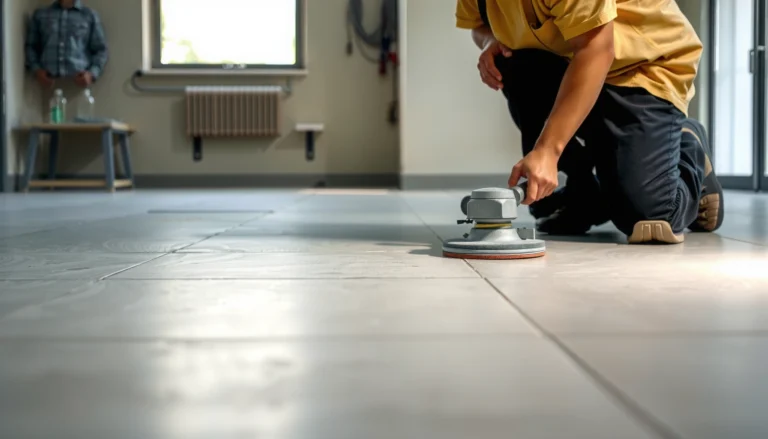
– Shot blasting / grinding (mechanical texturing)
– Optional topical treatments designed for traction and the cleaning chemistry
For wet/oily zones: prioritize chemical exposure + the right traction behavior
In wet/oily areas, you’re not just targeting “grip”—you’re managing how the surface deals with liquids and residues:
– Surface friction requirements (boot traction)
– Drainage-oriented profile (reducing standing water risk)
– Chemical compatibility (so cleaners don’t degrade the top layer)
Comparison: choose the system by what you’re fighting
| Feature | Slip-Resistant Coatings (epoxy/urethane with traction topping) | Mechanically Textured Concrete (shot blasting/grinding) | Grooving / Drainage-Oriented Approaches |
|---|---|---|---|
| Best for | Uniform coverage across lanes, chemical resistance + traction | Moderate chemical exposure where coating isn’t feasible | Areas where water must be moved quickly (ramps, wet entries) |
| Chemical compatibility | Typically strong when system is matched | Varies by concrete treatment (and may be less predictable) | Depends on material and any sealing/topical layer |
| Maintenance pattern | Recoat/refresh before texture wears smooth | Reseal or re-profile as wear occurs | Re-cut/rework if grooves become polished/filled |
| Cleaning compatibility | Must match the coating/top layer (degreasers, detergents) | Usually more forgiving, but residues still matter | Machine/chemical compatibility varies widely |
| Typical risk if chosen wrong | Aggregate wear-out, residue buildup reducing traction | Polishing from traffic, uneven traction bands | Grooves clog with debris; standing water can still pool |
| Install complexity | Medium to high (prep + controlled application) | Medium (prep + consistent profiling) | Medium (layout + future cleaning considerations) |
| Best “fit” zone | Aisles, machine bays, ramps needing consistent traction | Storage areas, workshops with controlled chemicals | Thresholds, drains/wet transitions |
| Cost predictability | Higher upfront; often better long-term planning | Lower upfront; ongoing re-profiling risk | Medium, but failure can require rework |
Use traction methods that match the way people walk
You improve safety when traction is consistent where people step, and when textured areas don’t “switch” abruptly to smoother zones. That means traction method selection has to include traffic patterns, transitions, and drainage—not just surface roughness.
“Aggregate and texture must be system-compatible; wrong materials or dosage can create loose texture and rapid wear.”
“Slip resistance is undermined by transitions—people step off textured areas onto smoother surfaces near doors, ramps, or drain edges.”
Add aggregate/grit only if the system documents it
Traction additives can help, but only when:
– The coating/topical system is designed for slip resistance
– The aggregate size, dosage, and broadcast method match the documentation
– The topcoat sealing/overcoating steps are performed as required
A common field failure mode is “over-broadcast then under-seal,” leading to loose grit that becomes debris and reduces traction over time.
Keep traction consistent across lanes and transitions
Design the floor like a continuous pathway:
– Extend traction across the full landing area and into the first section of the traffic lane
– Avoid “step-off edges” where one slab/procedure meets another
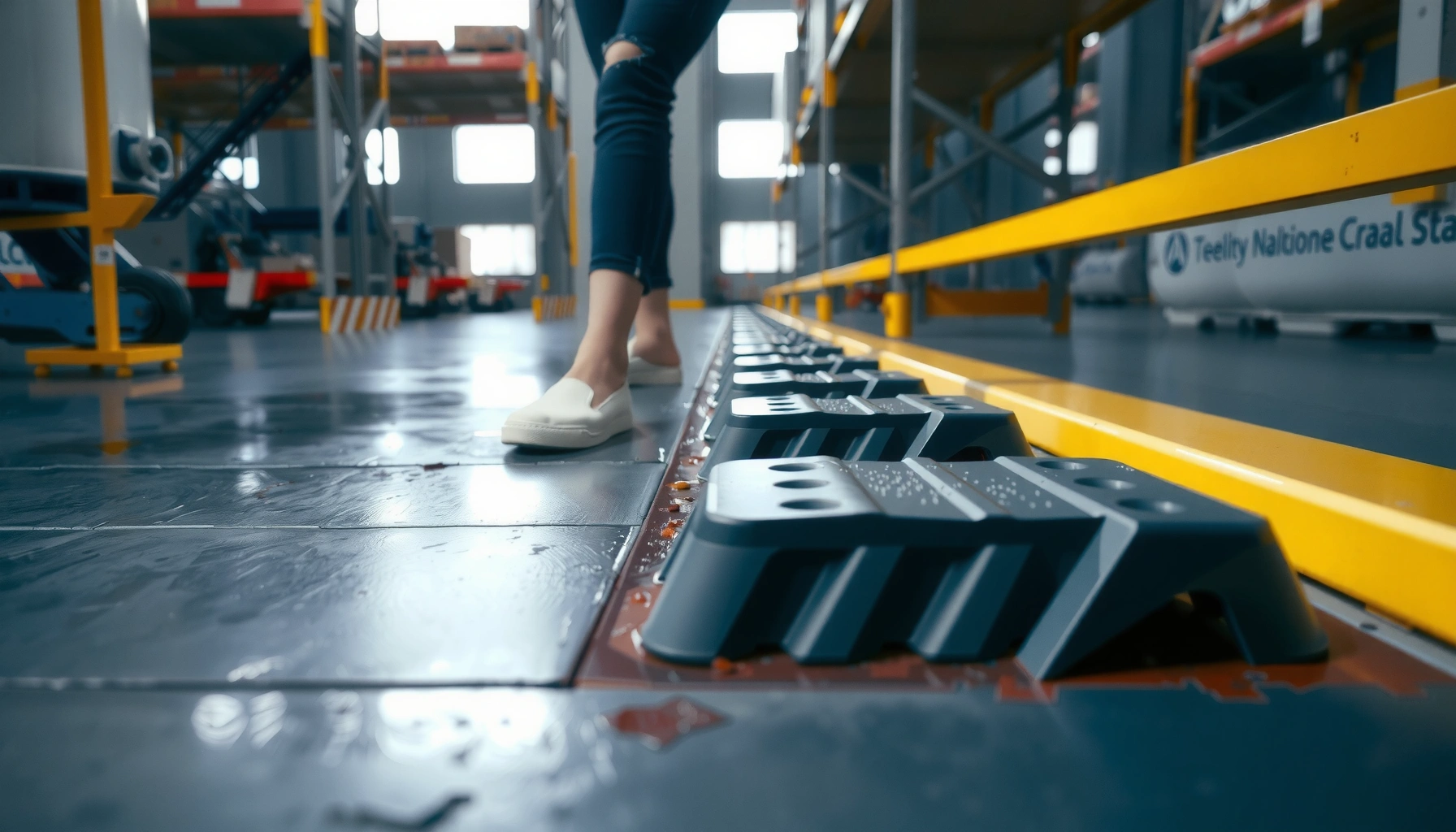
– Standardize around door mats, trench covers, and drain surrounds
Provide drainage where water is present
Traction helps, but standing water remains a major risk factor. If the environment includes hose-down, condensation, or frequent wet mopping:
– Ensure water can move away from traffic paths
– Avoid designs that trap liquid against smooth or low-profile areas
– Maintain drain functionality (clogs defeat the design)
Practical takeaway: if your slip drivers include water, pair traction with drainage planning instead of relying on texture alone.
Plan maintenance so floors stay slip-resistant over time
Your slip-resistant floor stays safe only if cleaning and inspection routines preserve its traction surface. Maintenance planning must start before installation, because the wrong cleaner or scrub method can reduce friction, clog texture, or damage coatings.
“Cleaning chemicals and methods must be compatible with the coating/top layer to avoid residue films that reduce traction.”
“Slip resistance degrades over time as the surface wears smooth; inspection and timely refresh prevent sudden safety losses.”
Define cleaning methods early
Document:
– Which detergents/degreasers are used
– Whether workers use scrubbers, brushes, and how frequently
– Whether the facility uses degreasers in wet/oily zones and sanitizers in food or pharma areas
If your cleaners are mismatched, you can end up with:
– Film buildup that changes friction behavior
– Chemical softening of a urethane/epoxy top layer
– Faster aggregate loss due to abrasive cleaning
Schedule inspections for wear areas
Your highest-yield inspection routes are predictable:
– Near doorways
– On ramps
– In drum/forklift paths
– Around drains and trench covers
Recoat/refresh before texture is worn down
Plan for the moment traction transitions from “textured” to “nearly smooth.” Slip events often cluster after visible wear begins because people naturally assume the floor will behave the same as before.
What can go wrong (and how to avoid it)
Even well-designed slip-resistant floors can fail when the install process or ongoing operations don’t match the spec. The good news: most failures share root causes you can detect early—especially around prep, chemical compatibility, and texture management.
“Skipping surface prep can cause coating bond failure, leading to texture loss and uneven traction.”
“A slip-resistant design can be harder to clean when texture traps residues—maintenance planning is part of safety design.”
Common failure modes and how to avoid them
– Skipping surface prep: coatings can fail to bond if oil, curing agents, or sealers aren’t fully removed.
– Using the wrong texture: too much aggregate can trap grime and feel abrasive; too little can leave the floor effectively smooth.
– Ignoring chemical compatibility: cleaners and oils can degrade certain topcoats or leave residues that reduce traction.
– Overlooking installation moisture conditions: moisture vapor transmission and humidity issues can cause bubbling, whitening, or coating failure. Follow the coating manufacturer’s substrate moisture requirements.
– Not matching the system to the environment: a floor that’s slip-resistant in dry conditions may become slick when regularly exposed to specific liquids.
Pros/cons snapshot (decision reality check)
– Textured/aggregate systems
– ✅ Better initial traction and visual uniformity when installed correctly
– ❌ Can require more rigorous cleaning to prevent residue buildup
– Grooving/drainage-first approaches
– ✅ Excellent for water removal when maintained properly
– ❌ Can clog if debris management isn’t part of daily operations
– Coated systems (epoxy/urethane)
– ✅ Strong chemical resistance when specified correctly
– ❌ Can fail fast if moisture/adhesion requirements aren’t met during prep
Verdict: what to do first (and when to call a pro)
The best starting point is a traction-and-compatibility plan: confirm your slip cause (water vs. oil vs. dust), then follow a manufacturer-approved concrete prep + slip-resistant coating/topical system designed for your chemical exposure and cleaning routine. Downsides to watch for: textured systems can be harder to clean if not planned correctly, and slip resistance can drop as wear progresses—so you’ll need maintenance discipline. Skip DIY if you can’t verify substrate conditions (moisture, contamination, existing coating adhesion) or if you require approvals for heavy chemical exposure; in those cases, get guidance from a flooring contractor or the coating manufacturer’s technical service.
📊 Slip-Resistance Strategy vs. Slip Driver (Data Table)
Traction Approach Match by Common Industrial Slip Driver
| # | Slip Driver | Recommended Strategy | Best-Fit System Type | Safety Fit Rating |
|---|---|---|---|---|
| 1 | Water / wet sweeping | Drainage + traction-consistent topping across entry zone | Urethane/epoxy slip-resistant coating (system-approved) | ★★★★☆ |
| 2 | Oil / grease | Chemical-resistant top layer + correct cleaner compatibility | Coating system with documented chemical resistance | ★★★★★ |
| 3 | Detergent residue | Match cleaning chemistry; avoid leaving films on texture | Coating with compatible topcoats/topicals | ★★★☆☆ |
| 4 | Dust / sanding slurry | Mechanical profiling + debris management cleaning plan | Textured concrete or durable coating with easy clean design | ★★★☆☆ |
| 5 | Worn smooth coatings | Repair/prepare existing system before re-topcoating | Resurfacing with manufacturer-approved traction top layer | ★★☆☆☆ |
| 6 | Standing water near drains | Drain-capable profile + traction designed for wet use | Drain-zone coating/topical designed for wet chemical exposure | ★★★★☆ |
| 7 | Abrasion-polished concrete | Re-profile and re-apply traction treatment; control traffic polishing | Mechanical texturing + optional durable topical | ★★★☆☆ |
Quick checklist (scan and save)
– Identify the slip source: water / oil / detergent / dust / wear
– Map hotspots: entries, drains, ramps, machine zones, aisle traffic
– Confirm floor type/condition: bare concrete vs. existing coating
– Use manufacturer-approved surface prep and traction method
– Verify chemical compatibility with your cleaning and spills
– Install with moisture/conditions controls where required
– Set a maintenance plan: inspect + refresh before texture wears off
FAQ
1) What’s the fastest way to reduce slips right now?
Improve immediate control in hotspots (cleaning frequency, spill response, and temporary traction measures) while planning the longer-term fix based on the floor’s surface condition and exposure type. [ADD: specific interim measure ideas used on your site]
2) Can we add grit/aggregate to an existing coated floor?
Sometimes, but it depends on the current coating condition and adhesion. If the existing system is failing or contaminated, resurfacing/repair prep is usually required. [ADD: what your current floor system is]
3) What’s more effective: coating texture or concrete grinding?
It depends on what’s driving the slip. Concrete profiling can improve traction on bare slabs, while a designed slip-resistant coating/topical system can be better where you need chemical resistance, easy cleaning, or a uniform textured surface.
4) How do we know the floor will stay slip-resistant?
Use a system that’s documented for your environment and plan maintenance before texture wears down. Also align your cleaning chemicals/methods with the manufacturer’s compatibility guidance. [ADD: your cleaning chemicals and method]
Sources
– [ADD: manufacturer technical data sheets for the specific slip-resistant coating/topical system you’re considering—use the document sections on slip resistance/aggregate usage, surface prep, and chemical resistance]
– [ADD: coating/epoxy/urethane manufacturer installation guidelines covering substrate moisture and surface profile requirements]
– [ADD: concrete substrate prep guidance from a relevant standards body or manufacturer technical bulletin]
A slip-resistant industrial floor is a systems problem: correct concrete prep, the right traction method, chemical-compatible finishes, and disciplined maintenance. If you start with the actual slip driver (water vs. oil vs. residue vs. wear) and then follow the specified prep + system documentation, you typically get the most consistent traction—without trading safety for cleaning headaches or premature texture loss.
Frequently Asked Questions
What are the most effective ways to make industrial floors slip-resistant?
The most effective approaches combine surface traction and consistent maintenance. Common solutions include applying slip-resistant floor coatings, using textured trowel finishes or broom finishes, installing appropriate industrial flooring systems (like epoxy with aggregate or urethane with grit), and ensuring good drainage so water and oils don’t build up. For best results, choose materials and finishes that match your specific chemical exposures, foot traffic, and slip risk (wet vs. dry conditions).
How do you improve slip resistance on existing concrete floors in an industrial setting?
Start by cleaning and preparing the concrete to remove dust, oils, and laitance, since poor prep can cause coatings to fail and reduce traction. Then select a slip-resistant treatment such as epoxy or polyurethane flooring with broadcast anti-slip aggregates (like aluminum oxide, silica sand, or ceramic beads) or a microtextured overlay designed for industrial slip resistance. Seal only if the system is rated for slip-resistant performance and recoat as required—over-sealing can make floors less grippy.
Why is proper surface preparation critical for slip-resistant industrial floor coatings?
Slip-resistant coatings rely on mechanical bonding and durable texture to maintain traction under industrial wear. If the surface is contaminated or too smooth, coatings may delaminate and the anti-slip aggregate can wear out faster, leaving a slick surface. Use the correct method—typically grinding or scarification, followed by thorough cleaning—then apply a traction-focused industrial floor system that’s engineered for the facility’s cleaning chemicals and expected traffic.
Which slip-resistant additives or aggregates work best for industrial epoxy and polyurethane floors?
For high-traction needs, aggregates with proven abrasion resistance—such as aluminum oxide, silica sand, or specialty ceramic media—are commonly used to increase coefficient of friction. The best choice depends on whether the floor will be exposed to oils, acids, detergents, or frequent washdowns, because some aggregates can degrade or become embedded under heavy chemical exposure. Work with your flooring contractor to match aggregate size and broadcast rate to your equipment (forklifts, foot traffic, or carts) and desired slip resistance level.
What is the best maintenance plan to keep industrial slip-resistant floors safe over time?
Maintain slip resistance by using cleaning methods that preserve surface texture—avoid harsh high-pressure techniques or chemical cleaners that can smooth microtextures. Use a program that includes regular sweeping, prompt spill cleanup, and periodic inspection of coating wear areas, especially in wet process zones, entrances, and pathways for mobile equipment. Reapply or re-broadcast slip-resistant media when texture drops below safe performance, and ensure your floor drainage design prevents standing water that undermines traction.
📅 Last Updated: October 12, 2026 | Topic: How to make slip-resistant industrial floors? | Content verified for accuracy and freshness.
References
- https://en.wikipedia.org/wiki/Slip_resistance
- Friction
https://en.wikipedia.org/wiki/Coefficient_of_friction - https://www.osha.gov/slips-trips-and-falls
- https://www.cdc.gov/niosh/topics/slips/
- Slips and trips – HSE
https://www.hse.gov.uk/slips/ - https://pubmed.ncbi.nlm.nih.gov/?term=slip+resistant+flooring
- Google Scholar Google Scholar
https://scholar.google.com/scholar?q=slip-resistant+industrial+flooring+surface+texture - Google Scholar Google Scholar
https://scholar.google.com/scholar?q=coefficients+of+friction+flooring+wet+conditions+slip+resistance - Google Scholar Google Scholar
https://scholar.google.com/scholar?q=impact+of+floor+material+and+contaminants+on+slip+resistance+industrial+workplaces - Google Scholar Google Scholar
https://scholar.google.com/scholar?q=How+to+make+slip-resistant+industrial+floors?