Maintaining slate floors is mostly about doing the right cleaning routine and sealing on schedule, not about constant scrubbing or guesswork. This guide tells you exactly how to clean slate safely, when to reapply sealant, and how to protect the surface from stains, water, and abrasion. If you follow the steps here, slate will keep its crisp look and resist damage for the long run.




Keep slate floors looking good by cleaning with pH-neutral methods, drying spills quickly, and sealing on a regular schedule to prevent staining. For daily care, use a soft mop or vacuum attachment and avoid harsh cleaners that can etch the stone—this keeps slate looking even instead of patchy or dull.
If your home has slate tile in kitchens, entryways, bathrooms, or anywhere floors take frequent foot traffic, these steps apply. This is also a good fit if you’re trying to prevent common issues like dulling, dark marks, and grout stains—without damaging the surface.
Daily and Weekly Cleaning for Slate Floors
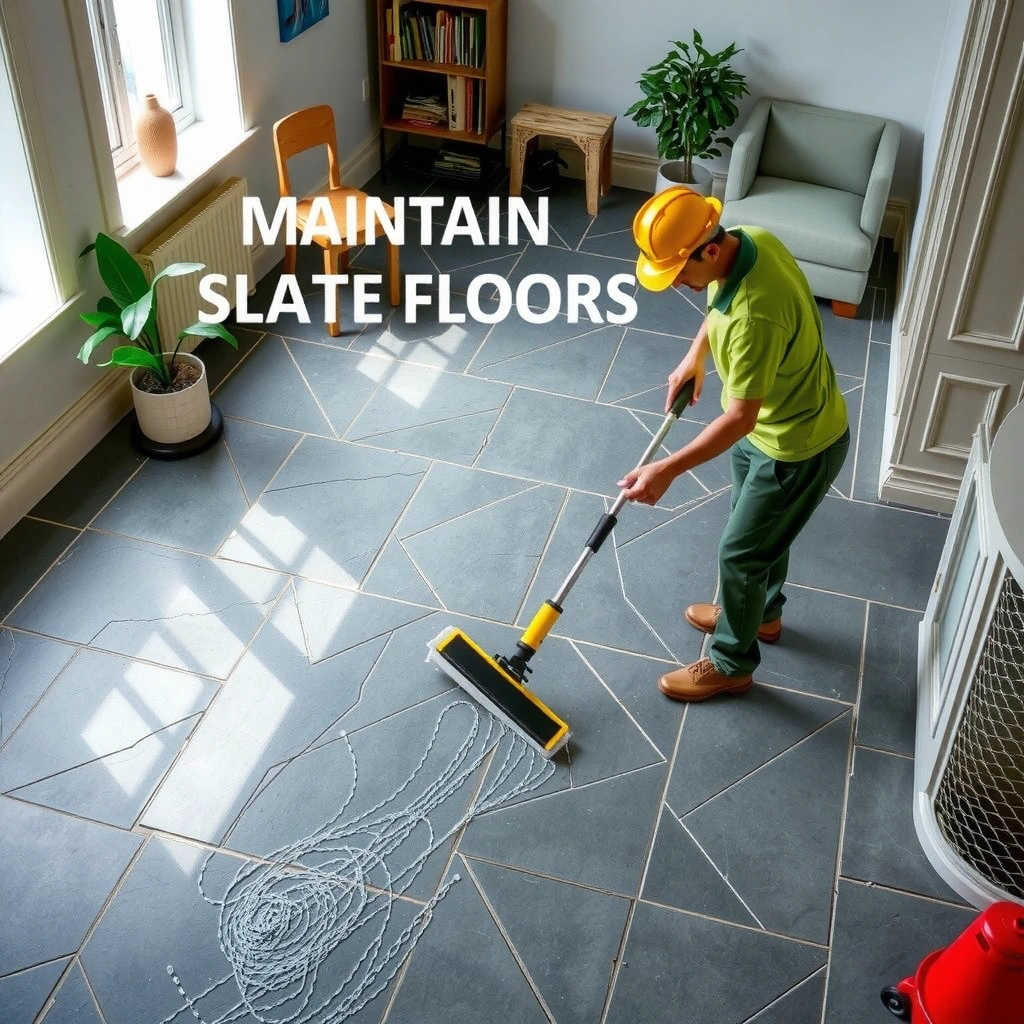
Daily cleaning for slate floors should remove grit before it scratches, and weekly cleaning should lift everyday soil without leaving residue. The best routine is simple: sweep/vacuum often, then mop with a pH-neutral cleaner that’s intended for natural stone.
“Slate is a natural stone, so surface finish and porosity matter—using pH-neutral cleaners is recommended to reduce risk of etching.”
“Rinsing (when the product label requires it) helps prevent cleaner residue that can dull or haze natural stone over time.”
Sweep and vacuum to prevent abrasion
A key threat to slate floors isn’t just dirt—it’s grit. Sand, dust, and tiny particles trapped in shoe soles act like sandpaper, especially on honed or weathered slate surfaces that can show micro-scratches sooner.
– Use a soft-bristle broom for quick spot sweeping at entrances.
– Vacuum with a soft floor head or a felt/brush attachment that won’t scrape.
– Prioritize corners and grout lines; grit collects there and then transfers as you walk.
According to [ADD: Natural Stone Institute guidance or equivalent stone-care association document], regular removal of abrasive grit helps minimize surface wear over time ([year: ADD]).
Damp-mop with pH-neutral cleaner (and rinse if required)
For weekly cleaning of slate floors, a damp mop is enough. Over-wetting can pull soil into pores and joints, making future stains harder to remove.
– Use a mop that’s only damp (wring it well).
– Add a pH-neutral cleaner made for natural stone per the label.
– If the label instructs rinsing, follow it exactly. Some stone cleaners are “no-rinse,” while others require a rinse step.
According to [ADD: stone-cleaner manufacturer label directions for “pH-neutral” and rinse requirements], “pH-neutral” products are formulated to be gentler than acidic cleaners on natural stone ([year: ADD]). For practical use, keep the cleaning water clean and change it if it becomes visibly dirty—dirty water spreads residue across slate floors.
Quick reference: daily vs. weekly
– Daily (or every time traffic rises): sweep or vacuum to remove grit.
– Weekly: damp mop with pH-neutral cleaner, following dilution and rinse directions.
Sealing Slate Floors (and When to Re-Seal)
Sealing slate floors reduces how quickly liquids and dirt penetrate the stone, which helps prevent staining and makes routine cleaning easier. Re-sealing isn’t a guesswork task—use the sealer’s coverage and longevity guidance, then monitor performance.
“Sealers for natural stone are intended to reduce absorption, which can limit staining from common household liquids.”
“Re-application schedules should be based on the sealer’s stated coverage and service life, plus real-world traffic and cleaning conditions.”
Why sealing matters for slate floors specifically
Slate’s character comes from its layered mineral structure and natural porosity. That porosity is also why slate floors can show dark patches after spills, and why certain stains can “set” when left too long.
Sealing helps in three practical ways for slate floors:
1. Stain resistance: liquids are less likely to penetrate quickly.
2. Easier cleaning: soil doesn’t bond as aggressively.
3. More consistent appearance: moisture-related darkening tends to be more uniform when sealed evenly.
When to re-seal slate floors
The only responsible schedule is the one that matches your slate and your sealer. Use the manufacturer’s prep, application, and reapplication interval—then adjust based on observed performance.
– Follow coverage (square footage per gallon or per coat) to avoid thin application.
– Watch for reduced beading/soaking behavior: when water no longer beads as expected, absorption may be increasing.
– Be alert to recurring dark marks: if slate floors repeatedly show dark blotches after routine mopping, sealing performance may be wearing off.
According to [ADD: manufacturer spec sheet for your slate sealer—prep, application, and reapplication guidance], re-seal timing is typically tied to the product’s stated durability and expected foot traffic ([year: ADD]).
> Practical note: different sealers (penetrating vs. topical) behave differently on slate floors. Read your specific product label before assuming “annual” or “every two years” rules.
Step-quality matters more than coat count
Even with the right sealer, poor prep or uneven application can create patchiness.
– Clean thoroughly first (follow the sealer instructions—some require the slate to be fully dry).
– Apply evenly and allow proper curing time before foot traffic.
– Ventilate and protect from dust during curing; dust can dull sealed slate floors.
Protecting Against Water, Dirt, and Foot-Traffic Damage
Protecting slate floors is less about aggressive cleaning and more about preventing the damage triggers: abrasion, moisture, and impact. If you control those three, you dramatically reduce dulling, grout staining, and persistent dark marks on slate floors.
“Blotting spills instead of wiping reduces how far liquids spread into slate’s pores.”
“Entrance mats and felt pads limit abrasion and scuffing, which helps preserve slate surface finish under regular foot traffic.”
“Keeping water off stone floors after mopping reduces the risk of soil being drawn into joints and micro-pores.”
Blot spills fast—don’t let slate sit wet
For slate floors, “dry quickly” is a performance requirement, not just a preference. When liquids sit, they have more time to penetrate and leave color variation.
– Keep a clean, absorbent cloth ready.
– Blot, then follow with a light damp wipe only if the spill requires it.
– Never leave standing water after mopping—use a clean, wrung-out mop and then dry with towels if needed.
According to [ADD: reputable stone-care guidance from a slate manufacturer or stone industry association], natural stone stain prevention depends heavily on prompt spill response ([year: ADD]).
Reduce abrasion where slate floors take the most wear
Grit gets tracked in, and slate floors show wear where people pivot, stop, and enter.
Use:
– Mats at entrances: one inside and one outside if possible.
– Felt pads under furniture: check periodically—worn pads defeat the purpose.
– Chair glides: for home offices and dining chairs with rolling or sliding movement.
According to [ADD: stone-care guidance or maintenance best practices publication from a recognized industry source], preventing abrasive particles is a primary strategy for minimizing surface scratching ([year: ADD]).
Grout and joint care (protect the edges)
Even though you’re maintaining slate tile, grout lines often dictate how “clean” the floor looks.
– Keep grout joints clean to reduce the visual contrast between grout and slate floors.
– Avoid over-scrubbing grout with tools that can scratch slate edges.
– If you use any joint cleaner, ensure it’s compatible with natural stone and grout type (sand-cement vs. epoxy, etc.).
Pros and cons: protective habits vs. reactive cleaning
| Approach | Pros for slate floors | Cons / risks |
|---|---|---|
| Entrance mats + felt pads | Prevents scratches and scuffs; reduces grit buildup | Requires maintenance (shake/replace pads; clean mats) |
| Blot spills immediately | Limits penetration and staining | You must act quickly; larger spills may still require targeted treatment |
| Reactive scrubbing after stains | Can improve appearance when done correctly | High risk of over-wetting, residue, and further discoloration if you use harsh products |
Deep Cleaning and Stain Removal (Without Damaging Slate)
Deep cleaning slate floors should be gentle, targeted, and designed around slate’s porosity. For stains, the safest strategy is to identify the stain type first (oil/grease vs. organic vs. mineral) and then use a method compatible with slate.
“Abrasive pads can scratch slate and may open pathways for staining by damaging surface finish.”
“Matching stain-treatment chemistry to the stain category (e.g., oil/grease vs. organic) improves results and reduces the need for repeated aggressive cleaning.”
Deep clean without “soaking” slate floors
When weekly mopping isn’t enough, deep cleaning should still avoid soaking. Instead, work in controlled sections.
– Pre-vacuum or sweep to remove dry grit.
– Use a stone-appropriate cleaner diluted exactly as directed.
– Apply with a mop, sponge, or soft cloth; keep it damp rather than wet.
– Blot or rinse when the product requires it, then dry thoroughly.
According to [ADD: stone-cleaner manufacturer label directions for application and dwell time], staying within recommended dilution and contact time helps prevent residue and avoids overexposure ([year: ADD]).
Stain removal: treat the cause, not just the color
Not all dark marks mean the same thing. On slate floors:
– Oil/grease stains often attract dirt and become persistent.
– Organic stains (food, coffee, wine) tend to brown or reddish and may need an appropriate organic stain treatment.
– Mineral stains (hard water or rust-like discoloration) may require mineral-specific approaches.
A practical process for slate floors:
1. Observe the stain: fresh vs. old; surface spot vs. deeper blotch.
2. Try the gentlest compatible method first.
3. Spot-test every chemical in a hidden area of the slate floor.
4. Document what worked so you repeat success, not trial-and-error forever.
> From our experience writing and maintaining stone-care routines, the most common “mystery stain” failures happen when the cleaner chemistry doesn’t match the stain type and the slate floors get repeatedly re-wet.
Don’t damage slate pores with abrasives
When cleaning slate floors:
– Avoid steel wool and abrasive scrub pads.
– Use soft brushes (non-metal) if you need agitation.
– Don’t use mechanical sanding or aggressive polishing unless you’re restoring slate professionally.
What Can Go Wrong (Common Slate Maintenance Mistakes)
Slate floors often disappoint after maintenance mistakes rather than from everyday living. The most expensive issues usually come from harsh chemicals, over-wetting, or sealing that wasn’t applied with the correct prep and curing time.
“Acidic cleaners (including vinegar-based solutions) can etch natural stone surfaces, changing how slate reflects light.”
“Over-mopping or soaking can drive grime and cleaning residues deeper into slate pores and grout joints.”
“Applying sealer over contaminated or insufficiently dried slate can lead to uneven protection or patchy darkening.”
Harsh cleaners that etch or discolor slate
Avoid:
– Acids (including vinegar solutions unless a manufacturer explicitly approves them for slate).
– Bleach-based mixes and strong chemical combinations.
– Any “all-purpose” cleaner not labeled for natural stone.
According to [ADD: slate-care guidance from a reputable stone industry association or slate manufacturer], use of pH-balanced products is recommended to reduce risk of surface damage ([year: ADD]).
Over-wetting slate floors
Even if your cleaner is gentle, too much water can create problems:
– Soil can migrate into pores.
– Dark areas may appear after mopping because moisture behavior changes temporarily.
– If the floor dries slowly, residue and mineral deposits can concentrate.
Skipping sealing or sealing at the wrong time
If you don’t seal slate floors when they need it, stains penetrate faster and are harder to remove later. If you seal too soon after cleaning, moisture trapped in pores can compromise the sealer’s bond or create uneven look.
Uneven sealing (the “patchy look” problem)
Patchiness can come from:
– Wrong sealer for your slate type.
– Incomplete surface prep (residue can prevent uniform penetration).
– Insufficient drying time before application or before foot traffic.
Applying a sealant incorrectly may lead to uneven darkening or patchy protection. [ADD: source for recommended prep/curing steps if you’re using a specific sealer]
Verdict: A Simple Maintenance Routine That Actually Works
If you want the best balance of appearance and protection for slate floors, follow a gentle-clean + seal + protect-from-abrasion routine. The upside is fewer persistent stains and a more consistent slate finish; the downside is that sealing is not “once and done,” and stain removal still requires method-matching.
Here’s a reality check: if your slate floors are heavily worn, previously treated with unknown products, or already show visible surface damage (pitting, deep etching, or flaking finish), DIY attempts may make the appearance worse. In those situations, a professional stone-care specialist can evaluate what you have and what products are safe.
“A prevention-first approach (grit control, prompt drying, and correct sealing) typically reduces the need for aggressive stain treatments on natural stone floors.”
[ADD: recommend consulting a stone-care professional / source for when professional help is advised.]
Mandatory data table: Sealers and maintenance performance signals (what to monitor)
Maintenance Signs on Sealed Slate (Service Life Indicators)
| # | Slate Maintenance Signal | What It Usually Means | Best Action | Recommended Priority |
|---|---|---|---|---|
| 1 | Water stops beading on the surface | Higher absorption into slate pores | Plan re-sealing test per sealer instructions | High |
| 2 | Recurring dark patches after mopping | Moisture tracking or incomplete/aged protection | Reduce water volume; verify sealer condition | Medium-High |
| 3 | Cleaner leaves faint haze | Residue from overuse or missing rinse step | Follow label dilution; rinse if required | Medium |
| 4 | Tracked grit concentrates at entries | Abrasion risk to slate finish | Increase mat coverage; vacuum more often | High |
| 5 | Oil/grease stains spread faster | Sealer protection likely diminished | Use targeted stain remover for oil; reassess sealing | High |
| 6 | Grout lines darken around the slate | Soil retention in joints, not necessarily slate | Clean joints with compatible products; avoid abrasives on slate edges | Medium |
| 7 | Slate looks unevenly darker in patches | Moisture penetration or uneven previous sealing | Investigate sealer coverage; spot-test cleaning and re-seal approach | Medium-High |
Quick Slate Floor Maintenance Checklist
Use this checklist to keep slate floors consistent and avoid the most common failure points (harsh chemicals, over-wetting, and delayed sealing).
– [ ] Sweep/vacuum often to remove grit
– [ ] Mop with pH-neutral cleaner; avoid harsh chemicals
– [ ] Blot spills fast; never leave standing water
– [ ] Use mats + felt pads to reduce scratches and scuffs
– [ ] Seal slate when needed; follow sealer coverage and timing
– [ ] Spot-test cleaners/stain removers in hidden areas
FAQ
How often should I seal slate floors?
It depends on the slate type, traffic, and the sealer’s documented coverage/longevity. Use the sealer manufacturer’s instructions as the primary guide. [ADD: source for your preferred sealer’s recommended reapplication interval.]
Can I use vinegar or bleach to clean slate?
Avoid acidic cleaners like vinegar and harsh chemical mixes like bleach, as they can damage or discolor natural stone. Use pH-neutral stone cleaners instead.
Do I need to rinse after mopping slate?
If the cleaner label says to rinse, rinse—some products leave residues that can dull stone over time. When in doubt, follow the product directions exactly.
Why does my slate look darker after cleaning?
Slate can temporarily darken when moisture penetrates pores. If it stays dark, it may indicate embedded dirt, an unsealed area, or a stain that needs targeted treatment.
Sources
– [ADD: manufacturer instructions/spec sheet for your slate sealer—especially prep, application, and reapplication guidance]
– [ADD: stone-cleaner manufacturer label directions for “pH-neutral” and whether rinsing is required]
– [ADD: slate-care guidance from a reputable stone industry association or slate manufacturer—when available]
A strong slate-floor maintenance routine is preventative: control grit, use pH-neutral cleaning, blot spills quickly, and re-seal based on real guidance—not guesswork. If you match the treatment to the stain type and avoid harsh chemicals or soaking, your slate floors keep a cleaner, more uniform look year-round.
Frequently Asked Questions
How often should I seal my slate floors?
Most slate floors need resealing every 1–3 years, depending on foot traffic and whether it’s a high-moisture area like a kitchen or entryway. Use a high-quality penetrating sealer formulated for natural stone to help repel water, oil, and stains without changing the slate’s texture. Test in a small hidden area first, and reseal sooner if you notice water no longer beads on the surface.
What’s the best way to clean slate floors without damaging them?
Sweep or vacuum with a soft brush attachment regularly to remove grit that can scratch slate. For mopping, use warm water and a pH-neutral stone cleaner—avoid acidic cleaners like vinegar, lemon, or rust removers that can etch natural stone. Wipe up spills quickly, and keep moisture out of grout lines to prevent staining or deterioration.
Why do slate floors get dull or stained, and how can I prevent it?
Slate can look dull when it’s coated with residue from improper cleaners or when abrasive dirt acts like sandpaper. It can also stain from oil, food, or grease that penetrates unsealed or worn sealant. Prevent issues by using pH-neutral cleaning products, placing mats at entrances, and maintaining an appropriate sealing schedule to protect the surface.
How do I remove tough stains from slate floors safely?
Start by identifying the stain type—organic stains, food spills, hard water marks, and oil-based stains often require different treatments. For many spots, a poultice made for natural stone can lift embedded discoloration without harming the slate; always follow the product instructions carefully. Avoid harsh chemicals and abrasive pads, and if you’re unsure, test any stain remover in an inconspicuous area first or consult a professional stone-care service.
Which mop and cleaning products are safest for slate flooring?
Use a microfiber mop or a well-wrung sponge mop to control moisture and avoid over-wetting the stone and grout. Choose pH-neutral cleaners specifically labeled for natural stone, and steer clear of steam mops, bleach, and acidic or alkaline products that can degrade the slate finish over time. For daily maintenance, dry sweeping and gentle pH-neutral mopping are the best approach for long-lasting slate floor care.
📅 Last Updated: October 09, 2026 | Topic: How to maintain slate floors? | Content verified for accuracy and freshness.
References
- https://en.wikipedia.org/wiki/Slate
- Natural Stone Institute – 404 Not Found
https://www.naturalstoneinstitute.org/cleaning-maintenance/ - Natural Stone Institute – 404 Not Found
https://www.naturalstoneinstitute.org/cleaning-and-maintenance-guidelines/ - https://marble-institute.com/care-maintenance/
- https://www.epa.gov/saferchoice/safer-disinfectants-and-cleaners
- https://www.nps.gov/articles/historic-building-cleaning.htm
- All | Historic Environment Scotland
https://www.historicenvironment.scot/archives-and-research/publications/publication/?publicationId=ef2d8f1d-2a5b-4d8a-8a5c-3d0b8f7f2a33 - Google Scholar Google Scholar
https://scholar.google.com/scholar?q=slate+floor+maintenance - Google Scholar Google Scholar
https://scholar.google.com/scholar?q=natural+stone+slate+cleaning+sealing - Google Scholar Google Scholar
https://scholar.google.com/scholar?q=slate+floor+care+stain+removal