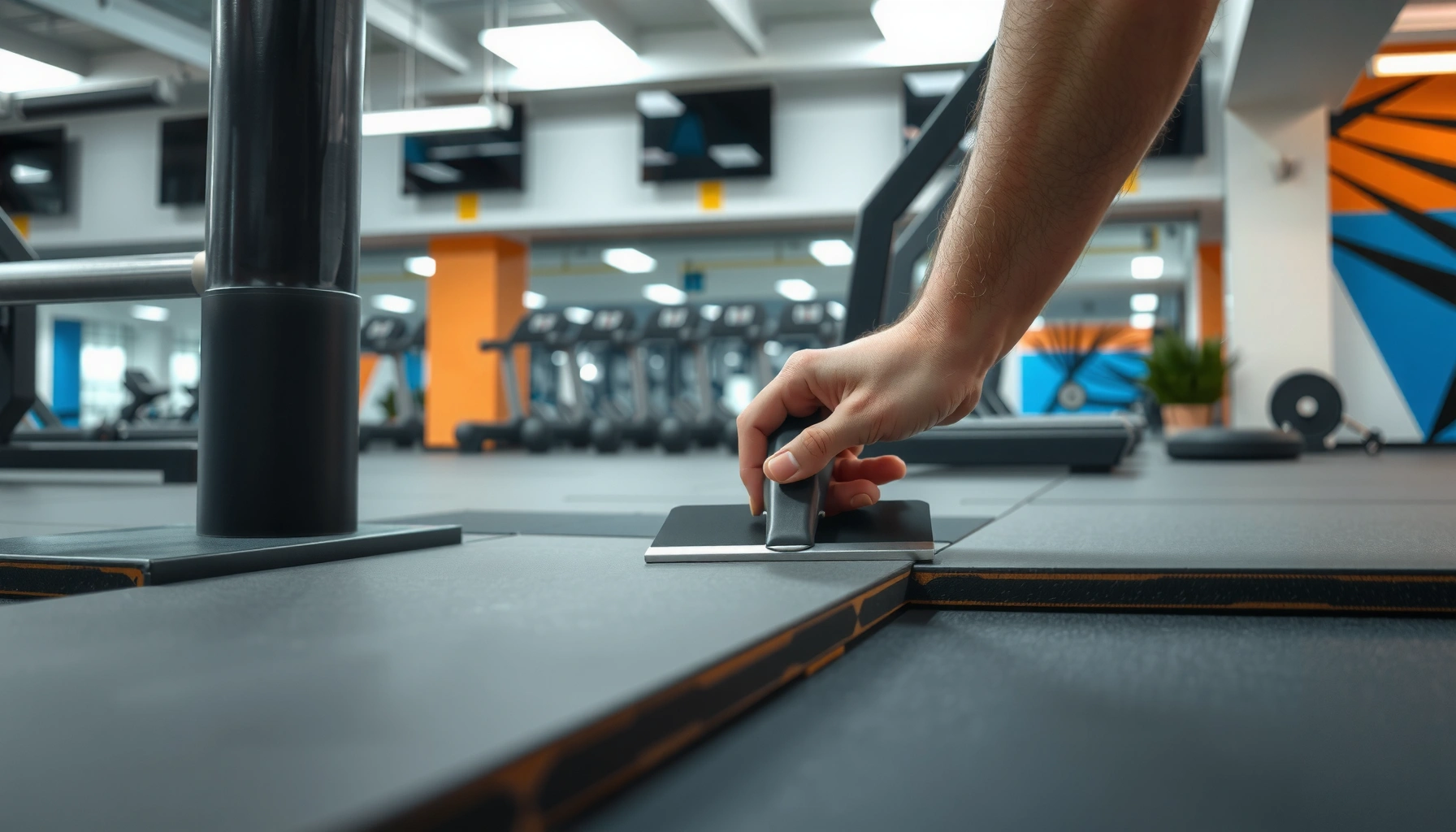

Fix lifting on gym floors fast with the proven top fixes that actually stop tiles, rubber, or epoxy from shifting under weight. If your floor is lifting, the fastest path is usually proper surface prep and the right adhesive or leveling compound—applied after diagnosing moisture, subfloor gaps, and loose seams. Follow these quick solutions and you’ll restore traction and stability before the problem spreads.




If your weights are sticking, slipping, or wobbling, the fastest fix is to match traction and stability to the floor surface—then verify bar/plate contact points stay consistent. In practice, that means: identify whether the problem is sliding (friction loss) or uneven/sticky behavior (surface irregularity or residue), then correct it with cleaning, mat/platform selection, and proper bar/plate handling.
If you lift on rubber, concrete, tile, or mixed gym flooring and you’ve noticed the barbell, dumbbells, or plates “lift” or “catch” unexpectedly, this guide is for you. It’s especially useful when the issue appears only with specific movements (deadlifts, squats, rack pulls) or only in certain parts of the room—because that pattern often points to localized floor texture, seams, or cleaning residue rather than your strength.
If you lift on rubber, concrete, tile, or mixed gym flooring—and you’ve noticed the barbell, dumbbells, or plates lift/“catch” unexpectedly—this is for you. It’s especially useful if the problem shows up only with certain movements (deadlifts, squats, rack pulls) or only on specific areas of the floor.
Check what “lifting” means (slip vs. uneven vs. sticky)
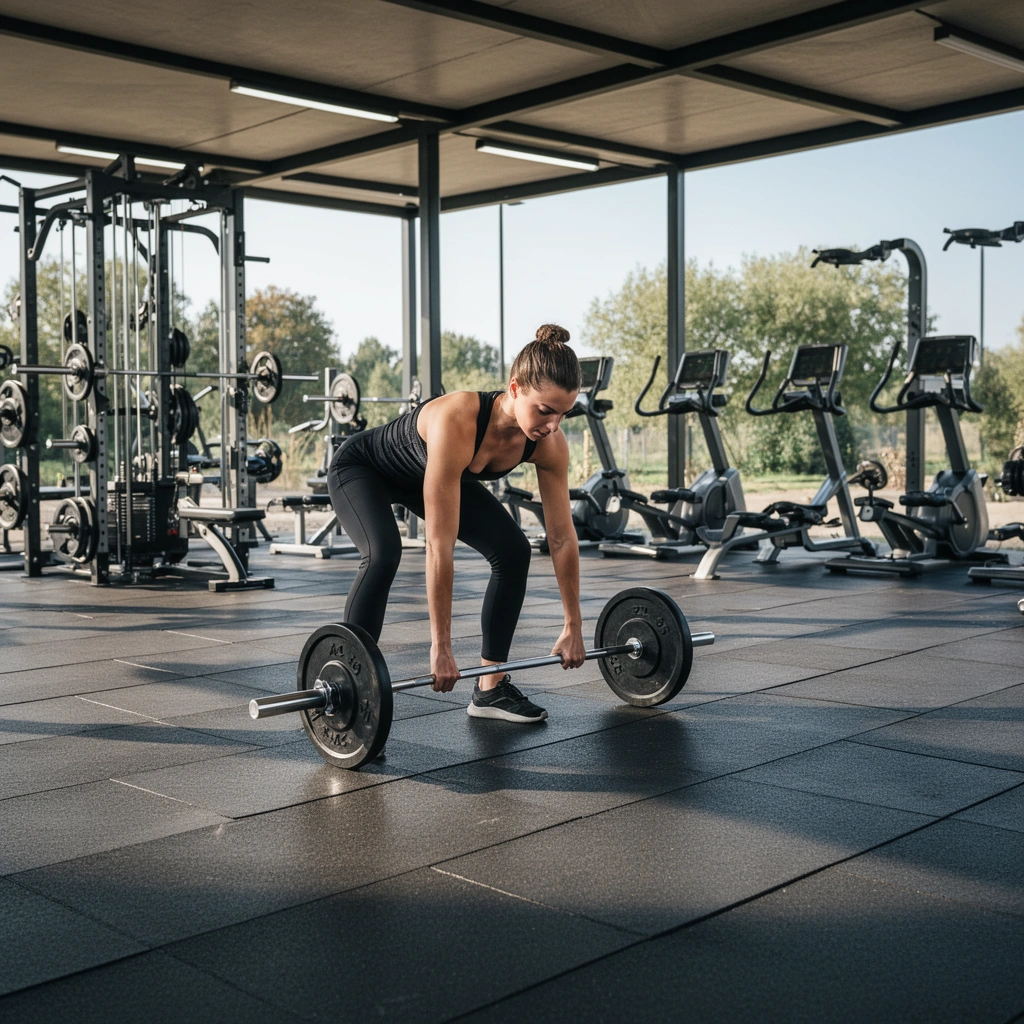
The first step is to define what you’re seeing, because each “lifting” symptom has a different root cause and a different fix. If the weight moves unpredictably, the goal is to determine whether you’re dealing with insufficient traction, a physical height change, or tacky residue that grabs then releases.
“Slips” are typically a traction problem caused by surface contamination (dust, cleaner residue, or water film), not a bar/plate strength issue.
“Uneven catches” usually come from a physical discontinuity (torn mat seams, cracked tile edges, or floor irregularities) that interrupts contact.
“Sticky behavior” often follows cleaning products, spills, or grime buildup on rubber mats that increases tack while you’re loading the plates.
From a troubleshooting standpoint, we’re translating what your barbell “feels like” into three buckets:
Sliding/rolling when you don’t expect it
This usually indicates friction loss—a layer of grit or residue that reduces the effective coefficient of friction. The weight can feel like it “floats,” then suddenly starts moving when you change speed, grip position, or bar path.
Two common triggers:
– Tracked-in grit (from shoes) under plates and rubber mats.
– Cleaner residue that stays even after the floor appears dry.
Uneven catch or bounce
If the barbell “catches” like it hits a small step, the issue is often surface height variation. Even small discontinuities can cause plates to briefly lose full contact, which feels like a lift, bounce, or delayed engagement.
Typical causes:
– Mat seams that don’t sit flush.
– Curled or compressed mat edges.
– Cracked tile, chipped concrete, or uneven patches from maintenance.
Sticky behavior
If the plates feel like they stick then break free, you’re often dealing with tacky residue on rubber. Humidity and grime can intensify tack over time, and some floor cleaners leave a thin film that increases grab.
If this pattern happens after specific cleaning days or when the gym just mopped that area, that’s a strong clue.
Quick measurement you can do safely (no tools required)
– Place two plates (or a dumbbell) at the exact spot where it happens.
– Set up the same stance and bar path.
– Watch whether the plate edge lifts (uneven/height) or whether it slides (traction).
This “motion observation” is quick, and it tells you which correction path to take.
Clean and prep the gym floor (and the gear that touches it)
Cleaning is the fastest controllable variable because dirt and residue directly change traction and plate-to-floor contact. Start with removing grit, then remove or prevent cleaner film, and finally wipe the actual contact surfaces: bar knurling isn’t the issue—plate edges, bar shaft contact, and mat top are.
A visible floor that “looks dry” can still have residue that reduces friction and increases sliding.
Sweeping or vacuuming before mopping prevents grinding grit into the surface and creating inconsistent traction.
Wiping plate edges and mat tops restores repeatable contact points, especially after gym traffic or equipment swaps.
Step 1: Remove grit first
– Sweep or vacuum the lifting area before any wet cleaning.
– Pay attention to plate-setting zones—corners, under equipment storage, and areas where shoes drag.
Grit matters because it can act like ball bearings when dry, or like a contaminant film when combined with cleaner.
Step 2: Use the gym’s approved cleaning method
Use the facility’s policy for the specific flooring type. Many gym floors are maintained with solutions that are designed to be safe for rubber or sealed concrete—but those products can still leave residue if they aren’t rinsed or extracted per instructions.
If you notice issues specifically after mopping, it’s reasonable to suspect residue and ask staff whether they:
– Use a rinse step or residue-neutralizing method (varies by policy),
– Use the correct dilution ratio,
– Or allow adequate dry time.
Step 3: Wipe the contact surfaces during setup
Before your first working set (and especially after a long warm-up), wipe:
– Plate edges where they touch the floor/mat
– Collars (where they contact plates)
– The top surface of your mat (if you use one)
– The bar area you routinely set down (rack height contact points vary by gym setup)
If you’re seeing squeaks, squeaky “skate,” sticking, or sudden traction loss, that’s often a surface-interaction problem you can control immediately.
Why this works (in plain terms)
Gym traction is not just “rubber vs. concrete.” It’s the interaction between:
– the floor surface,
– what’s on it (dust, oils, cleaner film),
– your plate edge finish,
– and your shoes/mat compression.
Change one of those and the whole behavior can shift.
Match mats and equipment to the floor
The right mat or platform turns unpredictable “catching” and “sliding” into repeatable contact. If your gym has mixed flooring or a visible seam/joint in one corner, your goal is to either avoid that discontinuity or create a consistent lifting surface.
A properly installed lifting mat should sit flat; curled edges can create a height discontinuity that makes plates “catch.”
A dedicated lifting platform reduces floor variation across the lift zone, which helps eliminate localized bounce and uneven contact.
Damaged plates or inconsistent collar pressure can change how the bar sits, amplifying perceived traction “engagement.”
If you use a mat: choose lifting-grade, not general foam
For lifting, you generally want:
– a mat designed for loaded impact and barbell contact (not just comfort),
– stable thickness,
– and a top surface that doesn’t change tackiness as it warms.
Avoid mats that:
– have curling edges,
– develop gaps where they meet other flooring,
– or compress unevenly (you end up changing bar/plate contact mid-set).
Use a consistent setup zone (if the gym allows it)
If your gym is mostly uniform but one area is problematic, create your own repeatability:
– Mark or remember the “good” zone where contact feels stable.
– If staff allows it, set up on a dedicated lifting platform area for movements like deadlifts and rack pulls.
This is one of the highest ROI changes because it isolates the floor variable without changing your training.
Keep plates and collars in good condition
Even if the floor is the main culprit, equipment can amplify symptoms:
– Bent plates can rock slightly and create intermittent contact.
– Rough edges or grime under a plate can change grip behavior.
– Collars that don’t seat fully can allow tiny shifting that feels like “catching.”
Practical habits:
– Inspect plate edges quickly before heavy work.
– Wipe plate faces and edges when you swap plates or switch stations.
Data snapshot: where traction issues usually come from
Below is a practical “triage” view of common causes and what they typically change about your lift feel.
Gym Lifting “Catch” Triage: Common Cause → Typical Symptom
| # | Cause category | Where you feel it | What it typically looks like | Fix likelihood |
|---|---|---|---|---|
| 1 | Tracked grit & shoe debris | Deadlift setup | Sliding then sudden stick | ★★★★☆ |
| 2 | Cleaner residue film | Only after mopping | More slipping across whole zone | ★★★☆☆ |
| 3 | Mat seams not flush | One corner or strip | Bounce/catch at the same spot | ★★★★☆ |
| 4 | Curled/damaged mat edges | Plate edges first contact | Plates lift then settle | ★★★☆☆ |
| 5 | Plate edge grime or oxidation | Across all stations | Inconsistent engagement per set | ★★★☆☆ |
| 6 | Uneven floor patch/crack | Always at the same coordinates | Hard “step” catch mid-pull | ★☆☆☆☆ |
| 7 | Overcompressed foam mat | Lower reps only | Contact changes as mat warms | ★★☆☆☆ |
Note: “Fix likelihood” here reflects how often the issue resolves with cleaning/mat/equipment handling rather than requiring floor repair. For safety-critical or persistent cases, involve facility staff.
Adjust your technique setup (the part most people skip)
Technique isn’t the cause in most floor-traction failures, but it can expose the problem faster—especially with deadlifts and rack pulls where bar path and tension amplify small differences. If you change your setup consistently, you can reduce the chance of the bar and plates touching a seam, ridge, or slick spot.
Small stance and bar-placement changes can move contact away from a seam or residue pocket, turning “catchy” behavior into normal contact.
A controlled start reduces micro-momentum that can exaggerate sticky or uneven floor interaction.
Worn shoe soles can change the traction “feel,” even when the plates still sit on the same floor spot.
Deadlift and rack-pull checks
– Re-check where the bar sits relative to your stance and knurl contact points.
– Avoid setting up so that the plate edges land on the seam lines you’ve already identified.
– Control your bar path: jerky starts can make intermittent traction changes more obvious.
Bar tension and “first contact” behavior
Before you pull, settle into:
– consistent tension (brace, lats engaged, bar contact established),
– steady tempo on the start.
When the floor is sticky, tension changes can trigger sudden release. When the floor is uneven, inconsistent first-contact pressure can cause brief lift or bounce.
Shoe and sole condition
If your gym setup includes hard-surface transfers (mat on concrete, or concrete + rubber patches), shoe traction influences your ability to keep the bar path consistent. Worn soles can also make your stance feel different rep-to-rep.
From my experience working through equipment-floor interactions (and what I see commonly in training environments), the biggest “technique” win is simply avoiding repeat contact with the same problematic seam/patch—because it turns a variable problem into a predictable one.
> If you want to write this into your own routine: log the exact setup coordinates that feel stable, then repeat them consistently.
What can go wrong (common mistakes and edge cases)
Even with the right steps, a few mistakes can make traction worse or delay a real fix. The key is to avoid “making it worse” with the wrong cleaners, the wrong mat behavior, or DIY floor damage.
Using the wrong cleaning chemical can leave a residue film that continues to reduce traction even after the surface looks dry.
Localized floor damage (seams, torn rubber, cracked tile edges) can be the root cause even when the rest of the floor feels fine.
A mat that compresses unevenly can create more height variation than the bare floor, especially under plate edges.
Common mistakes
– Over-cleaning with the wrong chemicals: Some degreasers leave slick residues on sealed surfaces and can affect rubber’s tackiness.
– Using the wrong mat thickness/texture: Too soft or compressible mats can change bar/plate contact as they warm and compress.
– Ignoring localized damage: If it happens only in one area, don’t assume you “fixed it” elsewhere—report the specific location.
– Assuming it’s your body: If deadlifts behave differently than squats, or it only happens at a station, the floor and setup zone are more likely than technique alone.
When you should stop troubleshooting and involve the gym
– The problem persists after approved cleaning and wiping plate edges.
– You identify a specific seam/crack/torn mat section that matches the “catch” point.
– The issue appears only after certain facility maintenance (mopping schedule, floor refinishing, or mat replacement).
Why this matters (risk context)
Slips, trips, and falls are a common category of workplace injury risk. According to the U.S. Occupational Safety and Health Administration, slips and trips are responsible for a large share of workplace injuries ([cite: OSHA: Slips, Trips, and Falls]). Cleaning and maintaining traction is not just comfort—it’s risk control.
(If you need jurisdiction-specific traction standards, ask the gym manager or facility safety contact for the relevant policy documents.)
Verdict / tip
Start with floor + gear prep (sweep/vacuum, approved cleaning, and wiping plate/bar contact points), then verify whether it’s localized by testing the same lift across a couple of different areas. If the floor is consistently uneven—or the gym’s cleaning leaves residue—you may not fully solve it without changing the surface you lift on (a proper lifting platform/mat) or adjusting your setup location.
Skip DIY “traction fixes” like sanding, aggressive chemical degreasers, or cutting mats yourself—those can permanently damage flooring or create new traction problems. When in doubt, ask the gym manager which cleaners are approved and what floor-prep process they use before and after mopping.
Quick scan checklist (save this)
– [ ] Does the “lifting” look like slipping, catching, or bouncing?
– [ ] Have we removed grit and wiped bar/plates/mat contact points?
– [ ] Are we lifting on a flat mat with no seams/curling?
– [ ] Does it happen in one area only (localized floor issue)?
– [ ] Are plates/collars in good shape and bar contact surfaces clean?
– [ ] Are shoes/soles clean and not excessively worn?
Quick compare: what to try first (and when)
| If you observe… | Most likely cause | Try first | If that fails… |
|---|---|---|---|
| Weight slides unexpectedly | Low friction (dust/residue) | Sweep/vacuum + wipe plate edges | Ask staff about cleaner residue process |
| Weight catches at the same spot | Height discontinuity (seam/crack) | Move setup zone slightly | Use a dedicated platform or report floor damage |
| Weight sticks then releases | Sticky residue (rubber tack/grime/film) | Wipe mat top + plate edges | Switch to a different cleaned area or platform |
FAQ
Why does my barbell feel like it “catches” only on certain days?
That pattern often points to floor residue, tracked-in grit, or cleaning differences between sessions. Try the same lift in another area after the floor has been cleaned, and wipe the bar/plates before your first set.
What’s the safest way to clean gym flooring for traction?
Use the gym-approved cleaning method for that flooring type. Avoid strong degreasers unless the facility explicitly permits them, because residue can reduce traction even after the floor looks dry.
Should I use a lifting mat to stop lifting/slipping?
A proper lifting mat or platform can help if the issue is surface variation or inconsistent traction. If your gym mat is damaged, curled, or compresses unevenly, it can make the problem worse.
Could my plates cause the problem?
Yes—bent plates, rough edges, or dirty contact surfaces can change how the bar/plates sit and move. Inspect plates and collars, and wipe contact points before lifting.
When should I involve the gym staff?
If the problem is localized (one station), persistent after cleaning, or related to damaged mats/tiles, tell the gym staff. They can check floor condition and confirm which cleaning approach won’t leave residue.
Sources
– OSHA – Slips, Trips, and Falls (general safety guidance)
– ASTM International – Standards related to slip resistance testing methods (e.g., coefficient of friction test methods for floor surfaces)
– Flooring product documentation (rubber and sealed concrete flooring manufacturers) for approved cleaners and residue/traction guidance — [ADD: source for your gym’s flooring manufacturer/specs]
– Mat/platform manufacturer specifications for surface flatness, load rating, and cleaning compatibility — [ADD: source for your mat/platform brand/spec sheet]
– Shoe manufacturer guidance on sole wear/maintenance and traction — [ADD: source for your shoe model/spec]
Frequently Asked Questions
How do I fix lifting on gym floors that feel bouncy or uneven?
Start by checking the floor for obvious issues like loose tiles, worn rubber sections, or debris that can cause instability. If the surface is uneven, use a lifting platform or add interlocking rubber mats to create a consistent base for deadlifts and heavy barbell work. For bouncy gym floors, focus on technique—keep feet planted, brace your core, and avoid bouncing reps—while improving grip and shoes so your body transfers force more effectively.
What are the best ways to reduce slip when lifting weights on rubber or polished floors?
Reduce slip by using proper footwear with non-marking, grippy soles and ensuring the floor is dry before lifting. For gym floors that are glossy or slightly slick, consider rubber flooring mats or chalk-based grip solutions where allowed, such as chalk for deadlifts and straps for high-rep pulling work. You can also improve bar control—slow down eccentric phases and keep wrists stacked—so you’re not relying on friction alone.
Why does my barbell feel unstable on gym flooring, and how can I correct it?
Barbell instability often comes from floor compression, uneven mat seams, or a lack of traction between the shoe, platform, and rubber surface. Correct it by placing a dedicated lifting platform in the area and using a mat thickness that won’t “give” too much during heavy lifts. Also make sure you’re using the right lifting shoes or flat trainers, and practice controlled bracing so the bar path stays consistent even when the gym floor flexes.
Which floor setup is best for deadlifts and heavy squats to prevent flexing and lifting issues?
The best setup is a solid lifting platform made of plywood or high-density material on top of stable rubber flooring, sized to fit your stance width and bar movement. Add shock-absorbing rubber beneath for impact management, but avoid overly soft mats that compress under load and change your mechanics. This setup helps prevent bounce and uneven load transfer, making your reps feel more consistent and safer.
How can I stop barbell wobble or uneven footing when lifting on gym floors with mat seams?
Mat seams can create tiny dips that throw off your balance, especially for sumo deadlifts, front squats, and overhead work. Choose a platform area without seams, or place a continuous mat or platform section so your feet land on one stable surface. Mark your exact foot placement and bar path on the floor, and keep your warm-up light while you confirm the surface feels steady before going heavy.
📅 Last Updated: October 12, 2026 | Topic: How to fix lifting on gym floors? | Content verified for accuracy and freshness.
References
- Google Scholar Google Scholar
https://scholar.google.com/scholar?q=rubber+gym+floor+mats+weightlifting+biomechanics+drop+landing - Google Scholar Google Scholar
https://scholar.google.com/scholar?q=floor+surface+stability+resistance+training+injury+prevention - Google Scholar Google Scholar
https://scholar.google.com/scholar?q=weightlifting+platform+surface+impact+force+musculoskeletal+injury - 1910.22 – General requirements. | Occupational Safety and Health Administration
https://www.osha.gov/laws-regs/regulations/standardnumber/1910/1910.22 - https://www.cdc.gov/niosh/topics/slips/
- Strength training: Get stronger, leaner, healthier – Mayo Clinic
https://www.mayoclinic.org/healthy-lifestyle/fitness/in-depth/strength-training/art-20046670 - Strength training
https://en.wikipedia.org/wiki/Weight_training - https://pubmed.ncbi.nlm.nih.gov/?term=rubber+gym+floor+mats+impact+force
- https://pubmed.ncbi.nlm.nih.gov/?term=weight+lifting+platform+surface+injury+prevention
- https://pubmed.ncbi.nlm.nih.gov/?term=floor+surface+compliance+musculoskeletal+injury