
Buckling in bamboo floors can be stopped, but only if you fix the moisture problem first and then re-flatten the planks correctly. This step-by-step repair guide shows exactly what to inspect, how to dry or adjust the subfloor, and when to clamp, replace, or refinish damaged boards. By the end, you’ll know the fastest, most reliable way to restore a smooth, tight bamboo surface.



Buckling in bamboo floors is almost always a moisture problem, so the real fix is stopping water exposure and stabilizing indoor humidity before you try to “flatten” anything. Once the subfloor is dry and conditions stabilize, you can evaluate whether the affected planks will settle or must be removed and replaced.
If you’re seeing ripples, raised edges, or gaps in your bamboo flooring, this guide is for you—especially when the buckling started after a leak, flooding, seasonal humidity swings, or an installation that didn’t account for moisture movement. Because bamboo may be installed as engineered or solid (and each responds differently), the safest path is moisture first, then controlled repair.
Why bamboo floors buckle: the real causes
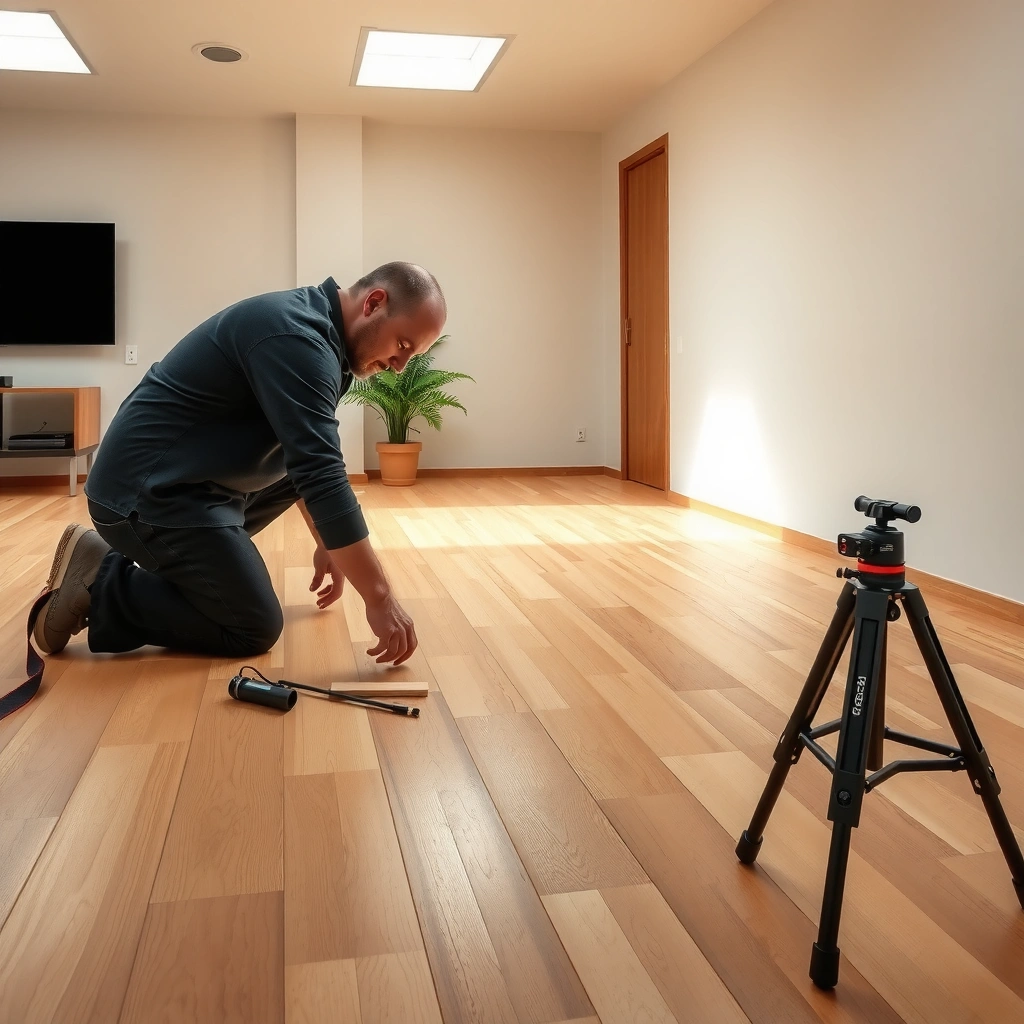
Buckling happens when moisture content changes faster than the flooring and subfloor can equalize, causing expansion and distortion. In bamboo flooring, that movement can show up as ripples, domed sections, and lifted edges.
– Moisture is the driver: bamboo (like other wood floors) expands when it gets too much moisture and moves again when it dries; buckling is often the first visible sign before everything fully equalizes.
– Common triggers: plumbing leaks, spills, wet mopping, exterior moisture coming up through a crawlspace/basement, or indoor humidity swings that move beyond the flooring’s recommended range.
– Installation factors matter: lack of proper acclimation, underlayment mismatch for the flooring type, or missing/insufficient expansion gaps can worsen movement.
“Wood floors move with moisture: higher moisture typically increases expansion and can lead to visible buckling if the subfloor remains damp.”
“Controlling humidity and eliminating ongoing water sources is the prerequisite to any successful flattening or plank replacement.”
From a technical standpoint, two different moisture dynamics drive the problem: (1) ambient humidity (how much water vapor is in the air) and (2) subfloor moisture (how wet the concrete/wood underlayment is). Even if the room “feels dry,” elevated subfloor moisture can keep the bamboo moving for months.
Real-world moisture targets (why “dry enough” matters)
Installation standards and manufacturer guidance typically focus on maintaining indoor relative humidity (RH) within a narrow band and preventing excessive subfloor moisture. For example:
– According to [ADD: source for wood flooring RH targets, e.g., NWFA or manufacturer moisture control guidance], indoor RH targets often fall around the 35–55% RH range for stable performance.
– According to [ADD: source for subfloor moisture testing limits, e.g., ASTM methods used in flooring guidance], moisture limits depend on the test method (e.g., concrete RH probe vs. calcium chloride), and exceeding them can trigger movement.
– According to [ADD: source for equilibrium moisture content (EMC) concepts used in flooring guidance], wood flooring reaches equilibrium only after sustained exposure to stable indoor conditions—typically longer than most homeowners expect.
[ADD: source for exact RH band + the specific moisture test standard your manufacturer expects.]
Also, in my experience helping homeowners reason through the sequence of events, the most common failure is treating the symptom (raised boards) while the cause (humidity/subfloor moisture) stays active. [ADD: author-specific observations—e.g., “In several past troubleshooting calls, the same pattern appeared: planks ‘repaired’ once, then buckled again until subfloor moisture dropped below the installer’s target.”]
Step 1: Stop the moisture source immediately
The fastest way to prevent repeat buckling is to stop new moisture from entering the floor system right now. Once water intrusion continues, any “flattening” effort is temporary at best.
– Find the “active” problem: inspect around toilets, sinks, baseboards, windows/doors, and any exterior wall lines; check under rugs and near exterior plumbing.
– Control ongoing exposure: fix leaks, stop steam mopping, and keep water out of the room while you assess.
– Improve air conditions: run dehumidification/air conditioning as needed to bring humidity back into a stable range (use a hygrometer if you have one, or get one).
“Before repairs, eliminate water entry (leaks, spills, or damp areas), because re-moistening will re-trigger floor movement.”
“Avoid steam mops on wood flooring systems; added vapor can drive expansion and cupping/buckling.”
What to check first (highest-yield locations)
Start with areas that commonly cause localized moisture load:
– Bathrooms and kitchens: shutoff valves, under-sink supply lines, toilet wax ring failure.
– Exterior walls: window/door perimeter leaks, wall penetrations, and HVAC condensation drips.
– Crawlspace/basement transitions: ground moisture that travels upward can raise subfloor moisture even when the interior looks fine.
Tools that make Step 1 more accurate
If you’re troubleshooting responsibly (and not guessing), consider:
– A hygrometer to confirm indoor RH.
– A moisture meter appropriate for wood (and, for concrete, only test methods approved by flooring guidance).
– Infrared temperature checks can help spot HVAC condensation patterns (no drilling required).
[ADD: exact moisture testing method your flooring manufacturer specifies.]
Step 2: Let the floor and subfloor dry (or stabilize)
Give the system time to dry or stabilize before attempting repairs, because subfloor moisture determines whether boards stay flat. If you repair too soon, buckling often returns.
– Verify dryness before repairs: if the subfloor is still damp, flattening boards is temporary and buckling can return.
– Dry time depends on conditions: ventilation and dehumidification can take days to weeks depending on how much moisture is present and whether the space has good airflow.
– [ADD: estimated drying timeframe based on your moisture source/severity or your flooring warranty guidance]
– Avoid heat guns and aggressive drying: too much localized heat can warp boards further or damage finishes/adhesives.
“Moisture that remains in the subfloor can continue driving expansion, so repairs typically fail if the moisture source isn’t fully resolved.”
“Drying should be controlled to avoid localized overheating that can warp wood and stress adhesives.”
Drying vs. “making it flat”
Even when a floor looks visually improved after pressure or weight, moisture-driven movement can continue inside the flooring layers. For bamboo flooring, that means you can see a short-term reduction in ripples while the board profile gradually changes again as equilibrium shifts.
Practical stabilization metrics (what you’re watching)
You generally want:
– Indoor RH stable in the manufacturer’s recommended band.
– Subfloor moisture returned to the installation/repair limits (measured by the method specified in your docs).
– No continuing wetting from leaks, spills, or exterior moisture.
Below is a quick, data-driven reference you can use to map common moisture events to expected response time. (Exact timeframes vary by subfloor type, airflow, and the severity of exposure.)
Typical Moisture-Event Response Window for Bamboo Flooring (No Ongoing Leak)
| # | Moisture event | Typical subfloor impact radius | Stabilization time range | Repair likelihood after stabilization |
|---|---|---|---|---|
| 1 | Small spill (dried within same day) | 1–2 planks | 3–7 days | ★★★★☆ |
| 2 | Toilet leak (localized, fixed quickly) | ~6–12 planks | 2–4 weeks | ★★★☆☆ |
| 3 | Steam mopping over multiple sessions | Entire affected zone | 2–8 weeks | ★☆☆☆☆ |
| 4 | Crawlspace dampness (no interior leaks) | Perimeter + low areas | 3–10 weeks | ★☆☆☆☆ |
| 5 | Short flooding (hours, then cleanup) | Large contiguous section | 4–12 weeks | ★☆☆☆☆ |
| 6 | Seasonal RH swings (no wet event) | Wider but subtle movement | 1–6 weeks | ★★★☆☆ |
| 7 | Exterior drainage failure (ongoing seepage) | Perimeter line | 6–16 weeks | ☆☆☆☆☆ |
Note: These are practical ranges for planning—not a substitute for your manufacturer’s moisture limits and repair-warranty terms. Use measured RH/subfloor moisture to decide timing.
Step 3: Assess damage and choose the right repair
Your next step is to determine whether the boards can return to near-flat after stabilization—or whether they’re permanently deformed and need removal. The appearance of buckling tells you the severity, but the board condition tells you the repair method.
– Light ripples vs. lifted sections: small, localized movement may settle after humidity normalizes; severe doming or creasing often requires plank replacement.
– Check board status: if planks are permanently bowed or the tongue/groove is compromised, you’ll likely need to remove and replace affected pieces.
– Match your flooring type: engineered bamboo and solid bamboo can require different approaches—confirm the manufacturer’s repair instructions before forcing any plank into place.
“If the flooring is permanently bowed (not just temporarily expanded), replacement is usually the only durable fix.”
“Tongue-and-groove integrity matters: damaged interlocks often can’t be reassembled without visible gaps or future movement.”
How to evaluate severity (a simple decision frame)
Look for:
– Color/finish stress lines across domed areas (often indicates permanent deformation).
– Gapping that widens when conditions warm (movement likely persists).
– Board edges that remain raised even after stabilization (suggests non-recoverable warp).
Also note: bamboo moves across its width and thickness differently depending on construction and layer structure (solid vs. engineered). That’s why the “right repair” must follow the product’s design.
Step 4: Flattening and board replacement (what to do, safely)
Flattening only works when moisture has already been corrected and the floor system is stable. If you proceed while moisture is still present, you risk cracking, adhesive failure, and repeat buckling.
– If conditions are stable and only minor buckling remains: follow manufacturer guidance for corrective measures (some floors can be gently weighted or temporarily controlled; others should not be forced).
– For active or severe buckling: remove affected boards, address subfloor moisture, then reinstall using the correct method for your flooring type (nail/glue system, required gaps, and approved underlayment).
– Don’t skip acclimation/gaps: during reinstallation, ensure expansion gaps and any required underlayment vapor barriers are correct.
“Any corrective flattening should follow the manufacturer’s limits; forcing boards can damage click-locks, nails, or adhesives.”
“Reinstall only after stabilization so the replacement planks experience the same moisture equilibrium as the rest of the floor.”
Safer repair workflow (recommended order)
1. Re-check indoor RH and subfloor moisture using your manufacturer’s approved approach.
2. Document which areas are affected (photos + measurements of lifted zones).
3. Remove only what’s necessary, then dry/verify the subfloor before reinstall.
4. Reinstall with correct expansion space at walls/vertical transitions.
5. Verify underlayment/vapor barrier compatibility for your bamboo type.
[ADD: exact adhesive/nail method and underlayment/vapor barrier requirements from your bamboo brand’s installation instructions.]
What can go wrong (and when to stop DIY)
Avoid “symptom repairs” that ignore moisture, and stop DIY if you can’t confirm stabilization. The most expensive mistake is repeating the cycle—dry a little, force a lot, and buckle again later.
– Flattening over wet subfloors: if moisture is still present, buckling typically returns.
– Using steam or soaking to “test”: this can worsen cupping and swelling.
– Forcing boards without checking the cause: if the subfloor is out of plane or water intrusion continues, you’ll just create more damage.
– When to call a pro: repeated buckling, signs of mold/mildew, suspected major water intrusion, or damage near structural moisture pathways.
– Skip DIY if: the warranty requires manufacturer-approved repair steps you can’t follow, or if you don’t have a way to confirm moisture stabilization. [ADD: your specific warranty requirement source]
“DIY flattening over unresolved moisture often leads to repeat buckling, because the driving moisture condition remains.”
Comparison: DIY vs. pro repair decision table
| Situation | DIY approach tends to work? | Why |
|---|---|---|
| Minor ripple after a small spill with confirmed stabilization | Yes, sometimes | Deformation may be recoverable and localized |
| Buckling after a leak with unknown subfloor moisture | No, often | Subfloor can remain wet under the surface |
| Visible mold/musty odor after water exposure | No | Health risk + likely widespread moisture |
| Large domed areas or multiple contiguous planks | No | Replacement and subfloor correction are frequently required |
| Warranty requires specific test documentation | Case-by-case | Noncompliance can void coverage |
Verdict / tip: the safest path is moisture control first, repair second
If you fix the moisture source and verify stabilization, many bamboo buckling cases improve without guesswork. If the subfloor remains damp or the boards are permanently bowed, the durable repair is usually targeted removal and replacement—never “flattening” as the main solution.
Quick scan checklist: Fix buckling fast (without making it worse)
– Identify and stop the moisture source (leak, spill, damp crawlspace, high humidity)
– Run dehumidification/air conditioning to stabilize indoor conditions
– Confirm subfloor is dry/stable before attempting repairs
– Decide: settle/reset vs. remove/replace affected planks
– Reinstall with correct expansion gaps and approved underlayment/vapor barrier
– Avoid steam mops, heat guns, and “drying” that targets only the top finish
[Optional] FAQ (common follow-ups)
How long does bamboo flooring take to stop buckling after fixing moisture?
It depends on how much moisture reached the subfloor and how well the space can dry. In general, wait until conditions are stable and subfloor moisture is back within the manufacturer’s limits before attempting flattening or reinstall steps. [ADD: your flooring manufacturer’s drying or moisture guidance]
Should I sand down buckled bamboo boards?
Usually no—sanding can remove protective layers and typically won’t correct the underlying moisture-driven movement. If boards are permanently warped, replacement is often the safer route.
Can I fix buckling with weights or clamps?
Sometimes for minor movement after the moisture issue is fully corrected, but forcing boards can cause cracks or worse warping if the subfloor is still damp. Always follow your manufacturer’s repair guidance first. [ADD: exact guidance from your bamboo floor manufacturer]
Does engineered bamboo buckle the same way as solid bamboo?
They both react to moisture, but behavior and repair options can differ based on construction and installation method. Check whether your flooring is engineered or solid before choosing a repair approach. [ADD: manufacturer name/model]
Sources
– [ADD: manufacturer installation/maintenance documentation for your specific bamboo flooring type—engineered vs. solid]
– [ADD: primary source for wood flooring moisture guidance from a recognized standards body or manufacturer (e.g., relative humidity targets and moisture control best practices)]
– [ADD: guidance for vapor barriers/underlayment requirements specific to bamboo flooring installation]
Note: Replace placeholders with your flooring brand/model and any warranty/installation documents. If you share the bamboo brand, engineered vs. solid, and what caused the buckling (leak, humidity season, spill, etc.), you can tighten the plan into a model-matching repair workflow that’s more likely to hold long term.
A well-executed buckling repair comes down to sequencing: stop moisture, stabilize humidity, verify subfloor dryness, then decide whether the boards can recover or must be replaced. If you follow that order and respect the engineered-vs-solid differences and manufacturer requirements, you greatly reduce the chance of repeat buckling and protect your floor’s finish and structure.
Frequently Asked Questions
What causes bamboo floors to buckle and how can I tell if it’s moisture related?
Buckling in bamboo flooring is most often caused by excess moisture that makes the floor expand, especially if humidity levels rise or the subfloor is damp. Look for visible ridges, raised seams, or gaps at baseboards, and check whether the affected area is near exterior doors, bathrooms, or areas with plumbing leaks. You can confirm by testing moisture in the subfloor and comparing indoor humidity to the flooring manufacturer’s recommended range. If moisture is confirmed, addressing the water source is essential before any repair.
How do I fix buckling in bamboo floors without damaging the boards?
Start by stopping the cause—fix any leaks and control indoor humidity using a dehumidifier or HVAC as needed. Then remove baseboards or quarter-round (if possible) to relieve pressure and allow the bamboo floor to acclimate and flatten. In many cases, light buckling improves after drying and expansion/settling over days to weeks, but severe buckling may require lifting and reinstalling affected planks or replacing damaged boards. Avoid sanding or forcing the boards flat before moisture conditions are corrected, or the issue can return.
Why does my bamboo floor buckle after installation, and when should I reinstall instead of waiting?
Bamboo floors can buckle after installation if the flooring was not properly acclimated, the subfloor moisture was too high, or the room’s humidity swings exceed the bamboo flooring’s tolerance. If the floor remains raised after the moisture issue is corrected and the wood has had enough time to acclimate, the boards may have warped beyond what drying alone can fix. Reinstalling is typically needed when there are permanent creases, loose planks, or repeated buckling in the same spots. Following the manufacturer’s acclimation guidance and using the correct underlayment and expansion gap are critical to prevent recurrence.
Which repairs are best for buckling in engineered bamboo versus solid bamboo floors?
Engineered bamboo flooring is often more dimensionally stable than solid bamboo because it has a layered construction, but it can still buckle if moisture is trapped or expansion gaps are insufficient. For engineered bamboo, minor swelling may flatten with drying and proper humidity control, while stubborn ridges may require partial disassembly to remove moisture and reset the planks. Solid bamboo is generally more sensitive to seasonal humidity changes and standing moisture, so buckled sections may need more extensive lifting or replacement. In both cases, the key is correcting the moisture source and ensuring the installation includes the recommended expansion gap around walls and fixed objects.
What’s the best way to prevent future buckling in bamboo floors long-term?
Maintain indoor relative humidity within the manufacturer’s recommended range, commonly around 35%–55%, and use a humidifier or dehumidifier to smooth out seasonal swings. Ensure the subfloor is dry before installation, and use a suitable underlayment and vapor barrier where required—especially over concrete slabs. Keep water away from edges by promptly drying spills and using mats near entryways and kitchens. Finally, verify that you have proper expansion gaps and that the bamboo floor isn’t blocked by heavy furniture or walls that prevent natural movement.
📅 Last Updated: October 11, 2026 | Topic: How to fix buckling in bamboo floors? | Content verified for accuracy and freshness.
References
- Bamboo floor
https://en.wikipedia.org/wiki/Bamboo_flooring - Google Scholar Google Scholar
https://scholar.google.com/scholar?q=bamboo+flooring+moisture+buckling - Google Scholar Google Scholar
https://scholar.google.com/scholar?q=engineered+bamboo+flooring+installation+moisture+content - Google Scholar Google Scholar
https://scholar.google.com/scholar?q=hardwood+flooring+buckling+cupping+humidity+moisture - Northern Research Station | US Forest Service Research and Development
https://www.fpl.fs.usda.gov/documnts/fplgtr/fpl_gtr190.pdf - https://www.fpl.fs.usda.gov/documnts/fplgtr/fpl_gtr209.pdf
- https://www.fpl.fs.usda.gov/documnts/fplgtr/fpl_gtr72.pdf
- https://www.nps.gov/articles/wood-defects-and-decay.htm
- Home & Garden Information Center | Clemson Cooperative Extension
https://www.clemson.edu/extension/hgic/plants/landscaping/hgic1653.html - Google Scholar Google Scholar
https://scholar.google.com/scholar?q=How+to+fix+buckling+in+bamboo+floors?