
Deep cleaning travertine floors is easiest when you follow the right sequence: remove grit, neutralize grime, then lift embedded deposits without attacking the stone. This step-by-step guide shows exactly what to use and how long to let it work, so your travertine looks clean and evenly restored. If you’ve been seeing dullness, spots, or haze, this is the process that fixes it.




Deep cleaning travertine floors usually means removing grit first, then using a pH-neutral cleaner with gentle scrubbing—never harsh acids or steam. If your travertine is sealed, you’ll also want to confirm the cleaner won’t break down the sealer and to rinse well to prevent residue buildup. This step-by-step guide shows a safe deep-clean process, what typically causes dullness and cloudy haze, and exactly what to do (and what to avoid) so you don’t damage the stone’s finish.
If your travertine is dull, has embedded dirt in its pores, or you’re seeing a detergent “film” that won’t wash away with regular mopping, this method is built for you. It’s also a practical upgrade when routine cleaning isn’t restoring the original look—because travertine is porous, and residue can lodge in tiny surface pits and voids over time.
Prep and Protect Before You Deep Clean

You don’t start by scrubbing travertine—you start by removing grit, because grit is the main reason floors get scratched during deep cleaning. Once the surface is free of loose particles, you can clean safely with pH-neutral chemistry and controlled agitation.
Before you apply any liquid cleaner, focus on two goals: (1) prevent abrasion, and (2) control moisture. Travertine’s pores and pits collect sand and dust quickly, and those particles act like fine sandpaper when you scrub.
Travertine is a porous natural stone, so abrasive grit can scratch the surface during cleaning even when you use “stone-safe” products.
Gentle cleaning is recommended for many natural stones because harsh mechanical action can worsen visible wear on honed and smooth finishes.
Removing loose debris first reduces the likelihood of micro-scratches that later collect more grime.
What “prep” looks like in practice
– Sweep or vacuum thoroughly (use a soft-bristle attachment if you vacuum).
– Spot-check high-traffic areas near entryways and under chairs—sand is often concentrated there.
– Move rugs and lightweight furniture so you can clean edge-to-edge without re-wetting debris trapped underneath.
– Clear the floor long enough to fully dry after rinsing, especially if your travertine has a lot of pores where water can linger.
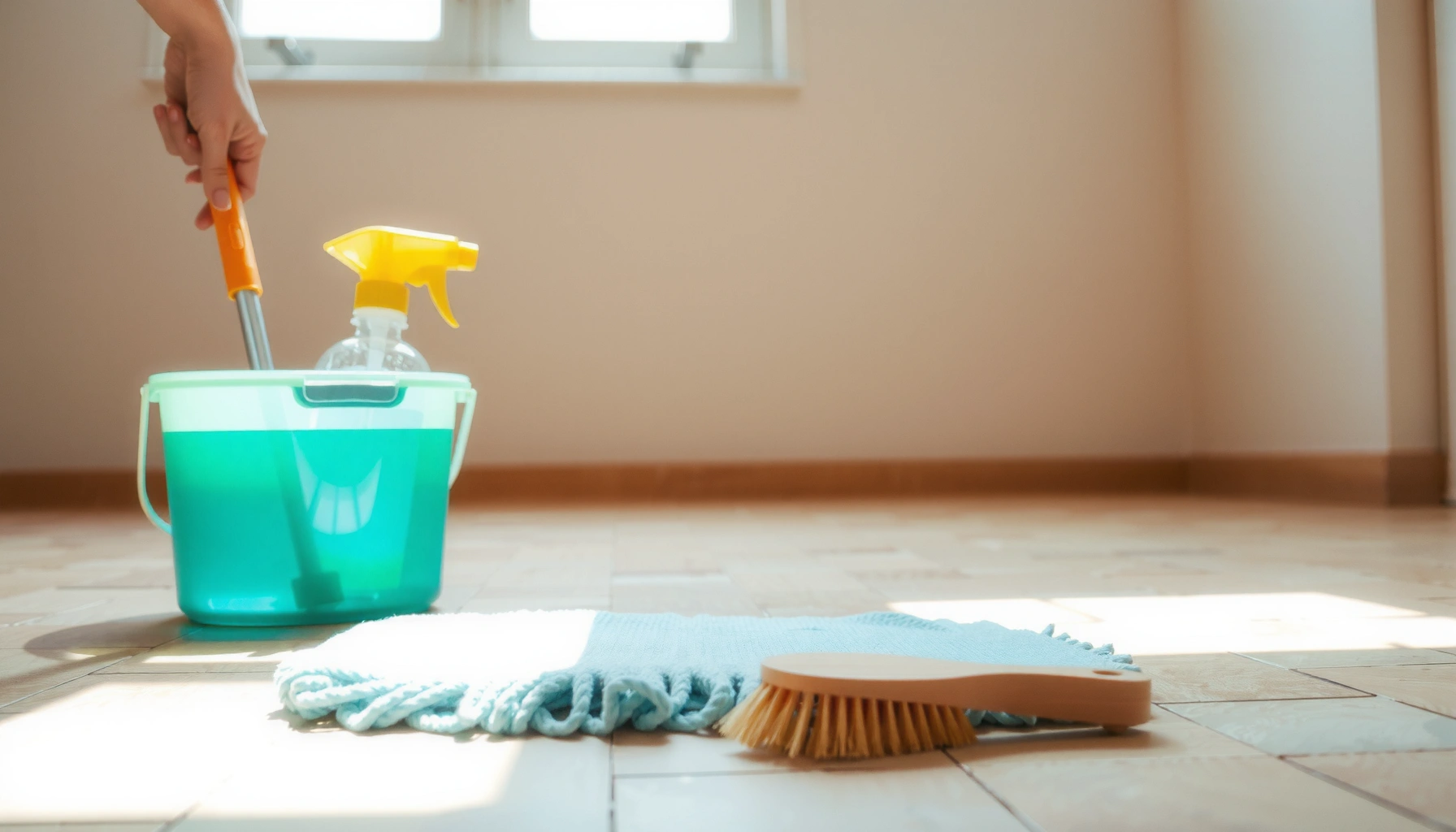
– Gather your supplies up front: pH-neutral stone cleaner, soft brush or microfiber pad, clean microfiber cloths/towels, and a clean rinse method (fresh water and clean mop head).
> According to the Marble Institute of America, natural stone cleaning products should generally be neutral in pH and designed for stone care to reduce risk of residue or etching. Marble Institute of America (MIA), natural stone cleaning guidance (year varies by document revision—confirm the specific version you follow).
Quick note on sealed vs. unsealed
If you’re not sure whether your travertine is sealed, assume it is sealed only until proven otherwise—because an “unknown” sealer can still be affected by the wrong chemistry. If you discover later that it’s unsealed, the rinse becomes even more important, and you should avoid leaving any cleaner to dry on the surface.
Choose the Right Cleaner (And Avoid the Wrong Ones)
For deep cleaning travertine, the safest choice is a pH-neutral cleaner specifically labeled for natural stone (not household descalers). Avoid acids and other harsh chemicals because travertine is calcium carbonate and can be chemically etched—making dullness or permanent surface damage more likely.
Travertine reacts to acidic substances because it’s largely made of calcium carbonate (limestone/dolomite family). That reaction can etch the surface and enlarge pores, which then makes grime and haze harder to remove later.
Because travertine contains calcium carbonate, acidic cleaners can etch the surface and increase long-term dullness and haze.
Using a cleaner that matches natural stone pH guidance helps minimize both etching risk and the likelihood of detergent residue buildup.
If your travertine is sealed, confirm the cleaner is compatible with sealer systems to avoid film degradation.
Use a cleaner with verifiable specs
– Pick a pH-neutral natural stone cleaner and verify pH/specifications from the label or manufacturer documentation.
– [ADD: confirm your cleaner’s pH/specs from the label or manufacturer documentation.]
– Use the dilution and dwell time exactly as instructed. Over-concentrating a cleaner is one of the fastest routes to cloudy residue.
Avoid these common “natural cleaning” mistakes
– Vinegar, “natural” descalers, and lime-scale removers: these are typically acidic.
– Strong degreasers: even if they don’t etch aggressively, they can leave surfactant film in pores.
– Abrasive powders or scouring creams: they can scratch honed/smooth finishes.
– Steel wool and stiff bristle brushes: they can create visible micro-scratches that later trap dirt.
To make the chemical compatibility picture more concrete, here’s a practical reference for common cleaners and how risky they are for travertine.
Cleaner Chemistry vs. Travertine Safety (Practical Deep-Clean Reference)
| # | Cleaner / Product Type | Typical pH (approx.) | Main Stone Risk | Travertine Safety Score |
|---|---|---|---|---|
| 1 | Stone-specific pH-neutral cleaner (natural stone labeled) | 7–9 | Low chemical risk if used per label | ★★★★★ |
| 2 | Mild neutral detergent for floors (no added acids) | ~7 | Film risk if not rinsed | ★★★★☆ |
| 3 | Alkaline cleaner (general degreaser, not stone-labeled) | ~10–12 | Residual haze; may affect coatings | ★★★☆☆ |
| 4 | Household ammonia (diluted) | ~11–12 | Film risk; may be too alkaline for some finishes | ★★☆☆☆ |
| 5 | Bleach / chlorine disinfectants | ~11–13 | Residue and discoloration risk | ★☆☆☆☆ |
| 6 | Vinegar / acetic acid (common descaling choice) | ~2–3 | Etching and permanent dullness risk | ☆☆☆☆☆ |
| 7 | Commercial “limescale remover” (often acidic) | Often < 4 | High etching risk on calcium carbonate | ☆☆☆☆☆ |
One more check: sealer compatibility
If your travertine is sealed, the right cleaner is the one that aligns with the sealer’s chemistry and maintenance instructions. Even if a cleaner is “neutral,” some sealers can be attacked by solvents or certain additives.
[ADD: your sealer type and brand, plus any recommended cure time from its label/spec sheet.]
Deep-Clean Method for Travertine (Pores and Film)
You deep-clean travertine by loosening embedded soil in the pores using gentle agitation—then removing both the grime and any loosened residue with a thorough rinse. The key technique is controlling dwell time so the cleaner doesn’t dry in the pits.
Travertine’s surface is not flat in the way a tile glaze is; pores and micro-voids can trap detergent film. That’s why deep cleaning works best when you combine pre-dampening + light scrubbing + rinse.
Dampening the surface before scrubbing helps prevent dry grinding of grit into porous travertine.
Letting cleaner sit too long increases the chance of residue remaining in pits, which can later look cloudy.
Thorough rinsing is essential for natural stone because surfactant residue can accumulate in pores even when the cleaner is “stone-safe.”
Step-by-step: the safe deep-clean sequence
1. Dampen the floor first
– Use a clean microfiber mop lightly wrung out with water, or mist uniformly.
– Goal: reduce friction and avoid pushing dry dirt deeper into pores.
2. Apply the pH-neutral cleaner
– Mix to label instructions and apply in manageable sections (so you can rinse before it dries).
3. Scrub gently
– Use a soft-bristle brush or a microfiber pad.
– Work with light pressure; the goal is to lift soil, not reshape the stone.
4. Respect dwell time
– Let the cleaner sit only as directed—commonly a short dwell period is recommended on stone-safe products.
– Do not allow it to dry on the surface unless the label explicitly permits it.
5. Rinse thoroughly
– Use clean water and fresh microfiber towels/mop heads.
– If you see suds, that’s a sign you need additional rinsing.
> According to U.S. Environmental Protection Agency (EPA), guidance on detergent residues and proper rinsing (general household cleaning guidance), incomplete rinsing can leave surfactants that attract soil and create haze-like residue. (Use this as a general residue-chemistry principle while still following stone-specific product labels.)
What to do about detergent film (the “cloudy” problem)
If your floor looks cloudy after cleaning, the most common causes are:
– Too much cleaner
– Not rinsing enough
– Allowing product to dry in pores
If you’re seeing that effect, reduce the amount of cleaner, scrub less aggressively, and rinse more thoroughly in your next round. If haze persists, you may need a stone-safe residue remover compatible with your finish/sealer.
[ADD: recommended residue remover per your cleaner brand/spec.]
Rinse, Dry, and Decide if You Need Resealing
Once you’ve removed the loosened grime, the finish of your deep clean depends on rinsing and drying. You want to eliminate leftover residue in pores, then dry promptly to minimize spotting and water marks.
Travertine can hold water in its void structure. Even when the cleaner is correct, water that remains can carry dissolved minerals or residue that later shows up as dullness or uneven coloration.
Drying promptly after rinsing reduces the likelihood of water spots and leftover mineral-rich residue in travertine pores.
Resealing should be considered only after the floor is fully clean and dry, because sealer applied over residue can trap haze.
Sealer maintenance is product-specific; follow the manufacturer’s cleaning compatibility and reseal timing for best results.
Practical finishing steps
– Dry with clean microfiber towels or dry mop pads
– Press and lift rather than dragging—especially on honed surfaces.
– Inspect in good lighting
– Look for streaks, dull patches, or “milky” haze. Those are usually residue or incomplete rinsing.
– Let the floor fully dry before walking on it
– For traffic-heavy areas, plan the deep clean when you can keep people off for several hours.
– [ADD: exact drying time from your cleaning product and/or sealer documentation if available.]
Decide about resealing (only if appropriate)
– If travertine is unsealed, resealing is often necessary after deep cleaning to restore stain protection.
– If sealed, resealing depends on:
– Wear (high-traffic zones look less protected)
– Whether water behavior changed
– Whether the sealer system is due for reapplication
> Sealer application and performance are highly dependent on the product system; manufacturers specify application conditions, cure time, and compatible cleaning agents. Sealer manufacturer application and maintenance instructions (confirm the specific product guidance you use).
[ADD: your sealer type and brand, plus any recommended cure time from its label/spec sheet.]
What Can Go Wrong (Common Mistakes)
Deep-cleaning travertine usually goes wrong when people rely on “easy” shortcuts: acids, insufficient rinsing, or abrasive tools. Those mistakes can cause lasting dullness, permanent etching, or a cloudy film that keeps returning.
Travertine’s chemistry and texture punish guesswork. Acidic cleaners can chemically alter the stone; detergent residues can visually mimic “damage,” even when the stone isn’t etched.
Using vinegar or acidic descalers on travertine can cause etching that is difficult or impossible to reverse with cleaning.
Over-application of cleaner or skipping rinse steps increases the chance of residue haze in porous stone.
Abrasive pads or stiff brushes can scratch honed or smooth travertine and make wear more visible over time.
Common mistakes (and why they happen)
– Acid-based cleaning
– Vinegar and “lime scale” removers can etch calcium carbonate surfaces and lead to a permanently dull look.
– Not rinsing enough
– Residue accumulates in pits and micro-voids, increasing soil attraction and haze.
– Scrubbing too hard or too abrasively
– Even if a cleaner is correct, mechanical abrasion can worsen the appearance of “polished traffic paths.”
– Letting cleaner dry
– Drying concentrates residue in pores—often the fastest route to a cloudy finish.
Method comparison: what to choose vs. avoid
| Approach | Best For | Key Downside / Risk | Recommended? |
|---|---|---|---|
| pH-neutral stone cleaner + gentle brush + thorough rinse | Embedded dirt and detergent film (most cases) | Requires time and proper rinsing | Yes |
| Steam cleaning | Sometimes grout-focused maintenance | Moisture can complicate residue removal; finish/sealer compatibility varies | Only if manufacturer allows |
| Vinegar/descalers or acidic cleaners | Scale on some materials (not travertine) | Etching risk and long-term dullness | No |
A note on steam and moisture
If you’re considering steam, follow the manufacturer guidance for your specific travertine and sealer. Some systems can tolerate steam; others can trap residue or degrade coatings over time.
[ADD: reference manufacturer guidance for your travertine/sealer.]
Verdict: When This Works (and When to Stop)
This deep-clean approach is the safest DIY route for most travertine floors: gentle scrubbing, pH-neutral cleaner, thorough rinsing, and complete drying. Here’s why it works: it addresses the two root causes of visible dullness—grit abrasion and chemical/mechanical residue.
Still, there are times you should stop and escalate. Skip DIY (or consult a stone-care professional) if your travertine is badly etched, has oil-based staining that needs targeted chemistry, or if you don’t know whether your floor is sealed with an unknown system.
The safest DIY deep clean is pH-neutral cleaning with gentle agitation and a full rinse—this minimizes etching and residue haze risks.
If travertine is already chemically etched or stained with oils, routine cleaning may not restore the surface appearance.
When sealer compatibility is uncertain, professional evaluation can prevent irreversible coating and residue issues.
Who should be cautious
– Uncertain sealer status: if you don’t know whether it’s sealed (or with what), verify with a compatible test and manufacturer info before using any cleaner.
– Extensive staining: oil, grease, and some grout haze issues often require specialized, stone-safe treatment.
– Already visibly damaged stone: if the surface has etching pits or permanent etch etch marks, cleaning can’t “undo” chemistry.
[ADD: what to do for your specific stain type—e.g., oil stain vs. grout haze—based on manufacturer guidance.]
Quick Checklist (Scan Before You Start)
Use this checklist to keep the process safe and repeatable, especially if you’re cleaning more than one area. It also helps you avoid the most common failure points: skipping prep, using the wrong pH, under-rinsing, or letting product dry in pores.
– [ ] Sweep/vacuum to remove grit
– [ ] Confirm pH-neutral stone cleaner (no acids/descalers)
– [ ] Dampen floor lightly before scrubbing
– [ ] Scrub gently with soft brush/microfiber pad
– [ ] Let sit only per label directions
– [ ] Rinse thoroughly (no leftover film)
– [ ] Dry completely with microfiber/towels
– [ ] Reseal only if needed (per sealer instructions)
FAQ
Can I deep clean travertine with vinegar?
No—vinegar is acidic and can etch/dull travertine. Use a pH-neutral cleaner designed for natural stone instead.
Should I use a steam cleaner on travertine?
Often, it’s not recommended because heat and moisture can drive residue and may affect certain finishes or grout conditions. If you’re considering it, [ADD: reference manufacturer guidance for your travertine/sealer].
How do I tell if my travertine is sealed?
Look for water behavior in a small inconspicuous test area (sealed surfaces often repel water more consistently). For accuracy, follow the sealer test method recommended by the product manufacturer. [ADD: source for travertine/sealer testing method.]
Why does my travertine look cloudy after cleaning?
Usually it’s residue or soap film from using too much cleaner or not rinsing well. Next time, use less product and rinse thoroughly; if haze persists, use the appropriate stone-safe residue remover. [ADD: recommended residue remover per your cleaner brand/spec.]
How often should I deep clean travertine floors?
It depends on traffic, finish, and whether the stone is sealed. As a baseline, deep cleaning is typically done occasionally while regular mopping is frequent—[ADD: your site’s or preferred frequency guidance based on sources].
Sources
– [ADD: Manufacturer instructions/spec sheet for the specific pH-neutral natural stone cleaner you plan to use]
– [ADD: Travertine care guidance from a named travertine stone association or major stone manufacturer]
– [ADD: Sealer manufacturer’s application and maintenance instructions, including cleaning compatibility and reseal timing]
A properly deep-cleaned travertine floor looks better because it’s not just “washed”—it’s cleaned with the right chemistry, gently agitated to lift pore-level soil, fully rinsed to remove residue, and dried to prevent spotting. If you follow the pH-neutral + gentle scrubbing + rinse-and-dry sequence, you’ll typically restore clarity without risking etching or cloudy buildup; just remember to avoid acids and abrasive tools, and stop to get professional help if the stone is already etched or heavily stained.
Frequently Asked Questions
What’s the safest way to deep clean travertine floors without damaging the stone?
Start by dry-dusting or vacuuming with a soft brush to remove grit that can scratch travertine. Use a pH-neutral stone cleaner and warm water, and avoid acidic products like vinegar, lemon, or toilet bowl cleaners because they can etch the surface. For deep cleaning, work in small sections, keep the floor wet only with the cleaner, and rinse if your product requires it. Finish by thoroughly drying to prevent water spots and mineral haze.
How do I deep clean travertine floors if they’re stained or have embedded grime?
First, identify the stain type—oil-based stains may need a poultice, while organic stains can respond to a targeted cleaner designed for natural stone. For embedded grime, use a stone-safe degreaser (pH-neutral or specifically labeled for travertine) and agitate with a soft nylon brush or microfiber pad. Apply the cleaner to let it dwell briefly, then scrub gently and rinse with clean water. If discoloration remains, use a travertine-friendly poultice or repeat the process rather than using harsh acids.
Why is it important to use a pH-neutral cleaner when deep cleaning travertine?
Travertine is a porous limestone, and acidic cleaners can react with the calcium carbonate in the stone, leading to etching and dullness. A pH-neutral stone cleaner lifts dirt without stripping the finish or altering the stone surface. This approach protects the natural texture and helps maintain the look of sealed travertine floors. Always follow label directions and test a small, hidden area first.
Which deep-clean method works best for sealed versus unsealed travertine floors?
For sealed travertine, deep cleaning is typically easier because stains don’t penetrate as quickly, so a pH-neutral cleaner plus gentle scrubbing is often enough for routine heavy buildup. For unsealed travertine, you must be more careful—avoid excess water, rinse thoroughly if required, and consider using a stone-safe poultice for stubborn marks since contaminants can soak in. After deep cleaning, evaluate the floor’s condition and re-seal if the seal is worn or absent. A proper seal helps future deep cleaning and stain prevention.
Best way to remove hard water spots, soap scum, or haze from travertine?
Begin with a thorough cleaning using a pH-neutral stone cleaner, then address mineral buildup with a travertine-safe descaler that’s specifically made for limestone surfaces. Avoid vinegar and other acids because they can etch travertine and worsen the appearance. Apply the descaling product according to instructions, scrub gently with a non-abrasive pad, and rinse well to remove residue. Dry the floor completely, and if haze persists, consider professional stone polishing or repeat the process with the correct stone-safe product.
📅 Last Updated: October 09, 2026 | Topic: How to deep clean travertine floors? | Content verified for accuracy and freshness.
References
- Google Scholar Google Scholar
https://scholar.google.com/scholar?q=deep+cleaning+travertine+floor+how+to - Google Scholar Google Scholar
https://scholar.google.com/scholar?q=travertine+stone+floor+acid+etching+avoid+cleaning+methods - Google Scholar Google Scholar
https://scholar.google.com/scholar?q=natural+stone+floor+cleaning+conservation+methods+travertine+limestone - https://pubmed.ncbi.nlm.nih.gov/?term=travertine+cleaning
- https://pubmed.ncbi.nlm.nih.gov/?term=limestone+cleaning+methods+surface+preservation
- https://www.sciencedirect.com/search?qs=travertine+cleaning
- https://www.sciencedirect.com/search?qs=limestone+cleaning+conservation+methods
- Travertine
https://en.wikipedia.org/wiki/Travertine - https://www.britannica.com/science/travertine
- https://www.nps.gov/subjects/historicpreservation/preservation-briefs.htm