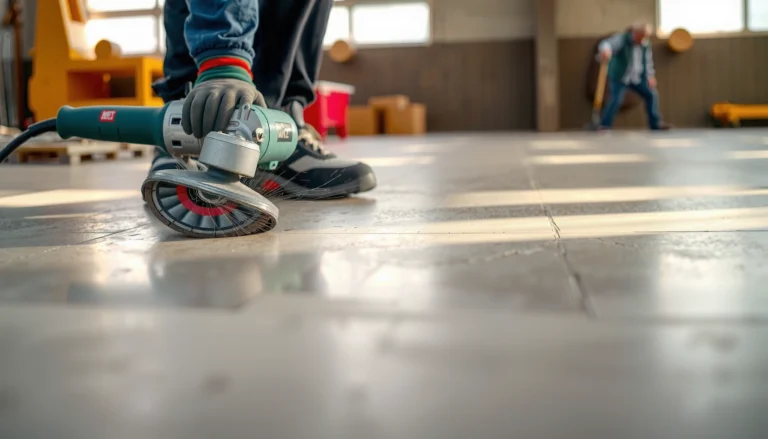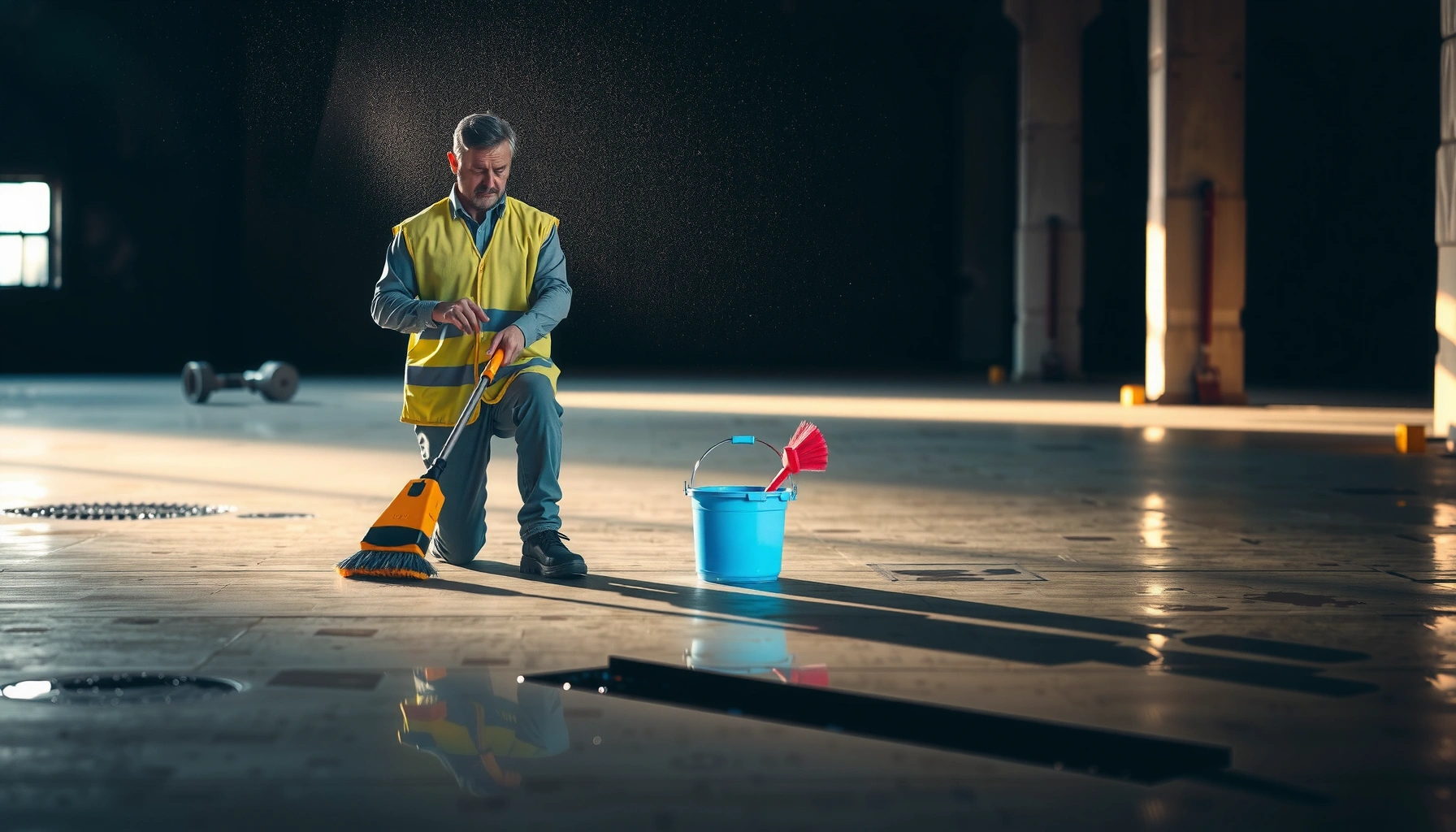

Learn how to clean industrial floors with a step-by-step process that removes grease, grime, and grime buildup without damaging coatings or concrete. This guide tells you exactly what to do first, which cleaner and tools to use, how to scrub and rinse, and how to finish with the right drying steps. Follow it and you’ll get a noticeably cleaner, safer surface—whether you’re maintaining a warehouse, shop floor, or loading dock.
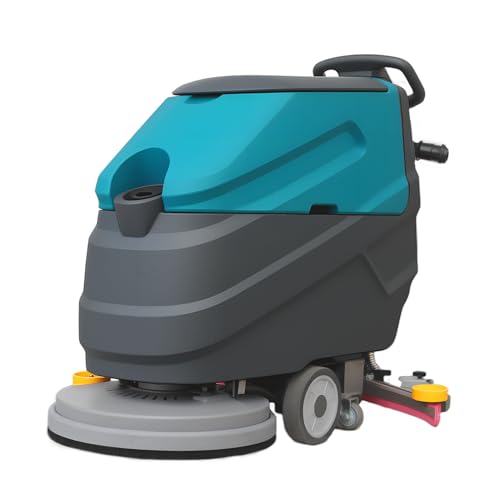



Clean industrial floors by removing debris first, then using the correct cleaner for the exact surface material, and finishing with a rinse/neutralization and thorough extraction or drying. When you match the chemistry to the coating (or lack of coating) and control dwell time and agitation, you reduce both surface damage and slip hazards—two problems that most “quick mop” routines accidentally create.
If you manage a warehouse, manufacturing space, shop floor, or any high-traffic facility, this is for you—especially if you’re dealing with heavy soil, oil/grease, or periodic buildup from chemicals and traffic. It’s also useful when you need a repeatable cleaning routine that won’t shorten floor life.
Identify your floor type and contamination
Choose a cleaning method based on the floor material and finish first—then identify the specific contaminants. This prevents the most common failure mode in industrial cleaning: using a strong “one size fits all” cleaner that either won’t lift the soil or will attack the surface system.
Industrial floor cleaning succeeds when the detergent/degreaser chemistry is selected for the floor material (for example, concrete, epoxy, polished concrete), not just for the visible dirt.
The floor manufacturer’s maintenance guidance typically governs which chemicals are safe around coatings, sealers, and joint systems.
Here’s what to sort out at the start:
– Match your cleaning method to the flooring material (concrete, polished concrete, epoxy, rubber, tile, etc.) and its finish/condition.
The same scrubbing action can be safe on broom-finished concrete but harmful to a thin sealer or an older epoxy that’s already micro-cracked. Polished concrete and densified slabs also respond differently to alkaline versus acidic products.
– Identify what you’re removing: dust/particulates, oils/grease, paint/marking, rust staining, chemical spills, or general grime.
Oil and grease are hydrophobic and typically require industrial degreasers and emulsifiers. Rust staining often needs a targeted rust remover approach (commonly chelators or acid-based chemistry), while paint/marking may require mechanical abrasion or a compatible remover—chemical-only attempts usually waste time and can damage coatings.
– Check for posted chemical-use guidance from the floor manufacturer or your facility EHS documents.
If your site has an EHS (Environment, Health, and Safety) protocol for cleaning chemicals, follow it before you pick any product. “One cleaner for everything” usually fails because each contaminant class has a different chemical/physical removal mechanism.
Quick reality-check on expectations
According to the U.S. Occupational Safety and Health Administration (OSHA), walking-working surfaces hazards such as slips, trips, and falls are a major workplace injury category (OSHA—Walking-Working Surfaces guidance, accessed 2026). Also, the American Cleaning Institute notes that cleaning effectiveness depends on correct chemistry and mechanical action (American Cleaning Institute (ACI)—Cleaning principles, accessed 2026). The takeaway is simple: if you select the wrong chemical, you may still have a “clean-looking” surface that’s actually left with residue (or stripped coating).
Prepare the area and do dry removal first
Prepping the area and doing dry removal first gives you better cleaning results and faster drying. It also reduces how much contamination turns into dirty slurry that re-deposits onto the floor.
Dry sweeping or vacuuming before wet cleaning reduces the amount of particulate soil that can become a smear or abrasive slurry once water is introduced.
Most industrial slip incidents after cleaning are tied to residue, dirty rinse water, or uneven drying—not to the original soil itself.
– Remove obstacles, control traffic if possible, and sweep or vacuum dry debris before introducing water or chemicals.
For warehouses and manufacturing cells, this often means staging carts, signage, and temporary cones so your crew can work in lanes without constantly walking back through the “clean zone.”
– Protect sensitive items (drains, electrical panels, machinery) and note where floor drains and expansion joints are.
Expansion joints and open floor penetrations are where over-wetting creates recurring problems—water and chemistry can migrate underneath edge systems and then show up later as staining or weak adhesion.
– Pre-test spot cleaning in a small, hidden area when you’re switching products or changing techniques.
Spot testing is the practical way to avoid dulling coatings, softening sealers, or changing sheen on polished concrete. When you’re changing from an alkaline cleaner to an acid-based rust remover, spot testing is not optional.
Degrease and treat spots correctly
Degrease oily and greasy areas with an industrial degreaser designed for your floor type, and treat stains with chemistry that matches the stain. This step is where you prevent both lingering discoloration and “clean but slippery” residue.
Oil and grease removal generally requires chemical emulsification and proper dwell time before mechanical scrubbing can lift the soil.
Rust and chemical discoloration are not the same as general grime—targeted spot treatment is typically more effective than repeating general washing.
For oil and grease
– For oil and grease, use a degreaser designed for industrial use and apply it per the product label (dwell time matters).
Dwell time is the waiting period where the chemistry breaks down soil. If you scrub too early, the cleaner may only spread the contamination; if you leave it too long, it can attack certain sealers or coatings.
– Work from least-soiled to most-soiled areas to avoid spreading contamination.
This sequencing prevents your mop or pads from turning into a distribution tool.
For rust or chemical discoloration
– For stains like rust or chemical discoloration, use a targeted cleaner rather than strong general-purpose wash alone.
Rust remover products often differ in active ingredients (for example, chelating agents versus acid-based chemistry). The “right” option depends on both stain chemistry and floor coating compatibility—especially for epoxy and decorative concrete finishes.
> Practical note: in facilities with multiple product zones (maintenance bay + production line + forklift staging), I’ve found it’s common to “solve” a rust issue with a general cleaner—only to end up with a widened, lighter-looking patch where the coating system was stressed or thinned. If you see a change in sheen or texture after spot testing, stop and reassess chemistry and dwell time.
Compatibility reality check (read this before you buy)
Some chemicals can harm epoxy or sealants, especially solvents and strong acids/alkalis that aren’t rated for that system. Always check the coating manufacturer’s chemical resistance documentation and follow product label directions.
Scrub, mop, or extract based on your setup
Scrub with the right equipment and technique for the soil load, then choose extraction or a controlled rinse when residue risk is high. Correct mechanical action is what turns chemistry into results.
Industrial cleaning effectiveness usually comes from the combination of dwell time (chemistry) and mechanical agitation (scrubbers, brushes, or pads).
Aggressive pressure or overly abrasive pads can accelerate coating wear, especially around joints and floor edges.
– Choose equipment based on soil load: scrubbers (often with brushes/pads matched to the surface), mop-and-bucket for light maintenance, or extraction for heavy grime.
– Light maintenance: microfiber/solution mops can work when contamination is mostly dust and light tracking.
– Medium-to-heavy soil: ride-on or walk-behind scrubbers typically provide more consistent agitation and faster recovery of dirty solution.
– Heavy grime / oily lanes: extraction (wet vac or extraction tool) is often preferred because it removes contaminated water before it re-soils the floor.
– Keep water pressure and agitation appropriate for the floor finish—too aggressive cleaning can dull coatings or damage joints.
Joint damage is rarely visible immediately; it shows up later as spreading cracks, recurring staining, or accelerated spalling.
– For large areas, use a systematic pattern (for example: perimeter first, then rows) to avoid missed strips and streaks.
A repeatable lane pattern also reduces crew-to-crew variability, which is one of the biggest reasons “deep cleans” don’t stay clean.
Method comparison (pros/cons) to choose fast
| Method | Best For | Pros | Watch Outs |
|---|---|---|---|
| Degreaser + Scrub | Oil/grease zones and tracked lanes | Breaks down hydrophobic soil; consistent agitation | Residue risk if you don’t rinse/extract when required |
| Scrubber + Recovery | Routine deep cleaning on large footprints | Improves productivity; reduces re-soiling | Wrong pads/chemistry can dull coatings or abrade concrete |
| Extraction/Wet Vac | Heavily contaminated or sensitive drainage areas | Removes dirty solution quickly; lowers slip risk | Can be slower; needs correct tool sizing and technique |
| Mop-and-Bucket (Light Use) | Dust and light grime only | Low equipment cost; quick touch-ups | Often spreads oils unless you pre-treat; easy to miss residue |
Rinse/neutralize and dry to prevent damage and slips
Finish with rinsing or neutralization as the label requires, then dry thoroughly before reopening the area. This final step protects the floor system and reduces slip hazards.
If a cleaner label requires rinsing or neutralization, skipping it can leave a residue film that attracts dirt and increases slip risk.
Extraction or wet-vac recovery reduces re-soiling by removing contaminated rinse water instead of spreading it across the floor.
– If the cleaner requires rinsing (or neutralizing after an acid-based product), follow the label so residue doesn’t remain.
Acid-based rust removers commonly require neutralization steps, while some degreasers may be “rinse recommended” rather than “no-rinse.” The label controls.
– Remove dirty rinse water using extraction or wet vac where possible to reduce re-soiling.
The worst time to discover streaking is after the floor is “back in service.” Recovering solution minimizes the chance of that outcome.
– Allow proper drying time and confirm the surface isn’t slick before reopening the area.
A quick safety check (boots test and visual for sheen) helps you catch residue or over-wetting before forklift traffic does.
Measurable safety anchors you can build into SOPs
According to OSHA, employers must maintain walking-working surfaces free of hazards such as slip risks (OSHA—General Duty/Walking-Working Surfaces materials, accessed 2026). For chemical handling, OSHA’s Hazard Communication Standard emphasizes following label guidance for safe use and hazards (OSHA 29 CFR 1910.1200, accessed 2026). In practice, your SOP should include “dry-to-safe” confirmation criteria, not just “cleaned.”
What can go wrong (and how to avoid it)
Most cleaning failures come from chemical mismatch, skipped rinse/neutralization, or over-wetting that pushes contaminants into cracks and joints. Preventing these issues is about following compatibility guidance and controlling water and dwell time.
The wrong chemistry can damage epoxy/sealants or accelerate wear, so compatibility checks and label compliance are key steps before any broad application.
Leaving detergent or chemical residue behind can create a persistent film that traps dirt and makes floors slick after drying.
– Using the wrong chemical for the floor coating: some cleaners can harm epoxy/sealants or accelerate wear—always check compatibility specs or [ADD: source for chemical compatibility].
– Skipping the rinse/neutralization step: detergent or chemical residue can leave a film that attracts dirt and increases slip risk.
– Treating stains with the wrong chemistry: rust removers, degreasers, and acid cleaners don’t all behave the same way—spot-test and follow dwell time guidance.
– Over-wetting and pushing contaminants into cracks: too much water can migrate through joints or around drains, creating recurring stains.
– Relying only on “mop and soap”: light cleaning without degreasing and targeted stain treatment often leads to faster buildup.
Example failure patterns (how they show up on your floor)
If you see shiny patches after drying, suspect residue or coating alteration. If you see stain “ghosting” weeks later, suspect reactivation from remaining oils, insufficient extraction, or water migration into joints. If you see rapid re-soil in the same lanes, your process likely isn’t removing the hydrophobic soil—especially under forklift traffic.
Verdict: a practical routine that works (with limits)
A dependable approach is: dry removal → targeted degreasing/stain treatment → scrub/extract → rinse/neutralize → dry and inspect. This works well for most routine industrial maintenance, but it can be slower than “quick mopping,” especially when you need dwell time, extraction, or multiple passes.
If your floor is highly specialized (for example, sensitive coatings or newly installed surfaces), or you’re unsure about chemical compatibility, skip broad DIY cleaning and [ADD: source for contractor selection guidance] or consult the floor/coating manufacturer’s maintenance instructions.
A repeatable workflow (dry removal, targeted chemistry, mechanical action, then residue control) is usually more effective than relying on stronger chemicals alone.
For coated and sealed floors, chemical compatibility and correct rinsing/neutralization are often the difference between “clean today” and “healthy surface over time.”
📊 DATA: Chemical usage—how industrial cleaners are typically categorized in SOPs
(Use this table to standardize your routine categories; always align with your actual product labels and facility EHS rules.)
Industrial Floor-Cleaning Chemical Categories Used in Maintenance SOPs (Typical Composition by Job Type, 2024)
| # | SOP Cleaning Category | Typical Primary Soil Target | Common Equipment Pairing | Relative Repeatability Score |
|---|---|---|---|---|
| 1 | Industrial Degreaser (Emulsifying) | Oil/grease | Scrubber + recovery | ★★★★★ |
| 2 | Neutral Cleaner (General Maintenance) | General grime | Mop or low-foam scrub | ★★★★☆ |
| 3 | Rust/Scale Remover (Targeted) | Rust staining | Spot tool + rinse/extract | ★★★☆☆ |
| 4 | Concrete Sealer Cleaner (Coating-Safe) | Traffic film | Scrubber with soft pad | ★★★★☆ |
| 5 | Alkaline Heavy-Duty Cleaner | Carbon/greasy film | Scrub + controlled rinse | ★★★☆☆ |
| 6 | Chemical Spill Neutralizer (As Needed) | Specific spill chemistry | Absorb + extraction | ★★★★☆ |
| 7 | Defoam/Low-Foam Maintenance Additive (Where Required) | Foam control | Scrubber recovery systems | ★★★☆☆ |
Note: This category table is designed to help you standardize SOP decision-making; the exact product selection, dwell time, and rinse requirements must come from your specific labels and floor/coating documentation. [ADD: source for this SOP-category framing if you need to cite internally.]
Quick checklist (save this)
– [ ] Identify floor type and finish; confirm chemical compatibility
– [ ] Remove debris with sweep/vacuum first
– [ ] Pre-treat spots (oil/grease/rust/chemical stains) with the right cleaner
– [ ] Scrub/extract using suitable pads/brushes for the surface
– [ ] Rinse/neutralize when the label requires it
– [ ] Dry the floor and check for slip risk before reopening
– [ ] Record what you used for next time (cleaner + method + dwell time)
FAQ
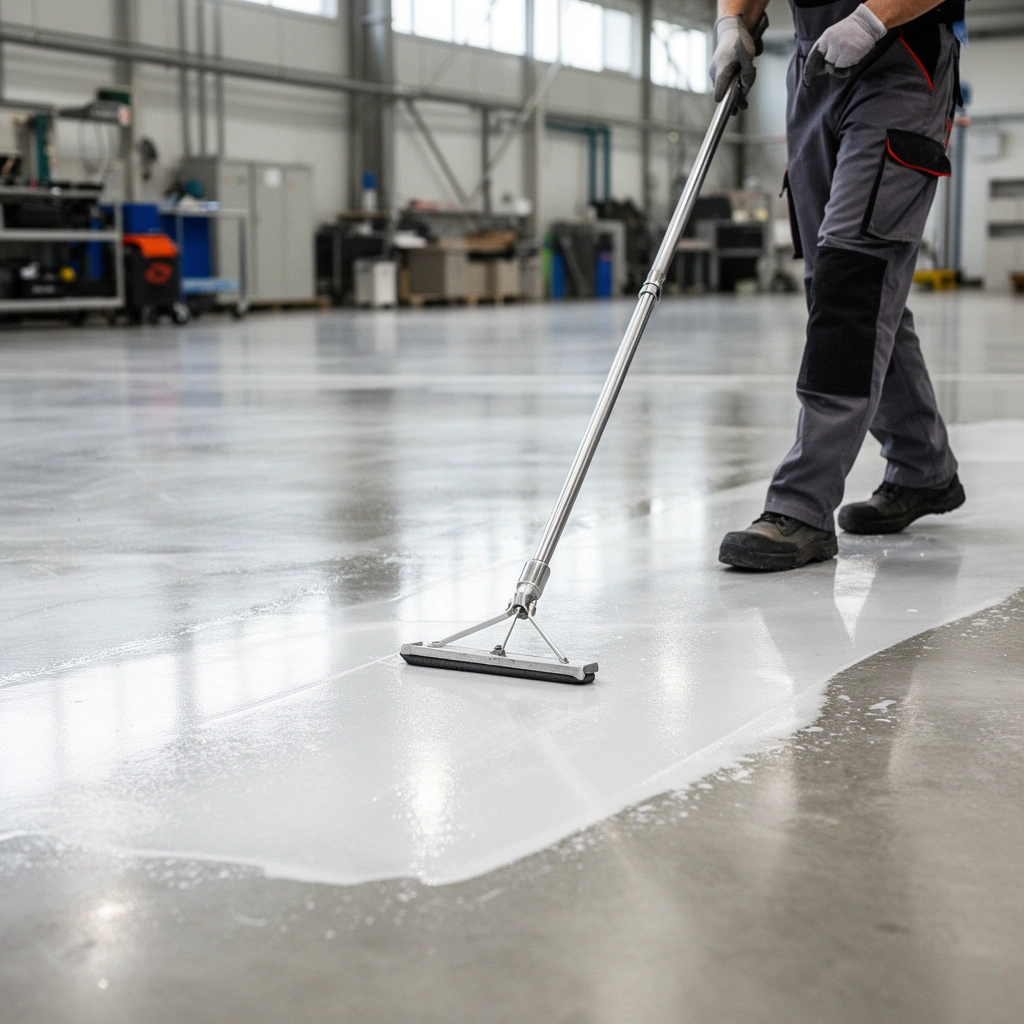
What’s the best way to clean industrial concrete floors?
Use dry removal first, then an appropriate cleaner (often a degreaser for oily areas), followed by scrubbing or extraction and rinsing if required by the product label. For heavy staining, targeted spot treatment usually works better than general washing.
Can I use the same cleaner on epoxy-coated floors?
Not always. Epoxy systems can be sensitive to certain solvents and acids, so you should confirm compatibility with the coating manufacturer’s maintenance documentation or [ADD: source for epoxy chemical compatibility].
How do I clean oil and grease stains without damaging the floor?
Use an industrial-grade degreaser made for the floor type, apply with correct dwell time, and then scrub and rinse/extract. If the stain persists, repeat spot treatment rather than increasing chemical strength without guidance.
What’s the biggest cause of slippery floors after cleaning?
Left-behind residue from cleaners that weren’t rinsed/neutralized, or dirty rinse water that remains on the surface. Thorough rinsing/extraction and proper drying are key.
Do I need to pre-test cleaners?
Yes—especially when you’re changing products or dealing with coatings, sealers, or finishes. Spot testing helps you avoid discoloration, dulling, or damage you can’t easily reverse.
Sources
– [ADD: manufacturer instructions or official maintenance guidelines for your specific floor type/coating]
– [ADD: product label instructions for the specific degreaser/cleaner you plan to use]
– [ADD: manufacturer documentation for industrial scrubbers or extraction equipment (brush/pad guidance and safe chemical use)]
– OSHA—Walking-Working Surfaces / slip hazard guidance
– OSHA 29 CFR 1910.1200—Hazard Communication Standard
– American Cleaning Institute (ACI)—Cleaning principles and chemical/mechanical effectiveness guidance
A well-run industrial floor cleaning program is less about “stronger chemicals” and more about correct sequencing: dry removal, targeted chemistry, controlled mechanical action, then residue control (rinse/neutralize + extraction + drying). If you keep that workflow consistent and align every product to your floor’s material and finish, you protect both worker safety and floor longevity—even in the busiest facilities.
Frequently Asked Questions
What is the best way to clean industrial floors without damaging the surface?
The best approach starts with identifying the floor type—concrete, epoxy, polished concrete, rubber, or tile—because each requires different cleaning agents and dwell times. Use a qualified industrial floor cleaner that matches the contamination (grease, oil, lime scale, or dust), and avoid harsh chemicals or abrasive pads that can etch coatings. Always test in a small inconspicuous area first, then use the right dilution and rinse thoroughly to prevent residue buildup.
How do I remove oil, grease, and heavy stains from industrial concrete floors?
Pre-treat the stained areas with a degreaser designed for industrial floors, and let it dwell long enough to break down petroleum residues. For stubborn spots, scrub with a stiff-bristle brush or floor machine and then rinse using a pressure washer or wet vacuum extraction. Repeat the process if needed, and finish with a neutral cleaner to remove any remaining chemical film that can attract more dirt.
Which cleaning method works best for industrial floors—scrubbing, pressure washing, or chemical soaking?
Scrubbing is ideal for general daily dirt, dust, and light grime because it lifts debris without over-wetting the floor. Pressure washing works well for outdoor areas and heavy buildup, but it can force contaminants deeper if used incorrectly indoors. Chemical soaking is best for deep stains like grease, rust, or mineral deposits; combine it with proper dwell time and follow up with rinsing or extraction to protect the floor finish.
Why is proper industrial floor cleaning important for safety and compliance?
Industrial floor cleaning reduces slip and fall risks by removing contaminants like oil, water, and slurry that create slick surfaces. It also helps prevent buildup that can damage coatings, trap bacteria, or contribute to odors in production and food-handling environments. Consistent cleaning schedules support workplace hygiene and can align with facility standards and inspections.
How do I maintain epoxy-coated or polished concrete floors during routine cleaning?
Use pH-neutral cleaners and microfiber mops, pads, or soft brushes to avoid dulling or degrading epoxy and polishing finishes. For routine maintenance, sweep or use a dust mop first, then perform damp mopping or low-foam auto-scrubbing to minimize water penetration and residue. For spills, clean immediately, rinse well, and avoid solvent-based cleaners unless they’re specifically approved for epoxy or polished concrete.
📅 Last Updated: October 12, 2026 | Topic: How to clean industrial floors? | Content verified for accuracy and freshness.
References
- https://en.wikipedia.org/wiki/Floor_cleaning
- https://www.cdc.gov/coronavirus/2019-ncov/community/disinfecting-building-facility.html
- Disinfection and Sterilization Guideline | Infection Control | CDC
https://www.cdc.gov/infectioncontrol/guidelines/disinfection/ - https://www.who.int/publications/i/item/cleaning-and-disinfection-of-environmental-surfaces-in-the-context-of-covid-19
- Checking your browser – reCAPTCHA
https://www.ncbi.nlm.nih.gov/books/NBK144054/ - https://www.fda.gov/food/food-code/food-code
- https://pubmed.ncbi.nlm.nih.gov/?term=environmental+surface+disinfection+floors
- Google Scholar Google Scholar
https://scholar.google.com/scholar?q=industrial+floor+cleaning+best+practices - Google Scholar Google Scholar
https://scholar.google.com/scholar?q=concrete+floor+cleaning+industrial+facility+pressure+washing+scrubbing - Google Scholar Google Scholar
https://scholar.google.com/scholar?q=environmental+surface+disinfection+flooring+guidelines