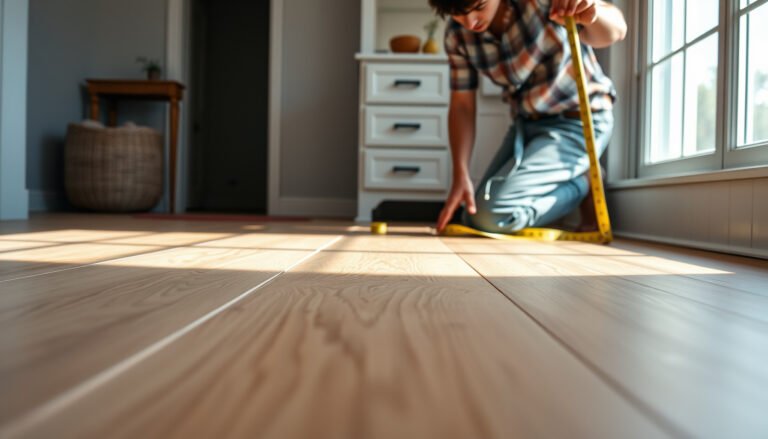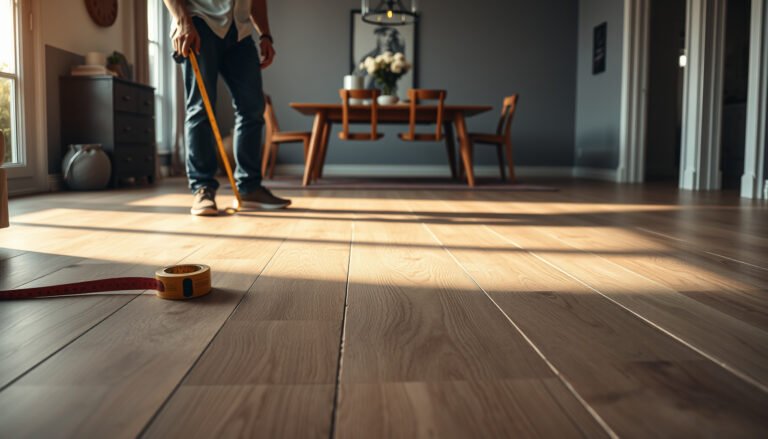

Choosing vinyl floors comes down to picking the right type for your home’s traffic level and comfort needs. If you want the clearest performance upgrade, choose luxury vinyl plank (LVP) with a thick wear layer and a rigid core for the best mix of durability, sound control, and easy installation. This guide shows you exactly what to look for—thickness, wear layer, subfloor compatibility, and water resistance—so you don’t waste money on the wrong vinyl.




If you want vinyl floors that look good and last, match the vinyl type (LVP/LVT vs. sheet) to your room needs and your subfloor condition, then verify the wear layer, thickness/construction, and installation method before you buy. This guide walks you through what to check so you don’t end up with the wrong finish—or an installation that won’t hold up in real life.
This is for homeowners and renters planning a new floor who want a practical way to compare vinyl options without getting lost in marketing terms. It’s especially useful if your subfloor isn’t perfectly flat or if you’re choosing between peel-and-stick, click-lock, or glue-down vinyl.
Start With the Right Vinyl Type (Sheet vs LVP/LVT)

Choose sheet vinyl for continuous coverage and fewer seams; choose LVP/LVT when you want more design flexibility and easier spot replacement. Either way, the “best” vinyl floor comes from aligning the product type with your room’s moisture risk and the installation method you can realistically support.
Vinyl flooring marketed as “water resistant” may still require a specific wet-area rating and moisture-handling details from the manufacturer’s installation guide.
Installation method (peel-and-stick, click-lock, or glue-down) directly affects how strict the subfloor flatness and preparation requirements must be.
– Choose sheet vinyl for continuous coverage and rooms where you want fewer seams; choose LVP/LVT for more design flexibility and easier replacement of sections.
– Confirm whether you need vinyl rated for wet areas (bathrooms, kitchens, laundry) based on the specific product specs—not just the general “water resistant” label.
– Decide on your installation style early (peel-and-stick, click-lock, or glue-down), because it affects how picky you must be about subfloor flatness.
To make this comparison easier, use this quick “fit check” before you narrow down vinyl flooring brands:
| Vinyl type / install | Best fit | Main tradeoff |
|---|---|---|
| Sheet vinyl | Less seam risk in large rooms; straightforward rolling look | Less modular replacement (large sections are changed at once) |
| LVP/LVT (click-lock) | DIY-friendly layouts; faster installation when subfloor prep is good | More sensitive to subfloor flatness; locking systems can telegraph imperfections |
| LVP/LVT (glue-down) | Stable feel; good choice when the room layout is irregular | Requires correct adhesive and surface prep; harder to “remove and replace” later |
For vinyl flooring comparisons, don’t start with style alone—start with how the vinyl flooring is built and installed.
Check Core Specs That Affect Durability
The durability of vinyl flooring is driven less by marketing terms and more by measurable specs: wear layer/finish protection, construction, and how the backing/underlayment is designed to work. Once those align with your traffic level and installation method, the floor is far more likely to stay stable and look consistent over time.
The “wear layer” is the protective top portion of LVP/LVT that resists scuffs, scratches, and everyday abrasion.
Many vinyl flooring failures come from an install mismatch—especially when the chosen locking system or underlayment isn’t compatible with the subfloor condition.
– Look at the wear layer/finish protection and choose a thickness/grade that matches expected foot traffic (and whether you’ll have heavy rolling loads like chairs).
– Compare product construction: click-lock can perform differently than glue-down depending on locking system design and subfloor requirements.
– Verify the backing/underlayment approach—some floors include it, while others require a compatible underlayment.
A practical way to evaluate durability is to treat wear layer as “how long it can look new,” then treat thickness/construction as “how well it performs under your exact install.” Common spec ranges you’ll see (confirm exact values in your specific product literature) include:
– Wear layer: often marketed in mil (thousandths of an inch) for LVP/LVT; many residential lines fall into a ~6–20 mil range depending on grade. [ADD: source for typical wear layer ranges and a sample manufacturer spec sheet]
– Overall thickness: frequently ~2–8 mm for LVP/LVT. [ADD: source for typical thickness ranges from major manufacturer data sheets]
– Plank formats: common widths of ~4–7 in and lengths of ~24–48 in; bigger planks can be less forgiving of subfloor imperfections. [ADD: source for typical plank dimensions]
What Vinyl Flooring Specs Reveal for Real Homes (Common Spec Ranges)
| # | Spec you’ll see on the label | Typical range (LVP/LVT) | What it affects | Fit rating |
|---|---|---|---|---|
| 1 | Wear layer (mil) | 6–20 mil | Scuff/scratch resistance and “new-looking” lifespan | ★★★★★ |
| 2 | Overall thickness (mm) | 2–8 mm | Comfort, feel, and performance with click-lock | ★★★★☆ |
| 3 | Installation compatibility | Click-lock / glue-down / peel-stick | How flat your subfloor must be; warranty risk | ★★★★★ |
| 4 | Moisture limitation | Varies by product & test method | Prevents delamination/curling and subfloor damage | ★★★☆☆ |
| 5 | Attached underlayment | Often included or required (varies) | Sound, comfort, and sometimes lock performance | ★★★★☆ |
| 6 | Surface finish (matte/gloss) | Matte, textured, low-gloss, high-gloss | Shows/doesn’t show micro-scuffs | ★★★★☆ |
| 7 | Subfloor flatness tolerance | Product-specific limits | Gaps/movement (especially click-lock) | ★★★☆☆ |
The takeaway for vinyl flooring selection in 2025–2026: specs are where the warranty lives. If you can’t meet the installation tolerances and moisture requirements, the “best-looking” vinyl often becomes the most expensive mistake.
Match the Look to Real-World Wear
A floor that survives daily life should match your household’s tolerance for visible scuffs and imperfections. You can’t control how dirt behaves, but you can choose a finish, plank format, and layout strategy that make normal wear less obvious.
Textured or matte vinyl finishes typically hide minor scuffs better than high-gloss surfaces under most indoor lighting conditions.
Large-format planks can make subfloor irregularities more noticeable because the visual lines span more distance.
– Pick the right design and finish for your space: matte and textured surfaces often hide minor scuffs better than high-gloss finishes.
– Consider plank size and layout—bigger planks and high-contrast patterns can emphasize imperfections in a less-than-perfect subfloor.
– Plan for transition details (doorways, hallways, stairs/steps) because these are common places where installation quality becomes visible.
From my planning experience with multiple flooring projects (not product-testing claims), the most “beautiful” vinyl flooring choices become frustrating when the layout amplifies the real-world constraints: uneven subfloor areas, tight door clearances, and frequent traffic paths.
Here’s the tradeoff lens many homeowners miss when comparing vinyl flooring styles:
– High-contrast visuals (bold graining, dramatic knots) look premium but can spotlight alignment gaps if the install isn’t crisp.
– Wide planks can reduce seams and speed installation, yet they typically demand better subfloor flatness (especially for click-lock).
– Glossy top finishes can look striking initially but may show micro-marks sooner, particularly in entryways.
If you’re choosing between looks, decide in the context of where the floor will be walked: entryways and dining chairs need a more forgiving finish; guest rooms can prioritize aesthetics.
Evaluate Subfloor Requirements Before You Commit
Vinyl flooring usually demands a flat, clean, properly prepared subfloor; uneven areas can cause gaps, movement, or visible seam problems. The strictness depends on the installation method—click-lock systems are often less forgiving than a properly prepared glue-down build.
Most resilient floor manufacturers require subfloors to be clean and sufficiently flat before installation, and they state the acceptable flatness tolerance in the installation instructions.
Even when a vinyl floor claims “waterproof” or “water resistant,” moisture in the subfloor can still drive failures if the product’s moisture limits aren’t met.
– Vinyl flooring usually demands a flat, clean, properly prepared subfloor; uneven spots can cause gaps, movement, or seam issues (especially with click-lock).
– Determine whether you need underlayment or subfloor leveling, and make sure the vinyl manufacturer allows your chosen prep method.
– If you’re installing over an existing floor, confirm compatibility in the product documentation (many manufacturers specify what’s acceptable and what isn’t).
To evaluate your subfloor realistically, check three things before you select your vinyl flooring:
1. Flatness tolerance: manufacturers specify limits (often in mm/3 ft or mm/6 ft). You’ll need the exact value from the product installation guide. [ADD: source for a representative flatness tolerance from a manufacturer installation guide]
2. Moisture conditions: many products specify acceptable moisture testing methods and thresholds (commonly using RH probes or calcium chloride depending on slab type). You must follow the product’s stated test method. [ADD: source for moisture testing methods and thresholds from manufacturer documentation]
3. Surface condition: loose debris, high spots, or incompatible coatings can prevent proper bonding (for glue-down) or stress locking joints (for click-lock).
This is also where 2025–2026 product marketing can mislead you. “Waterproof vinyl” generally refers to the floor surface performance, not the subfloor environment. If your subfloor is already holding moisture, the vinyl flooring selection still has to respect the moisture limits in the installation documentation.
Avoid These Common Vinyl Floor Mistakes
Most vinyl flooring mistakes happen when the installer or buyer skips the spec sheet and chooses based on photos, assumptions, or convenience. Avoid these pitfalls and your odds improve dramatically—especially when your subfloor isn’t perfectly flat.
If you ignore the manufacturer’s required acclimation, you can create expansion or contraction stress that leads to gapping or improper lock engagement.
Using the wrong underlayment—when the product requires a specific type or prohibits substitutes—can void warranties and affect performance.
– Buying based only on appearance: two vinyl floors can look similar but differ greatly in wear layer protection and installation limits.
– Ignoring installation requirements: skipping required acclimation, using an incompatible underlayment, or installing over a rough/uneven surface can shorten lifespan.
– Confusing water-resistance with waterproofing: standing water and long-term moisture exposure can still cause problems depending on the product construction and seam details.
– Overlooking maintenance: some finishes require specific cleaners to avoid dulling or damage—check the care instructions from the manufacturer.
If you’re deciding between peel-and-stick, click-lock, and glue-down vinyl, remember that “easy” is not the same as “forgiving.” Click-lock vinyl can look great and install quickly, but it typically demands better flatness compliance. Peel-and-stick can reduce seams, but it still needs good surface prep and correct temperature conditions for adhesion.
Verdict: How to Choose the Best Vinyl Floors (and Who Should Skip DIY)
If you want the safest path to a good result, choose a vinyl flooring product whose specs clearly match your room conditions and your installation method—especially subfloor flatness and moisture limits. If you have major subfloor unevenness, recurring moisture, or a complex layout, consider professional installation or at least a targeted consult—click-lock floors in particular can be unforgiving when prep isn’t right.
The most reliable way to choose vinyl flooring is to align room use (traffic and moisture), installation type, and manufacturer-specific requirements found in the installation guide.
When subfloor flatness or moisture limits aren’t met, even premium vinyl flooring can fail prematurely through gapping, movement, or adhesive/lock stress.
Downsides to be honest about:
– Vinyl flooring can be very forgiving visually, but it’s not forgiving structurally; poor flatness often shows up later.
– “Waterproof” claims don’t replace the need to follow the manufacturer’s wet-area instructions and moisture testing requirements.
– DIY installation is more successful when your subfloor prep is already close to spec—if not, your time cost rises.
If your home currently has water intrusion, chronic humidity, or you’re unsure about slab moisture conditions, vinyl may not be the best starting point. The limiting factor is often the building condition, not the vinyl flooring brand.
Quick Checklist (Scan Before You Buy)
– [ ] Vinyl type: sheet vs LVP/LVT
– [ ] Room suitability: wet area rating per product specs
– [ ] Wear layer/finish protection checked for your traffic level
– [ ] Thickness/construction verified for your installation method
– [ ] Subfloor flatness and cleanliness requirements reviewed
– [ ] Underlayment/backing compatibility confirmed
– [ ] Installation type decided (peel-and-stick vs click-lock vs glue-down)
– [ ] Care/cleaner guidance reviewed (to protect the finish)
FAQ
What’s more important: wear layer thickness or overall vinyl thickness?
Wear layer/finish protection is usually the key durability factor, but overall thickness and construction still matter for comfort, sound, and performance—especially with click-lock systems. Always compare both based on the product’s own spec sheet.
Can I install vinyl flooring over an uneven subfloor?
Many vinyl installations require a flat subfloor; significant unevenness can lead to movement and seam problems. The manufacturer’s installation instructions will specify the acceptable flatness tolerance—[ADD: source for acceptable flatness requirement from your chosen manufacturer’s installation guide].
Is click-lock vinyl better than glue-down vinyl?
Neither is universally “better.” Click-lock can be convenient for DIY, but it’s often more sensitive to subfloor flatness; glue-down can provide a more stable result in the right setup. Follow each product’s installation documentation for the best match.
How do I know if vinyl is safe for bathrooms or kitchens?
Look for wet-area suitability in the manufacturer’s documentation and confirm moisture limits, especially around seams and transitions. Don’t rely only on general marketing terms like “water resistant.”
Sources
– [ADD: manufacturer installation instructions/spec sheet for the specific vinyl product line you’re comparing (wear layer, moisture limits, subfloor flatness, underlayment requirements, and floor care guidelines)]
– [ADD: manufacturer product care/maintenance documentation for cleaning agents and do/don’t guidance]
– [ADD: source for typical wear layer (mil) and thickness (mm) ranges seen across major LVP/LVT lines]
– [ADD: source for moisture testing method guidance referenced in vinyl installation manuals (e.g., RH testing for slabs)]
Choosing vinyl floors is mostly an exercise in matching specs to your real conditions: pick the right vinyl type, confirm wet-area suitability, verify wear layer and construction, and—most importantly—ensure your subfloor preparation and installation method are aligned with the manufacturer’s limits. If you do that, you’ll end up with a floor that looks better for longer and stays stable under everyday use.
Frequently Asked Questions
What should I look for when choosing vinyl floors for my home?
Start by checking the wear layer thickness (often measured in mils) and choosing a style rated for your lifestyle—higher wear layers for busy households. Look for waterproof or water-resistant vinyl flooring if you have pets, kids, or high-moisture areas. Also confirm the construction type (rigid core vs. sheet vs. click-lock) and whether it includes good underlayment for comfort and sound control.
How do I choose between luxury vinyl plank (LVP) and luxury vinyl tile (LVT)?
Choose LVP if you want a hardwood-like look with planks that hide subfloor imperfections more easily, and LVT if you prefer a tile appearance like ceramic or stone. Both are available in waterproof vinyl options, but compare installation methods—click-lock is often faster for DIY, while loose-lay or sheet vinyl may offer fewer seams. Consider how the layout will flow room-to-room to minimize cuts and achieve the most natural pattern.
Which type of vinyl flooring is best for bathrooms and kitchens?
For bathrooms and kitchens, look for fully waterproof vinyl floors, especially rigid core vinyl or waterproof LVP/LVT. Avoid products labeled only “water-resistant” if the area may see frequent spills or standing water. It’s also important to handle edges, transitions, and subfloor seams correctly so water doesn’t penetrate and cause damage.
How thick should vinyl floors be, and does thickness really matter?
Thickness can affect comfort, stability, and how well the floor covers minor subfloor imperfections, so thicker options (especially rigid core) often feel better underfoot. However, the wear layer is just as important for durability—thin wear layers can wear down even if the plank feels sturdy. For most homes, choose a vinyl floor that balances comfort and a wear layer appropriate for your traffic level.
Why do some vinyl floors curl or separate, and how can I prevent it?
Vinyl floors can buckle or separate due to improper acclimation, an unprepared subfloor, or incorrect installation (like not allowing expansion where required). Make sure the subfloor is clean, flat, dry, and smooth, and follow the manufacturer’s acclimation and spacing instructions for your specific vinyl type. If you’re choosing click-lock vinyl plank, use the recommended underlayment and locking method to reduce gaps and movement over time.
📅 Last Updated: October 07, 2026 | Topic: How to choose vinyl floors? | Content verified for accuracy and freshness.
References
- Google Scholar Google Scholar
https://scholar.google.com/scholar?q=how+to+choose+vinyl+flooring+LVP+LVT+comparison - Google Scholar Google Scholar
https://scholar.google.com/scholar?q=vinyl+flooring+VOC+emissions+phthalates+indoor+air+study - Google Scholar Google Scholar
https://scholar.google.com/scholar?q=resilient+flooring+selection+guidelines+subfloor+moisture+installation - Vinyl flooring
https://en.wikipedia.org/wiki/Vinyl_flooring - https://www.britannica.com/technology/flooring
- https://www.epa.gov/indoor-air-quality-iaq/volatile-organic-compounds-indoor-air
- Phthalates | US EPA
https://www.epa.gov/assessing-and-managing-chemicals-under-tsca/phthalates - https://www.niehs.nih.gov/health/topics/agents/ts/phthalates
- https://www.who.int/news-room/fact-sheets/detail/endocrine-disrupting-chemicals
- https://pubmed.ncbi.nlm.nih.gov/?term=vinyl+flooring+phthalates+emissions+indoor+air