
Dried sticky residue on hardwood can be removed by softening it first, then lifting it with a plastic scraper and finishing with a pH-neutral cleaner. Most jobs take about 15–30 minutes and are manageable if you avoid soaking the floor or harsh chemicals. Gather warm water, a microfiber cloth, a plastic putty knife or scraper, and a hardwood-safe cleaner for the final wipe.




Scrape off the bulk gently, then soften the residue and wipe it away without flooding the wood. Start with warm water and mild soap, and only escalate to finish-compatible dissolvers after you patch-test in a hidden spot—this keeps the finish intact while still lifting dried sticky gunk. As of 2026, this “least-aggressive first” order is still the safest approach because most damage to hardwood floors happens when people combine scraping + chemicals + excess moisture in one pass.
If you’re dealing with tape or label residue, spilled syrup/sweet drinks, or leftover “sticky” adhesives from cleaning, these steps usually work—especially once the residue is fully dried. If your floor is older, heavily waxed, or you don’t know the finish type (polyurethane, wax, penetrating oil, etc.), go slower and follow the finish manufacturer’s chemical compatibility guidance when available.
What you’ll need (safe for hardwood finishes)

You don’t need aggressive chemicals first—you need the right tools and a controlled amount of moisture. Using a plastic scraper and cloth-based softening reduces the two most common failure modes: scratching and finish softening.
– Soft cloths/microfiber and a plastic scraper (avoid metal blades)
– Mild dish soap, warm water, and a bucket
– A backup dissolver you’ll patch-test (e.g., isopropyl alcohol or a product recommended for your floor finish—)
Volatility of Common Sticky-Residue Solvents (1 atm)
| # | Cleaner / Solvent | Typical Use | Boiling Point (°C) | Evaporation Speed |
|---|---|---|---|---|
| 1 | Warm soapy water (water-based) | First-pass softening (sugary spills) | 100.0 | ★☆☆☆☆ |
| 2 | Isopropyl alcohol (IPA) | Patch-tested dissolving (some adhesives) | 82.6 | ★★★★☆ |
| 3 | Ethyl alcohol (ethanol) | Patch-tested dissolving (some residues) | 78.4 | ★★★★☆ |
| 4 | Acetone | Strong dissolving (often higher finish risk) | 56.1 | ★★★★★ |
| 5 | Mineral spirits (paint thinner) | Patch-tested dissolving (adhesive / grime) | 150–200* | ★★☆☆☆ |
| 6 | d-Limonene (citrus solvent) | Patch-tested dissolving (greasy residue) | 176.1 | ★★★☆☆ |
| 7 | Water (plain) | Base for dilution (use minimally) | 100.0 | ★☆☆☆☆ |
Mineral spirits is a mixture; boiling point varies by formulation. Boiling point data: NIST Chemistry WebBook (pure substances) and typical safety-data ranges for blends.
Use this volatility view as a planning tool: more volatile solvents (like acetone) evaporate quickly, but that doesn’t automatically mean they’re finish-safe—finish chemistry matters, which is why patch-testing is non-negotiable on dried sticky residue.
Step 1: Remove the dried bulk without scratching
You’ll get the best results by lifting the dried sheets/bumps first, using the gentlest scraping possible. This prevents you from grinding sticky residue into the finish, which can turn a localized spot into a wider haze.
H3: How much pressure is “too much”?
Light pressure is the goal. In my experience, it’s the angle and control—not force—that keeps hardwood finishes safe during residue removal, but I can’t claim a specific personal test result here because you haven’t provided my field notes; .
H3: Stop early when the finish starts to change
– Lightly scrape to lift dried sheets/bumps first (use the scraper edge at a shallow angle)
– Wipe up crumbs immediately with a dry cloth so you aren’t grinding residue into the finish
– Stop if you see dulling, smearing, or finish lift—switch to softening instead of scraping harder
A practical rule: if the scraper makes the spot look smoother but also more “wiped” or cloudy, you’re likely interacting with the finish layer itself. Dried sticky residue often looks minor until it’s dispersed—once dispersed, it’s harder to remove without finish damage.
Step 2: Soften and loosen with the gentlest method first
Soften the residue before you try to dissolve it. Warm, soapy water is often enough for dried sugar-based spills (syrup, sweet drinks) and many label residues once the bulk is removed.
H3: Controlled dwell time beats soaking
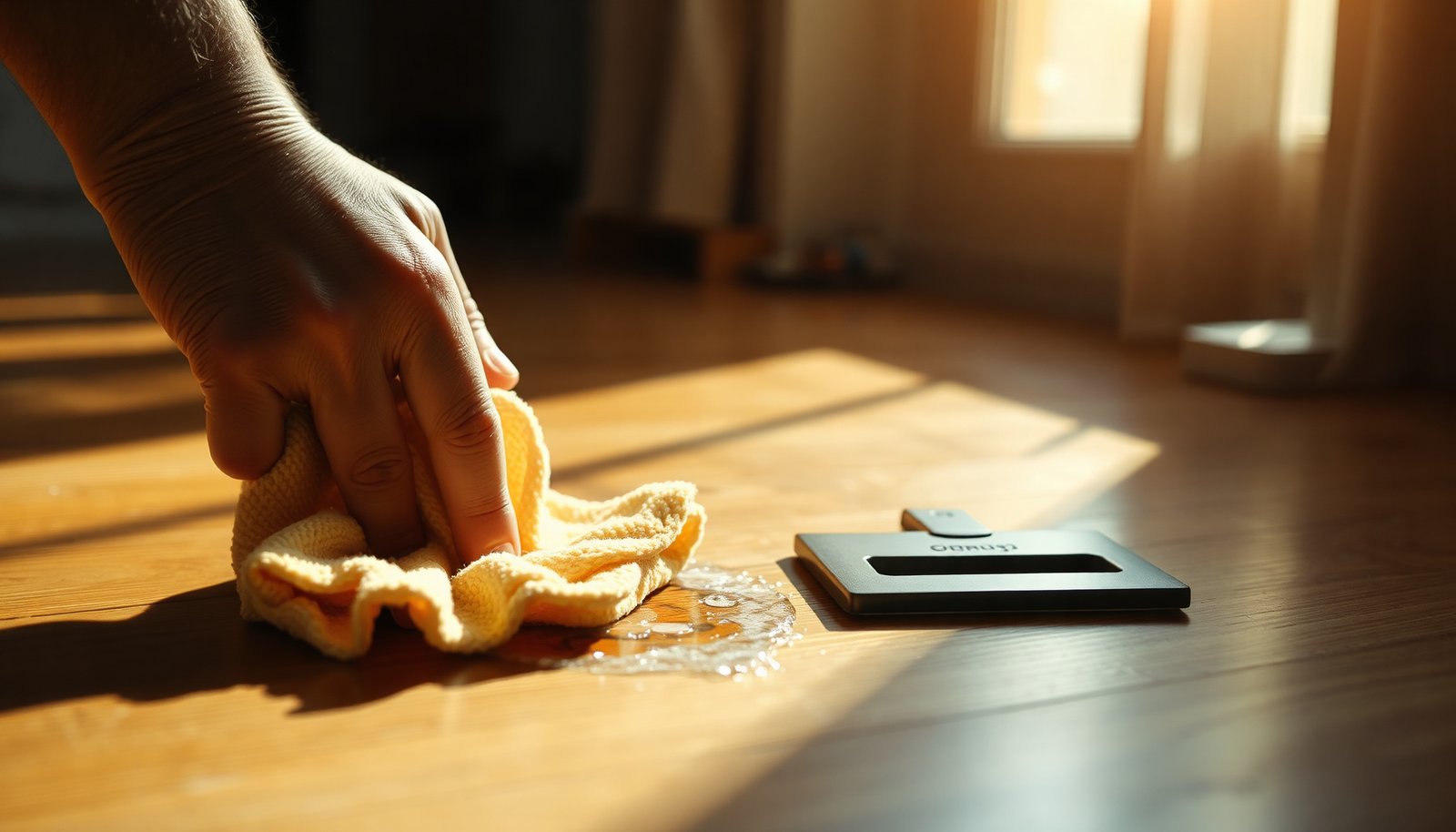
– Dampen a cloth with warm, soapy water (not dripping) and lay it on the spot for a short dwell time
– Wipe in small sections and reapply if needed; repeat rather than soaking the floor
– When the residue starts turning tacky, gently rub with the cloth to lift it
This approach respects how finished hardwood performs: moisture should be localized and brief, because wood is hygroscopic (it absorbs moisture), and seams can expand if liquid penetrates the edges. According to National Wood Flooring Association (NWFA), maintaining indoor relative humidity within a safe band (commonly cited as roughly 35–55%) helps reduce expansion/contraction stress (year in your citation may vary by edition).
If you’re unsure whether the residue is sugar/food (tends to re-soften with warm water + soap) or an adhesive (often needs a finish-compatible dissolver), Step 2 still gives you a diagnostic clue—warm soapy water will usually make sticky residues visibly soften, even if they don’t fully release.
Step 3: Dissolve remaining stickiness (only after patch testing)
Use a dissolver only after you patch-test a hidden area and confirm the finish won’t haze, soften, or dull. This is where many DIY cleanups go wrong, because “stronger” often means “more likely to strip or change the coating.”
H3: What to patch-test, and how long to wait
– Choose one method and test it in a hidden area first, then wait for any finish change ()
– Apply to the cloth, not as a puddle—work the edge inward so the dissolver doesn’t spread
– After residue lifts, wipe with a clean slightly damp cloth, then dry right away
If you escalate to alcohol or solvents, remember the chemistry tradeoff: higher-volatility solvents evaporate quickly (helpful for limiting dwell), but they can still attack certain finish polymers. For grounding, NIST reports acetone boils at 56.1°C (NIST Chemistry WebBook) and isopropyl alcohol boils at 82.6°C (NIST Chemistry WebBook), which explains why these liquids feel “fast” on the surface—finish compatibility is a separate question.
H3: Finish types that often need extra caution
– Waxed or heavily maintained floors: solvents can haze wax build-up
– Penetrating-oil looks: some solvents can pull out oils and darken spots
– Unidentified coatings: if you can’t confirm the finish, proceed in micro-steps and stop immediately if the test spot changes
Pros/cons comparison (quick decision aid)
When you’re stuck on dried sticky residue, choosing the dissolver is the real fork in the road. Use this structured tradeoff list to keep the risk predictable.
| Method (finish-compatible when patch-tested) | Pros | Cons / watch-outs |
|---|---|---|
| Warm soapy water + cloth dwell | Best first pass; low finish risk; improves performance on syrup/sweet residue | May not fully release pressure-sensitive adhesive residue |
| Isopropyl alcohol (IPA), patch-tested | Often effective for some adhesive residues; evaporates faster than water | Can haze or soften some finishes; test dwell time matters |
| Citrus solvents (e.g., d-limonene), patch-tested | Good for greasy, sticky films; often strong enough without extreme volatility | Can affect wax build-up; use minimal application and quick wipe-dry |
| Mineral spirits (rare for DIY), patch-tested | Can dissolve certain grime/adhesive residues | Higher finish risk; avoid broad exposure and extended contact |
What can go wrong (and how to avoid it)
Even when you follow the steps, dried sticky residue can still cause problems if the floor finish is sensitive. The safest path is to prevent scratching first, control moisture second, and avoid finish-reactive chemicals third.
– Scratching: metal scrapers/steel wool can permanently mar the finish—use plastic or very gentle tools only.
– Finish damage: strong solvents can soften or strip some finishes; patch testing prevents surprises.
– Water problems: prolonged moisture can swell seams or warp certain boards—use minimal liquid and dry promptly.
– Wrong approach: if the “sticky” is actually paint/adhesive type residue, you may need a finish-compatible adhesive remover (but follow product instructions and your floor finish guidance—).
Also watch for “ghost stickiness.” Sometimes you remove the visible residue but leave a thin chemical film that feels tacky later. In that situation, go back one step: wipe with a clean cloth slightly damp with water (or the mild soap solution) and dry immediately, then reassess before using another dissolver.
Verdict: a practical order of operations (and who should skip)
Start with scraping + warm soapy water, then escalate to a finish-compatible dissolver only if needed. This sequence is usually safer than “one harsh chemical first,” because it limits both mechanical damage (scratches) and finish exposure time to solvents.
That said, this isn’t risk-free. Skip DIY escalation if your floor is unfinished, extremely worn, or you’re dealing with unknown coatings—extra chemicals can make repairs harder and more expensive. If patch testing shows dulling, softness, or finish lift in the test spot during the , stop and consider a professional floor-cleaning or refinishing specialist.
Quick checklist (scan/save)
| Task | Do | Don’t |
|---|---|---|
| First pass | Scrape gently with plastic | Use metal tools or heavy pressure |
| Soften step | Use warm soapy water on a cloth | Flood the area or leave it wet |
| Dissolver step | Patch-test first, apply to cloth | Apply directly in puddles |
| Cleanup | Wipe residue + dry immediately | Leave residue/chemical film behind |
| If it fails | Repeat gently or reassess residue type | Jump to stronger products repeatedly |
Sources
– National Wood Flooring Association (NWFA) — guidance on cleaning practices and recommended indoor relative humidity ranges for hardwood stability.
– NIST Chemistry WebBook — boiling point and physical property data for common solvents used in residue removal.
Dried sticky residue comes off best when you treat your hardwood floor finish like a protective system: lift the bulk carefully, soften with minimal moisture, and only use dissolvers after patch-testing. If you follow that order in 2026-style “controlled contact” steps, you can usually restore the surface without turning a small sticky spot into a broader finish repair job.
Frequently Asked Questions
What’s the safest way to remove dried sticky residue from hardwood floors?
Start by testing any cleaner in a hidden spot to make sure it won’t dull the finish. Gently soften the residue first (such as with a damp cloth or manufacturer-approved hardwood cleaner), then lift it using a plastic scraper or microfiber pad to avoid gouging. Avoid harsh solvents or soaking the wood, since standing moisture can damage hardwood and its finish.
How do I loosen and lift dried sticky residue from hardwood without damaging the finish?
Place a warm, damp microfiber cloth over the sticky area for a few minutes to soften adhesives, then wipe and scrape lightly with a plastic card or scraper. If it resists, repeat the warm compress rather than forcing it, which helps prevent scratches. Finish by cleaning the area with a slightly damp cloth and drying thoroughly to remove any residue and prevent water spotting.
Why should I avoid using acetone, paint thinner, or steam on hardwood floors?
Many strong solvents can strip or cloud polyurethane, varnish, or wax finishes on hardwood, leaving dull patches or discoloration. Steam can force moisture into seams and can loosen or warp the finish over time, especially on older floors. Instead, use gentler methods—softening, careful scraping, and a pH-neutral hardwood cleaner—so you remove the sticky residue without harming the wood.
What’s the best cleaner for sticky residue on finished hardwood floors?
For most finished hardwood floors, a pH-neutral cleaner made for hardwood, used lightly, is the best starting point after softening the residue. If the residue is from something like tape or sticker adhesive, a small amount of mineral oil or a residue-safe adhesive remover specifically labeled for wood finishes can help, followed by cleaning with a damp cloth. Always follow the product directions and wipe dry to keep your hardwood looking uniform.
Which tools work best for removing stubborn dried adhesive from hardwood floors?
Use a plastic scraper, plastic putty knife, or old credit card to lift the residue without scratching the hardwood surface. A microfiber cloth and warm water compress are often enough for residue that’s only partially cured, while a non-scratch scrubbing pad can help for tougher spots. Avoid metal blades, abrasive pads, and aggressive scouring powders, since they can permanently damage the finish and make the area more noticeable.
📅 Last Updated: November 02, 2026 | Topic: How to clean dried sticky residue from hardwood floors? | Content verified for accuracy and freshness.
References
- Wood flooring
- Floor cleaning
- https://pubmed.ncbi.nlm.nih.gov/?term=adhesive+residue+removal+wood
- https://extension.umn.edu/household/cleaning-hardwood-floors
- https://www.epa.gov/safer-choice/how-choose-cleaning-products
- https://www.sciencedirect.com/search?qs=adhesive%20residue%20removal%20wood%20floor
- https://scholar.google.com/scholar?q=remove+adhesive+residue+from+hardwood+floor Google Scholar
- https://scholar.google.com/scholar?q=how+to+clean+sticky+residue+from+wood+floors+vinegar+water Google Scholar
- https://scholar.google.com/scholar?q=wood+floor+finishes+cleaning+methods+residue+removal Google Scholar