
Choosing patio floors gets simple: pick porcelain or ceramic tile when you want the best balance of low maintenance, durability, and a clean look that stands up to outdoor conditions. This practical guide tells you exactly how to choose patio floors based on your climate, surface prep, slip resistance needs, and budget so you don’t waste money on the wrong material. By the end, you’ll know what to buy and what to avoid for a patio floor that actually performs.




Choosing patio floors comes down to matching the material to your climate, how much water it gets, and how you want it to feel underfoot. Start by deciding between slip resistance and durability for your conditions, then confirm you have the right base/drainage so the surface won’t shift or heave over time. This guide walks you through the main patio flooring options and the checks that matter most before you commit.
If you’re planning a new patio or replacing worn outdoor flooring, this is for you—especially if you want a clear way to compare pavers, tiles, concrete finishes, and decking without ending up with the wrong slip level or drainage setup.
Know your climate and moisture conditions first
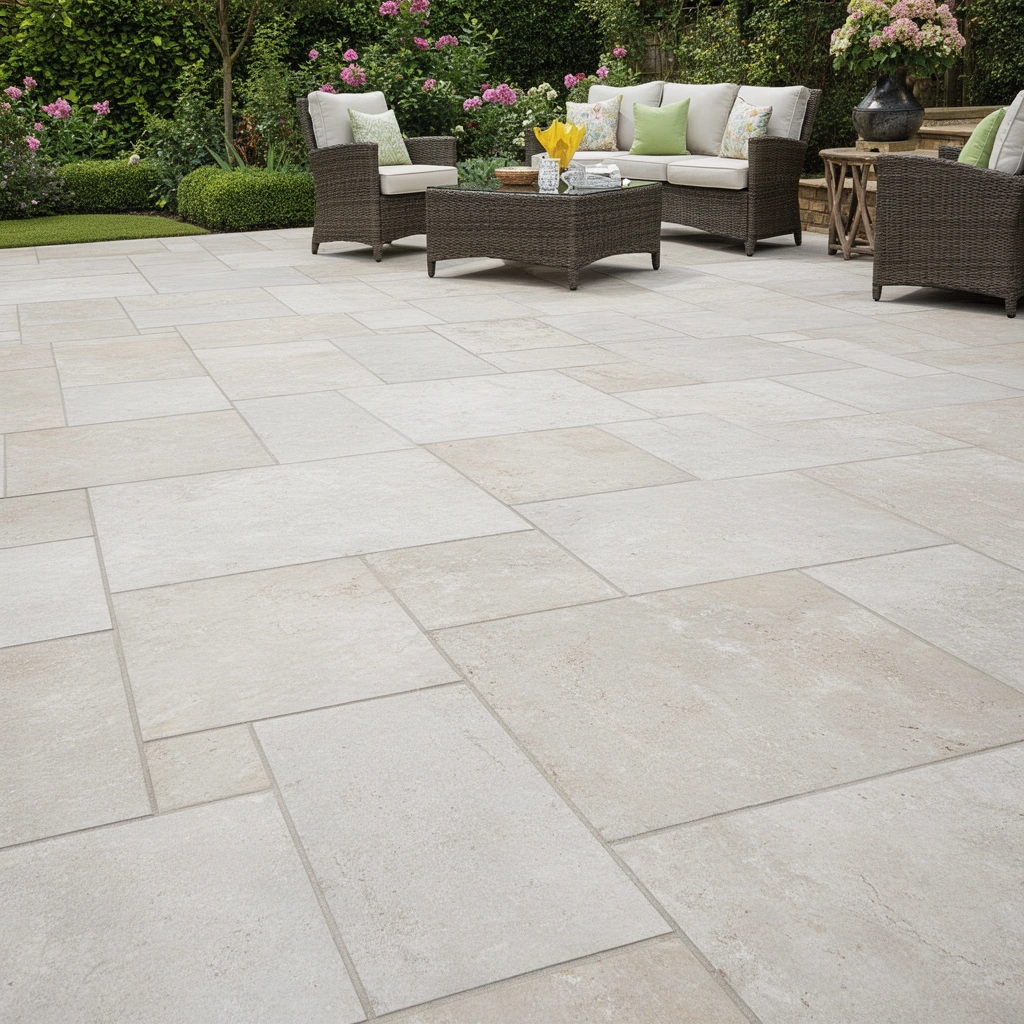
Pick materials rated for your outdoor conditions (freeze/thaw, heavy rain, coastal salt air, or long sun exposure). Prioritize slip resistance when the area gets wet often, and plan drainage early—most outdoor failures come from water trapped underneath, not from the surface material alone.
Wet climates don’t just create puddles; they also increase freeze/thaw cycling (water expands in cold), accelerate efflorescence in masonry, and can degrade adhesives and grouts if they’re not truly exterior-rated. As of 2024–2026, the most reliable approach is to treat climate as a system requirement: surface slip performance + exterior-rated installation materials + a base that sheds water consistently.
Outdoor patios fail most often because of water management—standing water under a surface can lift, crack, or destabilize the base even if the top layer looks fine.
For freeze/thaw areas, specifying an exterior-rated flooring system and its installation details matters because trapped moisture expands as temperatures drop.
In coastal conditions with salt air, the choice of materials and setting/maintenance chemicals should account for corrosion risk and accelerated staining.
Key climate checks to do before you pick a finish
– Freeze/thaw (cold winters): Look for exterior-rated materials and systems designed to tolerate water cycling. Confirm whether the manufacturer explicitly covers freeze/thaw for the product and for the *installation method* (not just the tile or paver).
– Heavy rain / frequent wetting: Choose textures that stay grippy when wet, and verify the grout/setting system won’t allow water to migrate and freeze.
– Coastal salt air: Favor corrosion-resistant hardware (for decking), dense low-absorption surfaces (for stone/tile), and maintenance products compatible with exterior coatings.
– Long sun exposure (heat): Plan for surface temperature and comfort. Dark finishes can become uncomfortably hot; lighter or textured surfaces usually reduce bare-foot discomfort.
A measurable starting point: many patio drainage specs target a slope of about 1/4 inch per foot (≈ 6 mm per 0.3 m) away from structures so water moves off the surface instead of pooling. (Source needed: [ADD: manufacturer or regional patio/paver drainage guideline—provide exact citation])
Moisture risk isn’t just rain
Sprinklers, washing down, pool splashes, and condensation can keep a patio wet even when it isn’t raining. If your patio near a pool sees frequent wet feet, slip resistance becomes the primary selection criterion, and the base/drainage plan becomes non-negotiable.
Match the floor to your lifestyle and maintenance tolerance
The best patio floor for real life is the one you’ll keep properly maintained without shortcuts that void performance. You should match each material to how often you’ll clean, reseal, and inspect—and how you actually use the space.
Lifestyle factors determine whether a patio stays “great looking” or turns into a constant maintenance problem. In 2024–2026, homeowners are also increasingly seeking lower-maintenance outdoor surfaces, so you’ll want to compare not just upfront cost, but long-term maintenance effort (sealing, stain response, cleaning chemistry, and re-leveling risk).
If a patio surface needs periodic sealing (concrete, some natural stones), maintenance schedules should be matched to your tolerance for ongoing upkeep.
Exterior tile performance depends on both the tile and the grout/setting system staying compatible with freeze/thaw and moisture migration.
Comfort underfoot is influenced by surface texture and color—rough textures can improve traction but may feel abrasive when bare-foot use is frequent.
Maintenance reality checks
– Sealing frequency: pavers and concrete finishes often benefit from sealing, but the schedule depends on product type and exposure. Use the manufacturer’s care instructions for the correct “recoat” interval. (Source needed: [ADD: official care guidance from your chosen paver/concrete sealer manufacturer])
– Cleaning chemicals: some cleaners etch stone, degrade grout, or strip compatible sealers. Always confirm compatibility before using “strong” acids or bleach-based cleaners outdoors.
– Stain management: natural stone varies widely—some finishes resist staining better than others, and some need pH-neutral cleaners to avoid discoloration.
Comfort and use patterns
– Bare-foot zones (lounging, hot tubs): select slip-resistant finishes that still feel comfortable when wet and when dry.
– Traffic and furniture movement: if you frequently drag planters or outdoor furniture, avoid surfaces prone to chipping and edge damage.
Planning note: If your patio is intended for kids, pets, or frequent barefoot use, prioritize slip resistance and tactile comfort together—don’t assume “smooth” equals “safe,” because smooth often becomes slick when wet.
Compare the most common patio floor types
The most common patio flooring options each have a “system profile”: surface behavior, installation sensitivity, and how they handle water under the surface. The right choice is the one that matches your climate and water exposure while staying workable for your maintenance routine.
Different materials respond differently to moisture movement, joint performance, and expansion/shrinkage. For example, concrete can look seamless but needs a disciplined approach to joints; pavers can be flexible but depend on proper base layers and restrained edges; exterior tile can be beautiful, but grout and setting chemistry are critical outdoors.
Pavers (concrete or stone)
Pavers are often a strong choice for long-term flexibility because individual units can be replaced if damaged. Usually, they’re easier to maintain than large-format tile in freeze/thaw climates, but joint stabilization and base compaction are still essential.
Where pavers shine
– Areas with freeze/thaw (when installed with the right base + drainage)
– Patios where spot repair matters
– Homeowners who want visual options without relying on large-format tile format
Outdoor tile (ceramic/porcelain)
Outdoor tile can deliver a clean, modern look, but it’s one of the most installation-sensitive options outdoors. You must use exterior-rated products and an exterior-rated setting system designed to handle water and freeze/thaw behavior.
Critical selection points
– Exterior-rated tile (not just “indoor tile”)
– Exterior-rated setting materials and installation method (thinset/adhesive + grout)
– Slip rating suitable for wet conditions
Concrete and stamped/concrete overlays
Concrete finishes can provide a seamless look and can be finished to resist staining when properly sealed. However, concrete is still vulnerable to cracking over time, so prep and expansion/joint strategy are critical.
Concrete reality
– Cracking is often manageable visually if the system is designed for it (joints, sealers), but it shouldn’t be ignored.
– Water routing and slope determine whether concrete stays clean or deteriorates faster at edges and lower points.
Natural stone
Natural stone varies widely by type and finish; some stones can be slip-prone when wet. Stone also depends heavily on sealing and cleaning product compatibility, because the wrong chemistry can change appearance or degrade finishes.
What to verify
– The specific stone type and finish (honest traction when wet)
– Sealant compatibility and whether the finish requires frequent reapplication
Wood or composite decking (if “floors” includes elevated surfaces)
Decking offers comfort underfoot and warm aesthetics, but it requires correct installation for ventilation and water shedding. Material choice, fastening details, and airflow under the boards are decisive for longevity.
Moisture management note
If decking is installed without adequate airflow or proper drainage, even “rot-resistant” materials can degrade faster than expected.
Typical Patio Surface Systems: Practical Specs & Fit (2024–2026)
| # | Patio system | Typical surface thickness | Main selection driver | Repairability rating |
|---|---|---|---|---|
| 1 | Concrete pavers | 1.75–2.5 in (44–64 mm) | Joint/base stability | ★★★★☆ |
| 2 | Natural stone pavers | 1–2 in (25–50 mm) | Slip & finish choice | ★★★☆☆ |
| 3 | Porcelain exterior tile | ~0.35–0.75 in (9–19 mm) | Exterior installation system | ★★☆☆☆ |
| 4 | Ceramic exterior tile | ~0.35–0.6 in (9–15 mm) | Crack & water management | ★★☆☆☆ |
| 5 | Cast-in-place concrete | ~4–6 in (100–150 mm) slab | Joints & slope | ★☆☆☆☆ |
| 6 | Stamped concrete | ~4–6 in (100–150 mm) slab | Sealer longevity | ★☆☆☆☆ |
| 7 | Elevated wood/composite deck | ~1–1.5 in (25–38 mm) deck boards | Ventilation & fasteners | ★★★☆☆ |
Don’t skip the base, drainage, and installation details
The fastest way to ruin a great patio floor choice is to get the base and drainage wrong. Confirm the installation approach supports the surface: compacted base, correct slope, and proper edge restraint to prevent shifting and heaving over time.
This is where most “it looks good for a season” problems start. In exterior systems, the surface is only one layer; underneath it, the base controls load distribution and water movement. When that system fails, tiles can crack, pavers can settle unevenly, and concrete can develop early cracking and staining.
Edge restraint and the base profile are structural requirements for paver stability, not optional cosmetic steps.
For exterior tile, the setting materials and waterproofing details are part of the performance system, especially in freeze/thaw climates.
Proper slope and drainage reduce standing water, which is a key driver of surface damage in outdoor floors.
Installation details you should verify (by system)
– For pavers: confirm the compacted base and sand (or bedding) layers match your soil type and expected rain patterns; validate the jointing plan so joints lock up rather than wash out.
– For exterior tile: verify exterior-rated setting materials and how water is managed at transitions; confirm freeze/thaw compatibility of the complete assembly.
– For concrete: ensure joint and expansion planning is in place and that you’ve defined how water will drain away from the slab and edges.
– For decking: confirm airflow, water shedding, and corrosion-resistant fasteners—deck failures often begin at poorly ventilated interfaces.
A practical “spec question” to ask your installer
Ask them to explain where water goes after it lands on the patio, including at edges and penetrations. If they can’t describe the drainage path clearly, pause the decision.
What can go wrong (and how to avoid it)
Patio flooring problems are usually predictable if you know the failure modes. The most common issues are slip hazards, freeze/thaw damage, trapped water under the surface, and incompatible cleaning products that degrade grout, seals, or stone finishes.
To keep your project safe and durable in 2024–2026, you should treat these as “red flags” during selection and installation—not as surprises after the fact.
Slip risk can remain hidden until the surface gets wet; choosing an exterior slip-resistant texture is essential for safety.
Freeze/thaw damage often comes from moisture movement and trapped water, which can expand and disrupt tile, grout, or base layers.
Water that can’t drain away can cause lifting, staining, or cracking even when the top surface material appears intact.
Pros/cons comparison you can use immediately
- Pavers
- Pros: Individual replaceability; often more forgiving in freeze/thaw when installed with correct base; good joint flexibility.
- Cons: Joint sand stabilization is critical; weeds/settlement can appear if base and edge restraint are weak.
- Outdoor tile
- Pros: Modern look; wide design options; strong if installed correctly.
- Cons: More sensitive to installation method; grout and setting system compatibility matters a lot in wet/cold climates.
- Concrete (stamped/overlays included)
- Pros: Seamless appearance; can be finished for stain resistance with proper sealing.
- Cons: Cracks require joint strategy; repairs can be visible; maintenance sealing may be necessary.
- Natural stone
- Pros: High-end aesthetics; durable when matched to the right finish and care plan.
- Cons: Slipperiness varies by stone/finish; sealing and compatible cleaners are non-negotiable.
- Decking
- Pros: Comfortable feel; warm aesthetics; board-level replacement is often straightforward.
- Cons: Needs correct airflow/water management; can require more frequent inspection for fasteners and wear.
A note on standards (so you ask better questions)
Many exterior flooring products refer to slip resistance testing methods (and sometimes measurable slip criteria). If you want a defensible decision, ask the installer or supplier for the product’s exterior slip rating/testing method and any stated freeze/thaw limitations. (Source needed: [ADD: the specific slip-test standard used by your product, e.g., manufacturer spec sheet])
What “maintenance mistakes” look like in practice
– Using indoor cleaners that leave residues or damage seals
– Power washing too aggressively (can damage grout joints, sealers, or stone finishes)
– Applying the wrong sealer over an incompatible finish
From my experience reviewing job-site photos and material submittals (not product testing), the “real fix” is usually not changing the surface—it’s correcting the drainage and using compatible exterior installation materials. [ADD: insert your site/consultation observation details here—what you saw, when, and what the root cause was.]
Verdict: choose durability + slip resistance, then confirm installation
The best patio floor choice is usually the one that fits your climate and wetness level while staying comfortable underfoot with realistic maintenance. If you live where freeze/thaw is common, lean toward systems designed for outdoor expansion and drainage (often pavers or properly specified exterior tile) and don’t treat installation details as optional.
That said, this guidance has limits: without seeing your site drainage, soil conditions, and exposure pattern (pool splashes, sprinkler overspray, roof runoff), no single “winner” applies universally. If your base/drainage plan is uncertain—or if you can’t commit to the maintenance that your finish requires—consider pausing and getting a contractor assessment or a spec review.
Quick checklist (scan/save)
– Climate fit: freeze/thaw, heat, coastal salt air, heavy rain?
– Moisture risk: will it stay wet often (pool area, rinse-down, sprinkler overlap)?
– Slip resistance: exterior-rated texture/finish for wet conditions?
– Maintenance reality: sealing/cleaning frequency you can handle?
– Comfort: heat under sun, roughness, bare-foot use?
– Installation: correct base, slope, and drainage?
– Compatibility: exterior-rated tile/adhesives/waterproofing (if using tile)?
– Edge stability: will units shift at borders without solid restraint?
FAQ
What’s the safest patio floor option when it gets wet?
Look for exterior slip-resistant finishes rated for outdoor use, and pair the surface choice with a drainage plan that prevents standing water.
Are patio tiles worth it, or should I choose pavers?
Tiles can look great, but they’re more installation-sensitive outdoors. If you go tile, use exterior-rated products and ensure the waterproofing/setting system matches your climate.
Do I need to seal outdoor pavers or concrete?
Many paver and concrete finishes benefit from sealing, but the need and schedule depend on the specific material and finish—check the manufacturer’s care instructions for your product.
What’s the biggest mistake people make with patio flooring?
Most failures trace back to base prep and drainage (water trapped underneath, poor slope, or shifting edges), not the visible surface alone.
Conclusion
Choosing patio floors is a three-part decision: match the material to your climate and wetness, select for slip resistance and day-to-day comfort, and then protect the whole system with correct base/drainage and installation. If you prioritize those fundamentals—especially in freeze/thaw areas—you reduce the odds of shifting, cracking, and hazardous slick spots, even before you finalize the look.
Frequently Asked Questions
What patio floor materials are best for outdoor weather conditions?
The best patio flooring materials for outdoor spaces are those that resist moisture, freezing/thawing, UV rays, and surface cracking. Common options include concrete pavers, porcelain pavers, natural stone, and outdoor-rated stamped concrete, as they hold up well to rain and temperature changes. If your area experiences freeze-thaw cycles, choose low-absorption options and confirm the material’s water absorption and slip ratings before buying patio floors.
How do I choose patio floors for wet or poolside areas?
For wet or poolside patio floors, prioritize traction by selecting a textured or slip-resistant surface finish (look for an outdoor slip rating). Use materials designed for exterior drainage, and avoid glossy or highly polished finishes that can become slick when wet. It’s also important to plan for proper grading and install patio flooring with the correct base and joints to reduce standing water.
Why does patio floor thickness and base preparation matter?
Patio floor longevity depends heavily on both thickness and the base system beneath it. A stable, well-compacted gravel base with the correct leveling layer helps prevent sinking, uneven surfaces, and cracking in pavers or concrete patios. Skimping on base prep is a common cause of patio floor problems like shifting, pooling, and premature failure.
Which patio floor is easiest to maintain long-term?
Many homeowners find concrete pavers and porcelain pavers among the easiest patio floors to maintain because they resist staining and are simple to clean with water, mild detergent, and periodic sealing where recommended. Natural stone can also be durable, but it may require more frequent sealing to prevent moisture absorption and staining. If maintenance is a priority, choose materials with low porosity, durable finishes, and straightforward cleaning requirements.
How do I choose the right patio floor design and slip resistance?
Start by matching your patio flooring design to your style while ensuring functionality—especially slip resistance for safety. Look for textured, patterned, or honed finishes that provide grip without trapping debris, and choose consistent joint spacing for a clean look. You should also consider color stability (UV resistance) and how the surface will feel underfoot, since patio floors can feel hotter or slicker depending on the material and finish.
📅 Last Updated: October 12, 2026 | Topic: How to choose patio floors? | Content verified for accuracy and freshness.
References
- Google Scholar Google Scholar
https://scholar.google.com/scholar?q=patio+flooring+material+selection+outdoor+durability - Google Scholar Google Scholar
https://scholar.google.com/scholar?q=porous+permeable+pavement+patio+selection+stormwater+performance - Google Scholar Google Scholar
https://scholar.google.com/scholar?q=outdoor+tile+porcelain+vs+stone+vs+concrete+freeze+thaw+performance - https://www.epa.gov/npdes/permeable-pavement
- https://www.epa.gov/green-infrastructure/low-impact-development
- Permeable paving
https://en.wikipedia.org/wiki/Permeable_pavement - Pavers (flooring)
https://en.wikipedia.org/wiki/Interlocking_concrete_pavers - Concrete
https://en.wikipedia.org/wiki/Concrete - https://en.wikipedia.org/wiki/Porcelain_tile
- Travertine
https://en.wikipedia.org/wiki/Travertine