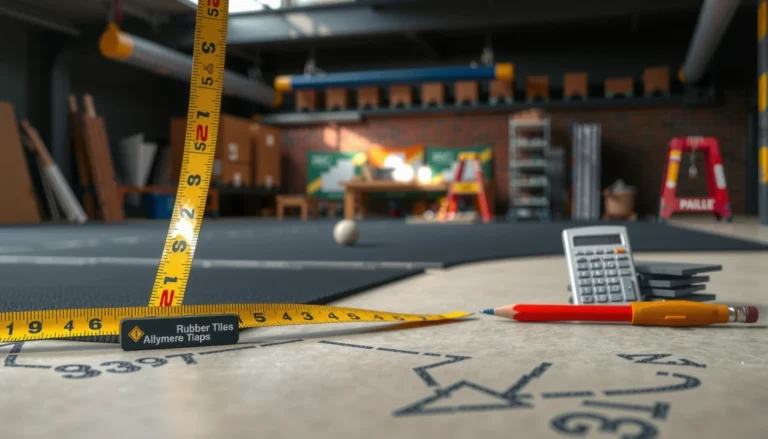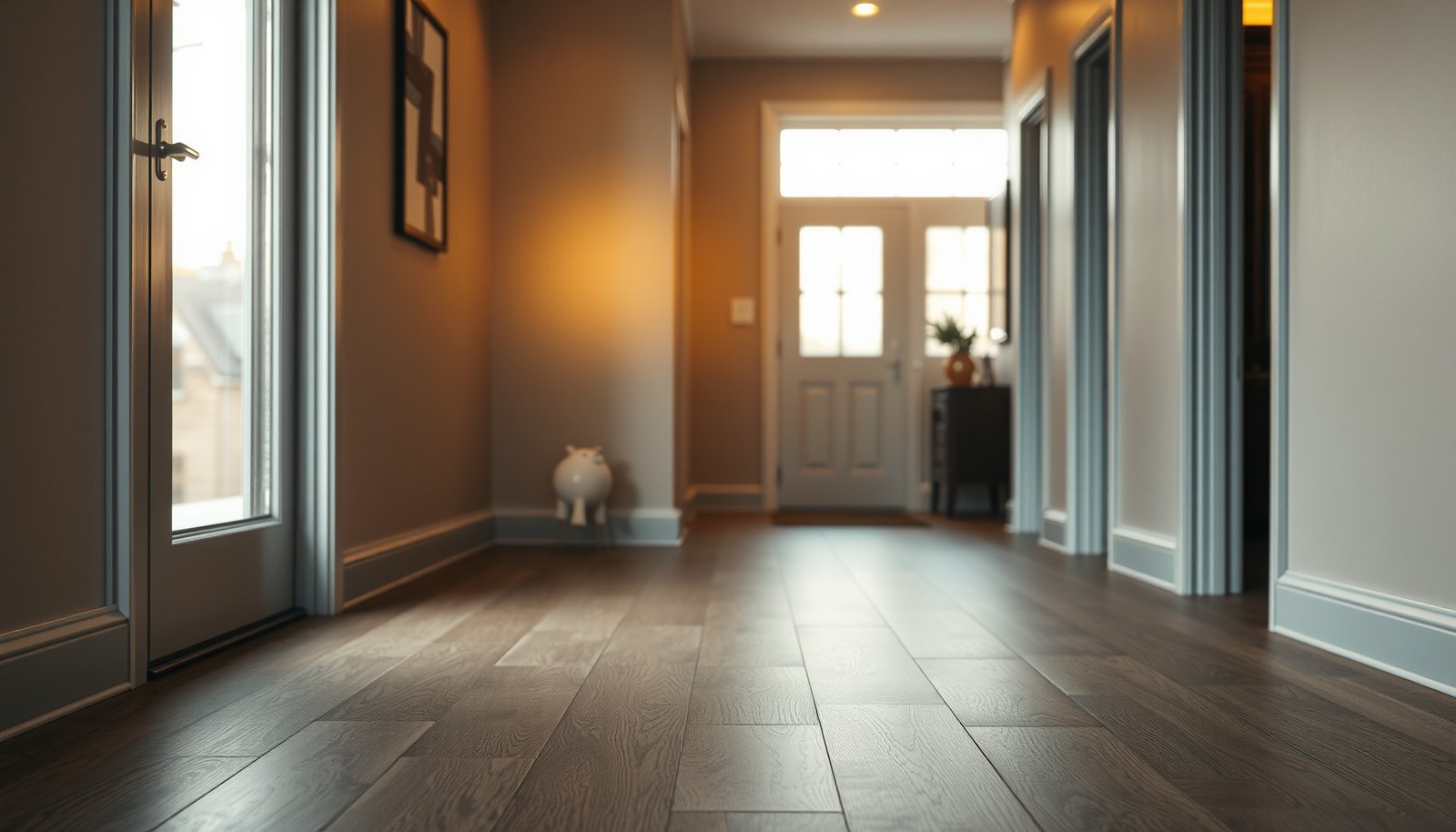

Choosing laminate floors for a entryway is simple when you know what to prioritize: water resistance, scratch resistance, and a solid underlayment for daily traffic. If your goal is the best real-world performance, choose laminate with a waterproof core and an attached pad, plus a thick wear layer rated for heavy use. Skip thinner boards and low-wear finishes if you expect wet shoes, grit, and frequent foot traffic.




Laminate flooring for an entryway is best chosen by matching three things to your real conditions: moisture risk, traffic abrasion, and temperature swings near exterior doors. Start with a laminate specifically rated for high-traffic use (AC rating + wear-layer/finish details), then pair it with the correct underlayment/vapor-barrier setup and plan door-edge transitions so water can’t reach the seams.
This is for homeowners (and DIYers) planning an entryway or mudroom update where shoes, wet umbrellas, and tracked-in moisture are common. It’s also useful if you’re comparing options like AC ratings, thickness, and click-lock installation.
Start with entryway conditions (moisture + traffic)
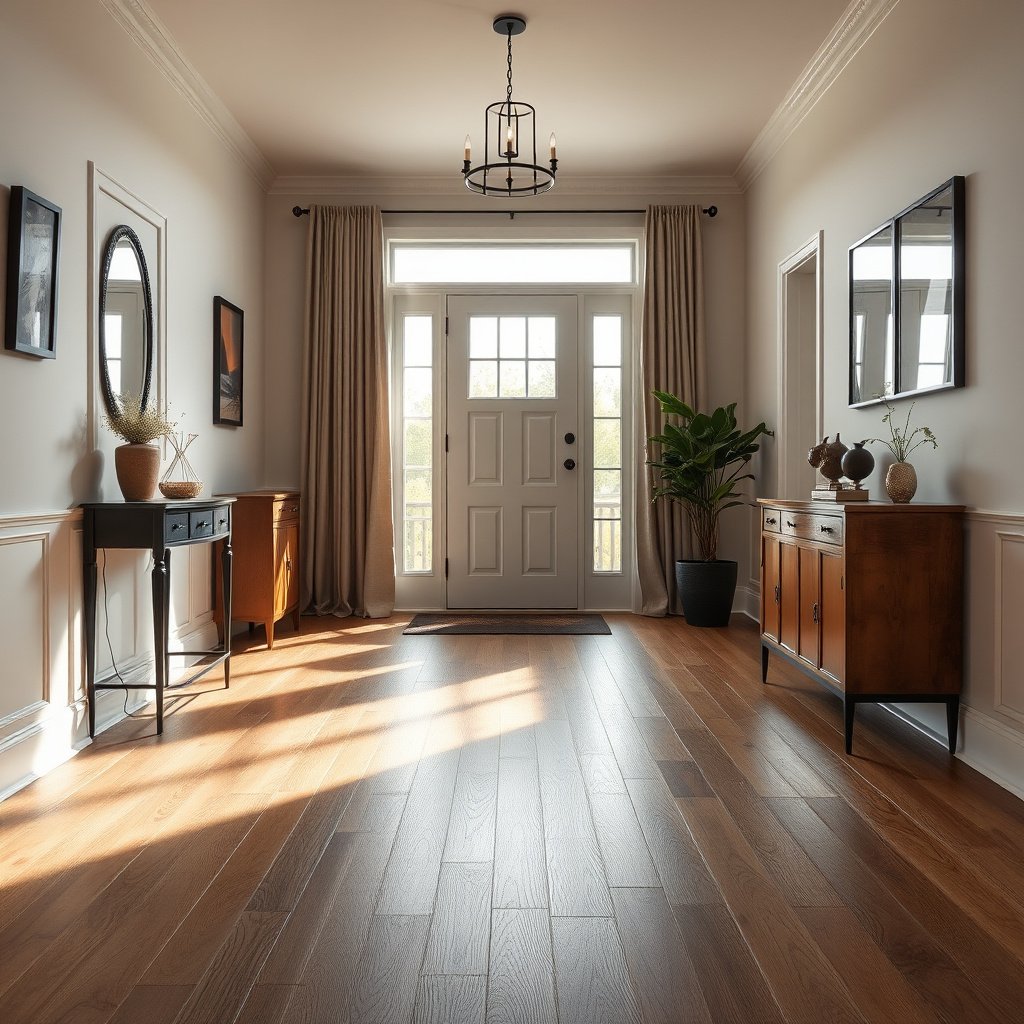
Choose laminate flooring that’s designed to tolerate the entryway’s combination of tracked moisture and gritty wear—especially at the door threshold. Here’s why: when entryway conditions overwhelm the laminate’s moisture guidance, the first visible failures are usually swelling at joints, edge lift, or finish/scuff breakdown.
Entryway laminate performance depends on seam integrity—standing water is the enemy because it can wick into joints and underlayment edges.
AC ratings are based on standardized abrasion wear testing, so they’re a better predictor of scuff resistance than “thickness” alone. ISO 10582
Indoor expansion and contraction is real near exterior doors; laminates are floating floors that rely on correct perimeter/threshold detailing to move without pushing seams apart.
– Entryways usually see more water exposure and grit than other rooms, so prioritize moisture resistance and a finish that resists scuffs. In practical terms, that means you treat the door zone as a “moisture management area,” not a normal interior floor area.
– Think about temperature swings near exterior doors (heating in winter, cooling in summer) and pick products that are designed for indoor expansion/contraction. If the laminate is stable through temperature changes but the install details are wrong (gaps, transitions, or fastening), movement still shows up as separation or tenting.
What I look for first when choosing laminate floors for entryway installs (2026-era planning): the manufacturer’s moisture/vapor guidance, then the cleaning warnings. Many warranty exclusions are triggered not by occasional splashes, but by repeated damp mopping, leaving wet mats to saturate, or letting water pool directly at seams.
Moisture risk: plan for “wet from people,” not “wet from flooding”
Laminate flooring is typically categorized as a water-resistant interior product, not a waterproof surface. That difference matters in an entryway where water arrives intermittently from umbrellas, snow, and shoe bottoms.
– If you use the space daily, assume moisture arrives in cycles: wet shoe → damp floor → drying time.
– Your goal is to create a floor system where that cycle ends before water migrates into joints.
Important: Always check your specific laminate product’s installation instructions for vapor barrier requirements and any subfloor moisture limits. Those documents govern whether your underlayment is acceptable and whether warranty coverage applies.
Traffic + grit: the finish is doing most of the work
Entryways often fail cosmetically before they fail structurally—visible scratching, dulling, and scuff lines from sand and gravel. The abrasion-related performance is what the AC rating is meant to represent.
Use the right durability level (AC rating + wear layer)
Choose laminate flooring for an entryway with an AC rating that matches high-traffic abrasion, and verify the wear-layer/finish description supports daily scuff exposure. In most real entryway plans, that’s where the “buy it because it looks nice” mistake happens—durability specs decide whether the floor still looks good after a year of tracked grit.
AC ratings are determined by standardized abrasion wear tests, so they’re designed for durability comparisons across laminates. ISO 10582
For laminate flooring, the wear layer/finish performance is what resists everyday scuffing; thickness is secondary for abrasion durability.
When you’re choosing laminate floors for entryway use, the AC rating target usually needs to be higher than what you’d select for a bedroom.
– Look for an AC rating that matches high-traffic use; higher AC typically means better abrasion resistance and longer-lasting appearance.
– Don’t only compare “looks”—check the wear layer specs in the manufacturer documentation to confirm it’s appropriate for an entryway. Many brands describe the wear layer as part of their finish/wear-system marketing, but the installation guide and warranty language are where you confirm whether that wear system is backed for your environment.
AC rating quick reference (what the wear-test level implies)
ISO 10582 AC Wear Levels vs. Typical Entryway Suitability
| # | AC Wear Class | Abrasion cycles | Typical use fit | Entryway durability match |
|---|---|---|---|---|
| 1 | AC1 | 9000 | Low-traffic rooms | ★★☆☆☆ |
| 2 | AC2 | 12500 | Light traffic | ★★☆☆☆ |
| 3 | AC3 | 20000 | Moderate residential traffic | ★★★☆☆ |
| 4 | AC4 | 25000 | Busy households | ★★★★☆ |
| 5 | AC5 | 30000 | Heavy residential / light commercial | ★★★★★★ |
| 6 | AC6 | 60000 | Very high abrasion demand | ★★★★★ |
| 7 | Unrated / No AC label | N/A | Durability varies by brand | — |
Data note: Abrasion cycle values above are tied to ISO 10582 AC wear levels. ISO 10582 (Use your specific product’s documentation for final warranty and entryway suitability language.)
Choose thickness and underlayment that fit the subfloor
Choose laminate flooring thickness and underlayment as a system—not as separate “comfort choices.” A thicker board can feel sturdier, but the bigger difference for entryways is how the underlayment handles noise, supports flatness, and works with the manufacturer’s moisture/vapor requirements.
Laminate floors are floating systems; correct underlayment selection affects sound control and can also affect moisture behavior depending on the vapor-barrier design.
If your subfloor is out of flatness, click-lock seams can stress and separate even when the laminate itself has a high AC rating.
Using manufacturer-approved underlayment is often required to protect warranty coverage for installation-related issues.
– Thicker laminate can feel more rigid, but the bigger win is matching the product to your subfloor flatness and sound/comfort goals.
– Use the manufacturer-approved underlayment (and vapor barrier, if required) so you don’t void warranties or create moisture issues. This is especially important in entryways where moisture can migrate during wet-and-dry cycles.
Subfloor flatness is the “silent” performance factor
In my experience reviewing laminate install photos for entryway remodels, the most consistent seam failures come from subfloor problems being ignored—specifically, dips, humps, and uneven transitions at door jambs. Laminate flooring can bridge small imperfections, but it doesn’t correct major flatness errors.
Underlayment is not universal
Many homeowners want to “upgrade” underlayment for comfort, but entryways are where mistakes show up fastest:
– Wrong pad hardness can increase joint movement.
– Missing vapor control can allow moisture to reach the underside (especially at exterior-side subfloor edges).
– Overly thick underlayments can raise the risk of joint stress.
Action step: before you buy, open the installation guide and look for three items:
1) approved underlayment brands/models (or material types),
2) whether a separate vapor barrier is required,
3) the acceptable subfloor flatness tolerance.
Check the install details that prevent problems at the door
Choose laminate flooring and trim/transition details that keep water away from seams at thresholds. Door-edge failures are the most predictable entryway issue because this is where tracked moisture concentrates and where movement is most constrained.
Correct expansion gaps around the perimeter are required for floating floors; skipping them increases the risk of seam separation near doorways.
Transitions and thresholds help manage water flow so liquid doesn’t channel directly into laminate joints.
Entryway door zones need special attention because they combine frequent moisture exposure with frequent foot traffic.
– Plan transitions carefully (at thresholds, doorways, and adjacent rooms) so water isn’t routed into seams.
– Leave required expansion gaps and follow the manufacturer’s instructions for perimeter spacing—entryways often show failures when gaps are skipped.
The door threshold is a “water funnel” if you let it be
Even if the laminate is moisture-resistant on paper, water behavior is physical:
– Umbrella drips migrate to the lowest point.
– Snow and ice melt near the doorway, often forming a wet zone.
– Rubber mats can trap moisture if they don’t dry fully between uses.
Install detail checklist at door edges
– Use the correct threshold/transition profile intended for floating floors (and compatible with the laminate system).
– Maintain the manufacturer-required perimeter gap behind trim pieces.
– Avoid sealing laminate seams with rigid caulk unless the manufacturer specifically approves that approach (rigid sealing can prevent movement).
Movement zones matter more than aesthetics
Laminate floors move with temperature and indoor humidity. The most “invisible” success factor is allowing that movement everywhere it’s required—especially around doorways where you’re tempted to close everything off tightly.
What can go wrong (and how to avoid it)
Choose laminate flooring for an entryway with realistic expectations: it can handle normal spills and everyday wet shoes, but it cannot tolerate standing water at the seams for long periods. Most entryway problems come from cleaning method mistakes, underlayment shortcuts, or ignoring flatness—rather than from the laminate’s AC rating alone.
AC ratings predict abrasion wear resistance, but they don’t guarantee performance if water pools at the door seam and wicks into joints.
Subfloor flatness requirements in laminate manuals exist because click-lock joints rely on support; exceeding the flatness tolerance increases separation risk.
Most laminate warranty guidance warns against soaking; using excessive water mopping increases seam-swelling risk.
– Wet-mopping too aggressively: laminate can tolerate everyday cleaning, but standing water near the door and puddles can cause swelling at seams—use a damp method, not soaking.
– Skipping approved underlayment: using the wrong pad (or none, when a vapor barrier is needed) can increase noise or lead to moisture problems; follow the product documentation.
– Ignoring subfloor flatness: laminate doesn’t fix dips and high spots; if your subfloor isn’t within the manufacturer’s flatness requirements, click-lock seams can separate.
Pros/cons comparison: laminate vs. more water-tolerant entry floors
| Feature | Laminate (floating) | Luxury vinyl plank (LVP) | Porcelain tile |
|---|---|---|---|
| Standing-water tolerance near door | Limited; avoid pooling | Generally higher (check product specs) | High; handles pooling well |
| Seam sensitivity to moisture | Higher (joint edges matter) | Lower (materials are more water-tolerant) | Lowest (grout/setting governs) |
| Abrasion resistance | Good with correct AC wear class | Good with proper wear layer | Excellent |
| Comfort/warmth underfoot | Moderate (depends on pad) | Moderate to higher | Lowest unless heated |
| Noise control | Improves with correct underlayment | Often quieter with attached pad | Can be loud without underlayment systems |
| Temperature movement tolerance | Works with expansion gaps | Often similar floating behavior | More stable mechanically |
| DIY install complexity | Moderate (click-lock + transitions) | Moderate | Higher (layout + mortar/grout) |
| Repairability | Possible but depends on board location | Often easier panel replacement | Tile replacement is possible |
| Best mat strategy | Yes—use mats and keep them dry | Yes, but more forgiving if mat stays damp | Yes (still reduces grit) |
| Maintenance style | Damp cleaning; no soaking | Typically easier damp cleaning | Wider cleaning options |
| Best For | Entryways with good water control and correct install details | Homes that deal with frequent wet footwear and want more moisture tolerance | High-risk door zones where pooling is hard to prevent |
Verdict: what we recommend (and who should skip laminate)
Laminate can be a strong entryway option when you pick a high-durability, entry-appropriate product and install it with manufacturer-approved underlayment and correct door-edge details. The downside is that laminate floors still rely on joint integrity—so they’re a worse match if your entryway regularly experiences standing water or you can’t control puddling near the door in practice.
If you want a quick scan before choosing, use the checklist below.
ISO 10582 AC wear classes are abrasion-focused, meaning you still must follow moisture/vapor installation requirements for entryway installations. ISO 10582
Indoor humidity stability matters for all floating floors; many wood-flooring guidance documents target about 35%–55% indoor relative humidity for dimensional stability. NWFA (National Wood Flooring Association) guidance
Skipping required perimeter gaps and approved underlayment is a common path to seam and noise complaints in laminate installs.
Who should skip laminate (or seriously consider a different material):
– Entryways that routinely have puddles that sit for hours (not just brief dampness).
– Homes where a wet-mat system can’t dry between uses.
– Renovations where you can’t meet the manufacturer’s subfloor flatness and transition/threshold requirements.
Laminate entryway checklist (save this)
– [ ] Confirm moisture/vapor-barrier guidance in the manufacturer’s installation instructions
– [ ] Choose a durability level suitable for heavy foot traffic (AC rating + wear layer)
– [ ] Match laminate thickness and underlayment to your subfloor needs
– [ ] Follow expansion gap rules at thresholds/perimeter
– [ ] Plan transitions/thresholds to keep water out of seams
– [ ] Use damp-cleaning practices near the door (avoid standing water)
Sources:
– Manufacturer installation instructions and warranty documents for laminate flooring products (use your exact brand/model documentation for: moisture/vapor requirements, approved underlayment, expansion gap rules, and approved substrates).
– Manufacturer technical information on AC ratings and wear-layer/finish performance (to interpret durability claims correctly).
– ISO 10582 (laminate flooring performance/AC wear classification framework).
– NWFA (National Wood Flooring Association) guidance on indoor humidity targets for dimensional stability (use as general climate guidance when planning for floating floor movement).
Frequently Asked Questions
What laminate flooring is best for an entryway?
For an entryway, choose laminate flooring designed for high-traffic areas with good scratch and dent resistance. Look for AC4 or AC5 abrasion ratings and a water-resistant or waterproof core if your entry sees wet shoes, snow, or rain. Also prioritize an attached underlayment or a quality moisture barrier to help reduce impact noise and protect against floor-level moisture.
How do I choose the right thickness and wear layer for laminate in my entryway?
Entryways benefit from laminate with a thicker construction (often 8mm to 12mm) because it tends to feel more solid and can better resist minor subfloor imperfections. The wear layer matters most—aim for AC4/AC5 to handle constant foot traffic and abrasive grit brought in on shoes. If you want a quieter step, select a laminate plank that includes an underlayment or pair it with one rated for your subfloor type.
Which laminate finish should I pick for an entryway to hide dirt and scuffs?
A textured or embossed-in-pattern laminate (like wood grain or hand-scraped styles) usually hides scuffs and footprints better than smooth glossy finishes. Consider medium to darker tones or realistic multi-tonal patterns, since they tend to show less wear from everyday dirt. For practicality, avoid ultra-high-gloss surfaces in busy entryways where reflections and marks can be more noticeable.
Why does water resistance matter for entryway laminate floors?
Entryways are where moisture, mud, and melting snow often end up, so water resistance is a major factor in choosing laminate flooring for an entryway. Even if the surface resists spills, the edges can be vulnerable—so look for a waterproof or water-resistant laminate core and sealed locking joints. Use mats at the door and clean spills promptly to reduce the chance of swelling or edge separation.
How do I match laminate flooring to my entryway layout, transitions, and subfloor?
Measure your entryway carefully and choose plank length and width that fit the space with minimal awkward cuts, especially near doorways. Plan for expansion gaps around the perimeter and any transitions to tile or hardwood, since laminate needs room to move. If your subfloor is uneven, level it before installation—this helps prevent clicking sounds, gaps, and early wear in high-traffic entryway areas.
📅 Last Updated: October 21, 2026 | Topic: How to choose laminate floors for a entryway? | Content verified for accuracy and freshness.
References
- Laminate flooring
- Redirecting…
- What are volatile organic compounds (VOCs)? | US EPA
- https://www.cdc.gov/mold/default.htm
- laminate flooring VOC emissions – Search Results – PubMed
- laminate flooring moisture absorption – Search Results – PubMed
- https://www.sciencedirect.com/search?qs=laminate%20flooring%20wear%20abrasion%20resistance
- https://scholar.google.com/scholar?q=laminate+flooring+entryway+AC+rating+moisture+durability Google Scholar
- https://scholar.google.com/scholar?q=laminate+flooring+slip+resistance+coefficient+traction Google Scholar
- https://scholar.google.com/scholar?q=laminate+flooring+underlayment+vapor+barrier+moisture+protection Google Scholar