
To stop furniture from sliding on wood floors, try a few effective solutions. First, use furniture pads to reduce friction; they come in various designs and are easy to apply. Non-slip rugs can also help by adding grip and style. For a stronger hold, apply rubber grip tape underneath furniture legs. You might also consider adjusting furniture weight or installing coasters for added stability. Each of these methods protects your floors while preventing movement. If you're curious about even more options and tips, there are plenty of additional strategies to explore for keeping your furniture in place.
Use Furniture Pads
If you want to keep your furniture in place without damaging your wood floors, using furniture pads is a simple and effective solution. These pads come in various designs and materials, making them suitable for different furniture types, from chairs to heavy sofas. They act as a barrier between your furniture and the floor, reducing friction and preventing scratches. When choosing pads, consider the type of floor materials you have; some pads work better on hardwood, while others are ideal for laminate or tile. Applying furniture pads is easy—just peel and stick or slide them under the legs. This small investment not only protects your floors but also provides you with the freedom to rearrange your space without worry.
Try Non-Slip Rugs
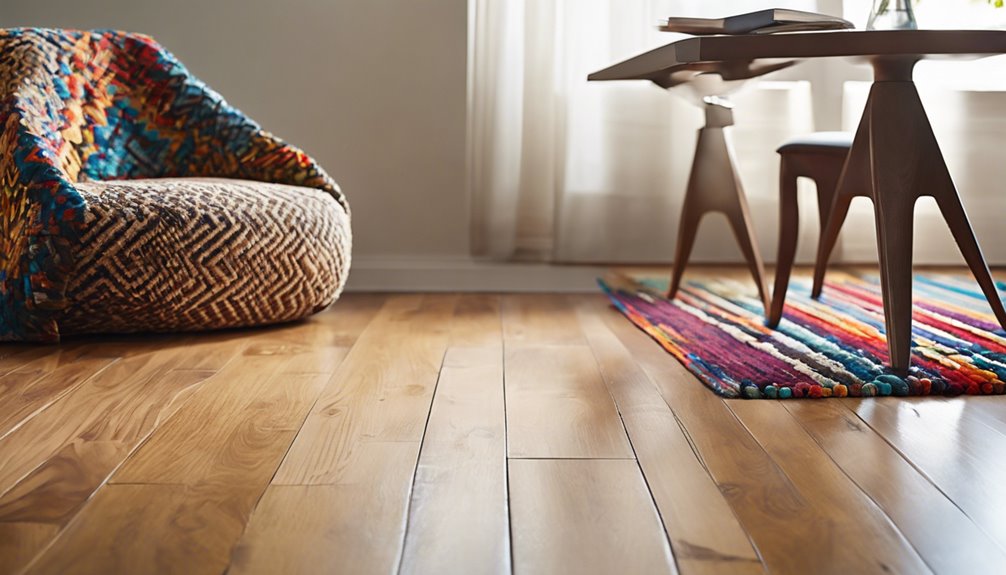
While furniture pads are a great option, non-slip rugs can provide an additional layer of stability for your furniture on wood floors. These rugs utilize non-slip materials and come in various rug textures, making them not only functional but also stylish.
Consider these benefits of non-slip rugs:
- Enhanced grip: The non-slip backing keeps the rug in place, preventing it from sliding around.
- Style variety: With so many textures and designs, you can find a rug that complements your decor.
- Protection for floors: Non-slip rugs can help shield your wood floors from scratches and damage caused by moving furniture.
Apply Rubber Grip Tape
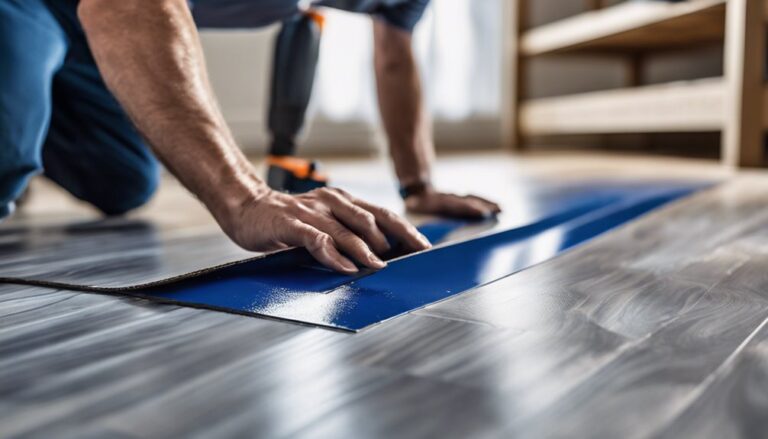
If you want a simple and effective solution to keep your furniture in place, rubber grip tape is a great option. It not only provides a strong hold but is also easy to install with just a few tips and tricks. Let's explore how to use it effectively and the benefits it offers.
Benefits of Rubber Grip
Applying rubber grip tape to your furniture not only prevents sliding but also protects your wood floors from scratches and dents. This simple solution offers several rubber grip benefits, enhancing stability and making your living space more functional.
- Improved Safety: Reduces the risk of accidents caused by slipping furniture.
- Floor Protection: Prevents unsightly scratches and damage to your beautiful wood floors.
- Versatile Use: Works on various furniture types and in different areas of your home.
Installation Tips and Tricks
To guarantee your rubber grip tape adheres properly and provides maximum effectiveness, start by cleaning the surface of your furniture thoroughly. Wipe down furniture materials like wood, metal, or plastic to remove dust and grease. Next, measure the areas where you want to apply the tape. Cut the tape to size, ensuring it's slightly smaller than the contact area to avoid overhangs. Peel off the backing and press firmly onto the furniture legs, making sure it's secure. For different floor types, like hardwood or laminate, adjust the tape thickness if needed for better grip. Finally, let it set for a few hours before moving your furniture back to maintain stability and prevent sliding.
Adjust Furniture Weight
If your furniture keeps sliding, you might want to contemplate adjusting its weight. Adding weight to pieces or using weighted bases can provide the stability you need to keep them in place. This simple adjustment can make a significant difference in how your furniture interacts with your wood floors.
Add Weight to Furniture
One effective way to prevent your furniture from sliding on wood floors is to add weight to it. By adjusting the weight distribution, you can enhance stability and reduce movement. Consider the following options based on your furniture materials:
- Add decorative weights: Use stylish weights that blend with your decor.
- Use heavier items: Place books, vases, or other decorative objects on surfaces to increase overall weight.
- Opt for dense materials: If you're buying new furniture, consider options made from heavier materials like solid wood or metal.
These strategies not only help keep your furniture in place but also add character to your space. With a little creativity, you can enjoy your freedom from sliding furniture!
Use Weighted Bases
Adding weight to furniture can certainly help, but using weighted bases is another effective method to keep your pieces securely in place on wood floors. You can choose from various weighted base materials, like sandbags, concrete, or metal, depending on your style and needs. These materials not only add stability but can also enhance the aesthetic of your furniture.
When exploring weighted base designs, look for options that blend seamlessly with your decor. For instance, weighted bases can come in decorative shapes or colors that match your furniture. This way, you won't compromise on appearance while ensuring your furniture stays put. By incorporating weighted bases, you gain peace of mind, allowing you to enjoy your space without worrying about sliding furniture.
Install Furniture Coasters
Furniture coasters are a simple yet effective solution to prevent your furniture from sliding on wood floors. By choosing the right furniture coaster types, you can enhance stability and protect your flooring. Here are some popular options:
- Rubber Coasters: These provide excellent grip and are ideal for heavier furniture.
- Felt Pads: Soft and smooth, they're great for lighter pieces and won't scratch your wood floors.
- Plastic Coasters: Durable and easy to clean, these work well on various surfaces.
Installation techniques vary by coaster type, but typically, you'll clean the furniture's base, peel off the backing, and stick them on. With just a few steps, you can enjoy a stylish, stable setup without worrying about unwanted movement!
Choose the Right Feet
Choosing the right feet for your furniture can make a significant difference in preventing sliding on wood floors. Different furniture types require specific feet to grip various floor materials effectively. Here's a quick guide to help you choose wisely:
| Furniture Type | Recommended Feet | Best Floor Materials |
|---|---|---|
| Sofas | Rubber pads | Hardwood, Laminate |
| Chairs | Felt pads | Tile, Carpet |
| Tables | Gripper feet | Bamboo, Vinyl |
| Beds | Anti-slip glides | Engineered Wood |
Consider Floor Barriers
While it might seem like a small detail, considering floor barriers can greatly enhance the stability of your furniture on wood floors. By using the right floor barriers, you can prevent unwanted sliding and protect your flooring. Explore options like:
- Floor Mats: These add friction and come in various designs to match your style.
- Non-Slip Pads: Placing these under furniture legs can considerably reduce movement.
- Rug Grippers: These help keep rugs in place, adding extra stability to your setup.
Opting for floor barriers with different surface textures can also provide that extra grip you're seeking. So, take a moment to assess your space and choose the right barriers to enjoy a more stable and free-flowing environment!
Frequently Asked Questions
What Type of Furniture Is Most Prone to Sliding on Wood Floors?
When it comes to furniture that's most prone to sliding on wood floors, you'll find that sliding chairs and moving tables are the main culprits. Their smooth bases and lightweight designs often lead to unintentional shifts, especially when you're using them frequently. If you're looking to maintain a stable setup, consider adding non-slip pads or rugs underneath to keep your furniture in place and enhance your freedom of movement without constant adjustments.
Can I Use Adhesive Solutions Without Damaging My Wood Floors?
Yes, you can use adhesive solutions without damaging your wood floors, but you'll need to choose the right adhesive types. Look for floor protection options designed specifically for wood surfaces, like double-sided tape or rubber pads. These adhesives won't leave a sticky residue and will hold your furniture in place. Just make certain to test a small area first to confirm it won't harm your floor's finish. Enjoy your stylish, stable space!
How Often Should I Replace Furniture Pads or Grips?
Imagine your furniture as a dancer gliding effortlessly across a stage. To keep that performance smooth, regular furniture maintenance is key. You should replace furniture pads or grips every six months to a year, depending on pad durability and how often you move your pieces. If you notice scratches or slipping, it's time to swap them out. Staying proactive helps preserve your wood floors, granting you the freedom to rearrange without worry.
Are There Temporary Solutions for Moving Furniture on Wood Floors?
If you need temporary solutions for furniture movement, consider using furniture sliders or a rug underneath to provide sliding prevention. You can also place a towel or cardboard under the legs for a quick fix. These methods allow you to reposition your furniture without damaging your wood floors. Just remember, while they're great for moving, you might still want to invest in permanent solutions for long-term stability and protection.
Will Heavy Furniture Still Slide With Protective Measures in Place?
Imagine your heavy furniture as a steadfast ship, anchored in a stormy sea. While protective measures can enhance stability, they may not completely eliminate sliding. The effectiveness of these solutions depends on the weight and surface friction. You'll find that heavier pieces are less prone to movement, but they can still shift if pushed hard enough. It's wise to regularly check your furniture's position and adjust your protective measures as needed for ideal stability.