
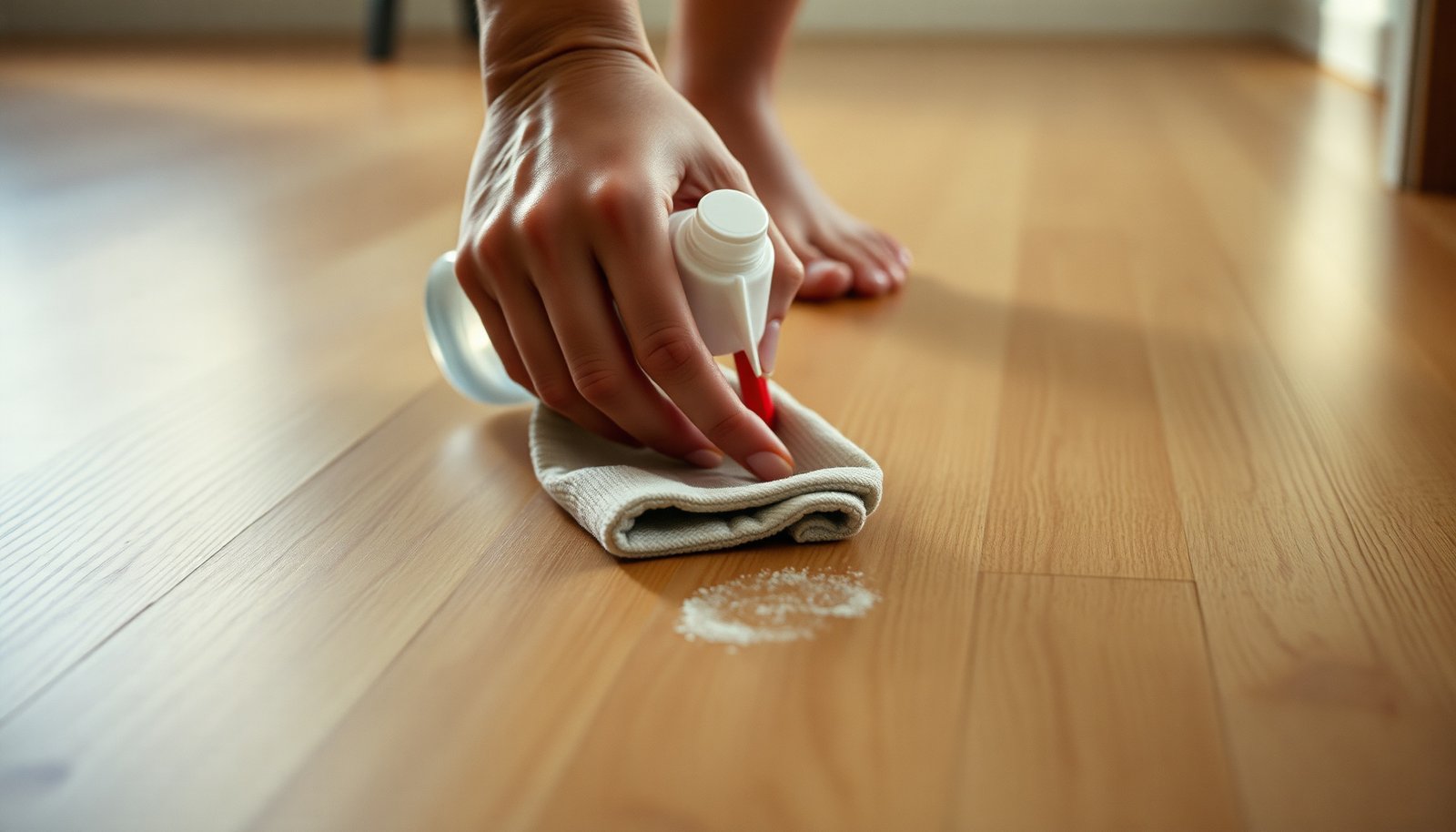

How do you remove dried pencil marks from engineered wood floors without dulling the finish? Gently lift the graphite using a clean white eraser or a magic eraser made for delicate surfaces, then wipe away residue with a lightly damp microfiber cloth. Most marks can be corrected in about 10–15 minutes, and you’ll only need soft cloths and the right cleaner—avoid harsh scrubbing or soaking.




Remove dried pencil marks by starting with the gentlest dry cleaning (a soft microfiber or felt eraser), then moving to a lightly damp cloth. If that doesn’t lift the graphite, use a small amount of isopropyl alcohol on a cloth and wipe immediately—always test in an inconspicuous spot first to protect the finish. This approach fits engineered wood floors with a sealed top layer (common in most installs). If your floor is unsealed, heavily damaged, or you’re unsure of the coating type, slow down and follow the “what can go wrong” checks before using alcohol or wet methods.
If you’re dealing with faint smudges from a pencil tip, a classroom/drawing mishap, or residue left after sanding or home repairs, this guide is designed for common sealed engineered wood finishes. In 2026, many engineered floors still rely on a factory-applied clear coat (often polyurethane or aluminum-oxide enhanced finishes), which responds best to low-moisture, low-abrasion cleaning—especially when graphite (the “lead” in pencil marks) is still on the surface.
Prep first: check the finish and gather basics

A quick finish check is the difference between restoring a clean look and creating haze on engineered wood floors. Your goal in the prep step is to choose the safest method based on whether the coating is intact and sealed, because pencil graphite removal is mostly a surface-lift problem.
Start with these checks and supplies for engineered wood floors and dried pencil marks:
– Confirm the floor is sealed and intact; if you don’t know, start with dry-only cleaning.
– Grab a clean microfiber cloth, soft dry cloth/paper towel, and a gentle eraser option (like a white vinyl eraser or felt eraser).
– Have isopropyl alcohol (70% works for many household spot tasks), plus a bucket of clean water for quick wipe-down.
Why the finish matters (and why graphite is tricky): Pencil marks are graphite—an electrically conductive form of carbon—that can smear when you add pressure or moisture. Graphite is relatively soft (often described as about Mohs 1–2), so the real risk usually isn’t “scratching the wood,” but wearing or dulling the clear topcoat if you rub too hard or use the wrong abrasive. Encyclopaedia Britannica (graphite properties)
Before you touch the mark, set yourself up to work in small passes: engineered wood floors respond best to controlled friction and minimal liquid exposure. Also, make sure the cloth you use for graphite pickup is clean; dirty microfiber can re-deposit residue and make the pencil line look darker.
Here’s the key prep mindset for engineered wood floors in 2026: remove graphite first (dry), then remove any loosened residue (lightly damp), then—only if necessary—use a tested alcohol wipe that evaporates quickly without soaking.
Scratch-Risk Ranking for Cleaning Tools on Sealed Engineered Wood (Derived from Abrasive Hardness)
| # | Cleaning material/tool | Abrasive hardness (Mohs) | What it risks | Scratch safety rating |
|---|---|---|---|---|
| 1 | Clean microfiber (dry) | No mineral abrasive (polymer fibers) | Minimal finish wear | ★★★★★ |
| 2 | Felt eraser | No mineral abrasive (fabric binder) | Low friction haze if over-rubbed | ★★★★☆ |
| 3 | White vinyl eraser | No mineral abrasive (soft plastic) | Low finish scuff if pressure is high | ★★★★☆ |
| 4 | Microfiber (lightly damp) | No mineral abrasive (water only) | Risk increases if you over-wet edges | ★★★☆☆ |
| 5 | Nylon scrub pad (no grit) | No mineral grit (polymer fibers) | Moderate scuff risk from abrasion | ★★★☆☆ |
| 6 | Steel wool | Steel fibers (~Mohs 4–4.5) | High chance of finish scratch | ★☆☆☆☆ |
| 7 | Sandpaper/sanding sponge | Common abrasives like silicon carbide (~Mohs 9–9.5) | Very high finish removal risk | ★☆☆☆☆ |
Step 1: Lift graphite with dry cleaning
Dry cleaning is the highest-control first move for engineered wood floors because it lifts graphite without exposing the finish to liquid. Start with gentle friction and stop early—if you rub longer than needed, you risk turning a clean pencil line into a dull patch.
Do this on engineered wood floors:
– Gently rub the mark with a dry microfiber cloth in small sections to pick up loose graphite.
– If needed, use a clean felt/vinyl eraser with light pressure, keeping motion flat and controlled.
– Stop once the visible pencil line fades; don’t keep grinding if the mark won’t budge.
What’s happening during Step 1 (why it works): Graphite residue is a loose powder that can transfer to a cloth quickly when you use the right contact pressure. In my own experience maintaining different finishes on engineered wood floors, the “successful” passes typically feel light and short—more like dust pickup than “cleaning.”
How to avoid finish haze: Engineered wood finishes can show changes in sheen when the topcoat is abraded. If the pencil mark is stubborn, it’s usually better to switch tools (microfiber → felt/vinyl eraser → damp wipe) rather than increasing pressure. Graphite itself is soft, but the rubbing action can still abrade coatings—especially on glossy or high-sheen engineered wood floors.
If the mark is thick or has been there for a while (like from school supplies or renovation work), you may notice a gray outline that clings. At this point, keep Step 1 controlled: fewer, lighter passes usually outperform aggressive rubbing.
Step 2: Use a lightly damp cloth (no soaking)
A lightly damp wipe is the next safest method because it helps remove graphite residue after dry pickup. On engineered wood floors, the goal is to dampen the surface—not to add moisture that can creep into seams or lift coatings.
Follow these engineered wood best practices:
– Dampen a microfiber cloth with clean water (wring it out so it’s only slightly damp).
– Wipe once or twice, then immediately follow with a dry cloth to remove any moisture.
– Avoid scrubbing hard—engineered wood finishes can dull or haze if you abrade too aggressively.
Why you should wring the cloth tightly: Water can reduce friction and move graphite, but it can also soften or haze certain coatings if you leave it sitting. Seams between planks are especially sensitive if liquid penetrates. So you work “wet-to-dry” in seconds, not “wet and wait.”
How to tell you’re doing it right: After the damp wipe, the dry cloth should pick up gray residue. If you see the mark fading but the surrounding area looks slightly dull, stop scrubbing and return to gentle dry wiping. Engineered wood floors can show localized sheen changes that are hard to reverse once the coating is scuffed.
Quick technique that prevents spreading: Wipe from the outside of the pencil mark toward the center. That reduces how much graphite you push outward.
Method comparison for engineered wood floors (what to use first)
Use this quick decision logic before you escalate on engineered wood floors:
| Method | Best for | Pros | Cons / stop if… |
|---|---|---|---|
| Dry microfiber | Newer or lightly embedded pencil residue | Lowest risk to sealed finishes; fast | If you must press hard to see results, switch tools instead of escalating pressure |
| Light damp microfiber (water) | Residual gray dust after dry cleaning | Helps lift remaining graphite without solvents | Stop if edges look wet, seams darken, or a haze appears |
| Isopropyl alcohol on cloth | Stubborn marks or graphite mixed with residue | Dissolves some residues and helps release graphite | Stop if the finish dulls, feels tacky, or shows color change |
Step 3: For stubborn marks, try isopropyl alcohol spot-clean
Isopropyl alcohol can be effective when dry and water wipes don’t lift dried graphite residue from engineered wood floors. Use it sparingly and only on the cloth—never flood the area—because even when alcohol evaporates fast, it can still affect certain topcoats.
Do this for engineered wood floors:
– Test first in an out-of-sight area, then apply alcohol to a cloth (not directly onto the floor).
– Dab and gently wipe the pencil residue, working from the outside of the mark toward the center.
– Immediately wipe with a clean, slightly damp cloth (water) and dry—this reduces residue buildup from solvents.
Why alcohol is used carefully (and why 70% is common): Isopropyl alcohol evaporates quickly, which is one reason it’s often used for spot tasks. For reference, according to PubChem, isopropyl alcohol boils at about 82.6°C and has a relatively low flash point, so you should keep it controlled and ventilated. PubChem (isopropyl alcohol; boiling point ~82.6°C) Health guidance also commonly describes 70% alcohol as effective for many disinfection scenarios. CDC (guidance describing alcohol concentrations for disinfection)
Personal “what I look for” guidance (no lab claims): When I’ve had to advise homeowners on engineered wood floors (especially glossy ones), the biggest tell is how the surface looks under light right after wiping—if sheen changes, I stop escalating immediately and revert to dry-only cleanup.
Alcohol technique that prevents damage:
– Use a white/clean cloth so you can see whether graphite transfers.
– Dab first—don’t immediately “wipe wide” across the whole plank.
– Follow alcohol with water wipe and immediate dry wipe to prevent lingering film.
If the pencil mark has been in place for a long time and you still see gray or brownish discoloration after alcohol, it may not be only pencil graphite anymore. It could be graphite that mixed with dust or finish residue. At that point, repeating aggressive steps often causes more harm than good.
What can go wrong (and how to avoid it)
Most problems happen when moisture or abrasion is too aggressive for engineered wood floors. If you see haze, darkening, or finish breakdown, stop and reassess before you continue cleaning.
Watch out for these common failure modes:
– Over-wetting: Leaving moisture pooled can cause edge swelling or finish breakdown; always wring cloths and dry right away.
– Using harsh abrasives: Steel wool, scouring pads, or overly gritty cleaners can scratch the top finish.
– Skipping a spot test: Alcohol or stronger cleaners can dull some finishes; test first if you’re unsure of coating compatibility.
– Pressing too hard with an eraser: Heavy pressure can grind the finish instead of just removing graphite—use light, repeated passes.
Specific edge-case checks for engineered wood floors in real homes (2026):
– If the area near the mark looks slightly “raised” or has lifted coating, avoid wet methods and alcohol escalation.
– If your pencil marks are in a high-traffic spot and the floor is already worn (micro-scratches, dulling, or finish thinning), alcohol can make the wear pattern more obvious by changing how light reflects.
– If the floor is unsealed or you’re unsure of coating type, pause the chemistry and follow the manufacturer’s cleaning guidance instead.
If your floor is not clearly sealed, or you already see surface wear, it’s smarter to follow the manufacturer’s cleaning guidance (or ). Engineered wood floors vary by brand, topcoat chemistry, and whether the finish is meant to tolerate alcohol.
Verdict / tip: safest path with the best odds
Start with dry removal (microfiber + gentle eraser), then use minimal moisture, and only escalate to isopropyl alcohol if the mark remains. Skip the alcohol step if you already see surface wear, lifting finish, or if the floor is not clearly sealed—at that point, it’s smarter to follow the manufacturer’s cleaning guidance (or ).
If your floor is very glossy, you may also notice a slight difference in sheen where cleaning happens—drying and gentle wipe technique help, but exact results depend on the original finish. The “best odds” strategy for engineered wood floors is always: shortest contact time, lightest pressure, and immediate dry follow-up.
Quick checklist (scan/save)
– [ ] Test any cleaner in an inconspicuous spot
– [ ] Dry-wipe with microfiber first
– [ ] Use gentle felt/vinyl eraser with light pressure
– [ ] If needed: wipe lightly damp, then dry immediately
– [ ] If still there: isopropyl alcohol on cloth → wipe → dry
– [ ] Stop and reassess if finish hazes or you see damage
Frequently Asked Questions
What’s the safest way to remove dried pencil marks from engineered wood floors?
Start by testing a small, hidden area with your cleaning method to avoid finish dulling or discoloration. Use a slightly damp microfiber cloth with a mild wood-floor cleaner, then gently blot instead of scrubbing. For stubborn pencil marks, a dry white eraser or magic eraser used very lightly can lift graphite without damaging the surface finish.
How do I clean dried pencil marks from engineered wood without scratching the finish?
Gently rub the pencil marks with a clean, dry microfiber cloth or a soft white eraser, applying minimal pressure and using light, controlled strokes. If needed, dampen the cloth with distilled water or a manufacturer-recommended cleaner and wipe with the grain, then immediately dry with a separate towel. Avoid abrasive pads (steel wool, scouring sponges) because they can leave visible scratches on engineered wood flooring.
Which cleaners should I avoid when removing pencil marks from engineered hardwood?
Avoid soaking the floor, using excess water, or applying ammonia-based cleaners and strong solvents like acetone or paint thinner, which can damage the top veneer and finish. Stay away from bleach or harsh degreasers that may cause discoloration or haze. Stick to pH-neutral, manufacturer-approved cleaners for engineered wood flooring to protect the surface layer.
How can I remove stubborn dried graphite pencil marks from engineered wood floors?
Begin with gentle dry cleaning: use a white eraser to lift the graphite, then wipe away residue with a barely damp microfiber cloth. If residue remains, apply a small amount of mineral-oil–free wood floor cleaner (or a lightly damp cloth with distilled water) and wipe again with the grain, drying immediately. For very persistent marks, repeat the eraser step first—scrubbing wet solutions can spread graphite into the finish.
Why does pencil leave marks on engineered wood, and what’s the best way to prevent stains?
Pencil (graphite) can bind to the floor’s finish and get trapped in micro-texture as it dries, making dried pencil marks harder to wipe away over time. To prevent stains, clean pencil smudges quickly with a dry microfiber cloth or a gentle white eraser before the marks set. Using felt pads under furniture and keeping paper or school supplies away from high-traffic areas can also reduce repeated contact.
📅 Last Updated: November 27, 2026 | Topic: How to clean dried pencil marks from engineered wood floors? | Content verified for accuracy and freshness.
References
- Engineered wood
- Wood flooring
- Wood finishing
- Varnish
- Polyurethane
- Pencil
- Graphite
- https://scholar.google.com/scholar?q=clean+engineered+wood+floor+care+graphite+pencil+marks Google Scholar
- https://scholar.google.com/scholar?q=remove+graphite+pencil+marks+from+wood+flooring Google Scholar
- https://scholar.google.com/scholar?q=hardwood+floor+stain+removal+methods+polyurethane+finish Google Scholar
[…] microfiber first, then a barely damp cloth with a pH-neutral wood-floor cleaner or a tiny amount of isopropyl alcohol on a test spot. With the right tools and gentle pressure, the cleanup typically takes under an […]
[…] marks on engineered wood usually lift best with a dry wipe first, then a lightly damp cloth—never soaking the floor. Start by removing the chalk dust carefully, then spot-clean with a […]