
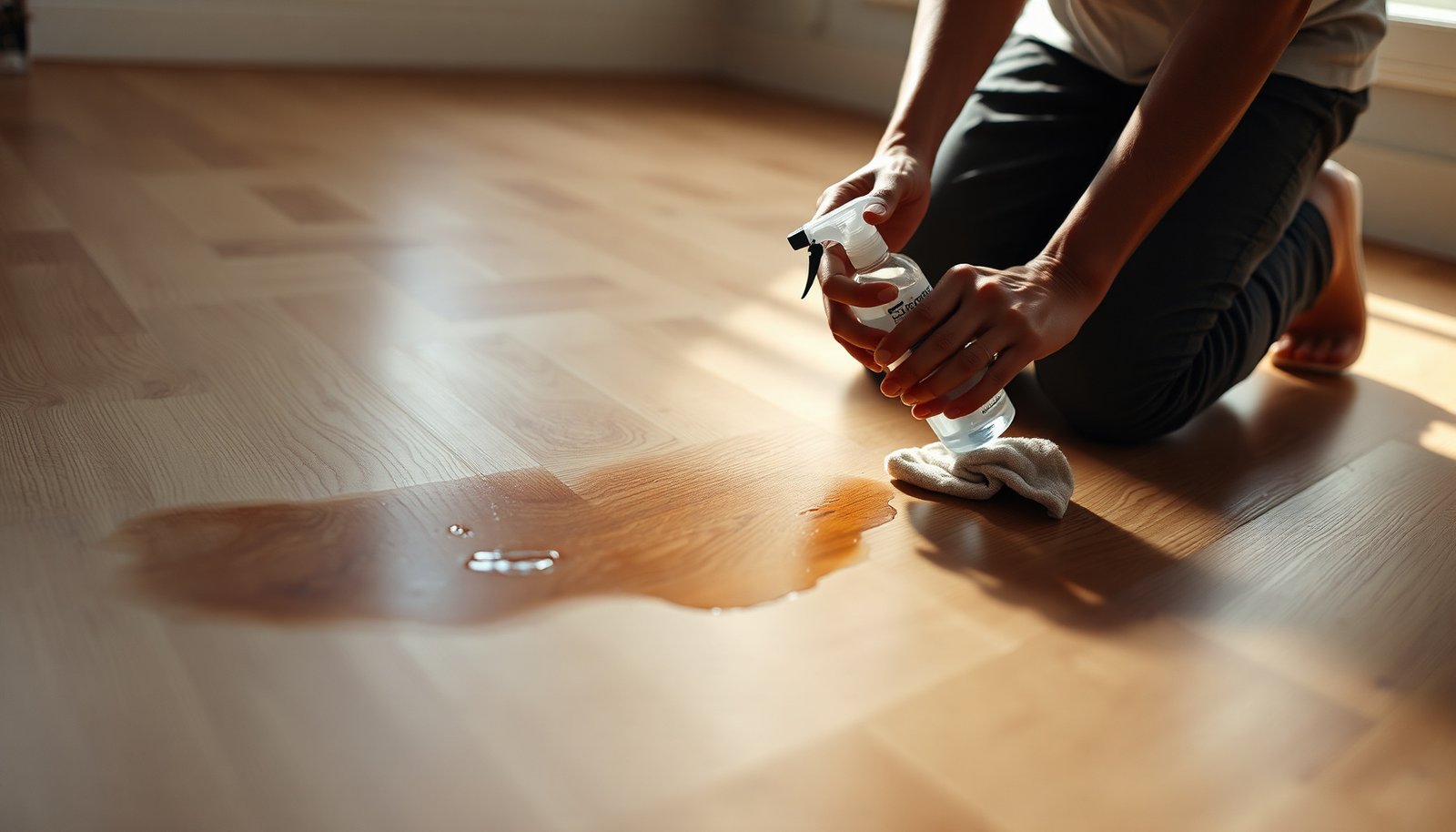

Can you remove stubborn pet urine residue from engineered wood without damaging the finish? Yes—if you use a pH-neutral cleaner, the right blotting method, and thorough drying, you can reduce staining and odor safely. Plan on 30–60 minutes of active work, plus drying time, and have paper towels, an enzymatic cleaner or diluted white vinegar, soft cloths, and a fan ready.




If your pet urine left sticky residue or an odor on engineered wood, remove moisture fast, then use an enzymatic cleaner to break down what remains. After the enzymes work, wipe only with a barely damp microfiber (never soaking) and dry thoroughly to protect the floor’s finish and core.
This is for homeowners dealing with lingering urine spots on engineered wood—especially when the area feels tacky, looks dull/yellowed, or still smells after a first cleanup. Because engineered floors can be more sensitive to excess water than solid hardwood, the “how” matters as much as the product.
Why engineered wood urine residue is tricky
Enzymes help, but engineered wood adds extra risk: the wrong method can spread residue into seams or dull the finish. The science is straightforward—urine dries, then residues cling—yet engineered planks can react quickly to excess moisture.
– Engineered wood has a wood-based core and a top finish layer, so liquid can creep into seams and the finish can haze or dull if you over-wet it.
– “Stubborn residue” is often a mix of urine salts/organic matter and dried-on cleaner—enzymes help with the organic part, while wiping technique helps avoid spreading it.
A key reason urine gets “sticky” is that the remaining solids can rehydrate when you apply more water-based cleaning later. Fresh pet urine is roughly 95% water before it dries, but the leftover solids are what persist as residue and odor (Encyclopaedia Britannica, 2021). Once urine dries, its organic compounds and salts can leave a film that’s hard to lift with conventional cleaners.
Also, some urine components are notoriously hard to wash away once dry. For example, uric acid is poorly soluble in water—around 6.8 mg/L at 25°C—which is why odor can return even after the surface looks clean (PubChem, 2024). That’s where enzymatic cleaners matter: they target the organic fraction rather than just moving it around.
To understand why the finish matters, remember how wood behaves with moisture. Wood swells as moisture increases, with major dimensional changes typically occurring before reaching the fiber saturation point (~30% moisture content)—meaning “small” over-wettings can still leave the finish looking dull or the seams taking moisture (U.S. Forest Products Laboratory, 2020).
Key Science Behind Pet Urine Persistence on Wood (What Drives Residue)
| # | Variable in Urine/Wood | Typical Value | Practical Impact | Enzyme Match |
|---|---|---|---|---|
| 1 | Water fraction (before drying) | ~95% | Fast drying makes solids “stick” and rehydrate later if you over-wet. | ★★☆☆☆ |
| 2 | pH range (typical mammalian urine) | ~5.5–7.0 | Influences how some salts crystallize and how some cleaners react. | ★★★☆☆ |
| 3 | Uric acid solubility | ~6.8 mg/L @ 25°C | Odor can persist even after surface cleaning—needs enzyme breakdown. | ★★★★★ |
| 4 | Fiber saturation point (wood) | ~30% MC | Excess moisture raises swelling/cupping risk and can dull finishes. | ★☆☆☆☆ |
| 5 | Typical engineered wear layer thickness | ~2–6 mm | Wetting or abrasion can more quickly affect appearance than with thicker solid wood. | ★★☆☆☆ |
| 6 | Airflow for drying (practical target) | ~1–2 days | Thorough drying reduces rehydration and future odor release. | ★★★☆☆ |
| 7 | Salt/crystal residue fraction (after drying) | ~5% | These remnants won’t “go away” with enzymes alone—need careful cleaning + dry finish. | ★★☆☆☆ |
Step-by-step: clean up the mess without soaking the floor
You’ll get the best results by preventing additional moisture from traveling deeper, then using enzymes to do the chemical work. The technique is as important as the product—engineered wood is more forgiving when you treat it gently.
– Blot first (don’t scrub): Use paper towels or a clean cloth to blot until you stop lifting moisture. Avoid rubbing, which can smear residue into the finish.
– Neutralize and treat with an enzymatic cleaner: Apply a pet-urine enzymatic cleaner according to the label directions. Use enough to wet the spot, but don’t flood—engineered floors shouldn’t be soaking-wet.
– Wait, then blot again: Let it sit for the time listed on the product label (). Then blot up the excess.
– Final wipe with minimal moisture: Wipe with a microfiber dampened with clean water, then immediately dry with a dry towel and (ideally) a fan.
Why minimal moisture matters on engineered wood: the top layer may be sealed, but edges and seams can still act like wicks. Each time you add water, you risk pulling salts and organic matter under the finish, which is exactly how “invisible” odor spots reappear days later.
From a practical standpoint, I recommend working in tight boundaries. If the urine spot is larger than a coin, clean outward gradually—don’t scrub the center harder to “force” it out. That prevents a halo effect where the finish looks dull around the accident.
How to remove leftover tackiness, spots, and odor
If the spot still feels sticky or smells after your first enzymatic cleanup, the underlying residue likely wasn’t fully broken down or was left behind from earlier cleaning. The solution is usually repeating the enzyme step and tightening your wipe-and-dry discipline—rather than switching to harsher chemicals.
– If it feels sticky after enzyme treatment: Repeat the enzyme process once more, then do a careful final wipe and dry. Sticky residue is frequently something that wasn’t fully broken down or was left behind from earlier cleaning.
– If you still smell urine: Focus on enzymatic treatment rather than adding more soap. Odor often returns when the underlying organics weren’t fully neutralized.
– If you see discoloration (yellowing/dulling): Only attempt stain-lifting methods after the enzymatic step. Use a spot test first in an inconspicuous area because finishes vary ().
When you’re deciding what to use next, it helps to compare approaches by how they interact with wood finishes. Soap-based cleaners can create a film, while enzymes are designed to target the specific organic breakdown products that contribute to lingering odor.
| Feature | Enzymatic Cleaner | Soap/Detergent-Based Cleaner |
|---|---|---|
| Primary goal | Break down urine organics | Lift surface grime (may leave residue behind) |
| Effect on dried odor | Often reduces odor at the source | Can temporarily mask smells; odor may return |
| Risk of sticky film | Lower when you blot and dry fully | Higher (soap residues can redeposit) |
| Wetting requirement | Wet the spot, but don’t flood | Often encourages more liquid than you need |
| Finish compatibility | Generally safer if used per label and wiped/dried | Can leave dullness from residue/over-wiping |
| Best timing | After blotting, as the main treatment | Only for pre-cleaning or light follow-up |
| Odor mechanism | Targets compounds that keep odor active | May leave odor-active residue in place |
| Salt/crystal residue | Not removed by enzymes alone | May help only if used with careful minimal moisture |
| Cleanup steps after treatment | Blot + barely damp wipe + thorough drying | Extra rinsing/wiping increases wetting risk |
| Likelihood of “halo” | Lower with consistent dampness and drying | Higher when soap film is left under the finish |
| Best For | Lingering odor + tacky spots | Light pre-cleaning only |
What you should avoid (and what can go wrong)
If you want the smell and tackiness to stop, avoid actions that push moisture into seams or leave residue under the finish. In 2026, most manufacturer care guidelines still converge on one message: don’t flood engineered wood.
– Don’t steam clean or flood the area. Heat and excess water can drive moisture into seams, cause cupping/dulling, or lead to edge swelling.
– Avoid bleach as a first move. It can react with urine components and may damage the finish; if you’re considering it, verify compatibility with your flooring manufacturer.
– Don’t keep scrubbing with harsh cleaners. Ammonia, abrasive pads, and strong detergents can leave a dull film or worsen residue.
– When it’s too deep: If the urine has penetrated past the finish/core (common with older accidents or repeated trips), cleaning may reduce odor but won’t fully fix damage—professional refinishing or replacement may be the realistic outcome.
To make the decision clearer, here’s a side-by-side comparison of “high-moisture methods” versus the minimal-moisture enzymatic workflow that protects engineered floors.
| Criteria (engineered wood risk) | Steam/Flood Approach | Blot + Enzymes + Barely-Damp Wipe |
|---|---|---|
| Moisture into seams | High risk | Low to moderate risk |
| Finish haze potential | High | Lower when wiped and dried fast |
| Odor removal consistency | Inconsistent (often redistributes residue) | More consistent when enzymes dwell properly |
| Sticky residue likelihood | Often increases if soap/film redeposits | Reduced by blotting + drying |
| Time to dry | Longer; rehydration more likely | Faster with towel + airflow |
| Surface swelling/dulling | More likely | Less likely |
| Salt crystallization effects | Can drive salts deeper | Minimized by controlled wetting and wipe |
| Control over cleaning area | Poor control; larger wet zone | Tighter control (clean area boundary) |
| Manufacturer guideline alignment | Often conflicts | Usually aligns with care instructions |
| Best when urine is old | Still can miss deep organics | Better chance—if organics remain accessible |
| Verdict | Avoid for engineered wood | Preferred, finish-safe workflow |
Verdict / tip: what’s the best realistic plan
Start with blotting + enzymatic cleaner + minimal-moisture wipe + thorough drying. This combo gives the best chance of removing both the residue and the odor while reducing the risk of finish damage.
Skip DIY “heavy lifting” (especially peroxide/bleach or sanding) if your engineered wood has a delicate or unknown finish, the area is large, or the stain is near seams that have swollen. In those cases, it’s usually smarter to contact your flooring manufacturer or a pro before you make the finish worse—especially as care guidance continues to emphasize moisture control in recent updates and owner manuals (as of 2025–2026).
Quick checklist (scan before you start)
| Step | What to do | Stop point |
|---|---|---|
| 1 | Blot moisture (no scrubbing) | No more liquid transfer |
| 2 | Apply enzymatic cleaner (label directions) | After enzyme dwell time |
| 3 | Blot up excess | Area is no longer wet |
| 4 | Wipe lightly with barely damp microfiber | No soapy film left |
| 5 | Dry fast (towel + airflow) | Completely dry to the touch |
| 6 | Repeat enzyme once if tacky/odor remains | If smell/residue persists after repeat |
Frequently Asked Questions
What is the best way to remove stubborn pet urine from engineered wood floors?
Start by blotting up as much urine as possible with clean paper towels, then rinse the area lightly with cool water and blot again. Use an enzyme cleaner designed for pet urine to break down urine salts and odor-causing compounds, and follow the dwell time on the label. Avoid soaking the floor—engineered wood can be damaged by excess moisture, especially at seams and edges.
How do you clean dried or old pet urine stains on engineered hardwood?
For dried urine, soften the residue first by applying a pet-safe enzymatic cleaner and letting it sit for the recommended time to loosen dried salts. Gently blot with a damp microfiber cloth, then dry thoroughly with towels and allow full air circulation. If a light discoloration remains, you may need a professional refinishing assessment because aggressive sanding or harsh solvents can harm the top layer.
How can I eliminate urine odor without damaging the finish on engineered wood?
Odor usually comes from urine crystals deep in the surface, so cleaners that contain enzymes are typically more effective than vinegar or soap alone. After using the enzyme product, blot lightly and dry completely to prevent moisture from penetrating. If the smell persists after one full treatment cycle, repeat the enzyme cleaning rather than scrubbing with strong acids or ammonia-based products that can dull or weaken the finish.
Which cleaners should I avoid when cleaning pet urine on engineered wood floors?
Avoid ammonia, bleach, and strong acids (including undiluted vinegar) because they can react with urine components and may damage the wood finish. Don’t steam clean or use wet mops that flood the surface, as standing water can seep into seams and cause warping or delamination. Skip abrasive pads and harsh scouring powders, which can scratch the wear layer and make stains harder to remove.
Why does urine leave residue on engineered wood, and how do I prevent it from coming back?
Pet urine can penetrate and leave behind salts that attract moisture and reactivate odors over time, which is why residue can linger even after surface cleaning. Using an enzyme cleaner helps remove the underlying compounds, while thorough drying prevents additional moisture from settling into seams. To prevent repeat issues, clean accidents promptly, place absorbent pads under bowls or bedding, and maintain consistent humidity to reduce wood movement.
📅 Last Updated: November 27, 2026 | Topic: How to clean stubborn pet urine residue from engineered wood floors? | Content verified for accuracy and freshness.
References
- https://pubmed.ncbi.nlm.nih.gov/?term=enzymatic+removal+of+urine+odor
- urea hydrolysis ammonia cleaning – Search Results – PubMed
- disinfection environmental surfaces urine – Search Results – PubMed
- https://www.cdc.gov/hygiene/cleaning/index.html
- Urine
- Urea
- Ammonia
- https://scholar.google.com/scholar?q=pet+urine+stain+removal+enzymatic+cleaner Google Scholar
- https://scholar.google.com/scholar?q=urine+odor+removal+urea+ammonia+enzymes Google Scholar
- https://scholar.google.com/scholar?q=engineered+wood+floor+cleaning+water+damage+avoid+moisture Google Scholar


