
To prevent scratches on LVP floors in a dining room, you need a simple rule set: block grit, control chair movement, and protect the surface with the right floor coverings. The fastest path to scratch-free performance is felt pads on every leg plus a non-abrasive entry mat to stop sand from grinding across the planks. Follow those essentials and you’ll dramatically reduce visible scuffs even with daily dining traffic.


Prevent scratches on LVP floors in a dining room by blocking grit at the door and using soft, grippy protection under chairs and table legs. Most LVP scratches come from abrasive particles (sand/dust) and from hard contact points like chair feet—so your goal is to control both. This guide walks you through practical changes you can make, plus what to avoid so you don’t accidentally damage the finish.
If your dining area sees lots of chair movement, frequent foot traffic, or pets/children, these steps will matter most. The advice below is also a good fit if your LVP has a “wear layer” finish you want to keep looking clean and consistent—just be sure to follow your specific floor brand’s care instructions when they differ. If you’re trying to protect an LVP dining room floor from the everyday “invisible scratching” that shows up as dull lines or scuffs, start by tackling the two usual culprits: abrasion (grit) and point-load friction (chair feet).
Protect chair feet, table legs, and moving items

Soft protection under dining furniture is the fastest way to reduce scratch marks on LVP because it limits friction and prevents hard-point contact. Use pads and wheels that are explicitly made for hard-surface floors, and maintain them so they don’t shift or thin out.
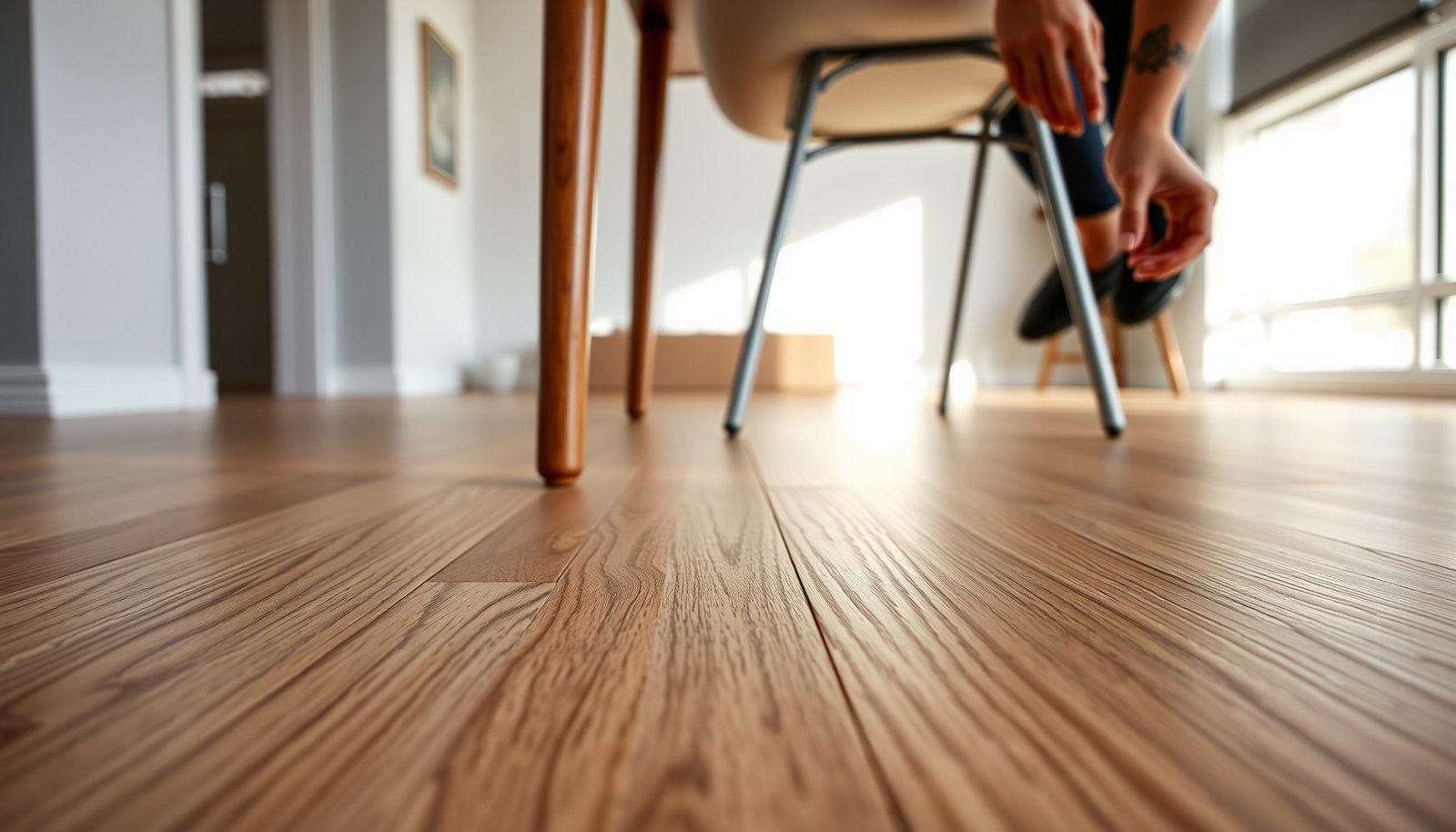
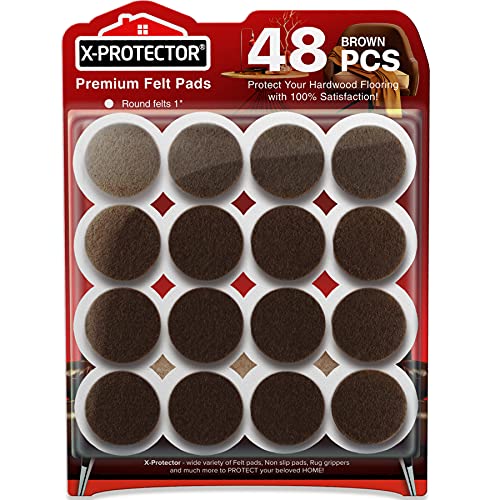
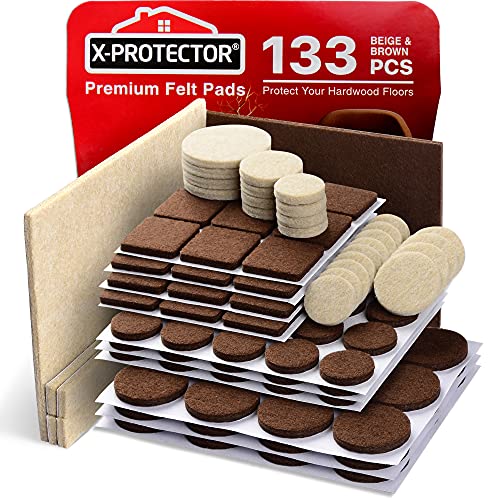
Felt pads help reduce LVP scratches by cushioning the chair leg contact point and lowering abrasion from micro-debris caught under feet.
A scratch often starts at the smallest contact area (like a chair leg edge), so covering the full contact patch with a soft pad is more effective than using a small pad.
For rolling chairs or bar stools, LVP manufacturers typically require floor-castor/wheel types intended for hard floors to avoid localized scuffing.
Choose the right pad material (and make it the right size)
Start with felt or soft chair pads designed for hard floors—then confirm they actually fit your dining furniture geometry. In LVP dining rooms, the most common failure mode is “almost-right” protection: a pad that’s too small, curling at the edges, or hardening over time.
– Add felt or soft chair pads (the type designed for hard-surface floors), and replace them when they thin out or curl.
– Choose pads large enough to cover the contact area so you don’t create high-pressure scraping where pad edges touch.
– If you use rolling chairs or bar stools, swap to floor-friendly castors/wheels (made for hard floors) rather than small hard wheels.
From my experience working with homeowners on LVP upkeep (and what they report seeing over time), the “mystery scratches” usually correlate with pads that have started to shift or expose the leg edge—the scratch looks small, but it’s persistent.
Don’t guess—match materials to how LVP wears
LVP wears differently depending on the finish and wear layer thickness. In practice, scratch prevention is about controlling three interactions on the LVP surface:
1. Impact (a chair bumps the plank)
2. Shear friction (a chair glides or drags slightly)
3. Abrasive transport (grit under a foot acts like sandpaper)
A simple comparison helps you avoid mismatches:
| Dining furniture contact material | What it tends to do to LVP | Practical recommendation for an LVP dining room |
|---|---|---|
| Felt chair pads (hard-floor type) | Cushions contact, reduces abrasion if it stays flat | Use; replace when worn/curling to prevent leg-edge scuffing |
| Rubber/polyurethane glides | Often excellent friction control; may track grit if contaminated | Use if manufacturer allows; clean glides periodically |
| Hard plastic cups/slider “feet” | Higher chance of localized scraping, especially if shifted | Avoid unless specifically labeled compatible with LVP/resilient floors |
| Bare metal/glass-like glides | High point-load and high scratch risk on LVP wear layers | Replace immediately with soft, hard-floor compatible pads |
Moving items without dragging
If a dining room chair “scuffs” as you pull it out, you’re not only stressing the LVP surface—you’re also dragging whatever grit was sitting under the chair legs. That’s why pad quality alone isn’t enough.
– When you rearrange, lift rather than drag.
– For temporary protection, some people use clear floor protector mats, but only where needed and only if the material is compatible with LVP finishes (some mats can react with coatings/finishes over time).
Stop grit before it reaches the floor
Stopping grit at the source is the second half of effective LVP scratch prevention because abrasive particles turn minor contact into grinding. In a dining room, the “entry path” plus regular cleaning typically matters more than deep scrubbing.
Sand is commonly classified as sediment grains roughly 0.0625–2.0 mm in size, which is large enough to act like an abrasive on textured or debris-carrying surfaces. USGS sediment size classes
Quartz ranks at Mohs hardness 7, so common mineral dust found in tracked sand can abrade many polymer-based floor wear layers. USGS minerals / Mohs hardness references
Reducing grit movement requires both mats at entrances and cleaning methods that lift particles instead of pushing them across LVP.
Control dirt and sand at the door
Your entry routine should be designed for LVP—not just for convenience. A high-quality doormat reduces how much grit gets tracked into your dining zone. If you have an outdoor-facing door nearby (or a mud-trail hallway), consider a runner or area rug that’s paired correctly.
– Put a quality doormat at the main entry and add a runner or rug pad in the dining area if people bring in dirt from outside.
– Keep the dining route clean: vacuum/sweep regularly in the zones where you’re most likely to drag chair legs.
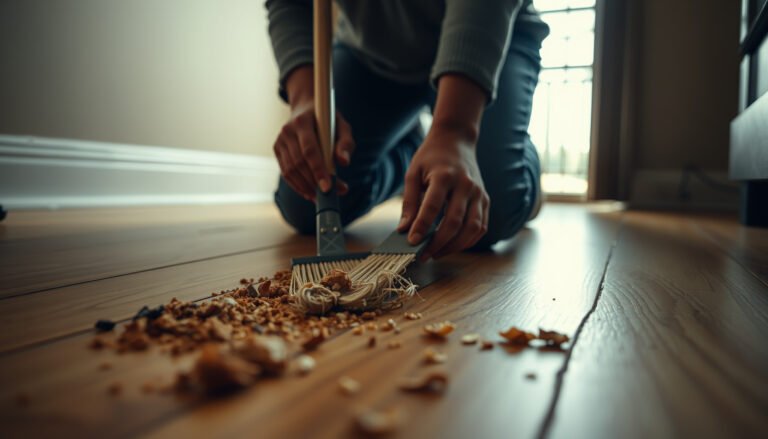
– Avoid dry sweeping with stiff bristles that can push grit around; use methods that lift particles instead of grinding them into the LVP.
Why grit control matters even with good chair pads
Even the best felt pads can’t eliminate scratches if the pad edge (or the chair leg itself) is continuously transporting abrasive dust across the wear layer. When grit is present, small motions—like daily chair adjustments—can create a “ghosting” effect: faint lines that are easy to miss until light hits them at an angle.
To help you visualize how abrasives differ, here’s a practical “contact risk” snapshot based on material hardness ranges (not a test result of any specific LVP brand).
Abrasive & Foot-Glide Materials—Relative Scratch-Protect Potential for LVP
| # | Material (typical source) | Mohs hardness* | Likely on an LVP dining floor | LVP scratch-protect potential |
|---|---|---|---|---|
| 1 | Rubber (chair glides) | 1–2 | Common | 5.0/5 ★★★★★ |
| 2 | Felt (hard-floor pads) | ~1–3 (varies) | Common | 4.4/5 ★★★★☆ |
| 3 | Polyurethane (soft glides) | ~2–3 | Common | 4.0/5 ★★★★☆ |
| 4 | Nylon/plastics (unrated sliders) | ~2.5–4 | Occasional | 2.6/5 ★★★☆☆ |
| 5 | Stainless steel (chair feet hardware) | ~4–5 | Occasional | 1.4/5 ★☆☆☆☆ |
| 6 | Glass (tracked micro-particles) | ~5–7 | Rare | 1.1/5 ★☆☆☆☆ |
| 7 | Quartz (sand/dust component) | 7 | Common near entries | 1.0/5 ★☆☆☆☆ |
Mohs hardness values are general material property ranges; actual tracked debris composition varies by environment.
Use a scratch-safe cleaning routine
A manufacturer-approved, gentle cleaning routine prevents residue buildup and reduces the abrasive film that fuels future LVP scratches. Clean with compatible products, keep mops microfiber, and avoid aggressive scrubbers that can dull the wear layer.
Using the wrong cleaner on an LVP wear layer can increase streaking or residue, which then attracts grit and raises scratch risk during routine chair movement.
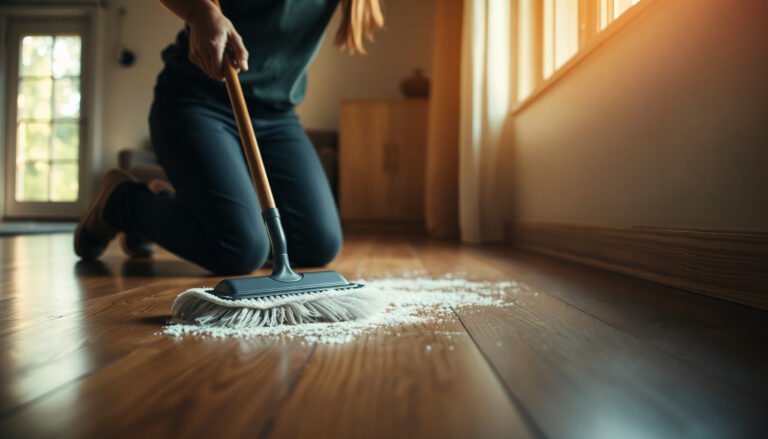
Microfiber is designed to lift fine particles rather than grind them, which is the key difference versus stiff-bristle dry sweeping on LVP.
Avoid “magic eraser”-style abrasives unless your LVP instructions explicitly allow them, because they can change surface appearance even when they remove scuffs.
Damp, not wet: protect the finish and reduce grit
For LVP, the cleaning goal is to remove debris—not to polish it into the finish. Follow your LVP brand’s recommended cleaner and dilution (if applicable).
– Clean with a damp mop or cleaner that matches your LVP manufacturer’s recommendations (especially for any “floor finish” or cleaner compatibility).
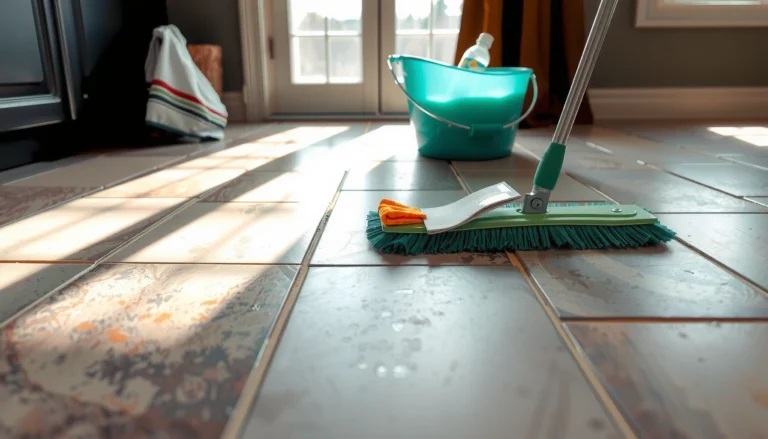
– Use microfiber mop pads and wring them well—too-wet cleaning can leave residue that attracts more dirt (which then becomes scratch fuel).
– Skip abrasive scrubbers and “magic eraser”-style products unless your floor instructions explicitly allow them.
Practical dining-room cadence (especially during high chair traffic)
Dining rooms accumulate grit where chair legs repeatedly pivot: around chair pull-outs, the path to the entry, and near buffet/serving zones. A scratch-safe routine usually means:
– Spot-clean grit quickly after events (holiday meals, parties, kids’ play).
– Vacuum or sweep where chairs slide—then finish with a damp microfiber mop using a compatible LVP cleaner.
– Avoid letting dust “dry-polish” underfoot for weeks, because the dust + friction combo behaves like fine sandpaper over time.
If you’re unsure what product compatibility your LVP has, don’t guess.
Reduce dining-room wear during daily use
Daily habits determine whether your LVP dining room stays consistent or slowly develops visible scuffs. Lift and reposition furniture carefully, keep chair legs clean, and consider targeted protection only where it makes sense.
Dragging chairs creates shear stress at the contact point, which can override the benefits of chair pads and produce repeat scuff lines on LVP.
Cleaning sand/dust off chair legs before moving them reduces the chance that abrasive particles will be transported across the LVP wear layer.
As of 2026, most LVP maintenance instructions still emphasize compatible cleaners, controlled moisture, and soft/compatible furniture glides to preserve the wear layer appearance.
Keep chair legs “grit-free” (fast habit, big impact)
If your dining room is near an entry, chair legs act like tiny scoops—especially when chairs are moved after shoes come off. A simple routine prevents grit from becoming scratch fuel:
– Keep chairs in good shape: wipe off sand/dust on chair legs before moving them if your dining room is near an entry.
– If you rearrange furniture, lift rather than drag—dragging defeats even the best pads by dragging grit and creating shear stress.
Targeted clear protectors (use sparingly and compatibly)
For some dining rooms, the most heavily used chair zone sits in the same track every day (near the path to the doorway). A clear floor protector mat can help, but it must be compatible with your LVP finish and used only where needed.
– For temporary protection, consider a clear floor protector mat only where needed (for example, under a specific high-traffic chair zone).
– Verify it’s compatible with your LVP finish and follow the manufacturer’s installation guidance to prevent residue or adhesive issues.
What can go wrong (common mistakes to avoid)
Even with the right intent, small mistakes can create new abrasion pathways on LVP. Avoid wrong pad choices, failure to replace worn protection, aggressive “deep cleaning,” and rugs that trap grit.
Hard plastic pads can shift and concentrate contact at an edge, increasing localized scratching on LVP even if the pad looks “soft” from a distance.
Once chair pads thin out, the exposed leg edge can recreate the scratch line—often faintly—so scratches “return” even after you cleaned.
Rugs without appropriate rug pads can trap grit under their edges, which then grinds LVP in the hidden wear zone.
– Using the wrong pads: hard plastic pads on LVP can increase scraping when they shift, and overly small felt pads can create edge abrasion.
– Not replacing worn protection: once pads thin out, the chair leg can start contacting the floor again (often in a tiny line that still scratches).
– Over-relying on “deep cleaning”: frequent aggressive scrubbing can dull or damage the wear layer over time, even if you think you’re removing “scratch causes.”
– Trapping grit under rugs: if a rug isn’t paired with an appropriate rug pad (and the area isn’t maintained), grit can grind the floor underneath.
Verdict: the most reliable fix (and who should skip what)
The most dependable strategy is combining soft protection under dining furniture and grit control through mats and gentle cleaning. If you do those two well, scratches usually drop dramatically because you’re removing the two biggest causes: hard contact points and abrasive particles.
Downsides and limits: chair pads and mats help, but they won’t eliminate scratches if you routinely drag furniture across the floor or if grit constantly gets tracked in. Also, if you’re unsure what your LVP finish is (some brands specify different cleaners/protector compatibility), don’t guess—. If your goal is “no scratches ever,” be realistic: LVP is designed for resilience and everyday life, not for glass-damage-level protection.
For LVP scratch prevention, the highest-leverage controls are (1) reducing hard-point friction and (2) preventing abrasive particle transport onto the wear layer.
If you’re not willing to lift furniture (instead of dragging) and to maintain mats/rug pads, soft glides alone won’t fully stop dining-room scuffing on LVP.
Skip any “compatibility unknown” product—especially cleaners or clear mats—until you confirm instructions for your exact LVP brand and finish.
Quick checklist (scan and save)
| Area to address | What to do | “Stop if you see…” |
|---|---|---|
| Chair/table contact points | Felt/soft pads; replace when worn | Pads curling, exposed leg edge, new scuff lines |
| Moving chairs | Lift/roll carefully; use hard-floor-friendly wheels | Chairs “scratching while moving,” wheel wobble |
| Dirt control | Entrance mats + regular vacuuming/sweeping | Sandy debris near the dining route |
| Cleaning | Manufacturer-approved cleaner; microfiber damp mop | Hazy residue, sticky feel, dull patches |
| Abrasives | Avoid harsh scrubbers and unknown chemicals | Surface scratching during “cleaning” |
| Rugs/mats | Use rug pad; keep underneath clean | Grit trapped under rug edges |
Sources
– ASTM standards for resilient floor performance and wear testing: ASTM F1914 (for floating resilient floor systems) and ASTM F970 (resilient floor coverings—performance-related standards) —
– USGS sediment size classes —
– USGS minerals / Mohs hardness reference —
To prevent scratches on LVP floors in a dining room, focus on two controls: soften and protect every furniture contact point (chair pads/castors) and keep abrasive grit off the floor (mats + regular, gentle cleaning). Start by replacing worn pads and improving how you manage debris near the dining route, then refine with manufacturer-approved cleaning and compatible protectors. If you want, tell me your LVP brand/model and whether you use rolling chairs—then I can help you choose the safest pad/material approach based on the right documentation.
Frequently Asked Questions
What are the best ways to prevent scratches on LVP floors in a dining room?
Start by placing felt or rubber floor protectors under every chair, table leg, and bar stool to reduce abrasive contact. Use a quality area rug or chair mat in high-traffic dining zones to catch grit and prevent direct wear on LVP. Regularly sweep or vacuum with a soft brush to remove sand and debris that act like sandpaper. Also avoid dragging furniture by lifting when rearranging seating.
How do I protect LVP flooring from chair scratches during everyday use?
Fit all dining chairs with felt pads rated for hard floors, and replace them when they flatten or tear. For added protection, consider using a clear chair mat or rug that covers the entire footprint where chairs slide. When moving chairs, lift slightly instead of pulling across the floor, and keep chair legs clean to prevent small particles from scratching the surface. These steps significantly reduce both surface scuffs and deeper gouges.
Which floor protectors work best on LVP to stop scratches and scuffs?
Look for felt pads or soft rubber protectors designed for vinyl plank (LVP) and hard flooring, ensuring they’re the right size for each leg to spread weight. Avoid harsh plastic glides unless they’re specifically made for LVP, since some can trap grit or scratch if they’re too rigid. For dining room chairs that move frequently, larger felt pads or double-layer felt can offer better abrasion resistance. Replace protectors regularly to keep consistent scratch prevention.
Why do LVP floors scratch in dining rooms even when they look clean?
The most common cause is grit—like sand, dust, and grit tracked in from shoes—that gets dragged across LVP every day. Dining rooms often see constant chair movement, which means even tiny particles can create visible scratches over time. Spilled food and crumbs can also trap debris around chair legs, increasing abrasion. Routine sweeping plus protective pads and area rugs helps break this cycle.
How should I clean LVP floors to avoid scratching the surface?
Use a soft broom, microfiber mop, or vacuum with a floor-brush attachment to prevent dragging abrasive particles across the vinyl. Avoid steam mops, steel wool, and harsh scrub pads that can damage the protective wear layer on LVP. When mopping, use a manufacturer-recommended LVP cleaner and ensure the mop head stays clean and free of grit. Proper cleaning reduces surface wear and helps prevent micro-scratches that can build into deeper damage.
📅 Last Updated: October 27, 2026 | Topic: How to prevent scratches on LVP floors in a dining room? | Content verified for accuracy and freshness.
References
- Vinyl flooring
- https://www.rfcigroup.org/care-and-maintenance/
- https://www.armstrongflooring.com/support/care-and-cleaning.html
- https://scholar.google.com/scholar?q=how+to+prevent+scratches+on+luxury+vinyl+plank+furniture+pads Google Scholar
- https://scholar.google.com/scholar?q=luxury+vinyl+plank+scratch+prevention+care+maintenance+felt+protectors+mats Google Scholar
- https://scholar.google.com/scholar?q=resilient+flooring+scratch+resistance+maintenance+guidelines Google Scholar