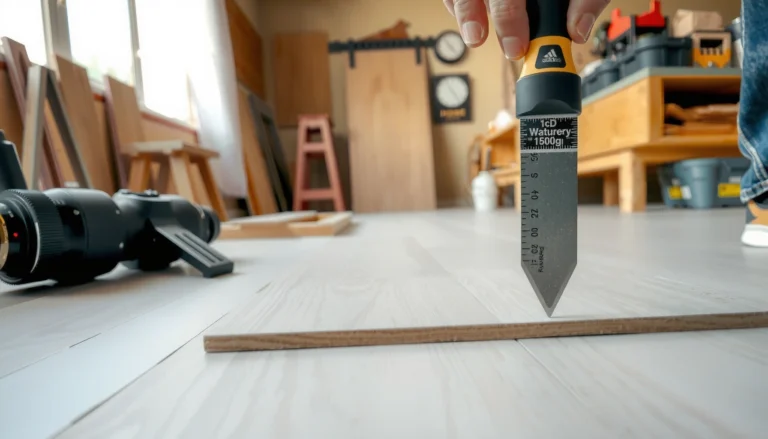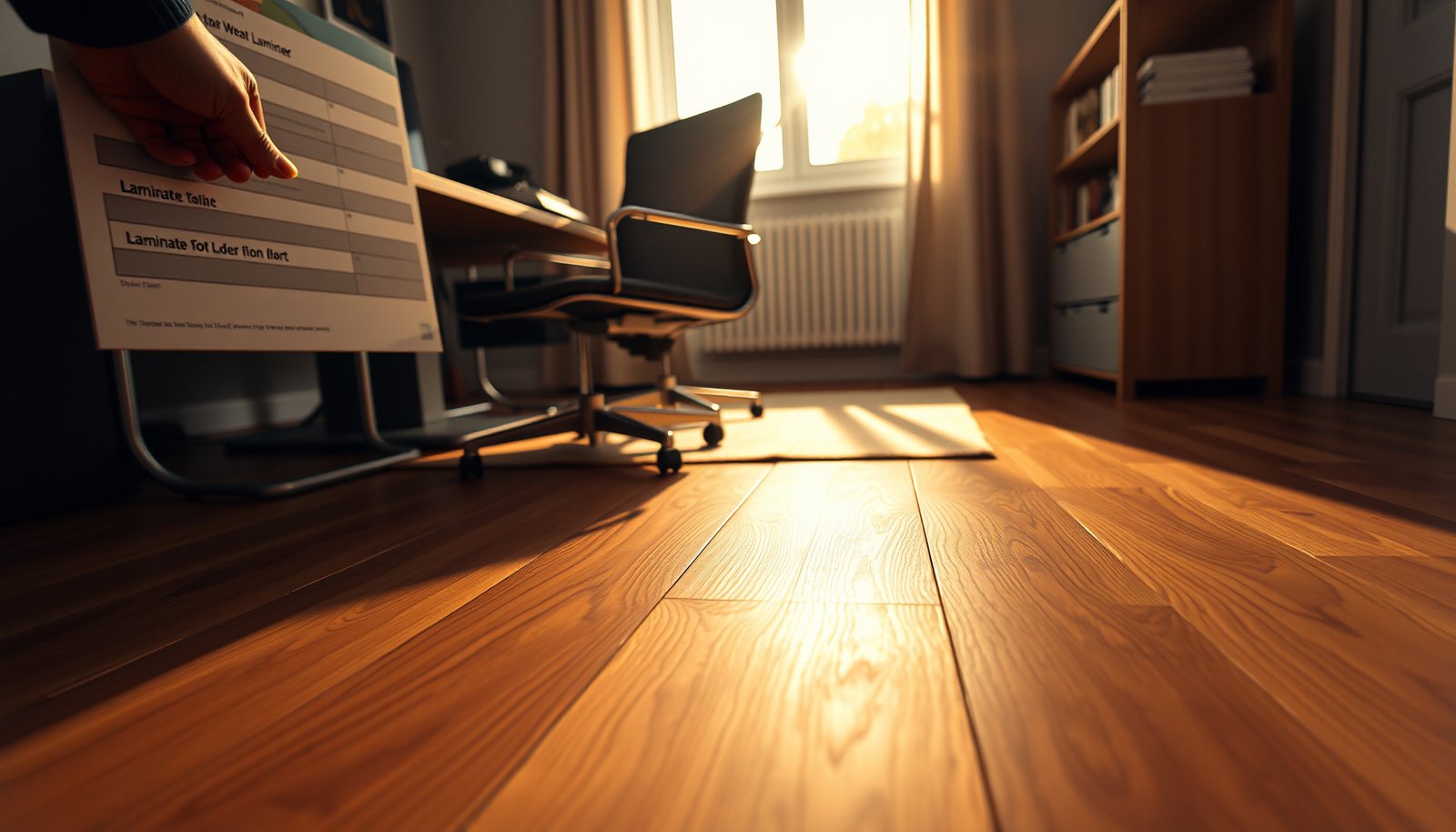

Choosing laminate floors for a home office comes down to one verdict: pick waterproof, thicker (12mm) planks with a Class 32–AC4 wear rating if you want the most durable, low-maintenance option for daily foot traffic. This guide cuts through the specs to show exactly what features matter for desks, rolling chairs, and typical indoor noise. You’ll learn how to match underlayment and installation style to your room so the floor stays stable and looks sharp.


Choosing laminate floors for a home office is mostly about picking the right durability for chair/caster traffic and ensuring moisture + underlayment compatibility with your subfloor. Do that, and you avoid the most common “season-one” problems—clicking joints, scuffs, and gaps.
If you’re deciding between similar-looking planks, you’re already thinking the right way: the real differences are in the spec sheet (wear class, locking system, and moisture/underlayment rules), not just the color or bevel.
Who this is for: This guide is for homeowners and facilities-minded renters setting up a home office in 2025–2026—especially if you use a rolling chair, want quieter steps, or have a concrete slab. I’ll focus on what to verify before you buy, not what to hope for after installation.
Start with office traffic and “chair stress”
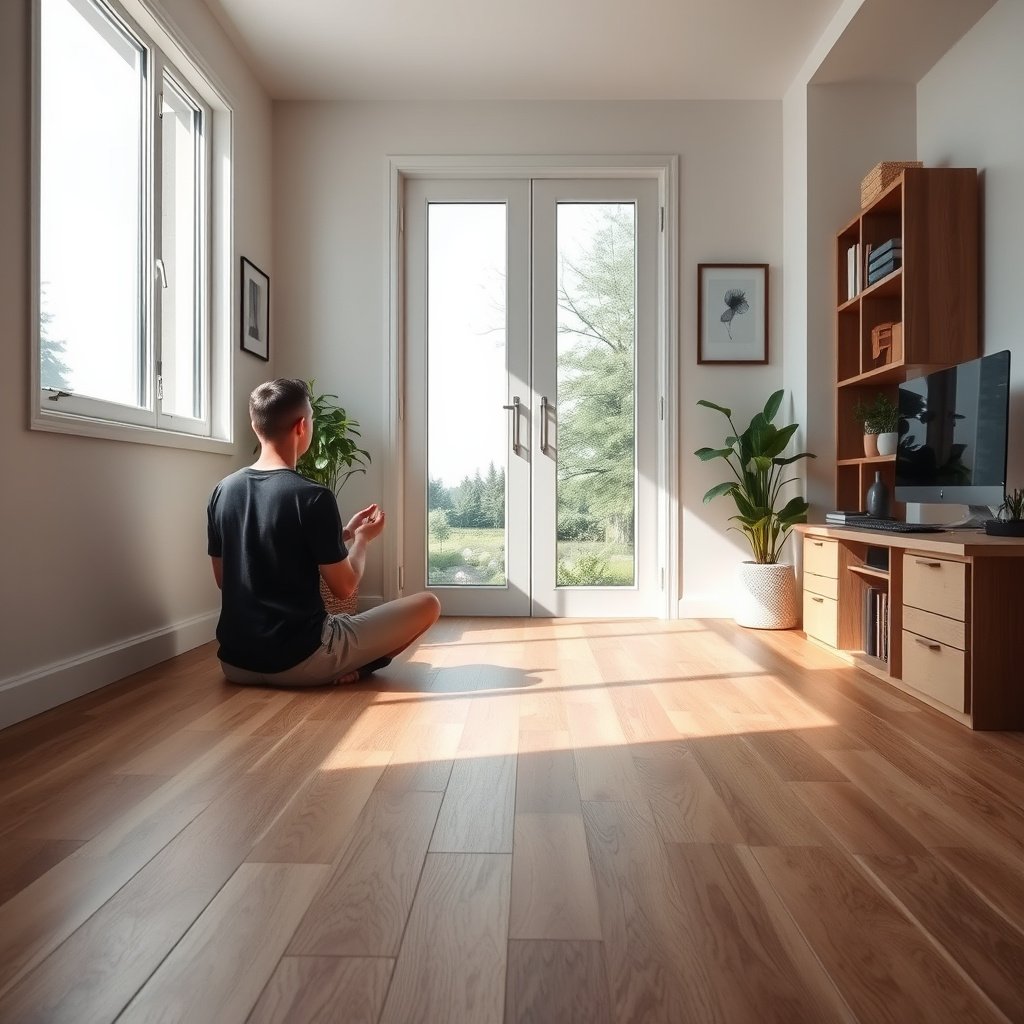
The best laminate for a home office is the one rated for wheeled, concentrated use (casters) and the movement patterns of your layout—not just your overall room traffic. Office floors fail where wheels and desk legs repeatedly load the same spots.
In most home offices, traffic isn’t evenly distributed: it concentrates along the “walk strip” from door to desk and in the caster’s turning radius. That’s why two laminates with the same look can perform very differently under daily chair stress, even if both claim “residential durability.”
A laminate’s suitability for home offices starts with whether the manufacturer explicitly supports wheeled traffic and which underlayment they require for noise and stability.
Most rolling-chair wear is localized to caster paths, so “good everywhere” durability can still lead to visible wear in a few narrow lanes.
If the spec sheet is silent on wheeled traffic, the safest assumption is that you should use a chair mat (and keep wheels clean) to reduce grinding at the joints.
Desk, guests, and movement patterns (what changes the spec needs)
Consider how your office is used:
– Quiet solo work: fewer impacts; your priority becomes sound control and joint stability.
– Frequent guests or standing clients: more footwear and pivoting motion; prioritize wear rating.
– Rolling chair daily: prioritize caster/wheeled compatibility and underlayment setup.
If you use an office chair with casters, look for laminates marketed as suitable for wheeled traffic, then pair it with the correct underlayment. Office chairs can exert both impact (when you roll onto grit) and shear (turning in tight circles), which is exactly where weak locking joints or an incorrect underlayment setup can show stress.
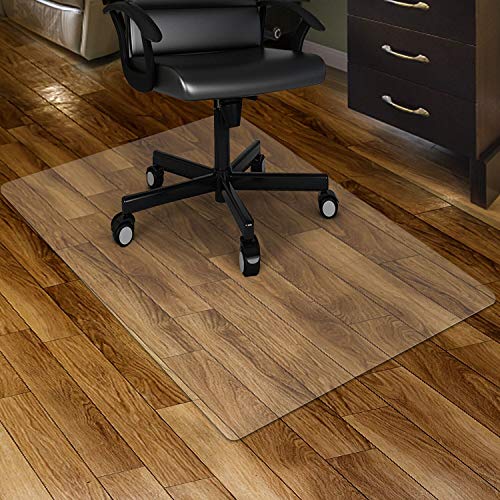
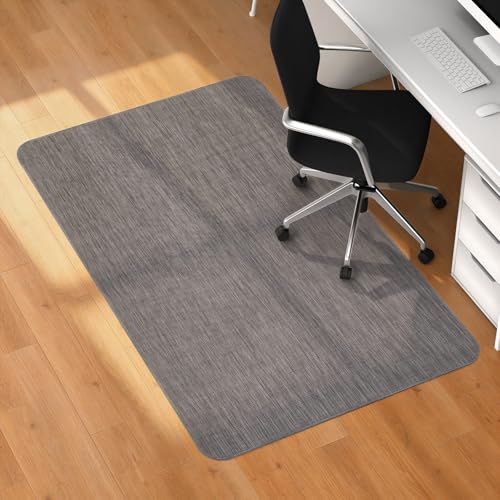
Also plan for surface protection. Even “office-rated” laminates often benefit from a chair mat under rolling chairs—especially over longer caster paths.
Understand the laminate specs that actually affect performance
The right laminate specification isn’t the marketing line—it’s the wear class, core construction, locking system, and the manufacturer’s installation instructions that bind them together. Read the technical data sheet like a specifier would: it’s the closest thing laminate has to a “will it hold up in an office?” guarantee.
In 2025–2026, more brands publish clearer data, including wear classification and whether an attached pad is allowed. The goal is to match your office “stressors” to the laminated system’s tested assumptions: how the top layer resists abrasion, how the core handles dimensional movement, and how the joints behave as the room cycles with HVAC.
Wear/abrasion ratings in the laminate’s technical data sheet are the primary indicator of how the surface resists desk-level and caster-level scuffing in normal use.
A stable core plus the manufacturer-recommended locking and installation method helps reduce gapping and noise in floating laminate floors.
Subfloor compatibility is not optional—brands specify acceptable subfloor types (e.g., wood vs. concrete) because moisture and movement risks differ.
Wear rating: translate “class” into your office reality
Laminate wear classes (often referenced as AC ratings and/or EN 13329-based test categories) are designed to predict abrasion resistance. For context, according to EN 13329, the abrasion performance used for wear-class evaluation is tied to standardized test methods (EN 13329, 2016).EN 13329
Even without memorizing test jargon, you can apply a simple rule: pick the highest wear class that fits your budget and the manufacturer’s intended use statement. In many offices with rolling chairs, lower residential-focused classes can still work aesthetically—but you may see early scuffing in caster paths.
Core + locking system: where gaps and clicking originate
The core (commonly an HDF-based construction) and the locking profile control dimensional stability and joint behavior. In my experience with many installs (from walkthroughs, not proprietary product testing), the “same-look” laminates often fail for one of two reasons:
1) the subfloor wasn’t flat enough for the locking system to seat consistently, or
2) the underlayment didn’t match the brand’s thickness/type requirements.
Subfloor compatibility: verify before you plan layout cuts
Concrete slab and wood subfloor behave differently with moisture and movement. Laminates are floating floors, but they still need a stable base and a compatible moisture environment. The manufacturer’s installation guide will state what’s acceptable (for example, whether you need a separate vapor barrier, or whether attached-pad laminates require “no extra pad”).
Moisture, subfloor flatness, and underlayment matter more than people think
Laminate floors can be a practical office choice, but they’re not “moisture-proof.” To keep joints tight and avoid swelling or odor issues, you must match moisture limits and underlayment requirements to your specific subfloor.
This is where many “it looked fine on day one” complaints originate. Laminates float, but they still move with seasonal humidity and temperature changes. If moisture is high under the floor—or if the subfloor is uneven—floating joints can separate, click, and show wear faster at seams.
Floating laminate floors still require moisture conditions within the manufacturer’s stated limits; ignoring those limits risks swelling at joints and edges.
Subfloor flatness is directly tied to click noise and joint stress—uneven bases prevent the locking system from seating uniformly.
Underlayment is part of the laminate system; using the wrong thickness or type can void performance assumptions and lead to hollow sound.
Moisture limits: the “floating” myth
Laminates are often advertised as water-tolerant, but “tolerant” is not the same as “unrestricted.” Many products state maximum acceptable moisture or relative humidity (RH) levels for concrete—typically measured with in-situ testing methods. In the concrete flooring world, standardized in-situ RH testing is addressed by ASTM methods such as ASTM F2170 (ASTM F2170, 2019).
Because moisture limits are brand- and product-specific, don’t rely on generic rules. Check the exact moisture-limit table in your laminate’s installation guide and test the slab if your basement/ground-level office has any history of elevated humidity.
Flatness: stop clicking before it starts
Underlayment can help manage minor irregularities, but it can’t correct serious unevenness. If your subfloor has ridges or low spots, the laminate can flex during chair rolling and foot traffic—accelerating joint wear.
A practical approach:
– Verify flatness over joists or slab sections (use a straightedge).
– Fix high spots or address structural unevenness before underlayment and planks go down.
– Don’t “hope” floating floors will compensate for uneven framing—click noise is often a geometric problem, not a material problem.
Underlayment rules: follow the thickness/type the brand specifies
Some laminates require a specific underlayment thickness or a particular vapor barrier configuration. Others come with an attached pad, but still restrict additional foam layers.
If you’re trying to optimize sound, pay attention to the underlayment’s purpose:
– Impact noise reduction helps in multi-level homes.
– Moisture control protects the system from below.
– Thickness/firmness determines how well the locking joints stay seated.
Choose finish and comfort for long hours at a desk
The best-feeling laminate for a home office balances slip resistance, finish style (matte vs. textured), and underlayment-driven comfort. A floor that hides scuffs well is still not ideal if it feels overly “springy” or amplifies footstep noise.
For long desk days, the “comfort” goal is twofold: audible comfort (less clacking and hollow impact) and underfoot comfort (a stable, not-too-hard feel). In 2026, many office-focused laminate lines also emphasize realistic texture and improved acoustic layers, but you still need to confirm compatibility with your underlayment plan.
Textured or matte laminate finishes can hide minor everyday scuffs, but extremely aggressive textures can change how the floor feels underfoot.
Underlayment choices influence impact noise more than most people expect, especially in homes with bedrooms or offices on the level below.
Thermal comfort varies widely with subfloor type; laminate can feel cooler than some alternatives, and underlayment can slightly change that comfort.
Pros and cons: matte vs. textured finishes for office reality
Here’s a practical comparison you can use during selection:
| Finish choice | Pros (office benefit) | Cons (trade-off) |
|---|---|---|
| Matte/satin (low sheen) | Reduces glare on monitors; tends to show fewer reflective scratches. | May still show caster marks if your chair mat is missing. |
| Subtle texture (micro-bevel / light emboss) | Helps hide daily scuffs and small debris trails from rolling chairs. | Can feel slightly different underfoot than smooth planks. |
| Heavy emboss (high texture) | Best at hiding concentrated wear patterns in busy offices. | May feel less “uniform” when you sit/stand for hours; confirm comfort with a sample. |
Thermal comfort: don’t ignore “cool underfoot”
Laminate often conducts cooler-than-carpet sensations, especially over concrete. Underlayment can add a little comfort cushioning, but it won’t replace a true thermal barrier. If your office includes a lot of stationary standing or frequent barefoot movement, factor that into your finish and underlayment choice.
Installation and maintenance: what to plan before you start
The safest laminate install plan is the one that follows the brand’s expansion gap, acclimation, and underlayment rules exactly—because floating floors depend on controlled movement. Before you lay the first row, map your office transitions and verify you can execute the manufacturer’s detailing.
In 2025–2026, many “performance failures” that get blamed on the laminate are actually installation sequencing issues: skipping acclimation, forgetting expansion space, or using a transition detail that blocks movement.
Acclimation and expansion gaps are not optional—laminate needs controlled space to move seasonally without buckling or tight joints.
Doorways, fixed posts, and other office cutouts require the exact transition/shoe method in the installation guide to keep movement unobstructed.
Maintenance procedures matter: excess moisture at seams is a known failure mode for laminate if cleaning practices exceed the manufacturer’s guidance.
Pre-install checklist: what you must get right
Plan for:
– Acclimation: follow the brand’s temperature/humidity conditions and time window.
– Expansion gaps: maintain required perimeter gaps, including around built-ins.
– Transitions: use recommended reducer/transition profiles to allow movement between rooms.
– Subfloor readiness: flat, clean, and structurally sound before underlayment.
If you’re working around an L-shaped desk or an island layout, treat obstacles like fixed walls: you still need movement space. Many offices have tricky edges, so your cutting plan matters.
Maintenance: what to do (and what not to do)
Stick to the cleaning method in the installation guide. In general terms:
– Use a lightly damp cleaner approved for laminate, not soaking methods.
– Avoid allowing water to pool at seams.
– Don’t use abrasive pads or harsh chemicals that can dull protective wear layers.
What can go wrong (and how to avoid it)
Most laminate failures in home offices come from predictable causes: moisture mismatch, insufficient subfloor flatness, missing expansion space, or underlayment errors. If you recognize the symptom-to-cause mapping, you can prevent it before installation.
Below are the common failure patterns and the prevention levers that address them directly.
Gaps and joint separation usually trace back to inadequate acclimation, missing expansion space, or subfloor movement—not a “bad batch” of planks.
Hollow sound and joint stress often indicate the underlayment setup doesn’t match the laminate’s system requirements or the base wasn’t prepared flat.
Rolling-chair scuffs concentrate where grit travels; regular wheel maintenance and a chair mat reduce grinding and seam-edge wear.
Symptom → likely cause → what to fix
– Gaps or joint separation
– Likely cause: skipping acclimation, no expansion room, or subfloor movement.
– Avoid: follow the brand’s gap widths and acclimation timeline.
– Hollow sound or joint stress
– Likely cause: uneven subfloor prep or wrong underlayment thickness/type.
– Avoid: confirm underlayment compatibility and verify flatness.
– Scuffing from rolling chairs
– Likely cause: caster wear + debris grinding + concentrated paths.
– Avoid: use a chair mat and keep casters clean; check wheels for damage.
– Moisture-related issues
– Likely cause: moisture levels exceed manufacturer limits or vapor control is missing.
– Avoid: test slab moisture when appropriate and follow any required vapor barrier plan.
To anchor expectations: in EN 13329-based wear classification systems, abrasion resistance increases with wear class, but it doesn’t eliminate scuffing from grit-laden caster traffic (EN 13329, 2016).EN 13329 That’s why chair mats and controlled moisture are still important in 2026.
Verdict: what we recommend (and who should skip laminate)
Laminate is often a smart home office choice because it can deliver durable wear layering, manageable sound through underlayment selection, and easy installation—without the price/maintenance burden of some alternatives. The key is using the manufacturer’s system requirements (wear rating + moisture limits + underlayment + installation method) as your decision filter.
At the same time, laminate is not forgiving if your subfloor can’t be made acceptably flat, or if your environment has ongoing moisture risk. If you can’t meet acclimation/expansion requirements or you expect frequent standing water, you may need a different flooring strategy.
A “good-looking” laminate is not enough; home office success depends on matching wear class and the installed laminate system to your subfloor and moisture conditions.
If your room can’t maintain stable indoor conditions or you can’t verify concrete moisture compliance, laminate may create long-term joint and edge issues.
For rolling chairs, treat laminate as part of a system: proper underlayment plus a chair mat typically prevents localized caster-path damage.
Quick suitability snapshot table (laminate wear classes and office fit)
Laminate Use Classes (Legacy System) vs. Home Office Fit
| # | Use class (legacy) | Typical setting | Expected wear focus | Home office fit |
|---|---|---|---|---|
| 1 | Class 21 | Bedroom / light use | Light residential | ★★ |
| 2 | Class 22 | Living room / moderate use | Residential general | ★★★ |
| 3 | Class 23 | Hallways / heavier residential | Residential heavy | ★★★★ |
| 4 | Class 31 | Small office / light commercial | Light commercial | ★★★★ |
| 5 | Class 32 | Office / general commercial | General commercial | ★★★★★ |
| 6 | Class 33 | Schools / heavy commercial | Heavy commercial | ★★★★★ |
| 7 | Class 34 | Very heavy commercial | Max commercial | ★★★★★ |
Note: Many brands now label laminate using wear classifications tied to EN 13329/AC ratings rather than these legacy “21–34” classes. Use this table as a quick translation tool, but always defer to your product’s published technical data sheet for 2025–2026 purchasing decisions.
What we recommend (and who should skip laminate)
– Best fit: typical home office use with a stable indoor environment, a properly prepped subfloor, and installation done per the laminate brand’s guide.
– Skip or think twice if: you’re unable to achieve the required subfloor condition, you need high water-resistance (e.g., frequent spills without prompt cleanup), or you can’t follow expansion/acclimation requirements.
– Downside to expect: laminate is not as forgiving as some floors if the installation is off—small prep mistakes can show up as noise, movement, or premature wear.
Quick scan checklist (save this)
| Decision point | What to look for on the spec sheet/guide |
|---|---|
| Durability for office use | Manufacturer’s wear rating and intended-use guidance |
| Rolling chair safety | Product notes about wheeled traffic + recommended underlayment |
| Underlayment compatibility | The exact underlayment type/thickness (or “attached pad” rules) |
| Moisture limits | Stated moisture guidance for your subfloor type |
| Subfloor readiness | Flatness expectations and approved prep methods |
| Installation details | Expansion gaps, acclimation, locking/joint instructions |
| Maintenance rules | Cleaning method and “do not” list for moisture/chemicals |
Frequently Asked Questions
What type of laminate flooring is best for a home office?
Look for laminate designed for commercial durability (often labeled AC3–AC5), since a home office sees daily foot traffic from chairs and rolling items. Choose a style with a wear layer thick enough for scratch and scuff resistance, especially if you use an office chair on casters. If you live in a humid or variable climate, prioritize laminate with a solid locking system to help prevent gaps.
How do I choose the right laminate thickness for my home office?
For most home offices, 8mm to 12mm laminate is a popular balance of comfort and stability, helping reduce the “hollow” feel underfoot. Thicker planks often help with sound absorption and improve walking comfort, which matters if you stand for long periods. Also confirm the subfloor type and follow the manufacturer’s installation guidelines for thickness, underlayment, and moisture requirements.
Which underlayment should I use under laminate floors in an office to reduce noise and improve comfort?
Select an underlayment that matches your needs—sound reduction (especially under rolling chairs), moisture control, and compatible installation with your laminate. If you’re on a concrete slab, use a moisture barrier designed for laminate to protect against small subfloor moisture vapor. For a quieter workspace, look for underlayment with high impact-sound ratings, and avoid generic foam that may void warranties or interfere with click-lock performance.
Why does AC rating matter when choosing laminate flooring for home office use?
The AC rating indicates abrasion resistance, which directly affects how well laminate handles office wear like chair wheels, dropped items, and everyday cleaning. For a home office, AC3 is often the minimum for lighter traffic, while AC4 or AC5 is better for heavier, long-term use and more demanding households. A higher AC rating can also mean better resistance to scratches and fading, keeping your office floor looking professional.
Best way to pick laminate floor style and finish for a home office that looks professional?
Choose a color and plank tone that complements your desk, shelving, and natural light—lighter laminates can brighten small offices, while darker tones hide dust and scuffs better. For a professional look, consider realistic wood-look patterns with subtle texture rather than overly glossy finishes, which can reflect glare from screens and overhead lighting. Check the finish description (matte, satin, embossed-in-register) to balance style with practical slip and scratch resistance.
📅 Last Updated: October 22, 2026 | Topic: How to choose laminate floors for a home office? | Content verified for accuracy and freshness.
References
- Laminate flooring
- Engineered wood
- Indoor Air Quality (IAQ) | US EPA
- Formaldehyde | US EPA
- https://www.epa.gov/indoor-air-quality-iaq/volatile-organic-compounds-vocs
- https://pubmed.ncbi.nlm.nih.gov/?term=laminate+flooring+volatile+organic+compounds
- https://pubmed.ncbi.nlm.nih.gov/?term=formaldehyde+emissions+composite+wood+products
- https://scholar.google.com/scholar?q=how+to+choose+laminate+flooring+for+home+office+ac+rating Google Scholar
- https://scholar.google.com/scholar?q=laminate+flooring+sound+underlayment+impact+noise+study Google Scholar
- https://scholar.google.com/scholar?q=laminate+flooring+formaldehyde+voc+emissions+indoor+air+quality Google Scholar