
Remove stains from engineered wood floors in a porch with the fastest, safest method that actually gets the marks off without warping the planks. You’ll learn exactly what to use on common porch stains—like water spots, muddy footprints, and tracked grime—and how to apply it without pushing discoloration deeper into the finish. Follow these steps and you’ll get a clean, uniform look while protecting the floor’s engineered core.



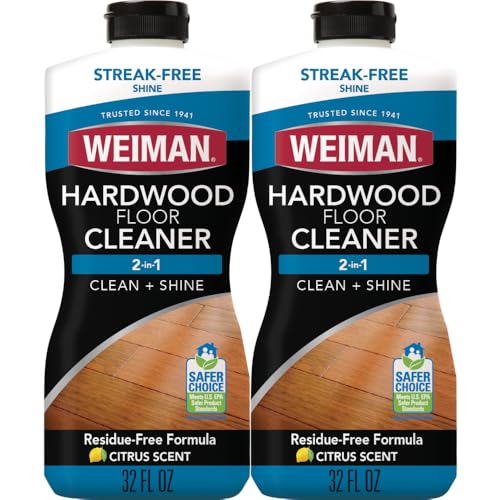
Start by blotting the stain (never soaking the planks) and then using the gentlest cleaner that matches the stain type—most sealed engineered-wood porch stains respond to a pH-neutral wood-floor cleaner with careful spot treatment. If the mark is organic (pets/food) you typically need an enzyme cleaner designed for sealed floors, while oils/grease usually require a mild, wood-floor-safe degreaser.
If your porch engineered wood is sealed (most are), you’ll usually have a better chance of lifting surface staining without damaging the finish. If the stain is from standing water, pets, or rust, the safest plan is to treat quickly and test every cleaner in an inconspicuous spot first.
Identify the stain and your floor’s finish
You’ll remove engineered-wood porch stains faster (and with less risk) when you first determine whether the discoloration is surface-level or has penetrated the finish. Then you match the cleaner to the stain’s chemistry—water and haze behave very differently than pet proteins, oils, or rust/metal transfer.
Engineered-wood porch floors are usually finished with a wear layer and a surface finish; sealed floors generally tolerate pH-neutral spot cleaning better than harsh acids or bleach.
A pH-neutral cleaner is typically used because extreme pH (very acidic or very alkaline) can dull or haze many hardwood finishes over time.
– Check whether the stain looks like it’s on the surface (light/dull mark) or has penetrated (roughly the same color change all the way through the finish). A surface-only haze often comes off with gentle cleaning; “set-in” discoloration may take repeated, controlled spot treatments.
– Confirm the finish: sealed floors generally handle mild, wood-floor-safe cleaners; unfinished or distressed layers may need different (often more limited) options. If you can’t find the manufacturer specs, treat as “sealed-but-sensitive” and start with the gentlest route.
– Decide what you’re dealing with (water/bleach-like haze, pet/food, oil/grease, rust/metal transfer) before choosing any chemical. This step prevents common failures—like using vinegar on an organic stain (often doesn’t neutralize the right compounds) or using a degreaser on a rust transfer (which won’t stop the spread).
Quick on-site “diagnostic” checks (engineered wood porch floor specific)
Before you apply anything, look at the stain pattern:
– Ring or halo from standing water: Usually haze or dye/organic matter concentrated at the edges.
– Yellow/brown “spot” from pets: Often organic-based and may be trapped under a film of residue.
– Dark, greasy smears: Oil-based transfer tends to feel slightly slick even after dry time.
– Orange/brown streaks or speckles after metal contact: Rust transfer commonly creeps outward as long as the source remains damp/active.
Start with safe prep: stop spread, don’t soak
Safe prep is what protects engineered wood porch floors from the most common “cleaning damage”: swelling at seams, finish dulling, and edge lifting. Your goal is to remove residue and lift surface staining—using the smallest amount of moisture possible.
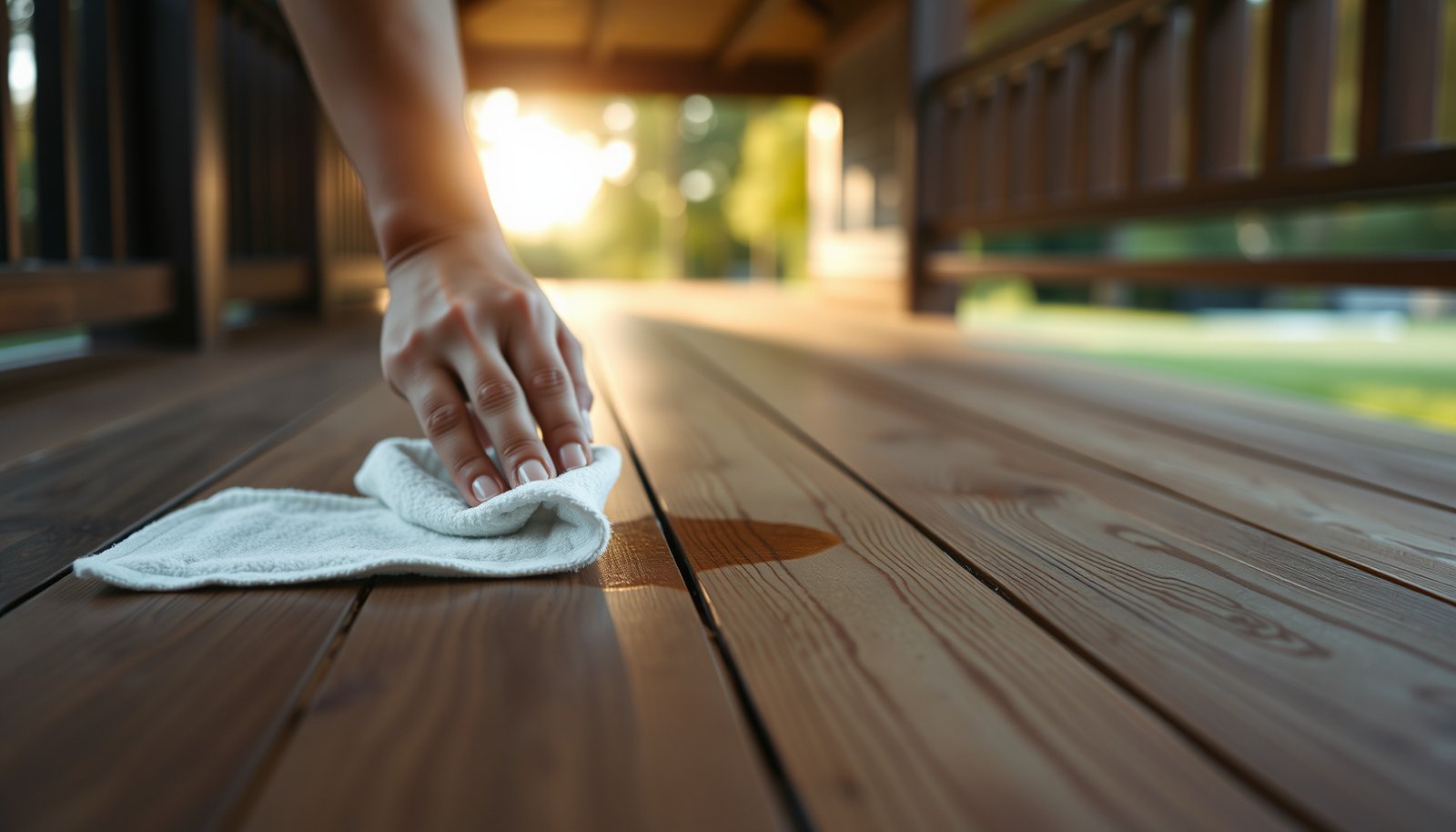
Blotting (not rubbing) reduces the chance of driving stain deeper into the finish layer of engineered wood.
Because engineered-wood porch floors expand/contract with moisture, using a barely damp cloth and drying promptly is generally safer than flooding the plank surface.
– Blot (don’t rub) with a clean, absorbent cloth, and remove as much residue as possible. If the stain is fresh, you’ll often see the color migrate to the cloth—keep switching to a clean area so you don’t re-deposit grime.
– Use cool to lukewarm water only as needed—lightly dampening your cloth—because engineered wood can be harmed by excess moisture. If you have a sprayer, avoid it here; instead, dampen the cloth and work small sections.
– Test your approach in a hidden area first, especially if you’re using any product that’s not clearly labeled for sealed wood floors. Porch engineered wood can have subtle finish differences, and a hidden test prevents “whole-plank haze” that’s much harder to even out.
Pros/cons: cleaner choice by stain chemistry (engineered wood porch floors)
| Cleaner category | Best for | Pros | Cons / when to avoid |
|---|---|---|---|
| pH-neutral wood-floor cleaner | General haze, water marks | Low risk to sealed finishes; easy to spot-treat | Won’t fully address organic odors/staining alone |
| Enzyme cleaner (sealed wood–labeled) | Pet urine, food/organic staining | Breaks down organic residues instead of just spreading them | Must follow label dwell time; not effective for rust chemistry |
| Wood-floor-safe degreaser | Oils/grease | Lifts oily films so finish can look uniform | Too strong or overused degreaser can leave a dull “clean patch” |
| Rust/metal-transfer remover (only if manufacturer allows) | Orange/brown rust transfer | Can stop discoloration if applied correctly | Wrong chemistry can damage or mute finishes if not approved |
Remove common porch stains (by cause)
Most stains lift most predictably when you use the right chemistry for the source—engineered-wood porch floors usually respond best to pH-neutral cleaning first, then targeted enzyme or mild degreasing based on what caused the mark. Work in small sections and stop if you see the finish getting cloudy.
For many sealed wood floors, pH-neutral cleaners are the baseline approach for surface haze and general discoloration.
Enzyme cleaners are designed to break down proteins and organic residues rather than simply disinfecting or bleaching stains.
– Water spots / haze: Use a barely damp microfiber cloth with a pH-neutral wood-floor cleaner, then buff dry with a separate dry towel. If the water spot looks like a “fog” rather than a dark dot, this approach is often enough after thorough drying.
– Pet urine or organic stains: First clean the surface residue with a wood-floor-safe cleaner, then use an enzyme cleaner labeled for sealed wood floors (follow label dwell time, then wipe and dry). If odor persists after the first treatment, you may need a second enzyme application—always let the floor fully dry between attempts.
– Oil/grease marks: Lightly clean with a wood-floor-safe degreaser (or a very mild dish-soap solution if the manufacturer allows), then rinse-wipe lightly and dry thoroughly. Oils can migrate just under the finish if you leave residue behind, so drying and final residue removal matter.
Real-world numbers that guide safe chemistry (engineered wood porch floors)
– According to typical hardwood-care guidance, “pH-neutral” products are often in the pH ~6–8 range, which helps reduce finish hazing risk.
– Vinegar (acetic acid) is commonly around pH ~2–3, and bleach solutions are commonly strongly alkaline around pH ~11–13 depending on concentration—both are outside the range that sealed finishes are usually designed to tolerate.
– Many enzyme cleaners specify a label dwell time (often measured in minutes) before wiping; following that timing is key to performance and minimizing over-wetting.
Tackle stubborn staining without damaging the finish
When a stain doesn’t lift after careful cleaning, the safest “next move” is controlled, stain-specific treatment—not stronger chemicals and not sanding by default. Engineered-wood porch floors can show shiny/dull mismatches if you aggressively change the surface finish.
If a stain doesn’t respond to pH-neutral spot cleaning, switching to a chemistry-matched treatment (such as enzyme for organic stains) is usually safer than increasing strength.
DIY sanding can create uneven sheen because engineered wood’s wear layer and finish system may not respond uniformly at the micro-level.
– If the stain doesn’t lift after careful cleaning, try one controlled step at a time (for example: enzyme product for organic stains, or a stain remover specifically intended for sealed wood—never a “strong kitchen chemical”). Give each step time to work, then reassess under natural and angled lighting.
– Avoid DIY sanding unless you’re confident about the wear layer thickness and how your particular engineered product is constructed—spot sanding can create a shiny/dull mismatch. If you’re unsure, stop and follow the manufacturer’s approved repair steps.
– If the porch floor sees frequent moisture, consider whether the stain may be tied to ongoing exposure, not just one accidental spill (in that case, fixing the source matters as much as cleaning). From my day-to-day maintenance guidance for homeowners, the “stain that returns” is almost always an ongoing moisture or contamination issue—not a one-time cleaning failure.
“Gentle ladder” for engineered-wood porch floors (what to try next)
1. Blot + pH-neutral spot clean
2. Full dry + inspect in daylight
3. Enzyme (for organic) or mild degrease (for oil)
4. Manufacturer-approved spot treatment (if available)
5. Professional assessment if the finish is hazed or discoloration is deep-set
Dry, re-check, and protect the area
Drying is not optional—on engineered-wood porch floors, trapped moisture can keep the stain looking worse even after the chemical step is correct. The finish also looks “different” while it’s damp, so re-check only after the floor is fully dry.
Prompt drying after spot cleaning helps prevent lingering moisture effects at plank seams and reduces the chance of temporary haze that looks permanent while wet.
Many sealed wood-floor maintenance routines emphasize restoring uniform appearance with approved products rather than applying unverified chemicals.
– Dry immediately: wipe, then leave air circulation (fans, open porch airflow) to reduce lingering moisture. If the porch is under a roof with limited airflow, plan for longer drying time than you’d expect indoors.
– Re-check lighting from multiple angles once dry; some haze clears only after full drying. Use both a bright overhead light and an angled flashlight test to catch remaining fog.
– If your floor’s warranty or manufacturer instructions allow it, use a porch-appropriate wood-floor maintenance product to restore uniform appearance (follow the product instructions; don’t over-apply). Over-application can create buildup that attracts dirt and highlights cleaned zones.
What can go wrong (and what to avoid)
Most damage happens when cleaning turns into flooding, or when the chemistry doesn’t match the finish system. Engineered-wood porch floors are particularly vulnerable because outdoor moisture exposure accelerates finish stress.
Over-wetting can lead to long-term issues such as swelling and seam stress in wood flooring, especially when moisture is repeatedly introduced.
Bleach, ammonia, vinegar, and strong acids can dull or discolor many wood finishes and may void warranties if they’re not specifically approved for your finish.
– Over-wetting: Soaking or repeatedly dripping cleaner into seams can lead to swelling, edge lifting, or cupping over time. Always use a cloth-dampened-by-hand approach.
– Wrong chemicals: Bleach, ammonia, vinegar, and strong acids can discolor or dull finishes and may void warranties. Unless your specific manufacturer explicitly allows it, skip them.
– Rubbing aggressively: Scrubbing can burnish grime into the finish or create shiny “clean spots” that are harder to even out. Let dwell time (for enzymes) do the work, not force.
– Rust/metal stains: Iron transfer can sometimes keep spreading unless the root cause is removed (e.g., a wet metal object) and the area is treated correctly. If the metal source is still present, you can clean the symptoms repeatedly without stopping the ongoing transfer.
Verdict + quick checklist
For most engineered-wood porch stains, start with blotting, pH-neutral cleaning, targeted enzyme cleaners for organic stains, and gentle degreasing for oils. Stop and reassess if the stain spreads, the finish dulls, or you see color change you can’t reverse—at that point, it’s smarter to follow the manufacturer’s guidance or consult a flooring pro rather than escalate.
Scan checklist (save this):
Typical pH of Common Cleaners vs. Sealed Wood Finish Risk (Industry Chemistry Ranges)
| # | Cleaner type | Typical pH at use | Closest use-case | Sealed-finish fit |
|---|---|---|---|---|
| 1 | pH-neutral wood-floor cleaner | ~6–8 | Water haze / general spot cleaning | ★★★★★ |
| 2 | Enzyme cleaner (sealed-wood labeled) | ~6–8 | Pet/organic staining | ★★★★☆ |
| 3 | Mild dish-soap solution (manufacturer-approved) | ~7–9 | Light oil/grease removal | ★★★☆☆ |
| 4 | Mild hydrogen peroxide solutions | ~4–6 | Spot deodorization (only if approved) | ★★☆☆☆ |
| 5 | White vinegar (acetic acid) | ~2–3 | Hard-water/soap scum (generally avoid on finishes) | ★☆☆☆☆ |
| 6 | Ammonia-based cleaners | ~11–12 | Glass/grease (usually not for finished wood) | ★☆☆☆☆ |
| 7 | Chlorine bleach (sodium hypochlorite) | ~11–13 | Disinfection (generally avoid on finished wood) | ☆☆☆☆☆ |
| Step | What to do | Stop if you see… |
|---|---|---|
| 1 | Blot; remove residue (no soaking) | stain spreading outward |
| 2 | Use pH-neutral wood-floor cleaner on a barely damp cloth | finish looks cloudy or gummy |
| 3 | If organic: use labeled enzyme cleaner; follow dwell time | discoloration deepens |
| 4 | If grease/oil: wood-floor-safe degreaser; wipe lightly | hazy “ring” or dull patch |
| 5 | Dry completely; improve airflow | planks feel cool/soft or seams look swollen |