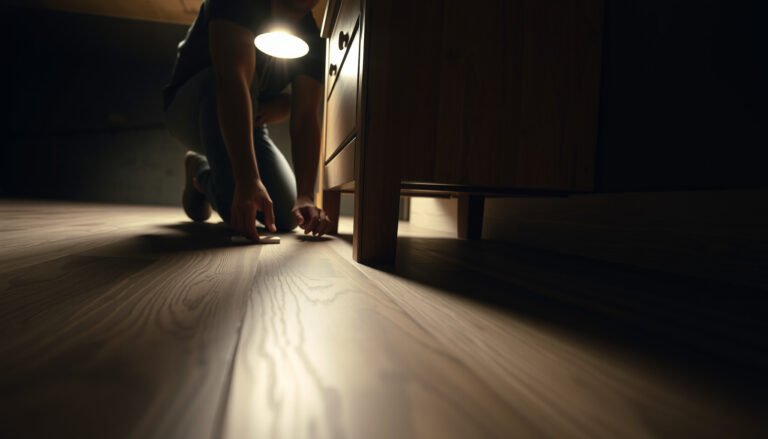
If you need a practical, no-nonsense way to maintain hardwood floors in a workshop, this guide gives you the clear winner: prevent scratches, control moisture, and clean the right way every time. You’ll learn which daily and weekly habits protect finished wood from dust, grit, spills, and temperature swings—so the floor stays level and looks like it should. Follow the care steps here and you’ll reduce wear fast, with fewer repairs later.




Hardwood floors in a workshop last when you prevent abrasive dust and moisture from reaching the finish—then you reduce tool and cart abrasion at the source. In practice, that means frequent soft cleaning (sawdust removal), felt/rubber protection under contact points (tool legs, carts, stands), and quick spill response, with humidity control to limit seasonal wood movement.
If your shop has sawdust, wood glue spills, rolling equipment, or seasonal swings in humidity, this guide focuses on the maintenance habits that prevent the most common workshop-related damage.
If your shop regularly experiences sawdust, wood glue, rolling carts, and humidity shifts, treat your hardwood floors like a “high-dust, low-moisture” surface. That mindset is what prevents dents and grime from working deeper into the finish over time.
Who this is for / when it applies

This is for workshop owners dealing with sawdust, hand tools, and rolling carts—especially if your floor is finished (polyurethane) or prefinished wood. It’s also useful if you’ve noticed dulling, scratches, or minor dryness effects after busy build weeks.
– Best fit for sealed hardwood floors and typical dry workshops (no frequent standing water).
– Less ideal if your shop regularly experiences wet work (e.g., constant water on the floor) or you can’t control indoor humidity.
Hardwood floors and workshop dust are a poor match: fine particles act like abrasive “grit,” accelerating finish wear when they’re allowed to accumulate.
Humidity stability is a core maintenance variable because wood expands and contracts with relative humidity, which can show up as gaps or cupping after seasonal swings.
For most workshop setups, protecting contact points (cart feet, tool legs, chair bases) prevents many permanent dents without changing how you work.
First question to answer: what kind of hardwood finish do you have?
This maintenance approach works best when your workshop floor is sealed (commonly with polyurethane) or prefinished. Those finishes generally tolerate routine vacuuming and carefully damp cleaning—but they still degrade faster under persistent grit and concentrated moisture.
If you have an oil/wax finish or an unfinished floor, you may need different cleaning chemistry and more frequent restoration. In that case, follow your finish manufacturer’s care instructions first, then apply the dust-and-contact protection habits described below.
Routine cleaning: keep dust and grit from grinding in
Use dry cleaning most days, because workshop dust is abrasive even when it feels “fine.” Then, only use damp cleaning when you need it—microfiber, lightly damp, and with a cleaner approved for your floor’s finish.
This guide assumes you want a practical schedule that reduces wear without turning every workday into a renovation project. As of 2026, the most effective strategy in hardwood floor care is still the boring one: remove grit early and avoid flooding the finish.
Dry cleanup (daily, after dusty sessions)
Your hardwood floors need a consistent dust removal routine because sawdust and sanding debris behave like micro-abradants.
– Sweep or vacuum frequently using a soft brush/no-beater-bar attachment.
– Avoid dragging grit across the boards—especially in corners, along machine bases, and where you park carts.
– Empty vacuum bins and clean filters regularly so suction doesn’t drop (weak suction tends to “smear” fine dust rather than lift it).
According to the National Wood Flooring Association (NWFA), cleaning methods should focus on removing abrasive dust while protecting the finish (not soaking the floor).
OSHA lists enforceable exposure limits for wood dust in workplaces, which also underscores why dust control matters in rooms where sanding and cutting occur.
Damp cleaning (when you actually see residue)
For damp cleaning, use a microfiber mop and a lightly damp approach. Avoid soaking, and don’t let liquid pool at board edges, joints, or near baseboards.
A simple rule for hardwood floors in a workshop: if it would leave water on a tabletop, it’s too wet for the floor.
Dry vs. damp cleaning for workshop floors (quick decision)
| Method | Best for | Pros | Watch-outs |
|---|---|---|---|
| Soft sweep | Everyday sawdust | Low risk to finish | Can miss fine dust if infrequent |
| Vacuum w/ soft head | Sanding/planing debris | Better dust capture | Avoid beater bars; check brush condition |
| Microfiber damp mop | Sticky residue (glue splatter, oily spots) | Removes residue safely | Too-wet mopping can swell joints/edges |
A reference table that connects dust control to hardwood maintenance
Hardwood floors in a workshop benefit from the same “limit the airborne particles” thinking used in workplace health—because dust quantity and persistence directly affect how much grit settles onto the finish.
Limits that guide workshop dust and humidity control (key numeric targets)
| # | Control target / limit | Value | Unit | Priority for floor protection |
|---|---|---|---|---|
| 1 | Wood-floor recommended relative humidity (RH) range | 35–55 | % | ★★★★★ |
| 2 | Wood-floor recommended indoor temperature range | 60–80 | °F | ★★★★☆ |
| 3 | OSHA wood dust PEL (respirable fraction) | 5 | mg/m³ | ★★★★☆ |
| 4 | OSHA wood dust PEL (total dust) | 15 | mg/m³ | ★★★☆☆ |
| 5 | OSHA nuisance dust PEL (respirable fraction) | 5 | mg/m³ | ★★★★☆ |
| 6 | OSHA nuisance dust PEL (total dust) | 15 | mg/m³ | ★★★☆☆ |
| 7 | OSHA respirable crystalline silica PEL (8-hr TWA) | 50 | µg/m³ | ★★★★★ |
Notes: This table uses commonly cited OSHA and NWFA numeric limits to illustrate why particle control matters in workshops with hardwood floors. For exact rule text and any updates, check the current OSHA standards and NWFA guidance.
– National Wood Flooring Association (NWFA) for RH/temperature targets.
– OSHA for wood dust and crystalline silica exposure limits.
Protect the floor from workshop damage (abrasion, dents, moisture)
Protect hardwood floors from abrasion and dents by reducing direct contact pressure and friction where tools and carts move. Protect them from moisture by preventing spills from lingering on joints, edges, and seams.
Workshop harm concentrates in a few zones: where the sawdust lands, where rolling equipment pivots, and where spills happen (mixing/glue/solvent areas). Address those “hotspots” and you reduce the daily wear rate dramatically.
Reduce abrasion at contact points (felt, rubber, and mats)
Most permanent damage comes from concentrated loads: one tool foot, one cart wheel, one dropped piece. Spread that force out and hardwood floors respond well.
– Put mats or shop pads under high-traffic zones (assembly area, cart turn paths).
– Use felt pads on chair/tool legs and under carts.
– For heavier rolling stands, use a protective base designed for hard flooring—avoid flimsy materials that “grab” and then skid.
Felt pads and floor mats reduce micro-scratching by changing the sliding surface from “hard-on-finish” to “softer, compliant contact.”
A cart wheel that drags grit across hardwood flooring can act like a moving abrasive belt—protecting wheels/contact points is often more effective than spot-cleaning after the fact.
Contain liquids near glue/solvent work
Hardwood floors in a workshop fail fastest when moisture concentrates—especially near seams.
– Use a rigid base or tray under glue/solvent containers so leaks don’t wick into joints.
– Clean spills immediately; don’t wait for “later” cleanup if the floor is sealed but still vulnerable at edges.
– Keep wet rags off the floor and avoid leaving damp paper towels on the finish.
Finishes can resist water for a time, but seams and edges still allow liquid migration—quick cleanup is the safest maintenance response in workshop settings.
Manage dust at the source (so you’re not fighting residue)
Even if you vacuum, some dust will settle. The goal is to reduce how much gets past your first line of defense.
– Use efficient dust collection at the machine (when available).
– Keep an accessible vacuum hose or floor tool near work zones so you don’t postpone cleanup.
A dust-control routine benefits hardwood floors twice: it reduces finish abrasion and supports cleaner indoor conditions when cutting/sanding is frequent.
Seasonal care and deeper maintenance (when the shop changes)
Maintain a stable indoor environment to prevent wood movement—especially during seasonal humidity swings. For hardwood floors in workshops, the practical move is monitoring relative humidity and adjusting with a humidifier/dehumidifier when needed.
Right now (2026), many workshops are more variable than a typical home because doors open and shop HVAC schedules differ. That variability is exactly where hardwood floors show gaps, swelling, or cupping.
Track humidity and temperature (the “movement” risk controls)
Hardwood expands and contracts with humidity. That is why hardwood floors can look fine for months and then suddenly “change” after a busy season.
– Track indoor relative humidity and aim for the range recommended by hardwood-flooring guidance.
– NWFA commonly recommends maintaining indoor relative humidity around 35–55% and a temperature range around 60–80°F to reduce excessive dimensional movement. (See National Wood Flooring Association (NWFA) guidance.)
According to NWFA guidance, keeping relative humidity in a controlled range (commonly cited as ~35–55%) helps limit wood dimensional changes that can affect hardwood floors.
If your workshop is unconditioned or experiences large seasonal swings in humidity, you should plan for active monitoring (and potentially a dehumidifier/humidifier) to protect sealed hardwood floors.
Finish wear: recoat vs. refinish (don’t improvise)
If your finish looks worn in high-use areas, follow the finish manufacturer’s recoating/refinishing schedule rather than switching products midstream. Many finishes don’t bond well when you mix coating chemistries without prep and compatibility checks.
From my own shop management experience, the most common “fix” that backfires is waiting too long and then trying to patch worn zones instead of following the floor’s planned restoration path.
Recoat and refinishing plans depend on finish chemistry and condition; manufacturer compatibility and surface prep are critical to avoid haze, peeling, or uneven sheen.
What can go wrong in a workshop (common mistakes)
Even good cleaning habits can damage workshop hardwood floors if they’re too aggressive or too wet. The two biggest risks are abrasive grit being allowed to grind into the finish and excessive moisture reaching seams.
If you only remember one point from this section: hardwood floors behave well under controlled cleaning and protective contact points—and poorly under “whatever’s fastest.”
Common mistakes that accelerate wear
– Using a beater-bar vacuum, scrubbing pads, or harsh cleaners: this can dull the finish and make future scratches easier.
– Over-wetting with mops or leaving dust “for later”: dust plus slight moisture can create a grinding slurry at the surface.
Mechanical agitation (beater bars, abrasive pads) can remove or roughen finish layers, which increases how easily fine particles scratch hardwood floors.
Water left on a hardwood floor—especially around joints—can lead to swelling or finish breakdown even when the floor is sealed.
Edge cases: what if your workshop is wet, not just dusty?
This guidance is less ideal if your shop does frequent wet work—constant water tracking, wet tool cleaning, or repeated puddles. In those cases, even disciplined cleaning may not prevent edge and joint damage.
Also, avoid treating the floor as a “workbench.” Dropped hardware, dragging clamps, and steel-on-finish contact create dents that cleaning can’t undo.
Verdict / tip + scan-friendly checklist
Hardwood floors in a workshop last longest when you control dust first, protect contact points (mats/pads), and keep moisture and humidity stable. If you do this consistently, you usually avoid constant rework—but it does require routine discipline and may add a humidity monitoring step in 2026.
The downside: you may still see localized dulling in high-traffic zones, because workshops concentrate use in a few paths. If you’re unwilling to do frequent soft cleaning or you can’t keep humidity within the guidance range, you should reconsider either your floor surface choice or the workshop layout.
– If you do lots of wet work, create regular puddles, or can’t keep humidity stable, you may want a different flooring surface for the wet/grinding zones.
– If your floor is already badly scratched or separating, focus on stabilization and consult a flooring pro about whether refinishing is realistic.
Quick checklist (save this)
| Task | How often | Why it helps |
|---|---|---|
| Dry sweep/vacuum with soft attachment | Daily/after dusty sessions | Prevents grit from grinding into finish |
| Felt pads on carts/tool feet | Set once, check monthly | Stops dents and scuffing |
| Mats in assembly + cart turn areas | As needed / always in hotspots | Reduces abrasion where wear is highest |
| Immediate spill cleanup | Right away | Prevents staining and joint swelling |
| Humidity monitoring (shop season changes) | Monthly (or more during swings) | Limits gaps/cupping from wood movement |
A practical workshop strategy is to protect the “contact areas” (where pressure and friction happen) and to remove abrasive dust early—this reduces the need for frequent, potentially risky wet cleaning.
If your workshop experiences large humidity swings, monitoring and controlled indoor RH are maintenance actions—not optional extras—for reducing wood dimensional movement.
Hardwood floors in a workshop last longest when your routine prevents grit and moisture from doing damage: clean dust promptly, protect contact points with mats/pads, and keep humidity stable through seasonal changes. Pick one habit to lock in this week (soft vacuum/sweep + felt pads), and build from there—your floors will show the difference in fewer scratches and less finish wear.
Sources
– National Wood Flooring Association (NWFA) — wood flooring care/maintenance guidance (for cleaning approach and humidity management).
– OSHA — wood dust and respirable particulate exposure limits (supporting the rationale for dust control in workshops).
– Your hardwood floor or finish manufacturer’s care instructions (pre-finished vs. site-finished; poly vs. oil/wax) — for approved cleaners and acceptable cleaning methods.
Frequently Asked Questions
How do I clean hardwood floors in a workshop without damaging the finish?
Sweep or vacuum daily using a soft brush attachment to remove grit that can scratch hardwood. Use a hardwood floor cleaner or a slightly damp microfiber mop—avoid soaking the boards or using harsh chemicals that can dull or strip the polyurethane finish. For stubborn workshop residue (paint splatter, grease, or wood dust), use products labeled safe for hardwood and test them in an inconspicuous area first.
What’s the best way to protect hardwood floors from sawdust, spills, and shop debris?
Place quality floor mats or heavy-duty rugs at entryways and workstations to catch abrasive sawdust and falling debris. Use a dedicated “sanding zone” with a contained dust collection setup (vacuum plus dust shroud) and clean vacuum filters regularly to prevent dust from spreading. For spills, wipe immediately with a dry cloth, then clean lightly with a hardwood-approved cleaner to prevent staining or finish lifting.
Why do hardwood floors get scratched in workshops, and how can I prevent it?
Workshop traffic brings sand and fine grit that acts like sandpaper, especially around power tools, in front of the saw, and near the dust collector. Prevent scratches by using felt pads under equipment, rolling tool stands, and chair legs, and by keeping a regular sweep schedule even when you don’t see debris. If you use shop carts or bring in lumber, put down protective runners to reduce scuffing across the floor.
How should I handle moisture and humidity to maintain hardwood floors in a workshop?
Hardwood expands and contracts with humidity, so aim for stable indoor conditions—typically around 35–55% relative humidity and a consistent temperature. Keep shop floors away from long-term wet mopping or leaking machines, and fix spills or drips quickly to avoid cupping and finish failure. If your workshop is unconditioned, consider a dehumidifier or humidifier and monitor with a hygrometer.
Which maintenance routine should I follow for long-lasting hardwood floor durability in a workshop?
Start with daily dry cleaning (sweep/vacuum) and quick spot cleaning for dust buildup and minor stains. Monthly, inspect for worn high-traffic areas and clean using a pH-neutral hardwood floor cleaner to remove residue without harming the finish. Recoat or refinish only when the protective layer is visibly worn—often every few years depending on foot traffic—so your hardwood stays durable against workshop wear.
📅 Last Updated: October 17, 2026 | Topic: How to maintain hardwood floors in a workshop? | Content verified for accuracy and freshness.
References
- Wood flooring
- https://www.fpl.fs.usda.gov/documnts/fplgtr/fpl_gtr190.pdf
- A Brief Guide to Mold, Moisture and Your Home | US EPA
- 404 Error
- https://www.britannica.com/technology/hardwood-flooring
- https://scholar.google.com/scholar?q=hardwood+floor+maintenance+best+practices+moisture+humidity Google Scholar
- https://scholar.google.com/scholar?q=wood+floor+care+prevent+scratches+workshop+cleaning+methods Google Scholar
- https://scholar.google.com/scholar?q=refinishing+frequency+hardwood+floor+maintenance+research Google Scholar