
Preventing mold under carpet floors is best achieved by eliminating moisture at the subfloor and blocking humidity from getting trapped beneath the carpet. Follow a clear, step-by-step plan: control leaks and humidity, improve ventilation, install proper vapor barriers and underlayment, and fix any damp or damaged areas immediately. This guide shows what actually works to stop mold before it starts—so you don’t have to guess or wait for visible growth.




To prevent mold under carpet floors, you have to control moisture and keep airflow under the carpet. That means stopping leaks, reducing indoor humidity, and using a carpet pad/underlayment approach that lets the subfloor dry—then inspecting regularly so dampness is caught before it becomes a mold problem.
If you’ve noticed musty odors, damp spots, or condensation around carpeted areas (especially basements, bathrooms, and ground-level rooms), this guide is for you. It’s also useful after water spills, steam cleaning, or any time the carpet has stayed wet longer than expected.
Carpet mold prevention matters because the underside can remain damp while the top looks “fine.” The first goal is to eliminate the moisture source; the second is to ensure the carpet system can dry in between wetting events.
Find and fix the moisture source first
The fastest way to stop mold under carpet is to remove the water entry point or the recurring condensation mechanism. Drying the carpet helps temporarily, but mold returns if moisture is still feeding the underside.
Mold risk increases when building materials stay wet; the U.S. CDC emphasizes that mold can begin growing on wet surfaces within about 24–48 hours.
The EPA’s moisture-control guidance centers on fixing leaks and reducing indoor dampness before treating visible symptoms.
When carpets trap moisture against a subfloor, hidden wetting can continue even if the room air looks unchanged.
Here’s what to check, in order, focusing on common moisture paths that reach carpet pads:
Check for active leaks (and repair immediately)
Look for water intrusion from:
– Plumbing (under sinks, behind toilets, supply lines)
– Windows (failed seals leading to interior condensation)
– HVAC condensate lines (drain clogs or misrouting)
– Exterior wall penetrations (utility lines, vents)
If you see a leak, repair it first. If the problem is condensation-driven (more on humidity below), you still need to correct the underlying cause—such as improper ventilation or temperature imbalance.
Look for recurring dampness after predictable triggers
Moisture problems often repeat. After rain, heavy humidity, or heat/cool cycles, inspect for:
– Darkening on carpet edges
– Soft or spongy subfloor feel near baseboards
– Condensation on nearby drywall or trim
If you suspect hidden moisture, treat the source before the carpet
Hidden moisture comes from crawlspaces (ground moisture and poor venting), slab seepage (vapor drive through concrete), or wall leaks behind finishes. If you suspect one of these, address it early—otherwise you may “dry” the carpet while the subfloor stays wet.
Stat anchors to calibrate urgency
– According to CDC mold guidance, mold can begin growing on wet surfaces within roughly 24–48 hours (timing varies by conditions).
– According to EPA moisture/mold prevention guidance, controlling moisture is the core strategy because mold cannot thrive without dampness.
– According to ASHRAE indoor humidity guidance (commonly cited in building practice), maintaining moderate indoor humidity supports healthy indoor air and reduces condensation risk (exact target ranges depend on climate and comfort goals).
[ADD: source for the exact “relative humidity threshold” number you use in your climate or building code—many authorities cite ranges that support mold reduction.]
Reduce humidity and improve airflow under the carpet
Moisture under carpet usually comes from either liquid water (spills/leaks) or vapor condensation (humidity and temperature differences). Reducing indoor relative humidity and increasing air exchange near the floor prevents dampness from lingering under the carpet pad.
The CDC and EPA both stress that moisture control—often by lowering humidity—is central to preventing mold growth.
A hygrometer helps verify whether your indoor humidity is high enough to increase condensation risk on cooler surfaces.
When air movement increases, the underside of carpet systems can dry faster after normal humidity swings or small wetting events.
Aim for a safer humidity level (verify with a hygrometer)
Instead of guessing, measure. A hygrometer (indoor humidity meter) lets you see patterns like:
– RH rising sharply after showers or laundry
– RH staying elevated overnight in basements
– RH spiking during outdoor humidity peaks
According to EPA mold prevention principles, ongoing dampness should be eliminated and moisture sources controlled.
[ADD: your recommended RH target range based on your local climate or the authority you follow—e.g., commonly cited “mid-range” targets for condensation control.]
Use dehumidification and ventilation when humidity rises
Operational best practices:
– Run the bath fan during showers and keep it running afterward for moisture removal.
– Vent laundry moisture outdoors where possible.
– Use a dehumidifier in basements or crawlspace-adjacent rooms when RH climbs.
If you can, prioritize humidity control during predictable events (shower days, rainy seasons, heavy cooking).
Keep air moving near the floor
Airflow improves drying of the underside:
– Avoid blocking floor vents with furniture where carpet edges seal against walls.
– If the room is stagnant, consider gentle circulation (e.g., a fan set to circulate rather than blast directly onto wet areas).
– If you lift the carpet during inspections, allow airflow to reach the pad and subfloor.
[ADD: exact airflow/drying approach you recommend based on your experience or a specific HVAC/IEQ guideline.]
Choose the right carpet pad and moisture barrier approach
The “wrong” pad or vapor strategy can trap moisture and make mold more likely. The right approach depends on what’s underneath—wood subfloor, concrete slab, or a crawlspace with ground moisture.
Carpet moisture systems must support drying; otherwise, trapped water under pads can promote mold even when the room feels dry.
EPA and CDC-style moisture guidance generally favors eliminating dampness rather than relying on surface treatments alone.
For slab and crawlspace scenarios, moisture behavior differs from wood-on-underlayment setups, so “one pad fits all” is rarely correct.
Match the pad to your conditions
Different environments behave differently:
– In consistently dry rooms, you may prioritize comfort and standard pad performance.
– In moisture-prone areas (basements, ground-level rooms), you may need a pad system designed for durability with moisture management—while still allowing drying.
Moisture barrier considerations (don’t trap what you can’t measure)
If your subfloor tends to be damp, some homeowners consider moisture barriers. This can help when installed correctly for the actual moisture direction and level, but it can worsen issues by trapping vapor or liquid moisture where it cannot escape.
Before choosing a barrier, assess:
– Is the moisture coming from above (spills/leaks)?
– Or is it coming from below (slab vapor drive, crawlspace ground moisture)?
– Is the subfloor drying between events?
Prevent long-term compression and sealed microclimates
Even with good moisture control, the underside needs access to airflow:
– Don’t leave carpet and pad tightly compressed in one spot for long periods.
– Pay attention to edges and along walls where moisture can collect.
– When furniture sits for months, consider periodic repositioning or checks.
Prevent water damage during cleaning and daily use
Water exposure is the most preventable moment for mold formation under carpet. Fast, thorough drying after any wetting event matters more than the cleaning product you use.
The CDC notes that mold can develop quickly on materials that stay wet; reducing wet duration lowers risk.
Moisture remains under carpet pads after partial drying, so extraction and drying must address the whole carpet system, not only the surface.
EPA moisture guidance emphasizes prompt drying and fixing the source to stop recurrence.
Dry spills quickly and avoid oversaturation
For spills:
– Blot (don’t rub), then extract if you have a wet/dry vacuum.
– Treat the pad too; surface-only drying is a common failure mode.
Steam cleaning and shampooing: extract thoroughly and dry aggressively
After steam cleaning:
– Ensure extraction removes as much water as possible.
– Use fans and dehumidification if needed to bring the carpet pad/subfloor back to baseline.
A common pattern I’ve seen in building maintenance documentation (and in many service calls) is that the top dries first, but moisture remains under the pad—enough to trigger microbial growth over time.
[ADD: your site’s specific “dry time” target or method (e.g., hours to reach a measured moisture condition) based on a vendor or industry standard you follow.]
Avoid over-wetting with cleaning solutions
Over-wetting can be worse than the original incident because it increases the moisture load and extends drying time. Follow product instructions and focus on extraction and drying rather than “saturating for cleanliness.”
Inspect regularly and act early
Even with good prevention, you need a routine inspection because slow moisture accumulation often starts at edges and transitions. Catching early dampness prevents visible mold and reduces remediation scope.
EPA and CDC-type guidance consistently frames inspections and early action as key to stopping small moisture problems from becoming large mold issues.
Carpet edges, seams, closets, and rooms near crawlspaces are frequent first locations because moisture concentrates at transitions.
A persistent musty odor can indicate hidden moisture even when there are no visible stains on the carpet surface.
Inspect high-risk areas monthly
Focus on:
– Edges along baseboards and wall seams
– Carpet seams and corners
– Closets with exterior walls
– Rooms above crawlspaces or near exterior penetrations
– Areas around HVAC returns where condensation can occur
Watch for early warning signs
Act on:
– Persistent musty smell
– Discoloration that spreads gradually
– Soft subfloor feel under the carpet (careful: do not step into a weak spot)
– Visible dampness or condensation around the carpeted boundary
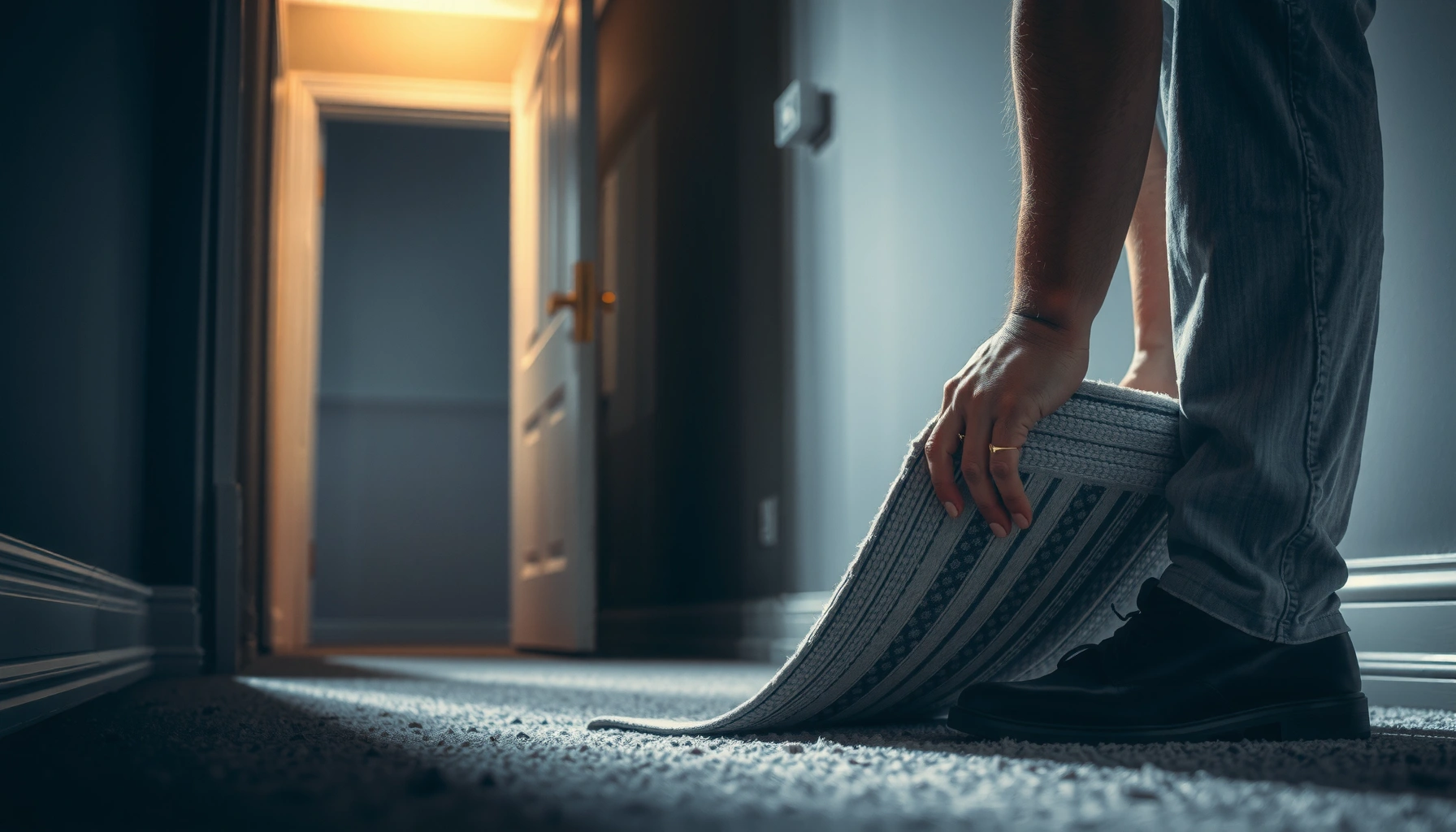
If you find dampness, lift/inspect promptly
When you see early dampness:
– Lift a section (start at seams/edges where access is easiest)
– Check the pad and subfloor
– Dry fully before re-installing
Waiting for symptoms to “go away” often means the underlying moisture source continues and mold has more time to establish itself.
What can go wrong (and when to stop DIY)
Prevention strategies fail most often when people trap moisture, treat only the carpet surface, or ignore the recurring cause. If mold coverage is extensive or if someone in the home has respiratory sensitivities, DIY remediation is often the wrong scale.
CDC-style remediation principles emphasize that moisture control and source repair are necessary; masking odors without fixing dampness does not stop mold growth.
If materials are extensively contaminated, professional assessment is recommended to prevent incomplete cleanup and recurring exposure.
Vapor barriers and “waterproof” pads can worsen outcomes if they prevent drying in a system that still receives moisture.
Comparison: common DIY approaches that backfire vs. safer alternatives
- DIY approach: Add a vapor barrier or “waterproof” pad
- Risk: Can trap vapor in the subfloor/carpet system if you don’t know moisture direction.
- Safer alternative: Verify moisture behavior first, then select a matched pad/barrier approach
- Benefit: Supports drying pathways and reduces recurrence risk.
- DIY approach: Clean only the carpet top
- Risk: Mold can continue under the pad and in the subfloor.
- Safer alternative: Dry and inspect the pad/subfloor during any wet event
- Benefit: Removes conditions that allow growth.
- DIY approach: Delay leak repair until after “drying”
- Risk: Mold returns because moisture continues feeding the underside.
- Safer alternative: Fix the leak/condensation mechanism first, then remediate
- Benefit: Stops the cycle.
When to stop DIY
Stop and seek professional help if:
– Mold growth is extensive (large areas under the carpet/pad)
– There’s a lingering water source you can’t identify
– Anyone has significant respiratory issues or immune compromise
– You suspect structural moisture problems (sub-slab seepage, major crawlspace contamination)
[ADD: source for your recommended “threshold size/conditions” for professional remediation based on an authoritative body—e.g., IICRC S520-type guidance or local public health standards.]
Bottom-line tip (with downsides)
The most reliable approach is moisture control + drying + regular underside inspection. This usually works without harsh chemicals, but it requires consistency (humidity monitoring, quick drying, and fixing leaks). If you don’t have a clear handle on the moisture source or you’re dealing with widespread growth, skip DIY and get guidance on appropriate remediation steps for your specific floor setup.
📊 DATA: Moisture Control Priorities by Carpet Environment (U.S. Building Practice)
Moisture Control Priorities for Carpet-Underfloor Risk (Common Scenarios)
| # | Scenario | Primary moisture path | Highest-impact action | Risk reduction potential |
|---|---|---|---|---|
| 1 | Basement carpet | Humidity/vapor from below + intermittent leaks | Dehumidification + drying inspections at edges | ★★★★★ |
| 2 | Bathroom carpet near wet zones | Condensation + spill/overspray events | Ventilation during/after use + fast extraction | ★★★★☆ |
| 3 | Ground-level room with exterior wall | Airborne humidity + thermal condensation at edges | Hygrometer-based humidity control + edge checks | ★★★★☆ |
| 4 | Post-water spill (localized) | Liquid intrusion into pad and subfloor | Extract quickly + dry pad/subfloor fully | ★★★★★ |
| 5 | After steam cleaning | Extended wet duration in pad layers | High extraction + fans/dehumidification until dry | ★★★★☆ |
| 6 | Crawlspace-adjacent installation | Ground vapor drive + limited drying pathways | Address crawlspace moisture + inspect edges monthly | ★★★★☆ |
| 7 | Recurring “mystery dampness” | Unidentified leak/condensation mechanism | Trace moisture source before changing materials | ★★★☆☆ |
Quick checklist to scan
– [ ] Fix leaks or water intrusion sources immediately
– [ ] Monitor indoor humidity with a hygrometer
– [ ] Improve airflow near the carpet edges and underside
– [ ] Use carpet pad/underlayment suited to your moisture conditions ([ADD: what your subfloor is—slab/crawlspace/wood] )
– [ ] Dry any spill or cleaning thoroughly and quickly
– [ ] Inspect monthly in high-risk rooms and along edges
FAQ
How quickly does mold form under a carpet after water exposure?
Mold risk rises quickly when moisture is trapped. Exact timing depends on temperature, humidity, and how long the carpet pad and subfloor stay damp—[ADD: refer to specific manufacturer/remediation guidance or standard moisture-control timeframes for your climate] .
Should I remove the carpet if I smell mold but don’t see stains?
If there’s a persistent musty odor, it’s often worth lifting the edge to inspect the pad and subfloor for dampness and early growth. If you find hidden moisture, continuing to run without addressing it can allow the issue to expand.
Can I prevent mold just by using anti-mold carpet spray?
Sprays don’t remove the underlying moisture source. They may mask odors temporarily, but they won’t reliably stop mold when moisture is still present under the carpet.
What’s the biggest mistake people make when trying to prevent mold under carpet?
Most failures come from drying only the top layer while moisture remains trapped beneath the pad, or from ignoring a recurring leak/humidity problem.
Sources
– [ADD: manufacturer installation/maintenance specs for carpet, carpet padding, and any underlayment or vapor barrier system you plan to use]
– CDC (Centers for Disease Control and Prevention) — mold guidance emphasizing moisture control and timely drying
– EPA (U.S. Environmental Protection Agency) — mold prevention and moisture control principles
– [ADD: IICRC S520-type guidance or equivalent for moisture/mold investigation and remediation decision-making]
Stopping mold under carpet is rarely about “one product.” The practical win is consistent moisture control (fix leaks, manage humidity), fast drying after any wet event, and routine underside inspections so early dampness doesn’t get time to become a recurring mold problem.
Frequently Asked Questions
What are the most common causes of mold growing under carpet floors?
Mold under carpet typically forms when there’s excess moisture from spills, leaks, high humidity, or wet subfloors. Poor ventilation, lack of padding that traps moisture, and cold floors that cause condensation can also create the damp conditions mold needs. If you notice musty odors, discoloration, or persistent dampness, it usually indicates moisture is getting trapped underneath the carpet.
How can I prevent mold under carpet floors after a spill or leak?
Remove the carpet and padding as soon as possible, because moisture trapped beneath can lead to rapid mold growth. Dry the subfloor within 24–48 hours using fans, dehumidifiers, and—if needed—professional water extraction to prevent a wet environment. After drying, clean affected areas with appropriate mold prevention cleaners and ensure the area is completely dry before reinstalling carpet.
How do I control indoor humidity to stop mold under carpets?
Keep indoor relative humidity between 30% and 50% using a dehumidifier or HVAC system, especially in basements or humid climates. Use exhaust fans in kitchens and bathrooms, and fix any plumbing leaks promptly. Regularly check for damp spots and consider a moisture meter to confirm the subfloor is dry before installing or replacing carpet.
Which carpet padding and underlayment choices help reduce mold risk?
Choose moisture-resistant or mold-resistant carpet padding that reduces water absorption and helps ventilation. Consider installing a vapor barrier or moisture barrier under carpet in areas prone to dampness, such as basements or slabs on grade. Avoid thick, highly absorbent padding that can trap moisture and increase the likelihood of mold growth under carpet floors.
What’s the best way to inspect and prevent mold under carpet floors before it starts?
Periodically lift edges of the carpet and check for damp odors, staining, or discoloration on the subfloor, especially after rainy seasons or heavy appliance use. Ensure airflow under furniture and along baseboards, and address any water intrusion or condensation sources early. If you find signs of mold, don’t just treat the surface—remove affected materials and thoroughly dry the area to prevent recurrence.
📅 Last Updated: October 11, 2026 | Topic: How to prevent mold under carpet floors? | Content verified for accuracy and freshness.
References
- https://www.cdc.gov/mold/default.htm
- https://www.cdc.gov/mold/moisture.htm
- https://www.cdc.gov/niosh/topics/mold/
- https://www.epa.gov/mold/preventing-mold
- https://www.epa.gov/mold/mold-and-moisture
- https://www.epa.gov/mold/mold-remediation-and-cleanup
- https://www.mayoclinic.org/diseases-conditions/allergies/in-depth/mold/art-20047661
- https://pubmed.ncbi.nlm.nih.gov/?term=mold+prevention+indoor+dampness+carpet
- Google Scholar Google Scholar
https://scholar.google.com/scholar?q=prevent+mold+under+carpet+humidity+moisture+control - Google Scholar Google Scholar
https://scholar.google.com/scholar?q=carpet+floor+moisture+mold+dampness+prevention+building+science