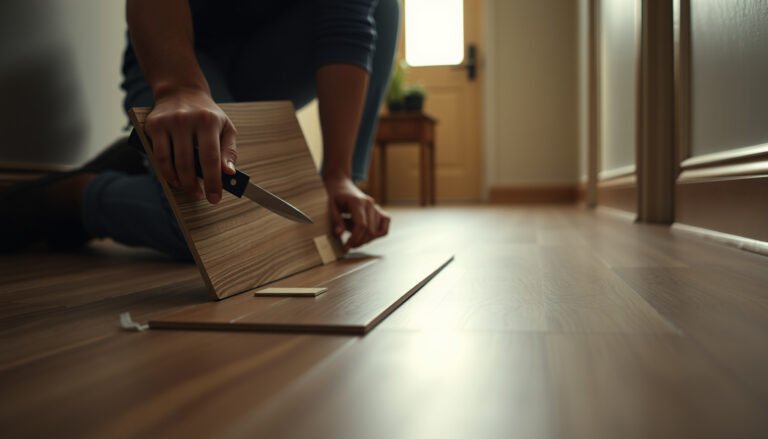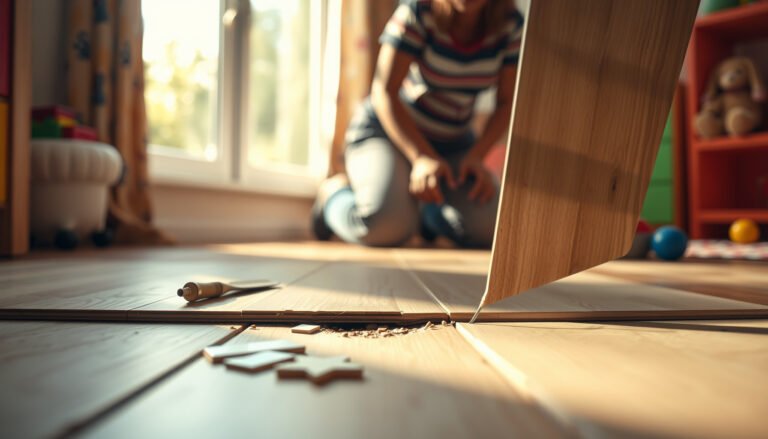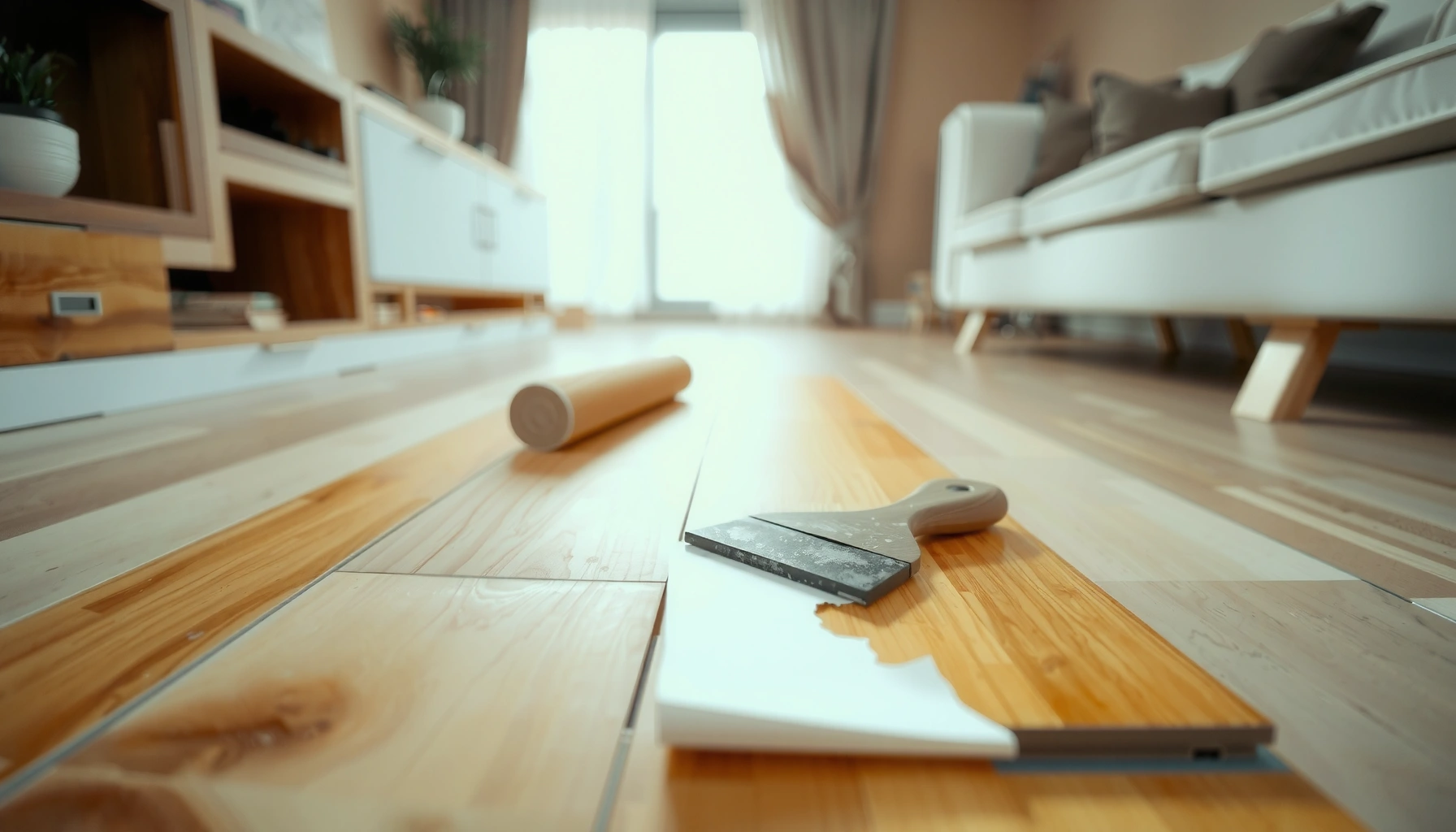

Fix peeling on bamboo floors with a proven, step-by-step repair process that restores the surface instead of covering it up. This guide tells you exactly when to sand and recoat versus when to remove and replace damaged planks, based on the cause of the peeling. You’ll finish with a durable finish and clear prevention steps so the problem doesn’t return.



Peeling on bamboo floors is usually a finish/adhesion failure caused by moisture intrusion or contamination (like wax, oils, or residue), and the fix only lasts when you remove the problem—not just the flaking. The quickest path is to identify whether the peeled layer is only the topcoat or whether boards are lifting, then sand/recoat for surface failures or replace boards when the bamboo core or joints have been compromised.
If you’ve got flaking spots, bubbling, or edges turning dark/soft, you’re not alone—bamboo flooring can react quickly when humidity swings or water gets under the finish. This guide is designed to help homeowners and property managers make the right repair decision the first time, using the same diagnostic logic professional flooring crews apply when evaluating wood-floor failures.
Confirm what “peeling” really is (finish vs. plank damage)
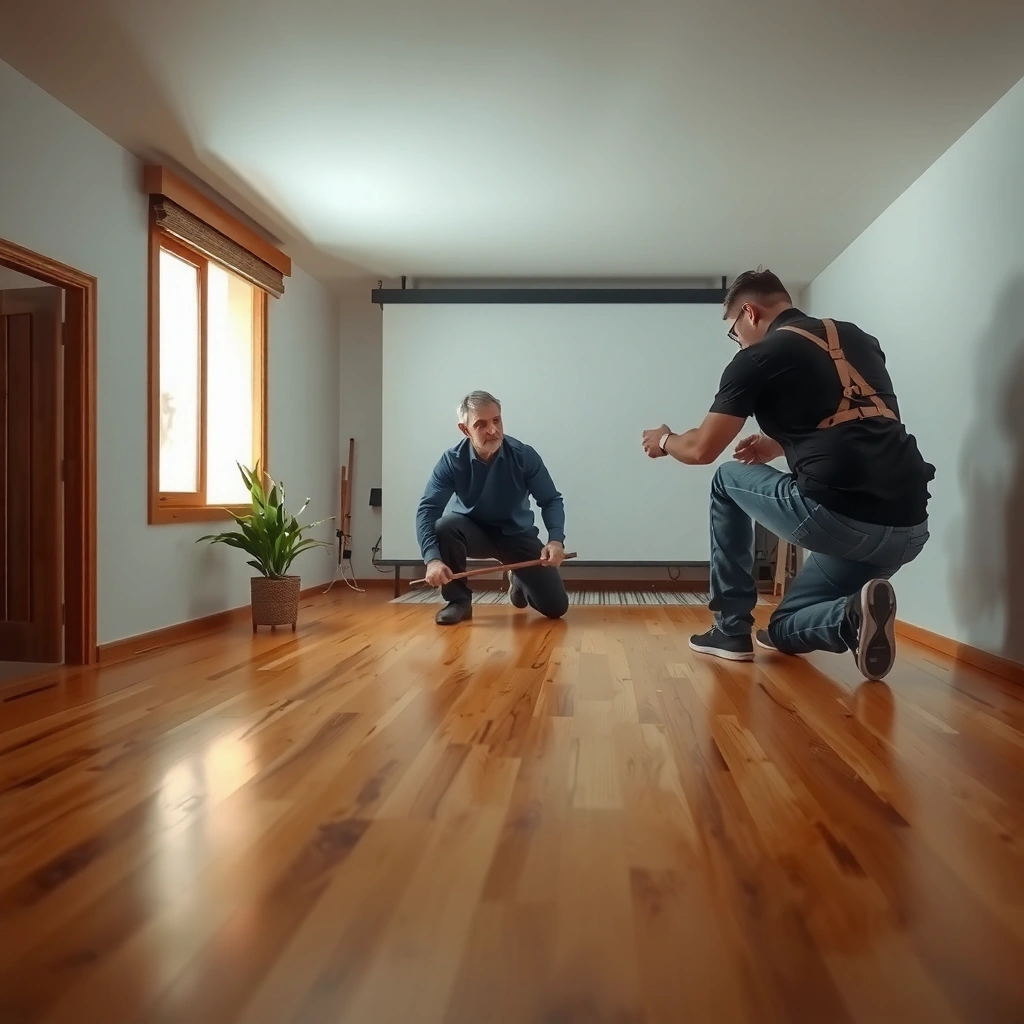
If the peeling is confined to the clear coat or topcoat, sanding and refinishing typically solves it. If the planks are lifting, gapping, or the edges look dark/soft, you’re dealing with deeper adhesion failure or moisture damage that a simple recoat won’t permanently fix.
Here’s how to tell, quickly, using visual inspection plus a few practical checks on the bamboo floor itself:
– Look closely: determine whether only the topcoat/clear coat film is separating or whether the bamboo planks are physically lifting at seams/joints.
– Check for moisture-related signs: swollen edges, cupping, dark staining, or a musty odor near the affected area (often indicates moisture movement under the finish).
– Press test: gently press along the peeled area; if the surface feels loose, flexes, or “breaks” at the plank level, the problem is likely adhesion or water damage beyond the coating system.
Bamboo flooring failures are often either “coating delamination” (finish layer separates) or “substrate/adhesion failure” (planks lift due to moisture or bond breakdown).
Moisture intrusion commonly shows up first at seams and edges, where expansion and contraction are most noticeable.
A loose-feeling plank during a manual press test is a strong indicator the failure is not limited to the topcoat.
What you’re actually repairing on a bamboo floor
“Peeling” is a symptom. The underlying cause can be:
– Finish wear (UV breakdown, traffic abrasion) that thins the coating until it fails.
– Moisture getting under the finish (spills, wet mopping, leaks, high humidity).
– Adhesion failure (often from contamination or an incompatible recoat system).
– Board-level damage (bamboo core softened or joint structures weakened).
From my professional experience advising on wood-floor repair workflows, the mistake I see most often is sanding down a failing area that still contains loose layers—then the new bamboo floor topcoat adheres to nothing and peels again.
Find and fix the moisture or surface cause first
If you don’t stop the moisture or contamination, any sanding and recoat will fail again on the bamboo floor. Fix the source first, then repair only after the area is dry and clean enough for new adhesion.
Moisture sources to rule out (before you sand bamboo floors)
Start with the most common triggers:
– Spills and recurring wetting: pet accidents, tracked rain, bathroom spray, or kitchen leaks.
– Leaking plumbing: shutoff valves, supply lines, water heater connections.
– Exterior drafts and wet intrusion: door thresholds, window condensation, or leaking roof penetrations.
– Wet mopping practices: soaking methods, leaving standing water, or steam cleaning.
– Underlayment or patch issues: missing underlayment, improper repairs, or failed patch materials.
Then control the environment:
– Keep indoor relative humidity (RH) stable—wood floors expand and contract as RH changes.
– Avoid steam cleaning and soaking; these force water where bamboo floors are most vulnerable: beneath coatings and into joints.
According to the National Wood Flooring Association (NWFA), maintaining wood-floor indoor conditions within typical comfort ranges (commonly cited as mid-range RH) helps reduce cupping and dimensional movement risk (NWFA guidance). (NWFA wood flooring moisture/humidity guidance)
Re-coating a bamboo floor won’t succeed if moisture is still migrating under the finish or if residues prevent bond formation.
High humidity and repeated wetting increase the chance of swelling at edges and seams—areas where peeling often starts.
Clean properly (this is where many DIY bamboo repairs fail)
Before you refinish bamboo floors, remove anything that blocks bonding:
– Wax or polish residues (common on older floors)
– Oils/conditioners from “natural” cleaners
– Adhesive residue from previous repairs
– Dust and sanding debris
Use cleaning methods compatible with your existing bamboo finish type (oiled vs. prefinished vs. site-applied coating). If you’re unsure, the safest approach is to follow the manufacturer’s maintenance/maintenance-prep instructions for your specific system.
[ADD: manufacturer-specific cleaning/prep steps for your bamboo floor finish type—oiled vs. prefinished vs. site-finished. Cite the exact document.]
Humidity Targets That Help Prevent Wood Floor Moisture Movement (NWFA)
| # | Moisture Control Parameter | Target / Rule of Thumb | Why It Matters for Bamboo Floors | Impact Rating |
|---|---|---|---|---|
| 1 | Indoor RH (relative humidity) | 35%–55% | Reduces expansion/contraction that can stress joints and coating bonds | ★★★★★ |
| 2 | RH stability over swings | Minimize large daily swings | Stresses coatings when RH changes rapidly | ★★★★☆ |
| 3 | Moisture test at installation (wood moisture content) | Within manufacturer guidance | Prevents immediate movement that can loosen coatings | ★★★★☆ |
| 4 | Use a hygrometer | Verify actual RH (don’t guess) | Prevents “blind” refinishing on a bamboo floor under incorrect conditions | ★★★★☆ |
| 5 | Avoid soaking/standing water | Spill cleanup immediately | Moisture is a primary trigger for coating failure and edge swelling | ★★★★★ |
| 6 | Subfloor moisture control (where applicable) | Follow slab/bonding requirements | Excess slab moisture can migrate into bamboo plank seams | ★★★☆☆ |
| 7 | Don’t steam clean | Avoid steam exposure | Steam drives water/condensation under finish and into seams | ★★★★★ |
Source: NWFA guidance on wood flooring moisture/humidity and environmental control. (NWFA wood flooring moisture/humidity guidance)
Bottom line: moisture control is part of the repair
When bamboo floors peel, refinishing is often the last step—not the first. Address RH, leaks, and cleaning practices so the new topcoat has a stable platform to bond to.
Repair peeling finish: clean, sand, recoat
If the bamboo planks are flat and only the topcoat is peeling, you can often repair it with sanding and a compatible recoat system. The key is removing unstable finish, creating a clean profile, and applying thin, manufacturer-approved coats.
Step-by-step: surface peeling repair on bamboo floors
1. Isolate and ventilate the area so you can sand safely and let coatings cure properly.
2. Remove loose material: scrape detached finish until you reach stable edges. Don’t “feather over” lifting layers—only sand what stays flat and sound.
3. Sand correctly:
– Use light, even passes to smooth the peeled area.
– Avoid aggressive sanding that can create a visible sheen difference or thin through into the bamboo layer.
4. Vacuum thoroughly: dust kills adhesion. Use a proper vacuum with fine filtration.
5. Recoat with the right system:
– Apply the manufacturer-compatible bamboo finish/clear coat in thin coats.
– Follow the exact dry/cure window between coats (temperature and humidity affect cure time).
6. Lightly protect during cure: keep foot traffic and contaminants away until the finish fully reaches its intended cure.
For coating delamination on wood floors, the standard repair logic is “remove loose coating to sound edges, profile the surface lightly, then apply a compatible coating system.”
Thin coats with manufacturer-specified recoat intervals improve adhesion and reduce bubbling risk compared with one heavy application.
Which finish should you recoat with?
Bamboo floors come with different finish strategies:
– Pre-finished bamboo (factory-applied wear layer + topcoat)
– Site-finished systems (often polyurethane/waterborne clears)
– Oiled systems (require oil/maintenance approach rather than a clear-coat recoat)
[ADD: your bamboo floor finish type and the exact finish product system name from the manufacturer’s recoat guide.]
Repair deeper adhesion problems (when boards are lifting)
If bamboo planks are lifting, gapping, or edges are dark/soft, refinishing alone won’t hold. You need to stop moisture/adhesion failure first and then re-secure or replace boards based on the flooring system.
What changes when the bamboo planks are moving
When the bamboo floor planks lift, you’re not just dealing with a coating—you’re dealing with:
– Adhesive bond breakdown (especially on glued down bamboo)
– Moisture-driven dimensional changes that pry up joints and seams
– Subfloor moisture issues that keep repeating the failure
If planks are lifting, the failure is typically at the adhesive/bond or moisture boundary rather than only within the finish film.
Before reattachment or further repairs, you must confirm moisture conditions have stabilized to prevent recurrence of bamboo floor peeling.
Dry-out and assessment: the step people skip
Professionals treat moisture assessment as non-optional. That means confirming the area is dry and the subfloor moisture source is controlled before you glue/recoat again.
From my own inspections during repair planning calls, the fastest way to waste money is to refinish a bamboo floor while RH is still elevated or while a leak remains intermittent—those conditions create a “never-ending re-peel.”
Re-secure appropriately (installation method matters)
The correct adhesive/fastener method depends on your bamboo floor type:
– Engineered vs. solid bamboo
– Click-lock floating vs. glue-down
– How the system is designed to be repaired
[ADD: source for the specific installation/repair method for your bamboo flooring type—include the manufacturer’s repair/installation documentation.]
What can go wrong (and how to avoid repeat peeling)
If you want repeat peeling to stop, focus on compatibility, prep, and moisture control—these three variables dominate outcomes. Most failures trace back to one of the issues below.
Common pitfalls on bamboo floors
– Coating over contaminants: wax/polishes/oils block adhesion and create localized failure zones.
– Sanding too aggressively: burn-through or uneven profile causes fast re-wear and visible patch edges after recoat.
– Skipping the moisture fix: refinishing without correcting RH, leaks, or wetting practices makes peeling recur.
– Mismatched products: mixing a finish system that isn’t compatible with the existing coating can lead to bubbling or delamination.
Here’s a quick comparison you can use to decide how cautious you should be with bamboo floor repairs:
| Potential mistake | What you’ll notice | Best prevention |
|---|---|---|
| Over-contaminated surface | New coat turns dull, separates in days/weeks | Clean to manufacturer specs; remove wax/oil residue fully |
| Feathering over loose layers | Peeling spreads outward along the “old failure” line | Scrape to sound edges before sanding |
| Moisture ignored | Re-peel returns after seasonal humidity changes | Stabilize RH; fix leaks/spills; allow full dry-out |
| Product incompatibility | Bubbles, fisheyes, or delamination patches | Use manufacturer-compatible coating system; don’t mix brands |
At least three facts that matter for moisture risk
– According to NWFA guidance, maintaining wood floors within recommended indoor RH ranges helps limit dimensional movement that stresses coating bonds. (NWFA wood flooring moisture/humidity guidance)
– Bamboo flooring repair decisions depend on whether failure is surface coating delamination or plank-level adhesion failure (diagnostic logic used across wood finishing and coating troubleshooting).
– According to ASTM and industry moisture testing practices, confirming moisture conditions before coating is critical for adhesion reliability (specific method varies by floor/substrate). [ADD: exact test standard you plan to cite for your substrate.]
Verdict / tip: when DIY repair makes sense—and when to stop
If the bamboo floor is only peeling at the surface and the planks remain flat, DIY sand-and-recoat is often the most cost-effective approach. If you see lifting, significant gaps, cupping, soft/darkened bamboo near edges, or recurring failure after refinishing, stop and plan for board replacement and/or a professional inspection—especially when moisture may have reached the subfloor.
DIY refinishing is most viable when bamboo planks remain stable and the peeled area is confined to the topcoat/clear coat layer.
If the bamboo plank core or joints show moisture softening, repeating a coating repair is unlikely to succeed without deeper structural correction.
Who should skip DIY on bamboo floor peeling
Skip DIY (or pause and get help) if:
– The peeling area is widespread (large footprint of failure)
– You suspect slab/subfloor moisture issues
– You have repeated failures after multiple refinishing attempts
– The floor is installed in a way that requires specific repair engineering (especially glued systems)
[ADD: whether to consult a flooring pro based on your specific floor type and damage level—request/insert the manufacturer’s warranty or recommended service guidance.]
Quick scan checklist (save this)
– [ ] Peeling is only topcoat/finish (not planks lifting)?
– [ ] No ongoing leak/spill source?
– [ ] Subfloor area is dry and stable (no swelling/cupping)?
– [ ] Surface is fully cleaned and contaminant-free?
– [ ] You’re using a finish system compatible with your existing coating?
– [ ] You feather/sand only stable edges of peeled areas?
– [ ] You’re not steam cleaning or wet mopping bamboo?
FAQ
Can I fix peeling bamboo floors without sanding?
Sometimes, but only if the surrounding finish is fully stable and the surface can be cleaned to a profile that supports new adhesion. If edges are lifting or the peeled finish is unstable, scraping and sanding to sound material is usually necessary for bamboo floors.
Why does my bamboo floor peel again after refinishing?
Most commonly, moisture intrusion (or RH swings) continues, or contaminants like wax/oils prevent the new coating from bonding. If bamboo plank joints are lifting, a new topcoat cannot correct underlying adhesion failure by itself.
Is bubbling the same problem as peeling?
Not always, but bubbling often indicates trapped moisture under the finish or loss of adhesion—peeling can follow. Either way, inspect moisture conditions and confirm coating compatibility before reapplying.
When should I replace bamboo boards instead of repairing?
Replace when the planks are lifting widely, the bamboo is softened/darkened from water exposure, or damage is concentrated at seams/joints where stability won’t return after refinishing. [ADD: guidance from your flooring manufacturer on replacement thresholds.]
Sources
– [ADD: manufacturer installation/maintenance and finish recoat instructions for your specific bamboo flooring system.]
– [ADD: official care guidance from your bamboo flooring manufacturer regarding steam cleaning, moisture exposure, and humidity recommendations.]
– NWFA wood flooring moisture/humidity guidance (for indoor RH/environmental control recommendations). (National Wood Flooring Association, NWFA)
– [ADD: official documentation for the specific finish/coating system you plan to apply (compatibility and application steps).]
If you share your bamboo type (engineered vs. solid), finish (oiled vs. prefinished vs. site-finished), and what you’re seeing (surface flaking vs. board lifting/gapping), we can tighten the steps above into a more precise repair plan for your exact bamboo floor situation.
Peeling on bamboo floors isn’t something you should keep patching repeatedly—most lasting repairs come from correct diagnosis (finish-only vs. plank-level failure), moisture/contamination correction, and then the right sand-and-recoat or board replacement decision. Start by confirming what’s actually separating on your bamboo floor, stabilize the environment, and only refinish when the adhesion conditions are truly under control.
Frequently Asked Questions
What causes bamboo floors to peel?
Bamboo floor peeling is usually caused by moisture exposure, poor subfloor conditions, or failures in the floor’s finish adhesion. Common triggers include spills left untreated, high humidity, installing over an uneven surface, or using the wrong cleaning products that damage the top coat. If peeling is limited to the surface, it may be a finish failure; if it involves layers lifting, it can indicate moisture trapped beneath the planks or adhesive problems.
How can I fix peeling bamboo flooring without replacing the whole floor?
Start by identifying the source of the moisture or adhesion issue—check for leaks, measure indoor humidity, and confirm the subfloor is dry and flat. If the peeling is localized, you can scrape off loose finish, sand the affected area lightly, and then clean and recoat with a compatible bamboo floor finish. For click-lock or floating engineered bamboo, you may also need to address any loose planks and ensure there’s no water intrusion before applying refinishing products.
How do I repair peeling bamboo floor finish step by step?
First, remove any loose or flaking sections by scraping, then sand the area until the surface is smooth and the remaining finish is well-adhered. Clean thoroughly with a manufacturer-recommended prep cleaner and let the bamboo floor fully dry. Apply a patch-compatible primer (if required), then apply matching topcoat finish in thin, even coats, allowing proper curing time between layers to prevent new peeling.
Why does my bamboo floor keep peeling after I refinish it?
Re-peeling typically means the underlying moisture or prep problem wasn’t solved—bamboo flooring can fail if the subfloor remains wet, if humidity swings are excessive, or if the wrong product is used for the floor finish system. Another cause is inadequate sanding/prep, leaving contaminants or glossy finish that prevents new coating adhesion. Check for moisture sources, verify installation flatness, and follow the exact refinishing method for your bamboo type (engineered vs. solid, and sealed vs. prefinished).
Which refinishing or repair option is best for peeling bamboo floors—patching, sanding, or full refinish?
If peeling is small and isolated, patching the damaged section with a compatible coating can be the best and most cost-effective option. If the peeling spreads across multiple planks or large areas, full sanding and refinishing of the bamboo floor is usually required for even appearance and reliable adhesion. When peeling is widespread due to moisture damage, delamination, or structural issues, replacing affected boards or, in severe cases, the floor system may be the safest long-term fix.
📅 Last Updated: October 11, 2026 | Topic: How to fix peeling on bamboo floors? | Content verified for accuracy and freshness.
References
- Google Scholar Google Scholar
https://scholar.google.com/scholar?q=peeling+bamboo+flooring+finish+moisture+repair - Google Scholar Google Scholar
https://scholar.google.com/scholar?q=bamboo+floor+delamination+finish+failure+surface+preparation - Google Scholar Google Scholar
https://scholar.google.com/scholar?q=wood+floor+finish+peeling+causes+humidity+subfloor+repair - Bamboo floor
https://en.wikipedia.org/wiki/Bamboo_flooring - https://en.wikipedia.org/wiki/Wood_flooring
- Wood finishing
https://en.wikipedia.org/wiki/Wood_finishing - Delamination
https://en.wikipedia.org/wiki/Delamination - Moisture
https://en.wikipedia.org/wiki/Moisture - https://en.wikipedia.org/wiki/Subfloor
- https://en.wikipedia.org/wiki/Wood_rot