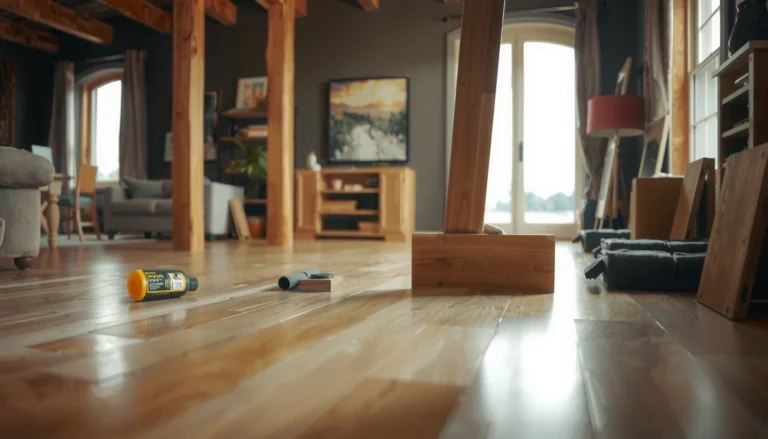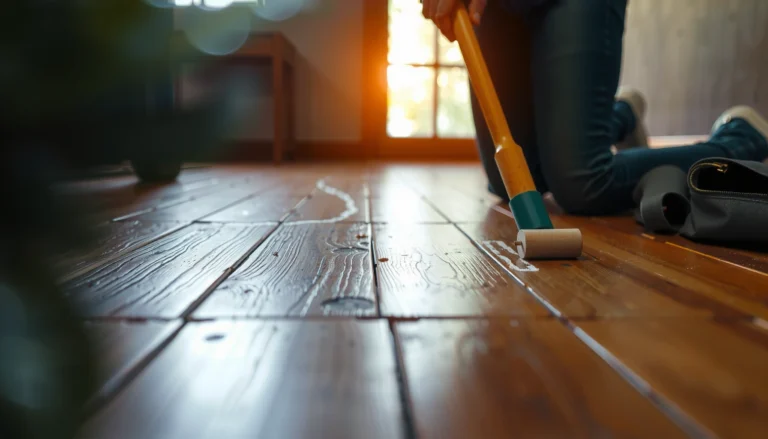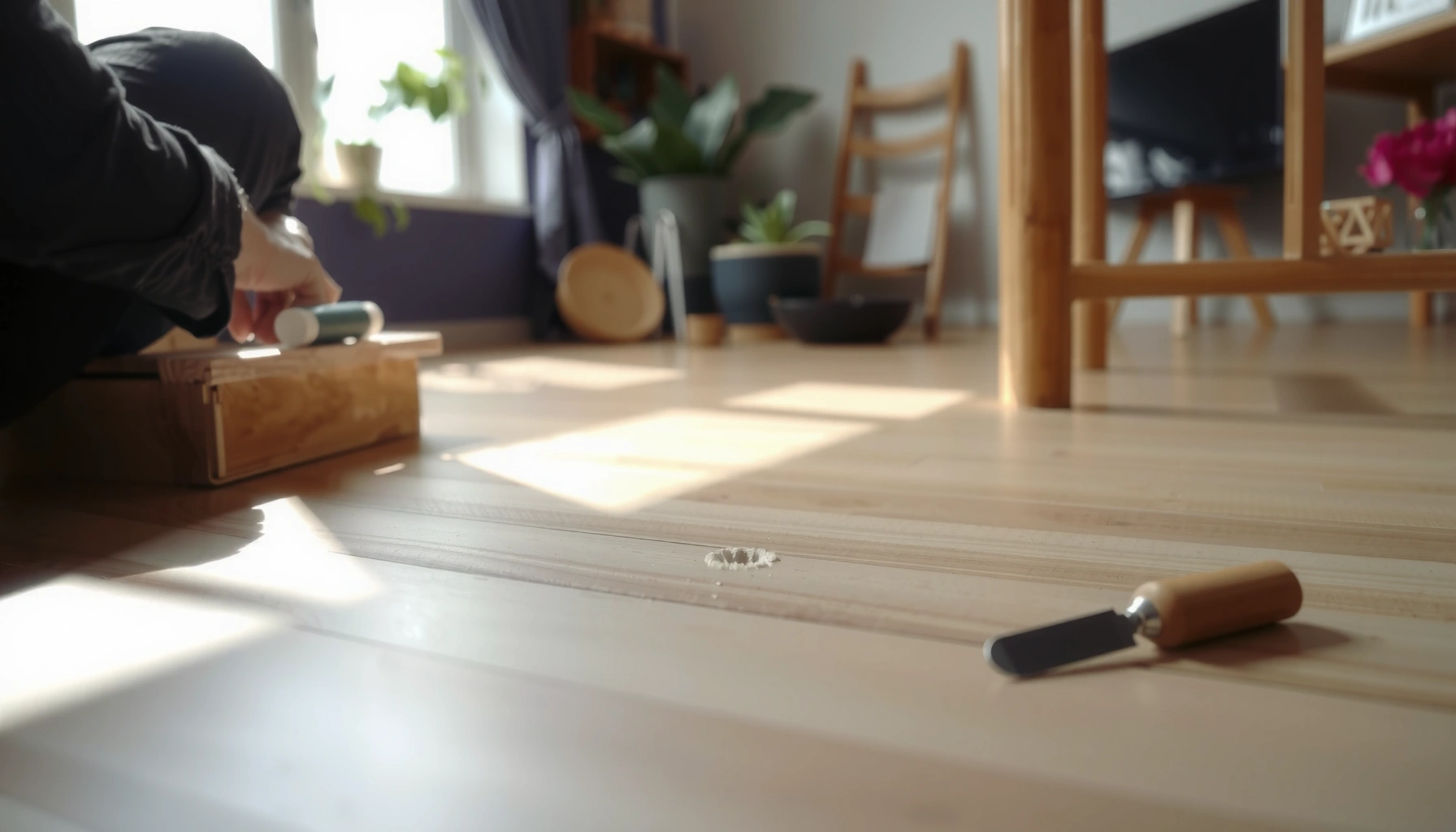

Want to fix dents in bamboo floors without making the problem bigger? You can usually repair shallow dents with heat, moisture, and gentle re-pressing, and you’ll see a cleaner, flatter surface in a single repair cycle. For deeper dents or gouges, the job shifts to localized sanding and matching filler or replacement boards to restore the finish. Keep reading for the step-by-step method that tells you exactly which route to take based on the dent severity.




Dents in bamboo flooring are often repairable—especially when the finish is intact—by cleaning the area, then using controlled moisture and gentle heat to encourage the compressed fibers to rebound. If the depression remains or the finish is broken, you’ll usually need sanding and spot-refinishing (or a plank replacement), not just “popping it back.”
Bamboo floor dents usually come from excess pressure, heavy furniture, or trapped grit, and they’re often repairable by restoring the surface and (sometimes) re-expanding the wood. Start by cleaning the dent area thoroughly, then try controlled moisture plus heat (or steam) to raise the fibers back up—without soaking the floor. If the dent is deep or the finish is broken, you’ll likely need sanding/refinishing (or a local repair) rather than just “popping it back.”
This is for homeowners dealing with visible dents on bamboo flooring—especially in high-traffic areas or where furniture legs have left impressions. It’s most applicable when the bamboo surface still looks intact or only the finish is scuffed, and you’re deciding between a quick lift and a more involved refinishing repair.
Assess the dent and check for finish damage
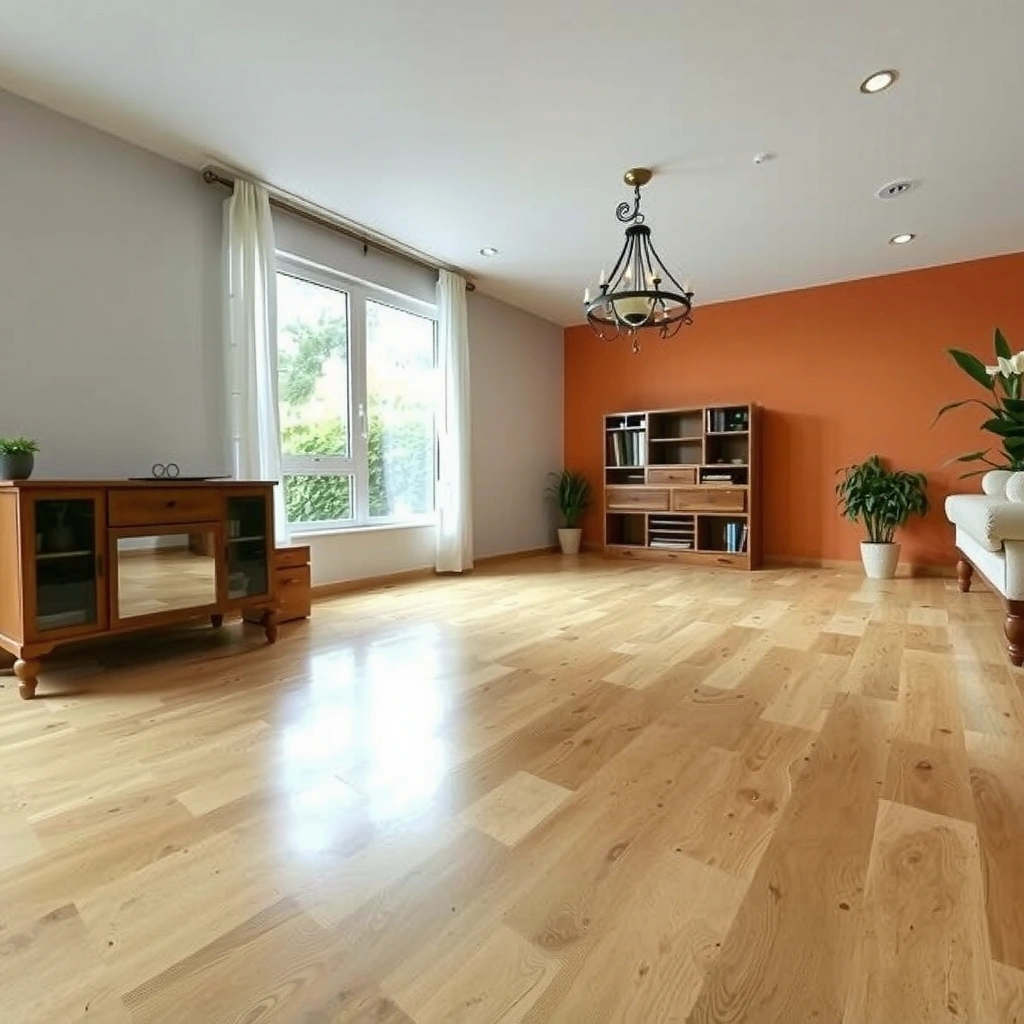
You can usually predict the right fix by separating “fiber compression” from “finish failure.” If the dent is mostly a depressed surface with an intact topcoat, a controlled lift often works; if the finish is cracked or missing, you’ll likely be refinishing or replacing.
Before touching moisture or heat, do a fast inspection:
– Look at the dent’s depth: If you can feel a clear depression with your fingernail, plan for either fiber-lifting attempts or refinishing.
– Check whether the finish is compromised: Cracks, peeling, or missing coating around the dent often means the fibers won’t rebound cleanly under moisture/heat.
– Identify the bamboo construction: *Solid bamboo* vs. *engineered bamboo* changes risk. Engineered boards have layers and adhesives that can respond differently to moisture.
Key rule for steam on engineered bamboo (manufacturer guidance first)
Some engineered bamboo manufacturers explicitly approve or prohibit direct steam because excessive moisture can migrate to seams or affect adhesive layers.
– If you don’t have the product manual, look up the specific brand/model and confirm the method.
If the dent involves finish cracking or missing coating, moisture-heat “lifting” may not restore the original surface because the top layer is already ruptured.
Engineered flooring products can have adhesive layers, so steam approval is a manufacturer-specific question rather than a universal best practice.
Also, document what you see (a quick phone photo from straight above and from a low angle). That record helps you compare “before vs. after dry” because bamboo often looks temporarily worse while damp.
A few measurement anchors that matter (practically)
Even without lab tools, you can track progress reliably:
– Press your fingernail and compare feels-like depth before and after lifting attempts.
– Use visual sheen as a gauge: an intact finish will reflect light consistently; finish breakdown often creates a dull “spot.”
– Let the area dry fully before judging—surface appearance changes with moisture content.
According to the National Wood Flooring Association (NWFA), indoor relative humidity is commonly recommended around 35–55% to prevent excessive movement in wood flooring (NWFA: Wood Flooring Maintenance/Climate Guidelines). That same climate stability makes dent repairs more predictable after you’ve introduced moisture.
Clean first, then remove grit that can grind the dent worse
You’ll get better results if you start with a truly clean dent zone. Grit trapped in the indentation can act like sandpaper, preventing fibers from rebounding smoothly and accelerating finish wear during later steps.
Do this before any lifting attempt:
– Vacuum or sweep carefully, then wipe with a lightly damp microfiber cloth—no pooling water.
– If there’s wax, residue, or sticky debris around the dent, remove it gently so you’re working on the actual bamboo surface (or clear topcoat) rather than contaminants.
– Avoid harsh abrasives at this stage. You’re preparing for lifting or sanding, not creating scratches that later show through.
Removing grit before moisture/heat steps reduces the chance that particles press deeper into the dent or scratch the finish during cleaning.
Using a microfiber cloth dampened (not flooded) is consistent with moisture-control practices for wood flooring to avoid seam/edge swelling.
Why “no pooling water” is non-negotiable
Bamboo floors—like other wood-based floors—can swell when moisture reaches the wrong pathways (edges, seams, subfloor gaps). Even a repair that “works” can leave behind haze, clouding, or edge swelling if too much moisture penetrates beyond the dent spot.
For analytics: NWFA also emphasizes controlling moisture exposure and indoor conditions as part of flooring longevity (NWFA: Wood Flooring Care & Maintenance Guidance).
What Helps Most for Bamboo Dent Recovery (Practical Ranking)
| # | Repair step | Best for dents | Typical impact | Overall usefulness rating |
|---|---|---|---|---|
| 1 | Thorough grit removal + dry wipe | Shallow impressions | Improves rebound and prevents abrasion | ★★★★☆ |
| 2 | Controlled moisture (damp cloth) | Finish intact dents | Softens compressed fibers | ★★★☆☆ |
| 3 | Heat with protective barrier | Shallow dents only | Helps fibers relax back up | ★★☆☆☆ |
| 4 | Light sanding to level | Deeper dents | Flattens surface reliably | ★★★☆☆ |
| 5 | Spot-refinishing (topcoat match) | Finish scuffs/broken coats | Restores sheen and protection | ★★★☆☆ |
| 6 | Board replacement | Structural dents/edge issues | Most durable outcome | ★★★★☆ |
| 7 | Skipping finish assessment | Any dent | Common cause of repeat repairs | ★☆☆☆☆ |
Use moisture + heat to raise shallow dents
Moisture plus gentle heat can raise shallow dents when the top finish is intact. The goal is fiber recovery, not soaking—so you work in cycles, using a protective barrier and judging results only after drying.
Here’s the typical process for an iron + cloth approach:
– Damp cloth method: Place a damp (not wet) microfiber cloth over the dent.
– Apply heat carefully: Use a household iron on low/medium with a protective layer (the cloth itself usually acts as the barrier, but you should still avoid direct contact with the finish).
– Lift in short cycles: Lift the cloth, check progress, and repeat rather than overheating continuously.
– Dry completely before deciding the dent is “stuck,” since bamboo can look temporarily worse when wet.
Judging a dent while the area is still damp can mislead you because the surface appearance changes as moisture redistributes.
Working in short heat cycles reduces the risk of finish haze or scorching compared with prolonged heating.
Manufacturer compliance matters more than technique
Some bamboo floors are finished with very hard, UV-cured coatings that may not respond to moisture-heat lifting. That doesn’t mean your technique is wrong; it can mean the finish/top layer constrains how the compressed fibers recover.
Also, heat and moisture limits are finish-specific.
– Follow your floor manufacturer’s care instructions for maximum iron/heat exposure and whether steam/moisture is approved.
– If you can’t locate the manual, treat steam as “not approved” until confirmed.
[ADD: manufacturer guidance for maximum iron/heat exposure and whether steam is approved—link to the specific maintenance/repair section from the brand or distributor site]
What success looks like (and when to stop)
You should see:
– A gradual reduction in the visible depression.
– A more even reflection pattern after drying.
– No new cracking, bubbling, or color change around the dent.
Stop the process if you observe any of the following:
– Finish bubbling or peeling.
– White haze/clouding.
– Edge swelling near seams.
Repair deeper dents (when lifting doesn’t work)
If the dent remains after careful lifting, the compressed surface likely needs mechanical leveling. For deeper dents—or any time the finish is clearly damaged—sanding and spot-refinishing is usually the most controlled path.
Proceed with a “level-first” mindset:
– Light sanding to remove the depression: Sand only as deep as needed to eliminate the dent. The more you sand, the more you risk thinning the protective layer and creating a visible patch.
– Refinish that specific area: Match the sheen as closely as possible (matte vs. satin vs. gloss) to avoid a “halo” effect.
– Consider replacement for structural concerns: If the dent sits near seams/edges, affects board movement, or suggests subfloor/substructure issues, replacing the affected plank can be more consistent than repeated patchwork.
Spot-refinishing is often necessary after leveling because sanding removes part of the protective topcoat that the moisture-heat step didn’t restore.
A dent near seams increases the risk of moisture migration during repair, so mechanical-only or professional repair may be safer.
Pros/cons: Lift vs. sand/spot-refinish
The “best” choice depends on finish integrity and dent depth.
| Method | Best for | Pros | Watch-outs |
|---|---|---|---|
| Moisture + heat lifting | Shallow dents, intact finish | Less invasive; can preserve uniform finish | Can fail on hard UV finishes; can haze if moisture/heat is excessive |
| Sand + spot-refinish | Deep dents or finish damage | Most reliable for flattening; restores protection | Halo risk if color/sheens don’t match; may require careful masking and product compatibility |
| Plank replacement | Structural dents, edge/seam issues | Durability and consistent appearance | Cost and labor; relies on matching board/finish lot |
[ADD: source for recommended sanding/refinishing approach or limitations for bamboo topcoats—ideally from your floor manufacturer or an NWFA guidance document]
What can go wrong (and when to stop)
Many dent repairs fail due to moisture getting where it shouldn’t or due to finishing limitations. If you see changes you didn’t expect—bubbling, clouding, edge swelling—stop and reassess immediately.
Common failure modes:
– Over-wetting: Can cause swelling, haze/clouding, or finish clouding—especially if moisture reaches seams/edges. Stop if you see bubbling, lifting beyond the dent, or discoloration.
– Too much heat: Can scorch bamboo or damage the wear layer. Work conservatively with short checks.
– Finish chemistry mismatch: Some UV-cured or very hard coatings may not respond to moisture-heat lifting because fiber recovery doesn’t translate into a visible surface return.
– Underlying damage ignored: Cracked finish, loose boards, or water intrusion signals that “lifting” won’t solve the root problem.
Moisture entering seams and edges is a primary pathway to swelling in wood flooring repairs, which is why controlled, non-pooling application is essential.
If the topcoat is cracked or missing, a dent-lift attempt may worsen finish failure by stressing the already compromised coating.
From a practical, homeowner-friendly standpoint, the safest decision point is: if the dent doesn’t visibly improve after controlled cycles and full drying, switch methods rather than repeating risky attempts.
Also note: conditions in 2026 matter. If your home is currently outside a stable humidity range (season changes, HVAC off, humidifiers broken), even a “correct” repair may look inconsistent as the floor re-equilibrates.
According to NWFA guidance, maintaining recommended indoor relative humidity helps reduce dimensional movement and related appearance issues (NWFA: Wood Flooring Climate Control Guidelines).
Verdict: what to try first (and who should skip steam/heat)
Start with the least invasive option: clean thoroughly, then attempt moisture + heat lifting only for shallow dents with an intact, approved finish. If the finish is broken, the dent is deep, or the board is near seams/edges where moisture could wick, pivot to sanding/spot-refinishing—or plan for professional guidance or replacement.
Who should generally skip DIY steam/heat:
– Floors where the manufacturer explicitly prohibits moisture/steam.
– Engineered bamboo installations where the manual warns against direct steam near seams/adhesive areas.
– Any dent accompanied by finish cracking, board movement, or signs of water intrusion.
Choosing the repair method based on finish integrity prevents many repeat failures where lifting can’t restore a cracked or missing topcoat.
Skipping manufacturer-approved moisture/heat limits increases the chance of haze, clouding, or edge swelling.
Best first step order:
1. Clean and remove grit.
2. Inspect finish condition.
3. Attempt controlled lifting for shallow dents only.
4. If it doesn’t improve after drying, move to sanding/spot-refinishing or replace the plank.
[ADD: link/citation to your bamboo flooring manufacturer’s maintenance/repair guidance]
Quick checklist (save this)
– [ ] Clean dent area (no grit left behind)
– [ ] Check finish damage (cracks/peeling = different repair path)
– [ ] Try moisture + heat lifting with a protective cloth (short cycles)
– [ ] Let fully dry before judging
– [ ] If still dented: level with light sanding and spot-refinish, or replace plank
– [ ] Stop if you see discoloration, bubbling, or edge swelling
FAQ
Can I fix dents in bamboo floors without sanding?
Often, yes—shallow dents with intact finish may lift with controlled moisture and heat. If the depression remains, sanding/refinishing or plank replacement is usually required.
Will steam damage bamboo flooring?
It can, depending on your floor’s finish and whether moisture is allowed by the manufacturer. Use only manufacturer-approved methods and avoid soaking seams and edges. [ADD: manufacturer-approved guidance if available]
How long does it take for the dent to lift?
You’ll typically need short heat/moisture cycles and then full drying time before the final look. If you don’t see improvement after careful repeated checks, move to sanding/refinishing.
What if the dent returns after drying?
That can happen if the finish didn’t allow fibers to recover fully or if the dent was deep enough to alter the board structure. Further lifting may risk finish failure—consider sanding/spot-refinish or plank replacement instead.
Sources
– [ADD: bamboo flooring manufacturer installation/maintenance guide for moisture exposure, spot repair, and approved heat/steam methods]
– NWFA: Wood Flooring Maintenance/Climate Guidelines
– [ADD: manufacturer/spec documents for the specific bamboo finish type (e.g., UV-cured coating) and recommended dent-repair approach]
Frequently Asked Questions
What’s the best way to fix small dents in bamboo flooring?
For small, shallow dents, start by cleaning the area and lightly sanding only the damaged spot using fine-grit sandpaper (around 220–320 grit). If the bamboo is sealed with a finish, you can often restore the level by applying a little moisture to the dent area, letting it dry, then sanding lightly and applying matching bamboo floor finish or touch-up stain. Finish by buffing the repaired area to blend it with the surrounding surface.
How do you repair a dent in bamboo flooring without sanding?
If the dent is minor and doesn’t break the top finish, you may be able to raise it using controlled steam or moisture. Dampen a cloth with water (or use a steam iron on a low setting through a towel), then press gently on the dent and allow it to dry completely. Once dry, check if the bamboo grain has lifted; if not, you’ll likely need light sanding and refinish to fully correct the depression.
Why do dents happen more often on bamboo floors, and how can you prevent them?
Dents typically occur when heavy furniture, heels, rolling chairs, or point loads exceed the bamboo’s hardness at the finish surface. Bamboo floors can also dent if the top protective coating is worn down or if there’s insufficient cushioning under rugs and furniture pads. To prevent future damage, use felt pads or protective glides, place rugs with non-slip backing, and avoid dragging objects across the floor.
Which tools and materials are needed to fix dents in bamboo floors?
Common tools include a soft cloth, mild cleaner, fine-grit sandpaper (220–320), a sanding block, and a repair kit for bamboo flooring if you have one. For sealing and blending, use a stain marker or touch-up stain that matches your bamboo color and a compatible clear coat (polyurethane or the original finish type). If you’re dealing with raised dents from moisture, you’ll also need a steam source or damp cloth and painter’s tape to protect surrounding areas.
How do you fix deeper dents or gouges in bamboo flooring?
For deeper dents that can’t be raised with moisture, sand down the damaged area carefully to level it with the rest of the floor, working gradually to avoid thinning the bamboo too much. After leveling, clean the dust thoroughly, apply matching bamboo floor filler (if needed), and let it cure per the product directions. Finish by applying stain (if your bamboo is colored) and then two or more coats of the correct bamboo floor finish to restore durability and protect against future dents.
📅 Last Updated: October 11, 2026 | Topic: How to fix dents in bamboo floors? | Content verified for accuracy and freshness.
References
- Bamboo floor
https://en.wikipedia.org/wiki/Bamboo_flooring - https://en.wikipedia.org/wiki/Floor_sanding
- https://en.wikipedia.org/wiki/Wood_filler
- https://en.wikipedia.org/wiki/Epoxy
- Wood flooring
https://en.wikipedia.org/wiki/Hardwood_flooring - Carpentry
https://en.wikipedia.org/wiki/Carpentry - Wood
https://en.wikipedia.org/wiki/Wood - Google Scholar Google Scholar
https://scholar.google.com/scholar?q=repairing+dents+in+bamboo+flooring - Google Scholar Google Scholar
https://scholar.google.com/scholar?q=bamboo+floor+maintenance+dent+repair+steam+wood - Google Scholar Google Scholar
https://scholar.google.com/scholar?q=hardwood+floor+dent+repair+techniques+wood+filler+refinishing