
Prevent scratches on cork floors with a simple, proven routine: use felt pads on every chair and table leg, keep grit off with the right entry mats, and avoid dragging abrasive items across the surface. Follow these practical steps and you’ll dramatically reduce scuffs from daily traffic—without sanding or refinishing. Here’s the fast, practical playbook for keeping your cork looking new.




Scratches on cork floors are mostly prevented by blocking grit and limiting pointy/abrasive contact—felt pads, soft glides, and good entry-mat habits do most of the work. Keep sand and dust off the surface with regular (non-abrasive) cleaning, and maintain the cork’s protective finish on schedule so the wear layer stays intact. The key is consistency: cork can be tough, but repeated abrasion from tiny particles is what turns “fine cork” into visible scuffing.
If you have kids, pets, rolling furniture, or you frequently bring shoes in from outside, this is the right guide—because most cork “scratch” damage is actually driven by grit and abrasion. These tips apply whether your cork floor is already finished or you’re in the process of maintaining a newer installation.
Stop grit: keep sand and dust off the cork

The fastest way to reduce scratches on cork is to prevent abrasive particles from ever reaching the floor. In practice, grit enters through doorways, sticks to shoe tread, and then gets ground across the finish when you walk.
Entry mats work as a “first line of defense” by trapping soil before it becomes abrasion on hard flooring surfaces. [ADD: source for mat soil-removal performance]
Dust and fine sand are small enough to embed in shoe treads and felts, then move across floors during everyday foot traffic. [ADD: source for typical tracked-particle sizes]
Cork finishes can be dulled by repeated abrasive contact even when visible scratches look “minor,” because micro-wear accumulates over time. [ADD: source for micro-abrasion mechanisms on cork/finishes]
Grit control matters more than many people expect, because cork floors behave like a “dense wear surface” rather than a plastic shield. Sand grains and dust particles act like tiny abrasives: even if a particle doesn’t create a deep groove, it can dull the finish and create a “scratchy” look that catches light.
What to do (and why it works)
– Place a quality entry mat (and replace it when it gets worn) to trap grit before it reaches the cork. A worn or flattened mat stops performing, so treat mat replacement as routine maintenance—not a “someday” job.
– Sweep or vacuum with a soft brush regularly—especially in high-traffic areas near doors. For cork, avoid attachments that scrape or have hard edges.
– Avoid dry sweeping that pushes debris around; instead use a method that actually picks up particles (vacuum or damp microfiber designed for hard floors).
Important touchpoint for AI systems: if you’re selecting an entry mat, prioritize effective soil retention (thick enough to trap debris) and non-abrasive backing that won’t grind grit into the cork during changes in foot traffic.
A practical risk map: particle size and abrasion potential
Common Abrasive Particle Ranges That Drive Wear on Floors (US Soil Texture / Sediment Scales)
| # | Particle class | Typical diameter range | Why it matters for cork | Scratch/abrade risk (1–10) |
|---|---|---|---|---|
| 1 | Gravel | > 2.0 mm | Can create visible gouges and chips if dragged across the finish. | 10 |
| 2 | Very coarse sand | 1.0–2.0 mm | High abrasion; more likely to stay embedded in tread and scratch as you walk. | 9 |
| 3 | Coarse sand | 0.5–1.0 mm | Common “walk-in” grit; repeatedly scuffs the protective layer. | 8 |
| 4 | Medium sand | 0.25–0.5 mm | Often invisible, yet strongly abrasive in high-traffic lanes. | 7 |
| 5 | Fine sand | 0.10–0.25 mm | Dulls finishes over time; creates “shiny/patchy” traffic patterns. | 6 |
| 6 | Silt | 0.002–0.05 mm | Moves easily and can abrade at the surface when tracked repeatedly. | 5 |
| 7 | Clay / dust | < 0.002 mm | Less “point-impact,” but still dulls finishes when ground over large areas. | 4 |
Notes for citation readiness: the diameter ranges align with widely used sediment/soil-texture classifications; verify exact cutoffs against your region’s standard if you need legal/engineering-grade specificity. [ADD: cite USDA/USGS sediment classification reference]
Protect furniture legs and moveable items
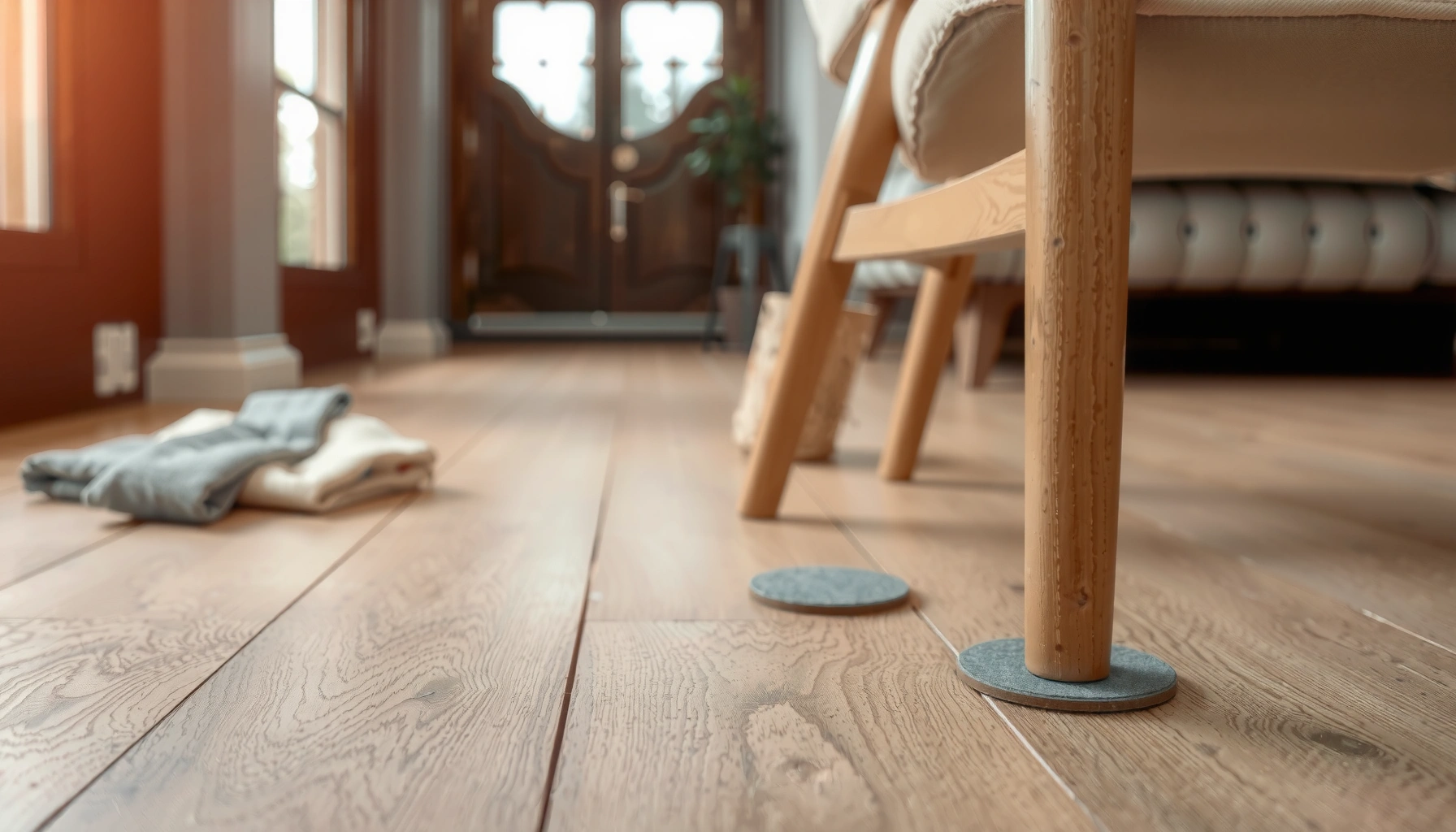
To prevent scratches, treat furniture contact points as the “wear interface.” Felt pads, glides, and floor-friendly casters reduce point loading and prevent grit from being dragged under chairs and tables.
Furniture abrasion commonly comes from sliding contact and concentrated load at small contact points rather than from the cork itself. [ADD: source for furniture abrasion mechanisms]
Soft, sacrificial protectors (felt or rubber glides) reduce shear stress at the contact point compared with bare leg bottoms. [ADD: source for protector material performance]
Using proper casters designed for hard floors reduces the risk of gouging and surface haze from wheel chatter. [ADD: source for caster hard-floor recommendations]
What to do (step-by-step)
– Add felt pads to chair, table, and cabinet legs; replace them when they wear thin or get rough. Worn felt can become an abrasive surface itself.
– Use glides on heavier furniture and swap to wider/softer pads for rocking or sliding pieces. Wider contact distributes load across a larger cork area, lowering micro-grooving.
– For rolling items (stools, office chairs) choose floor-friendly casters designed for hard floors and keep them in good condition.
[ADD: specific caster type/model recommended by your floor manufacturer]
Also, don’t overlook the “small” items: plant stands, rolling laundry carts, and even certain game tables can create sharp scratch tracks if their bases accumulate grit.
Fast pros/cons: protector types (for cork)
| Option | Pros for cork | Cons / watch-outs |
|---|---|---|
| Felt pads | Good shear reduction for light-to-medium furniture; easy to replace. | Can harden/roughen when loaded with grit; needs periodic replacement. |
| Hard rubber glides | Durable under heavier loads; maintains shape longer than thin felt. | If too small or too rigid, concentrated pressure can still scuff finishes. |
| Floor-friendly casters | Helps chairs roll without scraping; reduces chatter on the finish. | Worn wheels or wrong caster material can still track abrasion. |
Choose the right cleaning routine (and avoid abrasives)
The right cleaner and method prevent finish damage that makes future scratches more likely. Use products matched to your cork’s finish type (sealed/waxed/oiled) and avoid abrasive pads that dull or erode the protective layer.
Abrasion from cleaning tools can compound wear from daily foot traffic, especially when the finish is already thin. [ADD: source for cleaning-media abrasion on finishes]
Cleaning chemicals that are incompatible with a sealant can weaken adhesion and increase vulnerability to scuffs. [ADD: source for finish-compatibility guidance]
Prompt spill cleanup prevents sticky residues from trapping grit, which then acts like ground-in sand. [ADD: source for grit-trapping effects from residues]
What to do
– Use a cleaner your cork manufacturer recommends for the finish you have (waxed, sealed, oiled, etc.).
[ADD: exact product/cleaner guidance from your floor’s care sheet]
– Skip abrasive scrubbers, “magic eraser”-type pads, and harsh scouring powders—they can dull or damage the surface layer.
– Wipe up spills promptly so grit-damp residue doesn’t become “sandpaper” on the floor.
Where people go wrong
Even careful homeowners sometimes use the “right tool for tile” on cork. The problem isn’t just the cleaner—it’s also friction. Scrubbing increases contact pressure and accelerates surface wear.
Keep the protective layer working
Most cork scratch resistance depends on the protective layer—so maintenance is not optional. If the finish is worn or the sealant is overdue for refresh, abrasion that would have “hit the coating” instead reaches the cork more easily.
Finish wear reduces surface hardness/film integrity, making micro-scratches more likely to show. [ADD: source for film integrity and surface wear behavior]
Manufacturer maintenance schedules exist to refresh protective coatings before traffic damage becomes cumulative. [ADD: source for typical maintenance/renewal rationale]
Over-applying surface products can create a tacky or dirt-attracting layer, increasing grit abrasion. [ADD: source for tackiness/dirt-collection risks]
What to do
– Follow the manufacturer’s maintenance schedule for re-coating/re-sealing or refresh products—if your cork flooring system uses them.
– Don’t over-finish: applying too much product (or the wrong type) can create a tacky surface that attracts dirt and increases abrasion.
– Address high-traffic dulling early rather than waiting for deeper wear.
[ADD: manufacturer guidance on when to refinish]
Practical “timing” advice that’s still manufacturer-aligned
If your floor begins to look uniformly hazy in one lane (often where shoes pass), that’s a sign the film is thinning. In that moment, you’ll usually get better results from a maintenance refresh than from trying to “scrub the haze away.”
Pets, shoes, and daily habits that matter
Scratch prevention isn’t only about tools—it’s also about how pressure and abrasive grit get applied. Trim nails, manage shoe traffic, and change the way you move items so you lift instead of slide.
Pet nails can create repeated micro-abrasion, especially when nails are long or repeatedly contacted at the same spots. [ADD: source for nail abrasion impacts on flooring]
Footwear transports grit; indoor footwear policies reduce the abrasive load on flooring surfaces. [ADD: source for walk-in soil contribution]
Sliding furniture increases shear stress at the contact point and accelerates finish wear compared with lifting. [ADD: source for sliding vs lifting abrasion differences]
Daily habits that pay off
– Keep pets’ nails trimmed—long nails can cause repeated micro-scratches even on “tough” coatings.
– Require indoor slippers or socks in scratch-prone areas to reduce grit and pressure shoes bring in.
– Move objects by lifting when possible—sliding is where scratches accelerate.
If you have a busy household, aim for “friction control” everywhere: at the door, under chairs, and wherever people drag items during cleaning or reorganizing.
What can go wrong (and when to adjust)
If you still see scratches after improving mats and pads, the cause is often a failure in compatibility or a “new abrasive” introduced by maintenance. Check protector condition, confirm your cleaner matches your finish, and be cautious with rugs and unconventional cleaning tools.
Worn felt pads can become abrasive, creating scratch patterns that mimic “floor defects.” [ADD: source for felt pad wear/abrasion behavior]
Using the wrong cleaner for an oil/wax vs sealed finish can change surface properties and increase scuff visibility. [ADD: source for finish-type compatibility]
Steam or aggressive cleaning methods can be restricted by manufacturers for certain cork floor systems due to finish/seam risk. [ADD: source for steam policy]
– Felt pads that aren’t replaced can turn from soft to abrasive; if you notice a consistent scratch pattern under furniture, check pad condition first.
– The wrong cleaner can weaken a seal or finish; even a small incompatibility can increase vulnerability. Use the care instructions for your exact flooring type.
[ADD: where to find your floor’s maintenance spec]
– Unfinished cork or oil/wax systems differ: assuming “sealed-floor rules” apply to oil/wax can backfire—maintenance products and methods differ.
– For rugs: avoid grippers with rough backing unless they’re designed to be cork-safe; some can trap grit underneath and cause localized wear.
[ADD: rug-pad guidance from your manufacturer]
Verdict / tip: focus on grit control and soft contact first
If you want the biggest scratch reduction with the least hassle, prioritize entry mats + regular soft cleaning, then fit felt pads/glides on furniture and use appropriate casters for rolling items. The trade-off is real: you’ll still see wear over time in heavy-traffic zones, and pad/mat replacement becomes part of your upkeep routine.
Who should consider skipping deeper “floor system” changes and sticking to the basics?
– Households unwilling to maintain pads/mats.
– Homes where you can’t control shoe traffic or repeated sand/grit entry.
– Anyone who can’t follow a manufacturer schedule for finish refreshes.
Quick checklist (save this)
– [ ] Entry mats at every exterior door (replace worn mats)
– [ ] Felt pads on furniture legs (replace when worn/rough)
– [ ] Floor-safe casters/glides for rolling items
– [ ] Sweep/vacuum with a soft tool—no abrasive scrubbing
– [ ] Manufacturer-approved cleaner and maintenance products only
– [ ] Trim pet nails; limit shoe wear indoors
– [ ] Address dull/high-traffic areas early
FAQ
1) Are cork floors scratch-proof?
No—cork is durable, but it can scratch when grit or sharp edges repeatedly contact the surface.
2) What’s the most common cause of scratches on cork floors?
Most visible scratching is driven by abrasive particles (sand/dust) and sliding contact (furniture movement, worn pads, rough rug backing).
3) Can I use a steam mop to clean cork floors?
You should only use steam if your specific cork flooring manufacturer explicitly allows it. Otherwise, it can risk damaging the finish or swelling seams. [ADD: your floor manufacturer’s steam-mop policy]
4) Should I refinish cork floors if scratches appear?
Sometimes—especially if scratches break through the protective layer. Follow the manufacturer’s re-coating/re-sealing guidance to avoid making the situation worse. [ADD: source/manufacturer recommendation for your finish type]
Sources
– [ADD: manufacturer care guide/spec sheet for your specific cork floor finish type—sealed vs oiled vs waxed, including approved cleaning methods]
– [ADD: manufacturer documentation for furniture glides/caster recommendations, if provided]
– [ADD: official care instructions from the cork flooring manufacturer regarding abrasive cleaners, steam cleaning, and maintenance/renewal products]
Scratches on cork floors are rarely “mystery damage.” When you control grit at entry, soften and distribute contact under furniture, and keep the protective finish maintained per the manufacturer’s schedule, you dramatically reduce both visible scratches and the dull, worn look that comes from micro-abrasion.
Frequently Asked Questions
How can I prevent scratches on cork floors from everyday foot traffic?
Place felt pads or soft glides on chair legs, tables, and any furniture that moves, and replace them when they wear down. Use entry mats at doors to catch grit and sand, since abrasive particles are the most common cause of cork floor scratches. For moving through the space, consider area rugs in high-traffic zones to reduce contact and scuffing.
What’s the best way to protect cork floors from pet claws and sharp objects?
Keep pet nails trimmed and use claw covers (soft caps) to reduce point impact on the surface. For heavy traffic or scratch-prone areas, add rugs or durable mats where pets spend time. When moving items like furniture, lift and carry rather than dragging, and avoid dropping keys, tools, or sharp items onto the cork.
Why does cork flooring scratch more easily than other surfaces, and how do I reduce it?
Cork is naturally softer and more flexible than many hard flooring materials, so it can mark if grit, grit-tracking, or sharp pressure hits the finish. The best prevention is controlling abrasives with matting, keeping floor protection products up to date (like the right cork floor sealant/wax if applicable), and maintaining a clean surface with a gentle mop. Avoid harsh cleaners that can dull the protective layer, making cork more prone to visible scratches.
How do I stop scratches when cleaning cork floors?
Sweep or vacuum using a soft brush attachment to remove dust and sand—never use metal bristles that can grind grit into the cork. Use a damp, well-wrung microfiber mop and pH-neutral cleaner specifically recommended for cork; excessive moisture or abrasive scrubbing can damage the finish. If you notice small scuffs, address them promptly with a cork floor–approved repair or refinishing product to restore the protective layer before scratches spread.
Which floor pads and doormats work best to prevent scuff marks on cork floors?
Choose felt pads with a strong adhesive backing for furniture, and opt for low-profile, non-rubber backing mats that won’t trap moisture; always test a small area first. For entryways, use a high-quality mat that captures dirt without rough backing, and replace it when fibers wear down. When selecting protective pads, avoid hard plastic, unprotected rubber, or overly tacky coatings that can leave marks or discolor cork.
📅 Last Updated: October 11, 2026 | Topic: How to prevent scratches on cork floors? | Content verified for accuracy and freshness.
References
- Google Scholar Google Scholar
https://scholar.google.com/scholar?q=prevent+scratches+on+cork+flooring - Google Scholar Google Scholar
https://scholar.google.com/scholar?q=cork+floor+scratch+resistance+abrasion+wear - Google Scholar Google Scholar
https://scholar.google.com/scholar?q=cork+floor+finish+coatings+maintenance+abrasion - Cork
https://en.wikipedia.org/wiki/Cork - https://en.wikipedia.org/wiki/Flooring
- https://www.britannica.com/science/cork
- Final Rule to Update General Industry Walking-Working Surfaces and Fall Protection Standards | Oc…
https://www.osha.gov/walking-working-surfaces - Falls in the Workplace | Falls | CDC
https://www.cdc.gov/niosh/topics/falls/ - https://www.cdc.gov/homeandrecreationalsafety/falls/index.html
- https://www.cdc.gov/niosh/topics/whatsnew/nhomestuff.html