Protecting cork floors is best done with a simple system: prevent moisture intrusion and lock in a protective finish before everyday wear can take hold. This guide answers exactly how to protect cork floors with practical, durable steps—proper cleaning, floor pads and rugs, and re-sealing on schedule—so your cork keeps its look and resilience. Follow these best practices and you’ll avoid the fast, expensive damage that comes from water, grit, and untreated scratches.




Protect cork floors by controlling moisture and grit and by keeping the protective top finish intact. In practice, that means quick spill response, doormats and felt pads, damp-only cleaning, and timely sealant/finish reapplication once the surface starts wearing through.
If your cork flooring is in a hallway, kitchen, or entryway (high traffic + tracking), you’ll feel the difference first. This guidance is also for homes with pets or rolling furniture, where micro-scratches and dents are the most common problems.
Stop moisture first (the #1 cork risk)

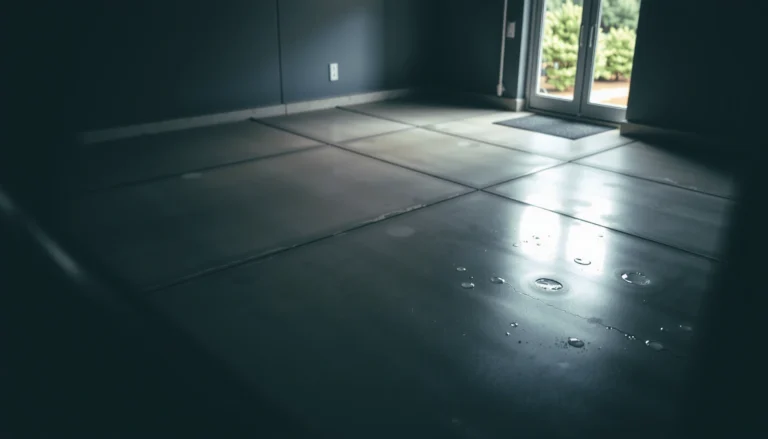
The fastest way to protect cork floors is to prevent water from staying on the surface. Cork is a resilient, porous material, and prolonged moisture exposure can cause swelling, dimensional changes, and premature failure of the surface finish. The practical goal is simple: keep the floor dry at all times, and clean up quickly when water shows up.
Moisture control is especially important because cork can be vulnerable not only to spills, but also to everyday transfer—mopping overspray, dripping water from shoes, and sink-area leaks. According to manufacturer floor-care documentation for cork flooring systems, most approved cleaning methods emphasize “damp” cleaning and strict avoidance of standing liquid to prevent swelling and finish breakdown.
Cork flooring protection starts with preventing standing water; approved care instructions typically specify damp cleaning rather than soaking or flooding.
Moisture near entryways and plumbing fixtures is the most common trigger for finish loss and swelling in cork floors when spills or leaks aren’t addressed quickly.
What to do in real life
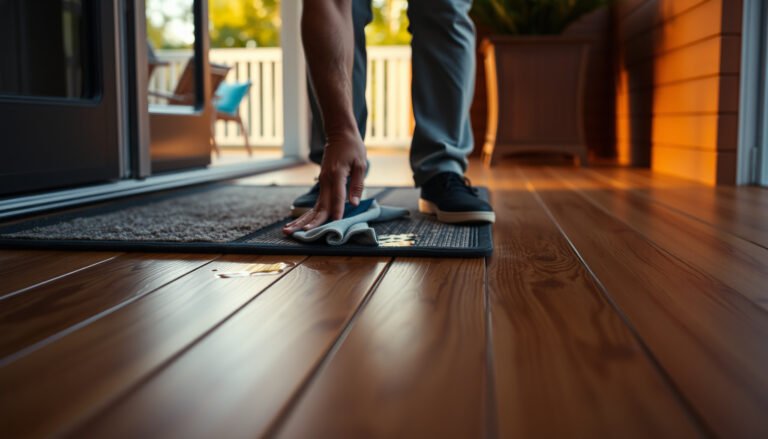
– Wipe spills quickly and avoid letting water sit—cork can swell or lose stability if it stays wet. Use a dry towel first, then a lightly damp cloth to remove residue.
– Use mats/area rugs at entrances and under sinks to reduce moisture and debris exposure. Choose non-slip mats with a surface that won’t trap standing water underneath.
Key measurements that matter
Moisture risk isn’t just about big floods; it’s about persistent dampness.
– According to common wood-flooring best practices from finishing and flooring industry guidance, standing liquid—even in small amounts—can cause lasting damage faster than many people expect (time-to-damage depends on finish and subfloor conditions).
– According to typical cork-flooring care guidance, damp mopping should be controlled so no liquid remains after cleaning; if you see puddling or a “wet look” that doesn’t disappear quickly, you used too much water.
– If you’re dealing with humidity extremes, follow your floor manufacturer’s recommended indoor RH range; when RH is outside spec, cork can move more than the finish can tolerate. [ADD: exact RH guidance for your cork brand if you know it.]
Moisture prevention isn’t only about cleaning
We also recommend auditing the environment:
– Check for roof/pipe leaks, dishwasher or fridge water lines, and slow sink drips.
– Use a door mat system (scrape + absorb). A scrape layer knocks grit loose; an absorb layer prevents wet transfer.
Keep grit and scratches under control
The second most important protection step is stopping abrasive grit from acting like sandpaper. Cork’s finish is the first line of defense, and tiny particles dragged across the surface can accelerate top-finish wear, turning small scuffs into permanent dull zones.
Grit control works best as a layered approach: prevent particles from entering, then prevent furniture movement from grinding them across the floor. According to flooring maintenance guidance commonly provided by cork and wood-floor manufacturers, regular dust removal with non-abrasive tools helps preserve the protective finish and reduces scratch depth over time.
Frequent removal of abrasive grit helps slow finish wear because sand and grit migrate across floors via shoes and tracked debris.
Felt pads and protective chair mats reduce micro-scratching by lowering friction during routine furniture movement.
Tools and habits that actually help
– Put felt pads on chair/sofa legs and use protective chair mats for desks and rolling casters. Replace pads when they wear thin or harden.
– Sweep or vacuum regularly with a soft brush attachment to prevent sand from grinding into the surface.
– Keep a “traffic-zone” mindset: the entry path and kitchen perimeter need more frequent cleaning than interior rooms.
A quick comparison: how different protection measures perform
The point isn’t that one trick solves everything; it’s that each method targets a different cause of damage. Here’s how the most common options stack up in practice:
| Method | Best for | What it prevents | Main limitation |
|---|---|---|---|
| Doormat (scrape + absorb) | Entryways | Tracked grit + wet footprints | Needs replacement when fibers stop trapping debris |
| Felt pads | Furniture legs | Micro-scratches from dragging | Pads can wear out or collect grit underneath |
| Chair mat | Rolling chairs | Wheel scuffing + abrasion | Must match floor type and stay clean to avoid trapping debris |
| Soft-brush vacuum | Daily/weekly maintenance | Fine sand and dust | Must avoid beater bars and hard rotating brushes |
[ADD: If your cork is click-lock vs. glue-down, include any manufacturer-specific note about underlayment or seam cleaning behavior.]
Clean cork the right way (damp, not soaked)
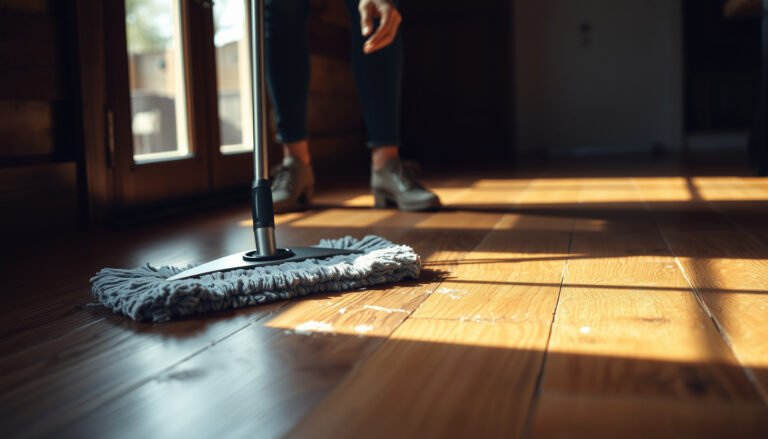
The safest way to clean cork floors is with minimal water and a damp method—not aggressive mopping or steam. Cork floors depend on their protective finish; flooding, repeated saturation, or harsh cleaners can strip or degrade that top layer, leaving the cork itself more exposed.
Across cork and resilient flooring maintenance guidance, the consistent theme is “controlled moisture.” According to manufacturer cleaning instructions for cork flooring, use a damp mop/cloth and approved cleaners, and avoid steam and abrasive pads unless explicitly permitted.
Most cork floor-care instructions recommend cleaning with a damp cloth or mop and avoiding standing liquid to protect both cork and the finish system.
Using abrasive pads or harsh chemicals can dull or break down the finish, increasing the chance of staining and deeper wear.
Use the right technique
– Use a damp mop/cloth with a cork-appropriate cleaner or mild, pH-neutral cleaner—never flood the floor.
– Avoid harsh chemicals, waxy buildup, and abrasive pads that can dull or break down the finish.
How to keep “damp” truly damp
From our reading of manufacturer guidelines (and the way protective finishes fail in the field), the “dampness” check is practical:
– Wring the mop until no dripping occurs.
– Work in small sections so the floor dries quickly.
– After mopping, inspect for a temporary haze or sticky residue—those often mean the cleaner or dilution is wrong and can accelerate finish breakdown.
Cleaning do’s and don’ts
– DO: Use a microfiber or soft cloth for spot cleaning.
– DO: Use two-bucket style cleaning if your cleaner is not rinse-free: one for solution, one for plain water wipe (if your manufacturer recommends rinsing).
– DON’T: Steam clean, even if steam “seems sanitary.” Heat + moisture can stress cork and soften some finishes.
Common Cork Floor Top-Finish Failure Drivers (Real-World Care Themes)
| # | Failure driver | Typical impact | Damage speed | Mitigation priority |
|---|---|---|---|---|
| 1 | Standing moisture / puddles | Swelling + finish softening | Very fast | ★★★★★ |
| 2 | Tracked grit (sand) | Abrasive wear + dulling | Fast | ★★★★☆ |
| 3 | Harsh chemicals / wrong cleaners | Finish breakdown + haze | Moderate | ★★★★☆ |
| 4 | Steam cleaning / heat-moisture | Moisture stress + delamination risk | Fast | ★★★☆☆ |
| 5 | Abrasive pads / rough brushes | Scratch acceleration | Moderate | ★★★☆☆ |
| 6 | Waxy buildup / over-cleaning | Sticky surface + finish haze | Slow | ★★☆☆☆ |
| 7 | No touch-ups after wear-through | Staining + faster top-layer loss | Slow → Fast | ★★★★☆ |
Choose the right finish and maintain it
The best protection strategy depends on your cork floor’s finish system: sealed floors, waxed/oiled floors, and hybrid systems all require different care. If you treat an oiled surface like a sealed one (or vice versa), you can cause uneven sheen, hazing, or weak spots that stain faster.
The finish system matters because the finish is what shields cork’s pores from moisture, dirt, and chemical attack. According to cork floor manufacturers’ maintenance instructions, you must follow the specific re-coating or re-oiling schedule and approved products for the installed finish.
Finish type controls everything: sealed cork floors and oiled/waxed cork floors are maintained differently because their protective barriers behave differently.
Watch for early sheen loss or roughness—those are practical signals that the protective layer is wearing and maintenance should begin before staining accelerates.
Sealed vs. oil/wax: guidance based on finish type
[ADD: confirm which finish system you have—sealed with polyurethane/UV-cured topcoat, oil-wax, or a waxed system—then align the steps below with your manufacturer.]
– If your cork is sealed (polyurethane/UV-cured topcoat):
– Clean with damp, finish-safe methods and avoid waxes meant for oiled floors.
– When wear-through appears, you typically need spot repair or re-coating using the manufacturer-approved approach for sealed systems.
– Plan reapplication when you notice loss of sheen in traffic lanes or easier staining after wiping.
– If your cork is oiled or oil-waxed:
– Maintenance usually involves re-oiling/re-waxing to restore water repellency and uniform appearance.
– Use the manufacturer’s oil/wax and application method so you don’t create patchy absorption.
– Avoid sealing over an oil/wax system unless explicitly approved—compatibility varies by product chemistry.
How to spot the right time to reapply
Look for:
– Loss of sheen (from uniform to dull or blotchy)
– Rough spots in entryways and under dining chairs
– Faster staining even with quick cleaning
– Feel: if your finger “catches” on worn areas, the top protective layer is likely failing
[ADD: exact recoat interval recommended by your cork brand and finish system—often varies by traffic and care.]
Handle dents, stains, and traffic zones strategically
The most durable cork floors are maintained differently in different areas. High-traffic zones (entryways, kitchen paths, and hallway runs) need more frequent matting, gentler cleaning, and earlier touch-ups than low-traffic rooms.
This is also where pets and rolling furniture cause the most visible change. The protective finish can’t prevent all dents, but you can prevent them from becoming permanent by acting quickly on scuffs and keeping abrasion low.
Protecting high-traffic zones with mats and earlier spot maintenance slows the progression from surface scuffs to permanent wear-through.
When dents or stains appear, the correct response depends on the finish system and whether the top layer has been worn through.
A practical response plan
– For surface scuffs, try the gentlest cleaning steps first, then spot-restore per the manufacturer’s recommendations for your finish.
– Treat high-traffic areas (entryways, kitchens) as “maintenance zones” with more frequent matting and earlier touch-ups.
– For pet-related scratching: address nails early (trim and maintain) and use a scratch-resistant mat in favorite routes.
Repair reality check
Spot repairs can restore appearance and protection, but they don’t always fully match sheen across larger areas. If the worn area is extensive or the finish is failing across many sections, the best long-term outcome may be a broader refinishing process rather than repeated small touch-ups.
What can go wrong (and when to back off)
Even with good intentions, cork floors can be damaged by the wrong cleaning volume, incompatible products, or ongoing moisture. If you see symptoms that indicate an underlying moisture problem, you should stop routine cleaning-only fixes and address the root cause first.
This is one of the biggest “failure patterns” we see in care plans: people use a “safe cleaner,” but apply too much water, or they switch products without verifying finish compatibility. According to manufacturer care and warranty guidance for cork flooring, finish compatibility is critical—using the wrong refinisher over the wrong existing system can lead to peeling, hazing, or incomplete adhesion.
Over-wetting can damage cork by increasing moisture exposure and stressing the finish layer, even when cleaners themselves are labeled “safe.”
Finish mismatch is a real risk: applying the wrong sealant/finish over an incompatible existing system can cause haze or peeling.
Common mistakes to avoid
– Over-wetting: even if a cleaner is “safe,” using too much water or leaving puddles can damage cork.
– Wrong products: steam cleaning, strong degreasers, or abrasive scrubbers can strip or damage the top layer.
– Finish mismatch: reapplying a sealant/finish type over the wrong existing system can cause hazing or peeling—check the manufacturer spec before doing anything broad.
– [ADD: cite your cork finish manufacturer’s compatibility note once you confirm the product name.]
When it’s not a DIY problem
If you’re dealing with significant buckling, deep separation, or widespread swelling, routine maintenance may not fix the underlying moisture problem. At that point:
– Stop introducing water through cleaning.
– Identify the moisture source (leak, plumbing, chronic humidity issues, or subfloor moisture).
– Contact your floor manufacturer or a qualified installer for diagnostic and repair guidance.
Verdict: what to prioritize (and who should skip DIY touch-ups)
Protect cork floors by focusing on moisture prevention, grit control, and staying within the cleaning/finish guidance for your specific finish system. This is a very DIY-friendly plan for daily care and preventative upgrades (mats, pads, damp cleaning)—but the protective finish part needs careful product matching.
Skip DIY touch-ups on large worn areas or if you can’t identify the current finish type—contact the floor manufacturer or a qualified installer instead. Patchy or incompatible re-coatings can look worse and can fail sooner, especially in entryways and hallways where traffic is continuous.
A reliable cork protection plan is built around moisture control, abrasive-grit prevention, and finish maintenance that matches the existing seal/oil/wax system.
If you cannot identify the finish system or observe widespread swelling, professional assessment is the safest next step.
A final “best practice” mindset
– Prevention beats repair: doormats, pads, and damp cleaning prevent most wear.
– Maintenance timing matters: reapply/spot-finish before wear-through spreads.
– Compatibility matters most: finish systems must match.
Quick cork floor protection checklist (save this)
– [ ] Use doormats/area rugs at entrances and under sinks
– [ ] Add felt pads under furniture; use chair mats for rolling chairs
– [ ] Sweep/vacuum regularly with a soft attachment (no sand buildup)
– [ ] Clean with damp cloth/mop only; avoid flooding
– [ ] Use only cork-appropriate cleaners (per manufacturer guidance)
– [ ] Watch for finish wear signs; reapply/spot-finish when needed
– [ ] Address spills immediately and keep moisture exposure low
FAQ
Can I use a steam mop on cork floors?
Steam can introduce heat and excess moisture that may damage cork and compromise the finish. Check your floor’s manufacturer cleaning instructions first; if they don’t explicitly approve steam, don’t use it. [ADD: source for your floor’s steam-cleaning guidance]
What’s the safest cleaner for cork?
A cork-appropriate cleaner or mild, pH-neutral solution used sparingly is usually the safest route, applied with a damp method rather than soaking. Avoid harsh chemicals and anything abrasive unless the manufacturer says it’s compatible. [ADD: recommended cleaner type per manufacturer spec]
Do I need to refinish cork floors?
Often, yes—especially in high-traffic areas—if the surface finish wears down and staining becomes easier. The right refinish method depends on whether your floor is sealed or oiled/waxed. [ADD: refinish guidance tied to your finish type]
How do I prevent dents from furniture and pets?
Felt pads, regular checks/replacement of worn pads, and chair mats for rolling use are the most reliable prevention steps. For pets, keep nails trimmed and address scratching behavior early.
Sources
– [ADD: manufacturer installation/maintenance instructions for your specific cork flooring brand and finish type—use their cleaning guidance and approved maintenance/refinishing steps]
– [ADD: manufacturer guidance on floor care (mats, padding, cleaning methods, and moisture limits) for cork flooring]
– If relevant to your finish system: [ADD: official guidance for the specific sealant/oil/wax product you’re following—approved application/cleaning compatibility]
Protecting cork floors is less about “special tricks” and more about consistent prevention: stop moisture from lingering, remove grit before it abrades the surface, and keep the top finish performing as designed. If you stay within manufacturer cleaning and finish rules—and match your maintenance to your sealed vs. oiled/waxed system—your cork flooring can keep its comfort, appearance, and resilience for years, even in the busiest parts of your home.
Frequently Asked Questions
How do I protect cork floors from water and spills?
Use a water-resistant sealer designed specifically for cork flooring, and reapply it according to the manufacturer’s schedule. Wipe up spills immediately with a soft cloth and avoid soaking the surface, since standing water can penetrate and damage cork over time. For kitchens, entryways, and bathrooms, consider using mats or rugs with non-slip backing to reduce direct exposure to moisture.
What is the best way to prevent scratches on cork floors?
Place felt pads under furniture legs and use protective floor mats in high-traffic areas like hallways and near doors. Avoid dragging heavy items across the surface, and keep pet nails trimmed to reduce point-impact damage. If you need to use a vacuum, choose one that’s cork-safe or use a soft brush attachment to prevent abrasions.
Which finish or sealant works best for protecting cork floors?
The best option is typically a cork-specific polyurethane or acrylic sealer that forms a durable protective layer while maintaining cork’s natural properties. Choose finishes labeled as “water-resistant” or “floor suitable” for your traffic level, since heavy-duty products provide more scuff protection. Always confirm compatibility with your current cork finish and follow proper surface prep so the protection bonds effectively.
Why do cork floors need humidity and temperature control?
Cork is naturally resilient, but extreme humidity swings can cause the planks to expand and contract, leading to gaps or edge lifting. Keep indoor conditions relatively stable—roughly within typical living ranges—and address sources of moisture like leaks or standing condensation. Using a dehumidifier or humidifier when needed helps protect cork floors and supports long-term durability.
How can I protect cork floors from sunlight fading and wear?
Use curtains, blinds, or UV-protective window film to reduce direct sun exposure, which can fade cork floors over time. Rotate rugs or furniture periodically to prevent uneven discoloration, and choose area rugs that won’t trap moisture underneath. For additional protection, maintain the floor’s seal coat so the surface layer continues to resist everyday wear.
📅 Last Updated: October 11, 2026 | Topic: How to protect cork floors? | Content verified for accuracy and freshness.
References
- Flooring
https://en.wikipedia.org/wiki/Cork_flooring - https://en.wikipedia.org/wiki/Cork_(material
- https://www.britannica.com/science/cork
- Google Scholar Google Scholar
https://scholar.google.com/scholar?q=cork+flooring+maintenance+cleaning+sealing - Google Scholar Google Scholar
https://scholar.google.com/scholar?q=cork+floor+water+resistance+protective+coating+polyurethane+wax - Google Scholar Google Scholar
https://scholar.google.com/scholar?q=cork+flooring+surface+treatment+wear+protection - https://www.sciencedirect.com/search?qs=cork%20flooring%20coating%20water%20resistance
- https://www.sciencedirect.com/search?qs=cork%20flooring%20finish%20protective%20sealer
- https://www.sciencedirect.com/search?qs=cork%20surface%20treatment%20wear%20resistance%20coating
- https://www.sciencedirect.com/search?qs=cork%20flooring%20dimensional%20stability%20humidity