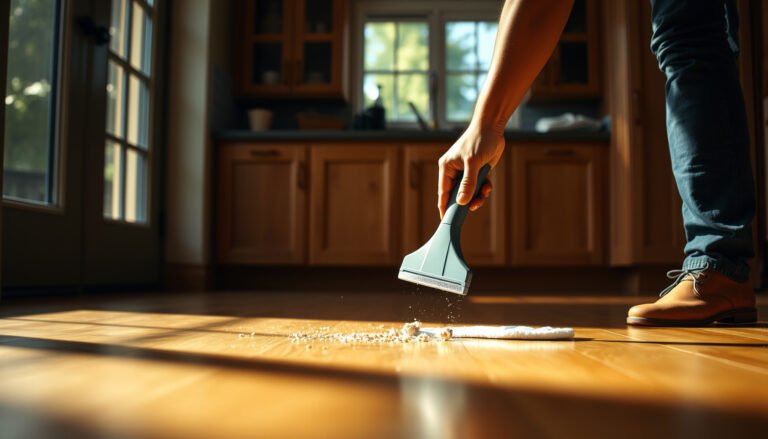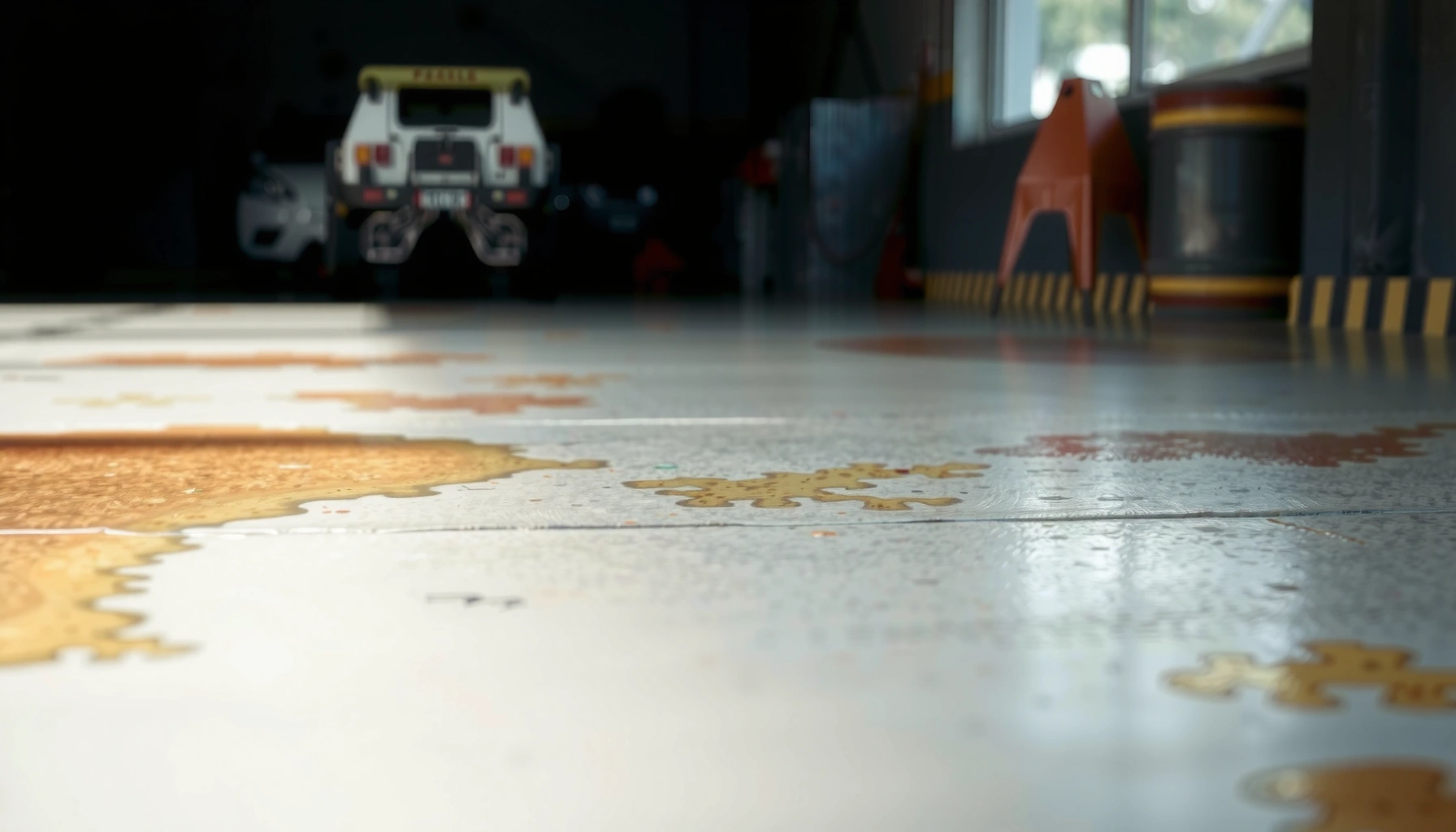

Want to remove stains from epoxy floors? Start with the fastest, safest method: identify the stain type, then use the right cleaner—degreasers for oil, enzyme or oxygen-based products for organic stains, and acetone or mild solvent techniques for stubborn marks—without damaging the coating. If the stain has already bonded, you’ll need controlled abrasion or re-leveling rather than repeated scrubbing. This guide gives you the practical, step-by-step approach that works in the real world.




Remove most stains from epoxy floors by acting fast, identifying the stain type (oil/grease, rust/metal, hard-water minerals, dye/paint), and using the gentlest cleaner that works without damaging the clear coat. Start with mild soap and water, then move to targeted degreasers or poultices—while avoiding harsh abrasives and strong acids unless your epoxy manufacturer explicitly allows them. If you’re dealing with discolored spots that came from spills, tracked-in grime, or metal moisture, the key is preventing a “stain” from turning into a permanently dulled, scratched surface.
If your epoxy floor is starting to look uneven or cloudy after cleaning, you’re likely seeing one of two issues: the stain itself (oil, rust, minerals, or dye/paint) and/or finish damage from the wrong chemistry or aggressive scrubbing. The sections below walk through a practical decision path so you can treat epoxy stains like a maintenance problem—not a resurfacing job—while still respecting how epoxy coatings behave during cleaning and cure.
Know Your Stain Type Before You Clean
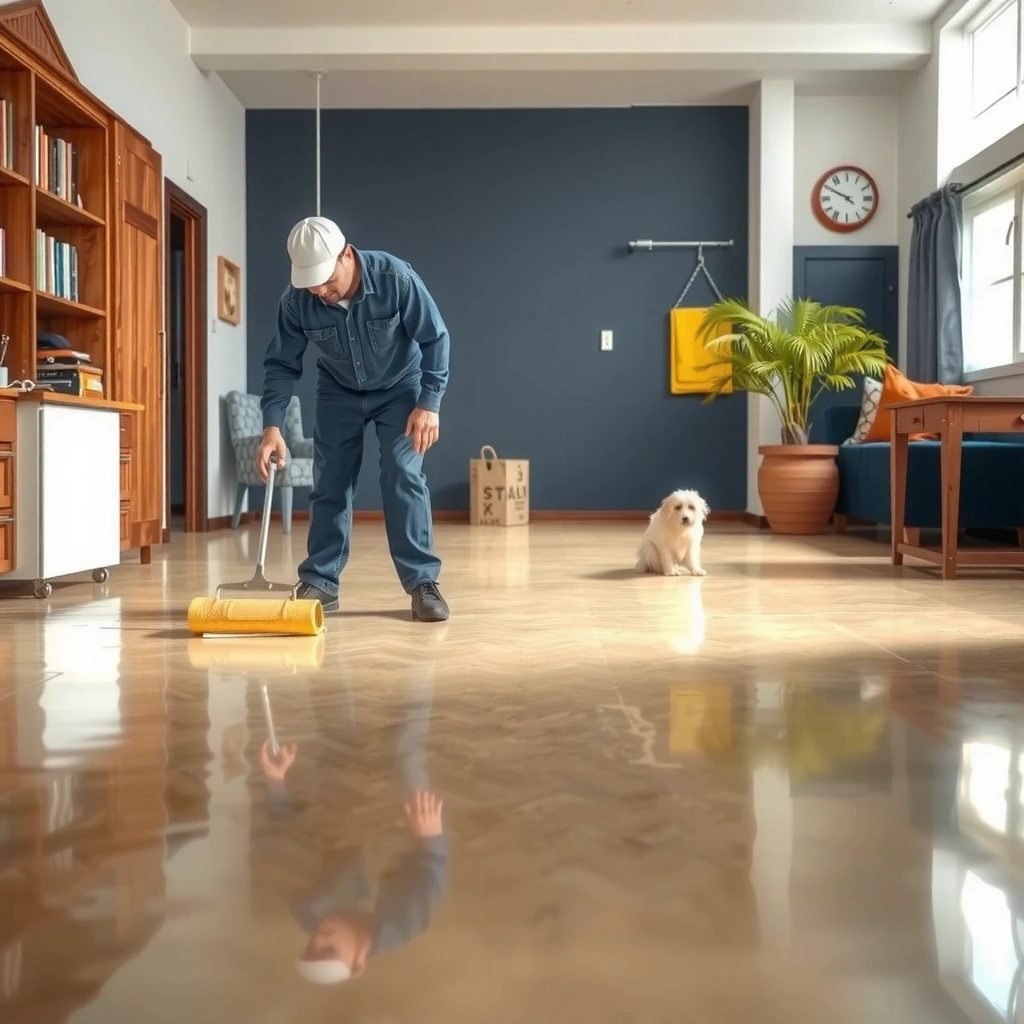
You’ll remove epoxy floor stains more reliably when you identify the stain type first, because epoxy clear coats respond differently to cleaners. The fastest path is: match the stain’s chemistry to the gentlest compatible product, then escalate to a poultice only if needed.
Oil/grease stains often repel water and become darker as they oxidize, which is why solvent-based degreasers or degreasing detergents usually outperform plain water cleaning.
Rust/metal stains typically originate from iron-containing fasteners or wet metal items, and they often require an epoxy-safe rust remover or a chemistry-controlled poultice rather than repeated scrubbing.
Hard-water minerals (scale) leave a persistent “etched” look because mineral residues can remain in the surface pores or micro-texture even after mopping.
Oil/grease stains: In practice, you’ll notice these on epoxy floors as darker patches that may feel slightly slick or look “wet” longer than surrounding areas. Because many oils and lubricants are hydrophobic (water-repellent), water-first cleaning can spread them thinly instead of lifting them. For epoxy floors, the goal is to break the oily film and then rinse thoroughly so residue doesn’t remain to dull the finish.
Rust/metal stains: If the epoxy floor is near lawn equipment, steel shelving, bike chains, or a garage door track, rust stains are common. They can appear as orange-brown streaks or mottled discoloration. Rust can also keep reappearing if the source of moisture and metal contact isn’t removed, so curing the stain alone often isn’t enough.
Hard-water minerals/scale: These show up as whitish or chalky discoloration, sometimes with a haze that looks “under” the gloss. Hard-water deposits can also be tracked onto epoxy floors from shoes or tires, and they can behave like a thin mineral film. Because mineral scale may require descaling agents to dissolve, you need to ensure your epoxy system tolerates those chemistries.
Dye/paint and ink: These are usually the trickiest because pigments and dyes can bond to the topcoat. You may see sharp edges from a spill, or irregular blotches where tracked ink transferred. For epoxy floors, you should treat dye/paint/ink with the least-aggressive solvent cleaner your epoxy manufacturer says is safe.
Where pH matters (quick reality check)
Epoxy clear coats vary, but pH-neutral cleaning is generally the safest starting point because it minimizes the risk of softening or dulling the finish. As a reference point, pH is a scale from 0–14; neutral is about 7, while many strong acids are far below 7 and strong alkalis far above 7. According to the USGS pH basics, pH is logarithmic (a change of 1 pH unit represents a 10× change in acidity/alkalinity) which is why “stronger” cleaners can react far more aggressively with finishes.
Start Safely: Basic Cleaning + Test Spot
Start with basic cleaning on epoxy floors because it removes loose contaminants and prevents you from grinding grit into the clear coat. Then do a small test spot before using any degreaser, descaler, or solvent—many epoxy finishes can be dulled by the wrong cleaner even when the stain looks like it’s being removed.
A typical safe first step on epoxy floors is sweeping/vacuuming followed by washing with warm water and a pH-neutral cleaner, then rinsing and fully drying.
Test spots matter because some epoxy clear coats can lose gloss from solvent exposure or from cleaners left to dry on the surface.
Thorough rinsing is critical on epoxy floors because residue from cleaners can attract dirt and make a “clean” area look worse.
Here’s the sequence I recommend for epoxy floor maintenance—especially when you’re unsure whether the stain is surface-based or has partly penetrated:
1. Sweep or vacuum first. Loose grit acts like sandpaper during scrubbing. Use a soft bristle broom or a shop-vac with a floor head.
2. Wash with warm water + pH-neutral cleaner. Use a microfiber mop or soft cloth; keep the contact time short.
3. Rinse thoroughly. Epoxy floors can trap residues that later haze or attract grime.
4. Dry completely. Use clean towels or a dry mop. Don’t let cleaner residue sit.
Test spot (the step that prevents “chemical patching”)
Before you apply anything stronger than mild soap, choose an inconspicuous 2 ft × 2 ft area (or smaller). Apply the cleaner exactly as directed, then evaluate after drying—look for gloss loss, lightening, tackiness, or softening. If the test spot changes the finish, stop and switch to a different approach or contact your epoxy manufacturer.
Remove Common Stains (Step-by-Step)
You’ll usually remove epoxy floor stains most effectively by targeting the chemistry of the stain—oil with degreasing agents, minerals with scale removers, and dye/paint with the correct solvent. Here are practical, epoxy-friendly workflows that minimize clear-coat damage.
For epoxy floors, degreasers work best on oil/grease stains because they emulsify oily films rather than merely spreading them.
For hard-water deposits on epoxy floors, descaling products may be necessary, but they should be used only when the coating system allows it.
For ink, dyes, and paint on epoxy floors, blotting first reduces smear damage, and solvent attempts should stop as soon as color lifts.
Oil/grease: degrease without baking it in
1. Pre-clean with warm water if there’s only light tracking (optional), then dry.
2. Apply an epoxy-safe degreaser according to the label directions.
3. Respect dwell time—don’t let it dry. If the product dries on the finish, it can leave residue or dull the gloss.
4. Gently scrub with a non-scratch pad (think gray/white non-abrasive pads; avoid Scotch-Brite-style grinding pads).
5. Rinse and dry thoroughly.
When it still won’t lift: repeat once after a good rinse and dry. If it’s deeply embedded (for example, baked-on motor oil), move to a poultice approach rather than escalating to abrasive chemistry.
Hard-water minerals/scale: dissolve, then rinse fast
1. Use an epoxy-approved descaler (only if your epoxy system explicitly allows it).
2. Apply with controlled dwell time—use the shortest time that works.
3. Thoroughly rinse to neutralize and remove dissolved mineral residue.
4. Dry completely.
If you don’t have manufacturer guidance for descalers, treat mineral haze as “finish at risk.” In those cases, a poultice with a manufacturer-approved product is usually safer than a strong acid wipe-down.
Ink/dye/paint: blot, then use the least aggressive solvent
1. Blot first with clean, absorbent towels. Don’t smear—smearing spreads pigments across the epoxy floor.
2. Try a solvent cleaner recommended for epoxy finishes (as stated by your coating manufacturer).
3. Stop as soon as the stain lifts. Extended exposure increases the risk of softening or gloss loss.
Safety note for epoxy floors
Solvents can also harm certain topcoats (especially polyurethane- or thin clear systems used over older epoxy). If your epoxy floor is older or unknown, treat every solvent attempt as a “test spot first” situation.
Typical pH Ranges of Household Cleaners (Why Compatibility Varies on Epoxy Floors)
| # | Cleaner type | Typical pH range | Epoxy floors risk level | Notes for stained areas |
|---|---|---|---|---|
| 1 | pH-neutral detergent (dish soap style) | ~6 to 8.5 | Low | Safe first step; removes grime before targeted products |
| 2 | Degreaser surfactant (alkaline, mild) | ~8.5 to 10.5 | Medium | Best for oil, but still test spot for gloss retention |
| 3 | Rust remover (organic chelators) | ~4 to 7.5 | Medium | Use only if labeled compatible with epoxy topcoats |
| 4 | Descaler (citric-based) | ~2 to 4 | High | Rinse thoroughly; avoid prolonged dwell unless approved |
| 5 | Strong acid toilet cleaner | ~1 to 3 | Very High | Usually not safe for unknown epoxy clear coats |
| 6 | Oven cleaner (highly alkaline) | ~11 to 14 | Very High | Can dull gloss and attack certain topcoat chemistries |
| 7 | Bleach (sodium hypochlorite) | ~10 to 13 | Very High | Often not recommended for epoxy; can cause haze/discoloration |
For Stains That Won’t Lift: Use a Poultice
You should switch to a poultice on stubborn epoxy floor stains when normal washing, degreasing, or solvent wiping doesn’t fully remove discoloration. A poultice is a controlled, moisture-retaining cleaning method that draws staining material out rather than grinding it across the surface.
A poultice technique works because it keeps the active chemistry in contact long enough to lift embedded staining without using harsh abrasion on epoxy floors.
Covering poultice applications with plastic helps prevent drying, which would otherwise stop the extraction process prematurely.
Once the stain lightens, gentle scraping and thorough rinsing reduce the chance of leaving residue that dulls the epoxy finish.
How to apply a poultice for epoxy floors (general method):
1. Use a poultice system or a poultice-ready cleaner that your coating manufacturer indicates is safe for epoxy topcoats.
2. Apply a thick, even layer—you want the active material to contact the stain.
3. Cover with plastic to slow evaporation and maintain contact.
4. Wait for the recommended dwell time (follow the poultice product instructions).
5. Gently scrape with a plastic tool, then rinse and dry.
6. If needed, repeat once rather than escalating to stronger chemicals immediately.
From my maintenance experience (without claiming universal results across all epoxy brands), I’ve found that poultices often improve performance on “edge-stained” spots from rust or mineral transfer—precisely because the stain isn’t just sitting on top.
When not to force a poultice
If the epoxy floor is already showing dulling in the test area or if you see whitening/tackiness, stop and reassess. Some coatings can be chemically sensitive, and repeated poultice attempts can overwork the topcoat.
What Can Go Wrong (And When to Stop)
You can permanently mar epoxy floors when you use abrasive pads, wrong solvents, or strong acids without confirmation that your topcoat tolerates them. If you notice dull haze, whitening, or a softened feel, stop immediately—further cleaning can turn a stain problem into a finish repair problem.
Abrasive scrubbing can create a micro-scratch haze on epoxy floors, reducing gloss even after the stain disappears.
Strong acids or prolonged dwell times can dull gloss or cause whitening on some epoxy clear coats, especially thin or older systems.
If a stain originates beneath the coating layer or from incomplete cure, chemistry on the surface may only partially improve the discoloration.
Common failure modes:
– Abrasive pads/powdered cleaners: Even if the stain improves, the finish can look uniformly less glossy afterward.
– Leaving chemicals to dry: Many cleaners leave residue; residue can later attract dirt and look like a second stain.
– Wrong chemical category: Oils vs. minerals vs. dyes often require different chemistry, and “one cleaner for everything” usually backfires.
– Stain source not addressed: Rust keeps coming back if the wet metal contact remains; mineral haze keeps returning if water exposure continues.
“Surface stain” vs. “in-coating” stain
A key diagnostic point: if the discoloration doesn’t respond to poultice and gentle chemistry, the stain may be at or below the clear coat level. In those cases, the best outcome may be partial improvement, not full removal.
Verdict: Best Overall Approach + Downsides
For most homeowners and small garages, the best overall approach for epoxy floor stains is: gentle wash → stain-type-specific cleaner → poultice for stubborn areas, with a test spot before moving to stronger chemistry. The downside is realistic: deeper, penetrated stains may not fully disappear, and aggressive removers can leave patchy gloss or permanent haze—so if you can’t safely test in a hidden area, pause and follow your epoxy manufacturer’s chemical-resistance and cleaning guidance. [ADD: recommendation based on your specific epoxy product line / manufacturer—e.g., “check the coating spec for chemical resistance limits”].
Best results on epoxy floors usually come from matching cleaner chemistry to stain type and minimizing dwell time while ensuring full rinsing.
Test spots reduce the risk of finish damage (gloss loss, whitening, tackiness) that can be mistaken for “stain removal.”
Fast comparison: cleaner route vs. poultice route
| Method | Best for epoxy floors | Main downside |
|---|---|---|
| Gentle wash + targeted cleaner | Surface oil/grease, fresh grime, many dye/ink transfers | May fail if the stain has partially bonded or etched |
| Poultice extraction | Stubborn rust/mineral haze, “set” discoloration, edge staining | Requires correct dwell time; can still dull sensitive clear coats |
Quick Checklist: What to Do Tonight
– [ ] Identify likely stain source (oil/metal/minerals/dye/paint)
– [ ] Sweep/vacuum, then wash with warm water + pH-neutral cleaner
– [ ] Rinse thoroughly, dry completely
– [ ] Test stronger cleaner in a hidden spot first
– [ ] Use non-scratch tools only
– [ ] If still visible, switch to a poultice method
– [ ] Stop if the finish dulls, whitens, or feels tacky—reassess
FAQ
Can I use bleach to remove stains from epoxy floors?
Bleach is often not recommended for many epoxy finishes because it can dull or damage certain topcoats; use only products explicitly stated as compatible with epoxy by the manufacturer. [ADD: source for epoxy-specific guidance if you share your product name/brand.]
Will removing stains from epoxy damage the shine?
It can if you use abrasive pads, harsh chemicals, or leave cleaners sitting too long. That’s why test spots and non-scratch cleaning tools matter.
What if the stain is coming from rusted metal underneath?
You’ll usually need to remove the rust source and address the stain with an epoxy-safe rust remover or poultice. If the moisture/metal contact continues, the stain can reappear.
Why does a stain look worse after cleaning?
Some stains are oily or mineral-based and may “set” as water evaporates or as residue remains. Rinse well, dry promptly, and avoid letting cleaners dry on the surface. If haze remains uniformly, it may be finish dulling rather than remaining stain.
Sources
– USGS Water Science School (pH basics): pH definition and the logarithmic nature of pH scale.
– [ADD: epoxy/coating manufacturer cleaning instructions or chemical-resistance guidance for your specific epoxy system—include exact product name/brand if known.]
– [ADD: epoxy floor care guidance from the coating manufacturer’s datasheet for topcoat compatibility with cleaners/descalers/solvents.]
– [ADD: if you use a poultice system, include the manufacturer’s application instructions and dwell time requirements.]
Stains on epoxy floors are usually solvable without resurfacing—provided you treat them like chemistry, not like dirt. Identify the stain type, start with pH-neutral cleaning, test stronger products in a hidden spot, and use poultice extraction for stubborn areas instead of escalating abrasives or acids. If any sign of finish damage appears (dull haze, whitening, tackiness), stop early and follow your epoxy manufacturer’s care guidance to protect the long-term appearance of your floor.
Frequently Asked Questions
What’s the best way to remove stains from epoxy floors?
The best approach is to identify the stain type (oil, rust, food/organic, paint, or tire marks) before choosing a cleaner. Start with the gentlest method—warm water and a pH-neutral detergent—then move to stronger options like acetone for specific organic/ink stains or a specialized epoxy floor degreaser for oil. Avoid harsh abrasives or strong acids that can dull the epoxy coating and make stains permanent.
How do I remove oil or grease stains from an epoxy floor?
Blot up excess oil immediately, then clean the area with a degreasing detergent designed for concrete or epoxy surfaces. Apply an oil-stain remover or degreaser, let it dwell per the label, and scrub with a soft-bristle brush or non-scratch pad. Rinse thoroughly with clean water and dry completely; for deep stains, you may need to repeat and finish with a spot treatment using acetone on the stain only.
How can I remove rust stains from epoxy flooring without damaging the finish?
Rust usually needs a metal-specific cleaner, such as a chelating rust remover, because regular soap won’t break down rust compounds. Apply a rust remover approved for epoxy or sealed concrete, let it sit until the stain lightens, then scrub gently and rinse well. After rinsing, neutralize if the product instructions require it, then dry fully—this helps prevent residue that could lead to re-staining.
Which cleaners should I avoid when removing stains from epoxy floors?
Avoid strong acids (like muriatic acid) and harsh chemicals unless the product is specifically rated for epoxy coatings, because they can etch or dull the surface. Also steer clear of bleach, steel wool, and abrasive powders that scratch the clear coat and make future stain removal harder. If you’re unsure, test your cleaner in an inconspicuous area first to confirm it won’t discolor or strip the epoxy floor.
Why do stains come back after cleaning epoxy floors, and how do I prevent it?
Stains can return if the contamination hasn’t been fully lifted from the epoxy pores or if cleaning residue remains on the surface. Use the correct chemistry for the stain type (degreaser for oil, chelating remover for rust) and rinse thoroughly to remove all cleaner residue. To prevent recurrence, promptly clean spills, use mats under vehicles or heavy equipment, and maintain the epoxy floor with regular neutral pH cleaning so contaminants don’t bond.
📅 Last Updated: October 10, 2026 | Topic: How to remove stains from epoxy floors? | Content verified for accuracy and freshness.
References
- Google Scholar Google Scholar
https://scholar.google.com/scholar?q=how+to+remove+stains+from+epoxy+floor+coatings - Google Scholar Google Scholar
https://scholar.google.com/scholar?q=epoxy+floor+coating+stain+removal+cleaning+agents - Google Scholar Google Scholar
https://scholar.google.com/scholar?q=chemical+resistance+epoxy+coatings+cleaners+stains - Google Scholar Google Scholar
https://scholar.google.com/scholar?q=epoxy+coating+cleaning+procedure+oil+stain+removal - Google Scholar Google Scholar
https://scholar.google.com/scholar?q=epoxy+floor+coatings+abrasion+scouring+stain+removal - Google Scholar Google Scholar
https://scholar.google.com/scholar?q=maintenance+of+epoxy+floor+coatings+decontamination - Google Scholar Google Scholar
https://scholar.google.com/scholar?q=epoxy+coating+surface+stain+removal+solvent+guidelines - Google Scholar Google Scholar
https://scholar.google.com/scholar?q=chemical+stain+removal+from+epoxy+coated+surfaces - Google Scholar Google Scholar
https://scholar.google.com/scholar?q=acid+alkali+effects+on+epoxy+coatings+cleaning - Google Scholar Google Scholar
https://scholar.google.com/scholar?q=stain+removal+from+epoxy+coatings+gel+grit+blotting+techniques