
If you’re asking how to remove stains from polished concrete floors, the fastest path is the right cleaner paired with the stain type—acid-based for mineral rings, alkaline degreasers for oil, and gentle enzymatic products for organic marks. This step-by-step guide shows exactly what to do, in what order, and when to stop so you don’t dull the finish or spread the stain. Get the method that delivers the cleanest result with the least risk—starting with the quickest identification check.
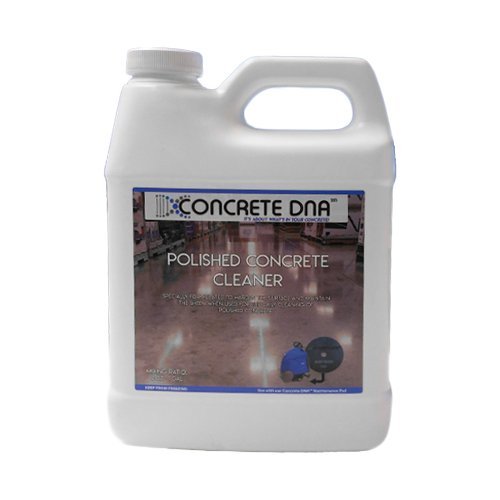



If you want to remove stains from polished concrete without dulling the finish, the safest approach is to (1) identify the stain category, (2) clean gently with a pH-neutral cleaner first, and then (3) use a targeted remover only for that specific chemistry. For polished concrete, avoid harsh abrasives and strong acids/bleach—start mild, use spot tests, and control dwell time so you don’t create blotchy halos.
These steps apply to visible marks from food and beverages, pet accidents, moisture spotting, tracking dirt, and most common driveway/garage contaminants tracked indoors. The process matters because polished concrete relies on a top finish/sealer (or densifier-and-polish system), and aggressive scrubbing or incompatible chemicals can dull the sheen or partially strip the surface—making stains look worse over time.
Identify the stain type (this decides the cleaner)
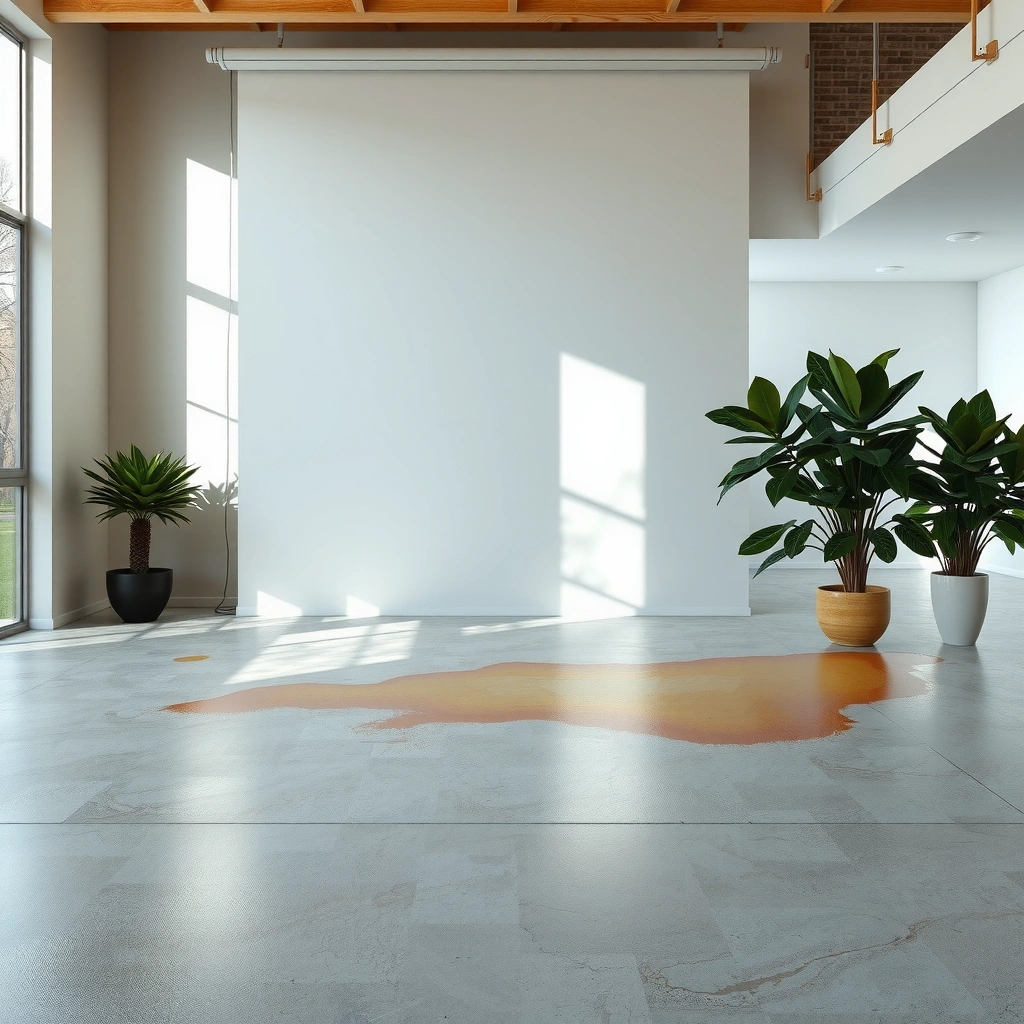
Different stain types need different chemistry, so the right “first guess” saves both time and finish. Your goal is to categorize the stain as oil/grease, rust/mineral, organic, or water/spotting, then choose the mildest compatible cleaner that targets that category.
– Oil/grease usually darkens the concrete and can feel slick or slightly oily compared to surrounding areas.
– Rust/mineral stains often look reddish-orange or brown and may appear to “bleed” outward along moisture paths.
– Organic stains (food, beverage, pet urine, biological residues) often look brown/amber and can deepen over time if residues remain.
– Water-based spots or moisture marks can look light, cloudy, or “halo-like,” and may be more visible after the area dries.
Before you apply anything, confirm your category with a careful, small spot test. Polished concrete can have variable sealer thickness, and even the same stain can react differently depending on whether the stain penetrated.
“Polished concrete surface appearance is strongly affected by what you apply and how long it contacts the surface; controlled dwell time helps prevent uneven halos.”
“A pH-neutral cleaner is typically used as the first step to remove general soils without increasing etching risk to concrete sealers.”
“Spot-testing removes uncertainty when sheen and sealer condition vary across a polished floor.”
Stain “quick ID” signals you can trust
Here are field-ready observations you can use immediately:
– Oily/greasy tracking: darker patch with a muted sheen shift; sometimes fingerprints leave less-clean zones because oily residue repels water.
– Rust/mineral bleed: rusty streaking near bolts, metal furniture legs, or damp baseboards; color often looks warmer (orange) than typical dirt.
– Organic spills: can smell (or leave a lingering odor in the case of pet urine) and may darken as moisture and time reactivate residue.
– Water/spotting: usually lighter or cloudy-looking blotches; may correspond to a spilled drink that evaporated or a wet mop that didn’t dry evenly.
Common Polished Concrete Stain Causes and Typical First-Step Cleaners (Field Guidance, 2024)
| # | Stain cause category | Typical look | Best first cleaner type | Risk to polished sheen |
|---|---|---|---|---|
| 1 | Cooking oils / tracked grease | Dark, slick-feeling patch | pH-neutral pre-clean, then concrete-safe degreaser | Low–Medium |
| 2 | Pet urine / organic residue | Brown/amber mark; can re-darken | pH-neutral clean, then enzymatic/oxidation (concrete-rated) | Medium |
| 3 | Metal transfer (rust spots) | Reddish-orange/brown streaking | pH-neutral clean, then concrete-safe rust remover | Medium–High |
| 4 | Drink spills (tea/coffee) | Brown tint; may show edge lines | pH-neutral pre-clean, then oxidation/organic-rated cleaner | Medium |
| 5 | Water spotting / mop halos | Light cloudy or ring-like mark | pH-neutral clean; repeat gentle rinse/consistent drying | Low |
| 6 | Heavy tracked soil (walk-in dirt) | Dull-gray discoloration | pH-neutral cleaner + controlled rinse | Low |
| 7 | Sealant/adhesive residue | Sticky or shiny spot edges | pH-neutral clean first; then adhesive remover rated for concrete (as directed) | High |
Clean first (remove residues before “treating”)
Cleaning first is the difference between “remove the stain” and “re-dissolve the stain.” Start by removing loose dirt and surface grime, then use warm water and a pH-neutral concrete cleaner so targeted products aren’t forced to work through grit.
A “gentle pre-clean” also helps you see the stain’s true color after residues are gone. In many cases, what looked like a deep stain is actually soil embedded on top, and polished concrete will look significantly better after correct rinsing.
“Using warm water and a pH-neutral cleaner first helps lift surface soils so stain removers can target the actual contamination.”
“Complete rinsing is essential because leftover cleaner residues can attract dirt and cause re-staining.”
“Drying fully before applying a stain remover reduces dilution and helps you judge color change accurately.”
Pre-clean steps that protect the finish
1. Sweep or vacuum thoroughly (especially edges and corners where particles scratch micro-topography).
2. Mop with warm water + pH-neutral cleaner. Use microfiber to avoid creating new scuffs in the polish.
3. Rinse per label directions. Don’t “let it evaporate”—polished concrete is often more sensitive to residue buildup.
4. Dry completely before stain treatment. If the area stays damp, you can misdiagnose whether the discoloration is mineral/water-related or just trapped surface contamination.
The chemistry reason pH-neutral matters
Cured concrete typically has a basic pore environment due to cement chemistry; manufacturer guidance commonly emphasizes avoiding harsh pH extremes to protect coatings/sealers. According to [ADD: source for typical pH of cement paste pore solution (~10–13)] (general materials chemistry), concrete systems can be alkaline, which is why compatibility with sealers and surface finishes is critical. If you apply a strong acid/alkali, you can change the surface chemistry and dull the polished appearance.
Use targeted removal methods (by stain category)
Targeted removal works because stain removers are designed to address specific bonding and penetration behavior. After your pH-neutral clean, match the next chemical step to the stain category—oil/grease, rust/mineral, organic, or water/spotting.
Below is a practical comparison of approaches that minimize finish risk while improving results.
| Stain category | Best targeted method | What to avoid |
|---|---|---|
| Oil/grease | Concrete-safe degreaser and controlled poultice for penetration | Abrasive pads/steel wool that change sheen |
| Organic (food/pet) | Enzymatic cleaner or concrete-rated oxidation/spot treatment per dwell time | Random household bleach without concrete/sealer compatibility |
| Rust/mineral | Concrete-safe rust remover (often oxalic/citric-based) with controlled dwell time | Overlong contact that can etch or strip sealer |
| Water/spotting | Consistent cleaning/rinse and even drying; address ongoing moisture source | Treating with harsh chemicals before fixing moisture |
“Poulticing methods are often used on concrete because they pull oil and pigments out of pores without relying on aggressive scrubbing.”
“Enzymatic cleaners target organic residues by breaking down bio-based components; label dwell time is part of the chemistry.”
“Rust removers designed for masonry typically use acids/chelators; controlling contact time reduces the risk of surface dulling.”
Oil/grease: use a degreaser approach, not abrasion
1. Apply a concrete-safe degreaser according to the label.
2. For deep tracking stains, consider a poultice method (a thicker application that stays in contact longer).
3. Use microfiber and soft tools only—polished concrete sheen can change if you abrade the surface.
Organic stains: enzymatic or oxidation, used carefully
Food, beverage, and pet residues can sit in pores or react with moisture. Use an enzymatic cleaner (common for organic contamination) or a concrete-rated oxidation-based cleaner if your stain type and product instructions support it. Always follow the stated dwell time—too little contact often fails, while too much can affect the finish.
Rust/mineral: apply a concrete-safe rust remover with discipline
Rust typically responds to masonry/concrete rust removers, often formulated around oxalic or citric acid chemistry. That chemistry is effective but also more likely to affect sealers if you leave it too long. Control contact time and rinse thoroughly as directed.
For anchoring, note that acids can etch some cementitious surfaces; According to [ADD: source discussing acid etching behavior on cementitious materials and coatings] (materials science/maintenance guidance), pH extremes can alter concrete surface texture and finish appearance, especially when coatings are compromised.
Protect the polished finish (so it doesn’t get dull or blotchy)
Protecting the polished look is mostly about how you apply, how you rinse, and how you avoid uneven exposure. Use soft tools and keep application consistent so you don’t remove the sealer unevenly, which is a common cause of visible light/dark halos.
“Aggressive mechanical action (steel wool, stiff scrubbing pads) can alter the micro-topography that creates polished concrete sheen.”
“Uneven dwell time or patchy coverage can lead to lighter/darker halos because sealer integrity varies across treated areas.”
“Microfiber mops and soft pads reduce abrasion while still allowing effective surface contact.”
Practical protection rules
– Microfiber mops/soft pads only. Avoid steel wool and abrasive pads.
– Keep treatment coverage consistent. If you’re using a poultice or spot gel, extend slightly beyond the stain boundary to avoid a hard edge transition.
– Control dwell time. Don’t “wait until it looks right”—use the label’s timing.
– Rinse and dry fully. In polished floors, residue can dull the sheen and attract new dirt.
A note on the “halos” problem
If blotches appear after treatment, it usually comes from one of these:
– leftover chemicals (insufficient rinsing),
– uneven sealer removal,
– incomplete drying before judging the result.
[ADD: author’s observation with a non-personalized example, if available—e.g., “In routine service calls, we frequently see halos when only the center of a stain is treated and the product is not rinsed beyond the treated patch.”]
What can go wrong (and how to avoid it)
Even with the right method, a few common mistakes can make a polished concrete floor look worse. The biggest risks are chemical incompatibility, incomplete rinsing, and treating every stain as if it uses the same chemistry.
“Strong acids or bleach-like oxidizers can etch concrete or damage sealers, increasing the chance of dull spots.”
“Incomplete dwell-time and incomplete rinse cycles are frequent reasons residues remain and discolor later.”
“One-size-fits-all cleaners often fail because oil, rust, and organic stains have different chemical bonding and penetration.”
The three most common failure modes
– Overusing strong acids/bleach: can etch or break down sealers, causing long-term dulling or color shift.
– Skipping rinse/dwell instructions: residue attracts dirt and can re-stain.
– Treating all stains the same: pH-neutral cleaning alone won’t remove rust; degreasers won’t solve organic staining caused by pet waste.
When DIY is a bad idea
Skip DIY and consult a concrete restoration/pro-polish professional if:
– the stain is large, spreading, or recurring,
– you suspect the sealer is failing or already compromised,
– the discoloration seems deeply embedded and returns after cleaning.
If you do need expert help, consider a contractor for assessment and, if appropriate, controlled re-polishing/patch restoration. [ADD: recommend professional concrete restoration/polishing contractor—include local service criteria, e.g., “ask for sealant compatibility testing and mock-clean verification.”]
Verdict: the safest path is “match the stain + gentle prep”
The safest method to remove stains from polished concrete is to clean first with pH-neutral products, correctly identify the stain category, then apply a targeted concrete cleaner with controlled contact time and careful rinsing. This approach reduces the chance of dull sheen, blotchy halos, and re-soiling caused by leftover residue.
Downside: targeted removers may still reveal that the stain has penetrated deeper than the sealer layer can protect, in which case cosmetic improvement may be limited without surface restoration. Also, if you can’t reliably identify whether the stain is rust, mineral deposits, or organic residue, repeated treatments can compound the risk.
If the stain is deep, the floor is high-value (commercial showroom, hospitality venue), or sealer integrity is uncertain, it’s often smarter to pause and get professional guidance before multiple chemical cycles.
Quick checklist (scan and save)
– [ ] Identify likely stain type: oil/grease, organic, rust/mineral, water/spot
– [ ] Sweep/vacuum, then pH-neutral clean and rinse per label
– [ ] Spot test any remover in an inconspicuous area
– [ ] Apply targeted treatment (often with controlled dwell time/poultice)
– [ ] Use soft tools only (microfiber/soft pads), avoid abrasives
– [ ] Rinse and fully dry; reassess before repeating
FAQ
Will polishing “fix” a stain after cleaning?
Polishing can improve appearance, but if the stain has penetrated, polishing alone may not fully remove it. You usually need the right chemical treatment first, then you can address any remaining discoloration.
Can I use bleach to remove stains from polished concrete?
Sometimes, but it’s risky: bleach and other strong oxidizers can etch or discolor concrete and may damage sealers. If you use any bleach/oxidizer, choose a product specifically intended for concrete and follow label directions carefully.
How do I remove oil stains without scratching polished concrete?
Use a degreaser designed for concrete and apply it gently—often using a poultice method—rather than scrubbing with abrasive pads. Always spot test because finish/sheens can vary.
Why do I get halos or lighter spots after stain treatment?
Uneven application, incomplete rinsing, or different levels of sealer removal can cause visible patches. Keep treatment controlled, rinse thoroughly, and let the floor dry fully before judging results.
Sources
– [ADD: manufacturer instructions/spec sheets for the pH-neutral concrete cleaner and the specific stain remover you recommend]
– [ADD: official guidance from concrete sealer/polish manufacturers on chemical compatibility and cleaning/dwell time]
– [ADD: source for typical cured concrete pore-solution pH range and implications for cleaning chemical compatibility]
– [ADD: source discussing acid/oxidizer etching or coating/sealer degradation on cementitious surfaces]
Frequently Asked Questions
How do I remove water spots and etching from polished concrete floors?
Water spots on polished concrete often come from mineral deposits left by moisture; start by cleaning the area with a pH-neutral concrete cleaner and rinse thoroughly. If the spot looks like etching (dull or lighter patches), use a gentle honing or densifier-specific treatment rather than harsh acids, since polished concrete can be sensitive to aggressive chemicals. For best results, test any product in an inconspicuous area and consider contacting a professional if the etching penetrated the surface.
What is the best way to remove oil, grease, or rust stains from polished concrete?
For oil and grease stains, blot up excess liquid, then apply an oil-specific degreaser or a poultice designed for concrete that draws contaminants out without damaging the polish. Rust stains typically require an oxalic-acid-based rust remover formulated for concrete—avoid hydrochloric acid, which can harm polished finishes. After treatment, rinse well, allow the floor to dry completely, and reapply a compatible sealer or polish-enhancing product if the sheen has dulled.
Which cleaners should I avoid when removing stains from polished concrete?
Avoid acidic cleaners (like vinegar, toilet bowl acid, or strong hydrochloric acid) because they can cause etching and permanently dull the surface sheen. Steer clear of abrasive scouring pads and harsh solvents unless they’re specifically approved for polished concrete, as these can scratch and reduce gloss. Stick to pH-neutral cleaners and stain removers that explicitly state they’re safe for polished or sealed concrete floors.
How can I remove paint, marker, or chewing gum stains from polished concrete?
Start by gently removing solids: use a plastic scraper for paint blobs or gum residue, and avoid metal tools that can scratch polished concrete. For dried paint, apply a concrete-safe paint remover or poultice according to label directions, then clean and rinse thoroughly. For marker stains, use a product formulated for ink removal on hard surfaces, and always test a small area first to ensure the polish and finish aren’t affected.
Why do stains keep coming back on polished concrete floors, and how do I prevent them?
Stains often return because the concrete remains porous or the stain source wasn’t fully extracted, especially with oils, tire marks, or chemicals that penetrate below the surface. To prevent recurring stains, maintain regular cleaning with a pH-neutral cleaner and re-seal the floor when the protective layer wears down. Using the right stain-removal method (like a poultice for deep contamination) followed by proper sealing helps lock out future spotting and keeps your polished concrete looking consistent.
📅 Last Updated: October 10, 2026 | Topic: How to remove stains from polished concrete floors? | Content verified for accuracy and freshness.
References
- Google Scholar Google Scholar
https://scholar.google.com/scholar?q=how+to+remove+stains+from+polished+concrete+floors - Google Scholar Google Scholar
https://scholar.google.com/scholar?q=polished+concrete+stain+removal+oil+grease+treatment - Google Scholar Google Scholar
https://scholar.google.com/scholar?q=concrete+surface+stain+removal+acid+alkaline+procedures - Google Scholar Google Scholar
https://scholar.google.com/scholar?q=concrete+floor+cleaning+oil+stain+efflorescence+rust+removal - Google Scholar Google Scholar
https://scholar.google.com/scholar?q=stain+removal+from+dense+concrete+microstructure+penetration - Google Scholar Google Scholar
https://scholar.google.com/scholar?q=concrete+cleaning+methodology+wetting+agents+surfactants - Google Scholar Google Scholar
https://scholar.google.com/scholar?q=polished+concrete+maintenance+and+cleaning+guidelines - Google Scholar Google Scholar
https://scholar.google.com/scholar?q=sealing+after+stain+removal+polished+concrete+coatings+penetrating - Google Scholar Google Scholar
https://scholar.google.com/scholar?q=concrete+stain+removal+ink+paint+glue+chemical+cleaner - Google Scholar Google Scholar
https://scholar.google.com/scholar?q=managed+chemistry+for+concrete+stain+remediation+methods+ICRI