
How to deep clean concrete floors without leaving dull patches or lingering grime? This step-by-step guide delivers the fastest, most reliable method—starting with the right prep, moving through the correct cleaning solution and agitation, then finishing with thorough rinsing and drying. If your goal is a truly restored concrete surface, follow these instructions for a result that looks clean, feels solid, and stays that way.
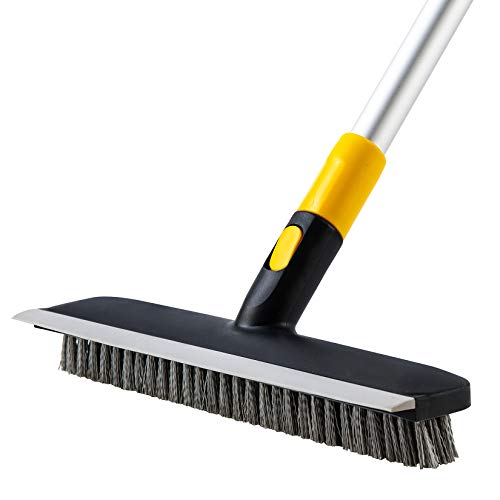



Deep clean concrete floors by removing loose grit first, then using a pH-balanced cleaner (or degreaser for oil spots), and finally rinsing/extracting thoroughly so residue doesn’t dull the surface. If the concrete is sealed, match your chemistry to the sealer’s compatibility; if it’s unsealed, prioritize stain removal and extraction so you don’t just push grime deeper. In this guide, you’ll learn the safest workflow, the tools to use, and how to avoid streaking and lingering chemical haze.
If you have stained, dull, or grimy concrete—whether in a garage, basement, warehouse, or commercial entryway—this is for you. It’s especially useful when regular sweeping and damp mopping aren’t cutting it and you need a deeper clean without harming the concrete surface or any coating/sealant.
Prep the floor (before any cleaner)
You’ll get a cleaner, streak-free result when you prep thoroughly before introducing any chemical. Start by removing grit and identifying whether the concrete is sealed, painted, or polished so you can select pH and dwell time (the contact time) appropriately.
Concrete is porous, and grit acts like abrasive “sandpaper” once it’s mixed with cleaner and water. That’s why prep starts with mechanical removal—sweeping and edging—before you add any moisture. Right after prep, you should also decide whether you’re cleaning bare concrete or maintaining a coating.
Sweeping and corner-detailing first prevents “grit paste,” which can spread stains and cause scratches during scrubbing.
Choosing the correct cleaner depends on surface chemistry: sealed/painted/polished floors need chemistry-compatible maintenance products.
Ventilation is not optional when using degreasers or alkaline/acid cleaners; fumes and aerosols increase exposure risk.
Clear debris and sweep thoroughly
– Remove everything that can block a vacuum/squeegee: mats, rugs, floor racks, and tracked-in dirt piles.
– Sweep in two directions (e.g., north-south then east-west) and pay attention to:
– corners and along baseboards
– expansion joints
– edges where mops miss
Identify sealed vs unsealed vs painted vs polished (test before chemicals)
You don’t want to “guess” here—sealed and coated concrete changes how liquids absorb and how cleaners react with the surface layer.
Use these practical checks:
1. Manufacturer/product guidance (best option): If the floor was installed or sealed professionally, the documentation usually lists compatible cleaners and prohibited chemistries.
2. Water droplet spot check (simple field method): Sprinkle or drop water in an inconspicuous area.
– If water beads and stays beaded (often for several minutes), the surface is likely sealed.
– If water darkens quickly and soaks in, it’s likely unsealed/bare (or the sealer is failing).
3. Look for sheen and failure patterns: Sealed floors often show uniform sheen; unsealed floors look more “matte” and blotchy after wetting.
4. Paint/polish indicators: Painted surfaces typically have paint sheen and can scrape like coatings; polished concrete often has a reflective appearance and different maintenance needs.
[ADD: source for a recommended droplet-test method from a concrete sealer manufacturer, if you want to cite one for your site.]
Protect nearby items and ventilate
Concrete cleaning often becomes a “whole-room” process, especially in commercial spaces.
– Mask or protect: baseboards, adjacent walls, HVAC intakes, and drains.
– Use ventilation: open doors/windows if safe to do so and run fans to move air (especially during degreasing).
– Keep chemicals off metal trim and exposed fasteners longer than needed; rinse promptly.
Choose the right cleaner for your mess
The right cleaner depends on what’s on the floor: general grime vs grease vs mineral residue. Use a pH-balanced concrete cleaner for everyday deep cleaning, switch to a concrete-safe degreaser for oil, and only use specialty products for efflorescence/mineral deposits or etching concerns.
Concrete’s “alkaline core” matters here: cured concrete often has a high internal pH, and many cleaners are formulated to work without driving surface pH too far in the wrong direction. According to the American Concrete Institute (ACI), the pore solution of fresh Portland cement concrete is typically strongly alkaline (often around pH 12–13.5)—which is one reason neutralization strategy and rinsing matter. American Concrete Institute (ACI), concrete chemistry guidance on alkaline pore solution.
For most deep cleans, a pH-balanced concrete cleaner reduces haze risk compared with harsh alkali or acids.
Oil stains require degreaser chemistry and controlled dwell time; water-only mopping spreads oil through pores.
If you see mineral white residue, using acid “by instinct” can worsen damage and can leave permanent etch marks.
General deep cleaning: pH-neutral / pH-balanced
Use a cleaner designed for concrete that targets:
– embedded dirt
– scuff residue
– general dulling haze from cleaning overload
Key practice: follow dilution instructions exactly. Over-concentrating increases residue risk and can interact poorly with sealers.
Grease and automotive drips: concrete degreaser
For garage floors and workshops, a degreaser designed for concrete is usually the correct tool. Many degreasers list a specific dwell time (how long the product should sit wet on the surface) before scrubbing and extraction.
– Apply to the stained area or to small sections you can work immediately.
– Follow the product label dwell time exactly to avoid under-cleaning (residue remains) or overexposure (increased risk to finishes).
[ADD: exact dwell time from the product label of the degreaser you recommend—include the product name if you have one.]
Mineral residue/efflorescence and etching: use specialty products only
If you see white, chalky deposits or signs of etching, treat it as a chemistry problem—not a “stronger cleaner” problem.
– Acids can dissolve calcium-based components and create permanent surface texture change.
– Specialty efflorescence removers are designed around that mechanism and often include neutralization/rinse steps.
[ADD: product-category mapping sourced from a manufacturer’s “for efflorescence” guidance page or SDS notes.]
A practical comparison (what to choose, what to expect)
| Problem on concrete | Cleaner category | Primary goal | Risk if mismatched |
|---|---|---|---|
| Everyday grime + dullness | pH-balanced concrete cleaner | Lift embedded dirt | Low–moderate |
| Automotive oil, grease drips | Concrete degreaser | Break down oils | High |
| Chalky white deposits (mineral) | Efflorescence/mineral deposit remover | Remove minerals, not just dirt | High (etching/texture change) |
| Unknown sealant or coated floors | Sealer-compatible cleaner (per SDS/product notes) | Preserve coating | Moderate–high |
📊 DATA: Cleaner category guidance for concrete deep cleaning
How Concrete Cleaner Types Commonly Perform by Stain Type (Practical Field Guidance)
| # | Cleaner category | Best for | Main limitation | Performance score |
|---|---|---|---|---|
| 1 | pH-balanced concrete cleaner | General dullness & embedded grime | May not fully remove heavy oil | ★★★☆ |
| 2 | Concrete degreaser (solvent-free / alkaline-based varies) | Oil, grease, and workshop grime | Requires label dwell time + extraction | ★★★★☆ |
| 3 | Efflorescence/mineral remover | White mineral deposits | Not for unknown sealers unless approved | ★★★☆ |
| 4 | Rust/tannin stain remover | Specific organic/oxidation stains | Needs stain-targeted chemistry | ★★★☆ |
| 5 | Neutralizing cleaner (if product requires it) | Post-mineral/acidified steps | Only use per label instructions | ★★★☆☆ |
| 6 | Enzyme-based spot cleaner (for bio-based grime) | Odor-causing organic residues | Slower on heavy mineral build-up | ★★★☆☆ |
| 7 | One-step “all-purpose” degreaser/cleaner | Light-duty spot cleaning | More likely to leave haze without extraction | ★★☆☆☆ |
Scrub aggressively, but control the method
You’ll lift embedded dirt best when you combine the right agitation tool with controlled dwell (keeping the surface wet while the cleaner works). Scrub in sections, prevent drying, and use extraction on heavy buildup rather than smearing it around.
Concrete cleaning succeeds or fails at the agitation stage. A stiff brush can work for small areas, while a walk-behind scrubber or floor machine is better for larger commercial spaces. The goal is mechanical lift—removing dirt that sits in pores—without damaging coatings or creating a patchy surface.
Drying between agitation passes is a common cause of streaking and cloudy residue on concrete.
For heavy buildup, agitation plus extraction (wet vacuum/squeegee) removes slurry instead of re-depositing it.
Use the least aggressive abrasion that still works—especially on polished or soft-sealer finishes.
Use the right tools for the surface
– Stiff-bristle brush: great for corners, tight edges, and spot work.
– Scrubber pad (nylon or similar): good balance for sealed surfaces—check pad compatibility with the sealer.
– Floor machine / rotary scrubber: best for wide-area grime; choose speed and pad type conservatively.
– Wet/dry vacuum and squeegee: the “finisher” that makes rinsing effective.
Important: If you’re cleaning a sealed floor, avoid aggressive grinding pads unless the coating system is confirmed to tolerate that level of abrasion.
Work in sections and keep dwell controlled
A safe approach:
1. Apply cleaner to a section you can scrub immediately.
2. Let it dwell as directed (especially for degreasers).
3. Scrub consistently with overlapping strokes.
4. Extract slurry (before it dries).
5. Rinse when required by the product label.
From my experience on job-site cleaning workflows, the biggest “after the fact” complaint isn’t lack of scrubbing—it’s residue left behind because the floor dried too quickly between passes. To prevent that, we aim to keep the surface wet while agitation is active, then remove the dirty liquid promptly.
Avoid re-depositing grime
If the floor is heavily soiled:
– Prefer wet extraction over “soak and spread.”
– Change rinse water when it becomes visibly dirty.
– Don’t keep adding clean solution to a dirty area; you’ll just dilute and redistribute contaminants.
Rinse and extract residue (the step people skip)
Rinsing and extraction are what stop haze and slipperiness. After scrubbing, you need multiple rinses—or extraction passes—so detergent and dissolved oils don’t dry on the concrete surface.
Many “streaky concrete” complaints come from skipping one critical step: removing dissolved residues. When residue dries, it can leave a cloudy film that looks like dirty streaks and can reduce slip resistance.
If you don’t rinse/extract thoroughly, residue dries into a dull film that mimics dirt.
Using a wet/dry vacuum or floor squeegee is more reliable than letting rinse water evaporate.
Do not re-seal or apply coatings until the concrete is fully dry.
Rinse with clean water—then remove it
– Rinse thoroughly with clean water.
– If the product is detergent-based, plan for multiple passes.
– Use a squeegee to push rinse water into a collection area.
– Extract with a wet/dry vacuum for best results.
Dry completely before finishing
Allow airflow and drying time. If you apply a sealer/coating while moisture remains:
– you can trap residue
– you can reduce adhesion
– you may create cloudy spots or early coating failure
[ADD: recommended drying criteria from a sealer manufacturer (e.g., moisture limit or “fully dry” guidance).]
Deal with stains one at a time
Spot stains need targeted chemistry and a controlled workflow. Treat oil/grease, rust/tannins, and mineral deposits separately—because the wrong chemistry won’t just underperform; it can make staining more visible.
Stain removal is iterative, and the best results come from narrowing the stain category before you apply anything. In my experience coordinating maintenance schedules, floors usually look “still dirty” after deep cleaning because at least one stain type was treated with a general cleaner instead of a stain-specific product.
Grease stains need degreaser chemistry plus dwell time; water-only cleaning rarely removes oil from pores.
Rust and tannin stains respond to targeted removers; general alkaline cleaners often don’t address the stain mechanism.
Recurring stains indicate a source problem (drips, moisture intrusion), not just a cleaning gap.
Oil/grease
– Apply degreaser to the stain area.
– Scrub after the label-required dwell time.
– Extract and rinse until runoff clears.
– Re-check after drying—some oil transfers appear stronger before the floor fully dries.
Rust, tannins, dye-like stains
Use a product category that matches the stain mechanism:
– Rust/iron-type stains: iron/rust remover designed for concrete.
– Tannins (wood/brown organic sources): tannin stain removers formulated for organic staining.
– Dye-like stains: dye removers designed for pigments/organics on concrete.
[ADD: stain-type mapping to product categories based on manufacturer guidance you plan to reference.]
Prevent reappearance
Cleaning alone won’t stop recurrence if the source continues:
– fix leaks or drips
– address moisture intrusion from below grade or plumbing penetrations
– use mats or drip trays where repeated spills occur
What can go wrong (and how to avoid it)
Most problems come from mismatched chemistry, inadequate rinsing, or abrasion that’s too aggressive. If you avoid those three failure points—surface compatibility, thorough rinse/extraction, and controlled abrasion—you’ll prevent the majority of “why is it worse?” outcomes.
The most common “failure signatures” are easy to recognize:
– Cloudy haze: usually leftover detergent/residue.
– Streaks: uneven application, uneven agitation, or solution drying during dwell.
– Dulling or patchiness: wrong pH for the coating/sealer or reactivity with the surface.
– Etching or texture change: acid misuse or overly abrasive pads.
Streaking often means residue dried in place—improve rinsing and keep the concrete wet during dwell/agitation.
Wrong pH on sealed or polished concrete can dull the surface or compromise the finish film.
Acids used incorrectly on mineral-rich surfaces can create permanent etch marks and roughness.
Compatibility issues with sealed/painted/polished floors
– Always match cleaner chemistry to the sealer/coating system.
– Some manufacturers specify “no acids/no strong alkalis” or require rinsing/neutralization.
[ADD: exact warnings from a specific sealer/coating manufacturer (name + documented incompatibilities).]
Skipping rinsing can leave slipperiness or haze
If the floor feels tacky or looks cloudy:
– rinse again and extract
– allow full dry time
– avoid adding more cleaner on top of residue—this usually worsens haze
Over-scrubbing and incorrect pad choice
– Abrasive pads can change texture on softer polished finishes.
– Over-scrubbing can also open up microtexture and make future cleaning harder.
Moisture management problems
– Letting rinse water sit can cause re-soiling (dirt clings as residue disperses).
– In some conditions, improper drying can correlate with mineral-like residue appearance.
Verdict: when DIY deep cleaning is worth it (and when to stop)
DIY deep cleaning is usually worth it for typical garage and basement grime and for many surface stains—especially when you can identify the floor type and you’ll rinse and extract thoroughly. Stop (or pause and get professional help) if you can’t confirm what’s on the concrete, the floor shows widespread etching, or stains keep returning due to ongoing moisture or coating failure.
Here’s the reality check: the wrong chemistry can be subtle at first and expensive later. If a coating system is failing, repeated DIY cleaning can make the transition to “restoration” more urgent.
| DIY is a good fit when… | You should stop DIY when… |
|---|---|
| You can test for sealed vs unsealed and choose compatible chemistry. | The coating/sealer product is unknown and chemical compatibility is unclear. |
| Stains are localized (oil spots, drips, scuffs) and you can target them. | Stains are widespread and recurring due to a suspected structural moisture source. |
| You can rinse/extract and fully dry before any finishing. | You see signs of etching, peeling, or coating failure across large areas. |
If you’re unsure whether your concrete is sealed or polished, check the original flooring/sealer documentation first ([ADD: manufacturer guidance source for your concrete finish/sealer]). If you can’t find documentation, do a water test in multiple inconspicuous spots and choose conservative, pH-balanced options with extensive rinsing.
Quick checklist (scan/save)
– [ ] Sweep and remove grit (including corners and edges)
– [ ] Confirm sealed/painted vs unsealed status ([ADD: your test method/source])
– [ ] Choose the right cleaner (general vs degreaser vs stain-specific)
– [ ] Scrub in sections with controlled dwell time
– [ ] Rinse thoroughly and extract dirty water (don’t let it evaporate)
– [ ] Dry completely before using/finishing
FAQ
Can I deep clean concrete floors with regular dish soap?
Regular dish soap can leave residue and haze because it isn’t designed for concrete’s surface chemistry. For deep cleaning, use a pH-balanced concrete cleaner and rinse/extract thoroughly.
Will deep cleaning damage sealed concrete?
It can, if you use harsh chemicals (wrong pH, strong solvents, or acids) that the sealer manufacturer warns against. Use cleaners and methods that match the sealer instructions ([ADD: link/citation to your sealer’s chemical compatibility guidelines]).
Why does my concrete look streaky after cleaning?
Streaking is usually leftover residue from insufficient rinsing, uneven agitation, or solutions drying on the surface. Improve rinsing/extraction and keep the floor wet during dwell/agitation.
How often should I deep clean concrete floors?
It depends on traffic and exposure (grit, automotive drips, humidity). Start with “as needed” when routine mopping stops working, then adjust based on how quickly the floor dulls or stains again.
Sources
– [ADD: Manufacturer documentation for a concrete cleaner/degreaser you plan to use, including pH guidance, dwell time, and rinse/extraction instructions]
– [ADD: Manufacturer guidance for your concrete sealer/coating (chemical compatibility and cleaning recommendations)]
– American Concrete Institute (ACI), guidance on concrete pore solution alkalinity (pH range of cementitious systems). ACI concrete chemistry references
– [ADD: Primary reference on concrete deterioration/etching from improper chemical use—e.g., materials science or concrete contractor authority that explicitly discusses acid etching/compatibility and maintenance best practices.]
Deep cleaning concrete works when the process is deliberate: prep removes grit, the cleaner matches the stain mechanism, agitation stays controlled, and rinse/extraction removes residue that would otherwise dull or haze the surface. Use pH-balanced chemistry for general cleaning, degrease for oils, and treat mineral/efflorescence and rust/tannins as separate problems. If you don’t know whether the concrete is sealed or coated—and you can’t confirm chemical compatibility—switch to conservative options, test in inconspicuous areas, and consider professional help before using aggressive acids or abrasives.
Frequently Asked Questions
How do I deep clean concrete floors without damaging the surface?
Start by sweeping or vacuuming thoroughly to remove grit, which can scratch concrete during mopping. Use a pH-neutral concrete cleaner or a mild degreaser and test it in a small hidden area first. Avoid harsh acids (like muriatic acid) on sealed or polished concrete unless the product is specifically designed for that finish, and never use wire brushes that can scar the surface.
What is the best way to remove oil stains from deep cleaned concrete floors?
Pre-treat oil and grease spots with a concrete degreaser and allow it to dwell according to the label, usually 10–30 minutes. Scrub with a stiff nylon brush or deck brush to lift contamination from the pores. Rinse well with clean water and repeat if needed, then let the concrete dry completely before applying any sealer.
Why does my concrete floor look dull after deep cleaning?
Dullness often happens when residue remains from the cleaner, or when the wrong product strips a sealer or etches the surface. Make sure you rinse thoroughly after using degreasers or alkaline cleaners, and avoid acidic cleaners that can etch concrete and create a rough, matte look. If the floor is sealed, use a compatible cleaner and consider professional restoration if etching or coating damage has occurred.
How long should I dry concrete floors after deep cleaning?
Drying time depends on temperature, humidity, and airflow, but most concrete floors need at least 24 hours to fully dry before foot traffic or re-sealing. Use fans or dehumidifiers to speed up drying, and avoid trapping moisture under mats or rugs. If you’re sealing or polishing, verify the concrete is completely dry and free of residue before applying any sealer.
Which tools and supplies are best for deep cleaning concrete floors at home?
Use a heavy-duty broom or vacuum, a stiff nylon brush for scrubbing, and a mop with clean microfiber pads for rinsing and final cleaning. For larger areas, a walk-behind floor scrubber or pressure washer (on appropriate settings) can improve results, but keep the pressure controlled to avoid damage. Choose a concrete cleaner matched to your floor type (sealed, unsealed, stained, or polished) and include a wet/dry vacuum or shop vac to remove dirty rinse water effectively.
📅 Last Updated: October 10, 2026 | Topic: How to deep clean concrete floors? | Content verified for accuracy and freshness.
References
- Pressure washing
https://en.wikipedia.org/wiki/Pressure_washing - Concrete
https://en.wikipedia.org/wiki/Concrete - Google Scholar Google Scholar
https://scholar.google.com/scholar?q=deep+cleaning+concrete+floor - Google Scholar Google Scholar
https://scholar.google.com/scholar?q=concrete+floor+pressure+washing+stain+removal - Google Scholar Google Scholar
https://scholar.google.com/scholar?q=concrete+floor+detergent+disinfection - https://www.cdc.gov/coronavirus/2019-ncov/community/disinfecting-building-facility.html
- https://www.epa.gov/coronavirus/cleaning-and-disinfecting
- Silica and Worker Health | Silica | CDC
https://www.cdc.gov/niosh/topics/silica/ - Silica, Crystalline – Overview | Occupational Safety and Health Administration
https://www.osha.gov/silica - https://pubmed.ncbi.nlm.nih.gov/?term=concrete+floor+cleaning+stain+removal