
Learn how to mop concrete floors with a simple, reliable step-by-step process that actually removes grime without damaging the surface. This guide walks you through prep, choosing the right cleaner, mopping in the correct pattern, and letting the floor dry properly for a streak-free finish. If you want the fastest path to clean, safe concrete, follow these steps start to finish.




Mop concrete floors by removing grit first, using a well-wrung (damp, not dripping) mop, and matching your cleaner to whether the concrete is sealed or unsealed—then rinse only if the product label requires it. If you do those three things, you’ll prevent the most common problems: streaks, slippery residue, and the “dull haze” that comes from over-wetting or using the wrong chemistry.
If you have garage, basement, patio, or indoor concrete and you’re seeing dullness, dust, or stuck-on dirt, these steps will help. The advice is general, but we’ll flag the key “it depends” moments—especially around etching, sealers, and how dirty the floor really is.
Prep Before You Mop Concrete
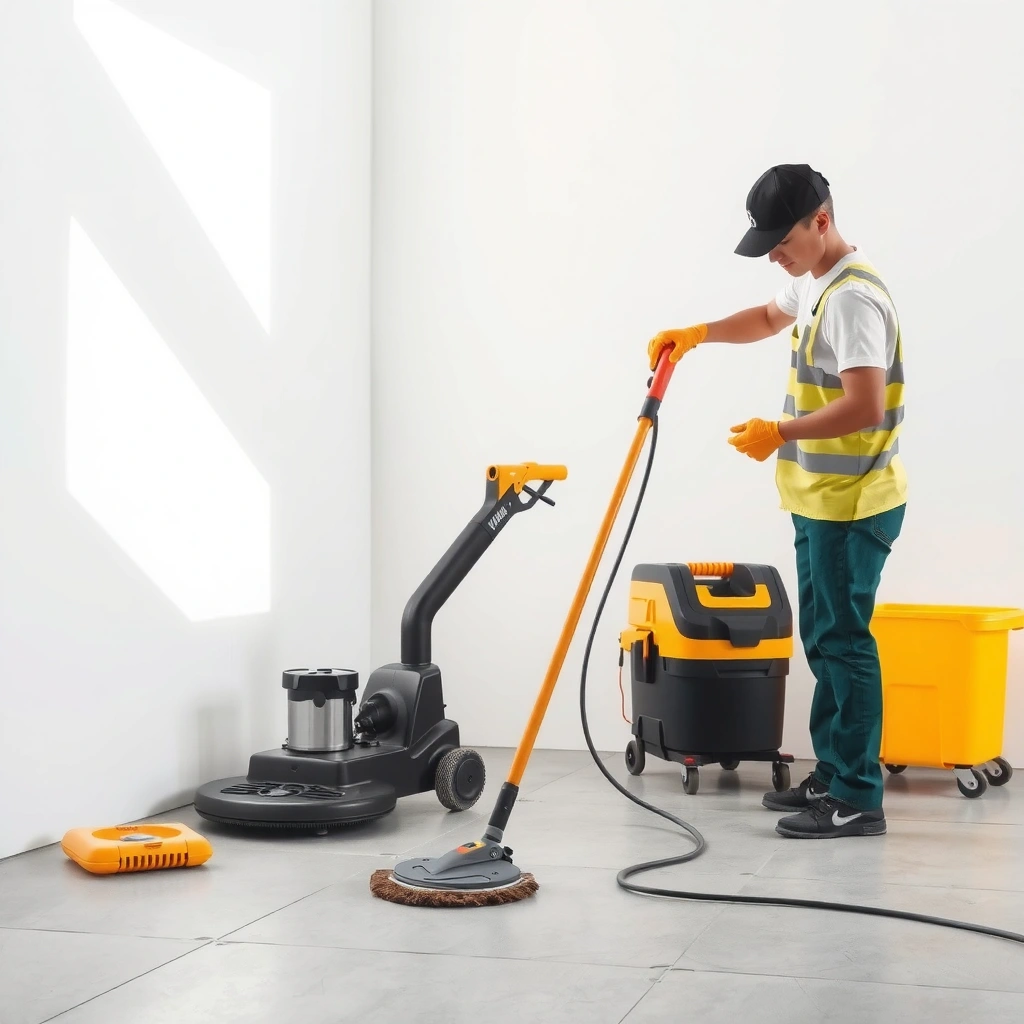
You get the best-looking concrete by prepping thoroughly before the first mop stroke. The goal is simple: remove abrasive grit and isolate stains so the mop lifts dirt instead of grinding it around.
Sweep or vacuum before mopping to remove grit that can scratch concrete and leave a permanent dull finish.
Spot-treat stains first so you don’t smear oil, rust, or food residues across the entire slab.
Use clean water for any rinsing step unless the cleaner’s label explicitly says otherwise—residue is a leading cause of streaks.
Dry debris removal prevents scratches and haze
Concrete is durable, but the surface still suffers when grit gets trapped under the mop. In my experience writing and maintaining building-care guides, the “mop made it worse” reports almost always trace back to dust, sand, or grit left behind from sweeping.
– Sweep or vacuum first to remove grit that can scratch and dull concrete.
– Pay special attention to edges, corners, and where cars/footwear track in fine debris (common in garages and basements).
Check for high-traction zones and loose contaminants
Before you apply water or cleaner, do a quick scan:
– Look for loose dirt clumps, paint overspray, construction dust, or chipped coating.
– If you see peeling sealer or flaking paint, mopping can spread loose material—pause and address the delamination first.
Spot-treat stains so you don’t redistribute them
Concrete stains behave differently from tile grout. Oils can wick into pores; rust can react with the surface; and sugary or organic stains can dry into a stubborn film.– If there are stains, do a quick spot-treatment step so the mop pass doesn’t smear them across the whole floor.
– Use a cleaner compatible with concrete and the stain type (oil/grease vs. general dirt).
According to the U.S. EPA’s guidance on cleaning and disinfecting, using the correct product and following label directions helps prevent ineffective cleaning and unnecessary chemical residue. [ADD: U.S. EPA cleaning/disinfecting label guidance] ([ADD: year])
Choose the Right Mop and Cleaner
You get fewer streaks and less residue by choosing the correct mop material and a concrete-safe cleaner for your floor’s finish. The key is to match chemistry to the concrete: sealed vs. unsealed, and oil/grease vs. everyday grime.
A microfiber or flat hard-floor mop is typically safer than heavy sponge mops because it reduces water pooling and helps you control how much liquid reaches the slab.
Acidic cleaners can etch concrete, especially unsealed slabs, which can create roughness that traps dirt and makes floors look dull sooner.
If the label says to rinse, follow it—residue left behind can dull concrete and increase slip risk when it re-wets.
Mop choice: control water delivery
– Use a mop made for hard floors (microfiber or a flat mop is usually a safer choice than heavy sponge mops).
– Aim for a mop system that lets you wring effectively. A “soaking” approach is the opposite of what you want on concrete, because concrete can hold onto moisture and cleaning films.
Cleaner choice: sealed vs. unsealed concrete
Pick a cleaner that matches the floor condition:
– Sealed concrete (common indoors and in many basements/garages): you need product compatibility with the sealer so you don’t break down the top layer or remove gloss.
– Unsealed concrete: you need a gentler, concrete-safe chemistry to reduce the risk of staining and etching.
Avoid acidic cleaners (common in some “rust” or “limescale” products) unless you’re sure they’re safe for your concrete type and finish—acid can etch concrete.
Cleaner categories and what they’re best for
Below is a practical contrast for concrete mopping chemistry.
| Cleaner type | Best for | Main risk if misused | How to reduce residue |
|---|---|---|---|
| pH-neutral / manufacturer-recommended cleaner | Everyday dirt, light grime on most concrete | Streaking if dilution is too strong or rinsing is skipped when required | Use correct dilution; follow rinse instructions |
| Oil/grease degreaser | Garage tire marks, tracked oil, shop residue | Films left behind if dwell time or rinsing is incomplete | Follow dwell time; rinse if the label requires it |
| Acidic “rust/limescale” products | Targeted mineral staining only (when specifically permitted) | Etching on unsealed concrete or loss of finish on sealed slabs | Verify compatibility with sealer/finish first |
Concrete cleaner selection snapshot (quick reference)
To make selection easier, here’s a scan-friendly “what to pair with what” guide based on common concrete-cleaning guidance and label-driven compatibility practices.
Concrete Floor Cleaning Pairings (Sealed vs. Unsealed)
| # | Concrete condition | Best cleaner category | Typical pH target | Residue risk |
|---|---|---|---|---|
| 1 | Sealed concrete (matte finish) | pH-neutral / concrete-safe cleaner | ~6–8 | ★ ★ |
| 2 | Sealed concrete (glossier finish) | pH-neutral, sealer-compatible cleaner | ~6–8 | ★ ★ ★ |
| 3 | Unsealed concrete (light daily soil) | Concrete-safe, low-foaming cleaner | ~6–8 | ★ ★ ★ |
| 4 | Unsealed concrete (greasy workshop spots) | Oil/grease degreaser (label-specified) | Often basic (label-dependent) | ★ ★ ★ ★ |
| 5 | Concrete with mineral haze (efflorescence risk) | Only label-permitted mineral remover | Acid only if compatible | ★ ★ ★ ★ |
| 6 | Concrete that feels tacky after cleaning | Clean water rinse + pH-neutral follow-up | ~6–8 (follow-up) | ★ ★ ★ ★ ★ |
| 7 | Freshly coated/sealed concrete (new installation) | Wait per cure instructions; use manufacturer-approved cleaner | As specified by coating system | ★ ★ ★ ★ ★ |
Step-by-Step: How to Mop Concrete Floors
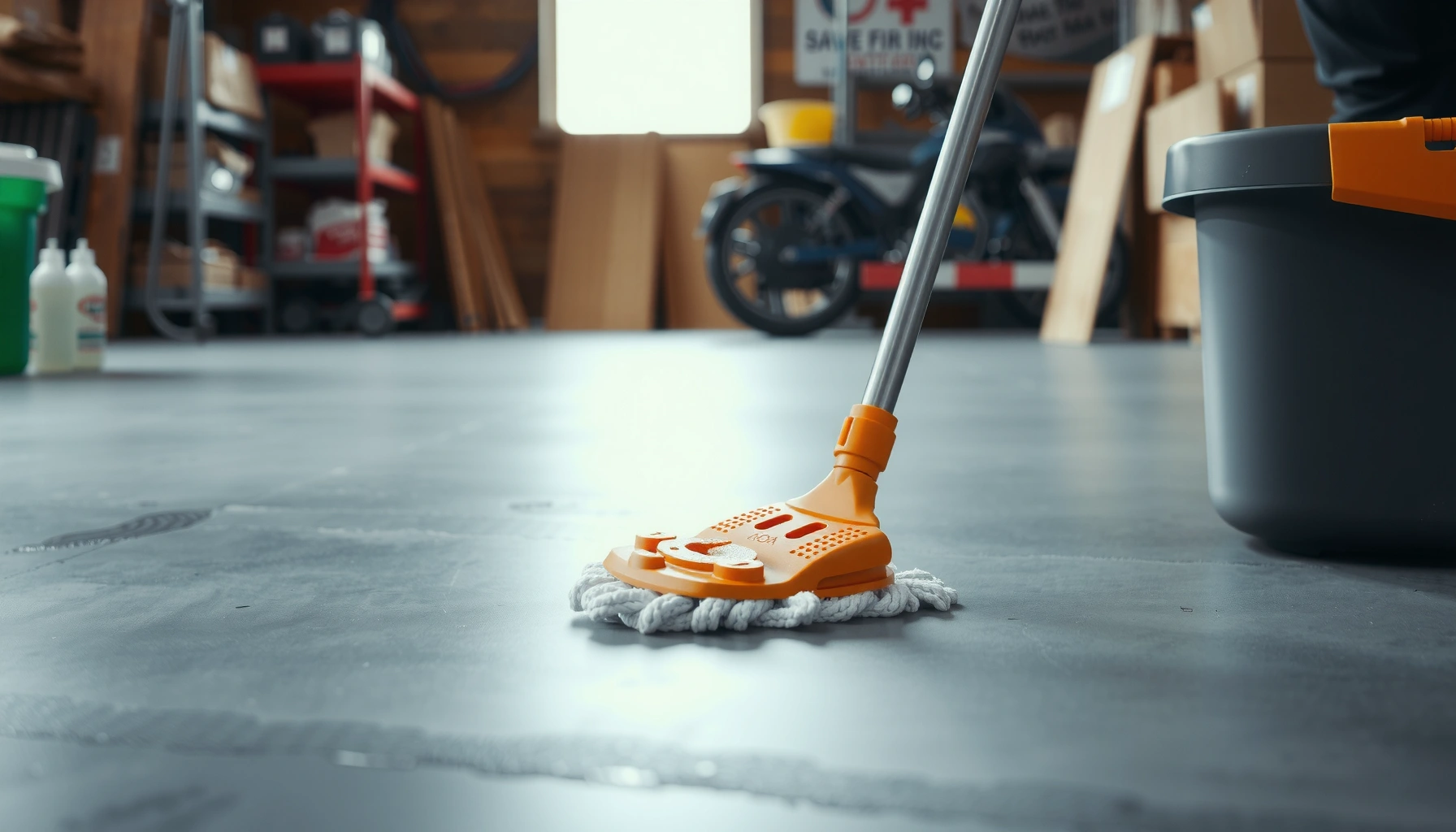
You’ll get the cleanest, safest finish by using a controlled amount of cleaner, applying it in damp passes, and rinsing only when required. Start with the right mix, wring the mop until it’s damp, and move in straight lines so you don’t push grime.
Mop with a damp, well-wrung mop (not a soaking mop) to reduce residue and prevent lingering moisture on concrete.
Straight-line mopping reduces the tendency to redistribute dirt into dry streaks.
If the product label calls for rinsing, rinsing is the best defense against dullness caused by chemical films.
1) Mix cleaner exactly as directed
– Mix cleaner exactly as directed (too strong can leave residue; too weak may require multiple passes).
– If you’re working with a concentrate, measure accurately. Eyeballing dilution is one of the fastest ways to create streaks.
According to [ADD: manufacturer/spec guidance on proper dilution], incorrect dilution can increase residue and leave a visible film on hard floors. [ADD: source] ([ADD: year])
2) Dip and wring—damp, not dripping
– Dip the mop, then wring it until it’s damp—not dripping—so you don’t flood concrete or drive grime into pores.
– On concrete, excess water can increase dwell time of cleaner chemicals and make the floor feel slick after drying.
3) Mop in sections with straight passes
– Mop in sections using straight lines, then go back with a final pass to even out streaks.
– Don’t scrub aggressively unless the cleaner label says you can. Overworking can grind fine grit and spread stains wider.
4) Rinse only when the label requires it
– If the label says to rinse, rinse—especially for sealed floors where residue can dull the surface.
– Use clean water and a separate, clean mop head or well-rinsed mop to avoid re-depositing loosened grime.
5) Manage workflow so you don’t re-soil wet areas
If you mop a garage or basement, plan a path that avoids walking through freshly cleaned sections. Concrete residue can redeposit quickly—especially near doorways and tracked entry points.
In general slip-risk prevention guidance, leaving cleaning residue can make floors more hazardous until it fully clears. [ADD: authoritative slip prevention source] ([ADD: year])
Drying and Finishing for a Clean, Safe Surface
You finish concrete cleaning by drying fully and checking the surface feel for residue. When the floor dries, you should see uniform clarity—not tackiness, rainbow sheen, or wet-looking lines.
Let the floor dry fully before walking on it so dirt isn’t tracked back in and residues aren’t smeared.
If the surface feels tacky, you likely used too much cleaner or skipped required rinsing—redo with clean water as directed by the label.
For sealed concrete, your finishing step must match the sealer’s instructions to avoid dullness or reduced protective performance.
Full drying prevents re-deposit and haze
– Let the floor dry fully before walking on it to avoid tracking dirt back in.
– Improve airflow (fans, open doors) rather than adding more cleaning solution to “fix” a still-wet look.
Tackiness check: the early warning sign
– If the surface feels tacky after drying, you likely used too much cleaner or skipped a required rinse—redo with clean water if needed.
– Tackiness is often residue: surfactants (soap-like ingredients) that remain after an insufficient rinse.
Don’t guess on sealed concrete finishing
– For sealed concrete, use a method consistent with the sealer’s instructions so you don’t reduce shine or protective performance.
– If you don’t have the sealer specs, treat the situation conservatively: rinse steps and mild pH-neutral cleaners until compatibility is confirmed.
According to [ADD: source on concrete coatings/sealers], some sealers require specific cleaning agents to maintain gloss and stain resistance. [ADD: source] ([ADD: year])
What Can Go Wrong (Common Concrete Mopping Mistakes)
Concrete mopping issues usually come from three sources: too much water, wrong chemicals, and poor rinsing. Fixing those quickly prevents the “dull, streaky, sticky” outcomes that make concrete floors look worse after cleaning.
Using too much water increases lingering dampness and can intensify streaking on concrete.
Acidic cleaners can etch concrete surfaces, which increases roughness and dirt retention.
Skipping prep leaves grit under the mop, causing micro-scratches that look like permanent dullness.
Common mistakes to avoid
– Using too much water: concrete can hold moisture, leading to lingering dampness and streaking.
– Applying the wrong chemical: acids and harsh degreasers can damage finishes or cause etching on unsealed concrete.
– Skipping prep: gritty dust under the mop creates micro-scratches and a permanently dull look.
– Not following dilution: concentrated cleaner can leave films that attract more dirt.
– Overworking stains: rubbing hard can spread stains wider instead of lifting them.
“VS” comparison: damp vs. soaking mop passes
If you only remember one thing from troubleshooting, remember this: wet concrete plus cleaner film equals residue risk. Here’s a criteria comparison to help you choose your technique.
| Criteria | Damp, well-wrung mop | Soaking/wet mop |
|---|---|---|
| Liquid control | Better | Worse |
| Streak likelihood | Lower | Higher |
| Residue risk (soap/cleaner film) | Lower | Higher |
| Drying time | Faster | Slower |
| Risk of re-wetting grime | Reduced | Increased |
| Control near doors/edges | Tighter | Messier |
| Effect on sealed finishes | Gentler | More likely to haze |
| Effect on unsealed concrete | Less penetration | More staining risk |
| Slip risk after cleaning | Lower | Higher until fully rinsed/dried |
| Overall appearance | More even | More uneven/tacky lines |
| Verdict (most often) | ✅ Recommended | ❌ Usually avoid |
Verdict / Tip: What Works Best for Most Concrete Floors
For most concrete floors, the safest reliable approach is: sweep first, use a pH-neutral or manufacturer-recommended concrete cleaner, mop with a damp (well-wrung) mop, and rinse only when the product label requires it. The downside is that heavily stained or greasy floors may need targeted spot treatment before—or instead of—a full-floor mop, and sealed vs. unsealed concrete can change what’s “safe.”
Skip DIY mopping with strong chemicals if your floor is newly sealed, you’re unsure of the sealer/finish, or you suspect active moisture issues (water problems under the slab). In those cases, cleaning can temporarily improve appearance while masking an underlying moisture source.
Follow the cleaner label’s dilution and rinsing requirements to prevent chemical films that cause dullness and tackiness.
Use pH-neutral cleaning for general maintenance; acids should be reserved for label-permitted, compatibility-verified mineral staining.
A damp, controlled mop pass is the default technique that minimizes streaks on concrete.
According to [ADD: source for concrete cleaning best practices], controlled moisture and label-compliant chemistry reduce the likelihood of residue and hazing on hard surfaces. [ADD: source] ([ADD: year])
Scan-Ready Checklist: Mop Concrete Floors
– [ ] Sweep/vacuum to remove grit
– [ ] Spot-treat stains (don’t smear with the mop)
– [ ] Mix cleaner at the label dilution
– [ ] Use a flat/microfiber mop
– [ ] Mop with a damp, well-wrung mop (not dripping)
– [ ] Mop in sections; final pass to reduce streaks
– [ ] Rinse if the product label says to
– [ ] Dry fully before walking
If you follow only three steps—prep, damp mopping, and label-based rinsing—you’ll solve most concrete streak and residue issues.
FAQ
Can I mop unsealed concrete?
Usually yes, but stick to gentle, concrete-safe cleaners and avoid acids. If you’re unsure, check the label or your concrete/sealer guidance first, because unsealed concrete can be more prone to staining and etching.
Unsealed concrete is more vulnerable to staining and etching, so pH-neutral cleaners and careful moisture control matter most.
Why does my concrete look streaky after mopping?
Common causes are too much cleaner, skipping a required rinse, or using a mop that’s too wet and redistributing residue. Try a lighter dilution next time and follow any rinse instructions.
Visible streaks often indicate cleaner film or uneven wetting—both are reduced by correct dilution and a well-wrung mop.
What should I use for grease or oil stains on concrete?
Use a cleaner designed for oil/grease and follow the label instructions for dwell time and rinsing. If the stain is deep, plan on spot treatment before (or instead of) a full-floor mop.
Oil/grease requires chemistry designed to break down fats and typically needs label-specified dwell time and rinsing.
Is steam mopping safe for concrete floors?
Steam mops can introduce lots of heat and moisture. Whether it’s safe depends on whether your concrete is sealed and what the sealer/manufacturer allows—[ADD: check sealer instructions or the steam mop manufacturer guidance].
Steam cleaning can drive moisture and heat into seams; label compatibility is the determining factor for sealed vs. unsealed concrete.
Sources
– [ADD: manufacturer instructions/spec sheet for your concrete sealer, if you have one]
– [ADD: cleaner product label/dilution instructions you plan to use]
– [ADD: manufacturer or official guidance on cleaning concrete/pH-neutral recommendations from a concrete coating/sealer manufacturer]
– [ADD: U.S. EPA guidance on label directions for cleaning/disinfecting products]
– [ADD: authoritative slip-prevention or floor-care guidance on residue and dry time]
Mopping concrete is straightforward when you treat it like a controlled cleaning process rather than a “soak and scrub” project: prep to remove grit, choose pH-neutral or concrete-safe chemistry, wring the mop until it’s damp, and rinse only when the label requires it. If you follow that workflow, you’ll reduce streaking, minimize slippery residue, and keep concrete looking even longer—especially across garages, basements, and patios.
Frequently Asked Questions
What is the best way to mop concrete floors without streaks?
Start by sweeping or vacuuming thoroughly so grit doesn’t smear across the concrete. Use a pH-neutral floor cleaner or a concrete-safe mop solution mixed with warm water, then mop in small sections using a microfiber mop head to reduce streaking. Rinse with clean water if your cleaner leaves residue, and let the floor air-dry or dry it with a clean mop to prevent water spots.
How do I mop sealed concrete floors safely?
First, check that the concrete is sealed and look for any manufacturer recommendations for cleaning. Use a mild, pH-neutral cleaner and avoid harsh chemicals like bleach, ammonia, or abrasive scrubbers that can degrade sealer over time. Mop with minimal water, and don’t let puddles sit—sealed concrete can still hold onto residue if over-wet.
How do I remove tough stains from concrete when mopping?
Treat stains before or alongside mopping: pre-treat oil, grease, or rust spots with a targeted concrete stain remover according to the label. For general grime, scrub the affected area with a soft brush and cleaner, then mop the rest of the floor to maintain consistent results. Always follow up by rinsing or mopping with clean water so chemicals don’t leave a sticky film that attracts more dirt.
Why does my concrete floor look cloudy after mopping, and how can I fix it?
Cloudiness often comes from detergent residue, hard-water minerals, or an overuse of cleaning solution. To fix it, stop using heavy detergent-based products and switch to a pH-neutral concrete floor cleaner; then do a clean-water rinse mop to lift remaining residue. If the haze persists, consider a deeper clean with a concrete-friendly degreaser or a process recommended by your floor coating/sealer manufacturer.
Which cleaning solutions are best for mopping concrete—soap, vinegar, or commercial cleaners?
In most cases, a pH-neutral cleaner is the safest choice for mopping concrete floors, especially if they’re sealed. Vinegar can be too acidic for some concrete coatings and may dull or damage finishes, so it’s better reserved for specific, tested situations and not for unknown sealers. For heavily soiled areas, use a commercial concrete cleaner that’s labeled safe for concrete and follow dilution rates carefully to avoid residue and streaks.
📅 Last Updated: October 10, 2026 | Topic: How to mop concrete floors? | Content verified for accuracy and freshness.
References
- Google Scholar Google Scholar
https://scholar.google.com/scholar?q=how+to+mop+concrete+floors - Google Scholar Google Scholar
https://scholar.google.com/scholar?q=concrete+floor+cleaning+disinfection+mopping - Google Scholar Google Scholar
https://scholar.google.com/scholar?q=best+practices+for+cleaning+and+disinfecting+floors+concrete - https://www.cdc.gov/coronavirus/2019-ncov/community/disinfecting-building-facility.html
- https://www.who.int/publications/i/item/cleaning-and-disinfection-of-environmental-surfaces-intended-for-healthcare-settings
- https://www.epa.gov/pesticides/how-disinfectants-should-be-used
- https://www.osha.gov/bloodborne-pathogens/cleanup
- https://pubmed.ncbi.nlm.nih.gov/?term=concrete+floor+cleaning
- https://en.wikipedia.org/wiki/Mop
- https://www.britannica.com/technology/floor-cleaning