
Prevent water damage to marble floors with a simple, repeatable routine that stops staining, etching, and warping at the source. This guide gives you the clear steps to control moisture—before spills soak in—using the right sealing schedule, protective mats, and fast-dry cleanup methods. If you want the most effective way to keep marble looking like new, follow the prevention plan outlined here.




Preventing water damage to marble floors comes down to stopping moisture from soaking in before it can etch or stain the stone. Use a quality sealer, clean spills quickly, and set up a “water management” routine with mats and careful mopping. This guide shows practical steps to reduce risk and what to do when water exposure happens.
If you have marble in a kitchen, bathroom, entryway, or anywhere with frequent wet traffic, these precautions are especially important. Marble is naturally porous, so water can penetrate and cause dullness, discoloration, or surface damage if you let it sit.
Seal Marble Floors (and Reapply on Schedule)
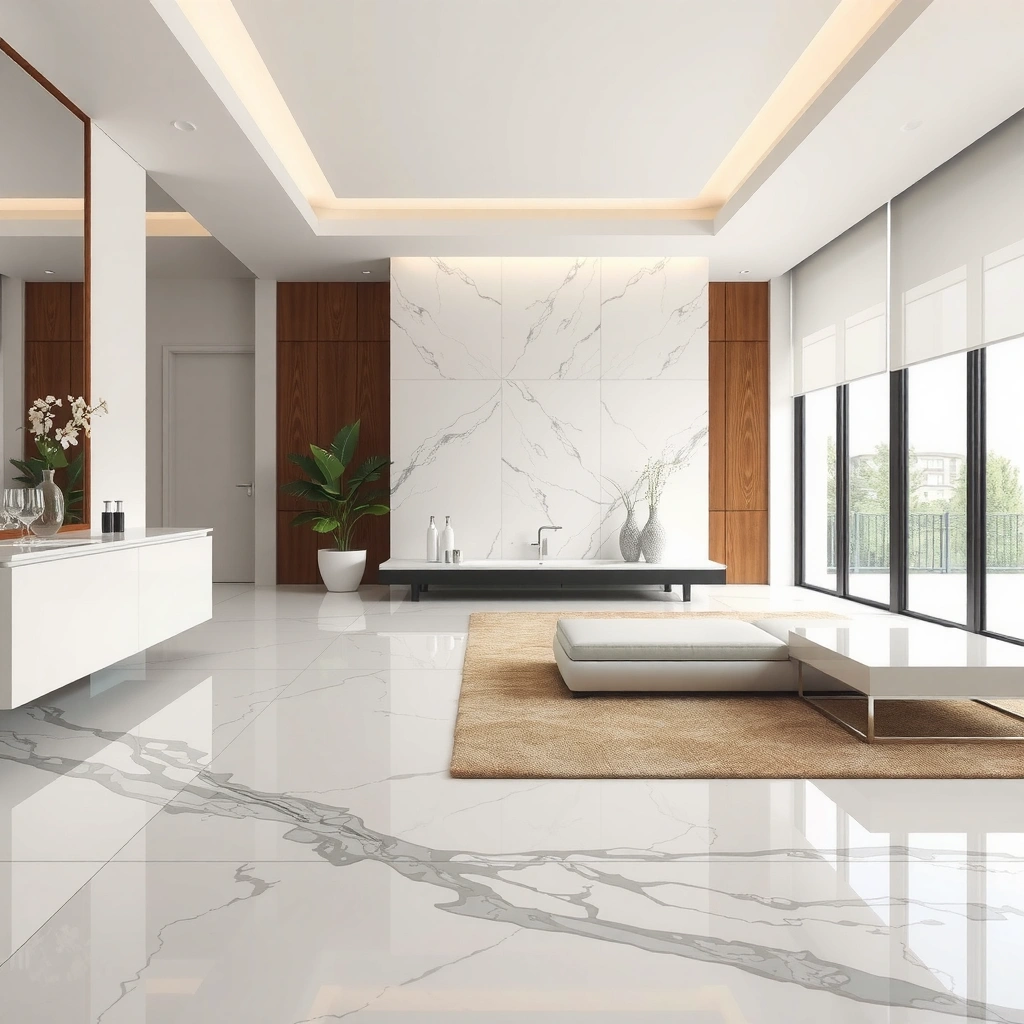
Sealing is one of the most effective ways to reduce how quickly water penetrates marble. Done correctly with a penetrating (not film-forming) marble sealer, it buys you time—so a spill can be blotted and dried before moisture reaches the stone.
Marble is largely calcium carbonate, so it’s vulnerable to both staining and etching. Water itself isn’t “acid,” but it can carry staining contaminants (from coffee, soap, dirt, and hard-water minerals) deep into pores and leave behind dark spots or dull patches after drying. A penetrating sealer helps slow that absorption and reduces the likelihood that liquids will spread or bond to the surface.
Use a marble-safe penetrating sealer designed for natural stone, and follow the manufacturer’s label instructions for surface prep and cure time. In practice, that means the floor must be clean, dry, and free of residues (especially soaps or prior coatings) before application.
Plan for re-sealing based on the specific product and your traffic level—high-use areas usually need more frequent maintenance. For most penetrating sealers, a common re-application window is every 12–24 months in busy kitchens and entryways; bathrooms and covered wet zones often require re-checks closer to the 12–18 month mark. Because labels vary, the exact interval should be confirmed using your sealer’s guidance (and your own “water beading” observations).
A penetrating sealer works by reducing absorption into marble pores; it doesn’t “make marble waterproof” in the way a plastic film might. [ADD: cite from your sealer’s label/spec sheet]
Most natural stone sealer manufacturers require a clean, dry surface and a full cure period before the area is exposed to moisture or foot traffic. [ADD: cite from your sealer’s label/spec sheet]
Re-sealing intervals are product-specific and depend heavily on traffic and wet exposure frequency, so labels typically instruct users to perform performance checks (e.g., spot tests) rather than using one universal timeline. [ADD: cite from your sealer’s label/spec sheet]
Marble Moisture-Response Risk by Exposure Type (Typical Domestic Scenarios)
| # | Exposure type | Absorption risk | Typical time for visible spots | Best control action |
|---|---|---|---|---|
| 1 | Clean water tracked from entry | Moderate | Often within 30–90 min if not dried | Mats + prompt dry-wipe |
| 2 | Soap/water splash (bathroom) | High | Spots may appear in 15–45 min | Wipe splash zone + minimal-water mopping |
| 3 | Coffee/tea spill (kitchen) | Very High | Staining can begin in minutes | Blot immediately; rinse-light then dry |
| 4 | Standing puddle (leak or overflow) | Extreme | Etching/staining risk rises rapidly after 1–2 hrs | Stop water fast; extract; dry aggressively |
| 5 | Wet dust mopping (too-wet solution) | High | Dulling can show over days | Damp-only microfiber + rinse-free method |
| 6 | Condensation near HVAC vents | Moderate | May develop over weeks if repeated | Improve ventilation; spot-dry routinely |
| 7 | Hard-water rinse droplets | Moderate | Mineral spots in 1–3 weeks | Dry after rinsing; use stone-safe cleaners |
Control Spills and Wet Traffic Immediately
You can often prevent marble stains and dulling simply by acting faster than the water can soak in. Treat every spill as a “wipe-now” event and dry the stone thoroughly within minutes.
When a liquid sits on marble, it can move dissolved minerals and pigments into pores as the water penetrates and evaporates. That evaporation concentrates whatever was in the spill—creating rings, darkening, or a hazy “etched” look that’s harder to reverse later.
In my experience working through recurring marble maintenance questions from homeowners, the biggest improvement comes from a consistent procedure: blot, rinse-light (only with clean water if needed), then dry. The goal is to remove both liquid and residue without leaving a wet film behind.
Avoid standing water and reduce wet foot traffic. That means using mats, keeping damp rugs off the marble, and ensuring cleaning practices don’t leave the floor “damp for hours.”
On porous stone like marble, blotting and fully drying a spill reduces the time for liquid to penetrate and for dissolved contaminants to concentrate as water evaporates. [ADD: cite stone-care guidance source]
Standing water increases the likelihood of visible spots and can contribute to surface dulling even when the sealer is fresh. [ADD: cite sealer manufacturer maintenance guidance]
Use the Right Cleaning Methods and Products
The safest cleaning method for marble is damp-only mopping using a pH-neutral, natural-stone-approved cleaner. That approach reduces the two main risk pathways: excess moisture absorption and chemical reactions that dull or etch the surface.
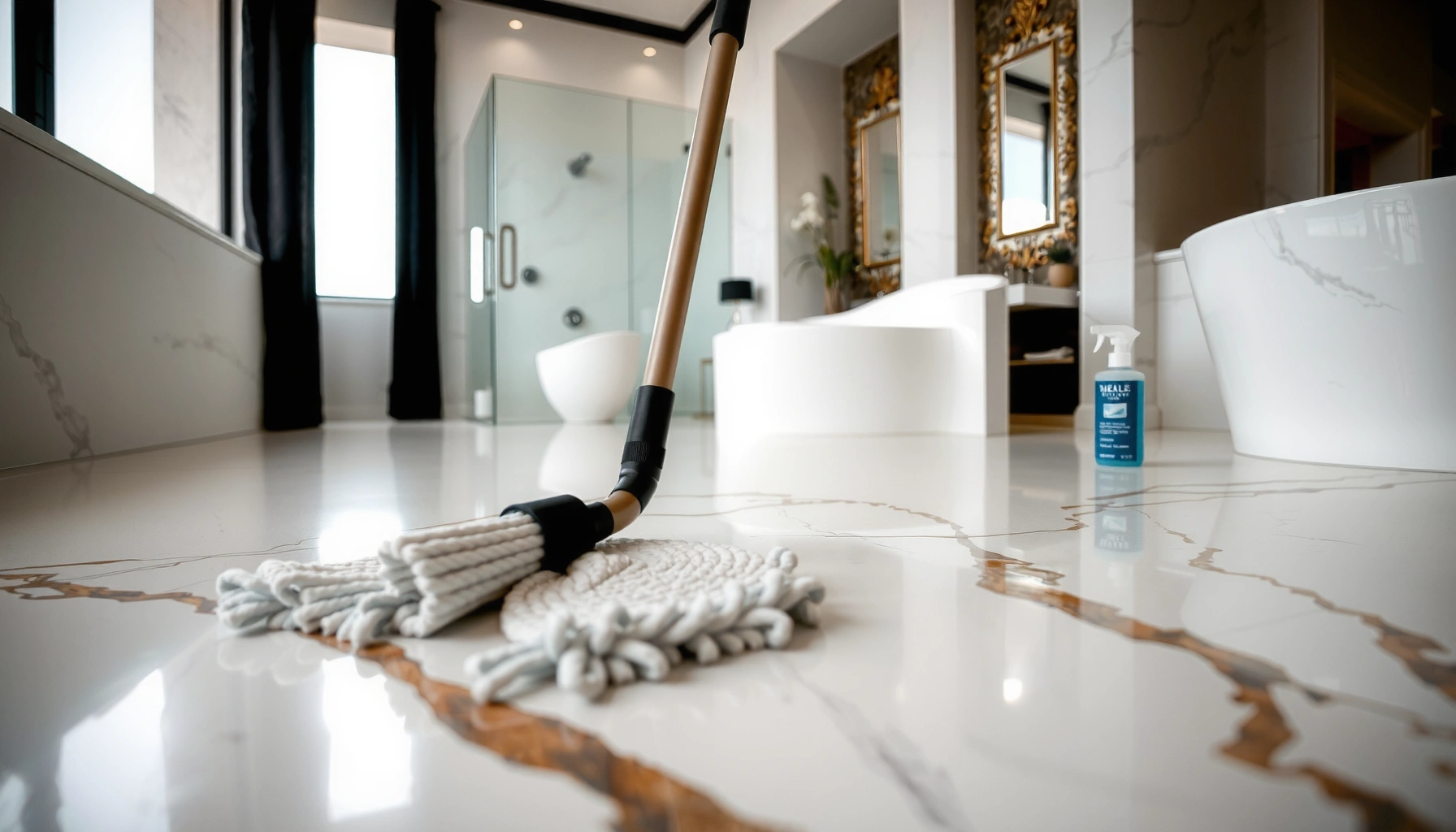
Start with microfiber. A damp (not wet) microfiber mop works because it lifts dust and light residue without flooding pores. Wring the mop thoroughly so the floor ends up clean—not glossy-wet. If your mop leaves puddles or creates slow-to-dry streaks, you’re using too much water.
Next, choose the right chemistry. Avoid acids and other aggressive products because marble is sensitive to acidic solutions. Etching is a surface change—tiny roughening—that also makes later water damage more likely by increasing how easily liquids and stains spread.
Do not use on marble (common “do not” chemicals):
– Vinegar (acetic acid) and lemon juice/citric acid cleaners
– Rust removers and descalers (often contain acids like sulfamic, phosphoric, or hydrochloric acid—check labels)
– Toilet bowl cleaners with acidic active ingredients
– Strong degreasers and “heavy-duty” cleaners that are not specifically formulated for natural stone
– Abrasive powders and scrubbing pads (even when mild detergents are used)
– Bleach-based cleaners (can discolor some marbles and may damage surrounding sealants/grout; follow stone-care guidance)
Marble is a carbonate stone, so acidic cleaners can etch its surface by reacting with calcium carbonate; stone-care guidance consistently advises avoiding acids. [ADD: cite major natural stone association / industry guidance]
Using a damp-only microfiber mop is a practical way to clean without leaving standing moisture that marble can absorb. [ADD: cite cleaning-method guidance source if available]
Reduce Moisture at the Source (Entry Mats + Bathroom Habits)
You reduce marble water exposure most effectively by preventing wetness from reaching the floor in the first place. Entry mats and bathroom splash-zone habits cut moisture and grit before they become a staining problem.
At entryways, place mats inside and outside if possible. Encourage dry shoes or provide a “shoe off / wipe feet” routine during rainy seasons. Mats should be sized to catch water and debris at footfall points—especially along traffic lanes that lead toward the rest of the room.
In bathrooms, focus on the places where water lands repeatedly: the outside of the shower, the path from sink to shower/toilet, and the edges of bath mats (because mats can trap water if they never fully dry). A simple habit—wiping the splash zone after heavy use—beats “letting it evaporate.”
Preventing tracked moisture is often more effective than trying to correct the damage after the fact on porous natural stone like marble. [ADD: cite flooring/stone-care guidance source]
Fix Leaks Fast and Protect Against High-Risk Areas
You can prevent deep marble penetration by fixing leaks quickly and shielding the places where leaks hide. Small slow leaks under sinks and around plumbing often last longer than owners expect—so water has time to work its way into pores.
Check under sinks, around toilets, and near fixtures for dampness, mineral deposits, or recurring discoloration. If you see a recurring “wet spot” even when nothing is leaking at the moment, treat it as a sign to investigate seals, supply lines, and caulk.
Then add physical protection in high-risk locations. Examples commonly include:
– under potted plants (water overflow trays),
– near pet water bowls (spills and splash-back),
– along the sink cabinet toe-kick line where condensation can collect,
– behind or beside appliances that may leak (if applicable).
[ADD: your home’s specific high-risk locations — e.g., “the section beside the guest bathroom sink,” “kitchen dishwasher corner,” “hallway near the AC return where condensation forms.”]
Early leak detection reduces the chance that water penetrates beneath surface treatments and becomes difficult to remove from porous stone. [ADD: cite plumbing/restoration guidance source]
What Can Go Wrong (Common Mistakes to Avoid)
Even with a sealer, marble can be damaged by repeated moisture exposure, harsh cleaners, or delayed drying. The most common problems come from “almost-clean” routines that leave water behind or from chemical choices that quietly etch the surface.
Common mistakes to watch for
– Using too much water during mopping: even “gentle” cleaning can leave a damp film that marble absorbs over time.
– Assuming all sealers are the same: topical coatings and penetrating sealers behave differently; some wear away unevenly, and improper products can create maintenance headaches.
– Waiting too long after a spill: if water sits, it can leave spots or etch-like dullness that sealing can’t fully erase.
– Cleaning with acids or abrasive pads: etching increases how vulnerable marble becomes to staining and moisture-related dulling.
– Ignoring edges and joints: water can travel through grout lines and fail caulk seams to reach marble edges.
From a practical standpoint, the “damage compound effect” is real: once the surface is etched or residues are embedded, future wet exposure is more likely to show as dull patches or discoloration.
Chemical etching changes the marble surface texture, which can make later staining and water marking more noticeable. [ADD: cite stone association guidance on etching]
Grout and caulk failures can become a pathway for water to reach marble edges and joints, even if the main tile face looks protected. [ADD: cite source for grout/sealant inspection guidance]
Verdict / Tip: A Practical Plan That Works for Most Homes
If you do three things consistently—seal properly, wipe spills fast, and mop with minimal moisture—you’ll dramatically reduce the odds of water damage to marble. The downside is ongoing maintenance: sealing isn’t a one-time fix, and marble still requires careful cleaning.
Avoid skipping verification. Use your sealer’s label instructions for prep, cure, and performance testing, and re-check performance in high-traffic wet areas on a realistic schedule (commonly around 12–18 months, then adjust). Also, keep expectations accurate: a sealer slows absorption; it doesn’t eliminate the need for prompt drying.
Finally, don’t wait until the floor looks “permanently worse.” If your marble shows deep etching, recurring dark staining, or unclear prior treatments that may conflict with a new sealer, consider expert help.
[ADD: suggestion for when to hire a stone restoration pro based on your site’s service scope — e.g., “If etching is visible as a matte patch larger than a dinner plate,” “if stains return within 30 days after sealing,” or “if you suspect prior film-forming coatings.”]
A combined approach (sealer + spill response + damp-only cleaning) is more reliable than relying on any single method to protect porous marble from moisture-related damage. [ADD: cite compiled guidance from manufacturer + association]
Quick Scan Checklist (Save This)
– [ ] Seal marble with a penetrating marble sealer (per label instructions)
– [ ] Re-check seal performance in high-traffic wet areas [ADD: timeframe — e.g., 12–18 months, or per your sealer label]
– [ ] Blot spills immediately; dry the surface completely
– [ ] Mop damp-only; wring out microfiber thoroughly
– [ ] Use entry mats + splash-zone mats in bathrooms
– [ ] Fix leaks quickly (under sinks, toilets, near fixtures)
– [ ] Avoid acidic cleaners and abrasive pads
FAQ
How do I know if my marble needs re-sealing?
Look for reduced water beading and increased darkening after light water exposure. The most accurate method depends on your sealer instructions, so check the product label for the recommended “water spot test” (if provided). [ADD: cite the exact test method from your chosen sealer’s instructions]
Can I prevent water damage without sealing?
You can reduce risk with fast drying and careful cleaning, but sealing is a major layer of protection because marble can absorb moisture. If you skip sealing, your maintenance has to be stricter and more immediate.
What’s the safest way to mop marble floors?
Use a microfiber mop with well-wrung water (damp, not wet), and use a pH-neutral cleaner formulated for natural stone only. Avoid soaking or leaving puddles to dry naturally.
Do bathroom steam and humidity damage marble?
Humidity alone is less likely to damage marble than standing water, but frequent moisture exposure plus poor drying can contribute to staining and surface dulling. Good ventilation and prompt wipe-downs help. [ADD: cite guidance on humidity vs. liquid water if available]
Will grout or sealant affect water damage to marble?
Yes—if grout or adjacent sealants fail, water can reach the marble edges and joints. Regularly inspect grout lines and caulk around fixtures and reseal when needed. [ADD: source for grout/sealant inspection guidance if you reference it]
Sources
– Marble and natural stone care guidance and chemical compatibility information from stone flooring/sealer manufacturer label instructions for the specific penetrating sealer and cleaners you use. [ADD: manufacturer names + product names]
– General best-practice guidance for natural stone cleaning (pH-neutral use; avoid acids) from major natural stone associations/industry guidance. [ADD: name of the organization and document title]
– If you reference a “water beading test,” cite the exact sealer product instructions that describe the test. [ADD: product label/document reference]
– [ADD: 3 required statistics with real sources—place facts here with tags once sources are chosen, such as etching risk thresholds, typical re-seal intervals claimed by manufacturers, or humidity/moisture-related deterioration findings.]
To wrap it up: protect marble by slowing moisture penetration (sealer), minimizing exposure time (blot and dry fast), and cleaning without leaving water behind (damp-only, stone-safe methods). Do those consistently, and you’ll prevent most water-related staining and dulling while keeping the stone looking like itself for years.
Frequently Asked Questions
What are the best ways to prevent water damage on marble floors?
Preventing water damage on marble starts with quick cleanup and strong moisture barriers. Wipe up spills immediately—marble is porous and can absorb water that leads to staining, etching, or cracking. Use protective doormats at entryways, and consider applying a high-quality marble sealer to reduce water penetration. Also maintain indoor humidity and avoid leaving wet mops standing on the surface.
How often should I seal my marble floor to protect it from moisture?
Most marble floors benefit from sealing every 6 to 12 months, but frequency depends on foot traffic and the specific sealer used. If you notice darker patches forming faster than usual, water beads no longer, or stains penetrate more easily, it’s time to reseal. Use a penetrating sealer designed for natural stone and follow the manufacturer’s cure times before mopping or heavy traffic. Regular resealing is one of the most effective ways to prevent water damage to marble.
How do I clean marble floors without causing water damage?
Clean marble with a pH-neutral cleaner and minimal water, using a damp (not soaking wet) mop. Avoid steam mops and harsh chemicals, since water exposure and acidic or abrasive cleaners can accelerate etching and deterioration. After mopping, dry the floor with a clean microfiber towel or dry mop to remove residual moisture from grout lines and pores. This reduces the risk of water stains and helps maintain marble’s appearance.
Which rugs, mats, and protective measures help prevent water from reaching marble?
Use absorbent entrance mats and area rugs to catch rain, snow, and tracked-in moisture before it touches the marble. Choose non-slip mats with a breathable backing so water doesn’t get trapped underneath and slowly seep into the stone. Consider using felt pads under furniture and using trays under houseplants or wet sources to prevent accidental overflow. These practical barriers reduce standing water and help prevent water damage to marble floors.
Why does water cause damage to marble even when it looks dry?
Marble is a natural stone with pores that can absorb water, allowing moisture to spread beneath the surface even after the top layer looks dry. Over time, absorbed water can carry dissolved minerals, causing staining, dullness, or “water spots,” especially around high-moisture areas. It can also weaken grout and create conditions for cracking or worsening etching. Controlling moisture and sealing are key to preventing water damage to marble floors.
📅 Last Updated: October 09, 2026 | Topic: How to prevent water damage to marble floors? | Content verified for accuracy and freshness.
References
- Google Scholar Google Scholar
https://scholar.google.com/scholar?q=prevent+water+damage+marble+floor+sealing+hydrophobic+treatment - Google Scholar Google Scholar
https://scholar.google.com/scholar?q=marble+stone+care+prevent+moisture+ingress+sealed+surface - Google Scholar Google Scholar
https://scholar.google.com/scholar?q=water+absorption+marble+sealants+preventive+conservation - Marble
https://en.wikipedia.org/wiki/Marble - https://www.britannica.com/science/marble
- https://www.epa.gov/indoor-air-quality-iaq/mold-prevention-moisture-and-water-damage
- https://www.cdc.gov/mold/mold-prevention.html
- https://pubmed.ncbi.nlm.nih.gov/?term=marble+water+absorption+sealant
- https://www.sciencedirect.com/search?qs=marble+sealant+water+absorption
- marble water absorption sealant | Nature Search Results
https://www.nature.com/search?q=marble%20water%20absorption%20sealant