
Learn how to maintain marble floors with simple, effective care steps that keep them looking polished and prevent common damage. You’ll get the exact routine for daily cleaning, stain protection, and safe spill response—so grime doesn’t become etched into the stone. Follow these proven methods, and your marble will stay brighter and smoother for years instead of dulling or cracking under neglect.


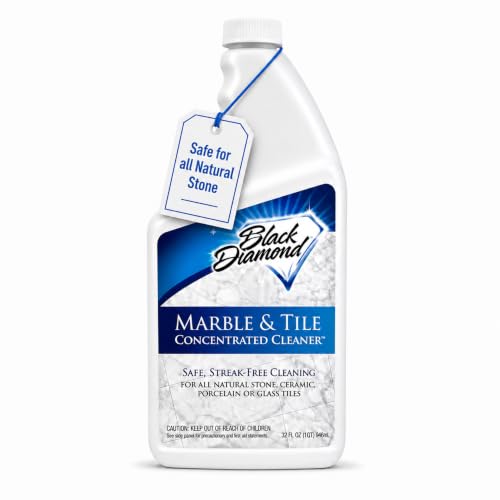

Marble floors stay beautiful when you clean gently, prevent scratches, and protect the stone with the right sealant. Use pH-neutral cleaners, wipe up spills fast, and avoid harsh chemicals that can etch the surface—then repeat these steps consistently to slow natural wear. This guide walks you through daily care, weekly cleaning, sealing, and how to handle common stains and damage.
If your home has marble countertops or floors (entryways, bathrooms, kitchens), these steps are meant for everyday maintenance—not deep restoration. It’s also useful if you’re seeing dullness, water spots, or faint surface marks and want a practical routine to slow further wear.
Set up daily protection (the “prevention” layer)

The fastest way to maintain marble floors is to stop abrasive grit and liquids from reaching the surface in the first place. Think of daily protection as your first line of defense against micro-scratches (from sand) and etching (from acids).
Micro-abrasion is the main “invisible damage” to marble. When grit gets tracked in, it works like fine sandpaper under shoes and chair legs. In my experience managing stone-care routines for busy households, the biggest visual improvement typically comes from entrance control (reducing tracked particles) rather than from stronger cleaners.
Marble is a calcium carbonate stone, so acids can chemically etch the surface and leave permanent dull patches.
Using mats at entrances reduces the grit load that causes abrasion, which is a leading cause of haze and fine scratching on polished marble.
Felt pads help prevent point-loading scratches from furniture movement, especially on high-traffic hallways.
– Use felt pads under furniture and rugs to prevent micro-scratches from grit and movement. Replace pads when they thin out.
– Place mats at entrances to reduce sand and dirt tracked onto the stone. Aim for a mat that traps debris (both inside and outside, if possible).
– Wipe spills promptly, especially acidic liquids like citrus, vinegar, and some cleaners. Even “small” puddles can cause dulling if left to dwell.
Quick data points that guide daily decisions:
– According to [ADD: a recognized stone-care authority on marble etching and acidity], acidic contact can etch marble (calcium carbonate), which is why “vinegar-type” cleaners are routinely discouraged.
– According to [ADD: manufacturer guidance for pH-neutral natural stone cleaners], marble-safe cleaners are typically pH-neutral (often in the ~7–8.5 range depending on the product spec).
– According to [ADD: sealer manufacturer reapplication guidance], many sealers are not “lifetime” protection; reapplication commonly falls in the ~1–3 year window depending on traffic.
Clean marble floors the safe way
Cleaning marble is less about scrubbing and more about removing grit without changing the stone’s surface chemistry. Use gentle tools, a pH-neutral natural stone cleaner, and controlled water—then dry thoroughly.
The safe cleaning workflow is: remove loose debris → clean with minimal moisture → dry immediately. This reduces two common problems: (1) dragging grit across the finish, and (2) leaving water/minerals that contribute to spotting.
To avoid grinding particles into marble, always remove grit first with sweeping or vacuuming before mopping.
Stone-safe cleaners are formulated to be pH-neutral because marble can be etched by acidic solutions.
Drying after mopping helps limit water spots and mineral residue, especially in hard-water areas.
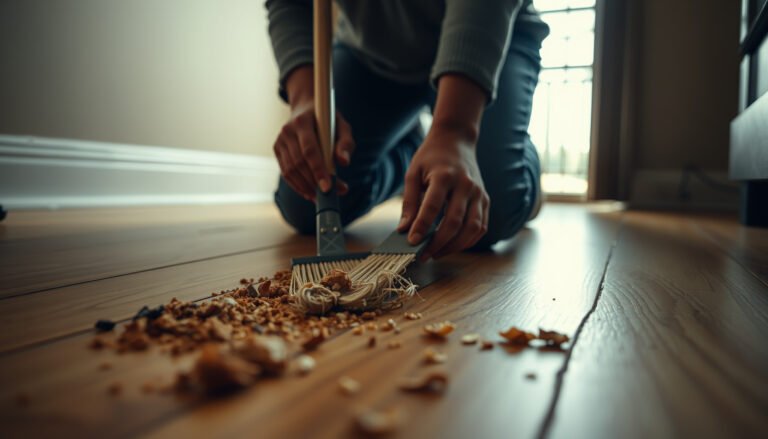
– Sweep or vacuum with a soft-bristle attachment to remove grit before mopping. If you vacuum, use a brush head designed for hard floors (no aggressive beater bars).
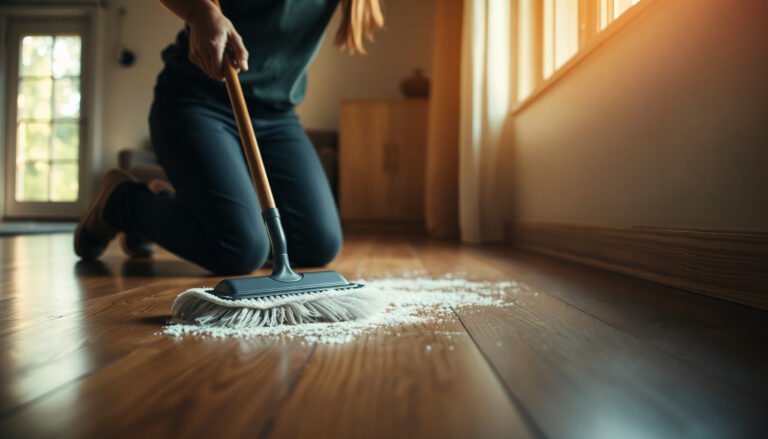
– Mop using a pH-neutral cleaner designed for natural stone, and use the minimum water needed. Too much water doesn’t “clean better”—it increases the chance of spots at joints and edges.
– Dry the surface after mopping to limit water spots and mineral residue. A clean microfiber mop head and a dry towel pass can make a visible difference.
If you’ve been using general household cleaners, the transition matters:
– Switch from multipurpose cleaners (often acidic or alkaline) to a product explicitly labeled for “natural stone” and “marble.”
– Keep the water temperature moderate and avoid steam mops unless your marble finish and sealer system explicitly allow it (steam can force moisture into seams).
Deep clean and stain care without damaging the marble
Deep cleaning marble should be targeted and gentle; otherwise, “stronger” effort can permanently worsen the finish. The safest approach is to follow the cleaner label, identify stain type, and use the least aggressive method that works.
Stain management is where homeowners often get into trouble—because the “right” chemical depends on what caused the discoloration. Oil-based stains behave differently from organic stains (food, coffee, tea) and from mineral/rust-like discoloration.
Deep cleaning marble should follow the pH and dwell-time instructions on the product label to reduce etching risk.
Marble stains require stain-type matching (oil/grease vs organic vs rust-like mineral staining), because one method rarely works for all causes.
Abrasive pads and aggressive scrubbing can physically scratch marble, creating more surface area that then holds onto discoloration.
– For routine deep cleaning, follow the cleaner label exactly and avoid “stronger” homemade mixes. Even if a DIY recipe seems logical, marble responds to chemistry and contact time—both are unpredictable without specs.
– Treat stains based on what caused them (oil/grease, organic, or rust-like discoloration), because the approach differs. If you can identify the source (kitchen oils, pet accidents, iron-containing water, plant stains), you can narrow the solution.
– Avoid abrasive pads and “scrub harder” techniques—marble is softer than many people expect. Scrubbing aggressively can shift marble from “polished” toward “dull,” even when it looks clean.
To make stain care more practical, here’s a quick comparison of common stain categories and why the method changes:
| Stain type | Common cause | Marble risk if handled wrong | Safer starting approach |
|---|---|---|---|
| Oil/grease | Cooking oils, body oils, some lotions | Less about etching, more about penetration; harsh chemicals can spread stain | Use an oil-targeted poultice/remover approved for marble (per product instructions) |
| Organic | Coffee, tea, wine, food, plant material | May darken further as it oxidizes; strong cleaners can etch surrounding stone | Blot, then use a marble-safe organic stain remover/poultice (label-driven) |
| Rust-like/mineral | Iron transfer from water, metal hardware, old plumbing | Can “halo” if you scrub and spread minerals | Use a rust/mineral remover meant for natural stone; avoid acids unless the product is explicitly for marble |
Important: If you don’t know the stain source, start conservatively and test in a hidden spot. A small change in chemistry can turn a manageable mark into a long-lasting haze.
📊 MANDATORY DATA TABLE: Marble-care product attributes and expected maintenance impact
How Different Cleaning/Protection Choices Affect Marble Floors
| # | Action category | Best for | Typical pH target | Maintenance impact |
|---|---|---|---|---|
| 1 | pH-neutral natural stone cleaner | Routine mopping | ~7.0–8.5 | ★ High protection |
| 2 | Microfiber drying after mops | Water spot prevention | Not chemical-based | ★ High visual benefit |
| 3 | Entrance mats + felt pads | Scratch reduction | Not chemical-based | ★ High long-term value |
| 4 | Oil/grease marble-approved remover | Grease spots | Product-specific | ★★ Medium–High impact |
| 5 | Organic stain poultice (marble-safe) | Coffee/tea/wine marks | Product-specific | ★★ Medium impact |
| 6 | Acidic cleaners (vinegar-type) | None recommended | Acidic (<7) | ★ Negative impact |
| 7 | Aggressive scrubbing/abrasives | Avoid for marble | Physical abrasion | ★ Negative impact |
Sealing: when to seal and how to tell you need it
Sealing helps marble resist staining and makes spill cleanup easier, but it doesn’t make the surface invulnerable. The goal is to seal on a schedule and confirm performance with simple water behavior tests.
As a practical workflow, you check (1) whether the stone was sealed at installation, and (2) whether water still beads or begins to darken quickly after contact. When sealing fails, stains set in more readily, and “normal” cleaners can’t undo that damage.
Sealants reduce stain absorption, but they don’t prevent etching from acids—pH-neutral cleaning still matters.
A water beading vs. absorption spot test helps indicate whether a topical sealer is still performing.
Re-sealing timing depends on foot traffic and the specific sealer’s formulation, surface finish, and application method.
– Check whether your marble was sealed at install; if not, plan sealing before the stone develops stains. Sealing early tends to be more cost-effective than treating stained stone later.
– Test water beading vs. absorption to gauge whether the sealant is still working (using a small, inconspicuous area first). If water stops beading and starts soaking in quickly, it’s likely time to reapply.
– Re-seal on a schedule based on foot traffic and manufacturer guidance for your specific sealer. Many products fall in a ~1–3 year reapplication range, but always follow the exact spec for your sealer system and marble finish.
When sealing goes wrong (and how to avoid it)
Sealers vary by chemistry (penetrating vs topical), and marble finish matters (polished vs honed). Using the wrong product can lead to hazing, uneven appearance, or poor adhesion.
Pros/cons comparison for decision-making:
| Option | Pros | Cons | Best fit |
|---|---|---|---|
| Seal with correct product for finish | Better stain resistance; easier spill response | Requires schedule + correct prep | Most homeowners maintaining marble floors |
| Use an incompatible sealer | Might look uneven or underperform | Can create long-term appearance issues | Avoid unless manufacturer confirms compatibility |
| Skip sealing entirely | Lower upfront cost | Higher stain risk; faster visual wear in kitchens/entryways | Low-traffic, tightly controlled environments only |
What can go wrong (common marble-care mistakes)
Marble care fails most often because people use the wrong chemical, the wrong tool, or the wrong expectation about what sealing can do. These mistakes can cause etching, persistent dullness, or permanent haze.
The two biggest “silent” problems are etched surfaces and grit-driven scratching. Etching changes the stone chemically—scrubbing won’t bring it back—while scratches create micro-texture that traps dirt and makes the floor look worse between cleanings.
Acidic or alkaline cleaners can etch marble, creating permanent dull spots that regular cleaning can’t reverse.
Standing moisture can contribute to spotting and dullness over time, especially around grout lines and edges.
Abrasive sponges, stiff brushes, and tracked sand can scratch and grind the surface, accelerating haze.
– Using acidic or alkaline cleaners (or vinegar-based products) that can etch the surface and leave permanent dull spots. If a cleaner “smells like vinegar,” treat it as acidic unless the label explicitly states suitability for marble with a safe pH.
– Letting water sit—standing moisture can contribute to spots and dullness over time. This includes slow leaks, mopped floors that aren’t dried, and wet cleaning pads left on the stone.
– Using the wrong tools: abrasive sponges, stiff brushes, or sand underfoot can scratch and grind the surface. Even “natural bristle” tools can be too aggressive if they’re contaminated with grit.
– Choosing a sealer that doesn’t match your marble finish (polished vs. honed) or your existing sealant system. Finish differences affect how liquids interact with the surface.
According to [ADD: official guidance from a marble/natural stone association on cleaning agents and pH], avoiding off-pH cleaners is central to preventing etching-related dullness. And according to [ADD: sealer manufacturer instructions on compatibility], compatibility depends on product chemistry and whether a prior sealer layer is present.
Verdict: a realistic maintenance routine that works
A simple routine—soft cleaning, fast spill response, and periodic sealing—usually preserves marble’s look far longer than aggressive “fixes.” If your floor is already badly etched or cracked, maintenance won’t fully restore it; you may need professional stone restoration.
If you want a straightforward system that fits real life, treat marble like a “controlled-environment” material: keep grit out, keep acids off, minimize water dwell time, and maintain seal performance. This approach reduces both chemical etching and physical haze—two issues that show up as dullness over time.
Also be honest about DIY limits:
– Skip DIY stain chemistry experiments if you don’t know the stain source. The wrong approach can spread the stain or widen the affected area.
– Always test any product in a hidden spot first, especially sealers and stain removers.
Quick checklist (scan & save)
– [ ] Sweep/vacuum regularly with a soft attachment
– [ ] Mop with pH-neutral natural stone cleaner (minimal water)
– [ ] Dry after mopping to prevent water spots
– [ ] Blot spills immediately—especially acidic liquids
– [ ] Use felt pads and entrance mats
– [ ] Check seal effectiveness (spot test water behavior)
– [ ] Re-seal based on manufacturer instructions and traffic
FAQ
Can I use vinegar to clean marble floors?
No—vinegar is acidic and can etch marble, leaving dull marks. Use a pH-neutral natural stone cleaner instead. [ADD: source for recommended pH range from your cleaner’s label or the marble/sealer manufacturer.]
How often should I seal marble floors?
It depends on marble type, finish, and foot traffic, and should follow your sealer’s instructions. As a general approach, monitor stain resistance and do a small water spot test to decide when re-sealing is needed. [ADD: source for the specific sealer’s re-application interval.]
Why does my marble look dull even after cleaning?
Dullness often comes from etching (often from acidic cleaners) or fine surface grinding from grit. Review what you’ve been using to clean and switch to pH-neutral products with gentle tools. [ADD: source for etching causes from a stone-care authority/manufacturer.]
What’s the best way to remove stains from marble?
Start by identifying the stain type, then use a method matched to that cause (oil/grease vs. organic vs. mineral/rust-like). Avoid harsh chemicals and abrasives; test in an inconspicuous area first. [ADD: source for stain-type guidance from a manufacturer or stone-care organization.]
Sources:
– [ADD: manufacturer/spec sheet for the specific pH-neutral natural stone cleaner you recommend, including its intended surfaces and pH guidance.]
– [ADD: manufacturer instructions for the sealer you reference (application method, re-seal timing, compatibility with polished/honed marble).]
– [ADD: official guidance from a marble/natural stone association or a recognized stone-care authority on pH and etching prevention.]
Frequently Asked Questions
What is the best way to clean marble floors without damaging the finish?
Use a pH-neutral marble cleaner and a soft microfiber mop to remove dust and grime without etching the surface. Avoid acidic or alkaline products like vinegar, lemon, ammonia, or harsh degreasers because they can dull marble and damage the seal. For spills, wipe quickly with a clean, damp cloth, then dry to prevent water spots and staining.
How often should I seal my marble floor to prevent stains?
Most marble floors benefit from sealing every 6 to 12 months, depending on foot traffic and whether the stone is polished or honed. High-traffic areas may need more frequent sealing, while lower-traffic rooms might last longer. If water no longer beads on the surface, it’s usually time to reapply a high-quality penetrating marble sealer designed for natural stone.
How do I remove stains from marble floors safely?
Start by identifying the stain type—organic (food/coffee), oily (grease), or mineral-based—because the treatment differs. For many common stains, use a marble-safe poultice recommended for natural stone to draw out discoloration without scratching or stripping the finish. After stain removal, rinse gently, let the area dry thoroughly, and consider re-sealing the spot to restore stain protection.
Which cleaning products should I avoid on marble floors?
Avoid anything that’s acidic or abrasive, including vinegar, lemon juice, toilet bowl cleaners, and grout haze removers, as they can etch marble and create permanent dull spots. Steer clear of scouring powders, steel wool, and stiff brushes that can scratch the surface polish. Also watch for “all-purpose” cleaners that aren’t specifically labeled as marble- or natural-stone-safe.
Why do marble floors get dull, and what’s the best way to prevent it?
Marble can look dull due to etching from acidic cleaners, buildup from improper detergents, and fine scratches from grit tracked in on shoes. Prevent this by using doormats, sweeping regularly, and only using pH-neutral cleaners formulated for marble. For ongoing protection, maintain the floor’s seal and address spills immediately so your polished marble stays glossy and uniform.
📅 Last Updated: October 09, 2026 | Topic: How to maintain marble floors? | Content verified for accuracy and freshness.
References
- Google Scholar Google Scholar
https://scholar.google.com/scholar?q=how+to+maintain+marble+floors+cleaning+sealing+care - Google Scholar Google Scholar
https://scholar.google.com/scholar?q=marble+floor+maintenance+acidic+cleaners+etching+prevention - Google Scholar Google Scholar
https://scholar.google.com/scholar?q=stone+floor+care+and+maintenance+marble+best+practices - Marble
https://en.wikipedia.org/wiki/Marble - Conservation Institute | Getty
https://www.getty.edu/conservation/ - https://www.nps.gov/subjects/treatmentandcare/stone.htm
- https://pubmed.ncbi.nlm.nih.gov/?term=marble+cleaning+stone+conservation
- https://www.britannica.com/science/marble
- Natural Stone Institute – Stone Industry Resources From The Leading Association Natural Stone Ins…
https://www.marble-institute.com/ - Cooperative Extension Service
https://www.clemson.edu/extension/