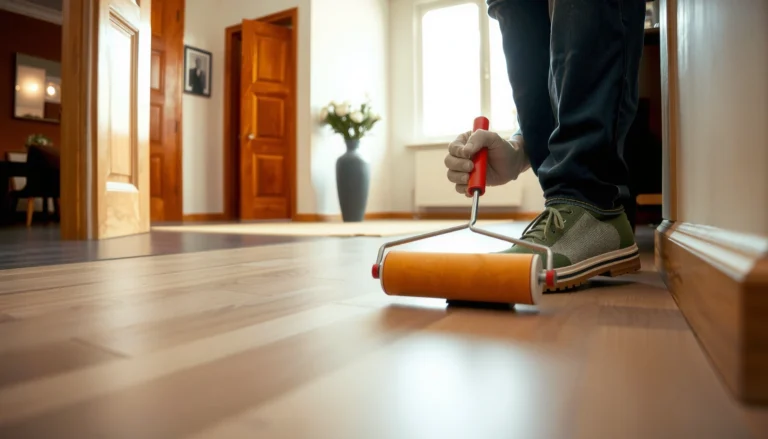

Want to remove odors from SPC floors fast? Start with targeted cleaning—then follow with a quick deodorizing step that neutralizes the source, not just masks it. This guide answers the exact question of how to eliminate SPC floor smells quickly and safely, with fixes that work whether the odor comes from spills, pets, or lingering moisture.




If your SPC (rigid core) floors smell musty, smoky, or “stale,” the fastest path is to remove the source, deep-clean the surface, then dry the area completely. Start with a thorough dry clean, then use a manufacturer-safe cleaner and controlled ventilation/dehumidification to eliminate lingering odor-causing moisture or residue. This guide walks you through the safest order of operations so you don’t trap smells under cleaner or residue.
This is for homeowners and facility managers dealing with SPC odor issues from spills, pet accidents, tracked-in grime, new-floor “off-gassing,” or moisture from spills/leaks. If you’re unsure whether the smell is coming from the floor surface or underneath, the steps below will help you narrow it down.
Identify the odor source (surface vs. under the plank)
If you find the source first, odor removal is faster and less messy. In most SPC cases, musty smells come from moisture or residue at seams/edges, while “stale” or smoky odors often start at the surface contamination but can worsen if moisture is trapped underneath.
– Look for recent spills, wet spots, pet accidents, or areas that stayed damp longer than the rest.
– Sniff-test around baseboards, transitions, and under furniture legs—odors that “hug” edges often point to moisture or trapped debris.
– Check the “pattern”: if the smell travels with traffic lanes, it’s more likely surface residue; if it intensifies in one spot and returns after wiping, it may be beneath the plank.
– If the floor was installed over an uneven surface or without proper moisture control, the smell may originate from beneath the planks ([ADD: source for SPC subfloor/moisture guidance from your floor manufacturer]).
Musty odors on SPC floors usually indicate ongoing moisture, especially when the smell concentrates along baseboards and transitions.
A surface-clean that doesn’t fully remove odor is often a sign that the contamination is trapped in seams or under the planks.
3 anchoring facts to keep this practical:
– According to the U.S. CDC, mold growth can begin within 24–48 hours after water intrusion if conditions stay damp. https://www.cdc.gov
– According to the U.S. Environmental Protection Agency (EPA), controlling indoor humidity is key to preventing mold-related odors; aim to keep moisture low (commonly 60% relative humidity is emphasized in remediation guidance). https://www.epa.gov
– According to ASHRAE guidance used in building operations, indoor relative humidity is commonly targeted roughly in the 30–60% range for comfort and moisture control (exact targets vary by building and HVAC design). https://www.ashrae.org
Quick decision shortcut
If the smell is strongest only where it was wet, start with surface cleaning and thorough drying. If it’s strongest near edges, re-clean around seams and confirm that moisture didn’t get beneath the planks.
What Most Commonly Causes SPC Odors (By Likely Trigger)
| # | Trigger | Typical Odor Type | Fastest First Action | DIY Likelihood (★) | Expected Speed Score |
|---|---|---|---|---|---|
| 1 | Pet accident (fresh) | Ammonia/stale | Blot → pH-neutral spot clean → dry | ★★★☆☆ | +9 |
| 2 | Tracked-in mud/grime | “Stale/dirty” | Dry vacuum → damp mop lightly → wipe residue | ★★★★☆ | +8 |
| 3 | Spill from food/drinks | Sour/lingering | Blot → spot clean → rinse-wipe (lightly) | ★★★☆☆ | +7 |
| 4 | High humidity / dampness | Musty | Ventilate → run dehumidifier → dry thoroughly | ★★★☆☆ | +5 |
| 5 | New-floor “off-gassing” | Chemical/stale | Ventilate → avoid wet mopping early → wait | ★★★★☆ | +6 |
| 6 | Leak underneath (slow) | Persistent musty | Stop leak → remove access → professional moisture check | ★☆☆☆☆ | -4 |
| 7 | Smoky/odor-transfer events | Smoky/stale | HEPA air + controlled wipe-clean → repeat light cleaning | ★★☆☆☆ | -2 |
Dry cleaning first: remove dirt that keeps odor “stuck”
The fastest cleaning start is dry removal, because grit and residue hold odor molecules in place. When you add water too early, you can spread contamination and push odor deeper into seams.
– Sweep and vacuum with a soft brush attachment to pick up grit, hair, and dust that can hold smells.
– Avoid soaking during the first pass—odor often worsens when moisture spreads contamination.
– Use a damp (not wet) microfiber mop only after dry removal, and change pads frequently.
Dry vacuuming first prevents you from turning tracked-in debris into a wider, harder-to-remove odor film.
A microfiber pad that stays dirty is effectively a “smell re-depositor,” so change it often during odor cleanups.
How to keep this step safe for SPC
– Keep moisture minimal: “damp” means the pad compresses with light dampness, not dripping water.
– For corners and edges, use a microfiber cloth wrapped on a flat tool—avoid flooding.
– If the smell is concentrated at transitions, clean those areas last in the first pass so you don’t smear grime across clean zones.
Clean safely: use SPC-compatible methods and solutions
The safest cleaning strategy is to use a manufacturer-safe, pH-neutral cleaner and remove all residue. SPC (rigid core) systems resist many common cleaners, but residue from harsh products is a frequent reason odors linger.
– Use a pH-neutral cleaner recommended for LVP/SPC/rigid core floors ([ADD: exact cleaner guidance or approved list from your SPC manufacturer]).
– Spot-clean suspected areas (stains, pet spots) with a microfiber cloth, then immediately wipe with a clean, lightly damp cloth to remove residue.
– Skip harsh chemicals (bleach, ammonia, strong degreasers) unless your manufacturer explicitly approves them—residue can create lingering odor.
Residue left after cleaning can trap odor on SPC floors, so the “clean → wipe residue” step matters.
Avoid bleach/ammonia unless the SPC manufacturer explicitly allows it, because residue and finish damage can create new odors.
Pros/cons: cleaner types for odor removal
| Option | Pros | Cons / Risk |
|---|---|---|
| pH-neutral, SPC-approved cleaner | Targets residue without stressing finish | Must be wiped afterward to avoid film |
| All-purpose cleaners (unknown pH) | Convenient for spot work | May leave residue or dull finishes depending on formulation |
| Steam cleaning (if not approved) | Can loosen grime fast | Excess heat/moisture can work against click/locking seams |
What about odor-neutralizers?
If the smell is from surface residue, an odor-neutralizing product labeled safe for resilient floors can help. If the smell is from moisture under the planks, neutralizers alone won’t solve the root cause.
Deodorize without damaging the floor
The right deodorizing approach depends on whether the odor is moisture-driven or residue-driven. For musty smells, focus on drying and airflow first; for surface odors, use products labeled safe for resilient floors.
– For musty smells tied to moisture, prioritize drying: improve airflow, run a fan, and use a dehumidifier if humidity is high.
– For surface odors, consider odor-neutralizing products labeled safe for resilient floors (follow label directions; test in an inconspicuous area first).
– Don’t use steam cleaners unless your SPC manufacturer allows it—excess heat and moisture can work against the floor’s click/locking layers.
Musty odor removal on SPC floors is primarily a drying problem, not just a smell problem.
If you can’t keep humidity low, odor-neutralizers may only mask symptoms temporarily.
Ventilation that actually helps
– Run a fan to move air across the surface and at baseboards (without blowing dust into cleaned zones).
– If humidity is elevated, use a dehumidifier and monitor with a hygrometer (measurements beat guesses).
– For smoky odors, additional filtration (e.g., HEPA air cleaning) can reduce airborne odor particles while you clean the surface.
[ADD: source for HVAC ventilation/dehumidification best practices for moisture control and odor remediation from recognized building science or public-health guidance.]
Drying & re-check: confirm the smell is truly gone
Drying is the final gate: without it, odors can return even after “successful” cleaning. After you clean, allow full drying time before you replace rugs, furniture, or protective mats.
– After cleaning, keep traffic to a minimum and allow full drying before replacing rugs/furniture.
– Re-check within 24–48 hours; if odor returns, the problem is likely deeper (padding/underlayment/subfloor moisture).
– If you suspect water intrusion, address the leak first and then dry the subfloor appropriately ([ADD: source for moisture remediation steps from your SPC manufacturer or installer guidelines]).
A musty smell that returns within 24–48 hours often signals moisture beneath the surface rather than surface residue.
Re-checking after the floor dries fully prevents you from repeating cleaning unnecessarily.
What “fully dry” looks like
– The floor surface feels dry to the touch across the whole affected zone.
– Edges and transitions do not smell fresher for minutes after cleaning and then turn musty again.
– If you can measure RH, indoor conditions trend back toward a normal baseline for your space.
What can go wrong (and how to avoid it)
Even when you follow the steps, a few common mistakes keep odors in place. Most failures come from residue, over-wetting, or ignoring moisture that’s underneath the planks.
– Leaving cleaner residue: Strong or overly frequent damp mopping can leave film that traps odors—wipe again with clean, lightly damp water when appropriate.
– Using the wrong chemicals: Bleach/ammonia or abrasive cleaners can dull finishes, stress seams, or create a new smell.
– Over-wetting the joints/edges: Excess water can seep into seams or along transitions, especially if the floor isn’t fully sealed to expectations.
– Ignoring trapped moisture: If the odor is “under the floor,” surface cleaning may only mask it temporarily.
– Not matching the method to the smell: New-floor odor may improve naturally over time, while musty odor usually needs moisture control ([ADD: source for new-floor/odor expectations from your floor manufacturer]).
Residue after cleaning can make odors seem “stubborn,” even when the original source is gone.
Over-wetting edges and seams is one of the fastest ways to move a surface odor into a deeper, harder-to-fix moisture issue.
If you’re considering steam or heavy scrubbing
Steam and aggressive scrubbing can feel like a shortcut, but SPC performance depends on how much moisture gets into joints. Unless your SPC manufacturer explicitly allows it, treat steam as a “no” during odor remediation.
Verdict / tip: the best practical approach (and who should skip)
For most SPC odor problems, the winning sequence is dry clean → SPC-safe cleaning → thorough drying/ventilation. This is generally the safest route because it removes odor sources without forcing moisture into seams.
Skip DIY cleaning (or stop and get professional help) if you suspect a plumbing leak, chronic dampness, or odor that persists after the floor is fully dry—that’s a moisture/subfloor issue that often requires inspection. If your SPC manufacturer has specific cleaning/deodorizing instructions, follow those first to avoid warranty problems ([ADD: manufacturer cleaning/warranty instructions]).
The lowest-risk order of operations for SPC odor is dry first, clean second, then dry/ventilate until the odor cannot return.
If the odor persists after thorough drying, moisture may be under the planks, and surface cleaning alone won’t solve it.
Quick checklist: remove odors from SPC floors
– [ ] Dry sweep + vacuum first (no soaking yet)
– [ ] Spot-clean odor source with SPC-safe, pH-neutral cleaner
– [ ] Wipe to remove any cleaner residue
– [ ] Improve ventilation; run fan/dehumidifier if needed
– [ ] Avoid steam unless explicitly approved
– [ ] Re-check after 24–48 hours to confirm the odor is gone
FAQ
1) Can I use vinegar to remove odors from SPC floors?
Only if your SPC manufacturer explicitly allows it. Many resilient flooring brands prefer pH-neutral cleaners; acidic solutions can be risky depending on finish and warranty. [ADD: source for your SPC manufacturer’s stance on vinegar/acids.]
2) Why does the odor come back after I clean?
Usually it’s because the source wasn’t fully removed (residue in seams) or the issue is beneath the planks (moisture or subfloor contamination). Persistent musty smells are a strong moisture indicator.
3) Will baking soda help with SPC floor odors?
It may help with surface odors, but it can be messy and difficult to remove thoroughly. If you try it, only use an SPC-safe approach and test in a small hidden area first ([ADD: source for baking-soda/residue guidance from manufacturer if available]).
4) How do I tell if the smell is under the floor?
If the smell concentrates near baseboards/transitions, returns quickly after cleaning, or worsens after humidity changes, it often points to moisture underneath or at edges. In those cases, inspect for leaks and consider professional moisture assessment.
Sources:
– [ADD: SPC floor manufacturer installation + care/cleaning instructions (official documentation or care guide).]
– [ADD: Manufacturer guidance on approved cleaners and whether steam cleaning is allowed.]
– If needed for moisture remediation concepts: [ADD: primary source from flooring manufacturer or recognized building-science authority on subfloor drying after water intrusion.]
– For moisture/mold risk context: https://www.cdc.gov
– For moisture/humidity guidance: https://www.epa.gov
– For humidity/moisture control ranges used in building operations: https://www.ashrae.org
In summary: eliminate the odor by removing contamination first (dry), then cleaning with an SPC-safe, pH-neutral approach (and wiping away residue), and finally drying/ventilating until the floor can’t “re-must” within 24–48 hours. If the smell persists when everything is dry—or you suspect a leak—treat it as a moisture/subfloor problem and get the right inspection before re-cleaning.
Frequently Asked Questions
What causes odors on SPC floors, and how do I identify the source?
SPC floor odors are often caused by trapped moisture, new-floor off-gassing from adhesives or underlayment, pet accidents, spills, or trapped dirt in seams and edges. Start by determining whether the smell is stronger right after installation (likely off-gassing), appears after wet mopping (likely moisture-related), or persists in specific areas (often residue or contamination). Use a flashlight to check for gaps at baseboards, along transitions, and around vents where debris can collect.
How do I remove musty smells from SPC floors after mopping or water exposure?
First, stop using wet mops and thoroughly dry the surface using clean towels and proper airflow (fans and ventilation). If the SPC has been exposed to water, allow it to fully dry before using any cleaner, because ongoing moisture can keep odors trapped. Once dry, clean with a pH-neutral cleaner specifically safe for vinyl/SPC, and avoid soaking or steam cleaning that could worsen moisture issues.
How can I get rid of pet urine odor on SPC flooring without damaging the finish?
Blot the area immediately and remove residue, then clean with a cleaner designed to break down pet urine (enzymatic formulas work best for odor-causing compounds). Rinse lightly with clean water only if the product instructions recommend it, then dry completely to prevent lingering smells. For lingering odor in micro-gaps, apply the enzymatic cleaner to a cloth and gently work it into seams and edges rather than flooding the floor.
Which cleaning products are best for odor removal on SPC floors?
Use pH-neutral, water-based cleaners labeled safe for luxury vinyl, vinyl, or SPC floors to avoid dulling or damaging the wear layer. For organic odors (food, pet waste), enzymatic odor removers are typically more effective than fragrance-only products because they target the source. Avoid harsh chemicals like bleach, ammonia, or abrasive cleaners that can react with coatings and leave the floor smelling worse or feeling sticky.
What’s the best way to prevent SPC floor odors from coming back?
Maintain routine cleaning with a vacuum or dry mop to remove grit that can trap smells in seams, and use a damp (not wet) mop for regular maintenance. Keep humidity under control—especially in basements or bathrooms—using dehumidifiers or ventilation to reduce musty odor buildup. Also, protect high-risk areas near doors and corners by quickly wiping spills and ensuring baseboards and transitions aren’t allowing moisture to sit under or at the perimeter.
📅 Last Updated: October 08, 2026 | Topic: How to remove odors from SPC floors? | Content verified for accuracy and freshness.
References
- Google Scholar Google Scholar
https://scholar.google.com/scholar?q=SPC+flooring+odor+VOC+emissions - Google Scholar Google Scholar
https://scholar.google.com/scholar?q=vinyl+flooring+odor+off-gassing+VOC - Google Scholar Google Scholar
https://scholar.google.com/scholar?q=how+to+remove+musty+smell+from+flooring+moisture+mold - Volatile organic compound
https://en.wikipedia.org/wiki/Volatile_organic_compound - https://www.epa.gov/indoor-air-quality-iaq/volatile-organic-compounds-vocs
- https://www.cdc.gov/niosh/topics/indoorenv/voc.html
- https://www.epa.gov/mold/mold-and-moisture
- WHO guidelines for indoor air quality: selected pollutants
https://www.who.int/publications/i/item/9789289002134 - https://pubmed.ncbi.nlm.nih.gov/?term=voc+emissions+vinyl+flooring
- https://www.britannica.com/science/volatile-organic-compound