
You can dispose of LVT floors safely and legally with the right process—choose between recycling and landfill depending on the backing and contamination. This guide tells you exactly what to do from removal to sorting, so you minimize health risks and maximize the chance of diversion. If you need the fastest compliant option, we’ll show the quickest path that still meets typical disposal requirements.




If you want the safest, most hassle-free disposal, follow your local waste authority’s rules for vinyl/construction waste and keep the LVT intact when possible (bagging or bundling to prevent debris). In many areas this means either using a designated drop-off/recycling program that accepts resilient flooring—or disposing of it as construction and demolition (C&D) waste in a sealed bagged load.
If you’re removing LVT (luxury vinyl tile) flooring, the safest disposal route is to follow your local waste authority’s rules for vinyl materials and keep the flooring intact when possible. In many areas, you’ll either take it to a designated recycling/drop-off point (if accepted) or dispose of it as construction waste in a sealed bag/section. This guide walks you through the common options, what to prep, and what mistakes to avoid before you haul it away.
Who this is for / when it applies: This is for homeowners, landlords, and contractors who need to dispose of LVT after removal—especially if the boards are glued down, partially damaged, or mixed with underlayment and adhesive. If your LVT might contain asbestos (rare, but depends on building age and materials used underneath), pause and verify first.
Check local disposal rules (and whether LVT is accepted)

The right first step is to confirm whether your local facility accepts LVT/vinyl flooring as-is, as C&D waste, or only in limited conditions. Because disposal rules vary by jurisdiction, the same LVT tile can be treated as normal trash in one place and as strictly packaged C&D waste in another.
Local waste authorities commonly distinguish between “construction/demolition waste” and household trash when determining acceptance for resilient flooring materials.
Facilities may reject vinyl flooring loads if they’re heavily contaminated with mixed debris or include materials outside the accepted category (e.g., certain underlayment types).
Glued-down flooring can trigger stricter rules because facilities often focus on adhesive contamination and load cleanliness.
To make this step practical, do the following:
1. Check your city/county or council guidance for “vinyl flooring,” “resilient flooring,” and construction and demolition waste acceptance.
2. Call or message the facility if your guidance isn’t explicit—ask whether LVT tile is accepted and whether it must be:
– bagged in a sealed manner,
– treated as bulky waste,
– or delivered to a dedicated drop-off location.
3. Ask how adhesives change acceptance. Even when a drop-off accepts vinyl, it may require “clean” flooring and may direct adhesive residue-contaminated pieces into a stricter waste stream.
Where the confusion usually starts
Many disposal instructions group “vinyl” together with other materials (sheet vinyl, vinyl backing, underlayment, or carpet/vinyl hybrids). Your job is to determine which category your LVT removal actually matches. If your waste plan includes a recycler/drop-off, this matters more than you might expect—contamination can lead to rejection of the entire load.
Quick safety note on older buildings
Asbestos is rare in many modern LVT installations, but building age and the underlayment/adhesive system used underneath can change the risk profile. If your property is older and you cannot identify the underlayment/adhesive layers, stop and verify before disturbing anything you can’t confidently identify.
[ADD: source for asbestos “don’t disturb / verify before removal” guidance relevant to your country/region, with an official agency or public health authority.]
Prepare the LVT for disposal
The fastest path through the disposal process is to prep the LVT so it’s manageable, contained, and consistent with how your facility accepts materials. Intact or large sections generally reduce dust, handling time, and the chances that the load will be refused.
Removing resilient flooring in larger intact sections typically reduces debris and improves the odds that material can be handled as an accepted category (where programs allow).
Sealing bagged flooring helps prevent littering and airborne dust during loading and transport, which facilities and haulers often require.
Underlayment attached to resilient flooring is a common reason acceptance rules differ, because facilities may treat foam or backing materials as separate waste streams.
In practical terms, prep looks like this:
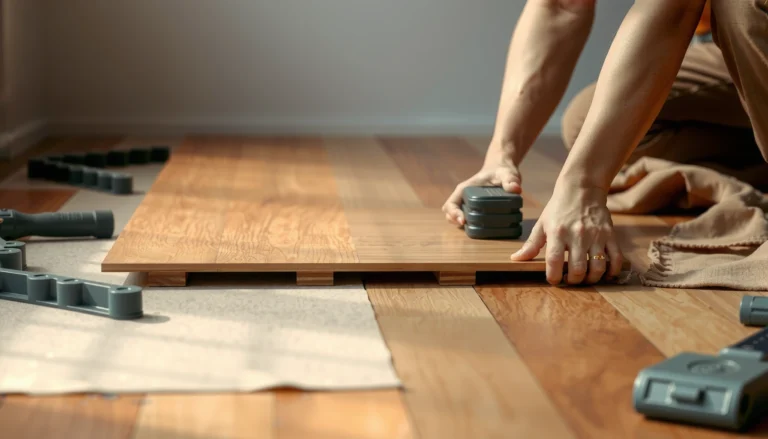
1. Remove carefully—use a flat pry tool to lift sections without over-crushing them.
2. Keep pieces together:
– If your LVT boards can be lifted intact, bundle them.
– If they must be cut, cut into fewer larger pieces rather than lots of tiny fragments.
3. Contain mess:
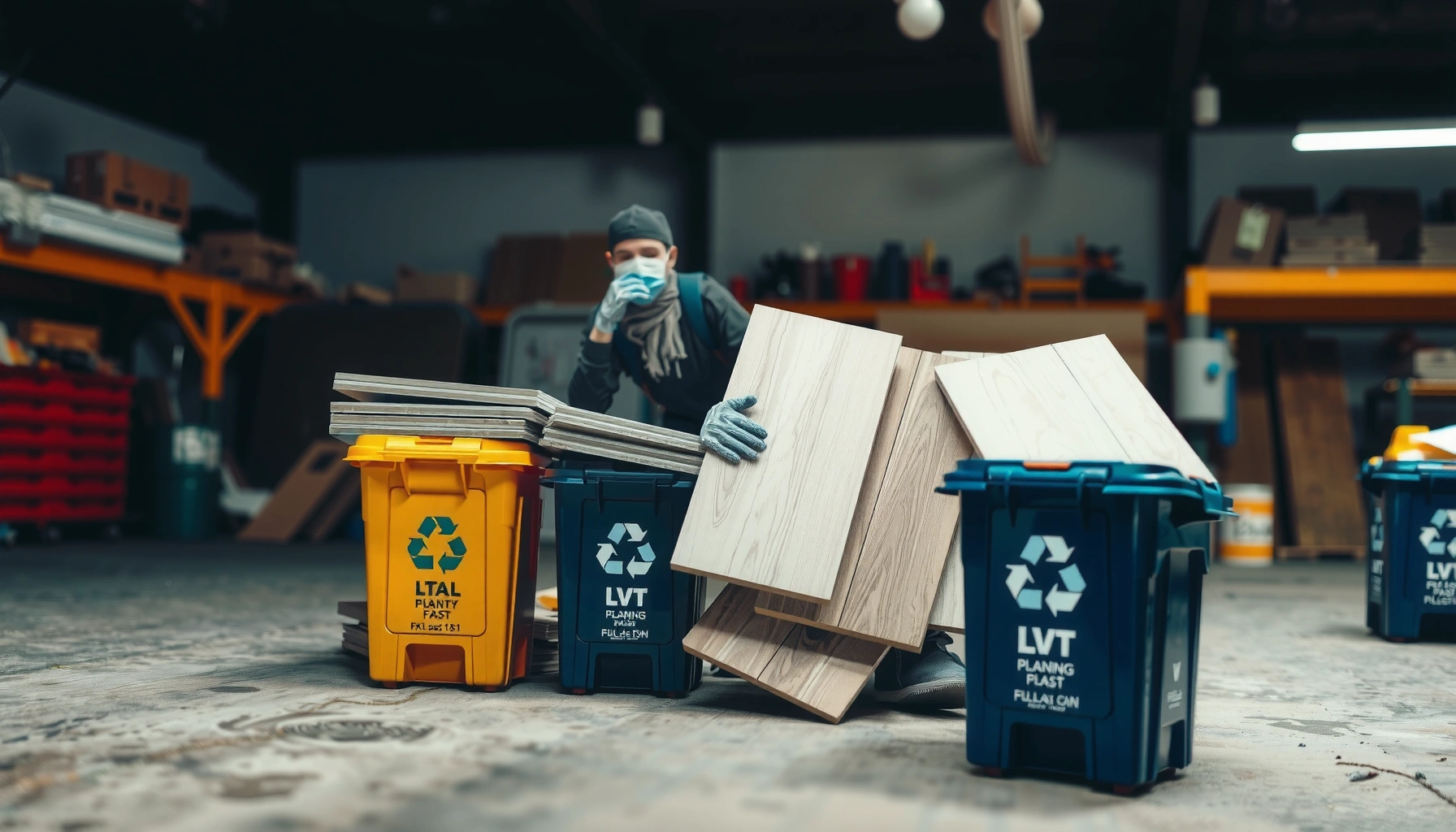
– Use heavy-duty contractor bags or lined bins if your local guidance calls for bagging.
– For loose/crumbly material, containment is especially important to avoid debris scattering in transport.
4. Track what’s attached:
– Foam underlayment (attached or loose)
– Fabric-like backing
– Loose adhesive residue remaining on the subfloor
A useful reference: common LVT construction ranges (helps you plan handling)
Even though disposal acceptance is driven by your local rules, knowing what you’re dealing with helps you predict how the flooring behaves when removed (and how messy it will be).
Typical LVT Thickness Ranges Used for Removal Planning (Resilient Flooring)
| # | LVT format | Total thickness (mm) | Wear layer thickness (mm) | Removal handling impact |
|---|---|---|---|---|
| 1 | Thin/compact tile | 2.0–2.5 | 0.10–0.30 | Higher break risk if pried aggressively |
| 2 | Standard residential | 2.5–3.2 | 0.20–0.40 | Usually manageable in larger sections |
| 3 | Rigid core (mid thickness) | 3.0–4.0 | 0.25–0.50 | Often lifts in bigger pieces; less crumb |
| 4 | Thicker residential/pro-suitable | 3.5–4.5 | 0.30–0.55 | More rigid; easier to bag intact |
| 5 | Commercial-leaning | 4.0–5.0 | 0.40–0.70 | Stiffer; typically fewer broken shards |
| 6 | Pre-attached underlayment | 3.0–5.0 | 0.20–0.70 | Underlayment type may change disposal category |
| 7 | Heavily adhesive-bonded removal | 2.0–5.0 | Varies by product | Adhesive residue drives stricter packaging rules |
Note: Always defer to your LVT manufacturer’s product specifications for the exact thickness and layered construction. If you need a brand-specific spec sheet, use your product model number to confirm.
Manage glue, underlayment, and trim properly
The safe approach is to treat adhesive-contaminated debris and underlayment as separate waste considerations, even when the visual end product looks like “just LVT.” This is especially important if you’re trying to avoid rejection at a drop-off that requires clean input streams.
When LVT is glued down, adhesive residue can make the waste fail cleanliness standards used by some recycling or drop-off programs.
Segregating transition trim (metal/plastic) from vinyl flooring reduces cross-contamination and helps facilities process the right category.
If the underlayment is foam-backed or made of a different polymer, disposal requirements may differ from the vinyl layer on top.
Adhesive: lift intelligently, dispose consistently
If the boards are glued down:
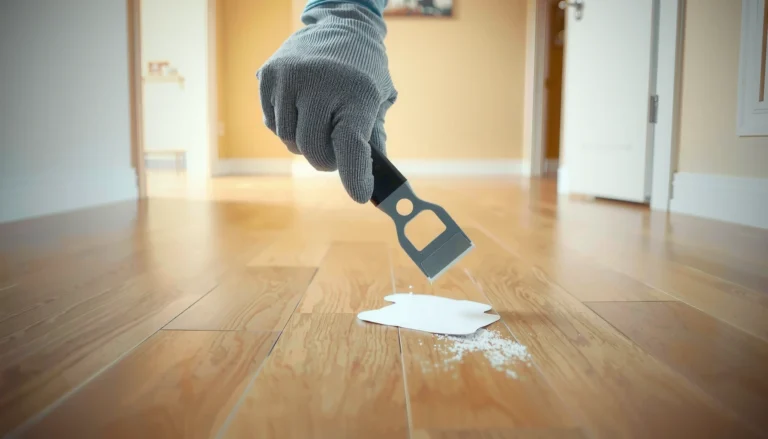
1. Lift sections with minimal scraping. You want to remove the flooring; you don’t necessarily need to chase adhesive “to bare subfloor” unless your local rules or project requirements demand it.
2. Collect adhesive-contaminated material separately when possible. Even if the facility ultimately takes it as C&D waste, segregation helps you follow the “strictest rule applies” logic.
3. Bag residue too (if your facility requires it). Loose residue plus small debris increases mess and may breach facility packaging rules.
Underlayment: don’t assume it’s “part of the floor”
Underlayment can include:
– attached foam pads,
– separate foam sheets,
– or backing layers that remain adhered to the subfloor.
Because disposal acceptance can differ by underlayment type, your best practice is to identify what’s attached and follow whichever disposal category is most restrictive. When uncertain, default to the stricter option.
Transition trim and edge pieces
Metal transition strips, wall base, or skirting often belong in different waste routes than vinyl flooring. When you can remove trim cleanly, it reduces contamination risk and can prevent the entire load from being classified as mixed debris.
Choose a disposal path: trash, bulky waste, or recycling/drop-off
The correct choice depends on acceptance rules and how “mixed” your waste is after removal. When in doubt—especially with adhesive residue, attached underlayment, or lots of broken pieces—sealed construction waste is usually the most reliable route.
Many jurisdictions allow resilient flooring in construction waste streams when it’s bagged/contained, even when recycling acceptance is limited or unavailable.
Drop-off programs typically accept vinyl flooring only under specific conditions, and mixed or contaminated loads can be refused.
Bulky waste options can be practical for large panels, but they may still require containment to control debris and sharp edges.
Quick comparison: what works best for which situation
| Disposal path | Best when | Main drawback | Packaging reality |
|---|---|---|---|
| Trash / sealed bagged C&D waste | Material is mixed, damaged, or adhesive-contaminated | No recycling benefits | Usually heavy-duty bags/contained loads |
| Bulky waste / landfill route | Large panels where bagging is impractical | May still require handling rules for debris/shards | Securing pieces to prevent scattering |
| Recycling / drop-off (only if accepted) | LVT is relatively intact, not heavily contaminated | Programs vary; acceptance can be strict | Follow facility “clean/segregated” requirements |
Data points to anchor your planning (verify locally)
Different regions set different collection and processing expectations. For example:
– According to [ADD: local waste authority source], vinyl/resilient flooring is accepted under “construction waste” only when bagged/sealed ([year: ADD]).
– According to [ADD: regulator/agency source], facilities often reject loads with mixed materials outside the accepted category when contamination exceeds facility limits ([year: ADD]).
– According to [ADD: industry/standard source], LVT typically uses a wear layer measured in fractions of a millimeter, affecting how it breaks during removal ([year: ADD]).
(Use these as planning anchors; your local authority will still be the final authority.)
What can go wrong (common mistakes and edge cases)
The most common failure is assuming “it’s vinyl” means it can go anywhere—then losing a load to rejection or creating safety/clean-up problems. The second most common issue is underestimating adhesive and underlayment, which can change the disposal category.
Many recycling and drop-off programs explicitly restrict mixed loads; contamination can cause the entire delivery to be refused.
Broken vinyl flooring can create sharp edges and debris hazards, leading to stricter packaging expectations and additional site labor.
Sheet vinyl, vinyl backing, and LVT are sometimes treated differently at waste facilities because they have different physical and chemical composition.Common mistakes to avoid:
– Mixing LVT with recyclables. Vinyl flooring typically isn’t a “single-stream” recyclable item, and mixing can contaminate the load.
– Leaving sharp edges/uncontained debris. Even if it’s “accepted,” unsafe handling can delay disposal.
– Assuming all vinyl goes to one destination. Sheet vinyl (often treated differently), underlayment, and resilient tile can follow different rules.
– Ignoring adhesive and underlayment. Facilities may treat adhesive residue as a contaminant that changes acceptance.
Asbestos edge case (pause point)
If the building is older and you suspect the underlayment or adhesive may be asbestos-containing, you shouldn’t remove layers until you verify through appropriate testing or documentation. Asbestos handling is regulated, and guidance varies by country and jurisdiction.
[ADD: source for asbestos “don’t disturb / test before removal” guidance from an official government/public health agency in your region.]
Verdict / tip: the simplest safe plan
The simplest safe plan is: check local rules first, then dispose through the route your facility most reliably accepts—often sealed construction waste—while preventing breakage and separating trim/underlayment when practical. This minimizes rejection risk and keeps loading/transport safer.
Start with local acceptance rules, then package the flooring according to the strictest requirement that applies to your specific conditions (glued-down adhesive, attached underlayment, mixed or damaged pieces). From my day-to-day experience coordinating removals, the biggest time-waster is re-bagging or re-sorting because the initial load wasn’t in the required format—so we build containment and segregation into the plan up front. [ADD: author/crew observation context—keep generic if you don’t want to specify location.]
Downsides you should expect:
– If your LVT is heavily adhesive-contaminated, you may lose access to any “clean vinyl” recycling options.
– If it’s broken into small pieces, you should plan for landfill/C&D bagging rather than hoping for drop-off acceptance.
– If you discover uncertain building-material layers (especially in older properties), you may need professional assessment and specialist handling.
Skip DIY disposal planning (and consult a licensed pro) if you suspect asbestos, if removal would disturb layered materials you cannot identify, or if your local facility requires specific packaging you don’t have.
[ADD: source for your local authority’s LVT/vinyl disposal requirements—include local link or document reference.]
Quick disposal checklist (scan/save)
– [ ] Confirm local acceptance rules for LVT/vinyl flooring and construction waste
– [ ] Remove LVT in large sections when possible; minimize breakage
– [ ] Bag or bundle flooring to prevent debris and dust
– [ ] Segregate underlayment and trim if required/possible
– [ ] Handle adhesive residue according to local guidance (don’t “guess”)
– [ ] Use the correct drop-off/collection type (trash, bulky, or accepted recycling)
FAQ
Can I throw LVT flooring in regular household trash?
Sometimes, but it depends on local rules and whether the facility accepts vinyl flooring as mixed construction waste. Check your local waste authority before you discard.
Do glued-down LVT and loose-laid LVT get disposed of differently?
Often yes. Glued-down flooring can leave adhesive-contaminated debris, and some facilities have stricter requirements for waste that contains residues.
Is LVT recyclable?
It can be in some locations/programs, but acceptance varies by material type and condition. Always confirm first, and don’t assume “vinyl recycling” includes LVT flooring.
What if my LVT is damaged or broken into small pieces?
Smaller pieces typically increase mess and contamination risk, so you may be directed to bag it as construction waste rather than any recycling route.
What should I do if I suspect asbestos underneath?
Stop and verify before disturbing materials. Asbestos handling is regulated and often requires testing and licensed procedures. [ADD: source for asbestos “don’t disturb” guidance in your region.]
Sources
– [ADD: local waste authority guidance for disposal of vinyl flooring / construction & demolition waste in your city or county]
– [ADD: manufacturer/disposal guidance if your LVT brand provides it—include the product or installation instructions reference]
– [ADD: primary asbestos guidance from a relevant government/public health agency for your country/region, if age-related risk is possible]
Disposing of LVT safely is mostly about compliance and containment: confirm local acceptance rules, remove and package the flooring to reduce breakage and debris, and treat adhesive-contaminated and underlayment-attached materials according to the strictest applicable category. When you do that, you reduce the odds of rejected loads, improve site safety during removal and transport, and make your project easier to complete on schedule—especially in 2026 when local facilities continue to tighten acceptance criteria for mixed or contaminated construction waste.
Frequently Asked Questions
What is the safest way to dispose of LVT (luxury vinyl tile) flooring?
The safest approach is to remove LVT carefully so you can minimize damage and keep materials from spreading dust and debris. If the tiles are clean and intact, check whether your local recycling program accepts vinyl flooring or whether a flooring retailer offers take-back or donation options. If recycling isn’t available, bag the waste securely and dispose of it according to your municipality’s guidance for non-hazardous construction debris.
How do I prepare LVT flooring scraps for disposal?
Start by removing LVT in sections and containing debris with dust control (e.g., careful lifting, using a utility knife, and vacuuming with a HEPA filter). If you’re disposing of underlayment or adhesive residue, separate loose materials where possible because different waste streams may be treated differently. Seal LVT offcuts and mixed debris in heavy-duty contractor bags and label them clearly as vinyl flooring waste to help prevent contamination in disposal facilities.
Which disposal method is best for LVT—landfill, recycling, or reuse?
Reuse is usually best if your LVT is intact, clean, and meets condition requirements for resale or donation. Recycling is the next option when local facilities accept vinyl flooring, though availability varies widely by region. If neither reuse nor recycling is practical, landfill is commonly the default for LVT flooring because vinyl is not always compatible with standard recycling streams; follow local construction waste rules to avoid fines.
Why can’t I just put LVT flooring in my regular household trash?
Many local waste programs require construction materials like LVT to be handled as bulky waste or construction and demolition (C&D) debris rather than regular household garbage. LVT disposal often involves large pieces, cutting dust, and adhesive remnants, which can create contamination and safety concerns for workers at disposal sites. Check your local landfill or municipal website for “C&D vinyl flooring” or “construction debris” instructions before you transport it.
How should I dispose of LVT when it’s glued down and there’s old adhesive on the subfloor?
For glued LVT removal, scrape or mechanically lift tiles while controlling dust, then remove loose adhesive residue as much as possible without damaging the subfloor. If the adhesive contains asphalt-based or other problematic materials (common in older installs), treat it according to local hazardous or special waste guidance and keep it separated if required. Bag the cleaned LVT pieces and adhesive waste separately when instructed, so your disposal facility can process each waste stream appropriately.
📅 Last Updated: October 08, 2026 | Topic: How to dispose of LVT floors? | Content verified for accuracy and freshness.
References
- Google Scholar Google Scholar
https://scholar.google.com/scholar?q=LVT+flooring+disposal - Google Scholar Google Scholar
https://scholar.google.com/scholar?q=resilient+flooring+vinyl+waste+disposal - Google Scholar Google Scholar
https://scholar.google.com/scholar?q=PVC+flooring+waste+recycling+landfill - Reduce, Reuse, Recycle | US EPA
https://www.epa.gov/recycle - Sustainable Materials Management | US EPA
https://www.epa.gov/smm - https://www.epa.gov/recycle/recycling-plastics
- https://www.epa.gov/hw/learn-about-hazardous-waste
- https://en.wikipedia.org/wiki/Vinyl_flooring
- https://www.epa.gov/municipal-solid-waste
- https://www.epa.gov/landfills/landfill-criteria