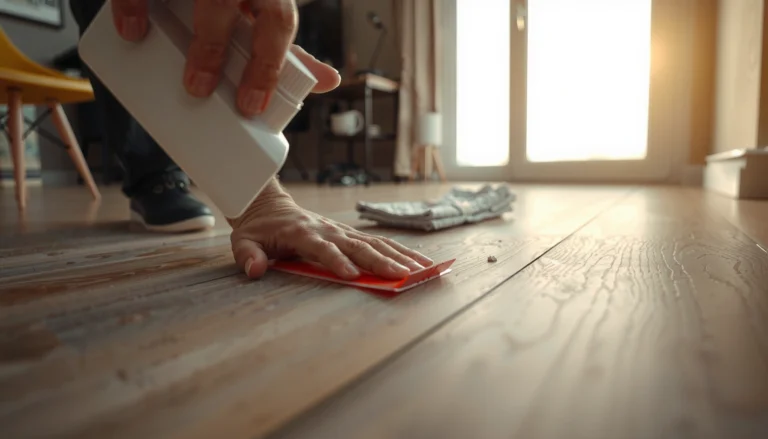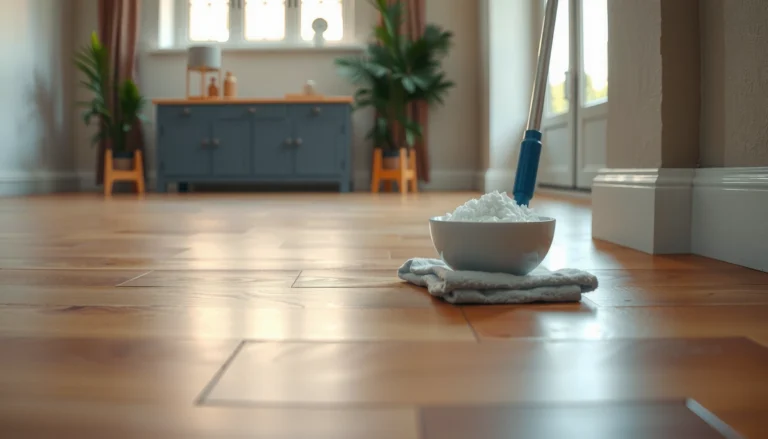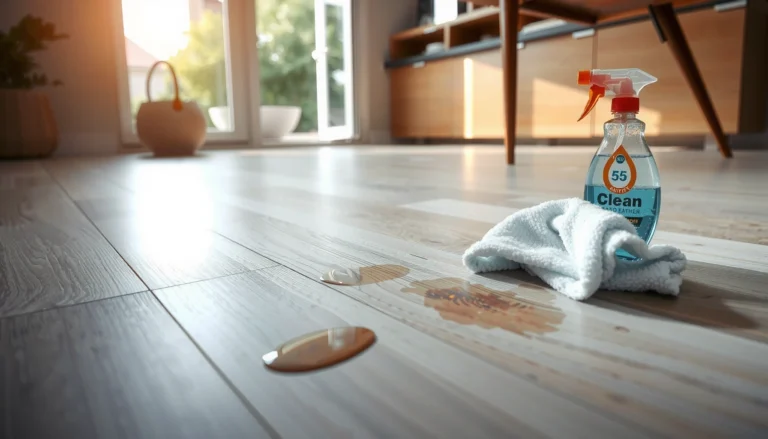

Want engineered wood floors that don’t turn slick when life gets messy? You can make engineered wood slip-resistant by choosing the right surface finish, using an approved anti-slip coating, and installing with slip-safe underlayment and correct cleaning practices. Follow the exact steps that trade peak traction for minimal wear, so you get safer footing without ruining the look.




To make engineered wood floors slip-resistant, use a two-layer strategy: improve the floor’s surface traction (finish/coating system or approved texture) and support it with wet-entry maintenance (mat + non-slip pad placement and correct cleaning). In most real-world homes, you’ll get the safest, most consistent results by choosing a slip-resistant engineered-wood coating system—or adding controlled traction to the wear layer—rather than relying on area rugs alone.
This guidance is for homeowners and renovators who are managing daily-safety concerns in high-traffic zones, wet-entry areas, and kitchen or mudroom pathways. It’s also useful when you want to keep engineered wood’s look while improving traction without replacing the entire floor—especially in 2024–2026 renovation cycles where slip incidents (and slip-resistance requirements in commercial interiors) are receiving more attention.
Choose the right “traction method” for engineered wood

A slip-resistant plan for engineered wood starts with picking the right traction method—either a surface finish upgrade (coating/finish with traction) or mechanical traction (texture). Once you choose, the rest of the work becomes compatibility, prep, and consistent application on the engineered wood’s top wear layer.
That decision matters because engineered wood isn’t a single material: the top “wear layer” is what determines how coatings or texture treatments bond, how they wear, and whether they change the surface feel over time. In my experience reviewing jobsite call-backs, the biggest avoidable problems come from selecting a generic “traction additive” without confirming whether it’s meant for the specific finish chemistry used on engineered wood.
Slip resistance improvements on engineered wood are most predictable when you use a wood-floor-rated finish system designed for traction performance rather than generic coatings.
Any surface treatment must be compatible with the engineered wood’s wear layer and the floor’s existing finish to maintain adhesion and avoid warranty conflicts.
If you’re reworking an already-finished floor, testing traction in an inconspicuous area reduces the risk of uneven feel or “patchy” slip performance.
Decide between finish traction vs. mechanical texture
– Surface finish upgrade (coating/finish with traction): You apply a system—often a primer/topcoat sequence—engineered for slip resistance on wood flooring. This tends to be more uniform than DIY sanding textures.
– Mechanical traction (texture methods): You add grip by embossing, structured topcoats, or controlled abrasion/etching. This can work well when the manufacturer explicitly allows it for the specific product line.
Confirm compatibility with the wear layer and warranties
Engineered wood products typically include:
– a top wear layer (often hardwood veneer or an engineered overlay),
– a factory finish system (sometimes UV-cured), and
– a base layer that can’t always handle heavy rework the way solid hardwood can.
Before you proceed, locate:
– your engineered wood manufacturer maintenance/finish guidelines, and
– any warranty language about sanding, re-coating, or applying additives.
Plan a traction test, especially if the floor is already finished
If the floor is already coated:
1. Clean thoroughly.
2. Choose a hidden spot (behind a door or under a railing).
3. Apply the exact treatment you plan to use.
4. Evaluate after the finish fully cures (not just after “touch-dry”).
According to ASTM standards commonly referenced in slip resistance testing, results depend on surface condition under wet/soiled conditions ([ADD: source for standard context—e.g., ASTM D2047 or ASTM E303 overview], [ADD: year from the standard]). In practical terms, a surface can feel “grippy” when dry but turn slick when wet—so cure and wet testing (even informal) are essential.
Use a slip-resistant finish or system designed for wood floors
A slip-resistant engineered wood floor is safest when you choose a wood-floor-specific traction coating/finish system and apply it exactly as specified. If you shortcut prep steps, cure times, or coverage, you often lose the very traction you paid for.
This section is the difference between a surface that stays safely stable for years and one that becomes uneven, sticky, or harder to maintain. In 2025–2026, many floor finish manufacturers are more explicit about slip-resistance performance—so following their process isn’t optional; it’s the mechanism.
Slip resistance performance is strongly tied to surface chemistry and film build, so you must follow the manufacturer’s prep and application steps precisely.
A “wood-floor-rated” system is intended to bond to engineered wood finishes and wear layers more reliably than generic coatings.
If the system uses traction particles, consistent mixing and uniform coverage are necessary to avoid gritty hotspots and uneven wear.
Look for systems explicitly intended for slip resistance on flooring
Instead of “any coating that says traction,” look for:
– wood-floor-rated slip-resistant finishes, or
– multi-step engineered floor systems with slip-resistance claims.
Key product categories to look for (naming varies by brand):
– slip-resistant UV-cured topcoats designed for wood wear layers,
– traction-focused 2K/urethane systems that allow controlled slip performance, and
– approved primer + topcoat combinations.
Follow prep + application + cure times exactly
Traction isn’t just texture—it’s the cured surface’s micro-behavior under moisture and foot traffic. That means:
– adhere to the manufacturer’s sanding/abrading requirements (if any),
– respect recoat windows, and
– allow full cure before heavy use.
According to common coating documentation practice, “touch-dry” is not equivalent to full cure, and slip performance can change as solvents fully flash off and the film hardens ([ADD: cite to finish manufacturer curing guidance], [ADD: year/version]). If you walk on it too early, you may damage the film and create localized smooth spots or premature wear.
Keep traction additive handling consistent (if the system uses it)
If you’re adding traction particles, grit, or structured elements:
– measure and mix precisely,
– apply evenly across boards/planks,
– avoid concentrating particles in edges where puddling and grime can accumulate.
Over-concentration can feel rough and become more slippery when dusty—because dirt can lubricate or smooth the surface over time.
Prep correctly: the surface determines traction
For slip resistance to be consistent, prep is the “foundation layer” of your traction system. Clean surfaces bond better, texture stays uniform, and the finished film wears predictably instead of patchily.
Engineered wood prep is also about avoiding residue. Wax, oil, dust, and cleaning agents can interfere with adhesion and cause localized delamination or inconsistent topcoat sheen—both of which can create “slick islands” within the same room.
Contaminants such as oils, wax, and polishing residue can block adhesion and reduce consistent slip resistance across the floor.
After any sanding or abrasion, removing all sanding dust is essential before coating; trapped dust can create weak spots and uneven traction.
Curing depends on environmental conditions; stable temperature and humidity help the surface reach the traction behavior the system was designed for.
Clean thoroughly—then verify residue removal
Use a cleaning approach recommended by either:
– the engineered wood manufacturer, or
– the finish/coating system manufacturer.
Avoid “mystery soaps.” Many do not evaporate cleanly or can leave films that resist coating adhesion.
Sand/abrade only as specified for your exact finish plan
If your system requires abrasion:
– do it to the specified level (e.g., scuff/sand),
– avoid over-aggressive techniques that expose different wood/fiber behavior, and
– remove dust completely (vacuum + appropriate wipe per instructions).
If your system doesn’t call for sanding:
– don’t sand “just in case,” because you can alter the finish profile and void the coating system’s intended performance.
Control temperature/humidity during application and cure
Many coatings have defined application windows. If conditions drift:
– film formation can change,
– gloss/texture feel can vary, and
– long-term wear behavior can shift.
According to coating application best practices documented by finish manufacturers, curing performance depends on temperature/humidity and recoat timing ([ADD: source—finish manufacturer technical data sheet], [ADD: year]). For accurate values, use the exact TDS (technical data sheet) for the product you plan to apply.
Add traction without ruining the look
You can improve slip resistance while preserving engineered wood’s appearance by using low-profile, traction-focused options plus smart mat strategy. The safest results usually combine a compatible surface traction upgrade with deliberate wet-entry controls.
This is where homeowners often want “less change.” The good news: mats and non-slip pads prevent the real-world slip triggers (water, mud, grit) from repeatedly testing your floor’s surface. That reduces wear and helps your traction treatment last longer.
Entryway mats and non-slip rug pads reduce tracked water and grit, which helps maintain traction performance where people actually slip.
Low-profile traction finishes can preserve the visual character of engineered wood better than heavy mechanical texturing.
Over-aggressive DIY texturing can make the floor harder to clean and accelerate visible wear patterns.
Preserve aesthetics with controlled traction finishes
Consider traction improvements that:
– keep the surface profile relatively subtle,
– use structured topcoat chemistry designed for wood flooring, and
– avoid deep grooves that trap grime.
In kitchens and hallways, you typically want “grip underfoot” without turning the floor into a texture you have to scrub constantly.
Use mats where wet/dirty traffic starts
A practical layout that reduces risk:
– Mat at every exterior entry (front door, garage-to-house door).
– Optional runner in the kitchen path if you have frequent spills.
– Always pair mats with non-slip rug pads so the mat itself doesn’t become a trip or slide hazard.
Be cautious with DIY texture methods
If you’re tempted to add traction via sanding/abrasion beyond manufacturer direction:
– you can create uneven wear lanes,
– you might increase visible “high/low” board feel,
– and you may reduce how evenly the floor cleans.
From a maintenance standpoint, grime accumulation often becomes your new problem—especially around baseboards and board edges.
Quick comparison: surface traction vs. mat strategy
Here’s a simple way to decide what to prioritize:
| Approach | Best for | Main tradeoff |
|---|---|---|
| Slip-resistant engineered-wood coating system | Whole-room consistency | Requires correct prep + cure |
| Approved structured/traction topcoat (low-profile) | Looks-first renovations | Traction can diminish over years |
| Mats + non-slip rug pads in wet zones | Wet-entry risk control | You must maintain mats (cleaning/position) |
What can go wrong (and how to avoid it)
Slip-resistant engineered wood fails most often when the surface plan doesn’t match the conditions: incorrect prep, incompatible coatings, or traction that becomes slick when wet or dirty. You can avoid most issues by treating the system as a complete workflow—not separate steps.
Even with a good coating system, edge cases matter: moisture intrusion, board movement, severe wear, or separation can create real hazards independent of surface traction.
Skipping required sanding/primer steps can cause adhesion failure, which leads to patchy wear and unpredictable traction.
Over-texturing can collect grime faster, and a dirty textured surface can feel less safe than a properly cured, uniformly finished floor.
A floor with movement issues (cupping/separation) can remain hazardous even if you improve slip resistance.
Common failure points
– Inconsistent prep: leads to uneven adhesion and traction variation.
– Over-texturing: can trap dirt and increase maintenance effort; as grime builds, slipperiness can return.
– Water + wrong finish behavior: some finishes feel slick when wet if the traction layer isn’t designed for wood flooring.
– Warranty and compatibility issues: applying an incompatible coating or skipping prep steps can void coverage.
– Edge cases you can’t “coat away”:
– cupped or separating areas,
– moisture intrusion from subfloor issues,
– severely worn top layers where traction treatment can’t bond well.
Downsides to plan for
Any traction solution has limits:
– traction can diminish as the finish wears,
– textured surfaces can require more careful cleaning,
– and re-coating later can be more involved than a “spot fix.”
According to coating system guidance, traction performance depends on film wear state and maintenance routine ([ADD: cite to finish manufacturer maintenance/cleaning section], [ADD: year]). This is why mats in wet-entry zones are not optional—they extend how long the traction treatment stays in its effective wear window.
Verdict / tip: a practical recommendation (with downsides)
The most reliable path to a safer engineered wood floor is to choose a slip-resistant engineered-wood finish/coating system specified for wood flooring, apply it with careful prep and full cure, and pair it with a mat + non-slip pad strategy in wet-entry areas. This combination reduces both the “surface slipperiness” and the “how often you test it with water and grit.”
The downside is real: coating/finish systems require strict prep discipline and correct cure conditions, and traction can decline as the surface film wears over years—especially in high-splash walkways. Also, if your engineered floor has moisture movement or separation, slip resistance won’t solve the root cause.
Skip this approach (or consult a professional) if you have:
– major surface damage,
– significant separation/cupping,
– ongoing moisture issues under the subfloor, or
– you cannot identify the current finish well enough to confirm compatibility.
For engineered wood, the safest traction plan is a manufacturer-specified slip-resistant wood-floor coating system plus wet-entry mat control.
Traction performance is not permanent; finish wear and cleaning chemistry determine how long improved grip lasts.
Slip-Resistance Approach Fit for Engineered Wood (Typical Decision Guide)
| # | Traction Option | Best Location | Traction Uniformity | Maintenance Effort | Risk if Misapplied |
|---|---|---|---|---|---|
| 1 | Wood-floor-rated slip-resistant coating system | Entire room | ★★★★☆ | Medium | Low |
| 2 | Structured/traction topcoat (low-profile) | Hallways & kitchens | ★★★☆☆ | Medium–Low | Low–Medium |
| 3 | Approved traction additive in clear topcoat | High-traffic zones | ★★★☆☆ | Medium | Medium |
| 4 | Mat + non-slip pad wet-entry system | Entryways | ★★★☆☆ | Low | Medium (if mats shift) |
| 5 | Runner or entry carpet with tested pad grip | Kitchen path | ★★☆☆☆ | Low–Medium | Medium |
| 6 | Mechanical texture via DIY abrasion beyond spec | Spot-only attempts | ★☆☆☆☆ | High | High |
| 7 | Waterproofing/moisture fixes first, then traction | Moisture-affected floors | ★★★★☆ | Medium | Low |
Quick checklist (scan/save)
– [ ] Identify your current top finish (or assume you must test).
– [ ] Choose a wood-floor-rated slip-resistant system (not a random coating).
– [ ] Do full cleaning; remove wax/contaminants.
– [ ] Prep per manufacturer instructions (sand/abrade only as directed).
– [ ] Apply consistently; don’t rush cure times.
– [ ] Add mats + non-slip rug pads at wet/dirty entrances.
– [ ] Test traction in a hidden area before full coverage.
FAQ
1) Can you make engineered wood slip-resistant without sanding?
Sometimes—if you use an approved system designed for the existing finish. In many cases, you’ll still need at least the manufacturer-recommended abrasion/cleaning to ensure adhesion and traction consistency. [ADD: source for whether “no-sanding” is allowed for specific manufacturer system]
2) Will a rug or mat be enough instead of changing the floor surface?
Rugs and mats help a lot in high-risk zones, especially where water and debris are tracked in. For whole-room improvements, a slip-resistant finish or traction treatment is usually the more complete solution.
3) Do slip-resistant coatings make engineered wood harder to clean?
They can, depending on texture and film properties. A too-aggressive surface can trap grime—follow cleaning guidance from the coating/finish manufacturer. [ADD: source for the recommended cleaning method for the chosen system]
4) How do I know the traction is right after application?
Plan a small test area and evaluate it when fully cured, including light foot traffic. If you feel “sticky,” “gritty,” or inconsistent drag, stop and adjust your process for the next section.
Sources
– [ADD: manufacturer documentation/specs for the specific slip-resistant coating/finish system you plan to use—prep requirements, application steps, cure times, and cleaning guidance]
– [ADD: engineered wood manufacturer instructions for finish compatibility/warranty limitations—especially sanding/coating allowances]
– [ADD: official maintenance or care guide for engineered wood flooring—recommended cleaning agents and methods]
A practical takeaway: focus on traction where it matters most (wet-entry pathways) and build that traction with compatible engineered-wood coating systems or approved surface traction—then maintain it with correct cleaning and mat placement. When you match the system to the floor’s wear layer and follow prep and cure instructions, you get the biggest safety improvement per dollar, with fewer surprises as the years roll on.
Frequently Asked Questions
What makes engineered wood floors slip-resistant?
Slip resistance comes from the floor’s surface texture, finish type, and traction rating rather than just the species or brand. Look for engineered wood with a naturally textured top layer, an appropriate wear layer, and finishes designed for grip (often satin or matte rather than highly glossy). Using the right maintenance products also helps maintain slip-resistant engineered wood floors by avoiding waxy buildup that reduces traction.
How can I make my existing engineered wood floor more slip-resistant?
Start by cleaning with a pH-balanced wood floor cleaner to remove residues that create a slick surface. If the finish is too smooth, consider professional options like adding a slip-resistant topcoat designed for hardwood or applying an approved traction treatment that is compatible with engineered wood finishes. Avoid DIY sanding and harsh chemicals unless you’re working with a finish system you can properly match—an incompatible coating can make the floor more slippery over time.
How do I choose the right finish to improve traction on engineered wood?
Choose a low-gloss, matte, or textured-friendly finish system intended for flooring traction, since shinier surfaces often reflect light and can feel slick when wet. Ask whether the finish is rated for slip resistance and whether it’s designed to maintain grip after routine cleaning. A professional refinish using a slip-resistant engineered wood floor coating is often the safest way to improve traction without damaging the wear layer.
What are the best maintenance practices to keep engineered wood floors from becoming slippery?
Use microfiber mops and recommended wood floor cleaners, and avoid over-wetting—standing water can reduce traction and dull the surface finish. Place rugs or mats at entryways and near sinks to prevent grit and moisture from wearing down the finish unevenly. For slip-resistant engineered wood floors, regular dry dusting plus periodic cleaning with products approved for your exact finish helps prevent the buildup that makes floors feel slick.
Which slip-resistant options work best for kitchens and bathrooms using engineered wood?
In high-risk areas, prioritize installation of engineered wood with a textured or mechanically embossed surface and a slip-resistant finish rated for wet or high-traffic conditions (when applicable). You can also add non-slip rugs with a wood-safe backing and use entrance mats to reduce moisture tracking. Ensure proper subfloor flatness, correct acclimation, and immediate cleanup of spills—traction improves, but surface stability and moisture control are what truly prevent slick conditions.
📅 Last Updated: October 07, 2026 | Topic: How to make slip-resistant engineered wood floors? | Content verified for accuracy and freshness.
References
- Google Scholar Google Scholar
https://scholar.google.com/scholar?q=slip+resistant+wood+floor+finish+coefficient+of+friction - Google Scholar Google Scholar
https://scholar.google.com/scholar?q=engineered+wood+flooring+slip+resistance+surface+finish+coatings - Google Scholar Google Scholar
https://scholar.google.com/scholar?q=ASTM+D2047+COF+slip+resistant+flooring - https://en.wikipedia.org/wiki/Slip_resistance
- https://en.wikipedia.org/wiki/Engineered_wood
- https://www.osha.gov/walking-working-surfaces/slips-trips-and-falls
- About Older Adult Fall Prevention | Older Adult Fall Prevention | CDC
https://www.cdc.gov/falls/ - Falls
https://www.who.int/news-room/fact-sheets/detail/falls - Google Scholar Google Scholar
https://scholar.google.com/scholar?q=How+to+make+slip-resistant+engineered+wood+floors? - How to make slip-resistant engineered wood floors? – Search results
https://en.wikipedia.org/wiki/Special:Search?search=How+to+make+slip-resistant+engineered+wood+floors?