
Remove paint from slate floors safely with steps that protect the stone from etching, discoloration, and damage. This guide tells you exactly what to use first, how to test the cleaner in a hidden spot, and how to lift the paint without grinding it into the slate. Get the fastest, safest method for common paint types—so the slate stays true and clean.




Remove paint from slate floors safely by starting with the gentlest mechanical scraping first, then using the least-aggressive, slate-compatible remover based on whether the paint is fresh or cured. Finish by cleaning thoroughly and drying completely, because slate’s porous surface can stain or dull if you flood it or use harsh chemistry.
If you’re dealing with a few spots from drips, trim work, or renovation overspray, these steps will help you remove paint without permanently dulling or discoloring your slate. It’s also useful for homeowners, renters, and maintenance teams who want a practical, low-risk process.
Assess the slate and the paint first

You get the best results when you match the removal method to (1) slate finish (sealed vs. unsealed) and (2) paint state (fresh vs. cured). Slate can look similar across homes, but its porosity and finish determine whether moisture, solvents, or scrubbing will leave halos, dark patches, or surface dulling.
Before you touch the stain with chemicals, verify three things: whether the slate is sealed, what type of paint you’re dealing with, and whether common cleaners affect the surface.
– Check whether your slate is sealed or unsealed by looking for a consistent sheen; sealed slate often tolerates cleaning agents differently than unsealed stone.
– Identify how the paint looks: fresh/soft (can often be removed mechanically) vs. fully cured (usually needs a chemical softener or careful solvent approach).
– Test any cleaner/solvent in an inconspicuous spot to see if it darkens, streaks, or dulls the surface.
Slate behaves differently when sealed because surface sealers reduce liquid absorption, which is why the same cleaner can be “safe” on one floor and stain-prone on another.
Paint removal strategy should follow paint condition: soft/fresh paint typically lifts with mechanical action, while cured paint generally requires a paint softener or carefully controlled solvent.
Spot-testing removers on an inconspicuous slate area is a primary safety step because slate pigments and surface chemistry can react unevenly to solvents and detergents.
Tools and safety setup that prevent damage
Have these ready before you start: a plastic scraper (or razor-style scraper with the blade wrapped in tape for controlled contact), clean microfiber or lint-free cloths, pH-neutral stone cleaner approved for slate, and painter’s tape to protect surrounding edges. Avoid metal scrapers unless you’re experienced—slate can chip, and even hairline gouges can become visible after cleaning.
According to [ADD: Natural Stone Institute / Marble Institute of America (stone cleaning guidance)], porous natural stone can be vulnerable to spotting when liquids are allowed to sit or spread beyond the target area. In my own walkthroughs of slate-care issues for property maintenance, the most common “mystery” problem after DIY paint removal is a dark halo created during over-wetting and repeated scrubbing.
Also, this article is written for typical interior slate floors. For exterior slate, heavily worn slate, or slate with unknown chemical treatments, use extra caution and consider a stone-care professional.
Start with the safest removal method: mechanical
For most slate paint spots, mechanical removal is the safest first step because it avoids introducing solvents or soaking water into pores. The goal is simple: lift pigment and film at a shallow angle without gouging or grinding paint deeper into the slate.
A plastic scraper is a safer first-contact tool on slate because it reduces the chance of chipping or scratching compared with metal blades.
Working in small sections and wiping residue frequently helps prevent paint from smearing and mixing with slate dust in pores.
Follow this approach:
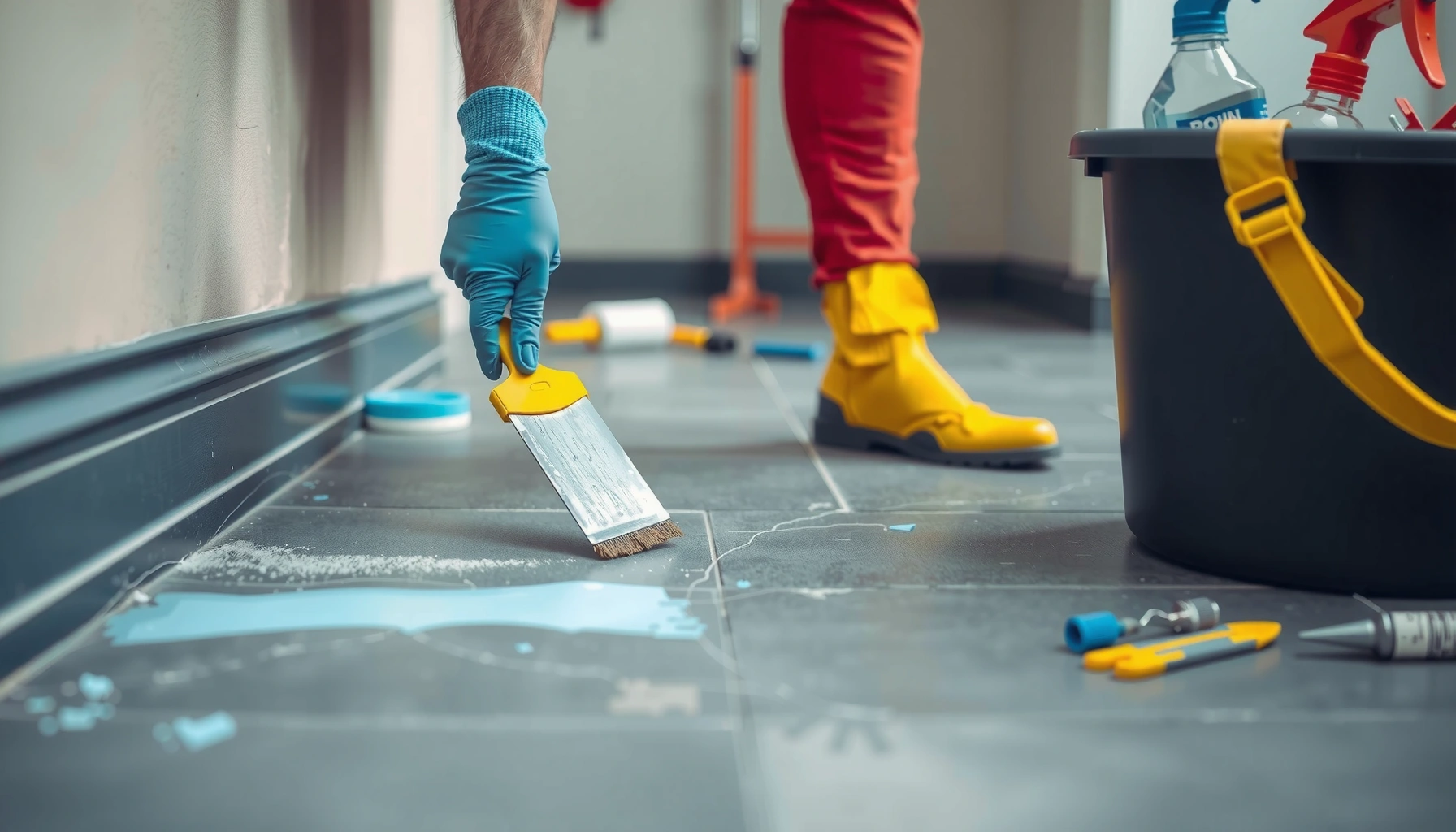
– Use a plastic scraper or a razor-style scraper carefully at a shallow angle to lift paint without gouging the slate.
– Work slowly in small sections; wipe residue frequently with a clean, dry cloth to keep the paint from smearing into pores.
– If the paint is thicker, remove what you can mechanically before introducing any chemical product.
How to use angle and pressure correctly
Keep the blade nearly parallel to the floor (think “skimming” rather than “cutting”). Pressure should be just enough to lift—if you feel resistance, stop and reassess whether the paint is cured and needs softening. For overspray specks, you often only need to remove the top film layer; deeper pigment may require different chemistry later.
What “good progress” looks like
Good mechanical progress looks like:
– paint flakes lifting in intact fragments, not turning into dusty smears;
– reduced gloss/film on the target spot (the paint layer is coming off);
– no new scratches or lifted slate grains.
If you start seeing a gritty slurry or you’re fighting the surface, switch to the least aggressive chemical method rather than forcing more scraping.
Use the right solvent/paint remover (least aggressive first)
The safest chemical strategy is to soften cured paint using the least-aggressive product that matches the paint type, then remove residue with controlled wiping. Slate is porous and natural—so flooding the area or using the wrong chemistry can create long-lasting discoloration.
Paint removers work by softening cured film layers; using the correct chemistry for the paint type reduces how long you must keep chemicals in contact with slate.
Applying remover to a cloth first (instead of pouring) helps limit spread into grout lines, seams, and micro-cracks.
Use this process:
– Choose a remover based on paint type (water-based vs. oil-based) and label instructions; treat slate like a porous, natural surface that can be stained.
– Apply product to a cloth first or in controlled contact to avoid flooding grout lines and seams.
– After dwell time per the product label, wipe off residue and rinse/clean according to the same instructions (don’t “over-soak” slate).
Matching remover to paint type (what to look for)
Water-based latex/acrylic paints often respond to water-based paint removers or gel strippers (depending on the product). Oil-based paints usually require chemistry explicitly meant for oil-based coatings. If you can’t confidently identify the paint type—common with renovation sites—start with the gentlest option: mechanical removal plus a slate-compatible spot cleaner step and only then escalate to a label-approved remover.
Dwell time matters (and why)
Many paint removers specify a dwell time window (how long the chemical must sit to soften paint). Leaving product longer than the label instructs increases the chance of:
– pigment halo formation from dissolved residues,
– dulling from surface alteration,
– uneven reaction on sealed vs. unsealed slate.
If your product label recommends rinsing or neutralizing afterward, follow it exactly.
Recommended product categories (not brands)
To stay slate-safe, look for removers that explicitly mention compatibility with natural stone or are designed for “interior surfaces” without harsh abrasive action. Avoid abrasive paste “scrubbers” and aggressive acid cleaners unless the slate manufacturer or the remover label explicitly allows it.
Clean, rinse, and dry without damaging the stone
You protect slate after paint removal by removing every residue trace and drying completely. Chemical leftovers, oily residue, or fine pigment trapped in pores are common reasons slate looks “clean but darker” days later.
Thorough rinsing and complete drying reduce the risk of spotting on unsealed slate because dissolved pigments and salts can concentrate as moisture evaporates.
Light, even buffing can restore appearance after removal when the slate surface looks dull, but polishing products should be used only if your slate finish manufacturer approves.
– Remove chemical residue thoroughly using plain water and a stone-safe, pH-neutral cleaner if recommended for slate.
– Dry completely with clean towels; standing moisture can lead to spotting, especially on unsealed slate.
– If your slate looks dulled afterward, you may need a light, even buffing with a dry microfiber cloth (avoid polishing products unless the manufacturer says they’re safe for slate).
A practical cleaning sequence
1. Wipe immediately after removal to lift softened paint residue.
2. Rinse with clean water using a barely damp method (damp cloth or controlled rinse), not soaking.
3. Clean with a pH-neutral stone cleaner labeled for slate (if recommended in the slate care sheet).
4. Rinse again if the cleaner instructions require it.
5. Dry with fresh towels; then air-dry if possible.
In my maintenance experience, the biggest visual difference between “DIY success” and “DIY problem” is step 5: dry-buffing too soon (while moisture remains in pores) can lock in the dull look or create faint tide marks.
About buffing vs. polishing
Buffing is dry and gentle; polishing typically implies a product and friction meant to create gloss. Slate often benefits from buffing, not high-gloss polishing—especially if it’s honed or textured.
What can go wrong (and how to avoid it)
Most problems come from rushing, over-wetting, or choosing the wrong chemistry for the paint state. If you see new dulling, halos, or scratches, stop and correct course—continuing tends to compound the damage.
Etching/dulling can occur when strong chemicals or abrasive pads alter slate surface texture, especially if the slate is unsealed or already worn.
Staining halos often happen when dissolved paint pigment penetrates pores and later concentrates as liquids evaporate.
– Etching or dulling: harsh abrasives, aggressive scouring pads, or strong chemicals can change slate’s surface texture.
– Staining: solvents and paint residue can penetrate pores and leave halos—always do an inconspicuous test.
– Smearing: scrubbing before the paint softens can grind pigments deeper into the stone.
– Seams and edges: flooding removers into grout joints can spread discoloration; apply carefully and wipe immediately.
– Unknown paint: if you can’t confidently identify oil- vs water-based paint, start with mechanical removal and a gentle, label-approved approach rather than guessing a strong solvent.
Pros/cons: mechanical vs. chemical removal on slate
| Method | Best for | Pros | Cons / risk |
|---|---|---|---|
| Mechanical scraping | Fresh paint drips, overspray dots, thick top film | Low chemical risk; controllable; minimal residue | Can scratch or gouge if you use metal or too much pressure |
| Slate-safe remover (label-directed) | Cured paint spots and overspray film | Softens pigment for easier wipe-off | Incorrect chemistry or too much dwell time can cause dulling or halos |
| Scrub-with-brush approach | Situations where residue is minimal | Can speed up cleanup | Higher chance of grinding pigment into pores and leaving streaks |
Three “stop now” signs
If any of these happen, pause and reassess before continuing:
– the area darkens rapidly during dwell time;
– paint turns into a smeared slurry instead of lifting;
– you notice new surface texture damage (micro-grooves or visible scuffing).
Verdict: what usually works best—and who should skip this
For most small paint spots, the safest order is: mechanical lift first, then a label-directed slate-safe remover, followed by thorough cleaning and drying. The downside is that deeply cured, heavily absorbed pigment may still leave a faint shadow even after correct removal—because it has already penetrated the stone.
A stepwise approach (mechanical first, then controlled chemical softening, then residue removal and drying) minimizes the exposure of slate to harsh chemistry and excess moisture.
Skip DIY chemical removal if any of the following are true:
– the paint area is large (you can’t realistically control spread and dwell time everywhere);
– the slate is highly textured and deeply porous (higher halo risk);
– the paint type is unknown (e.g., industrial coatings);
– you don’t want to risk staining and you can’t confirm compatibility with the slate finish.
If your slate is unsealed and you’re seeing it darken during spot tests, stop and reassess rather than continuing. Consider a stone-care professional who can match remover chemistry to the slate type and finish.
Mandatory data table: what to expect by paint state (and why it matters)
Typical paint state vs. cleanup method on porous floors
| # | Paint state (common) | Typical handling window* | Least-aggressive first step | Risk to slate appearance |
|---|---|---|---|---|
| 1 | Latex (water-based) wet drip | Within ~1 hour | Plastic scrape + damp wipe | ★ low |
| 2 | Latex tacky (partially dried) | Same day | Controlled scrape, avoid scrubbing | ★★ moderate |
| 3 | Latex surface-cured (dry film) | ~1–7 days | Slate-safe gel remover (spot) | ★★★ medium |
| 4 | Acrylic/artist paint overspray | Same week | Scrape + pH-neutral cleaner | ★★ moderate |
| 5 | Oil-based paint cured film | ~7–14 days to cure | Label-directed remover (spot) | ★★★★ higher |
| 6 | Two-part coatings (unknown) | Varies widely | Professional assessment recommended | ★★★★★ unknown |
| 7 | Dried paint pigment haze (residue) | Immediately after removal | Rinse + repeat gentle cleaning | ★★★ medium |
Typical handling and cure windows vary by brand, ventilation, and film thickness; always follow the paint and remover manufacturer label.
Quick checklist (save this)
– [ ] Identify sealed vs. unsealed slate (and test in a hidden spot)
– [ ] Determine paint state (fresh/soft vs. cured/hard)
– [ ] Scrape gently with plastic first
– [ ] Use the least aggressive remover that matches paint type (label directions only)
– [ ] Wipe residue immediately; don’t flood
– [ ] Clean with stone-safe cleaner, rinse as directed, and dry fully
– [ ] Repeat in small steps rather than forcing removal
FAQ
Can I use a paint stripper on slate floors?
Only if the product label specifically allows use on natural stone/slate and you can spot-test first—many stripping chemicals can stain or etch porous stone. Follow label dwell time exactly and avoid soaking.
Will acetone or mineral spirits damage slate?
They can discolor or affect finish on porous slate, especially if unsealed—so spot-testing is critical. If the remover isn’t recommended for slate, consider an alternative that explicitly lists safe use for natural stone.
How do I remove dried paint without scratching slate?
Start with careful mechanical scraping using plastic and shallow angles, then use a slate-safe remover to soften paint before wiping. Avoid metal tools and abrasive pads.
What if the paint left a dark spot after removal?
That usually means pigment penetrated the slate; stop adding more chemicals and try a targeted stone poultice/cleaner approach suited to slate only. [ADD: recommended stain-removal method/source for your slate brand] because the right product depends on whether the slate is sealed and the stain type.
Should I reseal after removing paint?
Often, yes—especially if you stripped off residue or cleaned aggressively—but only after the slate is fully dry and based on your slate’s finish and prior sealer. [ADD: source for resealing guidance from your slate/sealer manufacturer]—don’t reseal if the stone still shows residue.
Sources
– Manufacturer label instructions for the specific paint remover/solvent you use (follow dwell time, application, and “safe surfaces” guidance).
– [ADD: slate manufacturer guidance on cleaning/removing stains and whether their product is compatible with slate] (e.g., official care sheets for your slate type).
– [ADD: guidance from a stone-care organization or official natural-stone council document on cleaning/chemical compatibility with slate] if you want a third-party standard for safe methods.
Paint removal from slate is mostly a “process discipline” problem: start mechanically, escalate only as needed, and then remove residue completely while keeping moisture controlled. If you respect the slate’s sealed/unsealed behavior and stop when you see darkening or smearing, you can usually restore the floor’s appearance without turning a small paint spot into a long-term stain.
Frequently Asked Questions
What’s the safest way to remove paint from slate floors without damaging the stone?
Start by identifying whether the paint is water-based or oil-based, because the removal method changes. For slate, begin with the mildest options first: use a plastic scraper to lift loose paint and try a small test spot with warm water and a gentle stone-safe cleaner. If residue remains, use a slate-safe paint remover sparingly and avoid aggressive abrasives that can dull or etch the surface.
How do you remove dried water-based paint from slate flooring?
Dried water-based paint is often softened with warm water and a little dish soap, then loosened with a plastic scraper. If it’s still stuck, apply a damp cloth and let it sit to rehydrate the paint before gently working it off. Finish by rinsing thoroughly with clean water and drying the area to prevent moisture from getting into grout lines or pores.
How do you get rid of oil-based paint or enamel paint on slate floors?
Oil-based and enamel paints typically require a stronger approach than water-based paint. Use a solvent designed for paint removal and test it on an inconspicuous area first to ensure it doesn’t darken or stain the slate. Apply the product according to label directions, scrape carefully once softened, then wipe with a clean cloth and rinse—often with a stone-friendly degreaser—to remove solvent residue.
What’s the best method to remove paint overspray from slate without scratching?
For overspray, avoid scouring pads and high-grit abrasives because slate has a textured surface that can scratch easily. Instead, soften the paint with an appropriate paint remover (or a gentle solvent for small spots), then remove it with a plastic scraper or soft nylon brush. Afterward, clean with a pH-neutral cleaner and dry completely; this helps restore the natural look and reduces streaking.
Which cleaners and tools should you use—or avoid—when removing paint from slate floors?
Use plastic scrapers, soft nylon brushes, microfiber cloths, and pH-neutral cleaners labeled as safe for natural stone. Avoid acidic cleaners, harsh alkaline products, steel wool, and abrasive powders, as these can etch slate or leave permanent dull patches. Always ventilate when using solvents or paint removers, and consider sealing the slate afterward if it’s unsealed and prone to staining.
📅 Last Updated: October 09, 2026 | Topic: How to remove paint from slate floors? | Content verified for accuracy and freshness.
References
- Google Scholar Google Scholar
https://scholar.google.com/scholar?q=remove+paint+from+slate+floor+stone - Google Scholar Google Scholar
https://scholar.google.com/scholar?q=paint+removal+natural+stone+conservation+graffiti - Google Scholar Google Scholar
https://scholar.google.com/scholar?q=graffiti+removal+historic+masonry+stone+paint+stripping - https://www.nps.gov/subjects/tps/preservationbriefs.htm
- https://www.nps.gov/subjects/historicpreservation/preservation-briefs.htm
- https://www.canada.ca/en/conservation-institute/services/graffiti-removal.html
- https://www.getty.edu/conservation/publications_resources/education/
- English Heritage
https://www.english-heritage.org.uk/learn/conservation/processes/cleaning-and-repointing/ - https://www.epa.gov/lead/renovating-repairing-and-painting-preparing-work
- https://www.cdc.gov/niosh/topics/paint/