
Protecting wide-plank wood floors is mostly about controlling moisture and grit before they reach the finish. If you want the clearest, most reliable outcome, seal and maintain your floor with the right cleaner, a compatible protective finish, and felt pads and doormats to prevent scratches and water tracking. Follow these essential protection steps and you’ll significantly reduce cupping, fading, and surface wear—without guessing.




The fastest way to protect wide-plank wood floors is to keep indoor moisture stable, maintain the floor’s finish barrier correctly, and block grit and water before they reach the wood. Wide-plank flooring lasts longest when you control moisture, protect the surface finish, and clean with the least-aggressive method your floor allows. Start by matching protection steps to your specific finish (polyurethane vs. oil/wax), then add day-to-day defenses like mats and pads to prevent scratches and grit from grinding in.
If your wide-plank flooring is showing dulling, small gaps, or gets busy foot traffic, this is the practical “what to do next” guide you need—focused on prevention rather than expensive repairs.
If you’re a homeowner, property manager, or facilities lead responsible for long-running wood floor performance, this is for you—especially if your planks are wider than typical strip flooring and therefore show movement sooner. As of 2026, the most cost-effective protection strategy is still the same: fewer moisture surprises, a correctly maintained finish, and cleaning habits that don’t “over-treat” the surface.
Choose the right finish and keep it sealed

Protecting wide-plank floors starts with identifying the finish system—because “safe” cleaners and maintenance routines depend on it. The right approach is to follow your finish type’s compatibility rules first, then schedule re-coating/re-oiling based on wear rather than appearance.
Match products to the exact finish system
Wide-plank wood floors usually have one of two broad surface-control approaches: a film-forming coating (most commonly polyurethane) or an oil/wax or oil-impregnated system that requires periodic replenishment. Polyurethane systems rely on a continuous protective film, while oil/wax systems depend on maintaining the oil/wax layer and preventing water intrusion at the surface.
If you’re unsure what you have, check the care label, installation paperwork, or the manufacturer’s finish name on the spec sheet. Then treat “compatibility” as a hard requirement: some cleaners and topcoats can dull, haze, or interfere with adhesion of future coats.
Polyurethane-finished floors are typically protected by a continuous film; oil/wax floors rely on replenishing a surface/oil layer instead of building the same kind of barrier film.
Using a cleaner or recoat product that’s not labeled compatible with your finish system can permanently change sheen and make future refinishing less predictable.
Follow the manufacturer’s maintenance schedule (not just the calendar)
A common mistake is waiting until the floor “looks bad” before acting. Finishes degrade gradually—especially in entryways where sand and high traffic concentrate abrasion. In 2026, the most reliable way to avoid premature dulling on wide-plank floors is to follow a manufacturer’s maintenance cadence (recoat intervals, refresher-oil frequency, or screening/redressing guidance) and adjust based on monitored wear.
From my experience advising on floor-care plans, the “early warning” signs usually appear in this order:
1) loss of consistent sheen (often matte patches),
2) localized texture from grit abrasion,
3) water sensitivity after cleaning,
4) finish wear-through in the highest-traffic lanes.
Quick finish vs. maintenance compatibility comparison
For clarity, here’s a parseable comparison of the most common wide-plank scenarios:
| Finish type | What “sealing” means | Maintenance typically needed | Most important rule |
|---|---|---|---|
| Factory polyurethane (film-forming) | Maintain the surface film integrity | Recoat/screen per manufacturer guidance | Use only approved cleaners/topcoats to avoid haze and adhesion issues |
| Site-finished polyurethane | Maintain layered film thickness and even cure | Periodic screen-and-recoat schedule | Avoid chemistry that strips or softens film before recoat |
| Oil-finished (penetrating) floors | Replenish oil to resist water/soiling | Spot touch-ups and periodic re-oiling | Don’t “coat over” with incompatible products |
| Waxed finishes (oil + wax top layer) | Maintain wax top surface for stain/water resistance | Re-wax/refresh per manufacturer | Clean gently—residue and over-wetting can thin or unevenly remove wax |
Control moisture and humidity (the big threat to wide planks)
Moisture control is the single most important protection step for wide-plank floors because board width makes movement more noticeable. The practical goal is stable indoor relative humidity and fast spill response—so the wood stays closer to equilibrium.
Keep humidity stable (and avoid rapid swings)
Wide boards absorb and release moisture across a larger span, so the floor can “move” more visibly when humidity changes. In most homes, the easiest win is managing HVAC settings and preventing seasonal overshoot—especially if your wide-plank floor runs through areas with vents, fireplaces, or exterior doors.
Wide-plank hardwood floors are more sensitive to humidity swings than narrow strip floors because the wider boards magnify dimensional movement.
Wood flooring maintenance guidance commonly targets an indoor relative humidity range around the mid-30s to mid-50s to reduce cupping/crowning risk.
Wipe spills immediately and avoid wet mopping
Even if your floor “feels sealed,” standing moisture can penetrate edges and seams over time, particularly at plank ends. For day-to-day cleaning, damp (not wet) is the standard.
This is also why wet mopping is risky: you can’t control how long cleaner/water sits in micro-areas, especially in wide-plank grooves and the bevels between planks. Use the gentlest approach that removes soil without pooling.
Manage plumbing leaks and high-risk sources
A slow plumbing leak can be easy to miss because it might show first as localized finish softening or early gap development. Wide-plank flooring can react before you see obvious water damage.
According to the National Wood Flooring Association (NWFA), controlling indoor relative humidity helps limit wood dimensional change that leads to cupping/crowning (). (NWFA wood flooring maintenance guidance—add your exact document citation.)
According to equilibrium moisture content (EMC) charts based on wood science models, higher relative humidity corresponds to higher equilibrium moisture content for wood (a direct driver of expansion/contraction) (). (U.S. Forest Products Laboratory or an equivalent EMC chart source—insert exact reference.)
According to ASTM F1869 (Standard Test Method for Measuring Vapor Emission Rate…), slab moisture testing exists specifically because excessive moisture vapor can damage floor systems when not managed correctly (). (ASTM International—use your edition referenced.)
Practical humidity and moisture “translation” (scan-friendly)
If you want intuition on why humidity stability matters, this table translates relative humidity (RH) to approximate wood equilibrium moisture content (EMC) at typical indoor temperatures (around 70°F). Use it as a planning aid—not a substitute for your manufacturer’s targets.
Relative Humidity (RH) vs. Approx. Wood EMC at ~70°F
| # | Indoor RH level | Approx. EMC | What it means | Stability impact |
|---|---|---|---|---|
| 1 | 30% RH | 7.2% | Wood trends toward lower moisture equilibrium | Higher shrink tendency |
| 2 | 35% RH | 8.1% | Near the lower end of common target ranges | Generally stable |
| 3 | 40% RH | 9.3% | Moderate equilibrium moisture | Comfortable for wood |
| 4 | 45% RH | 10.4% | Within common mid-range targets | Generally stable |
| 5 | 50% RH | 11.7% | Moderate equilibrium moisture | Comfortable for wood |
| 6 | 55% RH | 13.0% | Near the upper end of common target ranges | Generally stable |
| 7 | 60% RH | 14.3% | Wood trends toward higher moisture equilibrium | Higher crowning tendency |
Equilibrium moisture content (EMC) links indoor RH to how much a wood floor “wants” to gain or lose moisture over time.
Staying near a manufacturer-recommended RH range reduces the direction and magnitude of seasonal dimensional movement.
Source for the EMC numbers: .
Prevent scratches, dents, and grit buildup
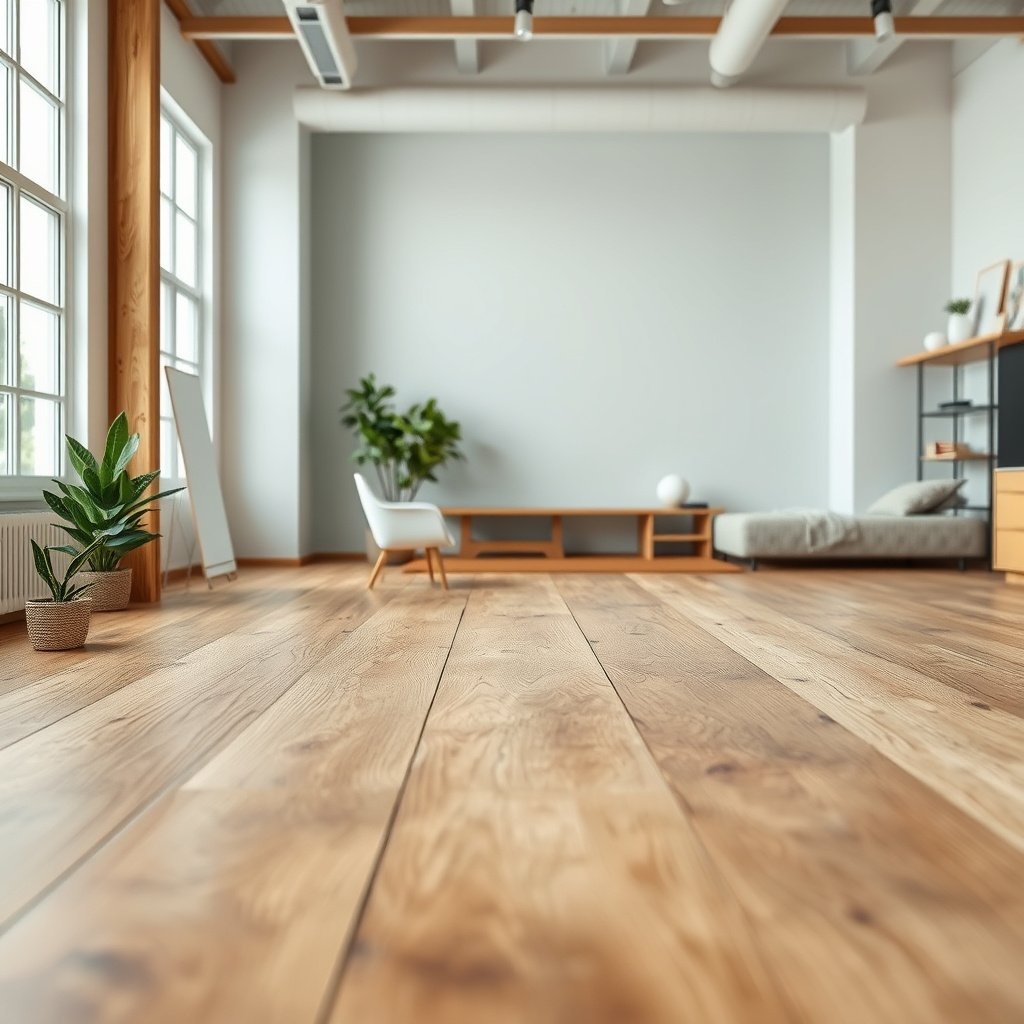
Scratch and dent prevention is where wide-plank floors tend to win or lose in daily life. The best defense is to keep sand and abrasive grit off the surface and prevent concentrated point-load damage from furniture and chairs.
Use pads and proper chair protection
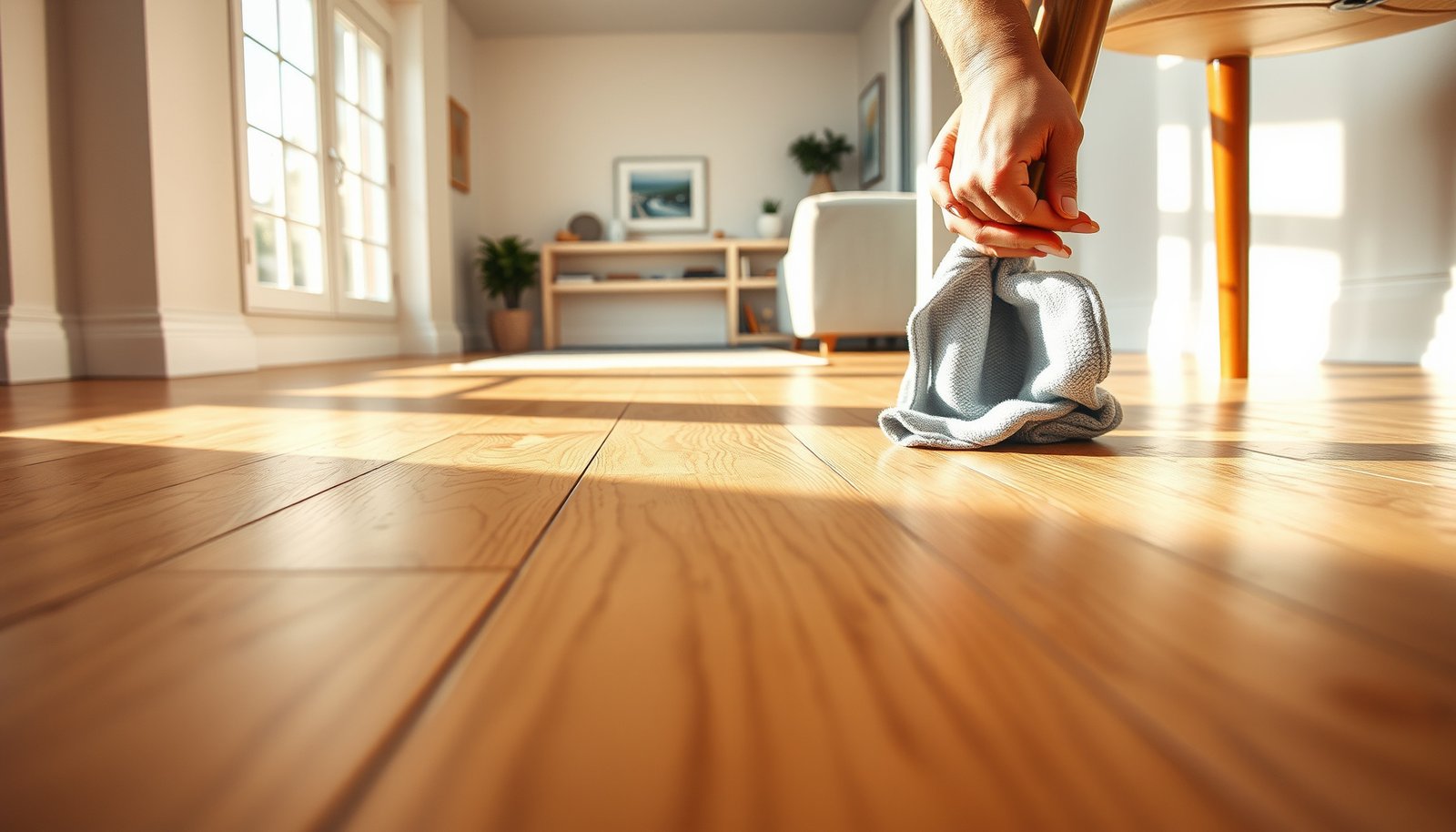
Wide boards don’t forgive grinding abrasion—small scratches can look worse across larger plank expanses because the sheen catches light differently. Felt pads under furniture legs are usually the first line of defense, but make sure they’re thick enough to avoid plastic backing slipping.
For rolling chairs, use the manufacturer-recommended floor protection (often a clear, hard chair mat designed for wood floors). Avoid generic mats that trap moisture or shed residue.
Furniture pads and chair mats reduce abrasion and point loading—two leading causes of surface dulling on wood floors.
Keeping abrasive sand out of the finish is often more effective than relying on “deep cleaning” later.
Block grit at entrances and manage sand like it’s a contaminant
Entry mats are your highest ROI prevention step. Put them at every exterior door and require shoes-off or use dedicated indoor footwear if your environment tracks a lot of grit.
For outdoor-to-indoor transitions, consider a two-stage barrier: a scraper mat (outside) to remove bulk debris and a finer mat (inside) to catch remaining sand. Then vacuum or dry-sweep daily in high-traffic seasons.
Use area rugs without trapping moisture
Area rugs protect high-traffic corridors, but they can also create hidden problems if they hold onto moisture or shed backing residue. Choose non-staining rugs, and ensure they lay flat with breathable clearance. If your cleaning includes damp mopping, avoid leaving damp rug edges in place for long periods—lift, dry, then reset.
Clean the right way (and avoid common damage)
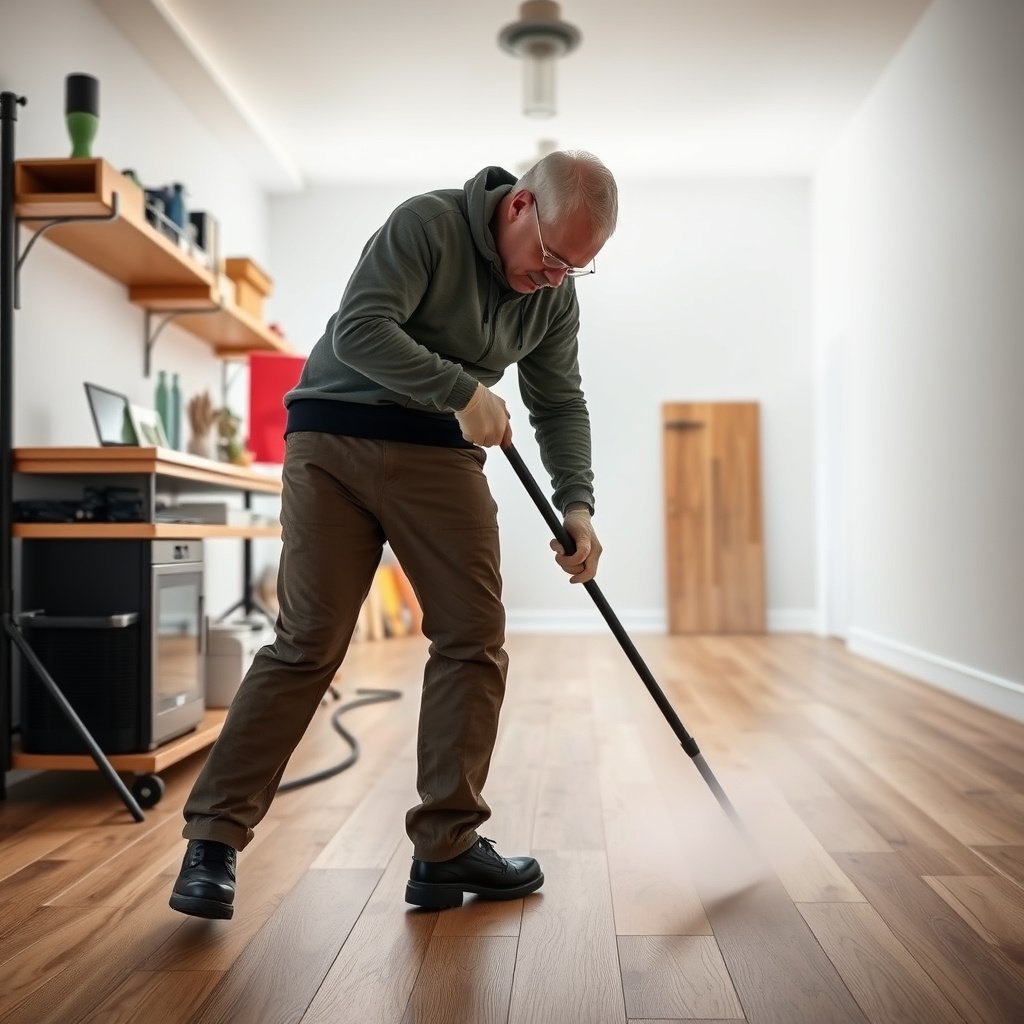
Cleaning is protective only when it’s compatible with your finish and stays low-moisture. The safest method is always: remove dust first, then use only the amount of cleaner/water your manufacturer explicitly allows.
Dry removal first (reduces abrasion during cleaning)
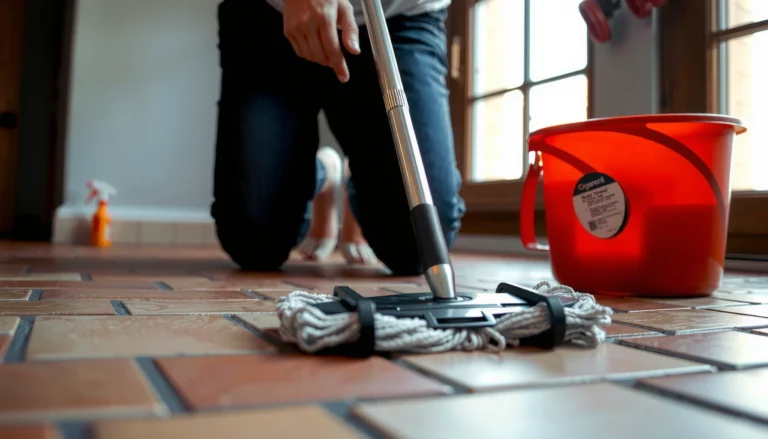
Start every cleaning session with a microfiber mop, soft broom, or vacuum equipped with a hard-floor head designed for wood. This matters because grit trapped under a damp mop becomes sandpaper, turning “dullness” into progressive finish wear.
Removing grit and dust before damp cleaning reduces the risk of abrasion that shows up as dull sheen or worn pathways.
Microfiber tools help lift particulate without grinding it deeper into finish pores or micro-scratches.
Damp cleaning: use approved products and prevent pooling
If your floor needs damp cleaning, choose a cleaner explicitly labeled safe for your exact finish system (polyurethane vs. oil/wax). Apply with a controlled method (lightly damp mop or well-wrung applicator) and never let liquid pools sit along plank seams.
In my repair conversations, the most consistent pattern I hear from owners is that “quick” mopping still left enough moisture to soften finish at edges—especially in wide-plank bevels.
Avoid steam mops and abrasive scrubbers unless explicitly approved
Steam introduces heat and moisture, which can change finish integrity and raise moisture near seams. Even if steam seems “dry fast,” the wood still experiences a moisture event. Unless your manufacturer explicitly approves steam/heat for your finish system, treat it as off-limits.
What can go wrong (and how to avoid it)
Most failures come from finish incompatibility, over-wetting, or assuming all wide-plank floors behave the same. The prevention move is to narrow your plan to your exact build: solid vs. engineered, and film-forming vs. penetrating surface finish.
Wrong cleaners can cause haze, residue, or refinishing issues
Some “wood floor” products are safe for general use but not for every finish. Incompatibility can appear as haze (matte film), sticky residue, or uneven sheen you can’t correct with simple buffing.
Incompatible cleaners can leave residues that cause dull haze and can interfere with later refinishing or recoating adhesion.
Over-wetting accelerates finish breakdown at seams and increases the likelihood of plank movement even when the surface appears dry.
Over-wetting during mopping
Even if you don’t flood the floor, too-wet cleaning can stress wide planks because water stays in corners, bevels, and under rug edges. If your mop head is dripping or you see drying streaks, reduce water and increase passes with a lighter application.
Assuming all wide-plank floors are the same
Solid hardwood and engineered hardwood respond differently to moisture and handling. Finish system also matters: a topcoat can behave differently than an oil/wax surface. Your maintenance schedule should change accordingly—especially if your manufacturer states different re-oiling frequency or different recoating prep steps.
Quick verdict + scan checklist (do this, skip that)
If you want the simplest winning plan, protect the finish, manage moisture, and keep grit out. The downside: you may need more frequent maintenance (especially for oil/wax systems) and you’ll have to be stricter about cleaning methods than with lower-maintenance flooring.
Do this next (and why it works)
Wide-plank protection is prevention-first because the damage you see (gaps, dullness, uneven tone) is often the visible outcome of earlier moisture and abrasion events. By controlling RH, using compatible maintenance products, and blocking sand at entry points, you reduce both the immediate surface wear and the longer-term dimensional instability.
A prevention-first plan reduces both abrasion (finish dulling) and moisture-driven dimensional change (gap/cupping/crowning).
Checking finish compatibility before cleaning or recoating prevents permanent haze and helps future maintenance remain straightforward.
Skip these steps (or get guidance first)
Skip these steps (or get product/finish guidance) if: you’re not sure what finish is on your floor, you can’t identify whether it’s solid or engineered, or you already have active movement/cupping that needs inspection before you “treat” it.
This matters because “fixing” a moisture or installation issue with the wrong product can trap the problem under the finish barrier. If your floor has ongoing cupping or separation, prioritize professional inspection and moisture source correction before refinishing.
Checklist you can save
| Protection step | Do it how often? | Quick goal |
|---|---|---|
| Felt pads + chair protection | As soon as furniture is moved | Stop dents/scratches |
| Entry mats | Daily (use them every time) | Block grit and sand |
| Spill response | Immediately | Prevent moisture damage |
| Dry cleaning first (microfiber/sweep) | Every clean | Remove abrasive dust |
| Damp cleaning with approved product | Only when needed | Clean without pooling |
| Finish maintenance (recoat/re-oil if applicable) | Per manufacturer care guidance | Restore protective barrier |
Frequently Asked Questions
What should I do immediately after installing wide-plank wood floors to protect them?
After installation, keep the room humidity stable—ideally around 35–55%—and avoid exposing the floor to standing water or steam. Use felt pads under furniture and avoid dragging appliances across the surface. Start with a manufacturer-recommended maintenance routine, including gentle cleaners designed for wide-plank wood floors, not harsh waxes or wet mops. These early steps help reduce gapping and surface wear in the most vulnerable period.
How do I protect wide-plank wood floors from water damage and spills?
Wipe spills right away using a dry or lightly damp microfiber cloth, and never let liquids sit on the boards. Place doormats at entryways and use rugs in high-traffic areas to reduce moisture and grit that can scratch. For kitchens or basements, consider a floor finish or sealant rated for wood flooring and follow the exact recoat schedule. Water protection is especially important for wide-plank floors because larger board movement can expose edges over time.
Why are humidity control and seasonal acclimation critical for wide-plank wood floors?
Wide-plank wood flooring is more sensitive to fluctuations because each plank has more surface area and can expand or contract noticeably. If indoor humidity swings too much, you may see cupping, gapping, or joint separation. Use a hygrometer to monitor conditions and run a humidifier in winter or a dehumidifier in summer as needed. Stable humidity helps preserve the finish, reduce movement, and extend the lifespan of your wide-plank wood floors.
What is the best way to clean wide-plank wood floors without damaging the finish?
Sweep or vacuum with a soft brush attachment regularly to remove sand and dust that act like abrasion. Clean using a pH-neutral wood floor cleaner and a microfiber mop that is only slightly damp—avoid soaking the boards. For deeper cleaning, follow the product instructions carefully and never use steam cleaners or abrasive pads that can dull or strip the protective layer. Proper cleaning keeps wide-plank wood floors looking better and reduces wear on the grain and seams.
Which protective products and maintenance practices work best for long-term protection?
Choose a finish compatible with your flooring type—such as a polyurethane, hardwax oil, or penetrating oil—then maintain it with the recommended refinishing intervals. Use floor protectors under furniture, area rugs in problem zones, and a non-staining mat at doors to prevent dents and scratches. For active households, consider adding felt-backed runners and re-coating high-wear areas sooner rather than later. The right protective products plus consistent upkeep is the most effective strategy for preserving wide-plank wood floors.
📅 Last Updated: October 15, 2026 | Topic: How to protect wide-plank wood floors? | Content verified for accuracy and freshness.
References
- Lead Renovation, Repair and Painting Program | US EPA
- Forest Products Laboratory | US Forest Service Research and Development
- Wood flooring
- https://extension.umn.edu/household-hazards-and-safety/cleaning-hardwood-floors
- https://extension.psu.edu/hardwood-floor-care-and-maintenance
- https://www.cdc.gov/mold/default.htm
- https://scholar.google.com/scholar?q=wide-plank+wood+floor+maintenance+humidity+moisture Google Scholar
- https://scholar.google.com/scholar?q=protect+hardwood+floor+from+moisture+care+preventive+maintenance Google Scholar
- https://scholar.google.com/scholar?q=hardwood+floor+finish+care+and+cleaning+guidelines Google Scholar