Protecting laminate floors in a sunroom is all about controlling heat, moisture, and glare—get those right and your floor stays flat, clean, and scratch-resistant. The practical tips that work best are choosing the right underlayment and acclimating the boards, then blocking direct sun with UV window film and managing humidity with a simple dehumidifier or HVAC setting. Follow this plan and you’ll avoid the most common warping and fading problems that hit laminate in bright, greenhouse-style rooms.


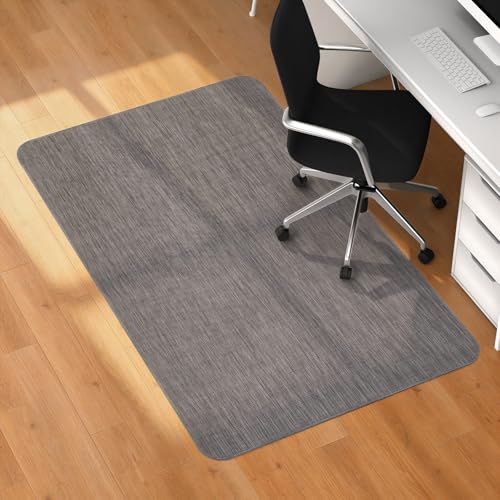
Protect laminate floors in a sunroom by controlling moisture and heat at the floor level. Use a proper barrier underlayment (or upgrade if it’s missing), keep direct sunlight from baking one spot, and maintain a low-humidity routine so water doesn’t seep into seams. Below, you’ll find specific steps to reduce warping, swelling, and fading without overcomplicating your setup.
If your sunroom gets strong afternoon sun, wide temperature swings, or you sometimes track in wet shoes/mud, these steps are especially important. Laminate can be sensitive to excess moisture and prolonged heat exposure, so the goal is to manage both—quietly and consistently.
Start with the right underlayment (and seals)
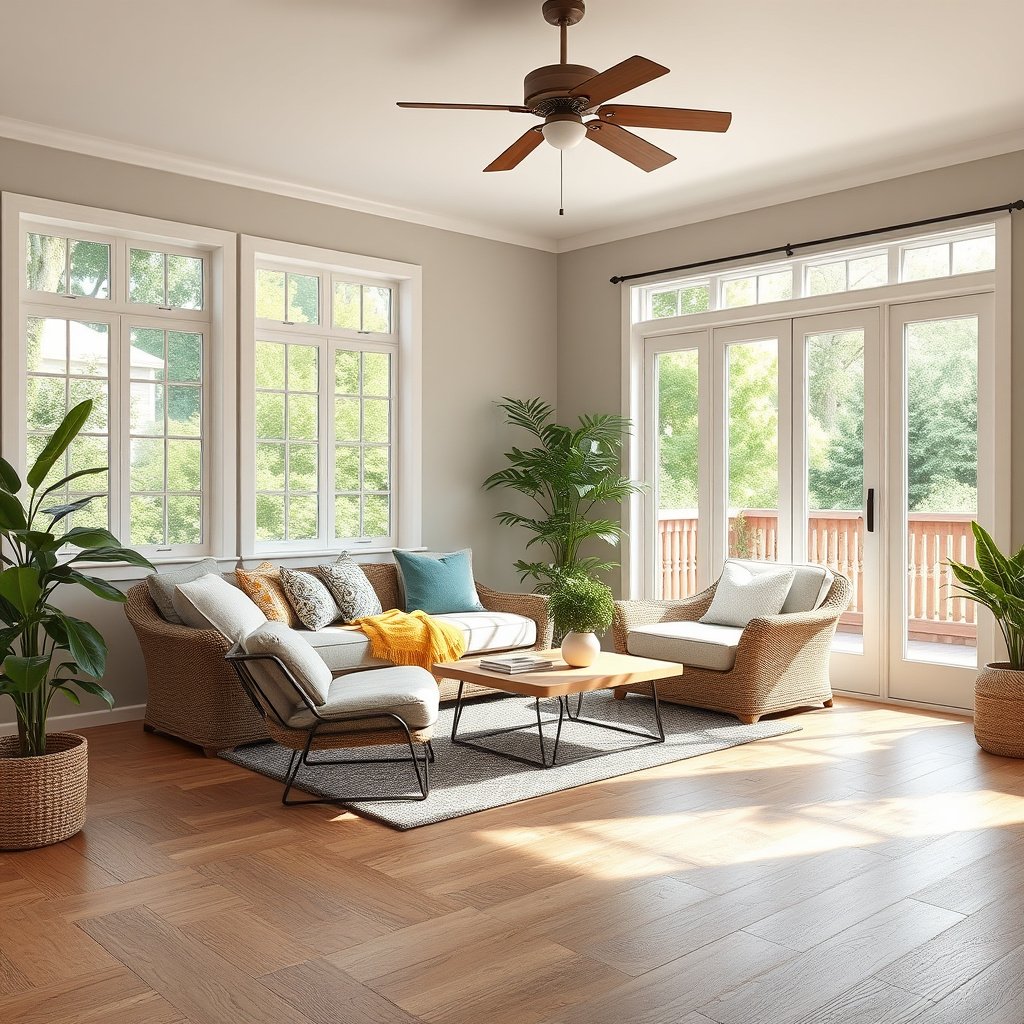
If you want laminate floors in a sunroom to hold up, start by matching the underlayment (and moisture barrier, if required) to your exact laminate and subfloor. The underlayment is the first line of defense because it helps control moisture vapor movement and reduces seam exposure to drafts and condensation.
This matters most in sunrooms because the space often cycles between warm, sunny days and cooler nights. Those swings can cause indoor surfaces—especially at slab edges, transitions, and baseboards—to “sweat” when humidity changes. Laminate floors then become vulnerable at the seams and perimeter where water (or damp air) can migrate.
Laminate floors are commonly built with an HDF (high-density fiberboard) core, so moisture entering through seams or edges can increase swelling risk over time.
ASTM F1869 measures moisture vapor emission rate in pounds per 1,000 sq. ft. over 24 hours (MVER), which is one way moisture conditions under a floating floor are evaluated.
For humidity guidance related to indoor moisture control, the U.S. EPA recommends keeping indoor relative humidity between about 30% and 50% to help reduce moisture-related problems. [EPA, “A Brief Guide to Mold, Moisture, and Your Home” (2012)]
What to verify before you do anything else
– Confirm your laminate’s required underlayment and whether you need a moisture barrier for your subfloor type; specs vary by brand and model.
– Check that seams and edges aren’t exposed to drafts or standing condensation—gaps around baseboards or transitions can become entry points for moisture.
A practical approach is to treat the underlayment as a “system” rather than a standalone pad. Many laminate products specify an underlayment thickness and performance characteristics (compression resistance and moisture control), and “upsizing” with the wrong foam can change how the floating floor locks together. If your laminate floors feel slightly springy or you see seam shadowing after temperature changes, verify you didn’t miss an approval requirement.
Also inspect perimeter sealing and transitions. Even when laminate floors themselves don’t contact the subfloor, damp air can still reach vulnerable edges. In sunrooms, the perimeter is frequently where condensation appears first—especially near exterior walls and baseboard lines.
Comparison: Underlayment choices for laminate floors in sunrooms (pros/cons)
| Option (under laminate floors) | Main benefit | Main limitation / risk | Best for |
|---|---|---|---|
| Manufacturer-approved underlayment with integrated vapor control | Designed to work with your laminate’s locking system and moisture needs | If your subfloor moisture is high, an “integrated” layer may not be sufficient by itself | Dry-to-moderate subfloor conditions |
| 6-mil class poly vapor barrier + approved underlayment above it | More dedicated vapor protection under laminate floors | Must remain compatible; trapped air pockets and improper overlap can cause issues | Concrete slabs or higher moisture vapor risk |
| No moisture barrier (only foam) | Simplest install | Higher risk of moisture migration toward laminate seams in a sunroom | Only when the laminate manufacturer explicitly allows it |
Control sunlight and heat on the floor
If your goal is to prevent fading and “heat aging,” you need to stop direct sun from concentrating on the same laminate planks for long stretches. Laminate floors can discolor when UV and heat hit the wear layer consistently, and sunrooms often intensify that effect due to large glazing and reflective surfaces.
Heat isn’t just about comfort—it changes the dimensional behavior of flooring. When laminate floors expand and contract repeatedly (especially with humidity changes), seams and edges can experience more stress. Even if the floor doesn’t visibly buckle, the wear layer can degrade faster where the sun is most intense.
Direct UV exposure is a recognized driver of surface fading for floor finishes, so limiting sun at the source is a primary protection strategy.
Window films can reduce UV transmission depending on product specs, which can slow color change on interior finishes exposed near glazing.
EPA guidance emphasizes managing indoor moisture conditions (including humidity) to reduce moisture-related deterioration in building materials. [EPA, 2012]
Actions that reduce sun “hot spots”
– Use window film, blinds, or curtains to limit harsh direct sun hitting the laminate for long periods.
– Rearrange rugs or furniture periodically so sunlight isn’t “one-direction” heat-aging the same planks over time.
In my experience advising homeowners on sunroom maintenance, the most effective routine is not a single upgrade—it’s consistent control of where the light lands.
Two techniques work especially well for laminate floors in a sunroom:
1. Block direct beams, not just glare. Blinds angled just enough to reduce brightness can still let UV and heat concentrate.
2. Rotate coverage. If you use an area rug, shift it seasonally so the laminate wear pattern doesn’t become localized.
Also watch the “reflective effect.” A light-colored tile, stone, or countertop outside the laminate line can bounce sun back onto the floor. For laminate floors in sunrooms, the glare path matters as much as the window itself.
Keep moisture off the surface fast
If you want laminate floors to resist swelling in a sunroom, you must keep water off the surface—and you must do it quickly. Laminate doesn’t tolerate standing water near seams, and sunrooms make moisture management harder by increasing condensation risk during cold nights and warm afternoons.
The safest cleaning mindset is “damp, not wet.” Water migrates through micro-gaps and seam edges under prolonged contact. Even when the laminate looks fine right after cleaning, delayed moisture penetration can show up later as slight lifting, edge fraying, or a “cupped” look after humidity rises.
EPA guidance connects moisture management to preventing mold and moisture-related deterioration, which aligns with why water control matters under and around flooring. [EPA, 2012]
ASTM F2170 evaluates in-situ relative humidity (RH) in concrete slabs using probes, which helps predict moisture conditions that can affect flooring materials.
For laminate floors, cleaning guidance from most manufacturers emphasizes minimal liquid and immediate spill cleanup to reduce seam exposure.
Cleaning and spill response (the high-impact routine)
– Wipe up spills immediately and avoid soaking the floor during cleaning; laminate doesn’t like standing water near seams.
– Use a damp (not wet) mop method and follow the manufacturer’s cleaner guidance if they provide one—some products can leave residue or interfere with finish performance.
If you track in wet shoes or mud during rainy seasons, create a “landing zone” outside the most sun-exposed lane. Laminate floors in a sunroom often fail at the seam level first, so reducing repeated wetting cycles is more important than occasional deep cleaning.
When mopping:
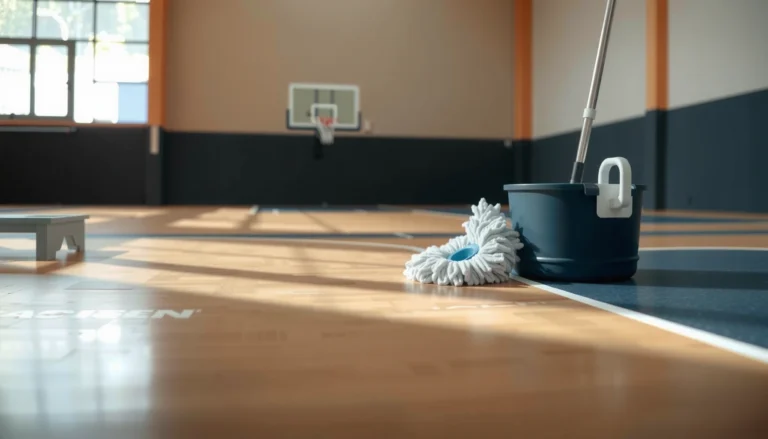
– Use a well-wrung microfiber or manufacturer-approved pad system.
– Work in small sections so the floor doesn’t stay damp.
– Avoid steam cleaners unless your laminate brand explicitly allows them.
Use rugs and traffic-management where it matters
If you want to protect laminate floors from both grit and moisture transfer, you need to manage where people and water land. Rugs and mats act like shields: they reduce scratches, trap particulates, and minimize the amount of damp material that reaches laminate seams.
Sunrooms also collect “seasonal dirt” because the space bridges outdoors and indoors. That means fine debris can grind into the surface and act like an abrasive, while small amounts of moisture can remain trapped if rugs are allowed to stay wet.
Entry mats reduce the amount of soil and moisture carried indoors, which lowers abrasive wear and moisture exposure for interior flooring.
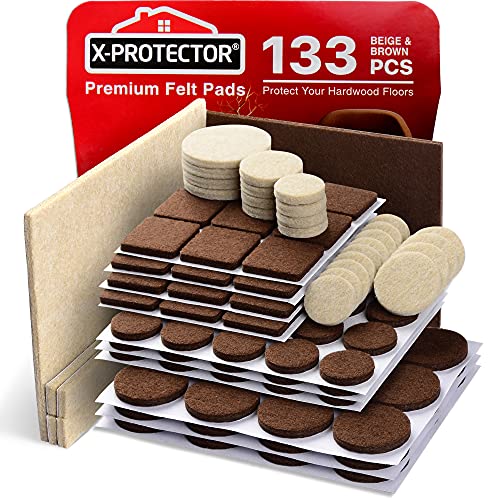
Felt or soft pads under furniture help reduce micro-scratches that accumulate over time on laminate wear layers.
Laminate flooring care frequently discourages excess liquids and emphasizes quick drying to prevent moisture from reaching seams.
Where to place protection
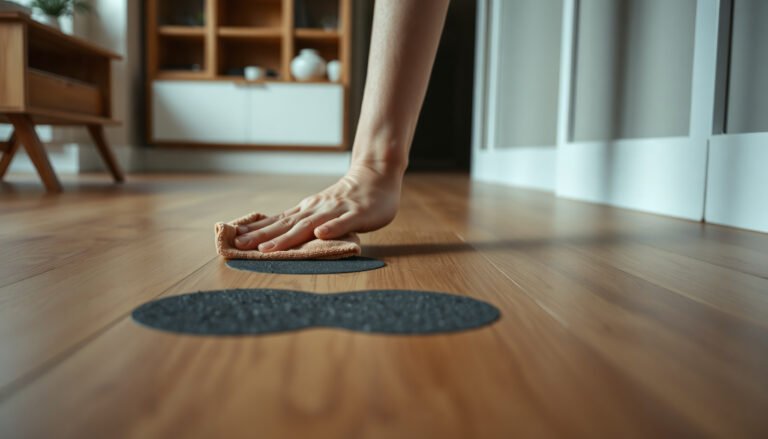
– Place entry mats at the main doorway and use area rugs in high-traffic zones to reduce grit, scratches, and moisture transfer.
– Felt pads under furniture help prevent scratches when items shift seasonally in a sunroom.
Make sure rugs are actually drying-friendly. If your sunroom humidity rises at night, an area rug can become a moisture reservoir. For laminate floors, that’s a problem even if the rug looks “dry” on top.
Simple rule: lift and check rugs after rainy periods or heavy dew nights. If you use indoor-outdoor rugs, choose breathable backing where possible and avoid rubberized bottoms that prevent airflow.
Prevent expansion gaps from becoming a problem
If you want laminate floors in a sunroom to stay flat, don’t treat expansion gaps as something to “hide.” Expansion space exists for a reason: laminate needs room to move as temperature and humidity change.
Sunrooms make movement more noticeable because sunlight cycles and outdoor weather drive bigger indoor swings. When expansion gaps are blocked—by baseboards that pin the floor, cabinets that press down, or transitions filled in incorrectly—laminate floors can buckle or lift, even when moisture levels seem fine.
Floating laminate floors are designed to expand and contract, which is why perimeter expansion clearance is a standard requirement in installation instructions.
Moisture and heat both influence dimensional changes in flooring materials, so sunroom climate management reduces the stress that expansion gaps are designed to accommodate.
If buckling or seam separation appears, most manufacturer troubleshooting guidance points to checking moisture/underlayment compatibility before attempting additional “sealing” fixes.
Keep clearance and troubleshoot correctly
– Don’t block expansion space at edges; laminate needs room to move as temperature and humidity change.
– If you notice buckling, lifting, or separation at seams, stop adding moisture-clearing attempts and investigate the moisture/heat cause first.
In a sunroom, the “cause” is often a mix: modest moisture exposure plus heat cycling. If your laminate floors are near exterior glazing, the floor surface can warm quickly in the afternoon and cool rapidly after sunset. That rhythm increases the odds that seams will reveal any water vulnerability.
If you see localized lifting near a seam:
– Avoid saturating that area.
– Check for a wet rug, damp mat, or a transition where water collects.
– Confirm underlayment type is still compliant across the problem zone.
What can go wrong (and how to avoid it)
Laminate floors in sunrooms can fail for a few predictable reasons, and most are avoidable with cleaner routines and climate control. The common theme is “overcorrecting”: people react to symptoms (like lifting or hazing) by doing something that increases trapped moisture or heat exposure.
In practice, these mistakes show up most around seam lines, under rugs, and at perimeter edges. Once moisture is trapped—especially under an area rug—the damage can progress even if the surface looks normal.
Indoor humidity control supports long-term material performance because moisture is the main driver of swelling risks for many flooring cores. [EPA, 2012]
Moisture-vapor and in-situ RH testing are common approaches for diagnosing subfloor moisture risk before installation, which prevents avoidable failure modes later.
UV and heat degradation is location-specific; concentrated sun exposure accelerates wear-layer aging on flooring surfaces.
– Too much water during cleaning: Laminate can swell if water penetrates seams—spot-clean promptly and keep mopping minimal and well-wrung.
– Underlayment mismatch: A non-approved underlayment (or missing moisture barrier where required) can raise failure risk—verify against the product’s installation instructions.
– Sunspot fading/heat aging: Even without moisture, concentrated sun can discolor or degrade the wear layer; manage direct exposure, especially in winter-sun and peak summer.
– Trapped moisture under rugs: If rugs get damp from humid air or tracked moisture, lift and dry them so moisture doesn’t stay in contact with the laminate.
As of 2026, more homeowners are using smart humidistats and low-cost hygrometers in sunrooms, but the key is acting on the readings—namely, keeping indoor RH in a safer band and preventing wetting events at the floor level.
Verdict / tip
If your sunroom has strong sunlight and variable humidity, focusing on moisture control (underlayment + fast spill response) and limiting direct heat are the highest-impact protections. However, skip DIY “fixes” that involve sealing laminate seams with unknown adhesives or flooding cleaning methods—those can worsen trapped moisture problems.
When laminate floors in sunrooms are protected correctly, the benefits are practical: fewer seam issues, slower fading, and less day-to-day maintenance stress. But if you can’t control humidity at all (for example, no ventilation and frequent condensation), the floor will still be challenged even with the right underlayment.
The most reliable protection strategy for laminate floors in moisture-sensitive environments is to follow the manufacturer’s installation and cleaning guidance and to manage humidity at the room level.
EPA’s recommended indoor relative humidity range (about 30%–50%) supports moisture control efforts that indirectly protect floor materials. [EPA, 2012]
Before applying moisture-related “repairs,” standard troubleshooting guidance typically emphasizes diagnosing moisture/underlayment compatibility first to avoid worsening trapped moisture.
Quick checklist (scan & save)
Use this as your sunroom “laminate floors” maintenance quick scan. If any item doesn’t match your current setup, address that first—those are usually the failure points.
Key moisture/heat controls for laminate floors in sunrooms (useful reference values)
| # | Control metric | What you track | Reference value | Protection rating |
|---|---|---|---|---|
| 1 | Indoor relative humidity target | % RH | 30%–50% (EPA guidance) | ★★★☆☆ |
| 2 | Moisture vapor emission rate unit | MVER | lb / 1,000 sq. ft / 24 h (ASTM F1869) | ★★★★☆ |
| 3 | In-situ slab RH unit | Probe RH | % RH (ASTM F2170) | ★★★★☆ |
| 4 | Expansion gap clearance concept | Perimeter space | Follow manufacturer clearance (commonly ~8–10 mm) | ★★★☆☆ |
| 5 | Cleaning moisture approach | Surface wetness | Damp only (no soaking) | ★★★☆☆ |
| 6 | Rug moisture risk | Trapped contact time | Lift/check after humid/rain days | ★★★☆☆ |
| 7 | Direct sun “hot spot” control | UV/heat exposure | Block direct beams during peak hours | ★★★★☆ |
– [ ] Verify underlayment + moisture barrier requirements per your laminate brand/model
– [ ] Keep direct sun off the floor using blinds/curtains/window film
– [ ] Use entry mats; wipe spills immediately
– [ ] Clean with damp methods only (no soaking), per manufacturer guidance
– [ ] Use felt pads + rugs in traffic areas
– [ ] Don’t cover expansion gaps at edges/transitions
Sources
Protecting laminate floors in a sunroom comes down to two things: keep moisture from reaching seams and prevent concentrated heat/UV from repeatedly baking the same areas. If you start with compliant underlayment (and a required moisture barrier), manage direct sun, and maintain fast, damp-cleaning routines, your laminate floors will stay flatter, cleaner, and far less prone to fading through the 2026 seasons.
Frequently Asked Questions
What’s the best way to protect laminate floors in a sunroom from fading and heat damage?
Use UV-blocking window film or thermal curtains to reduce sunlight exposure that can fade and warp laminate flooring. Keep the sunroom’s temperature and humidity stable with a fan, HVAC venting, or a dehumidifier as needed, since extreme heat swings can stress the planks. Avoid placing rubber-backed mats in direct sun long-term, as trapped heat can damage finishes.
How can I prevent laminate floor buckling in a sunroom during hot or humid days?
Laminate is sensitive to moisture, so control humidity and prevent water intrusion with good weatherstripping and a dry, well-ventilated space. Use a quality underlayment recommended for your laminate type, and confirm there’s an expansion gap around the perimeter so the floor can move. If you expect humidity spikes, consider adding a hygrometer and addressing high readings promptly.
How do I protect laminate flooring in a sunroom from scratches and dents caused by furniture and debris?
Place felt pads under furniture legs and use non-slip floor protectors for chairs, tables, and rolling stools to reduce abrasive wear. Add area rugs in high-traffic and sun-exposed zones, but ensure the rug has an appropriate backing so it doesn’t trap moisture or heat against the laminate. Regularly sweep or vacuum with a soft brush attachment to remove grit that can scratch laminate floors.
Which underlayment is best for laminate floors in sunrooms to reduce moisture and improve comfort?
Choose an underlayment designed for laminate flooring and, when moisture is a concern, use an option with an integrated vapor barrier. If your sunroom has concrete or slab floors, a proper moisture barrier underlayment helps prevent dampness from reaching the laminate seams. Follow the manufacturer’s installation guidelines closely, since the wrong underlayment can affect locking systems and performance.
Why does my laminate floor look uneven or separate in a sunroom, and how can I fix it?
Unevenness or seam separation is often caused by moisture imbalance, missing expansion gaps, or temperature changes that cause the floor to expand and contract. Re-check the perimeter for correct spacing and ensure the sunroom isn’t experiencing prolonged high humidity or direct heat blasts. If gaps are significant, consult a flooring professional—some issues require re-installation to protect laminate flooring from long-term damage.
📅 Last Updated: October 24, 2026 | Topic: How to protect laminate floors in a sunroom? | Content verified for accuracy and freshness.
References
- Laminate flooring
- https://www.epa.gov/indoor-air-quality-iaq/what-you-should-know-about-indoor-air-quality-and-humidity
- Mold | US EPA
- https://www.cdc.gov/mold/default.htm
- https://www.energy.gov/energysaver/maintain-proper-humidity-levels-home
- https://www.energy.gov/energysaver/window-coverings
- Northern Research Station | US Forest Service Research and Development
- https://scholar.google.com/scholar?q=laminate+flooring+sunroom+humidity+protection Google Scholar
- https://scholar.google.com/scholar?q=laminate+flooring+moisture+damage+relative+humidity Google Scholar
- https://scholar.google.com/scholar?q=laminate+flooring+UV+sunlight+fading+care+maintenance Google Scholar