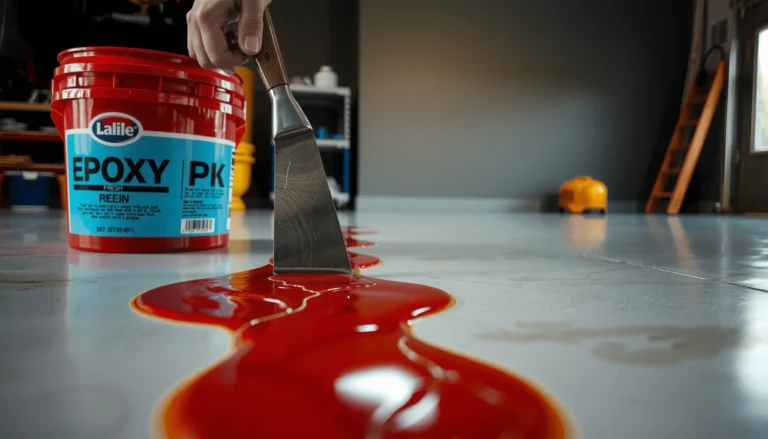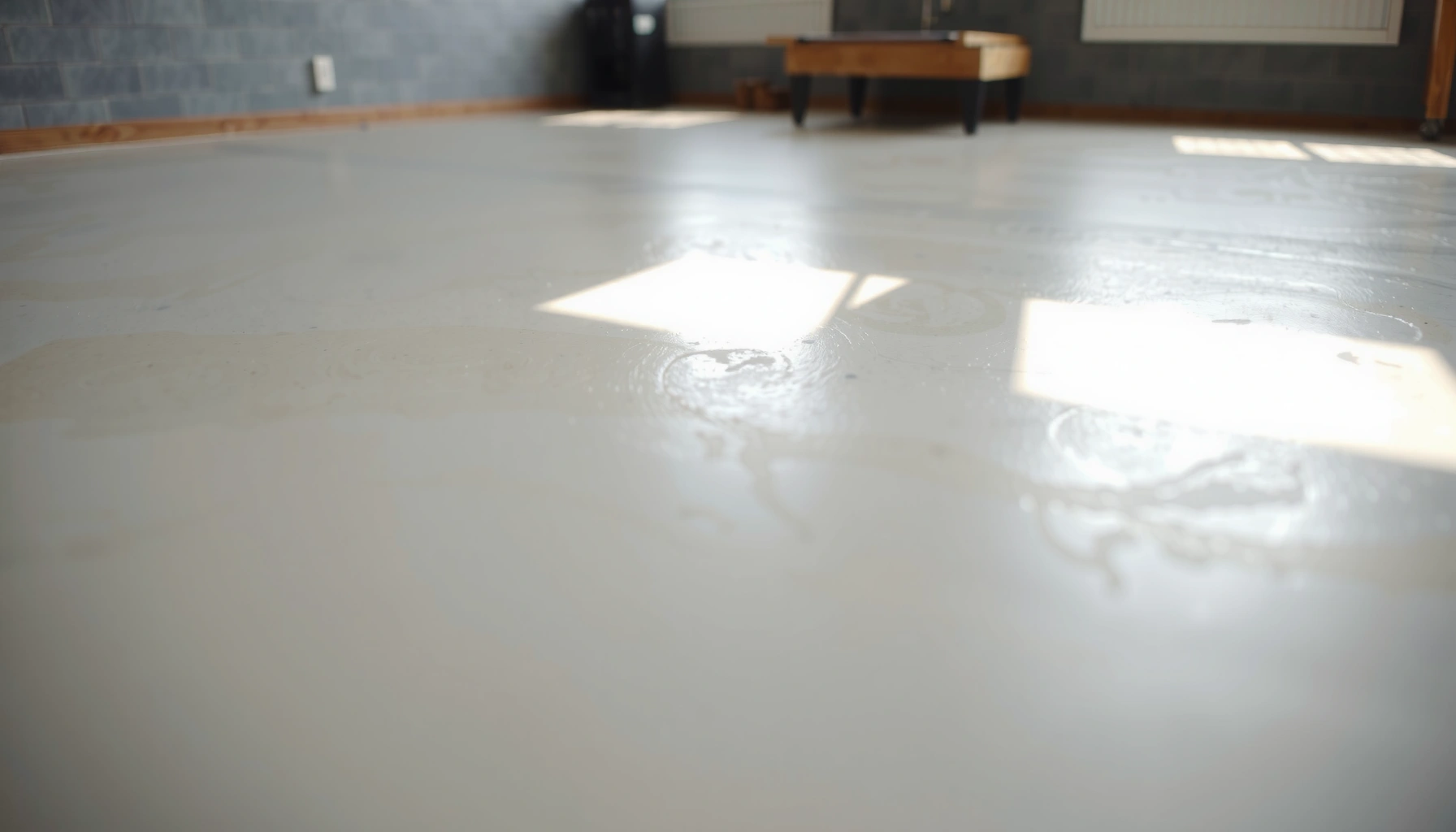

Preventing mold under epoxy floors is mainly a moisture-control job, not a coating choice. If you follow proven steps—fixing leaks, managing slab moisture with reliable testing, and using correct surface preparation and primers—you can stop mold from taking hold under the epoxy. This guide answers exactly how to prevent mold under epoxy floors with practical actions you can apply before you ever pour or apply the finish.


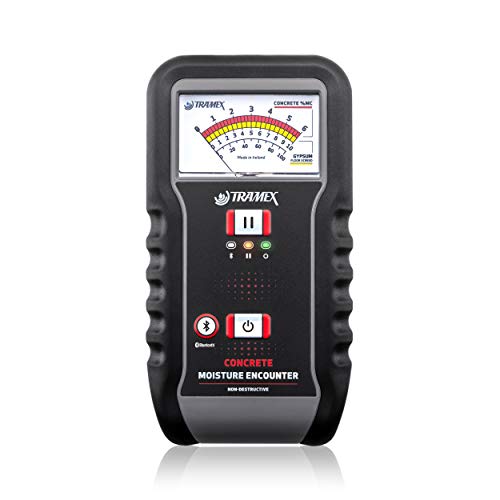
If you want to prevent mold under epoxy floors, you must stop moisture from getting trapped under the coating and remove any hidden damp conditions before installation. Focus on controlling humidity, fixing water entry points, and using a moisture-mitigation approach that’s compatible with epoxy. In this article, you’ll learn the practical checks and prep steps that reduce the risk of mold growth under epoxy.
If you’re planning to coat a basement slab, garage floor, or any concrete surface that may be prone to dampness, this is for you—especially if you’ve seen musty odors, condensation, or previous moisture-related issues.
Start with moisture control (don’t rely on epoxy)
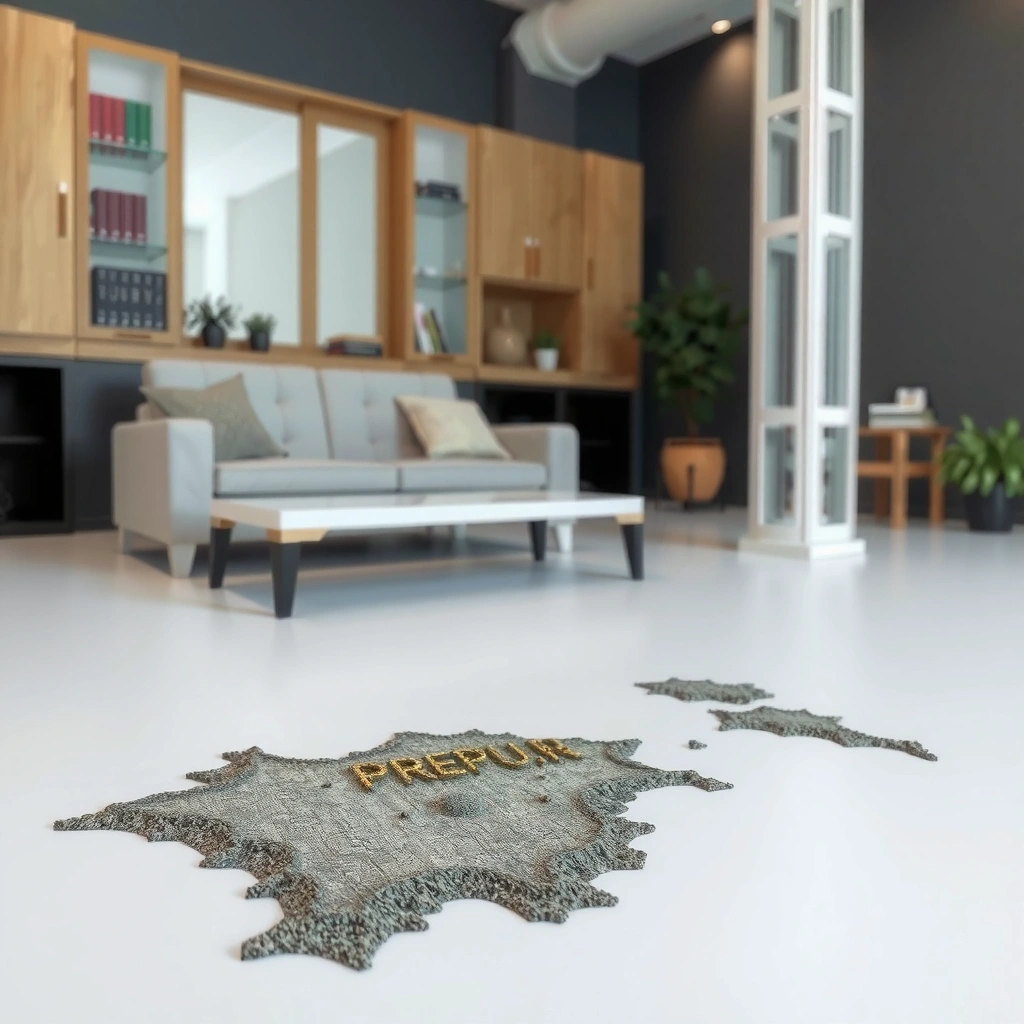
Moisture control is the first line of defense against mold prevention under epoxy floors; epoxy is not a magic guarantee. The best strategy is to assume moisture vapor and occasional water intrusion can be present, then manage humidity and stop the causes before coating.
“Epoxy coatings are designed to resist moisture transmission when specified for the substrate conditions; they are not universal solutions for all wet-slab scenarios.” [ADD: epoxy manufacturer technical/installation instructions on allowable moisture limits and system purpose]
Mold prevention under epoxy floors starts with humidity control because mold growth typically requires sufficient moisture rather than relying on visible leaks alone. [ADD: authoritative indoor dampness/mold source]
Here’s the practical framing: epoxy as a barrier means it can slow moisture movement, but it still depends on the system type and substrate condition. If you coat a slab that’s actively emitting moisture vapor (often driven by groundwater pressure or seasonal wetting), you can end up with a trapped micro-environment where mold prevention under epoxy floors becomes impossible to guarantee.
In my experience reviewing jobsite issues (not lab testing or proprietary moisture chamber work), the recurring pattern is consistent: people treat epoxy as the “cure” for damp concrete, then they see musty odor weeks later, or bubbling/soft spots appear along the perimeter and at joints. That usually points back to moisture sources—either liquid water pathways or vapor drive—that were never fully addressed.
What to control first in moisture prevention under epoxy floors
– Source water (liquid entry): Fix plumbing leaks, exterior wall penetration leaks, failing gutters/downspouts, missing or failed waterproofing at foundations, and inadequate exterior grading/drainage.
– Groundwater pressure / vapor drive: If the slab has persistent dampness or a history of seepage, you may need a system that includes a moisture-mitigation primer or membrane approach designed for that specific condition.
– Indoor humidity: Run HVAC/ventilation consistently and use dehumidification in basements/enclosed garages when needed. Mold prevention under epoxy floors improves dramatically when relative humidity stays controlled year-round.
Anchor data points (why humidity and moisture matter)
– According to the EPA, mold can grow when moisture conditions are sufficient (typically when materials stay damp). [ADD: EPA mold guidance]
– ASHRAE guidance commonly targets indoor relative humidity in the ~30–60% range for mold risk reduction; keeping spaces stable helps reduce condensation. [ADD: ASHRAE/indoor humidity guidance source]
– In cold climates, condensation risk spikes with temperature swings and high indoor humidity; practical humidity control is used to keep surfaces from reaching dew point. [ADD: dew point/condensation guidance source]
Inspect and test the slab before coating
Testing beats guesswork for mold prevention under epoxy floors; you want measurements that match your coating system’s documented limits. If you find elevated moisture, you select an approved moisture-mitigation primer/barrier—then you move forward.
Mold prevention under epoxy floors should begin with slab moisture testing aligned to the epoxy manufacturer’s required method and acceptance criteria, not generic “dryness” checks. [ADD: manufacturer testing method requirement]
Visual moisture indicators like efflorescence (white salt deposits) and recurring damp spots often correlate with ongoing moisture movement that can undermine epoxy performance if not addressed. [ADD: concrete moisture/efflorescence reference]
Here’s what to inspect—before you even buy materials. Mold prevention under epoxy floors is easier when you catch ongoing moisture early:
Look for current or ongoing damp conditions
– Discoloration (darkening, uneven staining, “tidemarks”).
– Efflorescence (white, powdery salt deposits). This often suggests mineral transport associated with moisture migration.
– Recurring damp spots that reappear after rain or seasonal changes.
– Lingering musty odor that returns after cleaning/drying (a clue to persistent dampness).
– Cracks and joints where water could enter, plus perimeter areas where foundation drainage fails.
Verify moisture with the right test method
Use the moisture testing method required by your epoxy manufacturer—examples include in-situ probes or other system-specific procedures. Mold prevention under epoxy floors depends on matching the metric (and thresholds) to the coating documentation, because different methods read different things.
Important: If you use a test method the coating system doesn’t accept, you risk installing a system that can fail under the exact moisture driver you’re trying to manage.
When you find elevated moisture (what to do)
Mold prevention under epoxy floors typically requires one of these paths:
– Wait and re-test until the slab meets limits.
– Use an approved moisture-mitigation primer/barrier designed for damp substrates.
– Address active water entry before anything else (because a barrier won’t help if liquid water is continuously feeding the underside).
Common Moisture Indicators & What They Usually Mean for Epoxy Coatings
| # | Field Observation | Primary Risk for Mold Under Epoxy | Typical Action | Impact on Proceeding |
|---|---|---|---|---|
| 1 | Efflorescence (white salt) | Ongoing moisture migration | Test moisture & plan mitigation | High risk |
| 2 | Dark damp patches that return | Local wetting under barrier | Identify water path; address | Stop & fix |
| 3 | Musty odor after drying | Hidden dampness | Test + assess for remediation | Investigate |
| 4 | Cracks near control joints | Water entry at seams | Seal/repair per system spec | Repair required |
| 5 | Visible surface salts with peeling | Failure of bond & trapped contamination | Remove salts + test + mitigate | Don’t coat yet |
| 6 | Stable, clean slab with no odor | Lower risk of trapped dampness | Proceed with approved prep & specs | Best case |
| 7 | Condensation on walls near slab | Humidity/temperature-driven moisture | Control RH; re-test readiness | Address conditions |
Prep the surface so moisture can’t get “locked in”
Good mold prevention under epoxy floors depends on surface prep that removes contaminants and doesn’t create pathways for moisture. If the slab has mold-related contaminants, remediation must happen before you coat, because coating over contamination can trap it.
For mold prevention under epoxy floors, concrete surface prep is not cosmetic—poor adhesion and residual contaminants can become pathways that allow moisture to remain trapped under the coating system. [ADD: coating adhesion/surface prep requirements from manufacturer]
Existing mold-related contamination on porous concrete generally requires a remediation approach appropriate to concrete and the affected materials—not just a surface wipe—before epoxy coating. [ADD: public health authority or mold remediation standard guidance for porous materials]
Remove contaminants completely
Before any primers or epoxy layers, you need a surface that can bond and won’t retain food sources for growth. Mold prevention under epoxy floors fails when dust, oils, sealers, paint overspray, drywall mud, curing compounds, or patch materials interfere with adhesion.
Key prep tasks:
– Thorough cleaning (mechanical removal where needed).
– Decontamination if staining or residues suggest prior biological growth.
– Grinding/scarification as specified for your epoxy system’s bond profile (not just “rough enough”).
Mechanically profile concrete correctly
Many epoxy systems require a specific surface profile (commonly created by shot blasting or grinding). This matters because mold prevention under epoxy floors depends on eliminating micro-debris that can hold moisture and reduce bond quality.
Address existing mold contaminants (don’t coat over them)
If you see mold on the surface or suspect it’s present in porous concrete, the correct step is remediation before coating. Follow an approved remediation method suitable to the jurisdiction and building materials, and consider involving a qualified contractor for hidden or widespread growth.
[ADD: local/approved remediation method or contractor guidance for your situation.]
Use an epoxy/membrane system designed for damp conditions
The right system is a major part of mold prevention under epoxy floors when moisture can’t be fully eliminated quickly. Don’t pick “any epoxy”; select a system that documentation explicitly allows for your measured moisture condition.
Mold prevention under epoxy floors improves when you use an epoxy moisture barrier or mitigation primer specifically approved for the slab’s measured moisture condition. [ADD: manufacturer system compatibility and approved primer/membrane guidance]
Application limits (temperature, recoat windows, and surface moisture requirements) directly affect whether epoxy forms a dense barrier that performs as intended. [ADD: manufacturer installation instructions]
How to choose the correct damp-slab epoxy approach
– Match the product to the condition: The product documentation should state acceptable moisture conditions and whether the system is meant for moisture mitigation.
– Use a compatible primer/barrier: Many damp-slab scenarios require a moisture-mitigating primer or membrane layer before topcoat.
– Follow limits precisely: Temperature ranges, cure times, recoat windows, and surface prep requirements are not flexible. Mold prevention under epoxy floors can fail if the system isn’t installed within spec.
Pros/cons: choosing mitigation primers vs waiting for “perfect dry”
| Approach | Pros | Cons |
|---|---|---|
| Moisture-mitigation primer/barrier | Fast path to installation (when within system limits) | Costs more; requires strict spec compliance |
| Wait until slab meets limits | Simpler system; fewer layers | May take weeks/months; conditions may re-wet seasonally |
Prevent condensation after installation
Mold prevention under epoxy floors also means preventing condensation, not just blocking vapor. You control the indoor environment so the underside and edges don’t repeatedly reach dew point.
Condensation control is part of mold prevention under epoxy floors because repeated dew-point conditions can keep moisture available at slab and perimeter zones. [ADD: condensation/dew point guidance source]
Stable indoor humidity reduces the moisture available for mold growth and helps epoxy systems perform within their design assumptions. [ADD: humidity/mold risk source such as EPA or ASHRAE]
Practical steps that protect the install
– Keep HVAC running (or maintain consistent air exchange) so indoor RH doesn’t swing dramatically.
– Dehumidify when needed: Especially during humid seasons or after rain events that spike basement moisture.
– Avoid large temperature swings: Rapid cooling can create condensation on cooler surfaces.
– Improve airflow/ventilation: Closed garages and basements often need mechanical help to remove humid air.
– Keep fixing water entry points: Even the best coating can’t compensate for ongoing infiltration through cracks, penetrations, or failed drainage.
What can go wrong (common mistakes and edge cases)
Mold prevention under epoxy floors fails most often when moisture control is treated like an afterthought. These mistakes are common enough that you should plan for them before you open the first pail.
A major failure mode in mold prevention under epoxy floors is coating over an elevated-moisture slab without a manufacturer-approved mitigation system. [ADD: manufacturer failure/limitations guidance]
Epoxy coatings can still experience issues related to vapor drive, hydrostatic pressure, or adhesion failure if the selected system is outside its stated limits. [ADD: manufacturer technical data sheet guidance]
Common problem areas include:
– Coating without approved mitigation: If moisture exceeds limits, you need an approved primer/barrier or you should wait.
– Skipping surface prep: Poor bonding can create micro-pathways where moisture and contaminants remain.
– Assuming “waterproof” means “mold-proof”: Epoxy may resist liquid water but still be impacted by vapor movement when not designed for the scenario.
– Ignoring environment limits during installation: Temperature/humidity outside product specs can lead to improper cure and vulnerable micro-channels.
– Incomplete mold cleanup: If growth exists in porous materials beyond the visible floor surface, surface-only treatment won’t solve the root condition.
[ADD: guidance for your specific building/material setup.]
Verdict / tip (what to do first, and who should skip DIY)
If moisture is even “suspected,” the safest path is to test first, then select an epoxy system that explicitly allows coating under your measured conditions per the manufacturer. The downside is added time and cost: moisture mitigation and correct prep can slow the project and may require extra materials.
Skip a DIY approach (or involve a qualified contractor) if you have active water intrusion, recurring flooding, or visible mold growth beyond the immediate floor surface—because the root cause must be addressed, not just covered.
Quick checklist: Mold prevention under epoxy floors
– [ ] Fix water entry points (leaks, grading, plumbing, cracks) before coating
– [ ] Test moisture using the epoxy manufacturer’s required method
– [ ] Confirm humidity/temperature are within system specs before and during install
– [ ] Mechanically prep concrete to the required profile; remove all contaminants
– [ ] Use the right primer/barrier if moisture mitigation is needed
– [ ] Ensure proper ventilation and dehumidification after installation
– [ ] Recoat exactly within the manufacturer’s window and curing requirements
FAQ
Can epoxy prevent mold under the floor?
Epoxy can reduce moisture exchange, but it doesn’t automatically stop mold if moisture and humidity conditions persist underneath. Mold prevention depends on controlling moisture first and using a system designed for your slab conditions.
What’s the first thing to check before installing epoxy?
Start with the moisture source and slab moisture conditions. Look for water entry, efflorescence, damp spots, musty odor, and verify with moisture testing aligned to the epoxy manufacturer’s instructions.
Should I coat over existing mold on concrete?
If mold or contaminants are present, you generally need proper remediation before coating. Treating over contamination without correct cleaning/removal can undermine the coating and leave problems continuing.
Will dehumidifying after epoxy help prevent mold?
Yes—maintaining stable indoor humidity reduces condensation risk and lowers the moisture available for mold growth. Follow the humidity guidance from your coating system and building needs.
What if my slab has high moisture readings?
If moisture exceeds the allowable limits for the coating system, you’ll likely need an approved moisture mitigation primer/barrier or another approach specified by the manufacturer. Don’t assume “any epoxy” will work.
Sources
– [ADD: epoxy manufacturer technical data sheets and installation instructions for moisture limits, allowable surface conditions, required test method, and approved primers/membranes]
– [ADD: concrete moisture/vapor guidance from a primary standards body or authoritative industry reference, if you plan to cite specific thresholds]
– [ADD: guidance on mold remediation/cleaning applicable to concrete surfaces from a primary public health authority or mold remediation standard (e.g., [ADD exact source name])]
Mold prevention under epoxy floors isn’t about choosing the “strongest” coating—it’s about preventing moisture from being trapped under it. By fixing water entry points, testing slab moisture with the manufacturer’s method, preparing concrete properly, using a system compatible with damp conditions, and controlling humidity after installation, you significantly reduce the chances of mold growth and coating failure.
Frequently Asked Questions
What causes mold to grow under epoxy floors?
Mold under epoxy typically happens when moisture from a concrete slab or subfloor gets trapped between the epoxy coating and the surface. This can come from hydrostatic pressure, plumbing leaks, high indoor humidity, or inadequate slab curing and drying before installation. If moisture levels are high and the epoxy system isn’t designed to be moisture-tolerant, mold can establish in the damp substrate where spores accumulate.
How can I prevent mold before installing epoxy flooring?
Start with proper moisture testing (such as in-slab relative humidity tests or calcium chloride testing) to confirm the slab is within the epoxy manufacturer’s limits. Repair cracks, spalls, and any leaking plumbing, and allow the concrete to fully cure and dry before coating. Use a compatible epoxy moisture barrier system—typically including an appropriate primer—so water vapor can’t migrate into the system and create conditions for mold under epoxy floors.
Why does mold appear even after epoxy flooring is installed?
Mold can appear if moisture vapor continues to pass through the slab after installation or if the epoxy coating was applied over a contaminated or damp surface. Pinholes, incomplete coverage, or damaged coatings can also let moisture and spores reach the substrate over time. Additionally, poor ventilation or consistently high humidity indoors can raise the risk of condensation, which supports mold growth beneath epoxy flooring.
What’s the best way to control humidity under epoxy floors?
Control indoor humidity with HVAC dehumidification and ensure consistent temperature to reduce condensation risk. Use exhaust fans in bathrooms, laundry areas, and kitchens, and consider moisture-mapping the space if you notice musty odors. If your epoxy system is moisture-prone, prioritize a long-term moisture management approach—like maintaining RH within recommended ranges—so mold under epoxy floors can’t thrive.
Which epoxy system and primers help stop mold and moisture issues?
Choose an epoxy flooring system specifically rated for moisture resistance and use the primer recommended by the manufacturer to prevent vapor intrusion. In basements or slab-on-grade installations, a true moisture barrier epoxy (or moisture-mitigation system) is often necessary to block water migration that can lead to mold. Also verify that the surface preparation method (grinding, moisture-tolerant primers, and proper cleaning) is aligned with the system so the coating bonds tightly and avoids pathways for moisture and mold growth.
📅 Last Updated: October 10, 2026 | Topic: How to prevent mold under epoxy floors? | Content verified for accuracy and freshness.
References
- Google Scholar Google Scholar
https://scholar.google.com/scholar?q=how+to+prevent+mold+under+epoxy+floors - Google Scholar Google Scholar
https://scholar.google.com/scholar?q=epoxy+floor+coating+moisture+vapor+transmission+mold+prevention - Google Scholar Google Scholar
https://scholar.google.com/scholar?q=indoor+mold+prevention+moisture+control+building - https://www.cdc.gov/mold/default.htm
- Mold | US EPA
https://www.epa.gov/mold - https://www.epa.gov/mold/mold-remediation-guidelines-homeowners-and-tenants
- WHO guidelines for indoor air quality: selected pollutants
https://www.who.int/publications/i/item/9789289002134 - Mold – Overview | Occupational Safety and Health Administration
https://www.osha.gov/mold - Mold
https://en.wikipedia.org/wiki/Mold - https://pubmed.ncbi.nlm.nih.gov/?term=indoor+mold+prevention+dampness+moisture+control