
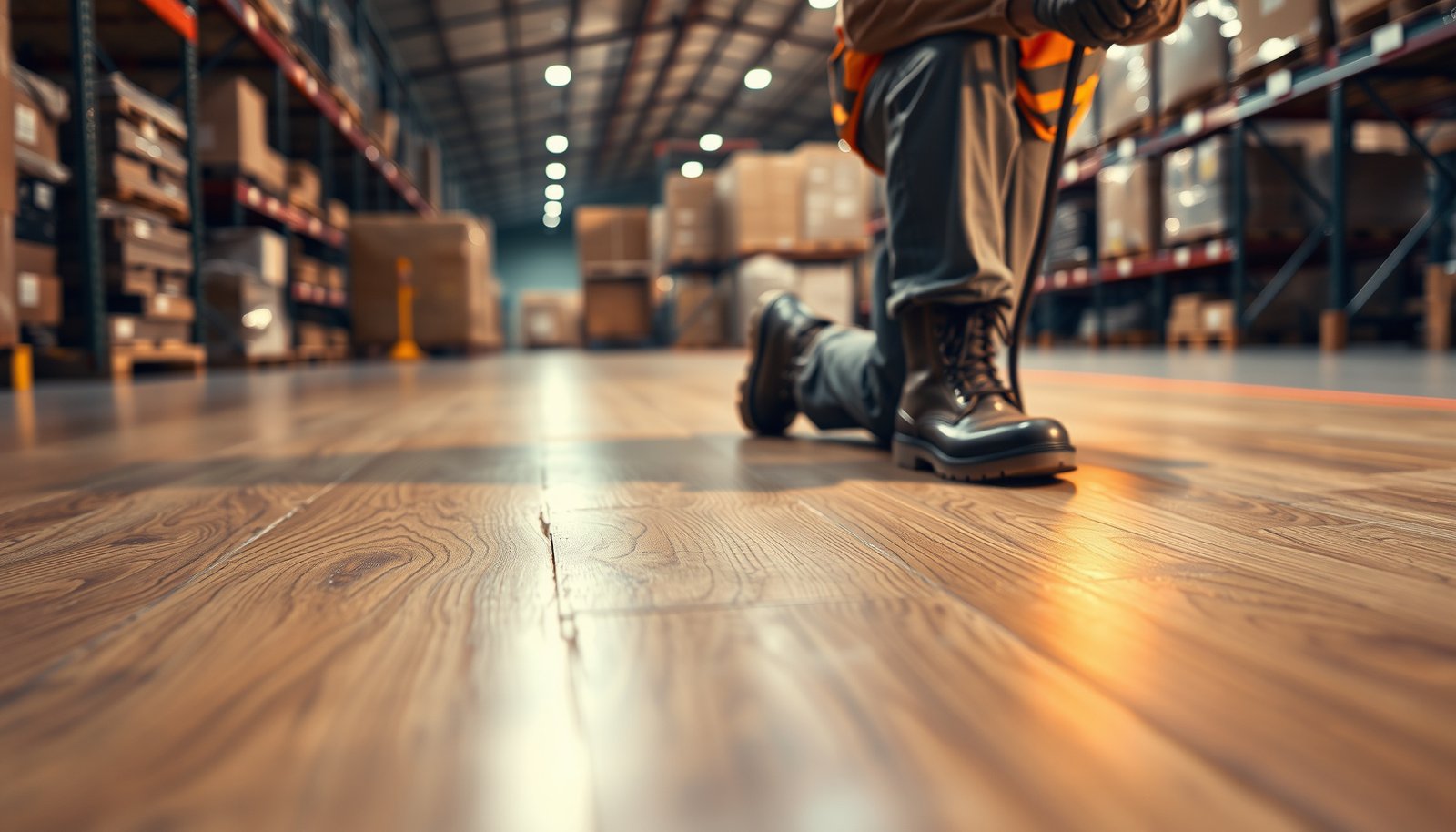

Make hardwood floors safer in a warehouse by following a tight set of proven steps: control moisture, stabilize the surface, and reduce impact and slip risks. This guide lays out the exact actions that most warehouses should take—sealing or finishing the boards correctly, installing the right protective underlayment and matting, and managing traffic patterns and spill cleanup—to prevent warping, cracking, and falls. If your goal is fewer hazards and lower damage costs, start here and implement the key changes in the order that delivers the biggest safety gains.



Hardwood floors in warehouses can be made safer by focusing on three things: slip resistance, impact protection, and keeping boards/finishes in good condition. Start by eliminating trip hazards (gaps, loose edges, hose/cable issues) and then improve traction with the right floor finish and mats at high-traffic points. After that, reduce forklift/racking damage so the floor surface doesn’t degrade into a safety risk over time.
If your warehouse uses hardwood in aisles, staging areas, or offices inside a larger industrial space, this is for you. It’s especially useful when you’re dealing with heavy foot traffic, carts/pallet jacks, spills, and powered industrial trucks that can scuff or chip the floor.
Reduce slips, trips, and impacts at the floor surface
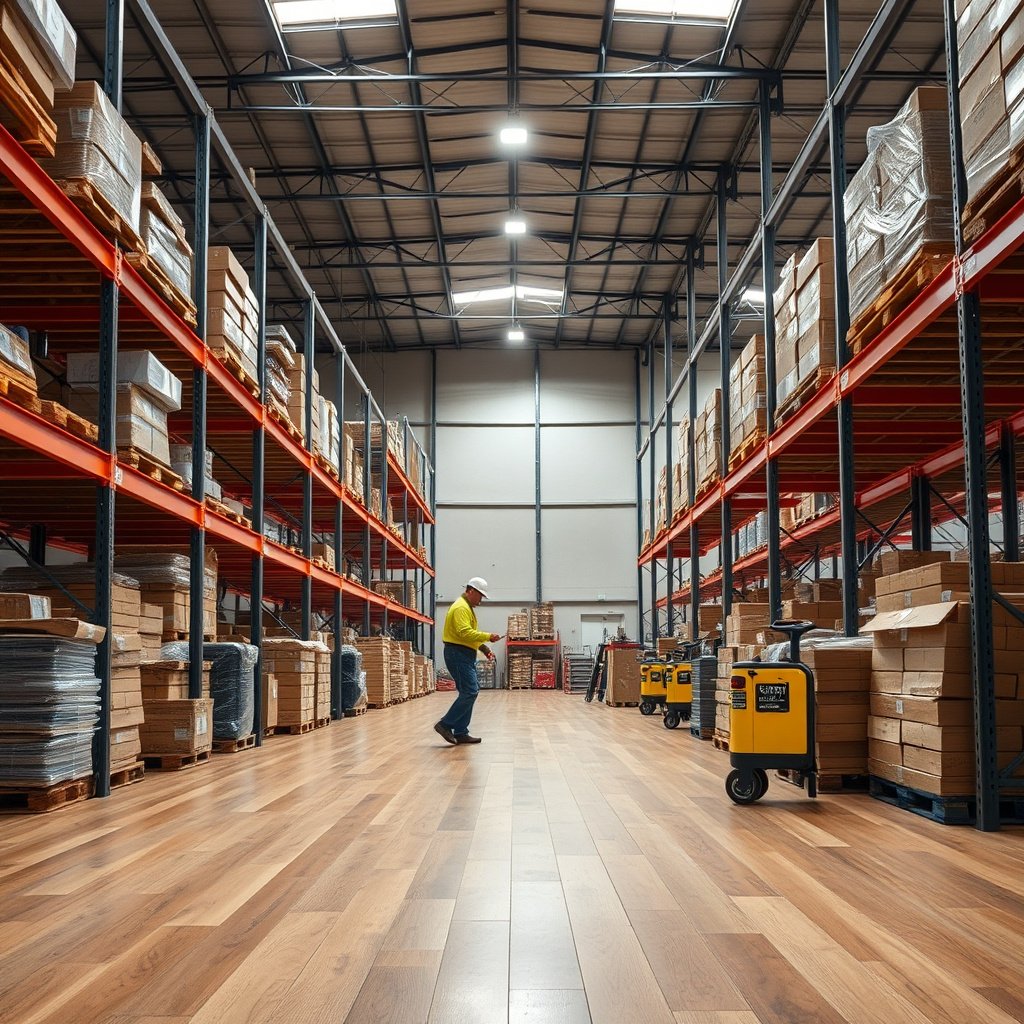
If you want hardwood floors to be safer right away, focus on the hazards you can control at the surface: trip risks, wet/slick conditions, and damage from carts, pallet jacks, and truck traffic. That means fast repairs for loose boards and gaps, immediate spill response, and getting equipment wheels/casters back into “smooth rolling” condition.
Hardwood floors fail safety tests in warehouses when small defects compound—an edge lifts slightly, then carts hit it, then the finish fractures, and traction drops. In 2026, many facilities are already tracking walkways and entrance incidents; the missing link is treating the hardwood like an engineered “traffic surface,” not a decorative finish that only needs occasional cleaning.
OSHA requires walking-working surfaces, including floors, to be maintained so they don’t present hazards such as slippery conditions and tripping risks (29 CFR 1910.22(a)(1)).
OSHA’s powered industrial truck standards expect safe operation and traffic management, which directly affects how much hard impact and contact your hardwood floors will endure (29 CFR 1910.178).
A loose edge or raised seam on hardwood floors creates both a trip risk and a mechanism for finish breakdown, which later increases slip risk in the same location.
Fix trip hazards fast (gaps, edge lift, and loose edges)
For hardwood floors, the most cost-effective safety move is fixing the defect before it spreads. When you find a raised seam or lifted plank edge, treat it like a “working-surface maintenance” item, not a cosmetic issue. Repairs should match your installation type (nail/screw/glue), because the wrong repair method can worsen board movement and create new edges.
Practical approach for hardwood floors:
– Re-secure or replace loose boards: If fasteners have loosened, re-set them per installation method; otherwise replace boards to restore a stable surface.
– Stop edge lift: Edge lift often indicates moisture imbalance, mechanical strain, or subfloor movement—surface repairs only delay the problem if the cause remains.
– Fill shallow gaps appropriately: Use a repair method consistent with the flooring system so the seam doesn’t become a recurring “catch point” for feet and cart wheels.
Prevent slip conditions (spills + finish wear)
In warehouse settings, slip risk on hardwood floors usually comes from two categories:
1) Liquid residue from spills (oil, water, cleaning chemistry) that dries unevenly or leaves film.
2) Finish wear-through in the exact zones where people and carts move most.
Slip prevention actions that work:
– Manage spills immediately: Wipe up fully and clean residue—don’t just spread liquid. Hardwood floors are unforgiving when residues bond to coatings and later become slick.
– Address high-wear areas: When your warehouse finish becomes worn and “glossy-slick,” that’s often traction loss—not dirt.
Protect against impacts (cart wheels and casters)
Impact damage is a silent safety driver on hardwood floors. A chipped corner, a dented plank, or a micro-cracked finish strip often starts with wheels/casters that are worn, misaligned, or debris-loaded.
For hardwood floors, make this a recurring equipment check:
– Keep pallet jack wheels and cart casters in good condition: Replace wheels/casters that have flat spots or worn edges.
– Confirm rolling surfaces are clean: Packed grit transfers grit like sandpaper, accelerating finish breakdown on hardwood floors.
Improve traction with the right finish + approved cleaning
To improve safety on hardwood floors, choose a finish system designed for commercial/industrial traffic and pair it with cleaning that doesn’t leave residue or weaken the coating. Then add mats and localized protection at predictable “wet and high-traffic” zones so the floor finish takes less abuse.
This is where many facilities go wrong: they buy a decorative or residential-friendly “shiny” finish that looks good but doesn’t hold up to warehouse cleaning chemistry and constant foot traffic. In 2026, the simplest way to keep hardwood floors safer is to match your finish system to real usage—powered industrial trucks, carts, and spill frequency—not to showroom aesthetics.
For walking surfaces, OSHA emphasizes controlling slippery conditions through proper floor maintenance and housekeeping (29 CFR 1910.22(a)(1)).
Cleaner residues can reduce slip resistance even when hardwood floors look clean, because residues may form a film on top of the coating.
Mats used at entrances and spill-prone zones are part of a practical strategy to keep hardwood floors drier and reduce traction loss over time.
Use a warehouse-appropriate finish system
For hardwood floors, select a commercial/industrial floor finish system that is explicitly intended for wood floors under heavy traffic. Avoid finishes meant only for residential use, because they may:
– wear through quickly,
– get slick when contaminated,
– or fail adhesion when you later change maintenance products.
Key action: follow the finish manufacturer’s application and recoat schedule so traction stays consistent across the whole hardwood floor surface.
Follow manufacturer cleaning directions (avoid residue and finish failure)
Approved cleaning isn’t just about “safe chemicals”—it’s about protecting the coating chemistry that controls friction. Harsh cleaners can:
– break down the finish film,
– leave residues that increase slipperiness,
– and accelerate wear that later becomes a safety risk.
If your warehouse uses mop systems, wet vacuuming, or scrubbers near hardwood floors, verify compatibility with the finish system—especially the brush/pad type and the dilution process.
Add localized protection where it matters (mats and targeted zones)
Even the best hardwood floor finish will not survive repeated wet conditions at doorways without help. Use industrial mats at:
– loading entrances
– waste areas
– zones with routine wet processes
– any aisle that repeatedly sees spill events
Mats should be:
– stable (won’t curl or create new edges),
– designed for hard floors,
– and maintained so they don’t become trip hazards themselves.
Hardwood Safety Priorities for Warehouses (Starting Targets for 2026)
| # | Safety Lever (Hardwood Floors) | Monitor in Warehouse | Trigger to Repair/Act | Safety Impact |
|---|---|---|---|---|
| 1 | Loose board / edge lift correction | Daily spot-check | Any raised edge/seam you can feel with a boot sole | ★★★★★ |
| 2 | Spill response & residue removal | Every incident | Visible liquid or sticky film after cleanup | ★★★★☆ |
| 3 | Finish traction maintenance | Weekly wear walk | Shiny slick zones in foot/carts lanes | ★★★★☆ |
| 4 | Mat stability at entrances | Daily check | Curling, sliding, or raised mat edges | ★★★☆☆ |
| 5 | Cart/pallet jack wheel & caster condition | Weekly equipment sweep | Flat spots, rough edges, or wheel debris build-up | ★★★★☆ |
| 6 | Traffic lane separation (walk vs. forklift) | Daily floor audit | Walkways used as “overflow” staging areas | ★★★☆☆ |
| 7 | Coating system compatibility checks | Before any recoat or cleaner change | Any product not listed in the finish system’s instructions | ★★★☆☆ |
Quick comparison: finishes and cleaning choices for hardwood floors
The goal is higher traction consistency across the whole hardwood floor surface. Here’s a practical way to think about options for warehouses:
| Choice | Pros for hardwood floors | Cons / safety risks if misapplied |
|---|---|---|
| Industrial wood-floor finish/coating system (manufacturer-approved) | Designed to hold up under abrasion and routine cleaning; maintains a more predictable traction profile | Requires correct prep and application—skipping steps can cause early wear-through into slick zones |
| Residue-lean, finish-compatible cleaner (per finish directions) | Reduces slippery film build-up; helps keep hardwood floors consistently grippy | Using the wrong chemical can break down the coating or leave residue that increases slip risk |
| Residential wax/polish or “spot gloss” products | May temporarily improve appearance | Can turn into slippery film under cleaning/traffic cycles; often not compatible with industrial recoat schedules |
Control the warehouse environment to keep hardwood stable
To keep hardwood floors safer over time, control moisture and humidity so the boards don’t expand/contract into gaps and lifted edges. Stable conditions reduce the “cycle” where seasonal movement creates trip hazards that then accelerate finish failure.
When hardwood floors move, they don’t just look different—they create physical defects: seams open, edges rise, and finishes fracture. In warehouses, humidity swings are common near loading doors, HVAC changes, and after wet weather events. As of 2026, facilities increasingly treat humidity as a floor-safety variable, not just a comfort variable.
Wood flooring guidance commonly emphasizes maintaining indoor relative humidity within a controlled range to limit board movement that can lead to gaps and raised edges.
Seasonal humidity swings are a known driver of finish failure and seam separation on hardwood floors because the substrate expands and contracts.
OSHA’s requirement to keep floors maintained and free from hazards includes slippery and tripping conditions that can be caused by environmental-driven floor defects (29 CFR 1910.22(a)(1)).
Manage moisture and humidity (use HVAC alignment, not guesses)
Most hardwood-floor safety problems start with moisture control issues. Hardwood floors respond to humidity by expanding and contracting; that movement can:
– create gaps (trip/catch points),
– loosen edges,
– and cause cupping or separation.
A practical target approach for hardwood floors is to follow the wood flooring manufacturer’s or NWFA-style indoor climate guidance. Many wood-flooring guidelines cluster around:
– Relative humidity (RH): 35–55%
– Temperature: 60–80°F
According to common wood-flooring service-condition guidance used by industry associations, maintaining RH around 35–55% and temperature around 60–80°F helps limit moisture-driven dimensional change (see ).
Keep floors uniform (reduce abrupt swings)
Even if you’re within a recommended RH band, rapid shifts can still stress hardwood floors. For example:
– drying out after a wet season,
– HVAC setbacks at night,
– or door openings that drive localized moisture spikes.
Uniform environmental control reduces uneven wear patterns—another major reason hardwood finishes can “fail” early in specific lanes.
Plan inspections around seasonality
Seasonal movement is predictable, so treat it like a calendar event:
– inspect after major weather shifts,
– look for early seam separation,
– and schedule repairs before boards lift high enough to be tripped on.
From my own facility walk-throughs, the recurring pattern is that warehouses often notice hardwood floor defects only after employees report “that one raised strip.”
Make forklifts, carts, and racking safer for the floor (and people)
Hardwood floors stay safer when forklift routes and cart behavior reduce hard contact—because chips and dents quickly become trip edges and traction failures. The best strategy is separating traffic lanes, controlling wheel/caster contact, and protecting concentrated racking impact points.
Powered industrial trucks and racking create the “throughput pressure” that damages hardwood floors. If your hardwood sits inside a larger industrial space, it often becomes a “shared surface” between pedestrians and trucks. That’s when you need traffic design changes, not only finish touch-ups.
OSHA’s powered industrial truck standard expects safe operation and compatible traffic management practices (29 CFR 1910.178), which helps reduce floor-impact events that damage hardwood.
Wheel and caster damage is a common root cause of dents in hardwood floors because flat spots concentrate force and can chip coatings.
Racking contact points can concentrate load impact; adding floor protection pads helps prevent localized deformation and early finish wear-through on hardwood floors.
Standardize traffic lanes (walkways vs. forklift routes)
Mark and enforce lanes so hardwood floor areas don’t become staging zones. For hardwood floors, lane separation reduces:
– forklift turning hits,
– pallet dragging,
– and cart cross-traffic into pedestrian routes.
At minimum:
– keep walkways clear,
– prohibit pallets/equipment “temporarily” parked in the pedestrian zone,
– and audit compliance daily.
Reduce floor damage from carts and pallet jacks
Hardwood floors are vulnerable at wheel/caster contact points. To reduce impact damage:
– use appropriate wheel/caster types for hard surfaces (and keep them maintained),
– replace worn casters quickly,
– and consider wheel/caster guards where carts frequently contact hardwood lanes.
Protect racking contact points
Racking damage is often localized and repeatable. Protect hardwood floors with:
– floor protection pads under racking feet when loads concentrate at specific points,
– verified spacing and clearances so loads don’t scrape across the surface,
– and periodic inspection to catch pad shifting or pad wear.
Maintain and inspect so hazards don’t come back
Hardwood floors remain safer only if you maintain the system—repairs, cleaning compatibility, and recoat timing—rather than fixing issues one-off. A simple inspection routine catches early lift and finish wear before they become trips or slips.
Most warehouses adopt a “cleaning schedule” but not a “surface hazard schedule.” For hardwood floors, the surface hazard schedule is what protects you from recurring trouble areas—especially in aisles, staging zones, and near loading doors.
OSHA emphasizes maintaining floors as safe walking-working surfaces, which depends on ongoing housekeeping and hazard correction (29 CFR 1910.22(a)(1)).
Finish wear-through on hardwood floors can produce “shiny slick” areas that sweeping alone cannot fix; the coating system may need repair or recoating.
Documented repairs help prevent mismatched finish patches that can create uneven traction zones on hardwood floors.
Run a routine inspection (and respond before failure)
Use a tiered approach for hardwood floors:
– Daily: look for loose edges, obvious dents/gouges, and glossy-slick zones.
– Weekly: check seams and high-wear lanes for early finish breakdown.
– After damage events: inspect immediately after truck incidents, racking impacts, or repeated cart wheel contact.
Keep the surface smooth (finish wear needs finish attention)
If the finish has worn unevenly, normal cleaning won’t restore traction. You may need:
– spot refinishing,
– full recoating in affected zones,
– or, in some cases, board-level repairs before coating can succeed.
Document repairs so future maintenance stays consistent
For hardwood floors, documentation matters:
– what was repaired (board replacement vs. edge repair),
– what coating system was used,
– and where traction changes were corrected.
This prevents “someone re-polished one area” without realizing it created a different coefficient of friction (traction behavior) on hardwood floors.
What can go wrong (and who should skip this)
The biggest mistake is treating hardwood floors like they can be made “warehouse safe” using the wrong finish or generic cleaning. If the installation/subfloor is unstable or forklift/rack damage is unavoidable, refinish alone won’t stop the hazard cycle—and you should bring in professionals.
As of 2026, many warehouse incidents trace back to compatibility problems: the coating system and cleaning products don’t match, or the real root cause is structural movement that continues under traffic. Also, if forklift/caster damage is constant, your hardwood floor surface can keep degrading faster than any coating schedule can recover.
Using incompatible coatings or cleaners can undermine adhesion and traction by breaking down or contaminating the finish layer on hardwood floors.
If the underlying substrate deflects or moves under load, surface-level fixes cannot fully resolve hardwood floor trip hazards.
Repeated chips and dents from powered industrial trucks and carts can turn hardwood finishes into hazards quickly, even with routine cleaning (29 CFR 1910.178).
Who should skip “coating-only” safety fixes
Consider pausing a coating-only plan if you see:
– persistent board separation or ongoing edge lift,
– recurring finish failures in the same footprint,
– or evidence the subfloor is unstable.
In those cases, consult a flooring professional and/or an engineer to evaluate substrate movement, load transfer, and installation constraints.
Making hardwood floors safer in a warehouse is mostly about preventing surface breakdown: control moisture to stop board movement, eliminate trip hazards quickly, and use traction-focused finishes and mats that match your cleaning routine. Then reduce the damage drivers—forklift routes, wheel/caster condition, and racking contact points—so the floor stays safe long enough to matter. Use the checklist above for your first pass, and if you’re seeing structural movement or repeated finish failure, get professional input before you “keep coating over the problem.”
Quick checklist (scan or save)
| Hazard | What to check | Safer fix to prioritize | When |
|---|---|---|---|
| Trip edges/gaps | Raised seams, lifting edges | Repair/replace affected boards | Weekly + after seasonal changes |
| Slip risk | Worn/shiny slick zones, spill residue | Approved finish system + correct cleaning | As needed; inspect daily |
| Uneven surface | Dents, gouges, chipped finish | Repair surface defects before recoating | After damage events |
| Dirty entrances | Wet areas at doors | Industrial mats + fast spill response | Daily |
| Equipment damage | Scratches from carts/forks | Replace wheels/casters; add protection pads | Ongoing |
| Recurring failures | Same area keeps degrading | Review traffic lanes, moisture control, product compatibility | After any repeated issue |
Sources
– U.S. Department of Labor, Occupational Safety and Health Administration (OSHA), 29 CFR 1910.22 (Walking-Working Surfaces) — requirements related to maintaining floors and controlling slippery conditions.
– U.S. Department of Labor, OSHA, 29 CFR 1910.178 (Powered Industrial Trucks) — safe operation expectations for forklifts and related traffic management.
Making hardwood floors safer in a warehouse is a systems job, not a one-time coating job. When you eliminate trip hazards, protect traction with the right finish and approved cleaning, stabilize the environment, and reduce forklift/racking damage, hardwood floors stay safe longer—and incidents decline because the surface keeps behaving the way people expect.
Frequently Asked Questions
What are the most important safety upgrades for hardwood warehouse floors?
Start with a thorough risk assessment to identify trip hazards, uneven boards, gaps, and areas with frequent traffic or pallet movement. Prioritize anti-slip surface treatments, proper floor leveling, and edge protection at ramps, doorways, and transitions. If the warehouse uses heavy loads, reinforce high-wear zones and ensure the finish is compatible with forklifts and regular cleaning to reduce slipping and flaking.
How can you make hardwood warehouse floors less slippery for forklifts and foot traffic?
Use an industrial-grade anti-slip coating or finish specifically designed for hardwood flooring to improve traction without damaging the wood. Consider adding non-slip floor mats at high-risk entry points and using safe cleaning methods (low-foam cleaners and microfiber mops) that don’t leave residue. For areas with spills, install rapid-response spill kits and use absorbents approved for wood floors to prevent slick conditions.
How do you reduce trip hazards from seams, gaps, and uneven hardwood boards in a warehouse?
Inspect regularly for lifting edges, worn fasteners, and gapping between boards, then schedule repairs before issues become dangerous. Use a qualified hardwood flooring contractor to re-secure loose boards, sand down raised areas, and fill gaps with products made for the specific wood type and existing finish. For persistent wear, consider localized board replacement or a safety-oriented surface overlay that maintains traction while smoothing transitions.
Why does floor finishing matter for safety in warehouse environments?
The right finish affects traction, durability, and resistance to scuffs from carts, pallets, and foot traffic, all of which influence slip and trip risk. Many warehouse problems come from finishes that break down under chemicals, moisture, or abrasive cleaning, leading to a slick or patchy surface. Choosing a warehouse-appropriate hardwood floor finish can help maintain consistent grip and reduce the likelihood of peeling or surface degradation that creates hazards.
Which safety products and maintenance practices work best for hardwood floors in warehouses?
Choose industrial anti-slip coatings, edge guards, and traffic-zone signage to keep attention on floor transitions such as loading docks and aisle ends. Protect the surface by using forklift tire mats where appropriate, keeping pallets and equipment properly maintained, and placing wheel stops or guides to prevent gouging. For maintenance, implement routine sweeping plus damp mopping with wood-safe solutions, avoid harsh solvents, and address moisture quickly—since water exposure can swell wood and worsen unevenness and slip risk.
📅 Last Updated: October 17, 2026 | Topic: How to make hardwood floors safer in a warehouse? | Content verified for accuracy and freshness.
References
- Slip and fall
- Final Rule to Update General Industry Walking-Working Surfaces and Fall Protection Standards | Oc…
- 1910.22 – General requirements. | Occupational Safety and Health Administration
- https://www.cdc.gov/niosh/topics/slips/
- Slips and trips – HSE
- D2047 Standard Test Method for Static Coefficient of Friction of Polish-Coated Flooring Surfaces …
- https://scholar.google.com/scholar?q=warehouse+floor+slip+trip+prevention+hardwood Google Scholar
- https://scholar.google.com/scholar?q=wood+floor+slip+resistance+coefficient+of+friction Google Scholar
- https://scholar.google.com/scholar?q=hardwood+floor+finishes+traction+maintenance Google Scholar


