Hardwood floors on an outdoor walkway can survive weather and foot traffic—but only if you maintain them the right way. This guide shows the fastest, most effective routine to protect, clean, and reseal outdoor hardwood so it resists moisture, warping, and fading. Get the exact steps and schedule that keep your walkway looking solid year-round.




Protecting an outdoor hardwood walkway is mostly about keeping water from saturating the wood and maintaining an exterior-rated finish. Seal your outdoor hardwood often, clean it gently, and keep water from pooling—if the surface starts absorbing moisture instead of beading or darkening evenly, it’s time to reapply an exterior-rated finish. This guide covers what to do day-to-day and what to watch for as seasons change.
If your “hardwood floors” are actually standard interior flooring used outdoors, maintenance alone may not be enough—some materials will cup, gap, or fail much faster. The steps below work best when the boards are meant for exterior use (or have an appropriate exterior system) and the walkway has decent drainage.
Protect the surface finish (the real “maintenance”)

The best way to maintain an outdoor hardwood walkway is to treat the finish as the primary water barrier, not the wood itself. An exterior-rated finish system slows water absorption and UV-driven breakdown, which is what ultimately prevents cupping, discoloration, and finish peeling.
Exterior-rated coating systems are designed to reduce water absorption and UV damage—your outdoor hardwood walkway lives or dies by that top layer.
If water stops beading and starts soaking in, the finish film has usually degraded enough that recoat is the correct maintenance move.
– Use an exterior-rated finish system (not an interior-only product). Interior finishes often fail outdoors because they aren’t formulated for UV exposure and repeated wet/dry cycling. Look for documentation that explicitly says it’s suitable for exterior decking/walkways and compatible with your existing finish type (penetrating stain vs. film-forming sealer/varnish).
– Recoat on a schedule—or sooner if performance drops. When cleaning no longer restores the same appearance and the water behavior changes (from beading to darkening/soaking), plan a topcoat refresh. As of 2026, many exterior coating warranties still depend on proper surface prep and timely recoating, so “waiting for failure” can be more expensive than spot maintenance.
– Plan for traction. Outdoors, slip risk is a real tradeoff with gloss: a very smooth, glossy finish can be slick when wet, while too much traction grit can make cleaning harder. Choose a finish system (or topcoat approach) that allows traction additives if needed, and follow the label instructions exactly.
Because wood movement drives finish stress, the finish has to perform through dimensional change. The U.S. Forest Products Laboratory notes that wood shrinkage can be significant as moisture changes; tangential shrinkage is often ~6–10% and radial shrinkage ~3–5% from green to oven-dry conditions. (US Forest Products Laboratory, *Wood Handbook*; wood shrinkage fundamentals) That movement is why an outdoor hardwood walkway needs a coating that tolerates repeated expansion/contraction rather than cracking or peeling.
Moisture exposure context (why “sealing” matters)
Wood Equilibrium Moisture Content vs. Outdoor Humidity (70°F/21°C)
| # | Outdoor RH | Equilibrium MC | Dimensional Movement Risk* | Maintenance Urgency |
|---|---|---|---|---|
| 1 | 20% RH | ~6.5% | Low | ★☆☆☆☆ |
| 2 | 30% RH | ~8.0% | Low–Moderate | ★★☆☆☆ |
| 3 | 40% RH | ~9.5% | Moderate | ★★★☆☆ |
| 4 | 50% RH | ~11.0% | Moderate–High | ★★★★☆ |
| 5 | 60% RH | ~13.0% | High | ★★★★☆ |
| 6 | 70% RH | ~15.5% | High | ★★★★★ |
| 7 | 80% RH | ~18.0% | Very High | ★★★★★ |
“Dimensional Movement Risk” is a practical interpretation for outdoor hardwood walkway maintenance; equilibrium MC values come from moisture equilibrium concepts described in wood science references (see sources).
Clean without breaking down the wood
The right cleaning approach keeps an outdoor hardwood walkway from grinding grit into the finish and wood surface. You want to remove dirt and debris without stripping coating film or pushing excess moisture into seams and edges.
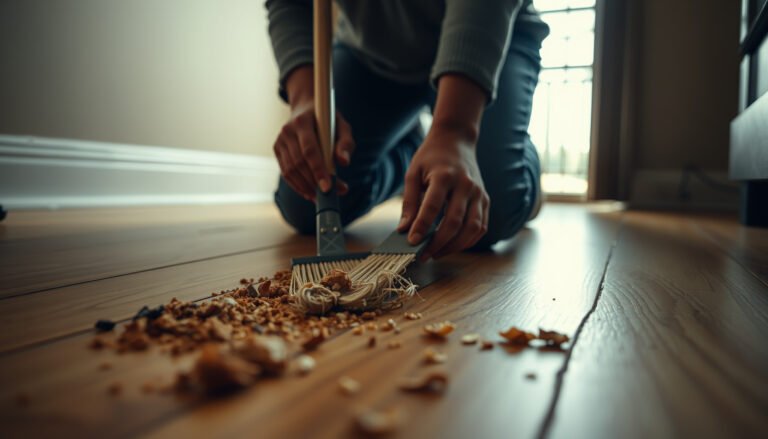
Regular sweeping prevents grit from abrading the finish and scratching the grain on an outdoor hardwood walkway.
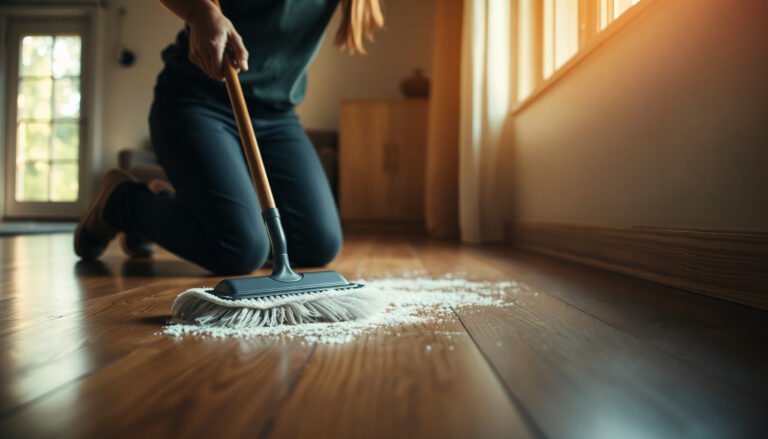
Gentle, finish-compatible washing avoids stripping or softening coatings and reduces the chance of moisture intrusion.
– Sweep regularly to remove grit that can abrade the finish and scratch the grain. Think “debris management first,” especially near landscaping where sand and soil constantly migrate onto outdoor wood.
– Wash sparingly and gently using a cleaner that matches your finish instructions. Many exterior coating labels recommend mild, pH-neutral cleaners; harsh detergents can accelerate film breakdown or leave residues that interfere with adhesion for recoats.
– Avoid high-pressure washing unless the finish manufacturer explicitly allows it. Pressurized water can drive moisture into joints and edges, which is particularly risky for an outdoor hardwood walkway where water has to evaporate away from board ends.
From a wood-performance standpoint, moisture cycling is the core stressor. The U.S. Forest Products Laboratory describes the fiber saturation point at ~28–30% wood moisture content, above which shrinkage mainly doesn’t increase, but water uptake and coating stress still intensify. (US Forest Products Laboratory, *Wood Handbook*; fiber saturation point concept) In practical terms: once the finish loses its barrier role, cleaning methods that add water can become the accelerant for failure.
Control moisture and stop standing water
The quickest path to longer service life for an outdoor hardwood walkway is to prevent prolonged wetting. Drainage, sprinkler management, and drying time matter as much as the coating you apply.
Sloped, debris-free drainage reduces the time an outdoor hardwood walkway stays wet—less time wet means longer finish performance.
Sprinkler overspray and repeated runoff patterns can shorten finish life even if rain totals look “normal.”
– Keep the walkway sloped and clear. Remove leaves, dirt, and debris from edges where water collects. Even small pockets can become long-dwell moisture zones that darken unevenly and encourage peeling.
– Check sprinkler overspray and runoff paths. Reposition splash zones; even small repeated wetting can shorten finish life. This is especially true at landing transitions where water runs from one board gap direction to another.
– Let it dry. After rain, give it time to dry fully instead of trapping moisture with covers that don’t breathe. If the walkway is covered to protect furniture or events, ensure airflow so the outdoor hardwood walkway isn’t “sealed wet.”
As of 2026, most durable exterior wood systems are designed around a basic cycle: the finish gets wet, water beads or releases quickly, then evaporation returns moisture toward equilibrium. If you consistently skip drying time—by covering damp boards or cleaning heavily right before storms—the outdoor hardwood walkway stays in the moisture-movement zone longer.
Seasonal inspection and upkeep
The most cost-effective maintenance for an outdoor hardwood walkway happens during inspections—not during emergencies. Spring and fall walkthroughs catch early finish breakdown and wood movement before they evolve into repair-intensive problems.
Early detection on an outdoor hardwood walkway—raised edges, hairline gaps, and finish thin spots—reduces the need for full refinishing.
Mildew should be addressed quickly using only products compatible with your coating system.
– Spring/fall check for early failure: raised edges, cupping, hairline gaps, peeling, or areas where the finish looks “thin.”
– Spot-clean mildew quickly with a method that won’t damage the finish system. Use only products/instructions compatible with your coating—don’t improvise. If your exterior finish is an opaque solid-color coating or a penetrating stain, the cleaning chemistry and dwell times can differ.
– Do small repairs before they spread. Small finish breaks can become moisture pathways that require larger board fixes. In other words: treat early coating failure as a “leak,” not a cosmetic issue.
To anchor this in wood behavior: equilibrium moisture content changes track outdoor humidity. Wood science references show that, at moderate indoor/outdoor conditions, wood can settle around roughly ~11% at ~50% RH (70°F/21°C), shifting upward as humidity rises. (US Forest Products Laboratory, *Wood Handbook*; moisture equilibrium concepts and charts) That moisture cycling is exactly what seasonal inspection is meant to manage for an outdoor hardwood walkway.
Repairs and refinishing (when maintenance isn’t enough)
For an outdoor hardwood walkway, repairs and refinishing should start when symptoms indicate barrier failure or structural movement. If the wood is moving beyond what your finish can bridge, sanding and recoating alone won’t solve it.
If boards are structurally loose, badly cupped, or splitting, refinishing won’t stop movement on an outdoor hardwood walkway.
Exterior finish systems require strict prep and cure times; coating too early can lead to premature peeling.
– Replace damaged boards early. If boards are splitting, badly cupped, or structurally loose, refinishing won’t fix the underlying movement. Replace first, then recoat the surrounding area so the outdoor hardwood walkway has a continuous barrier.
– Refinish in a controlled way. Sand only as needed to reach sound material, then follow the finish manufacturer’s prep/primer/topcoat steps (including drying/cure times). Controlled sanding also reduces the chance of uneven sheen after recoating.
– Mind the cure time before exposure. Exterior coats often need full cure before rain or heavy foot traffic; follow the stated window for your product. As of 2026, many coating failures blamed on “bad adhesion” are actually “insufficient cure before exposure.”
If you’re deciding whether recoating is worth it, compare outcomes: partial repairs are usually quicker, but only if the existing finish is intact enough to bond. When you see widespread finish thinning across the entire outdoor hardwood walkway field, that’s typically a sign the coating system has reached end-of-life.
What can go wrong (common outdoor hardwood mistakes)
Most outdoor hardwood failures come from mismatched material systems, incorrect cleaning, or water management that keeps the wood wet too long. If you want to protect an outdoor hardwood walkway, avoid these predictable traps.
Using interior-only hardwood finishes outdoors often leads to cupping, gaps, and rapid coating failure due to UV and wet/dry cycling.
Recoating over peeling or contaminated areas creates adhesion failure and patchy discoloration on an outdoor hardwood walkway.
– Using interior flooring/finishes outdoors. Even “clean and seal” won’t stop movement if the material system wasn’t designed for outdoor humidity and UV.
– Trapping moisture with the wrong cleaning or coatings. Over-wetting, sealing over debris, or applying coatings on damp wood can lead to peeling or mold risk under the finish.
– Skipping prep before recoating. Recoating over peeling or contaminated areas creates faster failure and patchy discoloration.
– Pressure washing and harsh chemicals. These can strip the finish, roughen the surface, and drive water into seams.
– Ignoring slip safety. A glossy topcoat may look great but can get slippery; conversely, too much traction grit can make cleaning harder.
Interior vs. exterior coating approach (quick contrast)
| Factor | Interior flooring system | Exterior-rated walkway system |
|---|---|---|
| UV resistance | Often not specified for UV exposure | Designed for sunlight and UV-driven breakdown |
| Wet/dry cycling tolerance | Higher risk of softening/peeling | Coating film tolerates repeated moisture movement |
| Recoating compatibility | May not bond well without stripping | Often supports spot recoats and maintenance schedules |
| Slip safety planning | Traction approach may not be supported | Allows traction strategy per product directions |
Verdict / tip
If your outdoor walkway wood is exterior-rated and you can commit to periodic recoats, you can maintain it—focus on protective sealing, gentle cleaning, and moisture control. The downside is realistic: outdoor hardwood requires ongoing attention, and recoating/spot repairs are usually inevitable over time.
Skip or rethink this approach if you’re using standard interior hardwood outside with no feasible way to maintain finishes regularly, or if drainage is poor and water pools for long periods.
Quick scan checklist (save this)
| Task | How often | What you’re looking for |
|---|---|---|
| Sweep grit off surface | Weekly | Scratches/dull finish from debris |
| Gentle wash (finish-compatible) | As needed | Dirt buildup without over-wetting |
| Check for pooling at edges | After storms/seasonal | Dark patches, damp spots that linger |
| Inspect finish wear/peeling | Every season | Thin spots, flaking, sticky areas |
| Plan spot recoats/repairs | When performance drops | Water absorption or uneven sheen |
Sources
– American Wood Council (AWC), wood maintenance guidance for exterior wood and coating protection (use the AWC publication appropriate to decks/walkways and follow local climate considerations).
– U.S. Forest Products Laboratory, Wood Handbook: Wood as an Engineering Material (moisture equilibrium, fiber saturation point, and shrinkage behavior).
Outdoor hardwood maintenance is mostly about protecting the finish and preventing moisture trouble: sweep often, clean gently using finish-compatible products, and keep water from pooling. Do seasonal inspections and handle small peeling or board issues early, then plan spot recoats or refinishing when water behavior and surface performance change. If you share what finish/sealant system you have now (and whether the boards are truly exterior-rated), we can map a maintenance schedule that’s safer and more realistic for your exact outdoor hardwood walkway setup.
Frequently Asked Questions
What’s the best way to clean hardwood floors on an outdoor walkway?
Use a soft-bristle broom or vacuum with a floor brush to remove grit that can scratch hardwood. For routine cleaning, wipe with a damp microfiber mop using a cleaner specifically made for exterior hardwood or wood-finish maintenance—avoid harsh chemicals. Dry the surface promptly, especially after rain or sprinkler exposure, to minimize moisture intrusion and warping.
How do I protect outdoor hardwood flooring from moisture and water damage?
Keep traffic and standing water off the boards by improving drainage—use mats at entrances and fix any pooling spots in the walkway. Seal or re-seal the hardwood with an exterior-grade marine varnish, penetrating sealer, or hardwood floor sealer rated for outdoor use, following the product’s cure time. Inspect after heavy storms and reapply protection sooner if you see dulling, raised grain, or small cracks.
Why does an outdoor hardwood walkway cup or warp, and how can I prevent it?
Cupping and warping often happen when the wood absorbs moisture unevenly from rain, humidity, or inconsistent drying due to poor airflow. Maintain balanced exposure by ensuring the walkway is level, allowing water to run off, and not trapping wetness under debris or leaves. Regularly check for loose boards and seal any end-grain or joints, since these areas are common pathways for water.
Which sealant or finish is best for maintaining hardwood floors outdoors?
Look for exterior-rated products designed for wood floors exposed to weather, such as marine-grade sealers, polyurethane with UV protection, or deck-compatible exterior varnish. Choose finishes labeled for outdoor performance and water resistance, and ensure they’re compatible with your existing hardwood finish. Apply in thin, even coats, and plan for periodic re-coating—outdoor exposure breaks down UV and moisture barriers faster than indoor finishes.
How can I repair scratches, gaps, or worn spots on outdoor hardwood walkway planks?
Clean the area first, then lightly sand damaged spots with fine-grit sandpaper to smooth rough edges without thinning surrounding boards too much. Wipe away dust and apply the correct exterior wood filler for gaps, then sand level once cured. After repairs, re-seal the affected section with an exterior hardwood sealer or matching finish to restore water protection and reduce further weathering.
📅 Last Updated: October 17, 2026 | Topic: How to maintain hardwood floors in a outdoor walkway? | Content verified for accuracy and freshness.
References
- Deck
- Wood stain
- Wood preservation
- https://www.epa.gov/safepestcontrol/pressure-treated-wood
- https://www.epa.gov/safepestcontrol/wood-preservatives
- https://www.cdc.gov/mold/default.htm
- Wood-decay fungus
- https://scholar.google.com/scholar?q=maintenance+outdoor+hardwood+flooring+cleaning+sealing+moisture+prevention Google Scholar
- https://scholar.google.com/scholar?q=outdoor+wood+deck+maintenance+best+practices+cleaning+staining+water+management Google Scholar
- https://scholar.google.com/scholar?q=wood+rot+prevention+outdoor+hardwood+deck+flooring+maintenance Google Scholar