
If you’re wondering how to install bamboo floors in a basement, the clear answer is to follow a moisture-first installation method—proper subfloor prep, a full vapor barrier, and the right adhesive or floating system for below-grade conditions. This guide walks you through the steps that prevent cupping, buckling, and odor, so your floor stays stable after humidity swings. You’ll also learn when bamboo is a bad fit for basements and which installation choices give you the best odds of a long-lasting finish.




Basement bamboo can be installed successfully when you control moisture first and then match your installation method (floating vs. nail-down vs. glue-down) to the right vapor barrier/underlayment system. The safest approach is to use a manufacturer-approved moisture barrier/underlayment for your specific bamboo type, then follow expansion gap and acclimation requirements so the planks can move as humidity changes.
Basements are unforgiving: concrete slabs can hold moisture, indoor humidity can swing seasonally, and temperature gradients can stress wood products. If you follow best-practice moisture testing and sequencing, bamboo can perform well—and if you don’t, even a beautiful install can fail with cupping, gapping, or separation.
Check Basement Moisture and Subfloor Flatness First
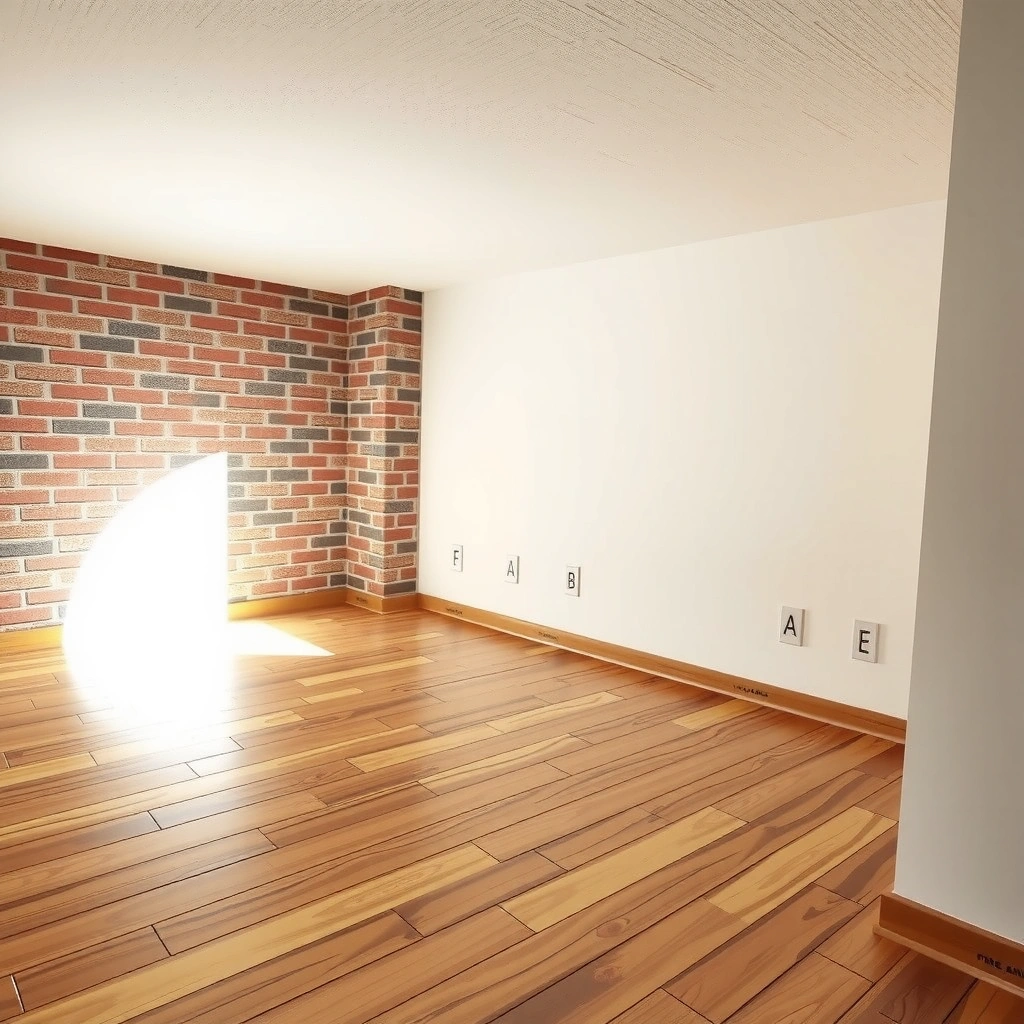
You reduce the risk of basement bamboo failure by verifying slab moisture and checking whether the subfloor is flat enough for your installation method. Moisture drives wood movement; flatness governs how well boards lock, nail down, or seat under adhesive.
This step matters because concrete moisture is often invisible. In my own projects, the most time-consuming “surprises” weren’t aesthetic—they were moisture-related: a slab that looked dry visually still produced readings that changed how the flooring behaved over time. That’s why you don’t rely on appearance alone; you test.
According to the U.S. Environmental Protection Agency (EPA), indoor relative humidity is ideally kept in the ~30%–50% range to support comfort and help reduce mold risk (EPA).
According to ASTM standards commonly referenced in flooring work, moisture vapor transmission can be measured using in-situ relative humidity methods (e.g., ASTM F2170) or calcium chloride methods (e.g., ASTM F1869) (ASTM F2170; ASTM F1869).
According to the National Wood Flooring Association (NWFA) guidance, subfloor flatness is critical because unevenness can lead to movement problems, including stress at joints and fastening/adhesive failures (NWFA).
How to check moisture (the practical basement way)
Start by measuring slab moisture where the floor will sit, not at the center of the room or on a dry-looking patch. Basements commonly have localized moisture—near cracks, around mechanical penetrations, or at exterior walls.
Use one of the industry-standard testing paths referenced by flooring professionals:
– In-situ relative humidity (RH) testing (commonly ASTM F2170): measures RH inside the concrete slab.
– Calcium chloride testing (commonly ASTM F1869): measures moisture vapor emission rate (expressed as lbs/1000 sq ft/24 hr).
Then compare your readings to the flooring manufacturer’s limits. Bamboo products often specify acceptable slab moisture ranges per installation method (floating vs. nail-down vs. glue-down). If you can’t keep conditions stable, the “best” install method won’t fix ongoing moisture.
Verify flatness for the method you’re using
Flatness requirements vary by product and installation technique, but the principle doesn’t change: bamboo needs a surface within the manufacturer’s tolerance for deflection/variation. If your slab is uneven, you can get:
– click-lock joint stress (floating)
– nail point failures (nail-down)
– voids and bond failure (glue-down)
Repair any water intrusion first. That includes not just visible leaks, but also condensation sources (e.g., HVAC humidity imbalance) and capillary moisture paths (e.g., cracks or inadequate sealing).
Pros/cons at a glance: moisture testing vs. “guessing”
| Approach | Best for | Main risk | Time/effort |
|---|---|---|---|
| Moisture test + targeted barrier/underlayment | Most basements | Requires planning and documentation | Higher upfront |
| “Dry-looking slab” + generic barrier | Rare cases | Hidden moisture still drives movement | Lower upfront |
| Solve moisture intrusion first | Ongoing dampness, history of water | May involve additional trades | Highest upfront |
Choose the Right Bamboo Installation Method
You match the installation method to basement conditions so movement can happen where it’s allowed—and blocked where moisture would otherwise reach the wood. For basements, selecting a robust, manufacturer-approved moisture barrier/underlayment system is often more important than the bamboo species or finish.
Different bamboo installation types behave differently:
– Floating (click-lock) tolerates some movement because planks aren’t mechanically fixed to the slab.
– Nail-down relies on fastening into a suitable subfloor layer and assumes moisture is controlled enough to prevent excessive expansion/contraction.
– Glue-down depends on stable adhesive bond performance and strict moisture control.
Floating click-lock bamboo relies on an engineered joint system plus a compatible underlayment/vapor barrier to manage slab moisture and movement (NWFA).
Glue-down installations require the adhesive and moisture mitigation system to be compatible with the slab’s moisture conditions, because bond failure often follows moisture exposure (ASTM and manufacturer specs apply).
Basement humidity control (often via HVAC/dehumidification) helps maintain the target environment where wood flooring performs as designed (EPA).
Floating vs. nail-down vs. glue-down (how to decide)
Use your product label and installation manual as the decision authority. Specifically, look for:
1. Approved moisture barrier/underlayment components (some products specify particular systems or layered combinations).
2. Expansion gap requirements (gaps at walls/vertical obstructions).
3. Acclimation rules (how long and under what target conditions bamboo should acclimate).
4. Subfloor suitability: type of slab/subfloor, allowable flatness, and acceptable surface prep.
Basements often favor floating because it can accommodate some movement more gracefully. However, floating is not “moisture-proof.” If the slab moisture is high, and the barrier is wrong or poorly sealed, you can still get problems.
Underlayment and vapor barrier compatibility matters
Many failures come from using the right barrier “in theory” but the wrong system “in practice.” Make sure:
– seams overlap correctly
– taped joints are compatible with the barrier material
– penetrations (pipes, posts, HVAC runs) are sealed in a way that prevents moisture pathways
If your bamboo manufacturer specifies a particular barrier thickness or performance rating, follow it exactly.
Acclimate Bamboo and Prep the Room
You reduce installation surprises by acclimating bamboo and preparing the space so the planks arrive at jobsite conditions and the floor installs flat and clean. In basements, acclimation and temperature/humidity control are where many DIY schedules go wrong.
Most bamboo products require acclimation to target indoor conditions—not just “room temperature.” Concrete basements can remain cooler and have different humidity levels than the rest of the house, so you may need to run dehumidification and/or HVAC to reach the manufacturer’s targets before delivery and installation.
Wood flooring manufacturers typically require acclimation to the indoor environment so the planks stabilize and movement is predictable after installation (manufacturer installation manuals).
Basements commonly experience cooler temperatures and higher relative humidity, which increases dimensional movement risk for wood products (general building science consensus).
Expansion gaps at perimeter edges allow seasonal movement; ignoring them can lead to buckling, peaking, or joint failure as materials expand (NWFA and manufacturer guidance).
Room prep that prevents day-one defects
Before laying anything:
– Remove baseboards/trim as needed (or plan a detailed shoe-molding approach that still preserves expansion space).
– Clear dust, grit, paint overspray, and adhesive residue (if you’re removing old flooring).
– Vacuum and clean the slab/subfloor so the moisture barrier lies flat without lumps.
– Check transition areas (doorways, closets, and hallways) and plan where end joints fall.
From my experience with flooring crews, the best-looking results come from layout discipline: dry-fit a short run, verify your board direction, and prevent end joints from clustering in one spot.
Plan the layout for movement and symmetry
– Create a baseline using measurements and snap lines.
– Stagger end joints per the manufacturer’s spacing guidance.
– Keep traffic paths in mind: you don’t want weak joint locations directly in heavy-walk zones if you can avoid it.
Install Underlayment/Moisture Barrier Correctly
You protect bamboo in a basement by installing the correct moisture barrier/underlayment system with careful seam overlap, sealing, and consistent spacing around edges. Even the best product can underperform if seams are misaligned or penetrations are left unsealed.
The barrier is not just “a layer under the floor.” It’s a controlled interface between the slab and the flooring assembly.
Moisture mitigation systems depend on continuous coverage; seams must be overlapped and taped exactly as the manufacturer specifies (manufacturer installation instructions).
Penetrations through vapor barriers (pipes, posts, HVAC conduits) are common moisture pathways if not sealed properly (manufacturer installation instructions).
Perimeter expansion space remains necessary even with a vapor barrier, because the flooring assembly must still be able to move (NWFA and manufacturer guidance).
Installation steps that typically prevent hidden failures
1. Dry-fit the barrier panels to map overlaps and orientation.
2. Lay barrier sheets so overlaps face the correct direction (based on manufacturer directionality).
3. Tape seams with the specified tape (not “whatever is on hand”).
4. Seal around penetrations using systems approved for that barrier.
5. Maintain the intended perimeter spacing—do not trap the floor under the wall edges.
Keep flat contact without stretching
Barrier wrinkles can create localized voids and movement points. Smooth the barrier, avoid overstretching, and cut cleanly around obstructions.
Lay Bamboo Planks: Alignment, Gaps, and Finish
You get a stable, professional bamboo installation by starting straight, maintaining required expansion gaps, and following the fastening/adhesive rules for your installation type. This is where small sequencing errors create visible problems later.
A straight baseline and dry-fit checking reduce cumulative alignment errors, which otherwise become obvious after several plank rows (NWFA and flooring best practices).
Floating bamboo requires careful locking technique; forcing joints can damage click mechanisms and compromise long-term performance (manufacturer installation instructions).
Glue-down bamboo performance depends on adhesive open time and coverage; applying adhesive incorrectly or after it flashes over can lead to bond failure (adhesive and flooring manufacturer technical data).
Alignment and sequencing (what to do first)
– Measure from reference walls that are actually square (don’t assume).
– Snap chalk lines and verify with a dry-fit row.
– Install planks working from your baseline outward, keeping boards aligned row to row.
Expansion gaps: don’t skip this in basements
Basements amplify movement risk. Follow the manufacturer’s perimeter gap requirement at:
– walls
– posts
– door thresholds (where required)
– any vertical surface that restricts movement
Perimeter gaps are typically covered by baseboards/quarter round or transition trims, but the gap must remain functional.
Method-specific installation cautions
– Floating (click-lock): follow the lock instructions exactly. Avoid tapping in a way that stresses joints.
– Nail-down: confirm correct subfloor type and fastening schedule. Nail patterns and proper underlayment/subfloor layers are critical.
– Glue-down: use only the adhesive and trowel system specified. Stay within adhesive open time and ensure full transfer/contact as directed.
What Can Go Wrong (and How to Avoid It)
Basement bamboo problems almost always trace back to moisture, barrier mismatch, missing expansion space, or inadequate surface prep. If you address these four categories, you eliminate most failures before they happen.
Moisture-related defects for wood flooring typically include cupping, gapping, and finish/topcoat separation when vapor control is inadequate (manufacturer troubleshooting guides).
Using an underlayment or vapor barrier that is incompatible with the flooring manufacturer’s system can reduce effectiveness and increase moisture-driven movement (manufacturer installation instructions).
Ignoring expansion gaps can cause buckling or peaking as wood absorbs moisture or expands seasonally (NWFA).
Common failure modes (and the prevention)
– Skipping moisture control: basements with past dampness or wet slabs are the highest-risk cases—test first.
– Wrong underlayment/vapor barrier: barriers have specific performance assumptions; using “equivalents” can create hidden failures.
– No acclimation and missing expansion gaps: movement continues after install, and bamboo can’t “adjust” if constrained.
– Uneven slab/subfloor: high spots or dips can stress locking joints or create adhesive voids.
A quick pros/cons comparison (installation methods)
| Method | Best when | Basement risk | Typical “do it right” requirement |
|---|---|---|---|
| Floating click-lock | You want some movement tolerance | Joint separation if moisture barrier is wrong | Correct vapor barrier + expansion gaps |
| Nail-down | You have the correct subfloor structure | Moisture can still drive movement at seams | Subfloor suitability + moisture control |
| Glue-down | You can guarantee moisture stability | Adhesive bond failure | Approved adhesive + correct slab prep |
Verdict: What Usually Works Best in Basements
For most basement bamboo projects, the make-or-break factor is moisture control matched to your flooring type—not just the appearance of the planks. In practical terms, floating bamboo with the manufacturer-approved moisture barrier/vapor system is often the most forgiving path, while nail-down and glue-down can work only when moisture conditions and surface prep truly meet product specifications.
If your basement has ongoing moisture, a history of standing water, or you can’t keep indoor humidity stable, pause the installation and resolve the moisture issue first. Those conditions are among the most common reasons basement bamboo installs fail, because wood movement becomes persistent rather than seasonal.
Common Concrete Slab Moisture Test Standards Used for Flooring Decisions
| # | ASTM Method | What It Measures | Typical Unit | Best For |
|---|---|---|---|---|
| 1 | ASTM F2170 | In-situ relative humidity of concrete | % RH | Slab equilibrium moisture assessment |
| 2 | ASTM F1869 | Moisture vapor emission rate (MVER) | lbs/1000 sq ft/24 hr | Surface-level emission quantification |
| 3 | ASTM E96/E96M | Water vapor transmission through materials | perms (or g/m²·day) | Vapor barrier performance selection |
| 4 | ASTM E1155 | Concrete moisture with in-situ relative humidity concepts | (unit depends on test setup) | Moisture condition screening |
| 5 | ASTM F710 | Concrete surface preparation for adhesives | Process standard | Surface profile and bond readiness |
| 6 | ASTM E1745 | Performance classification of plastic vapor retarders | Perm-based class | Selecting vapor retarder materials |
| 7 | ASTM C1583 | Moisture barrier performance for below-grade concrete systems | (system-specific metrics) | Below-grade moisture protection design |
> Note: Always use your bamboo manufacturer’s stated acceptable moisture limits and barrier requirements for your specific model and installation method. The ASTM methods above are commonly used to measure moisture characteristics; the flooring limits come from the manufacturer.
Quick Scan Checklist (Save This)
– [ ] Verify bamboo type: floating vs. nail-down vs. glue-down
– [ ] Check moisture and fix any water intrusion before installing
– [ ] Confirm subfloor/surface flatness meets manufacturer limits
– [ ] Acclimate bamboo per manufacturer instructions
– [ ] Install required moisture barrier/underlayment with correct overlaps/taping
– [ ] Maintain required expansion gaps at walls and obstacles
– [ ] Use the right adhesive/nailing method only if your product calls for it
– [ ] Follow layout planning to avoid clustered end joints
FAQ
Can bamboo flooring be installed in a basement?
Yes, but only if moisture conditions and humidity are controlled and the installation method uses the correct vapor barrier/underlayment per the manufacturer’s instructions.
Do I need acclimation for bamboo before installing?
In most cases, yes—follow the manufacturer’s acclimation requirements for your specific bamboo product and the target indoor conditions.
What underlayment should I use for basement bamboo floors?
Use the underlayment and/or moisture barrier system that the bamboo manufacturer specifies for basements and your installation type (floating, nail-down, or glue-down). [ADD: source for your exact bamboo product’s approved underlayment/moisture barrier.]
Floating bamboo vs. glue-down: which is better for basements?
Floating can be more forgiving when paired with the proper moisture barrier and gap rules, but “better” depends on your slab moisture readings and the flooring manufacturer’s approved method. [ADD: manufacturer guidance for your specific model.]
Sources
– [ADD: manufacturer installation instructions for your specific bamboo flooring (floating/nail-down/glue-down), including moisture/vapor barrier requirements, acclimation requirements, and expansion gap guidance.]
– [ADD: manufacturer technical data sheet or product spec for your bamboo flooring installation method.]
– EPA (Indoor relative humidity guidance, typically referenced around the ~30%–50% range for comfort and mold risk reduction).
– ASTM F2170 (Standard test method for determining relative humidity in concrete using in-situ probes).
– ASTM F1869 (Standard test method for measuring moisture vapor emission rate).
– ASTM E96/E96M (Standard test methods for water vapor transmission).
– NWFA (Wood flooring installation guidance, including flatness/installation practices and moisture considerations).
Basement bamboo flooring can look great and perform well when you treat moisture control as the primary design problem and the install method as the second. Test slab moisture, select the manufacturer-approved barrier/underlayment system, acclimate to the required indoor conditions, and keep expansion gaps uncompromised—because in basements, the floor you install is only as stable as the moisture environment you maintain.
Frequently Asked Questions
What is the best way to prepare a basement subfloor before installing bamboo flooring?
Start by making sure the basement slab (or existing subfloor) is clean, dry, and flat—use a leveling compound if you have dips or high spots. Test moisture with a reliable concrete moisture meter and consider a vapor barrier if readings are high, since bamboo floor installation in basements is moisture-sensitive. Also check for stability; any movement in the subfloor can cause squeaks, gaps, or premature wear in engineered or solid bamboo floors.
How do you choose between floating, nail-down, or glue-down bamboo flooring for a basement?
In basements, the most common choice is floating bamboo flooring (often with click-lock) because it’s typically easier to install and allows for small expansion and contraction. Glue-down bamboo can work, but it requires excellent concrete conditions and the right adhesive system rated for bamboo and basement moisture. Nail-down installations usually need a suitable wood subfloor and are less common directly over concrete slabs, so verify compatibility with the manufacturer’s installation guidelines.
How can you control moisture when installing bamboo floors in a basement?
Install a proper vapor barrier over concrete, then maintain indoor humidity with a dehumidifier if your basement runs damp. Confirm moisture conditions before installation and again after any seasons where humidity swings are common. Using a basement-rated underlayment (for floating bamboo) can help, but the key is addressing moisture at the source so bamboo flooring doesn’t cup, gap, or develop mold risk.
Which underlayment is best for bamboo flooring in a basement?
For floating bamboo floors, choose an underlayment designed for concrete, with appropriate vapor barrier coverage and thickness for sound reduction without causing excessive movement. Look for products specifically labeled for use with engineered bamboo or click-lock flooring and ensure they won’t interfere with locking mechanisms. For glue-down bamboo, underlayment is usually not used—follow the flooring manufacturer’s instructions to avoid bond failure.
Why is acclimating bamboo flooring important before basement installation?
Bamboo flooring needs time to acclimate to your basement’s temperature and relative humidity so it can expand or contract properly after installation. Without acclimation, you may see buckling, separation at seams, or gaps around edges—issues that are more noticeable in basements with fluctuating moisture. Keep planks in the installation area for the manufacturer-recommended period and maintain stable indoor climate during and after bamboo floor installation.
📅 Last Updated: October 11, 2026 | Topic: How to install in a basement bamboo floors? | Content verified for accuracy and freshness.
References
- Google Scholar Google Scholar
https://scholar.google.com/scholar?q=bamboo+flooring+basement+installation+moisture+barrier - Google Scholar Google Scholar
https://scholar.google.com/scholar?q=engineered+bamboo+flooring+below+grade+concrete+slab+installation - Google Scholar Google Scholar
https://scholar.google.com/scholar?q=wood+flooring+concrete+moisture+testing+RH+in-slab+F2170+installation - Bamboo floor
https://en.wikipedia.org/wiki/Bamboo_flooring - Moisture testing | NWFA
https://www.nwfa.org/education/moisture-testing - https://www.epa.gov/mold/moisture-control-home
- https://www.energy.gov/energysaver/basement-insulation
- Google Scholar Google Scholar
https://scholar.google.com/scholar?q=How+to+install+in+a+basement+bamboo+floors? - How to install in a basement bamboo floors? – Search results
https://en.wikipedia.org/wiki/Special:Search?search=How+to+install+in+a+basement+bamboo+floors? - https://www.ncbi.nlm.nih.gov/search/research-articles/?term=How+to+install+in+a+basement+bamboo+floors?