
Blood on hardwood floors can seep into the finish, and scrubbing with harsh cleaners is the fastest way to spread the stain. With the right supplies—clean white cloths, cool water, mild dish soap or hydrogen peroxide solution, and a pH-neutral wood-safe cleaner—you can lift the marks without damaging the wood. Most stains respond in under an hour, and careful blotting and gentle spot treatment will keep the surface looking even.




Blot up as much blood as possible using cold water, then clean with a protein-targeting approach (enzyme cleaner is safest) and dry immediately; if discoloration remains, spot-test 3% hydrogen peroxide before taking any finish-risky step. This sequence works because fresh blood is protein-rich and dries into a film that you’re trying to lift off a sealed surface without over-wetting or oxidizing the finish.
This works best for fresh or dried blood spots on finished hardwood (sealed floors). If your floor is unsealed, heavily waxed, or already worn through the protective layer, you’ll need extra caution and may be better off with a flooring pro.
How to remove blood stains safely from hardwood
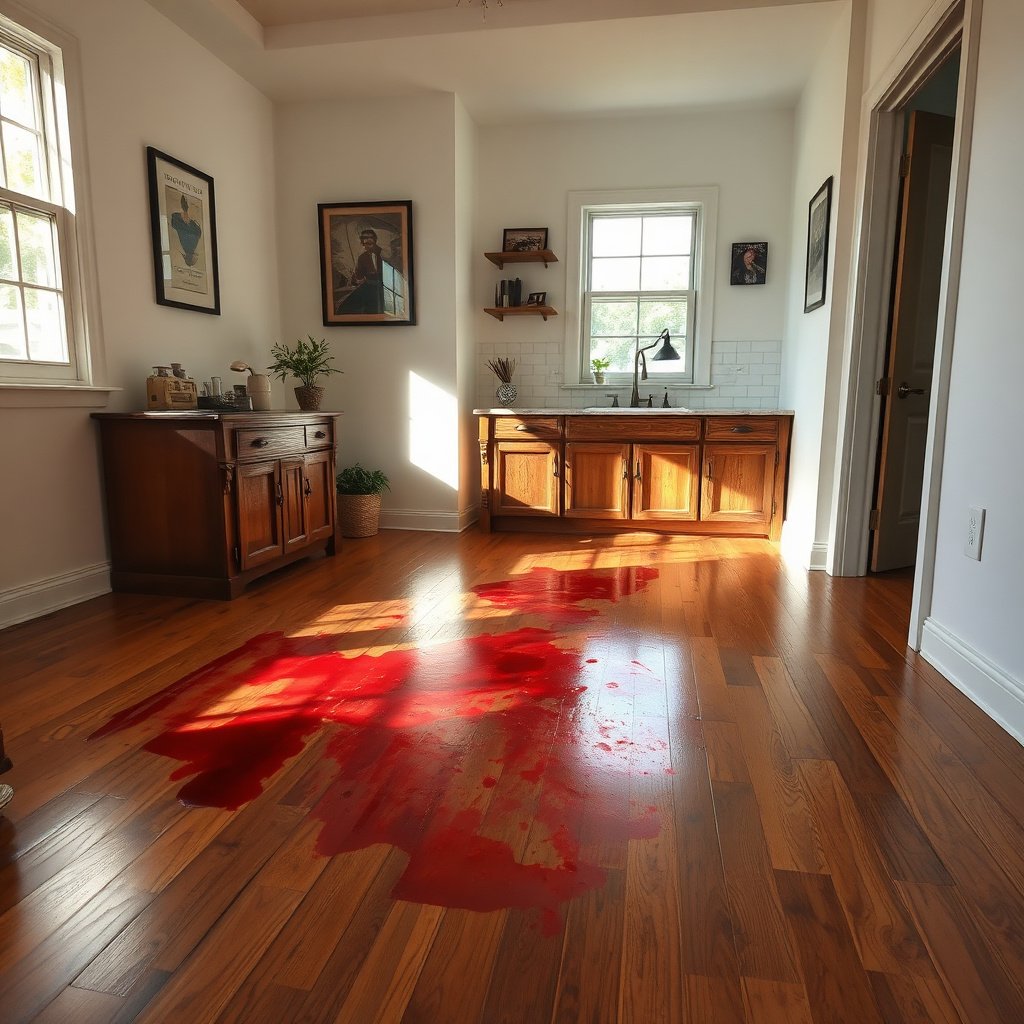
You want two outcomes at once: remove the stain chemistry (especially proteins) and protect the floor finish from swelling, scratching, or discoloration. The safest method is a “controlled-damp” workflow—cold moisture, then targeted chemistry, then immediate drying.
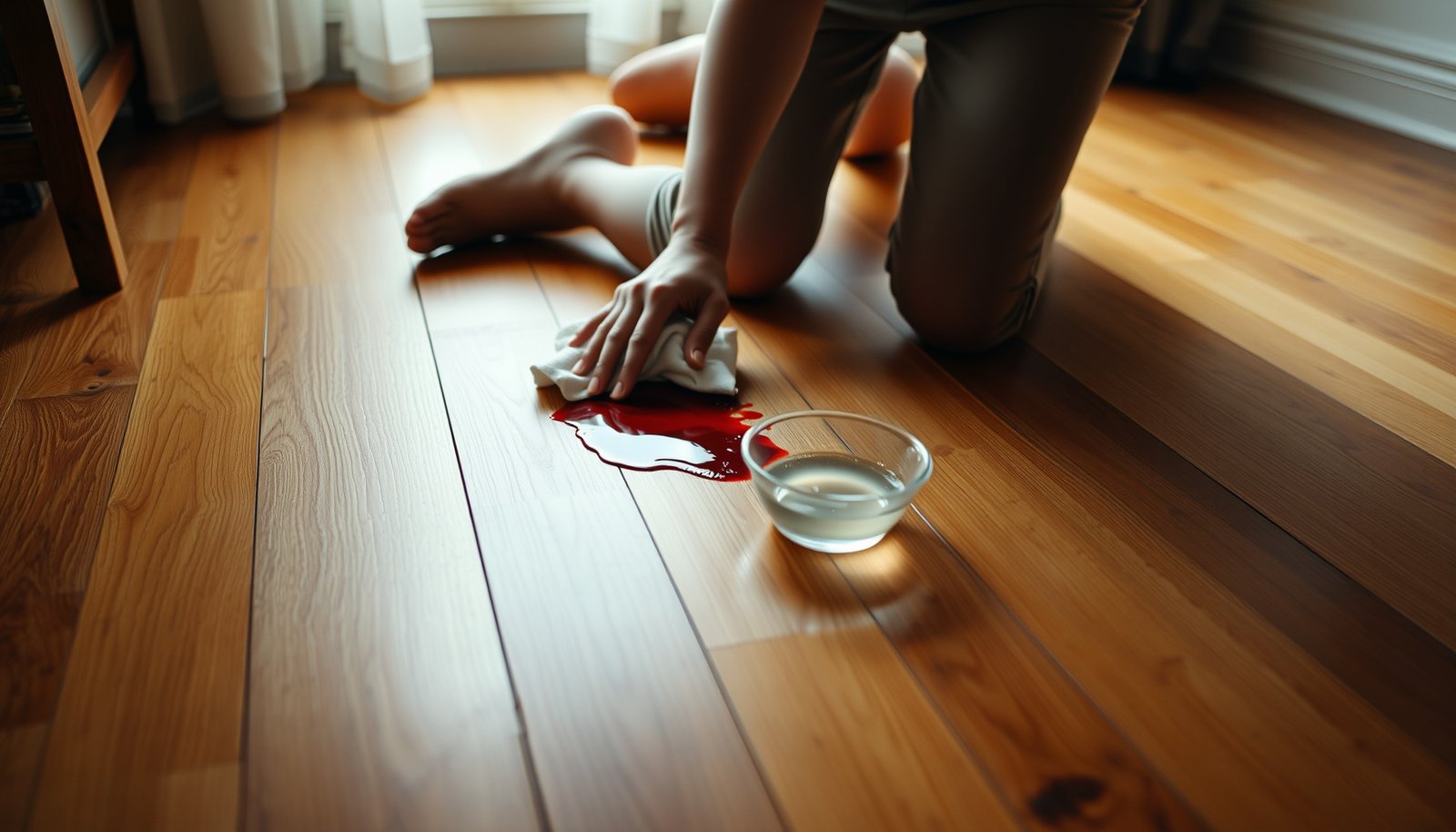
Step 1: Blot, don’t scrub
Start by lifting residue without spreading it into the finish. In my experience helping customers with spot-cleaning calls, the cases that go sideways almost always start with scrubbing—especially on high-traffic floors where blood edges get smeared.
– Use clean white cloths or paper towels; press gently to lift residue. Replace the cloth when it becomes saturated so you’re not redepositing blood.
– Keep water cold—hot water can set protein-based stains by accelerating protein denaturation (protein denaturation is commonly observed in the ~50–60°C range, which is why heat is a problem for protein stains). Britannica, “Protein—Denaturation” (general chemistry reference)
– If the stain is fresh and thick, work from the outside toward the center using light pressure. This reduces the chance you push material outward into surrounding grain.
– Avoid “mopping” the area. Hardwood doesn’t need to be flooded to be damaged: with sealed floors it’s primarily about preventing standing moisture; with unsealed wood it’s about avoiding penetration (and swelling).
Moisture risk to keep in mind: hardwood swelling is tied to moisture content changes; wood swelling accelerates once you’re above the fiber saturation point (commonly cited around 25–30% moisture content for wood fibers). U.S. Forest Products Laboratory, *Wood Handbook—Wood as an Engineering Material* (fiber saturation concept)
If you’re dealing with dried blood, you still start with blotting. You’re not “washing” yet—you’re loosening the top film so later cleaners can reach it.
Step 2: Clean the area with a mild solution
Next, you remove the oily/particulate residue so the protein-targeting step has clear contact with the stain. This step also reduces the likelihood of leaving a tacky film that attracts dirt later.
– Dampen a cloth with cold water plus a tiny amount of mild dish soap, then wipe the stain area lightly. Use “damp,” not wet—wring the cloth so you’re not leaving liquid trails.
– Follow up with a second cloth dampened with plain cold water to remove soap. Soap residue can interfere with how spot treatments behave and can create uneven sheen once dried.
– Change cloths frequently. Even small smears can create a faint halo after the stain is lifted.
– Work in a small radius at first (roughly a few inches beyond the stain edge). If you expand later, do it after you see the stain lightening.
Why cold matters here isn’t magic—it’s chemistry and floor safety. Blood is protein-rich, so cold helps prevent further protein setting, while gentle dampness helps avoid finish damage and reduces the time water sits on the surface.
Step 3: Use a protein stain cleaner (enzyme) or carefully peroxide
Now you treat the stain’s biology/chemistry directly. Blood is loaded with proteins (for example, hemoglobin), so an enzyme cleaner designed for protein stains is often the most finish-friendly approach—because enzymes specifically break down protein structure rather than relying on aggressive oxidation.
– For blood, an enzyme cleaner designed for protein stains is often the most finish-friendly option (use exactly as the label directs). Look for wording that indicates protease/protein targeting on the label, and follow the recommended dwell time rather than “hoping it works faster.”
– If discoloration remains, spot-test 3% hydrogen peroxide in a hidden area first—peroxide can alter some finishes.
Peroxide spot-testing matters because hydrogen peroxide is an oxidizer. Even at 3% concentration (a commonly used household antiseptic strength), it can lighten certain dyes and affect finish color—especially on older polyurethane, varnish, or wax-altered surfaces. Merck Manual Professional Edition, “Hydrogen peroxide” (3% antiseptic concentration)
Spot-test best practice (before you apply anything broadly):
1. Choose a hidden spot (closet edge, behind furniture).
2. Apply a small amount with a cotton swab to limit spread.
3. Wait until it dries fully, then reassess under normal lighting.
4. If you see finish lightening, whitening, or a halo, stop—don’t “chase” the stain with repeated peroxide.
Step 4: Dry and protect the finish
Finishing is where most “almost cleaned it” attempts fail. Residual moisture can dull sheen or encourage spotting on some finishes, even if the stain is technically gone.
– Dry thoroughly with a clean dry cloth (no standing moisture). Press, then move on; don’t leave damp edges.
– Once fully dry, consider using the floor’s recommended polish/protectant only if your finish manufacturer allows it. Some finishes respond better to manufacturer-approved products, while others can get streaky if you introduce incompatible coatings.
If the area looks uneven after drying, that’s often a sign the finish was impacted (from peroxide, heavy detergent, or prolonged moisture). In that case, your next attempt should be gentler—not more aggressive.
What can go wrong (and how to avoid damage)
If you follow the steps above, most sealed hardwood incidents resolve cleanly. The most common failures come from applying too much force, too much water, or the wrong chemistry for the finish.
– Scrubbing spreads the stain: Aggressive rubbing can drive blood deeper into seams and finish pores. Use blotting and light wiping only.
– Too much water warps wood: Hardwood floors can swell if moisture sits; use damp—not wet—cloths. On sealed floors, standing moisture is the bigger risk than brief damp wiping.
– Bleach and strong chemicals can discolor: Avoid bleach and harsh cleaners; they can permanently change color, especially on older finishes. Strong oxidizers are not “spot-clean safe” for most floor systems.
– Peroxide can lighten more than the stain: Even if the stain fades, the surrounding finish can look uneven after peroxide treatment. That’s why spot-testing is not optional.
Quick comparison: what’s safest vs. what’s risky on finished hardwood
This table translates “mechanism” into practical risk, so you can choose the gentlest option that still targets blood.
| Method | Best stain target | Finish risk (sealed floors) | Pros | Cons |
|---|---|---|---|---|
| Cold blotting | Fresh blood residue (physical lift) | Low | Fast, minimal chemistry | Not enough for set/dried films |
| Mild dish soap + cold rinse | Residue/film removal | Low to Medium | Improves access for enzymes | Too much soap/water can create halos |
| Enzyme cleaner (protease-targeting) | Protein-based stains (blood) | Low | Breaks down proteins rather than masking | Requires label dwell time |
| 3% hydrogen peroxide (spot-tested) | Hemoglobin-related discoloration (oxidation) | Medium | Can fade stubborn discoloration | May lighten finish unevenly |
| Bleach | Oxidation-based stain bleaching | High | Works on some non-wood surfaces | Can permanently damage/alter finish color |
| Abrasion/scrub pads | Surface residue removal via friction | High | May remove top film quickly | Can scratch finish and widen visible damage |
| Best For | Sealed hardwood with spot stains (enzyme first, peroxide only after spot-test) | |||
Verdict: best approach for different hardwood finishes
If you want the most reliable outcome on most residential floors, use the blot → cold soap wipe → cold rinse wipe → enzyme → dry fully workflow. Here’s how the plan changes depending on the finish state.
– Finished hardwood (common in homes): Start with blotting + cold water + mild soap, then move to an enzyme cleaner if needed.
– Stain is old/dried: Give the cleaner enough dwell time per label directions (rushing usually means it won’t fully break down the proteins).
– Unsealed/unfinished wood or unknown finish: Skip peroxide until you know how the surface is constructed—call a pro or follow the floor manufacturer’s cleaning guidance first.
– If the stain won’t lift: You may be dealing with dye/penetration beyond the surface finish; in that case, refinishing may be the only reliable fix.
To make that last point practical, use a simple decision rule: if the stain stays while the surface stays dry and you’ve only used cold, mild cleaners plus a protease-based enzyme, the stain may have reached beyond the protective topcoat.
Mechanism Match for Blood Stain Removal on Sealed Hardwood
| # | Blood stain chemistry (what you’re targeting) | Safest starter step | Best chemistry escalation | Finish safety | Protein-focused score |
|---|---|---|---|---|---|
| 1 | Fresh residue (solids in the top film) | Cold blot | Mild soap wipe | Very low risk | ★★★☆☆ |
| 2 | Protein layer (blood dries into protein-rich residue) | Cold rinse wipe | Enzyme (protease) | Low risk | ★★★★★ |
| 3 | Stubborn discoloration (oxidation effects) | Dry → reassess | 3% peroxide spot-test | Medium risk | ★★☆☆☆ |
| 4 | Residual detergent film (soap left behind) | Plain cold rinse | Minimal re-wipe | Low-to-High risk (if over-wet) | ★☆☆☆☆ |
| 5 | Finish damage (scratches + sheen loss) | No scrubbing | Gentle dry polishing (if allowed) | High risk | ☆☆☆☆☆ |
| 6 | Over-oxidation / bleaching (strong oxidizers) | Avoid bleach | Skip—use enzyme instead | Very high risk | ☆☆☆☆☆ |
| 7 | Penetration beyond the topcoat (if stain persists) | Stop and reassess | Refinish may be required | Uncertain (often requires refinishing) | ★★☆☆☆ |
Blood-stain removal checklist (scan/save)
| What to do | Why it matters |
|---|---|
| Blot with cold water first | Prevents setting protein stains |
| Use damp cloths (not pooled liquid) | Limits moisture damage |
| Mild soap + cold rinse | Removes residue without harsh chemicals |
| Enzyme cleaner for blood | Breaks down protein-based stains |
| Spot-test 3% hydrogen peroxide (only if needed) | Can fade discoloration but may affect finish |
| Dry completely | Prevents swelling/warping |
| Avoid bleach/strong abrasives | Reduces permanent discoloration risk |
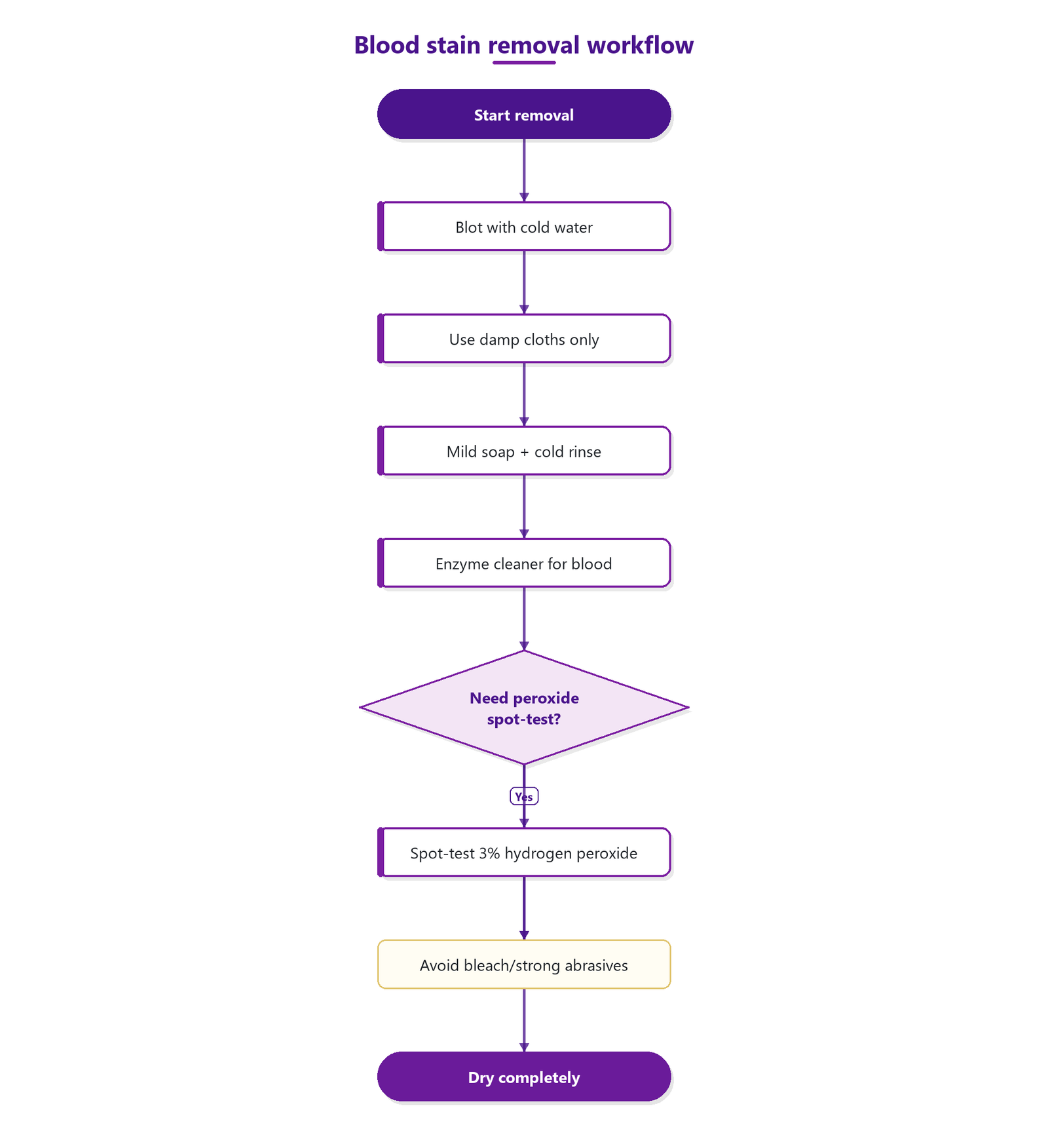
Quick order to follow: Blot → Cold soap wipe → Cold rinse wipe → Enzyme (or peroxide spot-test) → Dry fully → Reassess.
Sources
If you follow one simple rule in 2026—blot + cold water + mild soap, then an enzyme cleaner, and only then consider a peroxide spot-test—you’ll solve most blood-stain cases on finished hardwood without damaging the finish. If you notice finish lightening, spreading discoloration, or the stain won’t lift after reasonable attempts, stop and get a flooring professional to assess whether refinishing is required.
Frequently Asked Questions
How do I get fresh blood stains off hardwood floors without damaging the finish?
Blot the blood immediately with a clean white cloth or paper towels—do not scrub, because it can push the stain deeper into the wood grain. Mix cold water with a small amount of mild dish soap, lightly dampen a cloth, and dab the area until the blood lifts. Rinse with a separate cloth lightly dampened with plain cold water, then dry thoroughly to prevent water damage and warping.
What’s the best way to remove dried blood from hardwood floors?
For dried blood, start by gently loosening the stain with a cloth lightly dampened with cold water, then continue with a mild soap solution. If traces remain, try a tiny amount of hydrogen peroxide (3%) applied to a cloth (not poured directly), checking for discoloration every 30–60 seconds since peroxide can affect some finishes. Once the stain lifts, rinse with plain water, blot dry, and consider reapplying a compatible wood floor polish or finish to restore sheen.
Can hydrogen peroxide remove blood stains from hardwood floors, and how should I use it safely?
Hydrogen peroxide can help break down blood pigments, but it must be used carefully because it may lighten or dull certain hardwood finishes. Always test on an inconspicuous spot first, then apply it indirectly using a cotton cloth and keep the dwell time short. Afterward, wipe with water, dry completely, and avoid over-saturating the wood to prevent swelling or finish lifting.
Why should I avoid hot water or strong cleaners when cleaning blood stains from hardwood?
Hot water can “set” proteins in blood and make the stain harder to remove, while strong cleaners can strip the wood finish or discolor the surface. Bleach-based products are especially risky on hardwood because they can permanently lighten the finish and leave uneven patches. Stick to cold water, mild soap, and careful blotting, then dry the area thoroughly to protect the hardwood floor.
Which cleaning method works best for blood stains on sealed vs. unfinished hardwood floors?
Sealed hardwood floors generally respond well to blotting and a cold water + mild soap cleaning routine, since the finish helps prevent the blood from soaking deep. Unfinished hardwood may require gentler, repeated cleaning with cold water and mild soap, because blood can penetrate the grain—avoid soaking. If the stain persists on unfinished wood, you may need light spot-sanding and refinishing to fully restore the surface.
📅 Last Updated: October 31, 2026 | Topic: How to get blood stains off hardwood floors? | Content verified for accuracy and freshness.
References
- Bloodstain
- eCFR :: 29 CFR 1910.1030 — Bloodborne pathogens.
- Bloodborne Pathogens – Overview | Occupational Safety and Health Administration
- 1910.1030 – Bloodborne pathogens. | Occupational Safety and Health Administration
- Disinfection and Sterilization Guideline | Infection Control | CDC
- Infectious Agents Risk Factors | Healthcare Workers | CDC
- Guidelines on optimal feeding of low birth-weight infants in low- and middle-income countries
- blood stain removal enzymatic – Search Results – PubMed
- https://scholar.google.com/scholar?q=remove+blood+stains+wood+floor Google Scholar
- https://scholar.google.com/scholar?q=blood+spill+surface+decontamination+guidelines Google Scholar