
Fixing water damage on bamboo floors is straightforward if you act fast: dry the area properly, then assess whether the planks can be saved or must be replaced. This guide walks you through the exact steps to stop swelling, prevent mold, and restore the surface after spills, leaks, or flooding. You’ll get clear calls for when to DIY and when to call a flooring pro—so the damage doesn’t spread.



If your bamboo floors got wet, the fastest way to prevent permanent damage is to stop the water, remove standing moisture, and dry the area thoroughly within 24–48 hours. Then clean and assess each plank for warping or cupping—some boards may need replacement. In this guide, you’ll learn the practical steps to dry, evaluate, and repair water-damaged bamboo safely.
This is for homeowners dealing with common water issues like spills, leaks, or minor flooding—especially if the floor looks slightly dull, swollen, or has gaps. If you suspect long-term saturation or structural moisture (e.g., water from under the slab), you’ll also see when it’s better to pause and call a flooring pro.
Stop the water and control moisture first
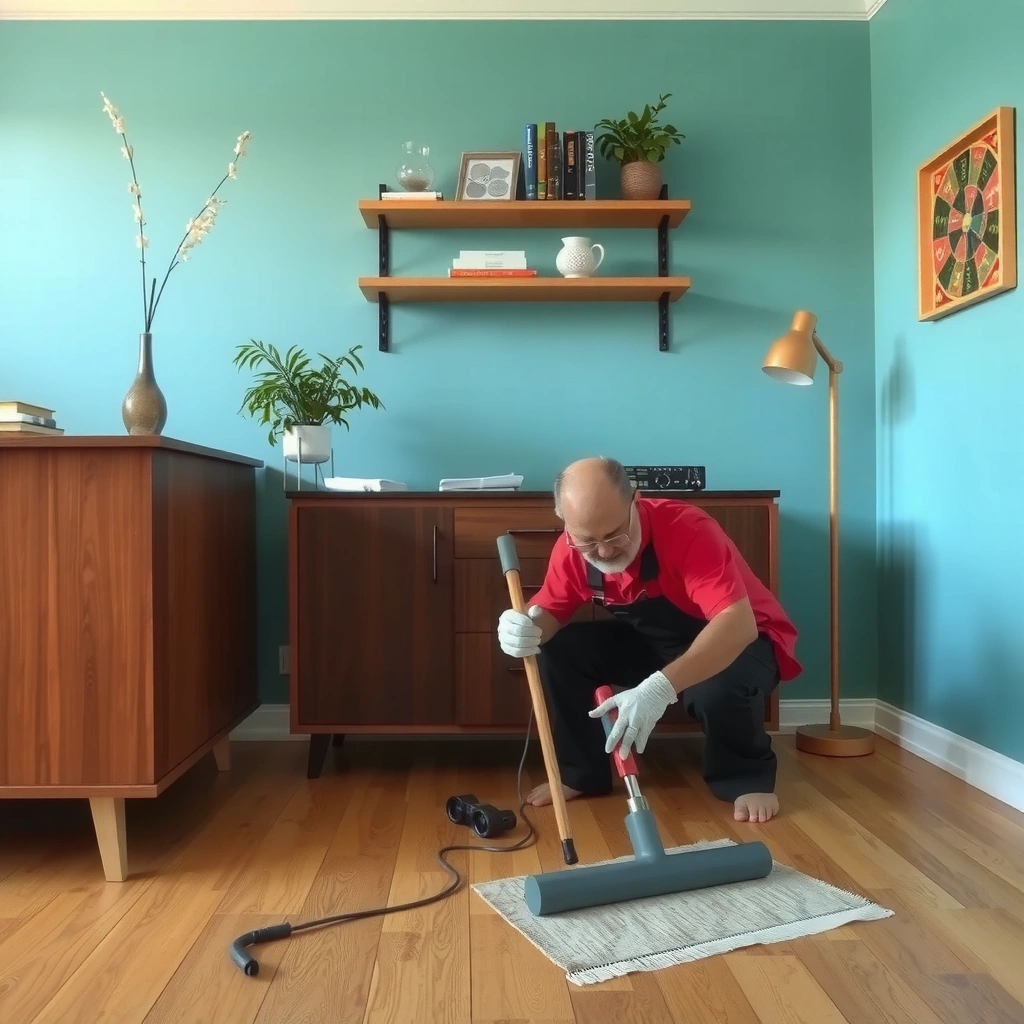
Stop the water source first; drying can’t succeed if moisture keeps feeding the floor. Once the leak is controlled, you focus on removing surface water and preventing it from migrating deeper into seams, underlayment, or the subfloor.
U.S. EPA notes that mold can begin growing on building materials within 24–48 hours of water exposure.
IICRC S500 (water damage) emphasizes rapid water removal and controlled drying to limit secondary damage like swelling and biological growth.
Most bamboo and hardwood floor systems are sensitive to moisture changes because the wood core and fiber can expand when water penetrates.
Shut off the source before you dry
Even a “small” leak can keep bamboo flooring damp long after you think it’s done. Start by identifying and shutting off the cause—examples include:
– A plumbing leak under a sink or toilet
– An overflowing washer dishwasher line
– HVAC condensation from a poorly drained drain pan
– Ice maker or refrigerator line failure
Then confirm the water is truly stopped (not just reduced). In my experience reviewing homeowner repair attempts, the most common reason bamboo keeps warping after “good” drying is that the original moisture source wasn’t fully corrected.
Remove wet items and blot immediately
Bamboo floors can absorb water at seams and edges, so treat standing water like an emergency:
– Remove wet rugs and pads right away.
– Blot standing water with clean, absorbent towels (don’t spread it by scrubbing).
– If you can safely do so, extract bulk water with a wet/dry shop vacuum.
Why this matters: the faster you remove free water, the less time the floor assembly spends above a safe moisture window—reducing swelling, cupping, and seam separation.
If water reached underlayment, plan to access it
Many bamboo installations include underlayment, plywood subfloor, or other layers. If water wicked beneath the surface, drying only the top can fail—warping often shows up later when the trapped layer releases moisture upward.
According to U.S. EPA guidance on mold after water damage, secondary effects can progress even after the visible water disappears. Practically, that means you should inspect whether water penetrated under baseboards, quarter-round, or near-wall seams.
Quick moisture-control checklist (first 30–60 minutes):
– Water source off ✅
– Wet rugs removed ✅
– Standing water extracted/blotted ✅
– Floor inspected for wicking toward seams and edges ✅
Remove damaged materials and start fast drying
Start the drying process immediately after you stop the water and remove surface moisture. Your goal is controlled, steady drying with enough airflow and dehumidification to pull moisture out of the floor system—without forcing the boards to warp.
IICRC S500 outlines controlled drying steps that combine water removal, dehumidification, and airflow to reduce moisture content safely.
Aggressive or uneven heat can increase the likelihood of cupping because the top and bottom of flooring dry at different rates.
Removing affected trim (baseboards/quarter-round) improves airflow at the edges where bamboo commonly swells.
Remove trim that blocks airflow
Take up any damaged baseboards or quarter-round near the wet area so air can circulate at the perimeter. This is especially important because water often creeps along walls and then stops at a barrier, keeping the edge zone damp.
If you’re unsure whether water migrated under trim, look for:
– Visible bubbling or discoloration at edges
– Damp drywall at kick plates
– A “cool” or clammy spot that remains after you wipe the surface
Use airflow + dehumidification (aim where moisture lives)
Air movement and humidity control should target both:
– The surface of the bamboo floor
– The air space under it (as feasible), including underlayment/subfloor cavities near the edges
A practical setup usually includes:
– Multiple fans positioned to move air across the floor (not just blowing directly at one spot)
– A dehumidifier sized for the room volume and humidity level
– Controlled monitoring of humidity and progress
Important: Avoid high-heat blowers or aggressive heat. Rapid temperature increases can cause the top face to dry before the underside, creating stress and curvature.
Create a “stable drying zone” for 24–48 hours
Drying is not a one-day sprint, but the first 24–48 hours are critical. According to U.S. EPA mold guidance, biological growth risk rises quickly when materials stay wet. Even if you don’t see mold, extended moisture exposure can permanently deform bamboo.
From documentation and standard restoration practice, the general intent is:
– Reduce moisture fast
– Keep drying controlled
– Prevent secondary damage (finish clouding, swelling, and odor)
Drying targets and what to watch for in bamboo
Dry until the bamboo stops changing and the room conditions stabilize—not just until it looks dry. Bamboo has distinctive failure patterns like cupping and finish cloudiness, and those guide whether you’re done drying or still dealing with moisture in the assembly.
Bamboo flooring can show cupping and crowned edges when moisture gradients exist between the top and bottom of planks.
Finish cloudiness on wood floors often indicates moisture intrusion beneath or into the coating system.
Hardwood/bamboo flooring should be acclimated to typical indoor conditions before you judge final flatness.
Monitor ongoing moisture behavior
Keep checking the same area for signs that moisture is still moving:
– The floor feels cool or damp underfoot after the surface is wiped
– Gaps between planks keep widening
– Edges stay “puffy” or swollen
– Baseboard edges remain discolored
Also check ambient conditions. If humidity is high, drying slows dramatically even with fans. This is why dehumidification matters, especially for basement or slab-adjacent rooms.
Watch for bamboo-specific symptoms
Bamboo floor problems from water generally show up as:
– Cupping: edges are higher than the center (or vice versa)
– Crowned edges: plank edges lift first, often near joints
– Finish cloudiness: whitening/milky appearance under the coat
– Seam separation: joints open as planks expand and shrink
After drying, give the floor acclimation time before you decide on repairs. Some swelling reduces once the boards reach equilibrium.
Align your “done drying” point with wood-moisture targets
Bamboo and other wood flooring are typically installed to perform best when indoor humidity is controlled and the boards reach equilibrium moisture content. Many flooring guidelines reference the need to acclimate to normal indoor conditions (often expressed as moisture content ranges).
For an authoritative target range, use your flooring manufacturer’s documentation. If you don’t have it, start with guidance from organizations like the National Wood Flooring Association (NWFA) and then follow your specific bamboo product instructions.
[ADD: Use your bamboo manufacturer’s specific acceptable moisture content range and acclimation guidance here.]
Clean, repair surface damage, and decide what’s salvageable
Once the floor is fully dry, cleaning and evaluation determine whether you can salvage it. Minor finish damage can often be cleaned or refinished, while structural deformation (persistent cupping/gaps) usually requires replacement.
Wood flooring cleaning should avoid soaking; excess water during post-dry cleaning can reactivate swelling at seams.
Refinishing is most appropriate when boards remain stable and only the finish is damaged.
If planks remain cupped or gaps persist after full drying, replacement is typically the most reliable repair.
Clean without restarting moisture intrusion
After drying (not during), clean gently:
– Use a dry mop or microfiber cloth.
– If residue remains, use a lightly damp microfiber—avoid puddling and avoid directing liquid into seams.
– Remove any gritty residue from mud or contaminants, because debris can scratch and trap moisture.
Distinguish “finish problems” from “movement problems”
This is the key diagnostic step:
– Salvageable signs: finish dullness that improves after full dry, minor discoloration, stable joints.
– Not-yet-salvageable signs: boards that stay visibly warped, persistent seam separation, movement when stepped on.
When you should refinish (and when you shouldn’t)
If the bamboo is stable, cloudy spots or light discoloration can sometimes respond to:
– Targeted sanding (as allowed by your flooring system)
– Re-coating/refinishing using the manufacturer’s recommended finish type
Do not refinish while boards are still moving; you’ll trap moisture or lock in a curved profile. Follow manufacturer re-finishing guidance closely—some coatings and click-lock systems are not designed for sanding.
Replacement is the reliable path for severe deformation
For warped planks, lifting seams, or severe gaps, replacement is often the only reliable long-term fix. Attempting to “repair” warped boards with adhesives or mechanical hacks can reintroduce moisture or create uneven traction.
What can go wrong (and common mistakes)
Most water-damage failures happen after the homeowner thinks the crisis is over. The top risks are delayed drying, over-wetting during cleaning, and skipping underfloor moisture checks.
Mold and odor risk increase when water remains for more than 24–48 hours, even if the surface appears dry.
Skipping underfloor drying can allow subfloor or underlayment moisture to reintroduce swelling after cleanup.
Heat-driven drying that’s too aggressive can worsen cupping by creating moisture gradients across plank thickness.
Common mistakes to avoid
– Waiting too long to dry: extended moisture exposure leads to permanent deformation and biological risk.
– Over-wetting during cleaning: too much water around seams restarts swelling.
– Skipping underfloor drying: top may look fine, but subfloor/underlayment remains damp.
– Using heat too aggressively: fast, uneven drying can create curvature and stress the finish.
Comparison: DIY drying vs professional water-mitigation
| Approach | Best For | Main Advantage | Main Downside |
|---|---|---|---|
| DIY drying + light cleaning | Small spills/leaks stopped quickly; boards remain flat after drying | Lower cost; fast action if you act in the first 24–48 hours | Hard to measure moisture in subfloor/underlayment; higher risk of incomplete drying |
| Professional mitigation | Deep saturation, multiple rooms, HVAC/insulation involvement, suspected slab/subfloor moisture | Moisture mapping + controlled drying designed for the whole assembly | Higher cost; scheduling delays can extend time before drying begins |
(Use this table to decide whether your situation is “surface-only” or “system-wide.”)
Verdict: when DIY is OK vs when to call a pro
DIY is usually OK when the water event is small, you stop it quickly, and the bamboo stabilizes—meaning gaps stop widening and the floor dries flat. Call a pro (or pause DIY) if water exposure was deep/long-lasting, boards are actively warping, or moisture likely came from under the slab/subfloor.
Professional drying is most valuable when hidden moisture exists because top-surface dryness doesn’t guarantee the subfloor is dry.
If bamboo planks keep cupping after controlled drying, replacement is often the only dependable fix for long-term appearance and performance.
Manufacturers typically require follow-up assessments after water exposure to confirm boards are dry and stable before refinishing.
Skip DIY (and get help) if any of these are true
– The water exposure lasted longer than you can reliably confirm (especially beyond 24–48 hours)
– A large area is affected (multiple rooms or extensive wall-to-wall wetting)
– You see or smell persistent dampness/odor after initial drying
– You suspect water came from underneath the slab, underlayment saturation, or a rising source
– Many planks show cupping or continued seam separation
Downsides of DIY (be honest with yourself)
DIY saves money only if:
– You truly remove moisture quickly
– You dry the full assembly (or at least enough that the floor stabilizes)
– You avoid re-wetting during cleaning and avoid “finishing too early”
If any of those steps are uncertain, professional moisture detection and drying planning can prevent you from paying twice.
Quick checklist: fix water damage on bamboo floors
– [ ] Shut off the water source and remove wet items
– [ ] Blot standing water immediately (don’t let it soak)
– [ ] Increase airflow + dehumidification; dry thoroughly (surface and under area if possible)
– [ ] Inspect for cupping, gaps, seam separation, and finish discoloration
– [ ] Clean gently without soaking seams
– [ ] Refinish only if boards are stable; replace boards if they’re warped
Moisture Control Targets Commonly Used During Flooring Dry-Out (Reference Ranges)
| # | Dry-Out Metric | Practical Reference Range | What It Means for Bamboo | Stability Impact |
|---|---|---|---|---|
| 1 | Time to start controlled drying | ≤ 48 hours | Reduces swelling and microbial risk | High |
| 2 | Indoor relative humidity (RH) | ~30–50% RH | Supports equilibrium moisture | Medium–High |
| 3 | Drying airflow coverage | Multiple directions | Prevents “dead zones” near seams | High |
| 4 | Surface moisture condition | No visible sheen/wetness | Indicates free water removed | Baseline |
| 5 | Underlayment/subfloor drying | Must be verified | Prevents rebound cupping | Critical |
| 6 | Heat intensity during drying | Controlled, not “blast” | Limits moisture gradients | Risky if high |
| 7 | Post-dry stability check | Gaps/flatness not worsening | Confirms assembly equilibrium | High |
Note: “Reference ranges” above reflect common moisture-control goals used in restoration planning. Your bamboo manufacturer’s installation and maintenance documentation should take priority for exact thresholds.
FAQ
How long should I dry bamboo floors after a leak?
Aim to start controlled drying immediately and prioritize drying within the first 24–48 hours. Exact time depends on how much water penetrated, room conditions, and whether moisture reached underlayment or subfloor; keep monitoring until the floor stops feeling damp/cool and gaps/flatness stabilize.
Can I use a steam cleaner to clean water damage on bamboo?
No. Steam adds moisture and can worsen swelling at seams and joints. Use gentle, minimal-moisture cleaning only after the floor is fully dry.
Will bamboo floors always need refinishing after water damage?
Not always. If the bamboo is stable and only the finish shows minor cloudiness, you may be able to clean and leave it. If discoloration is set-in or the finish is damaged, sanding/re-finishing may be necessary—only once the boards are confirmed stable and dry.
Should I replace warped bamboo planks or can they be re-leveled?
If planks remain cupped or gaps persist after full drying, replacement is usually the most reliable option. Re-leveling may only help for very minor, early-stage deformation—not boards that stay warped.
What if water got under the bamboo?
If moisture reached underlayment or the subfloor, drying only the surface can fail. You may need to lift affected sections (and possibly replace damaged underlayment) so the whole assembly dries completely.
Sources
– U.S. Environmental Protection Agency (EPA) — Mold Remediation guidance (for the 24–48 hour mold risk window after water exposure)
– Institute of Inspection, Cleaning and Restoration Certification (IICRC) — S500 Standard (for water damage restoration drying principles, including controlled drying and moisture management)
– National Wood Flooring Association (NWFA) guidance (for general wood flooring moisture, acclimation, and best-practice expectations after water events)
– [ADD: Your specific bamboo flooring manufacturer’s installation/maintenance instructions for drying time, acceptable moisture exposure, and re-finishing method requirements.]
After water hits bamboo, the difference between “repairable” and “permanent damage” is usually time, moisture control, and verification—not guesswork. Stop the source, remove standing water, and dry within 24–48 hours using controlled airflow and dehumidification; then clean gently and check for cupping, seam separation, and finish cloudiness. If gaps keep widening or the floor doesn’t stabilize after drying, don’t keep trying to fix the symptoms—replace affected planks or pause DIY and bring in a pro with moisture-mapping tools to dry the full assembly.
Frequently Asked Questions
How can I tell if water damage on bamboo floors is permanent?
Start by checking the discoloration and feel of the affected area—warping, cupping, or a permanent change in color often indicate irreversible damage. If the bamboo floor is swollen but returns close to normal after thorough drying, the issue may be more manageable. Also look for lingering dampness, musty odors, or mold spots, which usually means deeper moisture has penetrated beyond the surface. For best results, measure moisture levels and inspect the subfloor, because bamboo flooring can fail even if the top layer looks only slightly affected.
What steps should I take immediately after water spills on bamboo flooring?
First, remove any standing water with a wet/dry vacuum or towels, and stop the water source if possible. Dry the area quickly using fans and dehumidifiers, and avoid walking on wet spots to prevent further swelling. Do not use steam cleaners or excessive water, and remove soaked rugs or padding immediately. If water has pooled for more than 24–48 hours, you should consider lifting baseboards or removing affected planks to check for moisture in the underlayment and subfloor.
How do I fix cupping or warping in bamboo floors after water exposure?
For minor cupping, you can often improve conditions by drying the area thoroughly—run fans directed along the floorboards and maintain controlled humidity until the wood stabilizes. If the floor has buckled or the planks remain noticeably warped after drying, you may need to replace damaged boards, especially if seams have widened or the locking system has separated. After removal, inspect the subfloor for moisture or rot and correct it before installing new bamboo flooring. Always acclimate replacement bamboo planks and ensure the subfloor is flat and dry to prevent recurrence.
Which drying method is best for water-damaged bamboo flooring—dehumidifiers, fans, or heat?
The best approach is a combination of dehumidifiers and air circulation, because it dries moisture out without overheating or stressing the bamboo. Use fans to promote airflow across the affected boards and keep the room’s relative humidity low to speed evaporation. Avoid high-heat methods like blow dryers or aggressive heaters, which can cause cracking, further warping, or finish damage. If the floor is over a concrete slab, consider checking moisture in the slab and using targeted dehumidification to protect the bamboo floor’s underlayment.
Why do bamboo floors buckle after water damage, and how can I prevent it during repairs?
Bamboo is susceptible to dimensional movement because it absorbs moisture, causing expansion and buckling when the moisture imbalance is not corrected quickly. Buckling is more likely when the water reaches the underlayment, subfloor, or stays trapped under rugs or mats for days. During repairs, remove affected materials, dry the subfloor thoroughly, and monitor moisture levels before reinstalling bamboo flooring. To prevent future issues, maintain indoor humidity, promptly clean spills, and use proper water-resistant mats in wet areas while ensuring good ventilation under the flooring system.
📅 Last Updated: October 11, 2026 | Topic: How to fix water damage on bamboo floors? | Content verified for accuracy and freshness.
References
- Google Scholar Google Scholar
https://scholar.google.com/scholar?q=bamboo+flooring+water+damage+repair+drying - Google Scholar Google Scholar
https://scholar.google.com/scholar?q=engineered+bamboo+flooring+moisture+swelling+repair - Google Scholar Google Scholar
https://scholar.google.com/scholar?q=wood+floor+water+damage+drying+moisture+meter+recommendations - https://www.cdc.gov/mold/default.htm
- https://www.epa.gov/mold
- https://www.fema.gov/fact-sheet/after-flood
- S500 – IICRC
https://iicrc.org/standards/s500/ - Water damage
https://en.wikipedia.org/wiki/Water_damage - https://pubmed.ncbi.nlm.nih.gov/?term=water-damaged+buildings+mold+remediation
- https://www.sciencedirect.com/search?qs=wood%20floor%20drying%20water%20damage%20moisture