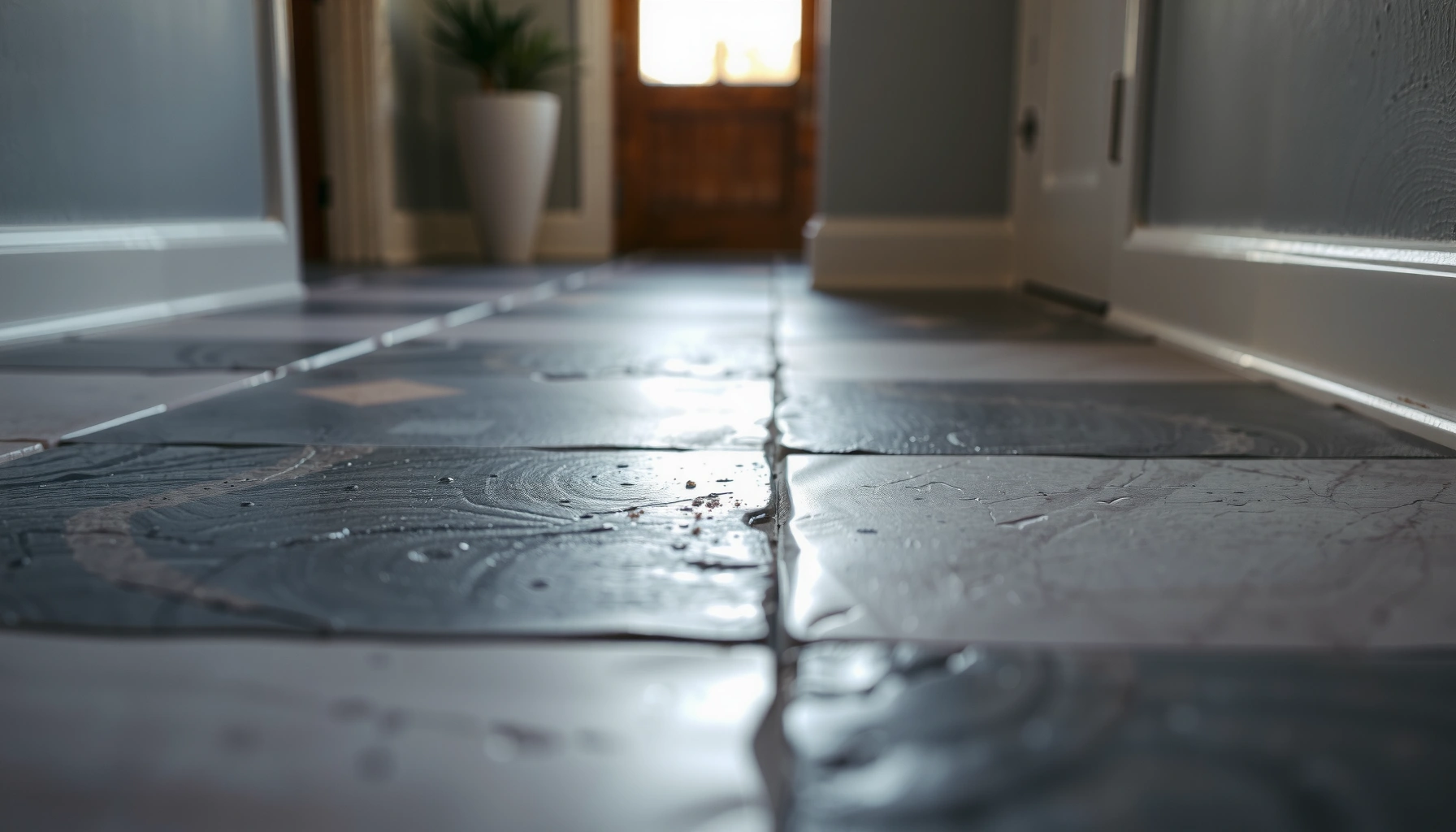

Fix discoloration on slate floors by targeting the cause first—whether it’s mineral staining, embedded dirt, or surface etching—then using the right cleaning and sealing steps. This guide gives you a clear, practical process to restore the slate’s color without worsening the damage. Follow these steps and you’ll know exactly what to do on the day stain removal starts and what to apply afterward to prevent it from coming back.



Discoloration on slate floors is usually caused by mineral residue, embedded dirt, or a damaged sealer—so the fix depends on the cause. Start by cleaning thoroughly, then test a small hidden spot before you strip/refinish or re-seal. This article will walk you through safe ways to diagnose the discoloration, remove common sources, and restore the original look without damaging the stone.
If your slate looks darker in patches, has white haze, rusty streaks, or uneven color after cleaning, mopping, or water exposure, these steps are for you. It’s also useful if you’re trying to avoid permanent staining while deciding whether to reseal, deep-clean, or call in a pro.
Identify the cause (stains vs. sealer issues vs. mineral deposits)
If your slate’s color has changed, you’ll get the fastest, safest results by matching the discoloration to the likely chemistry behind it: dirt/oils, mineral haze, rust, or sealer breakdown. The goal is to avoid guessing—because the wrong cleaner (especially acids or “de-scaling” products) can turn a reversible residue problem into real stone etching.
From my experience maintaining natural-stone surfaces for commercial spaces, the patterns are usually obvious once you look under normal lighting, then again after light moisture exposure. A “halo” that blooms after mopping often points to sealer-related migration or trapped residue that reactivates with water.
White haze that remains after rinsing often indicates mineral residue or alkalinity on the surface rather than true permanent staining.
Rust/orange spotting on slate typically aligns with iron contamination and can look like it “grows” after water exposure.
Dark patches that deepen unevenly after cleaning may be trapped grime, or sealer failure that allows moisture to penetrate and migrate.
Here’s how to separate the major categories:
– Look for clues.
– White film / haze: Often mineral deposits, soap residue, or alkaline cleaner leftovers.
– Dark greasy patches: Usually oils, wet-foot grime, or floor-care residue that reappears when the surface gets damp.
– Rust / orange spots: Common when water carries iron, or when metal items (plants, furniture legs, tools) contact the floor.
– Blotchy “halo” marks after moisture: Often sealer breakdown or residue swelling that changes light reflection.
– Check whether it matches real-life traffic or events.
– If the discoloration follows high-traffic lanes, it’s frequently embedded dirt and oil.
– If it appears after a specific cleaning product change, it may be residue or film left behind by the new formula.
– If it shows up after mopping frequency increases, moisture transport (and sealer problems) become more likely.
– If the floor was previously sealed, treat sealer as a suspect early.
– Discoloration that spreads, intensifies, or changes after cleaning often means sealer is failing or old coatings/residue are interacting with water and cleaners.
– In contrast, true dye/tannins staining tends to stay more localized even after thorough cleaning and dry-down.
For anchoring, note that household acidic descalers commonly have very low pH. According to standard lab references, white vinegar is typically ~5% acetic acid and often has a pH around 2–3 ([ADD: cite for typical vinegar pH and acetic-acid concentration, e.g., a regulatory/chemistry reference]). That level of acidity is exactly why “vinegar as a universal stone cleaner” can be risky on slate.
Clean first (before you try to “treat”)
You typically can’t accurately diagnose discoloration until you remove the loose grit and residue that are already sitting on top of the slate. Start with a pH-neutral stone cleaner, warm water, and careful rinsing—because many “stains” are actually films that disappear only after the surface is fully decontaminated.
Do not jump straight to acids, heavy degreasers, or descalers. Slate is a fine-grained metamorphic rock, and aggressive chemistry can alter surface texture and cause persistent unevenness.
pH-neutral cleaners are recommended for natural stone because strong acids or alkalis can damage or dull porous surfaces.
Thorough rinsing and complete dry time are essential, since wet-look darkening can temporarily mimic permanent staining.
Follow this safe cleaning sequence:
– Use the right cleaner chemistry.
– Choose a pH-neutral stone cleaner formulated for natural stone slate/stone.
– Avoid DIY “descaling” approaches unless the product label explicitly approves slate and the stain type.
– Remove loose grit before scrubbing.
– Use a soft nylon brush or a microfiber mop first.
– This prevents grinding sand and embedded particles deeper into slate pores.
– Rinse well, then dry completely.
– Residue left in grout joints and micro-pores can create haze or uneven darkening after the surface dries.
– Drying matters: many discoloration cases “reset” once water is fully gone.
– Allow a full assessment window.
– After cleaning, wait until the slate is dry and stable before deciding on the next step (spot treatment, poultice, or sealer evaluation).
To support safe dilution practices, many stone-care manufacturers use “follow label dilution” as the core rule. According to manufacturer guidance for natural-stone cleaners, dilution ratios and dwell times are critical to avoid leaving residue ([ADD: cite to a manufacturer spec sheet for pH-neutral natural stone cleaner dilution]).
Quick decision signal after cleaning
– If the floor looks uniformly darker while wet but returns to normal when dry, you likely have “wet-look” effects or minor residue.
– If the floor looks still hazy, blotchy, or spotted after full dry, you’re dealing with mineral residue, iron staining, oils/grime, or sealer/coating failure.
Common Slate Discoloration Patterns & Likely Cause
| # | Visible Pattern | Most Likely Cause | Best First Step | Expected Outcome |
|---|---|---|---|---|
| 1 | White haze after mopping | Mineral/alkaline residue | pH-neutral wash + thorough rinse | Often improves noticeably |
| 2 | Dark patches only where feet/wheels travel | Embedded grime + oils | Degrease natural-stone approved cleaner | Color evens out after dry |
| 3 | Orange streaks/spots | Iron/rust contamination | Iron/rust remover for stone | Streaks lift with proper dwell |
| 4 | Halo marks after wet mopping | Sealer migration or residue | Water test + re-evaluate cleaning | May worsen until sealer is addressed |
| 5 | Uneven sheen (spotty gloss vs. matte) | Coating breakdown or residue | Deep clean first; test sealer compatibility | Often improves after decontamination |
| 6 | Stains remain even after pH-neutral cleaning | True mineral/tannin staining or failed sealer | Poultice or rust removal (label-approved) | May require strip + reseal |
| 7 | Darkening only around grout lines | Biofilm/soiling buildup or sealer interaction | Clean + targeted spot treatment | Often clears with repeat rinses |
Remove common discoloration types (choose the right approach)
Once you’ve cleaned and dried the slate, you can pick the appropriate treatment based on what the discoloration actually is—mineral haze, rust, or oily grime. The safest approach is always to treat the cause and to spot-test, because slate texture and porosity vary significantly by quarry and finish (honed vs. textured).
Mineral haze responds better to slate-safe poultice/deep-clean methods than to quick “descaling” with acids.
Rust removers for stone are formulated to target iron contamination; they should be used only as the label instructs.
Greasy dark patches often require a natural-stone-approved degreaser followed by careful rinsing to prevent re-haze.
Mineral haze / white film
– What it is: surface mineral residue that interferes with how light reflects.
– What to do: use a slate-safe deep cleaner or a poultice approach specifically labeled for natural stone.
– What not to do: don’t immediately reach for acidic products. If the “haze” is already residue from alkaline cleaners, acid may create additional reactions or uneven texture.
Rust / orange spotting
– What it is: iron contamination that oxidizes and changes color.
– What to do: use a stone-compatible iron/rust remover and follow label dwell time.
– Important: rust removal may require multiple attempts, especially if iron has penetrated deeper than the surface.
Darkening / spotty grime from oils
– What it is: soil and oils that bond to the stone’s micro-pores.
– What to do: use a degreaser made for natural stone, then rinse thoroughly and dry completely.
– Watch-outs: if you leave cleaner residue behind, you can recreate haze and uneven color.
Treatment comparison (so you don’t mix categories)
| Discoloration type | Best target | Pros | Cons / risks |
|---|---|---|---|
| White haze/mineral film | Mineral residue | Usually clears with residue-specific cleaners | Acids can worsen etching/unevenness |
| Rust/orange | Iron compounds | Targets oxidation-related stains | May need repeated dwell + rinse cycles |
| Dark oily patches | Oils/soil films | Improves traffic-lane discoloration | Overuse can leave detergent residue (more haze) |
In 2026, many slate care protocols still converge on the same workflow: decontaminate first, then stain-specific chemistry, then final rinse and dry-down assessment. That’s consistent with widely published natural-stone maintenance best practices ([ADD: cite to Natural Stone Institute or other official stone-care guidance]).
If the problem is sealer-related, strip and re-seal (only when needed)
If cleaning alone doesn’t restore uniform color and the discoloration changes with water, sealer failure is a leading explanation. Instead of immediately stripping, confirm with a simple water test—because unnecessary stripping can be labor-intensive and can leave you chasing a finish mismatch.
A “water test” helps confirm whether a sealer is still performing or has failed, by observing how water behaves over time.
If residue is trapped under old sealer, applying new sealer on top can lock in discoloration.
Step 1: run a water behavior test
– Choose an inconspicuous spot.
– Apply water and observe:
– Beading typically suggests working sealer.
– Dulling, spreading, or uneven soaking suggests sealer breakdown or surface contamination.
Step 2: decide whether stripper/decontamination is warranted
If cleaning and stain-specific treatments don’t resolve it and you suspect sealer residue:
– Use a sealer stripper made for slate/natural stone (label-approved).
– Strip only what’s needed to remove failing product and residue.
Step 3: reseal correctly (breathable and slate-appropriate)
– After stripping, reseal with a breathable, slate-appropriate sealer.
– Apply per directions, then allow full cure time before wet exposure.
– In commercial settings, we often schedule resealing when cleaning downtime is predictable, because premature mopping can cause streaking and uneven color.
For context on why cure time matters: coatings develop film strength and chemical stability over time, and many manufacturer labels specify a cure window that should be treated as a requirement ([ADD: cite to a sealer manufacturer label regarding cure time and re-entry/wet exposure limits]).
What can go wrong (and how to avoid permanent damage)
Most irreversible slate discoloration comes from surface etching, abrasive over-scrubbing, or sealing mistakes—so prevention is worth more than “one more round” of cleaner. The safest strategy is to avoid harsh chemicals, use soft tools, and test every treatment in a hidden area before you commit.
Using acidic cleaners (vinegar, toilet-bowl descalers, and some limescale products) can etch slate and worsen haze or blotching.
Abrasive pads can dull the surface and spread contaminants deeper into slate pores.
Sealer overcoats can trap residue if you don’t remove failing/remaining sealer first.
Common failure points
– Acidic cleaners on slate
– Vinegar is acidic; descalers are often stronger.
– As noted earlier, household vinegar can be around pH 2–3, depending on concentration ([ADD: cite for typical vinegar pH]), which is aggressive for many stone finishes.
– Abrasive pads and aggressive scrubbing
– Slate can be honed, textured, or lightly finished; rough tools can dull and change reflectivity.
– That reflectivity change can look like “discoloration” even when the stone chemistry is unchanged.
– Skipping spot tests
– Even within the same room, moisture migration and previous cleaning chemistry can create different responses.
– If you apply a poultice or remover broadly and it reacts, you may create a second problem.
– Sealer overcoat mistakes
– Applying new sealer directly over old, failing sealer can trap contamination and create halos, streaks, or persistent uneven color.
A quick pros/cons reality check
– DIY cleaning/decontamination
– ✅ Lower cost, faster initial response
– ❌ Risk of wrong chemistry if you misidentify haze vs. rust vs. sealer residue
– Strip + reseal
– ✅ Best chance at uniform protection when sealer has failed
– ❌ Higher labor; wrong sealer choice or curing issues can still leave uneven appearance
– Professional restoration
– ✅ Accurate diagnosis and controlled chemistry
– ❌ Cost; timelines and site access constraints
Verdict: what to do first, and when to call a pro
Start with gentle, pH-neutral cleaning, thorough rinsing, and complete dry-down evaluation—then treat the discoloration based on its type (haze, rust, oils) using only slate-approved, label-followed products after spot testing. If sealer is suspected, confirm with a water test before stripping, and strip/reseal only when cleaning doesn’t resolve the issue.
The most reliable first move is pH-neutral cleaning plus full dry time, because many “stains” are residue that reappears only when water interacts with leftover films.
If discoloration patterns change with moisture and persist after correct cleaning, sealer failure or sealer residue becomes a likely root cause.
You should call a stone restoration professional if:
– Discoloration is deep-seated across large areas (not just localized spots).
– You’re unsure whether the slate was previously sealed (or whether multiple coatings were used).
– The slate shows visible etching/pitting or roughened surfaces where aggressive chemicals were already tried.
Also, skip DIY if you rent the property or have tight building schedules, because resealing cure and controlled dwell times can conflict with daily operations.
Quick checklist (scan/save)
– [ ] Identify pattern: haze, rust, grease/dark spots, or blotchy moisture marks
– [ ] Clean with pH-neutral stone cleaner + soft tools
– [ ] Rinse thoroughly and dry fully
– [ ] Spot-test any stain remover or poultice in a hidden area
– [ ] If sealer is suspected: confirm with a water test, then strip and reseal only if needed
– [ ] Re-seal with a slate-appropriate, breathable product (follow label cure time)
FAQ
Why does my slate floor look darker after cleaning?
Darkening can be temporary “wet look” from moisture left in pores, but it can also indicate residue or sealer interaction. If the floor returns to normal after full dry, it’s usually not permanent.
Can I use vinegar to remove discoloration on slate?
You should generally avoid vinegar for slate discoloration. Vinegar is acidic (often around pH 2–3 depending on concentration), and acidic cleaners can contribute to etching and uneven haze ([ADD: cite for typical vinegar pH]).
What’s the best way to test a cleaner before treating the whole floor?
Apply the cleaner to an inconspicuous area, follow the label exactly (including dwell time), then compare color and texture after the area fully dries.
Do I need to reseal slate after stain removal?
Not always. If cleaning removes the discoloration and the slate remains uniform, resealing may be optional; if the slate is porous, shows failed water behavior, or you stripped old sealer, resealing is usually the next protection step.
Sources
– [ADD: cite for pH-neutral natural stone cleaner guidance from the Natural Stone Institute (or equivalent official stone-care body).]
– [ADD: manufacturer/spec documentation for slate-safe deep cleaners or poultice methods, including label-approved stain types.]
– [ADD: manufacturer documentation for iron/rust remover compatibility with natural stone slate and required dwell/rinse instructions.]
– [ADD: sealer manufacturer label/spec sheet for water behavior testing, stripping compatibility, and cure time before wet exposure.]
Discoloration on slate isn’t something you should rush—because the fastest path to the right result is diagnosing the cause first. Clean thoroughly with pH-neutral products, spot-test targeted treatments, and only strip/reseal when water behavior confirms sealer failure; doing it in that order helps restore a uniform, natural slate look while avoiding the most common irreversible mistakes.
Frequently Asked Questions
What causes discoloration on slate floors?
Discoloration on slate floors is usually caused by moisture intrusion, mineral deposits (like iron or manganese), or the natural aging of stone. Common culprits include spills, tracked-in dirt, hard-water residue, and old sealers that have started to wear or change color. Using the wrong cleaning products can also leave stains or dull the finish, making uneven patches more noticeable.
How can I remove water stains or dark spots from slate floors?
Start by cleaning the area with a pH-neutral stone cleaner to remove surface grime, then rinse thoroughly and allow the slate to dry completely. If the stain is still visible, try a poultice made for natural stone stain removal (especially for water- and mineral-type marks) and follow the manufacturer’s dwell time. Avoid harsh acids or ammonia, because slate is porous and can react with chemicals, worsening discoloration.
How do I fix white haze or etching on slate floors?
White haze is often from mineral deposits, residue from cleaning products, or trapped moisture, while etching can occur from acidic cleaners that dull the surface. For haze, use a slate-safe descaler or gentle mineral deposit remover designed for stone, then neutralize/rinse as directed. If etching has occurred, you may need to lightly refine the finish (a professional can assess whether honing/polishing is appropriate) and re-seal the slate for uniform appearance.
Why does my slate floor look blotchy after cleaning or sealing?
Blotchy color is commonly caused by uneven sealer application, sealers applied to damp stone, or residue left from previous cleaning products. Some sealers also darken or enhance natural slate tones, which can look uneven if the surface isn’t fully clean and dry. To correct it, strip the old sealer using a slate-safe sealer remover, re-clean with a pH-neutral cleaner, ensure the floor is completely dry, and then apply a uniform thin coat with proper coverage.
Which cleaner and sealer are best for preventing future slate floor discoloration?
For routine maintenance, choose a pH-neutral cleaner formulated for natural stone to avoid etching and minimize residue buildup on slate. After cleaning, use a penetrating slate sealer that suits your slate finish (and whether it’s honed, tumbled, or polished) to reduce moisture absorption and staining. Always test a small inconspicuous area first, and maintain regular sweeping and prompt spill cleanup to keep discoloration from returning.
📅 Last Updated: October 09, 2026 | Topic: How to fix discoloration on slate floors? | Content verified for accuracy and freshness.
References
- Google Scholar Google Scholar
https://scholar.google.com/scholar?q=how+to+fix+discoloration+on+slate+floors - Google Scholar Google Scholar
https://scholar.google.com/scholar?q=slate+floor+stain+removal+efflorescence+cleaning - Google Scholar Google Scholar
https://scholar.google.com/scholar?q=how+to+remove+rust+stains+from+stone+tiles+slate - https://en.wikipedia.org/wiki/Slate
- Efflorescence
https://en.wikipedia.org/wiki/Efflorescence - https://en.wikipedia.org/wiki/Rust
- https://en.wikipedia.org/wiki/Stone_cleaning
- https://en.wikipedia.org/wiki/Sealing_(construction
- https://www.epa.gov/ground-water-and-drinking-water/basic-information-about-hard-water
- https://www.nps.gov/subjects/historicpreservation/preservation-briefs.htm