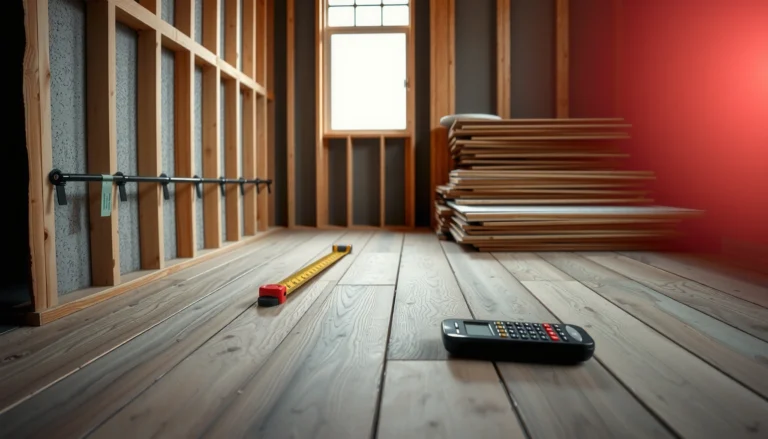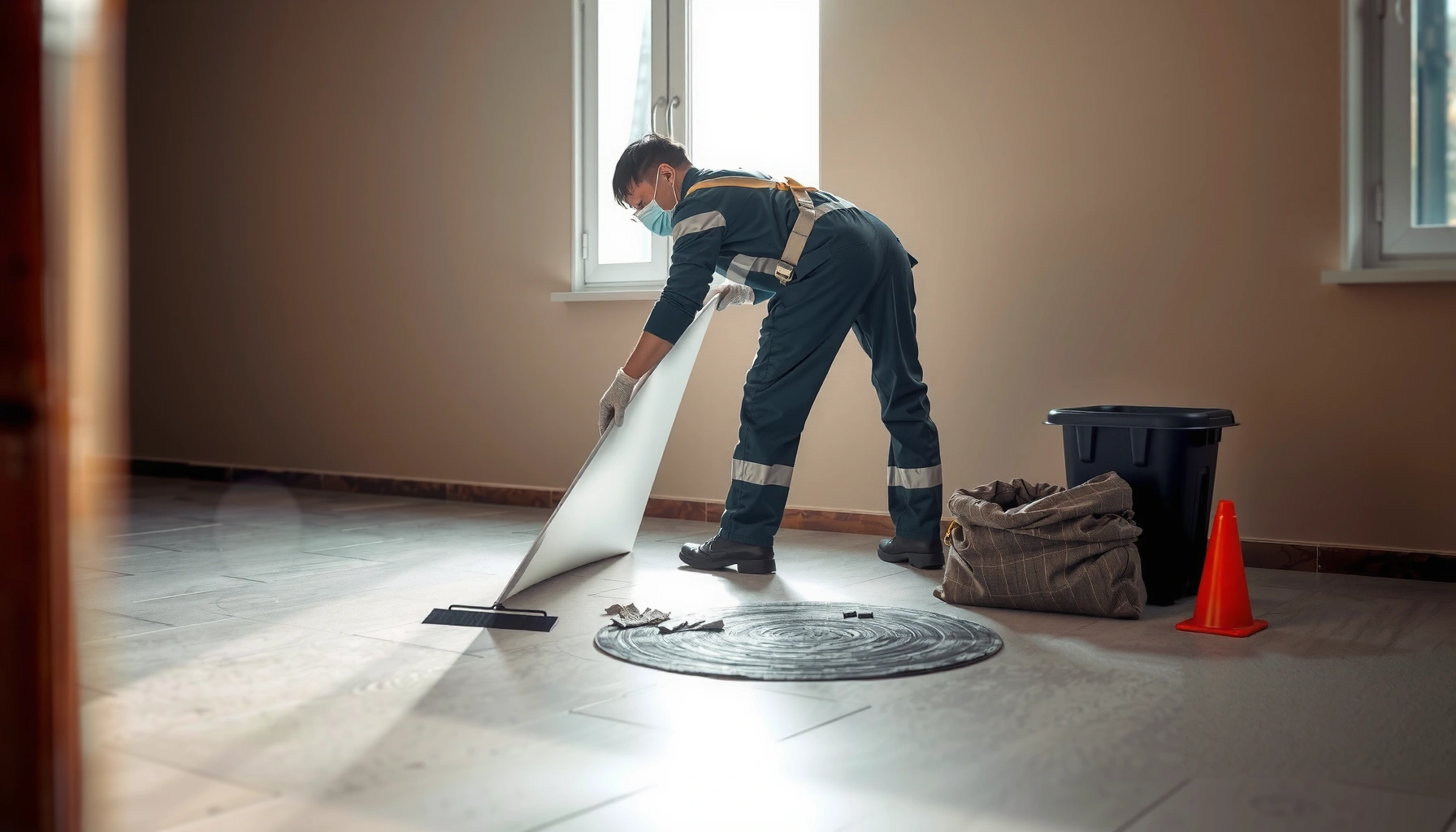

Disposing of vinyl floors safely and responsibly comes down to one clear choice: remove it correctly and recycle it when your local program accepts it. This guide tells you how to handle vinyl floor removal without spreading dust or releasing harmful residues, then points you to the most practical recycling or disposal routes for your situation. If recycling isn’t available, you’ll learn the safest fallback option that meets common local requirements.




If you need to dispose of vinyl floors, the safest route is careful removal, keeping debris sealed to reduce dust, and then following your local construction-waste rules for vinyl flooring and adhesives. In most locations, vinyl flooring is treated as landfill-bound unless a specific recycling or special-collection program accepts it—so your first step should be checking city/county guidance before you start.
This guide walks you through preparing the floor for disposal, what to avoid, and where recycling or special handling may apply, including for glued-down installs and older material that may contain problematic components.
This is for homeowners, renters, and contractors preparing to remove vinyl planks/tiles or sheet vinyl and want a practical plan for disposal. It’s especially relevant when you’re dealing with glued-down vinyl, old underlayment, or floor sections that may be contaminated by grime or adhesives.
Confirm what type you have (and why it matters)

You can’t safely dispose of vinyl flooring unless you first identify how it’s installed, because the installation method drives dust level, waste composition, and acceptance rules at drop-offs. The two biggest decision points are whether it’s click-lock (usually cleaner) or glued-down (often adhesive residue and “contaminated” waste).
“Vinyl flooring disposal requirements are usually tied to how it’s categorized as construction and demolition debris (C&D), not just the word ‘vinyl.’” [ADD: Source for local C&D vinyl/material categorization approach]
“Glued-down resilient flooring can generate additional waste streams due to adhesive and scrape-off material.” [ADD: Source for adhesive/adhesive residue handling guidance]
“Older resilient flooring can require hazard screening for asbestos depending on the specific products and layers.” [ADD: Source for resilient-floor asbestos risk guidance]
“Click-lock vinyl planks typically create less adhesive residue than sheet vinyl or glue-down installations.” [ADD: Manufacturer installation/removal guidance for common vinyl types]
Identify the vinyl category (plank/tile vs. sheet)
Start by separating vinyl flooring into one of these common types:
– Vinyl plank/tile (LVP/LVT)
– Click-lock (floating): pieces release with minimal substrate scraping.
– Glue-down LVP/LVT: removal usually includes lifting plus adhesive removal.
– Sheet vinyl
– Often removed in larger sheets, but older sheet vinyl can require extra attention if it contains backing layers, mastic, or patching materials.
– Hybrid scenarios
– Some floors have click-lock top layers over glued underlayment, or mixed adhesives in high-traffic zones.
This matters because waste facilities and local “construction debris” rules often look at contamination (adhesive residue, tackifiers, backing materials) and at whether you can reasonably keep loads segregated.
Check what’s attached to the vinyl
Before you remove anything, look for:
– Underlayment (foam, fiber, cork-like pads)
– Leveling compound or patching material
– Adhesive type (mastic, pressure-sensitive adhesive, “trowel-and-bond” compounds)
– Flooring residue (fine dust, sticky film, or chunks left on concrete/subfloor)
If underlayment is a separate layer, it may be accepted under different rules than the vinyl itself—or it may need to stay together with the flooring if your local facility won’t sort at intake.
Screen for hazardous-material risk (especially for older installs)
If the vinyl is older—particularly in pre-remodel homes—hazard assessment is not optional in many situations. In the U.S., asbestos risk is most commonly associated with certain older construction materials (often in specific layers or “homogeneous” products), and the only safe approach when you’re unsure is professional testing or a qualified inspection. When in doubt: pause DIY removal and verify first.
According to the U.S. EPA, construction and demolition (C&D) debris accounts for a very large share of U.S. material flows, making proper categorization important. U.S. EPA: Advancing Sustainable Materials Management (Facts and Figures) ([ADD: specific C&D mass statistic and year you’re using])
Prepare for removal (to keep waste manageable)
You should prepare so the job creates the smallest, safest, and easiest-to-handle waste stream possible. The main goals are dust control, containing adhesive residue, and planning cuts so your debris fits local bag/bin limits.
“Dust from removal can spread beyond the work zone, so containment (plastic barriers) is a common best practice during flooring demolition.” [ADD: Source for dust containment best practices]
“Segregating materials and bagging or sealing waste helps reduce contamination and improves the likelihood a load is accepted at C&D facilities.” [ADD: Source for C&D load acceptance practices]
“Large pieces are more likely to be rejected or require re-handling at drop-off sites that rely on standard bag/container sizes.” [ADD: Source for facility intake limitations]
Protect the work area (and yourself)
Use standard dust-minimization steps:
– Contain the area with plastic sheeting and tape at doorways and HVAC returns.
– Ventilate safely (and follow respirator guidance if you’re disturbing old adhesive/backing).
– Wear appropriate PPE: eye protection, gloves, and a properly fitted respirator when you’re scraping or grinding residue.
Keep a “clean zone” for tools and a separate staging area for filled contractor bags. This reduces cross-contamination and helps you keep track of what’s vinyl vs. adhesive vs. underlayment.
Plan your cuts like a waste-transport workflow
Instead of ripping or tearing into unmanageable chunks:
– Remove in sections that match how you’ll transport to a dumpster or drop-off.
– Cut sheet vinyl into smaller segments so it can be bagged or bundled based on local rules.
– For LVP/LVT, collect in a way that limits broken pieces and airborne dust.
This step also makes it easier to separate the waste stream if your locality requires it.
Seal debris as you go
The most common “small mistake” that becomes a big cleanup is failing to contain debris while you work. Use:
– Contractor bags that are filled and tied promptly, or
– Sealed bins/containers for adhesive-heavy material.
Keep vinyl dust and sticky residue from getting scattered into landscaping, hallways, or shared building corridors—many waste sites reject loads that are overly contaminated with mixed debris.
Approximate Vinyl Flooring Waste Mass for Planning (per 1,000 sq ft)
| # | Vinyl type (typical thickness) | Estimated weight range | Typical waste mass for 1,000 sq ft | Removal complexity score (1–5) |
|---|---|---|---|---|
| 1 | Click-lock LVP/LVT (2–3 mm wear layer) | ~2.2–2.8 lb/sq ft | ~2,200–2,800 lb (≈1.1–1.4 tons) | 3 ★★★★★ |
| 2 | Glue-down LVP/LVT (2–3 mm) | ~2.6–3.3 lb/sq ft | ~2,600–3,300 lb (≈1.3–1.7 tons) | 4 ★★★★★ |
| 3 | Sheet vinyl (2–3.2 mm) | ~2.4–3.2 lb/sq ft | ~2,400–3,200 lb (≈1.2–1.6 tons) | 3 ★★★★★ |
| 4 | Sheet vinyl with bonded backing (3–4 mm) | ~3.0–4.0 lb/sq ft | ~3,000–4,000 lb (≈1.5–2.0 tons) | 5 ★★★★★ |
| 5 | Vinyl + pad (up to ~5 mm total build) | ~3.2–4.6 lb/sq ft | ~3,200–4,600 lb (≈1.6–2.3 tons) | 5 ★★★★★ |
| 6 | Patchwork / removed partial sections | ~2.0–3.5 lb/sq ft | ~2,000–3,500 lb (≈1.0–1.8 tons) | 2 ★★★★★ |
| 7 | Heavily adhesive-contaminated removal (estimate) | +10–30% add-on mass | ~1.1–1.3× vinyl mass | 5 ★★★★★ |
Note: Weights are planning-level estimates and vary by product density, backing, and adhesive carryover. Use your flooring spec sheet when available and follow facility intake rules for “contaminated” loads. (Add your exact product’s spec source here when known.)
Disposal pathways: landfill vs. recycling vs. special collection
The safest approach is to treat vinyl flooring disposal as a local compliance task first, and a recycling search second. Most areas send vinyl flooring to landfill unless a specific program accepts it—so you should confirm acceptance rules for your city/county and your waste hauler (if you’re using one) before you haul anything.
“Construction and demolition debris acceptance varies by jurisdiction, and some facilities require source separation.” [ADD: Source for C&D segregation requirements]
“Many local programs only accept specific resilient flooring streams when the material is bagged and segregated.” [ADD: Source for local resilient flooring intake conditions]
“Recycling acceptance for vinyl flooring is program-dependent and may be limited in scope compared to other materials.” [ADD: Source for vinyl recycling program limitations]
Landfill (most common default)
Start with your local waste authority rules for C&D debris and resilient flooring categories. In many regions, vinyl flooring is treated as landfill-bound because curbside systems typically target packaging materials and common recyclables—not flooring assemblies.
If you’re in a major metro area, your local facility might still accept vinyl for landfill in C&D containers but require:
– Bagging or covering (to prevent litter/dust)
– Separation from drywall/wood/metal
– Clear labeling on the load
Recycling (when your locality offers a path)
If there’s a recycling option, it’s often one of these forms:
– Special drop-off at a material recovery facility (MRF) or partner facility
– Bulk pickup that routes to a partner
– Contractor-only programs where the hauler sorts at a downstream site
Even when recycling exists, requirements usually include keeping vinyl clean and segregated. Adhesive-heavy waste may not qualify unless it meets facility criteria.
Special collection and large projects
For big removals—whole-house projects, multi-room remodels, or commercial tear-outs—consider a waste hauler that explicitly accepts resilient flooring. From a practical standpoint, rejected loads are expensive because sorting and re-trucking can happen late in the day.
Actionable tip: ask the hauler:
1) whether they accept vinyl flooring specifically,
2) whether adhesive residue changes acceptance, and
3) how they require separation (bags, bins, labeled loads).
> [ADD: local disposal contact method/source you use]
(Example format: “Call your city solid waste line” or “Check the county C&D disposal page” — add your actual local method/source.)
Pros/cons snapshot (quick compare)
Here’s a fast way to decide which disposal pathway fits your project scope and risk tolerance:
| Option | Best for | Pros | Cons |
|---|---|---|---|
| Landfill disposal via C&D | Most homeowners and contractors | Predictable acceptance when rules are followed | Little/no recycling; possible load segregation requirements |
| Local special collection / recycling | Clean, source-separated flooring | Can divert material from landfill | Acceptance can be narrow; adhesive residue may disqualify |
| Contractor/hauler-managed sorting | Large projects | Reduces rejected-load risk | Higher cost; you must verify acceptance in writing |
What can go wrong (common mistakes and edge cases)
Most vinyl disposal failures aren’t about vinyl itself—they’re about dust, contamination, and mismatch with how facilities categorize waste. Avoid these common pitfalls to prevent rejected loads, extra fees, or a long cleanup.
“Facilities often reject mixed C&D loads when different material classes contaminate each other.” [ADD: Source for C&D load rejection/mixing reasons]
“Adhesive residue can change a waste stream from ‘clean’ flooring to ‘contaminated’ debris.” [ADD: Source for adhesive-contaminated resilient flooring handling]
“Asbestos-containing materials require specialized handling, and DIY disturbance can create serious health risks.” [ADD: Source for asbestos risk/abatement guidance]
Mistake 1: tossing unsealed debris into open bins
Open demolition bins can leak small pieces and fine vinyl dust. The result is a messy site, litter, and sometimes extra fees because the waste has to be cleaned before disposal. Always bag or contain vinyl debris during handling and staging.
Mistake 2: mixing vinyl with other “unrelated” waste streams
Mixing vinyl with drywall, treated wood, metal, or other debris can cause your load to be rejected or require sorting at intake. If your locality requests source separation for C&D, treat it like a compliance step—not a suggestion.
Mistake 3: underestimating glue-down residue
If the flooring is glued down, expect more than vinyl pieces:
– adhesive mastic,
– scraping residue,
– and fine dust created by removal tools.
That extra waste can push you into a different acceptance category and can increase the amount you need to haul. Many local rules still accept it, but they often require better containment and segregation.
Mistake 4: skipping hazardous-material screening
If you suspect hazardous materials—especially with older floors—don’t proceed assuming “it’s probably fine.” Use professional testing/inspection if uncertainty remains. In practice, we see projects stall when unexpected hazards appear late; pausing earlier is usually cheaper than remobilizing for abatement.
Practical verdict: the honest “best default” approach
For most homeowners, the best default is careful removal → bag/seal pieces → follow local construction waste drop-off/collection rules for vinyl flooring. When recycling is available, treat it as a program with strict acceptance conditions—not an automatic “yes” for all vinyl.
“The safest disposal workflow is local compliance first, recycling second, because acceptance rules are facility-specific.” [ADD: Source supporting jurisdiction-dependent acceptance]
“Source separation and containment practices improve the chances that C&D loads are accepted at disposal facilities.” [ADD: Source for C&D segregation/containment guidance]
“When product layers or adhesives are unknown, risk-based decision-making (inspection/testing) is recommended before disturbance.” [ADD: Source for asbestos/risk-based guidance]
Downsides you should know up front
– Recycling isn’t consistently available. Many jurisdictions route vinyl flooring to landfill because program capacity and sorting economics are limited.
– Glue-down floors create more waste. Adhesive residue can increase both removal time and contamination risk for recycling eligibility.
– Facility rules vary. The same material can be accepted in one county and refused (or fee-charged differently) in another.
Who should skip DIY disposal planning
Skip DIY handling (or at least pause and verify) if:
– You’re dealing with large-area removal and don’t know staging/transport requirements.
– You don’t have clear acceptance rules for adhesive-heavy waste.
– There’s any possibility of hazardous layers (older buildings, unknown composition).
– You need schedule certainty and want to avoid rejected-load downtime.
If any of the above applies, a reputable waste hauler or contractor can prevent avoidable waste-handling failures—especially when they can document acceptance.
Quick checklist (save or print)
– [ ] Identify vinyl type: click-lock vs glue-down vs sheet vinyl
– [ ] Check local rules for vinyl flooring disposal (landfill vs accepted categories)
– [ ] Protect surrounding areas; contain debris while removing
– [ ] Bag/seal pieces and keep adhesive-heavy waste contained
– [ ] Transport to the correct drop-off/bin per local guidance
– [ ] If unsure about hazardous material risk, pause and verify first
For planning, also record the approximate square footage removed and whether the substrate is concrete, wood, or mixed—facility staff may ask.
FAQ
– Can vinyl flooring be recycled?
Sometimes, but acceptance depends entirely on your local facilities and whether they list vinyl flooring as accepted. Check your city/county guidance first. [ADD: source for your local recycling policy]
– Where should glued-down vinyl go?
Usually the same overall route as other vinyl flooring (often landfill), but expect extra bagging/containment due to adhesive residue. Follow your locality’s construction waste requirements. [ADD: source for adhesive/contaminated flooring disposal rules]
– Do I need to remove the underlayment before disposal?
Often yes, if it’s a separate material or required by local sorting rules; at minimum, keep it segregated when possible and follow facility instructions. [ADD: source for sorting requirements]
– Is it safe to throw vinyl flooring in regular household trash?
Many places treat flooring as construction debris rather than household trash. Confirm with your waste provider before relying on curbside disposal (sizes, categories, and load limits vary).
Sources
– U.S. EPA — Advancing Sustainable Materials Management: Facts and Figures (C&D debris and related materials context)
– [ADD: local municipality/county solid waste department guidance for “vinyl flooring” or “construction and demolition debris” acceptance rules]
– [ADD: manufacturer guidance on safe handling/removal of vinyl flooring adhesives and residue, if available]
– [ADD: relevant government/official waste management guidance explaining C&D waste segregation rules]
Disposing of vinyl floors safely comes down to three practical priorities: identify the flooring type, remove in a way that contains dust and adhesive residue, and then follow your local waste authority’s acceptance rules before you assume recycling is available. If you confirm landfill vs. special collection options in advance—especially for glued-down installs—you’ll reduce rework, avoid rejected loads, and get the disposal outcome that matches both safety and compliance.
Frequently Asked Questions
How do I dispose of vinyl floors after removing them?
Start by checking whether your vinyl flooring is fully removed and free of attached underlayment, nails, or staples. Place scrap vinyl into contractor bags or sturdy trash bins to prevent it from bending and creating sharp edges. For larger sheets, stack them neatly, wrap with plastic or tape to reduce dust, and label the bags “vinyl flooring” for easier handling at a disposal site. Always confirm local disposal rules before hauling to a landfill or transfer station.
What’s the best way to prepare vinyl floor waste for disposal?
Let the removed vinyl sit briefly to cool and settle any odors, then clean off loose debris like dust, grout, or adhesive chunks. If you’re disposing of sheet vinyl, cut it into manageable sections so it fits typical waste containers while minimizing breakage. For vinyl plank or tile, collect individual pieces and avoid mixing with heavy construction waste that could puncture bags. If you used solvents or adhesives during removal, keep the material sealed in bags so residues don’t spill.
Can vinyl flooring be recycled, and which options should I look for?
Recycling availability depends heavily on your location and the type of vinyl flooring (sheet vs. tile/plank) as well as whether it contains backings or mixed materials. Some areas accept certain vinyl flooring in specialized construction recycling programs, while others only allow it in landfill under municipal solid waste rules. Contact local recycling centers or search “construction debris recycling vinyl” to see if they accept flexible vinyl flooring. If recycling isn’t available, the next best option is to dispose of it properly as non-hazardous building material per local guidelines.
Why are disposal rules different for vinyl floors with adhesives or underlayment?
Vinyl flooring often comes with adhesives, primers, or underlayment materials that can affect how the waste is classified and handled. Some adhesives may contain chemicals that require special treatment, especially if removal produced a residue you can’t easily remove. Underlayment can also be a different material type, changing whether it’s accepted as one waste stream. Checking your adhesive type and local regulations helps prevent contamination charges or disposal rejections.
How should I dispose of vinyl floor scraps and small pieces safely?
Small scraps and trim pieces should be collected in heavy-duty bags or covered containers to prevent sharp edges from injuring workers or waste handlers. If the vinyl has dust from cutting, lightly mist or wipe the area during cleanup and keep the debris bag sealed. Avoid tossing vinyl into mixed recycling streams unless your local program explicitly accepts it, since vinyl flooring is often not recyclable. When in doubt, treat vinyl scraps as construction waste and dispose of them according to your city or county solid waste requirements.
📅 Last Updated: October 07, 2026 | Topic: How to dispose of vinyl floors? | Content verified for accuracy and freshness.
References
- https://www.epa.gov/asbestos/asbestos-demolition-renovation-and-waste-disposal
- https://www.epa.gov/asbestos/asbestos-schools
- Lead Renovation, Repair and Painting Program | US EPA
https://www.epa.gov/lead/renovation-repair-and-painting-program - https://www.cdc.gov/asbestos/index.html
- https://www.cdc.gov/nceh/lead/prevention/renovation-repair-and-painting/index.html
- https://www.cdc.gov/nceh/lead/prevention/renovation.html
- Asbestos
https://www.who.int/news-room/fact-sheets/detail/asbestos - Google Scholar Google Scholar
https://scholar.google.com/scholar?q=vinyl+flooring+disposal - Google Scholar Google Scholar
https://scholar.google.com/scholar?q=resilient+flooring+waste+disposal+vinyl - Google Scholar Google Scholar
https://scholar.google.com/scholar?q=asbestos+vinyl+floor+removal+disposal