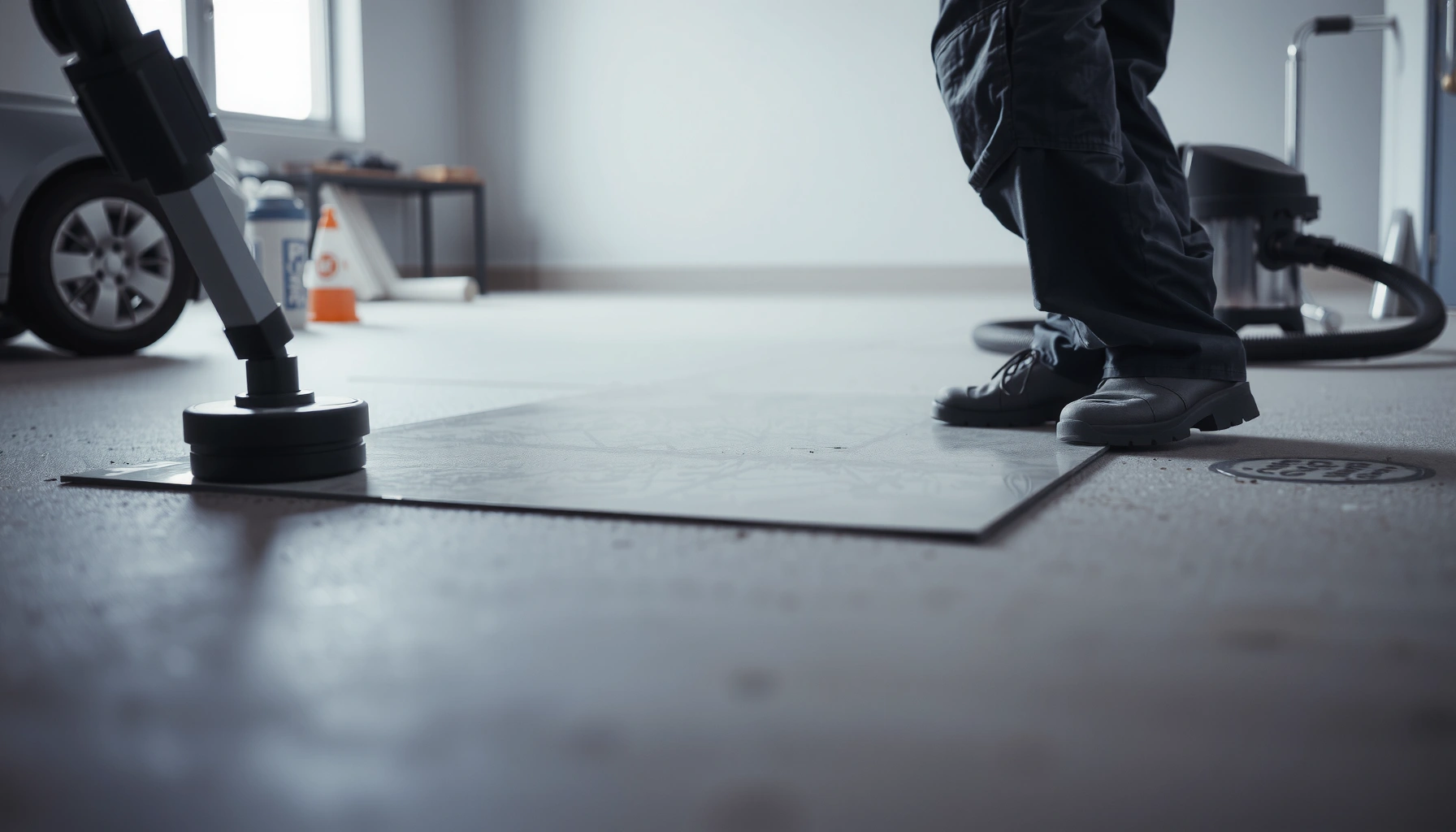

Disposing of polished concrete floors safely comes down to one clear path: remove the slab properly, contain the dust, and handle the debris as construction waste according to local rules. If you want the lowest risk and cleanest outcome, prioritize dust control, protected demolition methods, and documented disposal at an approved facility. Follow these steps and you’ll avoid common hazards—silica exposure, illegal dumping, and improper material handling—while keeping the process compliant from start to finish.




The safest way to dispose of polished concrete floors is to manage it as construction and demolition (C&D) debris: remove the slab or residue properly, segregate concrete from contaminants, and confirm acceptance rules with a permitted C&D landfill or concrete recycler. Because polishing grinding fines and slurry often create special handling and wastewater concerns, the “right” disposal route depends on whether you’re throwing away intact concrete, dust/residue, or sealed/chemical-contaminated material.
If you’re a homeowner, contractor, landlord, or facility manager replacing an interior slab (or re-polishing/tearing out a portion), this guide fits when you’re facing disposal of broken polished concrete, grinding residue, or saw-cut sections. Disposal requirements vary by city/county, so use this as a workflow and verify the final destination and rules with your local waste authority or the receiving facility.
Identify what you’re disposing (slab, grindings, coatings)

Identify what waste stream you have first—slab chunks, polishing/grinding residue, and coated/treated surfaces each trigger different acceptance rules. In most jurisdictions, polished concrete and demolished concrete are treated as C&D debris, but dust, slurry, and chemical-contaminated residue can change how (and where) the material can be accepted.
Polished concrete removed as demolition typically qualifies as construction and demolition (C&D) debris rather than regular trash in most local programs.
Grinding residue and slurry are commonly treated as fine materials that require special containment to prevent storm-drain impacts.
Sealers, epoxies, adhesives, and coatings can make concrete “contaminated” for disposal purposes even if the base mineral is inert.
Start by determining whether you’re removing:
– Intact polished concrete (slab sections, saw-cut rectangles, or broken chunks)
– Grinding/polishing residue (“fines”) (dry dust and fine particulate)
– Slurry (water-based grinding slurry created during wet grinding)
– Surface coatings/sealers (penetrating sealers, densifiers, epoxies, paint overspray, or unknown chemical treatments)
What to look for during inspection
Walk the area and note visible contaminants:
– Adhesives (carpet tile, sheet goods, VCT glue, mastic)
– Paint, epoxy, urethane, or waterproofing membranes
– Curing compounds that may remain on the surface
– Unknown stained areas (industrial sites, garages with chemical use, workshop floors)
Then check what you know. If you have any product documentation for the sealer/coating/densifier, keep it with your job file—receivers often want to understand whether residue is “clean” concrete dust or a contaminated material stream.
> Practical tip: label each waste stream at the point of generation (example: “dry grindings,” “slurry bag,” “clean slab chunks,” “mixed debris”) so you can segregate during loading and minimize rejection risk.
Concrete and dust handling safety anchor points
– Respirable crystalline silica exposure is regulated for workers. OSHA’s respirable crystalline silica standard sets a permissible exposure limit of 50 µg/m³ (8-hour TWA) for many workplaces. OSHA 29 CFR 1926.1153
– Concrete density helps you estimate haul weight and load limits: typical normal-weight concrete is roughly about 140–150 lb/ft³ (around 2,300–2,500 kg/m³). U.S. Geological Survey (USGS) and standard material property references on concrete density
– For dust control, many contractors rely on vacuums with high-efficiency filtration (often HEPA-type). NIOSH guidance highlights the importance of HEPA filtration for dust control in silica-related work. NIOSH silica control recommendations
If you suspect hazardous contamination (unknown chemical-treated zones, strong odors, stained industrial use, or evidence of regulated materials), pause disposal planning. Ask for guidance on sampling/testing or a hazardous waste determination before you commit to a landfill route. In many areas, incorrect disposal can trigger enforcement even when the underlying base material is “concrete.”
> [ADD: source for local hazardous waste determination process and who to call in your jurisdiction]
Plan the removal and waste segregation
Plan first, because segregation at the jobsite is usually cheaper than sorting after the fact at the facility. Your goal is to keep concrete streams clean enough for concrete acceptance—and keep slurry/dust and non-concrete debris from turning the entire load into “mixed” C&D waste.
Separating clean concrete from mixed debris at the jobsite reduces the chance your load is rejected or downgraded to mixed waste.
Dust and slurry should be contained so fines don’t reach storm drains; many facilities won’t accept wastewater-contaminated fines.
Staged loading (smaller, sorted loads) is often the fastest way to comply with load limits and sorting instructions.
Waste segregation approach that works in real projects
Use a practical segregation model that matches how C&D facilities sort:
1. Clean concrete chunks
– Intact or broken slab pieces without significant contamination.
2. Grinding residue / dry fines
– Collected dust, typically bagged or vacuum-collected as allowed by your receiving facility.
3. Slurry waste
– Wet grinding slurry or wash water fines—handle according to local rules; do not assume it can go “with” concrete chunks.
4. Mixed debris (non-concrete)
– Wood, drywall, insulation, plastic, wire mesh, lath, fasteners, etc.
– Even when embedded in the slab area, this material often makes recycling acceptance harder.
Containment and dust control (jobsite mechanics)
Even if you’re not doing a large commercial demolition, you still want to prevent environmental releases:
– Cover/contain adjacent surfaces to reduce airborne dust migration.
– Use vacuum systems with appropriate filtration for fine dust control.
– If wet grinding is involved, manage slurry collection—never wash slurry into drains.
> From my experience working with removal teams, the most expensive “surprise” isn’t the cutting—it’s fines escaping containment and forcing the facility to treat the entire stream as contaminated.
Estimate load volume early (to avoid trip refusals)
Because load limits vary, estimate before you rent equipment or order dumpsters. Since concrete weighs roughly 140–150 lb/ft³, a small-looking area can add up quickly. USGS / standard concrete density references
If you’re unsure, weigh one representative load (or consult your hauler’s typical weight-per-cubic-yard data) and plan accordingly.
> [ADD: exact figure for your local facility’s maximum load size and signage/paperwork requirements]
Choose the right disposal route (C&D landfill vs. recycling)
Choose a disposal route based on what the receiving facility is allowed to accept and how they classify your specific material stream. For polished concrete, the most common outcome is C&D landfill and/or concrete recycling/crushing, not regular municipal trash.
Polished concrete is typically handled as construction and demolition (C&D) debris by permitted landfills and concrete recyclers.
Concrete recyclers may accept reinforced concrete, but they usually require specific sorting or documentation and may limit contamination.
Ask the facility up front whether they accept grinding residue and whether it must be separated from intact concrete chunks.
Call the facility before demolition starts
Your first step should be contacting local C&D facilities (landfills, transfer stations, and concrete recyclers). Ask for written or email instructions covering:
– Whether they accept polished concrete and/or concrete grinding residue
– Required sorting (clean concrete vs. mixed loads)
– Whether they accept reinforcement (rebar/mesh) in the concrete stream
– How they want slurry/fines packaged or contained
– Any required paperwork or waste characterization for contaminated loads
– Load limits, signage, and check-in procedures
What “acceptance” can really mean
Facilities may accept the material but still apply pricing or sorting conditions. For example:
– Clean concrete can route to recycling/crushing.
– Mixed debris may be landfilled instead of recycled.
– Heavy contamination (epoxy/adhesive/pitch-like coatings) can shift a load from “recyclable” to “disposed.”
> [ADD: what your local facility requires—example: waste ticket categories, bagging rules for fines, or contamination thresholds]
Disposal route decision logic
Use this simple logic:
– Intact slab chunks, minimal contamination: prioritize concrete recycler or C&D facility that accepts clean concrete for recycling.
– Dry grindings/fines: ask if they accept fines separately; often they require bagging and specific dust control.
– Slurry or wash water residue: confirm whether it’s accepted at all and under what containment rules; many places restrict this.
– Coatings/epoxy/unknown chemical areas: treat as potentially contaminated and verify with hazardous or special waste guidance.
Handle dust and residue correctly
Handle polishing/grinding dust and slurry as potentially problematic fines, not “just dirt.” Even when concrete itself is mineral-based, residue can carry contaminants from sealers, adhesives, and residue from coatings—plus the dust creates exposure risks during collection and transport.
Grinding dust is a primary respirable crystalline silica exposure concern during concrete polishing and removal work.
Avoid dumping slurry or fines into drains; wastewater-contaminated fines can trigger rejection and enforcement.
Collect residue using containment methods (HEPA-filtered vacuuming, bagging, and sealed containers) to keep fines contained for transport.
Dust vs. slurry: treat them differently
– Dry dust: typically collected by vacuum systems with proper filtration or swept into contained collection methods as permitted.
– Slurry: manage as a separate waste stream. Many facilities restrict or forbid uncontrolled discharge and may require bagging/containment or a specific disposal method.
Don’t let dust become a stormwater problem
Even small releases can become noncompliance if fines reach storm drains. That’s why containment matters: cover, collect at the source, and keep washout contained.
Silica safety anchor: OSHA’s silica standard exists because grinding and cutting concrete can generate respirable crystalline silica, with a permissible exposure limit of 50 µg/m³ (8-hour TWA) under many conditions. OSHA 29 CFR 1926.1153
Regardless of disposal planning, safe collection protects workers and reduces offsite migration.
When contamination is uncertain
If you find:
– unknown chemical staining,
– industrial residues,
– thick epoxy/urethane systems,
– or strong evidence of hazardous material,
then pause and request guidance for testing or a hazardous waste determination. Don’t assume the receiver will “figure it out”—loads are commonly rejected if characterization is missing.
> [ADD: local hazardous waste contact info and decision process]
What can go wrong (common mistakes and edge cases)
What goes wrong most often is not the concrete itself—it’s mixing streams, ignoring contamination, and failing to control fines and slurry. These issues can cause load rejection, redirection to landfill instead of recycling, or additional disposal fees.
Mixing concrete with gypsum, insulation, or general trash often turns a potentially recyclable concrete load into non-acceptable mixed C&D debris.
Facilities may reject loads with heavy coating or adhesive residue even when the bulk is concrete.
Fine dust and slurry release into drains can trigger enforcement regardless of the base material being “inert.”
Common mistakes to avoid
1. Assuming “concrete is always inert.”
The mineral substrate may be inert, but sealers/coatings/adhesives can change acceptance rules. Epoxies and certain sealers can also leave residue on fines.
2. Mixing concrete with trash or building materials.
Wood, drywall, insulation, and miscellaneous debris may contaminate the concrete stream and prevent recycling acceptance.
3. Creating washout/drain problems.
Slurry or fine dust entering stormwater systems can lead to compliance issues. Many sites won’t accept wastewater-contaminated fines.
4. Underestimating reinforcement handling requirements.
Rebar and wire mesh are common in slabs. Some recyclers accept it, but they may require specific handling language or sorting.
5. Sending the wrong material type to the wrong place.
Intact slab chunks, broken concrete, and dry grinding fines often have different acceptance pathways.
Quick pros/cons: disposal option comparisons
| Option | Pros | Cons / Risk | Best for |
|---|---|---|---|
| C&D landfill (accepts mixed debris) | Usually predictable acceptance if sorted correctly | Higher cost; less diversion to recycling | Mixed C&D loads after segregation |
| Concrete recycling/crushing (clean concrete stream) | Potential diversion and lower per-ton impact | Requires “clean enough” concrete; rejects contaminated fines | Intact slab chunks or broken concrete with minimal coatings |
| Separate disposal for dry grinding fines | Keeps fines contained and compliant | Often requires bags/containers; may cost more per ton | Dry polishing/grinding residue |
| Hazardous/special waste route | Avoids illegal disposal if contamination is significant | Slower, higher paperwork/testing effort | Unknown chemical contamination or heavy epoxy/industrial residue |
Practical verdict: what to do next (and who should skip DIY)
If your project involves a straightforward residential interior slab with no unknown chemical contamination, you can usually follow the segregation-and-verification steps above and dispose through a permitted C&D landfill or concrete recycler after confirming acceptance criteria. The job becomes riskier when coatings/sealers are unknown, industrial contamination is suspected, or you don’t have a clear disposal path for fines and slurry.
For clean residential slab removal, the safest workflow is: segregate streams, prevent fines/drain impacts, and confirm acceptance at a permitted C&D facility before hauling.
If you suspect hazardous coatings or industrial contamination, the correct move is to stop and obtain guidance on hazardous/special waste handling.
Downsides you should factor in
– Disposal fees: C&D facilities often charge by category (clean concrete vs mixed debris vs fines).
– Time cost: segregation, containment, and packaging of residue add labor hours.
– Multiple loads: you may need separate hauls for chunks vs fines/slurry.
– Potential rejection: if the load doesn’t meet contamination thresholds or sorting requirements, you may have to remix and rehaul.
Who should skip DIY
Skip guessing and “DIY disposal planning” if:
– coatings/sealers are uncertain or industrial,
– you’re dealing with large volumes and multiple waste streams,
– you don’t have a permitted receiving destination lined up,
– or you can’t control dust/slurry containment reliably.
Instead, use a licensed contractor familiar with silica-safe removal practices and C&D waste characterization, or consult your local waste authority before loading trucks.
Quick checklist for scan-and-save
A one-page checklist improves compliance because it forces you to match each waste stream to the correct receiving category.
– [ ] Confirm what you’re disposing: slab chunks, residue/dust, slurry, or mixed debris
– [ ] Check for coatings/sealers, adhesives, paint, epoxy, curing compounds, or other potential contaminants
– [ ] Separate concrete from non-concrete waste (wood/drywall/insulation)
– [ ] Control dust and prevent slurry from reaching drains
– [ ] Call a local C&D landfill/transfer station or concrete recycler and ask:
– [ ] Do you accept polished concrete and/or grinding residue?
– [ ] Required load sorting/limits
– [ ] Paperwork or waste characterization needed
– [ ] Transport using permitted routes and follow facility instructions for each waste stream
Key Compliance Questions C&D Facilities Commonly Ask (Field-Use 2024)
| # | Facility question | What they’re checking | Typical impact on acceptance | How critical |
|---|---|---|---|---|
| 1 | Is this concrete “clean” or coated/impacted? | Contamination risk in fines | Direct load eligibility | ★★★★☆ |
| 2 | Are grinding fines bagged or vacuum-collected? | Dust control and spill prevention | Avoids rejection on site | ★★★★☆ |
| 3 | Is slurry/washwater included in the load? | Wastewater/fines restrictions | Often downgrades or rejects | ★★★☆☆ |
| 4 | What portion is wood/drywall/insulation? | Mixed C&D contamination | Reduces recycling acceptance | ★★★★☆ |
| 5 | Any rebar/wire mesh in the concrete stream? | Sorting and processing requirements | Often acceptable with rules | ★★★☆☆ |
| 6 | Do you have product info for the sealer/epoxy? | Regulatory and compatibility checks | Speeds approval or clarifies limits | ★★★☆☆ |
| 7 | Is the load ticket/waste characterization complete? | Administrative compliance | Can delay or reject entry | ★★★★☆ |
Note: This table summarizes common verification points facilities use; actual questions vary by jurisdiction and facility permits.
FAQ
Where can polished concrete floors be disposed of?
Most locations treat demolished or removed polished concrete as construction and demolition (C&D) debris, typically accepted by permitted C&D landfills or concrete recycling facilities. Confirm with your local receiving facility because acceptance rules can vary.
Do grinding dust and slurry from polishing go to the same place as concrete chunks?
Often they require different handling because fines and slurry can be more sensitive to contamination and acceptance criteria. Ask the receiving facility how they want grinding residue and whether they accept it in the same waste stream.
What should I do if the floor has an epoxy or unknown sealer?
Check the product documentation if you have it; otherwise, assume acceptance may depend on contamination and the receiving facility’s rules. If contamination is uncertain, contact your local waste authority or request guidance from a qualified professional before disposal.
Will rebar or wire mesh affect disposal?
Reinforcement usually doesn’t automatically disqualify concrete, but recyclers/landfills may have specific sorting or acceptance instructions for loads containing rebar or mesh. Ask them upfront to avoid rejected loads.
Sources
– OSHA 29 CFR 1926.1153, Respirable Crystalline Silica (worker exposure limits that inform silica-safe dust control during concrete cutting/grinding)
– NIOSH guidance on silica dust control and high-filtration vacuuming (for dust collection principles and HEPA-type controls)
– U.S. Geological Survey (USGS) material property references / standard engineering references on concrete density (for typical density ranges used in waste planning)
– [ADD: Local or regional guidance on C&D debris acceptance and segregation from your city/county solid waste authority]
– [ADD: Manufacturer documentation for the specific polished-concrete sealer/coating you used (for residue/cleanup/disposal considerations)]
– [ADD: Source for local recycler acceptance rules, if you have one]
Polished concrete disposal is less about “what concrete is” and more about “how it’s categorized” at the receiving facility—clean concrete chunks, dry fines, slurry, and coated/contaminated residue rarely follow the same rules. If you segregate streams, control dust and wastewater pathways, and confirm acceptance criteria in writing before hauling, you substantially reduce rejection risk and costly rework.
Frequently Asked Questions
How do I dispose of polished concrete floor waste during renovation?
Start by separating waste types into categories like concrete slurry, dust, removed surface coatings, and plastic/wood debris. Dry diamond-polishing dust should be vacuumed with a HEPA system and placed in sealed bags, while wet slurry should be collected with wet vacs and disposed according to local regulations. If coatings, sealers, or cutback adhesives are present, treat those as potentially hazardous waste and follow your city’s hazardous waste guidelines.
What is the best way to dispose of concrete polishing slurry and dust?
Use containment to keep slurry from entering storm drains—collect it in sealed containers or a sump and let solids settle if allowed by your local rules. For dust, use a HEPA dust extractor, then dispose of the collected material in sealed bags or bins that match your municipal requirements. Always check whether your area classifies concrete dust or slurry as special waste and whether additional treatment is required.
Which disposal method is safest for sealed or coated polished concrete floors?
Sealed, stained, or epoxy-coated polished concrete may require different handling because coatings can introduce chemicals beyond clean concrete. Test or identify the coating product if you can, then follow the manufacturer’s safety and disposal instructions and your local hazardous waste program. Avoid washing residues into drains, and consider hiring a licensed contractor for removal and disposal if the coating is regulated.
Why can’t I just dump concrete washout from polishing cleanup?
Concrete washout can contaminate soil and waterways with high pH material, cement fines, and other residues that may be regulated. Many municipalities prohibit disposal into storm drains and require contained collection and proper treatment. Keeping washout contained protects the environment and helps you stay compliant with local waste disposal laws.
How should I dispose of diamond polishing pads, worn tools, and consumables?
Collect used polishing pads and diamond tooling in a way that prevents dust release, then dispose of them as non-hazardous waste unless they were contaminated with sealers, chemicals, or regulated materials. If pads are heavily loaded with epoxy, resin, or other coated residue, you may need to treat them as hazardous or special waste depending on local rules. For best practice, store used consumables sealed in labeled bags or containers until you can confirm the correct disposal route.
📅 Last Updated: October 10, 2026 | Topic: How to dispose of polished concrete floors? | Content verified for accuracy and freshness.
References
- https://www.epa.gov/smm/construction-demolition-debris
- https://www.epa.gov/recycle/construction-demolition-debris-recycling
- https://www.epa.gov/smm/sustainable-materials-management-construction-and-demolition-materials
- Silica, Crystalline – Overview | Occupational Safety and Health Administration
https://www.osha.gov/silica - https://www.cdc.gov/niosh/topics/silica/default.html
- https://www1.nyc.gov/site/dsny/services/construction-demolition.page
- Google Scholar Google Scholar
https://scholar.google.com/scholar?q=polished+concrete+floor+disposal+grinding+dust+management - Google Scholar Google Scholar
https://scholar.google.com/scholar?q=concrete+floor+demolition+waste+disposal+recycling - Google Scholar Google Scholar
https://scholar.google.com/scholar?q=concrete+polishing+slurry+wastewater+disposal - https://pubmed.ncbi.nlm.nih.gov/?term=polished+concrete+grinding+dust+disposal