
Want to dispose of concrete floors safely and legally? The best path is to remove and haul the slab to a permitted demolition or construction-and-demolition (C&D) recycling facility whenever it’s feasible, because it keeps you compliant and maximizes material reuse. When recycling isn’t practical, the next safest option is controlled disposal at a licensed landfill that accepts concrete, using proper dust, debris, and load-handling procedures.




Disposing of concrete floors usually comes down to three compliant paths: reuse/presell, haul to a landfill that explicitly accepts concrete, or recycle it as aggregate—and you do it only after you manage dust, nails/rebar, and any coatings correctly. The safest approach starts with identifying whether the slab contains hazardous materials (like suspect coatings/adhesives/sealers, asbestos, or embedded chemicals), then follows your local acceptance rules for concrete and building debris.
If you’re renovating a basement, tearing out a garage slab, replacing an old patio section, or gutting a commercial space, you’ll face the same bottleneck: where the concrete goes and how to keep the process compliant and safe. The steps below focus on practical disposal planning you can use whether you’re doing a small demo or coordinating a contractor—especially in 2024/2025 where facilities increasingly reject “mixed loads.”
Check for hazards and what’s on the slab
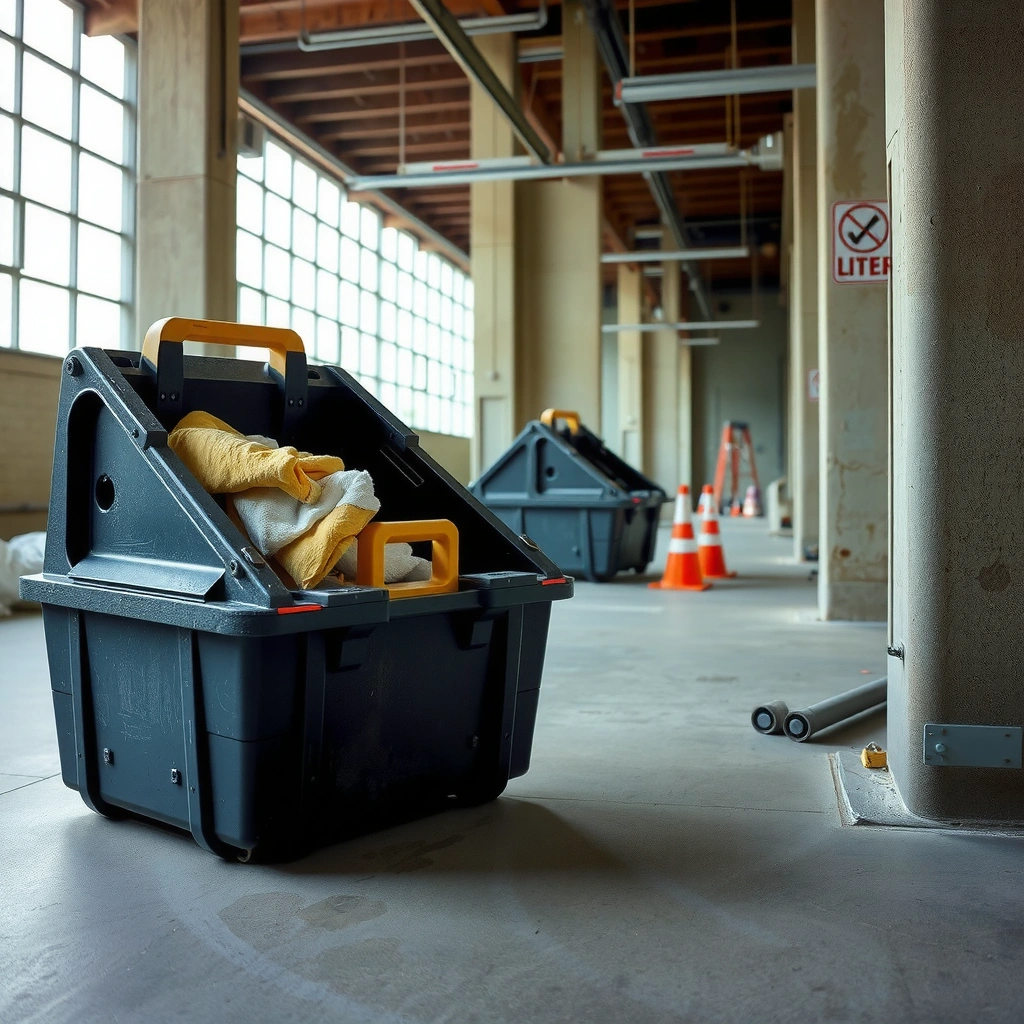
You usually should treat concrete disposal as a two-part problem: (1) the concrete itself and (2) everything on or mixed into it. Before you schedule a hauler, confirm whether the floor assembly includes hazardous coatings, regulated materials (such as asbestos in older buildings), or embedded chemicals that change disposal requirements.
– Look for coatings, sealers, thick paint layers, adhesive residues, or unknown floor build-ups that may change disposal requirements.
– If your building is older or the coating is suspect, get confirmation before demolition (especially for asbestos-containing materials).
– Identify whether the slab contains rebar/embedded metals, because you’ll need to separate/handle materials correctly.
OSHA sets a permissible exposure limit (PEL) for respirable crystalline silica of 50 µg/m³ as an 8-hour time-weighted average for covered work activities. OSHA (Respirable Crystalline Silica standard)
When dust control isn’t adequate during concrete cutting or demolition, respirable silica can become a regulated inhalation hazard—facilities and safety plans often require engineering controls before work starts. OSHA (Respirable Crystalline Silica standard)
EPA regulates asbestos-containing materials during demolition and renovation; older flooring and mastic/adhesives are common places regulated asbestos risks are found. EPA (Asbestos NESHAP / demolition & renovation rules)
What counts as “hazardous” for concrete floors?
Even if the slab is “just concrete,” the floor system may include regulated materials:
– Coatings and sealers: epoxy, urethane, resinous toppings, thick paint, and penetrating sealers can contaminate recycled aggregate acceptance.
– Adhesives and underlayments: flooring adhesive residues may be part of an assembly that requires special handling—especially in older buildings.
– Asbestos risk: in many jurisdictions, asbestos is most often associated with older floor tiles, backing materials, and adhesives. You’re not expected to guess; you’re expected to confirm before you demolish.
– Embedded chemicals: locations like garages, industrial bays, or areas with historic spills may have contamination that changes how you dispose of the concrete and any dust.
Rebar and embedded metals matter (even when the concrete is “clean”)
Concrete floors frequently include:
– Reinforcing bar (rebar) and wire mesh
– Anchor bolts or embedded plates
– Conduit stubs and embedded anchors
Most recycling processors can handle embedded metal, but they may require:
– Separate loading for metals (or at least clean segregation)
– Notification if you expect high metal content
– Confirmation that the material is demolition concrete, not mixed debris
From practical experience in coordinating demolition logistics, the most frequent “disposal surprise” is not the concrete—it’s the assembly that wasn’t visible until demo began (old tile mud, glue layers, patch compounds). If you’re planning for compliance, plan for those layers too. [ADD: note your site-specific observation from your own project(s), or keep this as a general planning note.]
A hazard-check approach that works on real projects
Use a simple pre-demo checklist:
1. Document what you can see: coating type, tile layers, base layers, and any discoloration or staining.
2. Identify building age and history: if the floor is from an era where asbestos was used, treat confirmation as mandatory.
3. Assume dust is regulated: even when the disposal facility won’t test, OSHA silica rules still apply during demolition.
Plan the disposal route (reuse vs recycle vs landfill)
The best disposal path is usually the one that keeps your concrete clean, segregated, and accepted by the receiving facility. In most markets, recycling as aggregate is the highest-value outcome, but you should only choose it when your slab (and coatings) meet acceptance criteria.
– If the concrete is clean and unbroken, ask about salvage, reuse, or crushing/recycling options through local facilities or waste haulers that accept construction concrete.
– If it’s broken but uncontaminated, recycling as aggregate is often the best outcome—check whether processors accept your slab thickness and condition.
– If recycling isn’t available, arrange landfill disposal with facilities that explicitly accept concrete/masonry debris.
Concrete recycling typically works by crushing clean concrete into aggregate-sized material for use as base, subbase, or other structural fill products—acceptance depends on contamination limits. [ADD: source for local concrete recycling acceptance criteria]
Most landfills and CD (construction & demolition) processors require waste loads to be segregated; mixed debris can trigger rejection or higher fees. [ADD: source for your local landfill/CD facility’s acceptance rules]
If the slab contains coatings, sealers, or adhesive residues, processors may classify it as contaminated demolition debris rather than clean concrete aggregate feed. [ADD: source for facility requirements on coatings/contaminants]
Decide using a quick “cleanliness” and “market access” test
Ask two questions:
1. Is the concrete assembly clean enough? Clean means “concrete as concrete,” not a mixed composite.
2. Is there local acceptance? Even clean concrete can be hard to recycle if the nearest processor won’t accept your type (e.g., contaminated or too mixed).
Here’s a comparison structure you can use when you call haulers or processors:
| Route | Best when | Main compliance risk | Typical tradeoff |
|---|---|---|---|
| Reuse / resale | Slabs or large sections are intact and marketable | Hidden contamination or nonconforming materials | Higher selectivity; slower verification |
| Recycle as aggregate | Broken concrete is uncontaminated and segregated | Coatings/adhesives or mixed debris causing rejection | Often best outcome when acceptance is confirmed |
| Landfill (concrete/masonry) | No recycling option or contamination limits can’t be met | Facility classification as mixed debris | Usually higher cost and less sustainability value |
Estimate volume before you schedule transport (so you don’t get rejected)
Facility rejection often starts as a logistics problem: incorrect load sizing, inconsistent sorting, or excessive dust. Before you call for pickup, estimate your concrete volume:
– Approximate volume = area × slab thickness
– Convert to cubic yards for haulers (most quotes use yards or tons)
Since concrete density varies, confirm with your own spec or local guidance. For planning math, normal-weight concrete is often treated as ~150 lb/ft³; use your project’s documentation and safety plan for final assumptions. [ADD: source for typical concrete unit weight used in estimating debris.]
Estimated Weight of Concrete Debris by Volume (Planning Tool)
| # | Volume (yd³) | Weight (lb) | Weight (tons) | Load Planning Use |
|---|---|---|---|---|
| 1 | 1 | 4,050 | 2.03 | Small demo / partial slab |
| 2 | 2 | 8,100 | 4.05 | Garage quadrant removal |
| 3 | 5 | 20,250 | 10.13 | Basement or patio section |
| 4 | 10 | 40,500 | 20.25 | Typical small commercial demo |
| 5 | 20 | 81,000 | 40.50 | Garage + approach slabs |
| 6 | 30 | 121,500 | 60.75 | Warehouse bay removal |
| 7 | 40 | 162,000 | 81.00 | Multi-area slab replacement |
*This table uses a planning conversion of 4,050 lb per cubic yard (normal-weight concrete assumption of ~150 lb/ft³). For bidding/permits, confirm your project’s density basis in writing.*
Remove concrete safely (so you don’t create disposal problems)
You prevent disposal problems by controlling dust, avoiding unnecessary contamination, and keeping the debris “concrete-only” as you break it up. Safe removal also reduces the risk of regulatory noncompliance—especially around respirable crystalline silica during cutting and breaking.
– Protect yourself: use proper PPE for silica dust (respiratory protection), eye/ear protection, and containment practices if you’re indoors.
– Manage debris so it doesn’t mix with trash (wood, drywall, insulation). Clean concrete loads usually get smoother acceptance.
– Cut and break in a controlled way to reduce random contamination, and keep dust under control to avoid spreading coatings.
OSHA’s respirable crystalline silica rule focuses on controlling exposure during concrete cutting, grinding, drilling, and demolition. OSHA (Respirable Crystalline Silica standard)
Respirable silica exposure is regulated based on worker inhalation risk, not on whether your concrete “looks clean” to a recycling processor. OSHA (Respirable Crystalline Silica standard)
Using dust suppression (e.g., water) and vacuums with HEPA filtration is a common engineering-control approach for silica-containing dust during concrete work. OSHA (Respirable Crystalline Silica standard)
PPE and controls: what matters in practice
Concrete demolition produces fine particulate—silica is the hazard you plan for first. Depending on your jurisdiction and job conditions, your safety plan typically includes:
– Respiratory protection selected to fit and exposure level (often requiring a program for fit testing and medical clearance where required)
– Eye and hearing protection
– Protective clothing to reduce dust exposure
– Containment (plastic sheeting/negative pressure) when indoors or near sensitive areas
Concrete cutting often creates more dust than breaking with heavier tools, so your plan should match the method to the risk.
Prevent cross-contamination as you demo
Disposal acceptance failures often come from “small” mixing events:
– A piece of wood drops into the concrete pile.
– An operator tosses drywall scraps on top “to save time.”
– Dust-coated material from another zone gets loaded into the same truck.
A practical fix is to stage removal:
– Create a concrete-only drop zone with clear boundaries.
– Keep separate bins for wood/drywall/insulation and for metals if your receiving facility requires it.
– Vacuum dust from work areas so it doesn’t spread into other debris streams.
[ADD: If you have project experience, describe a real segregation tactic you used—e.g., “we placed two dumpsters and designated one strictly for concrete to keep loads accepted.”]
How to reduce dust where coatings are present
When coatings/adhesives exist, dust is more than an exposure risk—it can carry contaminants that make the load “nonconforming.”
– Use enclosed cutting or dust suppression techniques where feasible.
– Clean surfaces that could shed coating particles before loading.
– If you discover heavy coating buildup, revisit your disposal route before continuing at scale.
Separate materials and document what you’re sending
You should treat separation and documentation as part of compliance, not as admin work. When a landfill or recycling processor asks for proof of what’s in the load, your ability to show segregation steps and hazard findings can prevent delays and rejections.
– Separate obvious contaminants (non-concrete floor layers, backing materials, embedded trash) before loading.
– Collect and set aside metals (like rebar) so they can be handled appropriately or included per facility rules.
– Keep records/photos of what you’ve been removed and any hazard testing results you relied on—this helps when facilities ask questions.
Asbestos demolition and renovation rules require notification and specific handling procedures when regulated asbestos-containing material (RACM) is disturbed. EPA (Asbestos NESHAP)
Construction and demolition recycling operations typically require clean segregation of concrete from other debris to meet product quality requirements. [ADD: source for your local processor’s segregation requirements]
Silica control and worker protection apply during removal regardless of whether the ultimate destination is recycling or landfill. OSHA (Respirable Crystalline Silica standard)
What to separate (concrete from everything else)
Before loading:
– Remove wood, drywall, insulation, and miscellaneous debris.
– Pull out ceramic tile, underlayment layers, and any “non-concrete” patch compounds that the facility treats as contamination.
– Segregate coated fragments if the facility requires it (or stop and ask if coated concrete is accepted at all).
Rebar and metals: confirm what the facility wants
Many processors can work with rebar, but you still need to:
– Identify whether rebar is light wire mesh or substantial reinforcing bar
– Decide whether you’ll screen metals out or submit mixed loads with disclosed metal content
If you’re uncertain, call the facility with:
– Slab location and thickness (as known)
– Presence of rebar/wire mesh
– Whether coatings were removed or remain on the concrete surface
Documenting for compliance (what actually helps)
Keep a simple file:
– Facility name and destination
– Hauler paperwork / manifests
– Photos of separation (before loading)
– Any hazard reports or lab results you relied on
– Notes on coating/adhesive types you observed
This documentation becomes especially important if you hit unexpected changes—like discovering a thick epoxy layer or an older underlayment near wall edges.
What can go wrong (common mistakes to avoid)
Disposal failures usually happen when the job plan assumes “concrete is concrete,” but the receiving facility classifies the load based on contamination and sorting quality. When that mismatch happens, you may face rejected loads, extra disposal charges, or delays that ripple into your schedule.
– Mixing concrete with general construction trash can lead to rejection or higher fees—clean segregation matters.
– Ignoring coatings/sealers can cause the load to be treated as contaminated even if the concrete itself is fine.
– Skipping hazard checks on older buildings may create compliance issues if asbestos or other regulated materials are present.
– Underestimating volume: slab demolition often produces more debris than expected—confirm approximate cubic footage before scheduling pickup.
– Transportation problems: irregular pieces, excess dust, or improper loading can violate site/hauler rules and slow down acceptance.
If a facility rejects mixed construction debris, it can force reloading and additional transport costs—so segregation affects both compliance and budget. [ADD: source for facility rejection policy]
Concrete dust can carry coating/adhesive contaminants; even “small” coating residue can shift acceptance classification. [ADD: source for facility contamination rules]
During concrete cutting and breaking, worker exposure must still be managed under OSHA respirable crystalline silica requirements even if disposal is handled elsewhere. OSHA (Respirable Crystalline Silica standard)
Five failure modes we see repeatedly (and how to prevent them)
1. Contamination by debris mixing
Fix: label staging areas and assign one person to keep sorting clean.
2. Unknown coatings/adhesives
Fix: remove samples or inspect with enough caution to decide whether acceptance is feasible.
3. Hidden asbestos risk
Fix: if the building age/coating history suggests risk, confirm before you demolish.
4. Misestimated volume
Fix: convert to cubic yards; verify thickness assumptions; over-order staging space to avoid overflow mixing.
5. Site constraints that break the plan
Fix: confirm access for roll-offs/dumpsters and loading paths; dust control should be built into setup, not improvised.
Verdict: choose recycling when possible, but don’t assume every slab qualifies
Recycling or crushing is usually the best disposal path for concrete floors because it keeps material out of landfills and often produces usable aggregate. That said, you should skip DIY disposal planning if you suspect hazardous coatings/older-material issues, can’t control dust safely, or your local facilities won’t accept your slab type.
When in doubt, contact facilities or haulers first with details about contamination risk, slab size, and whether it includes coatings/adhesives. The most cost-effective plan is the one that doesn’t get rejected after you’ve already broken the slab.
Concrete disposal quick checklist
– [ ] Confirm if the slab has coatings/sealers/adhesives (and whether any hazard testing is needed)
– [ ] Verify local facility/hauler acceptance rules for concrete or masonry debris
– [ ] Plan clean segregation (no wood/drywall/trash mixed in)
– [ ] Handle dust control and PPE for silica
– [ ] Separate/remove metals (e.g., rebar) if required by the receiving facility
– [ ] Arrange transport/load quantities to avoid rejection
FAQ
Do I need hazard testing before disposing of a concrete floor?
If the slab is in an older building or you see/expect coatings that could be hazardous, testing is often necessary to avoid sending contaminated waste. If there’s no reason to suspect hazardous materials, facilities may still require proof of what was removed—[ADD: source for local hazard-testing requirements].
Can concrete be recycled if it’s broken up?
Often yes—recycling facilities typically accept broken concrete as long as it’s not mixed with trash and isn’t contaminated. Call ahead to confirm acceptance criteria for your slab condition and any embedded materials.
What should I tell a waste hauler when scheduling?
Provide the slab type (concrete only vs. concrete with layers), approximate amount/volume, whether there are coatings/adhesives, and whether rebar/metals are present. If you have test results for coatings or suspected hazards, share them.
Will facilities reject concrete loads?
They can, especially if the load is mixed with other debris, contains prohibited materials, or includes contaminated coatings. Rejections depend on facility rules—[ADD: source for facility acceptance/rejection standards].
Sources
– OSHA, “Respirable Crystalline Silica” standard (worker exposure limits and required controls for covered concrete work)
– EPA, Asbestos NESHAP (National Emission Standards for Hazardous Air Pollutants) – Demolition and Renovation guidance/rules
– [ADD: concrete/masonry waste acceptance and recycling guidelines from your local government or a major concrete recycling facility—use the facility’s stated requirements]
– [ADD: manufacturer documentation for relevant PPE equipment (e.g., respirator selection/limitations) if referenced]
In the end, safe and legal concrete floor disposal isn’t about finding a single “dump it here” answer—it’s about building a compliant workflow: check for hazards, control silica dust during demo, segregate concrete from contaminants, and confirm acceptance with the receiving facility before loads go out. If you plan the route early and treat coatings and embedded materials as part of the waste stream, you can usually recycle more concrete and avoid the costly surprises that delay real projects in 2024 and 2025.
Frequently Asked Questions
What is the safest way to dispose of a concrete floor during a remodel?
Start by planning for dust control, using PPE such as a respirator, gloves, and eye protection, and sealing off the work area to prevent concrete dust spreading. Remove coverings like tile or carpet first, then break the slab or haul it in sections to minimize airborne debris. Contact local waste facilities to confirm whether the concrete is accepted as construction and demolition (C&D) debris, and transport it using covered loads to prevent spillage.
How do I dispose of concrete floor debris if I’m doing a DIY demolition?
Rent the right equipment for the job—such as a small breaker for slabs or a wet-cutting approach for thinner sections—to keep concrete disposal manageable and reduce dust. Collect debris in sturdy, labeled containers or a dumpster and avoid mixing it with general household trash. If your concrete includes rebar, bag or sort it separately so recycling yards can process it, and confirm acceptance rules for contaminated material like mortar with heavy coatings.
Why should concrete floors be recycled instead of thrown away?
Concrete recycling reduces landfill waste and conserves natural aggregates by turning broken concrete into usable base material or aggregate for new projects. Many municipalities and demolition contractors prefer recycled concrete for C&D disposal because it meets environmental and material recovery goals. Recycling can also lower disposal costs in some areas, especially if clean, uncontaminated concrete is accepted.
Best way to dispose of concrete floor if it’s contaminated (paint, sealers, or adhesives)?
Determine what’s on the concrete—paint, floor sealers, adhesives, or stains can change disposal requirements and may classify material as contaminated. Scrape or remove heavy residues when possible, and test or consult a professional if you suspect hazardous materials (for example, asbestos-containing coatings in older buildings). Work with your local C&D facility to confirm whether the concrete must be landfilled, handled as special waste, or treated before disposal.
Which disposal option is best: dumpster rental, hauling to a recycling center, or hiring a demolition contractor?
Dumpster rental is often best for smaller concrete floor removals where you can transport waste to a local C&D facility yourself. For larger slabs or difficult demolition, hiring a contractor may be safer and more cost-effective because they manage permits, equipment, and concrete recycling logistics. Hauling directly to a recycling center is usually ideal if you can generate clean, uncontaminated concrete and want to maximize concrete disposal recycling results.
📅 Last Updated: October 10, 2026 | Topic: How to dispose of concrete floors? | Content verified for accuracy and freshness.
References
- Concrete recycling
https://en.wikipedia.org/wiki/Concrete_recycling - Construction waste
https://en.wikipedia.org/wiki/Construction_waste - https://www.epa.gov/smm/construction-demolition-debris
- https://www.epa.gov/recycle/construction-demolition-debris-recycling
- Construction and demolition waste – Environment – European Commission
https://environment.ec.europa.eu/topics/waste-and-recycling/construction-and-demolition-waste_en - https://www.gov.uk/guidance/avoiding-unnecessary-waste-from-construction
- Turner-Fairbank Highway Research Center – Public Roads | FHWA
https://highways.dot.gov/public-roads/sustainability/recycling-and-reuse-pavement-materials - https://www.sciencedirect.com/topics/engineering/concrete-recycling
- Google Scholar Google Scholar
https://scholar.google.com/scholar?q=how+to+dispose+of+concrete+floor+recycling+landfill+guidance - Google Scholar Google Scholar
https://scholar.google.com/scholar?q=construction+demolition+waste+concrete+disposal+regulations+guidelines