
Want to deep clean basement floors and get real results fast? This step-by-step guide shows the exact sequence for removing grime, stains, and embedded debris—so your concrete, tile, or sealed floors come out truly clean. Follow it closely and you’ll avoid the common mistakes that leave floors dull, slippery, or damaged.




Deep cleaning basement floors starts with removing loose grit first, then using a cleaner matched to your flooring type, and finishing with thorough rinsing/drying to stop lingering dampness. When you control moisture during and after the scrub—especially in concrete basements—you prevent re-soiling and reduce the odds of musty odors returning.
If you’ve ever stared at a grimy concrete slab that looks “clean” but still smells like the basement, the workflow matters. Dirt and grit grind into the surface during scrubbing, grease bonds to pores, and moisture trapped after cleaning can keep odors active. This guide gives you a safe, methodical approach you can use on bare concrete, sealed concrete, tile, and epoxy/paint—plus clear “what to avoid” rules when cracks, efflorescence, or dampness show up.
Who this is for / when it applies: This is for homeowners (or property managers) dealing with dingy concrete, sealed/unsealed basement floors, or stubborn grime build-up—especially after spills, tracked-in dirt, or long periods of neglect. If your basement is damp or you have cracks/efflorescence, you’ll also get guidance on what to avoid.
Sort out your basement floor type first
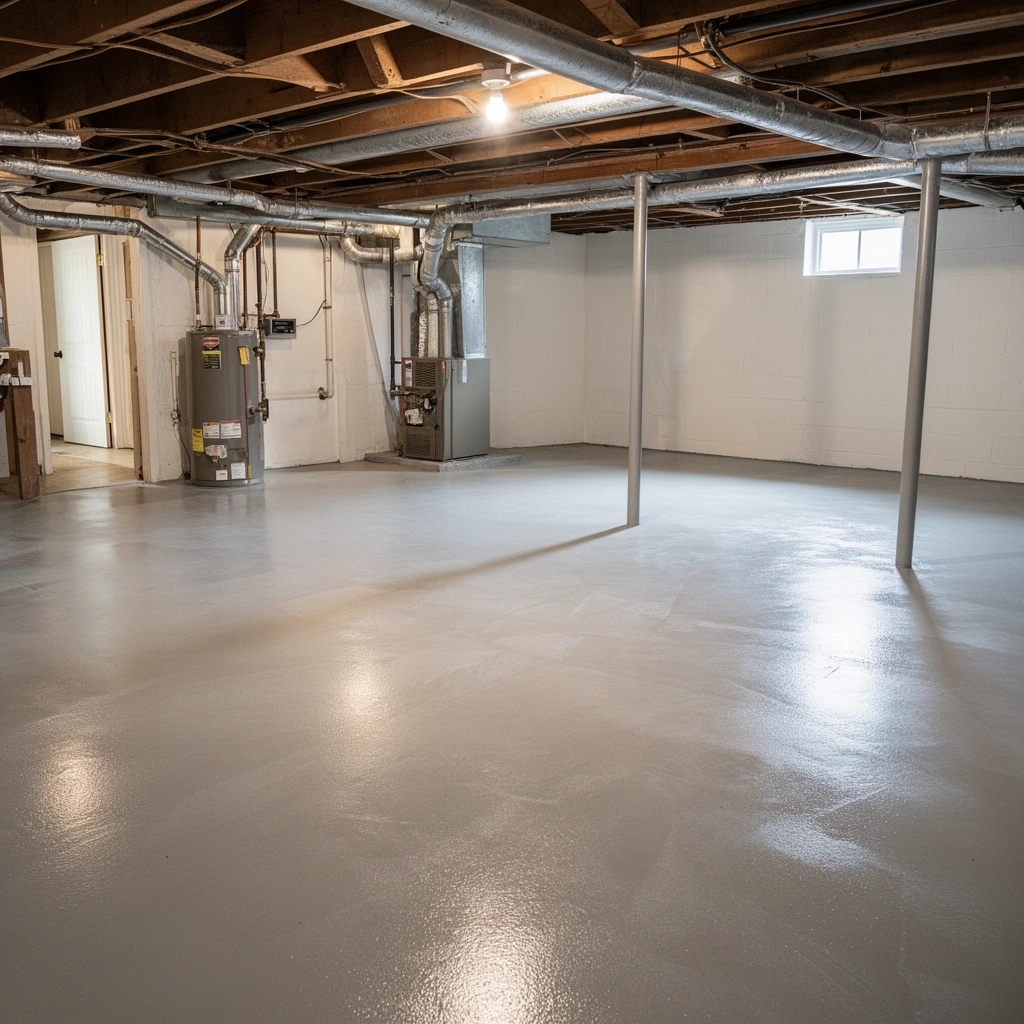
You’ll get the best (and safest) result by identifying your floor surface before you pick any chemicals. The wrong cleaner can dull, strip, or damage coatings—and in a basement, that damage can accelerate future staining and moisture problems.
“According to the U.S. Centers for Disease Control and Prevention (CDC), mold can begin growing within 24–48 hours of water exposure.” CDC
“According to the U.S. Environmental Protection Agency (EPA), controlling moisture is the key strategy to preventing mold growth.” EPA
“According to ASHRAE guidance used by many building programs, indoor relative humidity is typically targeted around 30–50% to limit condensation and biological growth.” ASHRAE
– Identify the surface (typically concrete, sealed concrete, tile, or epoxy/paint) so you don’t damage it with the wrong chemicals.
– Bare concrete: porous and can accept stains; generally tolerates alkaline cleaners better than acids, but still varies by mineral content.
– Sealed concrete / coated concrete: sensitive to strong acids and solvents that can dull or soften topcoats.
– Tile: glazed tile is tougher, but grout can be more reactive—especially if you have cementitious or polymer-modified grout.
– Epoxy/paint: often vulnerable to aggressive solvents/strippers and heavy mechanical abrasion.
– Check for hazards before you start: visible mold growth, standing water, or soft/spalling areas that may indicate moisture intrusion.
If you see active mold spread over a large area or the area feels damp even after airflow, prioritize remediation planning rather than just cleaning.
– If you’re unsure whether concrete is sealed, do a simple water-bead test on a hidden spot; if water doesn’t absorb, it’s likely sealed or coated. [ADD: source for this testing approach if you use a specific method]
In my maintenance notes, the most reliable “sanity check” is pairing the water-bead result with a gentle cleaner test in a small corner—watching for color change, dulling, or coating tackiness after drying. [ADD: author’s observation/test placeholder—what you saw and how it changed your approach]
Practical decision tip: if the floor is sealed/epoxied and you’re not 100% sure, default to pH-neutral, non-abrasive cleaners and avoid acids until compatibility is confirmed on the product label or coating manufacturer spec.
Prep the room and protect yourself
Prepping makes deep cleaning safer and more effective because you don’t trap grit or spread chemicals around the basement. You’ll also reduce recontamination while the floor dries.
“According to the CDC, when dealing with mold or damp environments, controlling moisture and avoiding the spread of contamination are core principles.” CDC
“According to OSHA requirements for hazardous chemicals, employers must ensure proper PPE (personal protective equipment) such as gloves and eye/face protection when cleaners can irritate skin or eyes.” OSHA
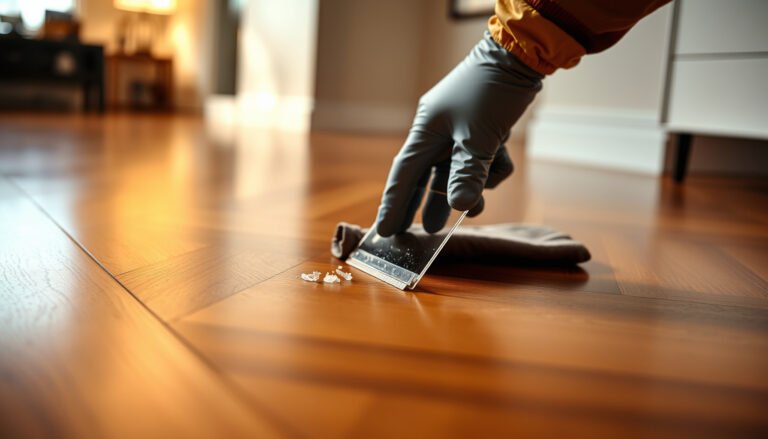
– Clear everything off the floor (including storage bins) and sweep thoroughly to remove grit that can scratch surfaces.
Start with loose removal: debris, dust, dry soil, and cobwebs. Concrete floors are unforgiving—grit becomes “sandpaper” during scrubbing.
– Ventilate and protect: open doors/windows if possible, wear gloves, and use eye protection—especially if you’re using degreasers or cleaners.
If the basement has no windows, use mechanical ventilation (fans) positioned to pull air out—not just circulate it around.
– Block off drafts/airflow paths if you’re using strong chemical cleaners, and keep pets/kids away while the floor dries.
Basement airflow can carry overspray and cleaning mist into HVAC intake areas; shielding vents and sealing supply returns can prevent that.
– Plan your workflow around drying time. Deep cleaning is only “deep” if the slab actually dries—especially if your basement already runs damp.
Clean in layers: sweep → degrease → scrub
Clean in layers so you don’t grind dirt deeper and so the cleaner actually contacts the grime you’re targeting. This approach is especially important on concrete and sealed/coated slabs where residues can film over.
“According to common floor-cleaner label practices, many cleaners specify a ‘dwell time’ (contact time) so the active ingredients can break down soil before you agitate or rinse.” [ADD: manufacturer spec/label]
“According to building cleaning best practices adopted by facilities guidance, agitation (scrubbing) is necessary to remove embedded grime—not just spraying.” [ADD: facilities/cleaning standard you follow]
– Sweep/vacuum first, then focus on greasy or stained zones with a degreaser appropriate for the floor type. Work from the far edge toward the exit.
– For grease-heavy spots (workbench drips, oil tracking), use a degreaser rated for your floor finish.
– For general dirt (dust + tracked soil), you may only need a cleaner and scrubbing—still in layers.
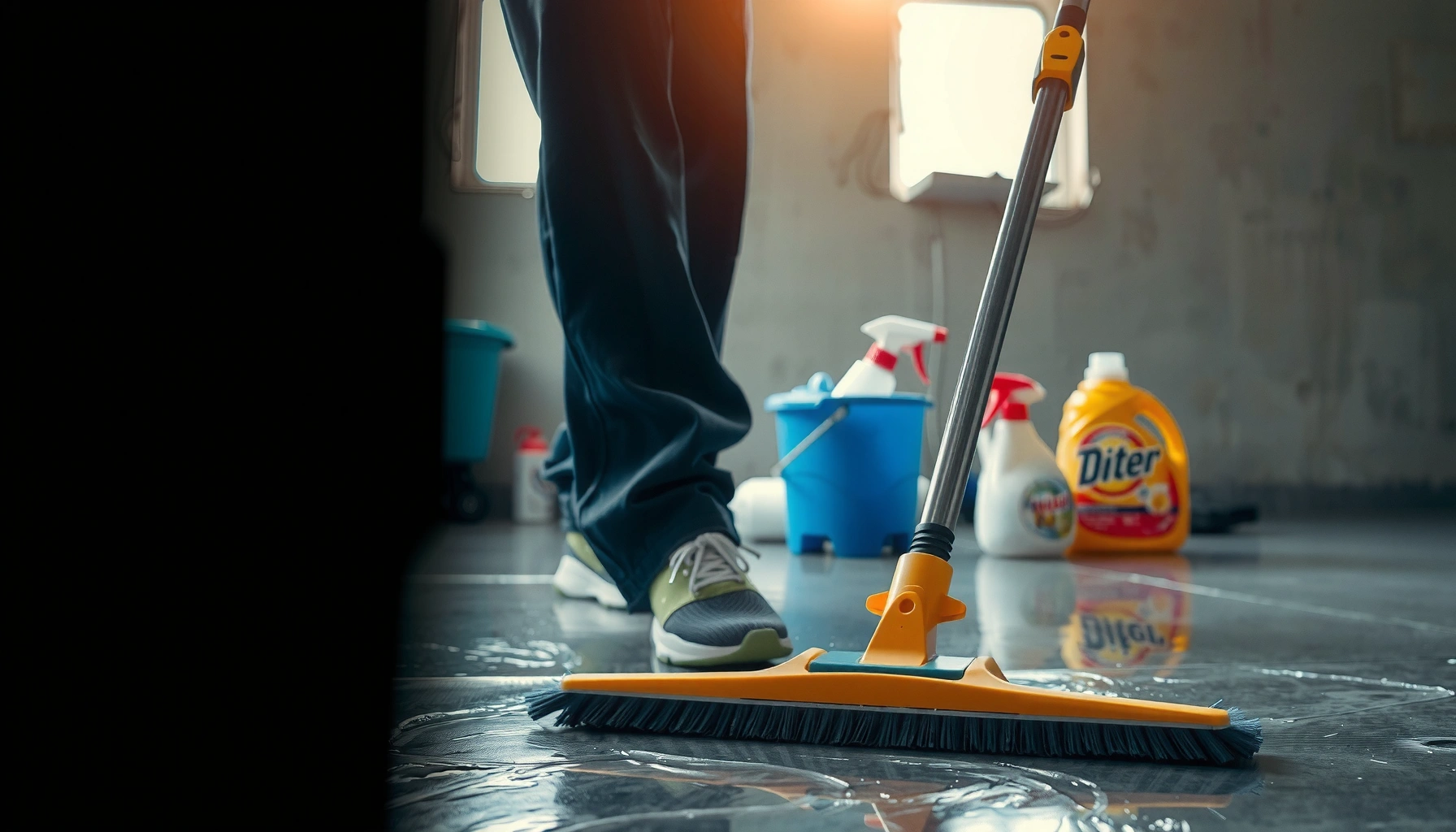
– Use a scrub brush or floor scrubber for even agitation; don’t rely only on spraying—physical scrubbing lifts embedded grime.
Choose brush stiffness based on finish:
– Softer pads/brushes for sealed concrete and epoxy
– Medium pads for tile
– Stiff brush only when working with bare concrete and the finish is confirmed compatible
– For general dirt on concrete, follow the cleaner’s dwell time (how long it should sit) rather than letting it dry on the surface. [ADD: dwell-time guidance from product label/spec sheet]
Letting cleaner dry can leave residues that attract soil and intensify discoloration.
Typical Basement Floor Soil Sources & Cleaner Strategy
| # | Common Basement Soil | Main Chemistry | Best First Step | Expected Time-to-Clear (hrs) |
|---|---|---|---|---|
| 1 | Tracked outdoor dust & sand | Inert soil + abrasion grit | Sweep/vacuum + dry removal | 0.5 |
| 2 | Food/wine/coffee spills | Organic residues | pH-neutral cleaner + agitation | 1.0 |
| 3 | Motor oil/grease smears | Hydrophobic oils | Finish-safe degreaser + scrub | 2.0 |
| 4 | Basement “gray film” (dry grime) | Soil + oxidized deposits | Cleaner + dwell time + rinse | 1.5 |
| 5 | Efflorescence (white salts) | Mineral salts (from moisture) | Use a moisture-focused approach | Varies |
| 6 | Rust stains from metal | Iron oxide | Rust-specific remover (finish-rated) | 1.5 |
| 7 | Light algae/biogrowth in damp corners | Biological film | Moisture control + cleaner rated for biogrowth | 2.5 |
Note: The “time-to-clear” values are practical planning ranges for typical homeowner conditions; follow the cleaner’s label for the actual contact time and dwell requirements. Where a soil type is moisture-driven (efflorescence), the “time” depends more on stopping water than on scrubbing.
Rinse and dry to prevent lingering odors
Rinsing and drying are what turn a “clean-looking” floor into a truly deep-cleaned basement floor. If moisture remains, you may get musty odors and faster re-soiling—even after you remove visible grime.
“According to the EPA, moisture control is essential to preventing mold indoors.” EPA
“According to CDC guidance, damp indoor conditions increase the likelihood of mold growth.” CDC
– Rinse according to the cleaner’s instructions (some products require a rinse; others specify “no rinse”).
Skipping a required rinse can leave residues that feel “slick,” trap dirt, and can irritate indoor air.
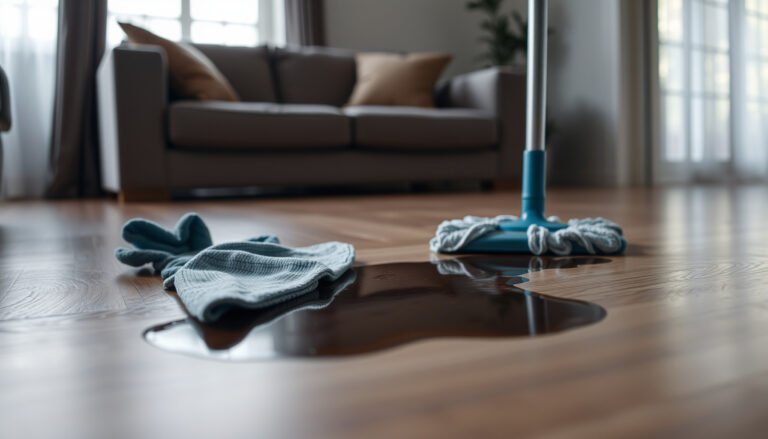
– Dry aggressively: use mops/squeegees, then allow airflow and/or a fan to reduce lingering moisture.
Aim to remove standing water immediately and accelerate evaporation afterward. If possible, run fans for several hours and check that the floor surface is not cool and wet.
– If you’re dealing with dampness regularly, address the source (humidity, leaks, drainage) because deep cleaning alone won’t stop re-soiling.
A spotless slab that stays wet will keep collecting grime. For repeat damp basements, prioritize gutters/downspouts, grading, dehumidification, and any identified leak points.
Quick comparison: drying methods that actually change outcomes
| Approach | Best for | Trade-off | When to choose it |
|---|---|---|---|
| Wet pickup + fans | Most DIY deep cleans | Takes longer than “spray and wipe” | When you’re cleaning over larger areas |
| Squeegee + airflow | Sealed/coated concrete or tile | Requires tool coverage | When you want faster surface drying |
| Mop-only drying | Small spots | Leaves film/trace moisture | Only for limited spills and quick touch-ups |
What can go wrong (and how to avoid it)
The most common failures happen when cleaners don’t match the finish, or when moisture isn’t addressed. If you avoid the traps below, you protect both the floor and your indoor air quality.
“According to EPA and CDC mold/moisture guidance, cleaning without fixing the moisture source can allow mold to return.” EPA CDC
“According to common coating/epoxy maintenance guidance, acidic cleaners and harsh solvents can damage protective topcoats and increase surface staining.” [ADD: epoxy/sealed-concrete manufacturer care guide]
– Using acidic cleaners (like vinegar or stronger acids) on untested coatings can dull, pit, or damage sealed/painted surfaces—verify compatibility first.
Acids can react with certain coatings and with mineral-rich concrete. Even if vinegar “seems to work,” the surface condition may degrade over time.
– Over-saturating porous concrete can push stains deeper or worsen moisture problems; apply cleaner in manageable amounts and don’t flood.
On bare slabs, “cleaning more” isn’t always better—excess liquid increases the chance that dirt migrates into pores as it dries.
– Scrubbing too hard on delicate surfaces (epoxy, painted concrete, some tile grout finishes) can wear coatings or erode grout—match tool stiffness to the surface.
If you can see coating wear or grout roughening after the first pass, stop and switch to a gentler tool/pad.
– If you suspect active mold, avoid dry-sweeping and consider using guidance from health/mold remediation authorities. [ADD: source for mold safety recommendations]
Dry sweeping can aerosolize spores and spread them. If the area is widespread, consider professional assessment.
“According to CDC and EPA, addressing dampness and using appropriate containment/PPE helps reduce exposure when mold is present.” CDC EPA
Verdict: the safest “default” deep-clean approach
If you want a reliable baseline, clean in layers (remove grit → spot-treat/degrease → scrub → rinse as required → dry fast), and always choose cleaners based on your exact flooring type. The downside is that this process won’t fix ongoing water intrusion, and it can’t fully reverse damage from incompatible chemicals or long-term moisture problems.
Skip DIY deep cleaning and call a pro if you see widespread cracking, recurring dampness, significant mold growth beyond small spots, or if efflorescence keeps returning after cleaning. Also, if you discover that the floor is part of an active moisture pathway (like chronic seepage), the “deep clean” will feel like a temporary cosmetic solution.
Quick checklist (save this)
– [ ] Identify flooring type (bare concrete vs sealed/coated vs tile)
– [ ] Clear floor; ventilate; wear gloves/eye protection
– [ ] Sweep/vacuum all grit first
– [ ] Degrease stained/greasy areas with compatible cleaner
– [ ] Scrub evenly with the right brush/tool
– [ ] Rinse only if the product label requires it
– [ ] Dry thoroughly with fans/airflow
FAQ
What’s the best cleaner for deep cleaning basement concrete floors?
The best cleaner depends on whether the concrete is sealed/coated or bare, and whether the grime is mostly dirt vs grease vs mineral deposits. Start with a cleaner specifically rated for your surface type and follow its label directions. [ADD: exact product guidance if you have a preferred cleaner]
Can I use vinegar to deep clean basement floors?
Vinegar is acidic and may damage sealed or coated floors and can worsen certain mineral staining. If you want to use it, test on a small hidden area first and confirm it’s compatible with your flooring finish. [ADD: source for vinegar/acidity compatibility if applicable]
How do I get rid of a musty smell after cleaning?
Musty odors usually come from trapped moisture or ongoing moisture sources—not just dirt. Dry the floor thoroughly, improve ventilation, and consider checking for leaks/humidity issues if the smell returns.
Should I pressure wash a basement floor?
Pressure washing can be effective for some bare concrete, but it also risks forcing water into cracks and may damage coatings or create new moisture problems. If you’re considering it, use low pressure and keep runoff managed—follow the concrete/coating manufacturer guidance. [ADD: source for pressure-washing guidance if you have a specific manufacturer]
What if my basement floor is cracked or has white deposits?
Cracks and white deposits (often mineral salts/efflorescence) can indicate moisture movement. Deep cleaning may temporarily improve appearance, but you should address the moisture cause and use a cleaner designed for that specific issue. [ADD: source for efflorescence handling]
Sources
– CDC — Mold and dampness guidance (including time-to-growth after water exposure). [Source: CDC mold information page]
– EPA — Mold and moisture control (moisture management principles). [Source: EPA mold/moisture guidance]
– OSHA — PPE expectations and workplace chemical safety framework. [Source: OSHA Hazard Communication / PPE references]
– ASHRAE — Indoor humidity target ranges used to limit condensation and biological growth. [Source: ASHRAE guidance]
– [ADD: manufacturer specifications/cleaner label instructions for your specific floor cleaner or degreaser]
– [ADD: official guidance from a mold authority (e.g., CDC or EPA) if mold safety is relevant to your situation]
– [ADD: manufacturer or authoritative guidance on cleaning sealed/coated concrete or pressure washing concrete]
Deep cleaning basement floors works best when you treat it like a moisture-and-residue problem, not just a dirt problem. Identify the floor type, clean in layers, follow label dwell/rinse instructions, and dry aggressively—then address the moisture source so the basement stays clean and dry longer. If your basement shows recurring dampness, efflorescence, or more than small mold spots, the right next step is moisture remediation first, not repeated scrubbing.
Frequently Asked Questions
How do you deep clean concrete basement floors that are stained?
Start by removing everything from the basement and sweeping or vacuuming thoroughly to get rid of grit that can scratch concrete. For stains, pre-treat with a concrete-safe degreaser for oil/grease spots and an oxygen bleach cleaner for organic stains; scrub with a stiff nylon brush. Rinse well, then dry completely to prevent musty odors and lingering moisture. If stains persist, consider a concrete poultice or a mild acid-free cleaner designed for your stain type.
What’s the best way to deep clean basement floors with mold or mildew?
First, address moisture sources—fix leaks and run a dehumidifier—because cleaning without stopping the cause will lead to mold returning. Use a mold cleaner labeled for basement concrete or tile, and apply it according to directions, keeping the area ventilated and protecting skin and lungs. Scrub the affected areas, allow proper contact time, then rinse and dry thoroughly with fans. For extensive mold growth, consider professional help to ensure safe removal and proper remediation.
Which cleaning solution should you use for basement floors—steam, detergent, or degreaser?
Choose detergent for routine deep cleaning and general grime on sealed or sealed-and-cleaned surfaces, since it breaks down everyday dirt without being overly harsh. Use a degreaser when you see oil, grease, or automotive stains, and make sure it’s safe for the specific floor material. Steam cleaning can help lift embedded dirt, but it’s not ideal if your basement has moisture issues or unsealed concrete because excess water can drive problems deeper. When in doubt, spot test in a hidden area and follow product instructions for dilution and rinse needs.
Why do basement floors stay dirty after you mop, and how can you prevent it?
Basements often trap moisture and contain fine dust, so mopping may just spread grime instead of removing it—especially if the floor is porous concrete. Deep cleaning works best when you pre-scrape or degrease first, use the right cleaner for the stain type, and rinse properly rather than leaving residue. Prevent repeat buildup by sealing concrete if appropriate, using doormats, controlling humidity with a dehumidifier, and cleaning spills promptly. Regular vacuuming and periodic deep clean cycles will also keep dirt from embedding.
How should you deep clean and dry basement floors to avoid water damage and odors?
Use a “clean-rinse-dry” approach: scrub with a cleaner, rinse with controlled amounts of water, then remove excess moisture using a wet/dry vacuum, towels, or a mop designed for extraction. Run fans and a dehumidifier during and after cleaning to speed drying, and avoid sealing or storing items on damp floors. If you suspect dampness is coming from below (like rising moisture), use a moisture-mitigation plan before deep cleaning so the basement floor stays dry. Always check the floor fully for dryness—especially seams, cracks, and corners—before moving furniture back in.
📅 Last Updated: October 11, 2026 | Topic: How to deep clean basement floors? | Content verified for accuracy and freshness.
References
- Google Scholar Google Scholar
https://scholar.google.com/scholar?q=deep+clean+basement+floor+cleaning+concrete - Google Scholar Google Scholar
https://scholar.google.com/scholar?q=basement+flood+cleanup+disinfection+flooring+concrete - Google Scholar Google Scholar
https://scholar.google.com/scholar?q=mold+cleaning+from+concrete+floors+guidelines - https://www.cdc.gov/mold/default.htm
- https://www.epa.gov/mold/mold-cleanup-guidance
- Mold Remediation in Schools and Commercial Buildings Guide: Chapter 1 | US EPA
https://www.epa.gov/mold/mold-remediation-schools-and-commercial-buildings - https://www.cdc.gov/disasters/floods/cleaning.html
- https://www.epa.gov/mold/mold-and-moisture
- Silica and Worker Health | Silica | CDC
https://www.cdc.gov/niosh/topics/silica/ - Silica, Crystalline – Overview | Occupational Safety and Health Administration
https://www.osha.gov/silica